Distorted Records Born from Colonial Pain: The Annals of Gojong and Annals of Sunjong
- Historical Materials Created Under Japanese Leadership: Among all the Annals of the Joseon Dynasty—which are national treasures and inscribed on the UNESCO Memory of the World register—the Annals of Gojong and Annals of Sunjong are often excluded and not recognized as official annals. This is because these two annals were compiled after the fall of Joseon, under the strict supervision and leadership of Iwangjik (the Royal Household Office), an organization subordinate to the Japanese Government-General during the Japanese colonial period.
- Historical Distortion to Justify Colonial Rule: As Japanese scholars and pro-Japanese collaborators led the compilation work, numerous records were deleted or distorted to conceal Japan's acts of aggression and justify colonial rule. Sensitive historical truths such as the assassination of Empress Myeongseong, the disbandment of the army, and the Eulsa Treaty were severely distorted or downplayed.
- Loss of Historians' Independence: Annals are supposed to be completed through the independent historical awareness of historians who do not fear the king's gaze. However, these two records were written under the censor's knife of the aggressor, completely losing their independence. Therefore, modern academia does not include these two sets of annals in the official Annals of the Joseon Dynasty, and uses them strictly and limitedly as reference materials (secondary historical sources) after rigorous historical verification to understand the situation at the time.
(26th King and First Emperor of the Korean Empire) Gojong: Gwangmuje, Who Tried to Protect a Country Like a Candle Before the Wind
Gojong (reigned 1863–1907) was the son of Heungseon Daewongun and ascended the throne at the young age of 12. He broke the power politics of the Andong Kim clan, stood against the invading forces of Western powers, changed the country's name to the Korean Empire to save a declining Joseon, and rose to the position of Emperor as a fated monarch seeking independent modernization.
1. From a 'Beggar at a Funeral' to the Father of a King: Gojong's Dramatic Ascension Process:
- The Passing of a Childless King and the Queen Dowager's Decision: In 1863, when the 25th King Cheoljong passed away without a son, a national crisis struck as the direct royal lineage was cut off. The authority to designate the next king lay with Queen Shinjeong (Queen Dowager Jo), the highest elder of the royal family at the time. Queen Shinjeong seized the golden opportunity to oust the power politics of the Andong Kim clan—who had monopolized power and suppressed the royal family for a long time—and reclaim authority.
- Heungseon-gun's Ambition Disguised as a 'Beggar at a Funeral': Yi Ha-eung, Heungseon-gun, a royal clansman descending from King Yeongjo's line, deliberately lowered himself to survive the strict surveillance and death threats of the Andong Kim clan. He hung around marketplace merchants, begged for money, and played the fool, inviting mockery as a 'beggar at a funeral.'
However, this was a high-level political act to lower the guard of the Andong Kim clan. Secretly contacting Queen Dowager Jo, Yi Ha-eung made a secret promise that if Cheoljong died, he would place his second son, Yi Myeong-bok (Gojong), on the throne. - Ascension of a 12-Year-Old Boy and the Dawn of the Daewongun Era: As soon as Cheoljong breathed his last, Queen Dowager Jo immediately issued a royal decree according to the pre-prepared scenario, placing 12-year-old boy Yi Myeong-bok on the throne. This boy was none other than Gojong, the 26th king of Joseon. Upon Gojong's accession, the Andong Kim clan instantly lost power, and Gojong's father Yi Ha-eung was titled Heungseon Daewongun (the Prince Regent, father of the reigning king), taking actual control of Joseon into one hand.
2. Gojong's Direct Rule Out of Daewongun's Shadow, and the Waves of Incoming Foreign Powers:
- In the early years of his reign, his father Heungseon Daewongun seized power, abolished Confucian academies (Seowon) to elevate royal authority, and rebuilt Gyeongbokgung Palace, though excessive construction drew complaints from the people. He also erected anti-cheokhwabi monuments and tightly shut the national doors.
- Fierce Battle Against French Forces in Ganghwado, Byeongin Yangyo (1866): When Daewongun harshly persecuted Catholicism, French warships invaded Ganghwado in protest, sparking a war. General Yang Heon-su and Korean troops risked their lives at Jeongjoksanseong Fortress and other sites to defeat the French forces; however, retreating French forces raided Oegyujanggak, the royal library in Ganghwado, plundering Uigwe—the ultra-precise records that were treasures of the Joseon royal family—along with numerous cultural assets in a painful ordeal.
The Behind-the-Scenes Return of Oegyujanggak Uigwe, Exchanged for High-Speed Rail (KTX) Contracts:
- Discovering Ancestral Record Heritage in Warehouse Corners: The Oegyujanggak Uigwe plundered by French forces during the Byeongin Yangyo seemed lost forever, but came to light thanks to the dedication of historian Dr. Park Byeong-seon, who studied in France. Working as a librarian at the National Library of France, Dr. Park discovered the Uigwe abandoned in a library warehouse corner and made its existence widely known to the world in 1975.
- South Korea's High-Speed Rail and President Mitterrand's Promise: While subsequent efforts for repatriation continued, France and Germany competed fiercely in 1993 to win South Korea's high-speed rail project contract. Visiting South Korea at the time, French President Mitterrand brought 1 volume of the Oegyujanggak Uigwe directly to sell his country's high-speed trains (TGV) and promised full repatriation. Thanks to this diplomatic transaction, France won the massive high-speed rail order.
- Return in the Form of Permanent Lease Renewed Every 5 Years: However, France maintained that under its domestic laws, state-owned property could not be completely transferred to another country. Ultimately, after persistent diplomatic negotiations, all 297 volumes of the Uigwe finally set foot on Korean soil in 2011 in the form of a 'permanent lease' where contracts are renewed every 5 years. Although technically a rental format on paper, it is effectively no different from a permanent return, marking a tearful homecoming 145 years after plundering.
-
Opert's Plot to Plunder Tomb of Namyeon-gun, a Sacrilegious Crime Arousing Daewongun's Extreme Rage, Oppert's Tomb Robbery Incident (1868): An unprecedented incident where German merchant Ernst Oppert attempted to rob the tomb of Namyeon-gun (Gojong's grandfather and Heungseon Daewongun's father) to force trade negotiations with Joseon.
Because the tomb was reinforced with hardened lime and sand, the grave robbery failed; however, it inflicted unerasable humiliation and great shock upon Joseon society and Daewongun, who valued filial piety above all state values. This incident served as a decisive catalyst that led Daewongun to define Westerners as barbarians and adhere even more strongly to his policy rejecting commerce and diplomacy (isolationist policy). -
Desperate Struggle at Gwangseongbo Against the American Fleet, Sinmi Yangyo (1871): Using the burning of an American merchant ship (General Sherman) in Pyongyang as a pretext, the US Asiatic Fleet sailed warships to invade Ganghwado. General Eorae-yeon and Joseon soldiers hung the symbolic Commander's Flag (Sujagi) at Gwangseongbo and fought desperately. Outnumbered and outgunned by modern US cannons and rifles, they scattered dirt and fought bare-handed when ammunition ran out, fighting nobly to the last man in a heartbreaking fierce battle.
Immediately after experiencing these two Yangyo conflicts, Daewongun erected anti-cheokhwabi monuments prohibiting peace agreements with Western powers across every corner of the country.
The Decisive Temperature Difference Between Korea and Japan in Treating Western Powers During the Open Port Period:
- Korea's Desperate Resistance Using Teeth and Stones: When the US brought cutting-edge warships, Joseon did not cowardly submit despite overwhelming firepower disparities. When ammunition ran out, they shot arrows; when bowstrings snapped, they threw stones, biting US soldiers bare-handed and with teeth until the very end. Despite surviving the brutal Civil War, US commander Major Schley left records full of awe: ""We fought a frightfully sad battle unlike anything seen in the Civil War. The Joseon army fought valiantly to the last man, without a single surrender.""
- Japan's Pragmatic Yield Before the Power of Warships: Conversely, when US Commodore Perry appeared in Tokyo Bay in 1853 leading Black Ships and staged a show of force with gunboat diplomacy, Japan (Edo Shogunate) surrendered immediately in profound shock without proper fighting. Overwhelmed by the firepower of the US fleet, Japan meekly opened its ports the following year and pursued opening.
- Results Born from Contrasting Choices: Korea's fierce determination to fight to the death against Western aggression, contrasted with Japan's pragmatic attitude of kneeling quickly after feeling the power gap and actively absorbing Western civilization to build strength, served as a massive crossroads completely splitting both nations' destinates later on.
3. Opening Ports and the Beginning of Modernization, Along with Mixed Fortunes:
- Opening Ports and Reform Steps: When Heungseon Daewongun stepped down in 1873 and Gojong began direct rule, Joseon opened its doors and tried to actively accept modern civilization. Gojong created a new military unit, the Byulgigun, to reform the country, but this rapid change sparked clashes with conservative forces. In the process, foreign powers like Qing China and Japan stationed troops in Joseon, turning the country into a battlefield for imperialist powers.
- Joseon's First Unequal Treaty, Treaty of Ganghwado (Japan-Korea Treaty of 1876): In the exact manner they themselves suffered military threats from US Commodore Perry to open their country, Japan sailed modern warships (Unyo) in 1875 to unlawfully shell Chojijin fortress in Ganghwado in a show of force (Unyo Incident).
Ultimately, Joseon yielded to this coercion and signed a treaty with Japan in Ganghwado in 1876. While Joseon's first modern treaty, it was a representative unequal treaty that unconditionally conceded extraterritoriality (consular jurisdiction)—allowing Japanese criminals in Joseon to escape local prosecution—and coastal surveying rights authorizing Japan to arbitrarily survey and map Joseon's three seas. Starting here, Busan, Wonsan, and Incheon opened sequentially, accelerating foreign encroachment on national sovereignty. - Unlimited Grain Export and Livelihood Destruction, Skyrocketing Rice Prices: Under trade rules annexed to the Treaty of Ganghwado, Japanese merchants gained the right to unlimitedly ship Joseon rice back to Japan without tariffs or regulations. As Japan—facing food shortages due to industrialization—ruthlessly swept up Joseon's rice, internal grain storage emptied, and rice prices skyrocketed crazily. General citizens suffered economic ruin without enough rice for a single daily meal, serving as a core social flashpoint that would later explode into the fury of old-style soldiers (Imo Incident).
4. Soldiers' Fury Explodes, the Imo Incident and Foreign Interference:
- Explosion of Discriminated Soldiers, Imo Incident (1882): A large-scale military mutiny instigated by old-style soldiers who suffered severe discrimination and failed to receive proper pay (rice) compared to the new military unit, Byulgigun. When rice pay finally arrived after 13 months, it was heavily mixed with sand and chaff, pushing anger to extremes. Enraged soldiers rushed to the royal court to punish corrupt officials of Queen Myeongseong's family faction and attacked the Japanese legation pressing for port opening.
- Daewongun's Short Return to Power and a Peculiar Queen's Funeral: As soldiers' fury grew uncontrollable and royal courts fell under the blade of armed troops, Gojong had no choice but to respond to the fierce demands and pressure of armed soldiers to reinstate Daewongun and hand over power, entrusting Heungseon Daewongun with full authority to resolve the crisis.
Regaining power after roughly 10 years, Daewongun was warmly welcomed by old-style soldiers as he immediately abolished the new military unit Byulgigun and tried to return the country to his isolationist era. - In particular, to send excited soldiers home and cut off any pretext for the Queen's return alive, he falsely declared that "Queen Myeongseong had already passed away during the chaos," holding a bizarre funeral (state funeral) without a body, using only clothes worn by the Queen, and forced its execution.
- Qing Military Intervention and Daewongun Kidnapping: Hearing of this bizarre funeral from her hiding place, Queen Myeongseong wept tears of blood and actively begged Qing China to dispatch troops. Taking her secret letter as a pretext, Qing troops led by force to take over Hanyang and carried out a kidnapping operation, seizing Heungseon Daewongun and deporting him to Tianjin, China. Thus Daewongun's power ended in a mere one month (33 days), and Joseon began swaying under heavy Qing interference.
- Japan's Military Pressure and Humiliation in the Treaty of Jemulpo: As the Japanese legation burned and Japanese citizens suffered casualties during the mutiny, the Japanese government immediately sailed warships and led troops under the pretext of protecting nationals and claiming compensation, staging a show of force. Ultimately, Joseon yielded to Japanese threats and signed the Treaty of Jemulpo. Through this treaty, aside from paying massive reparations, Joseon fatefully permitted Japanese troops to be stationed inside the Hanyang capital walls under the excuse of protecting the Japanese legation. This was a tragic shackle allowing regular Japanese troops to strut proudly with weapons at Joseon's beating heart.
4. Queen Myeongseong's Shadow, Shaman Jinnyeong-gun, and the Shade of In-law Power Politics:
- Daewongun's Resignation and Revival of the Yeoheung Min Clan In-law Power: When Heungseon Daewongun stepped down in 1873, Queen Myeongseong began actively interfering in politics alongside Gojong. However, as her maternal relatives of the Yeoheung Min clan monopolized key official positions, the evils of in-law power politics—which Daewongun had barely managed to eradicate—revived, causing rampant office-selling and corruption.
- Shamanistic Politics Born from Imo Incident Trauma: Having barely escaped and survived angry soldiers during the 1882 Imo Incident, Queen Myeongseong suffered from severe anxiety. When a shaman she met in hiding accurately predicted the date of her return to the palace, the Queen summoned her to court and trusted her absolutely, even granting her the meritorious title 'Jinnyeong-gun'.
- State-Destroying Corruption and Shamanistic Rituals: Shaman Jinnyeong-gun stayed in the palace, meddling in state affairs and serving as the center of office-selling where official posts were bought and sold for money. Furthermore, under the pretext of praying for royal peace, large-scale shamanistic rituals were held daily in the palace, wasting massive budgets by offering rice and money across every peak of Mt. Geumgang. With in-law tyranny and shamanistic manipulation overlapping, Joseon's state finances prior to the Korean Empire faced runaway ruin.
A Bowl of Soup on the Flight Path and Queen Myeongseong's Cruel Retribution Tale:
- Insults Heard in Person: Stopped in disguise at a tavern near Gasin-ri, Noeun-myeon, Chungju while fleeing the Imo Incident, Queen Myeongseong ordered rice soup out of extreme hunger. However, lamenting the chaotic state of the country, the tavern owner hurled harsh insults right in front of the Queen: ""Because of that woman, the Minbi, the country has turned into this mess."" Showing no outward reaction, the Queen finished her soup silently and left the tavern.
- Revenge After Return That Devastated a Village: Returning to triumph and power later with the aid of Qing troops, Queen Myeongseong immediately ordered her subordinates: ""Bring me that tavern owner who insulted me on my flight path."" In the end, not only the tavern owner but the entire village near the tavern was made an example of, wiped out completely and reduced to ashes in a creepy and terrifying folk tale.
- Public Resentment Behind History: Although this cruel story is informal folklore rather than official history, it serves as a vivid remaining trace testifying to how deep the resentment was among commoners toward the corrupt power politics of Queen Myeongseong's Min clan, and how much terror people felt regarding the revenge tour of the reinstated Queen.
5. Dream of Reform Ending in Three Days, Gapsin Coup:
- Young Scholars' Desire for a Modern State and Action: As Qing China constantly interfered in Joseon following the Imo Incident, progressive reformers like Kim Ok-gyun, Park Yeong-hyo, Seo Jae-pil, and Hong Yeong-sik tried to completely transform Joseon into an independent, modern state modeled after Japan's Meiji Restoration. Trusting a promise by the Japanese minister to provide troops, they set December 4, 1884, the day of the opening banquet for Ujeongchongguk—Joseon's first modern post office—as the day for their coup. Amidst chaos from fires outside the banquet hall, they succeeded in removing conservative officials who blocked reforms relying solely on Qing power and seized the palace.
- Joseon's First Abolition of the Class System, 14-Article Reform Program: Seizing power, the young reformers immediately announced Joseon's most revolutionary 14-Article Reform Program. They severed humiliating tributary ties with Qing China to proclaim external sovereign independence, and promulgated a nation where social classes and noble lineages were entirely abolished so all citizens had equal rights before the law. They also integrated state finances for transparent management and abolished corrupt Bobusang merchant privileges, presenting progressive modern reforms ahead of their time.
- Cowardly Japan and Qing Intervention, Three-Day Reign: However, this blueprint for reform met a tragic end in just three days (46 hours). Feeling threatened, Qing general Yuan Shikai—responding to an urgent request from Queen Myeongseong—led an army of 1,500 to launch a surprise attack on the palace. The Japanese troops, who had promised strong military support, panicked at the might of Qing forces and fled without fighting. Eventually, figures directing the coup like Hong Yeong-sik were brutally killed in the palace courtyard, while Kim Ok-gyun and Park Yeong-hyo fled into exile in Japan. With this vain failure, Qing dominance over Joseon reached its peak, and Joseon's modernization clock stopped completely.
Yuan Shikai, the Tiger of Joseon Who Roamed and Dominated Joseon as His Own Home:
- Arrogant Rule by a Young Viceroy and Ignoring the King: Young Qing general Yuan Shikai, who earned merit by crushing the Imo Incident and Gapsin Coup, was dispatched to a post equivalent to a Viceroy governing Joseon, wielding royal power in Joseon arbitrarily for 9 years.
When visiting the palace, he ignored protocols required of ministers and even the king, riding his palanquin straight into the front courtyard of the king's bedchamber in ultimate insolence. - Obstructing Independent Diplomacy and Threatening Deposition: When Gojong tried to independently dispatch diplomats to Western nations without going through Qing China for sovereign independence, Yuan exerted military pressure and screamed at the king to recall the diplomats immediately. Furthermore, when Gojong refused to act as Yuan wished and tried to draw in other Western powers like Russia or the US, Yuan plotted to forcibly depose Gojong and enthrone another royal clansman, reducing the king to a figurehead.
- Plundering Concessions and Roots of Yongsan Military Base: He forcibly seized Joseon's customs to allow Qing merchants to flood markets tax-free, and stationed Qing troops in key strategic locations in Hanyang. This garrison of Qing troops became the sad origin of the Yongsan Military Base, later occupied extensively by Japanese and US forces.
Attack on Ujeongchongguk and the Origin of Korean Modern Medicine, Min Yeong-ik and Gwanghyewon:
- A Key Figure of the Min Clan Hanging Between Life and Death by an Assassin's Blade: At the Ujeongchongguk banquet in 1884 where the Gapsin Coup signaled, Min Yeong-ik—Queen Myeongseong's nephew and a core figure of the moderate reform faction—was struck down by assassins' blades, collapsing covered in blood. It was a critical, life-and-death moment with deep slash wounds across his head and body severing blood vessels and causing massive blood loss.
- Fateful Encounter with Western Doctor Horace Allen: Traditional Joseon medicine (oriental medicine) had limitations in treating his severe traumatic injuries. At the urgent contact of diplomatic advisor Paul Georg von Möllendorff, American doctor and missionary Horace Allen was hastily summoned. Allen mobilized Western surgical methods like disinfection and vascular suturing to provide devoted treatment for three months, successfully saving Min Yeong-ik's life.
- Birth of Joseon's First Modern Hospital, Gwanghyewon: Gojong and Queen Myeongseong were deeply impressed by Western medicine that miraculously saved their nephew's life. Actively accepting Allen's proposal, Gojong established Joseon's first modern Western hospital, Gwanghyewon (廣惠院, later renamed Jejungwon), in April 1885. This hospital later received massive donations from American businessman Louis Severance to become today's Severance Hospital, marking the starting point of Korean modern medicine.
6. The Convention of Tianjin, the Qing-Japan Double-Edged Sword That Sealed Joseon's Fate:
- Simultaneous Troop Withdrawal and Joint Dispatch Promise: To clean up after the Gapsin Coup, Li Hongzhang of Qing China and Ito Hirobumi of Japan signed a convention in Tianjin, China. The main content was that both countries would simultaneously withdraw stationed troops from Joseon, but if a rebellion occurred in Joseon in the future and one side dispatched troops, they must first notify the other in writing and dispatch troops simultaneously.
- Aggressive Promise Ignoring Joseon's Sovereignty: This convention was an explicit violation of sovereignty where foreign powers agreed among themselves on joint ruling rights over Joseon's territory and national rights. Above all, it prepared a legal pretext for foreign powers to march in troops regardless of Joseon's intentions.
- Pretext Firing the Fuse of the First Sino-Japanese War: When the Donghak Peasant Revolution exploded 9 years later in 1894 and the Joseon government requested reinforcement from Qing China, Japan used the simultaneous troop dispatch clause of the Convention of Tianjin as a pretext to immediately land large-scale warships and troops in Joseon. Ultimately, both nations' troops entered the Korean Peninsula simultaneously, serving as the decisive spark for the First Sino-Japanese War that stained Joseon soil with blood.
7. An Egalitarian World Dreamed by the Grassroots, Donghak Peasant Revolution:
- Torches Against Corrupt Local Officials: Amidst disrupted agricultural tax systems due to corrupt in-law politics, the wicked tax extortion and tyranny of Gobu Magistrate Jo Byeong-gab in Jeolla-do crossed lines. Unable to endure further, peasants led by Green Bean General Jeon Bong-jun took up bamboo spears and rose up to capture the Gobu government office (1894). This uprising spread across Jeolla-do instantly, and peasant armies successively defeated government troops at Hwangtohyun and other battles, finally capturing Jeonju Fortress, the center of Honam, in a single stroke.
- Voluntary Disbandment for the Country and Gabo Reform: As the government—having lost Jeonju Fortress—requested reinforcements from Qing China, and Japanese troops flocked to Joseon in response under the Tianjin Convention, the peasant army felt a sense of crisis and made a crucial decision. To prevent foreign armed conflict, they struck a grand compromise with the government (Jeonju Truce), laid down weapons voluntarily, and returned home to independently establish self-governing reform organs called Jipgangso, practicing independent reforms toward a new world such as abolishing the class system and distributing land equally.
- Desperate Resistance at Ugimchi Pass and Broken Dreams: However, when Japanese troops ignored demands to withdraw and unlawfully invaded Gyeongbokgung Palace, the peasant army rose up massively once more to defend the country (Second Uprising).
At Ugimchi Pass in Gongju, the peasant army fought desperately against a coalition of Japanese troops and government forces armed with cutting-edge machine guns and cannons. Wearing thin hemp clothes and armed with bamboo spears and bows, peasants climbing the pass fell like autumn leaves before a hail of bullets, ultimately facing a devastating defeat. Although leaders like Jeon Bong-jun were captured and executed, ending the rebellion in failure, surviving peasants became the solid pillars of future anti-Japanese righteous armies (Uibyeong).
Tears of Grassroots Mourning the Death of Green Bean General Jeon Bong-jun, 'Bird, Bird, Blue Bird':
- Lyrics of a Sorrowful Folk Song: As the Donghak Peasant Revolution failed disastrously and leader Jeon Bong-jun was arrested and executed, a sorrowful, plaintive song began spreading from mouth to mouth among despairing Joseon citizens:
"Bird, bird, blue bird, do not sit on the mung bean field.
When mung bean flowers fall, the green jelly merchant weeps." - Painful Symbols Hidden in Lyrics:
- Blue Bird: A covert metaphor for Japanese troops (or foreign powers) wearing blue military uniforms who brutally suppressed the peasant army.
- Mung Bean Field and Flowers: Refers to peasant leader Jeon Bong-jun, nicknamed the 'Green Bean General' due to his short stature, and the dream of independence and equality he tried to blossom.
- Green Jelly Merchant: Symbolizes poor Joseon commoners eagerly awaiting to live like humans in the new world dreamed of by Jeon Bong-jun, much like a poor merchant selling jelly made from mung beans.
- A Name Buried in People's Hearts: Just as green jelly merchants weep when mung bean flowers fall, a sorrowful cry echoed that if Jeon Bong-jun died, commoners would lose their path to survival. Although the revolution ended in failure, citizens honored General Jeon Bong-jun through this plaintive song, deeply harboring the spark toward independent sovereignty and an egalitarian world in their hearts.
8. Flames of War and Modern Great Reform, First Sino-Japanese War and Gabo Reform:
- Assault on Gyeongbokgung and Provocation of the First Sino-Japanese War (1894): Japanese troops dispatched under the Tianjin Convention refused to withdraw even after Donghak peasant forces disbanded, launching a dawn sword attack to unlawfully occupy Gyeongbokgung Palace where Gojong resided. Practically holding Gojong prisoner, Japan established a pro-Japanese government and launched a surprise artillery bombardment on the Qing fleet off Pungdo in the Yellow Sea, sparking the First Sino-Japanese War. Victorious in this war, Japan completely ended Qing China's long-standing influence over Joseon and undertook monopolistic encroachment on national sovereignty.
- Joseon's First Modern Great Reform, Gabo Reform: Initiated under Japanese threats, the reform proposals fully reflected the independent modernization blueprints envisioned by reformist politicians and the innovative tax-reform demands of the Donghak peasant army. Gojong proceeded to Jongmyo Shrine to proclaim the 14-Article Hongbeom, the guideline for sovereign independence and modern reform, fundamentally overhauling Joseon's systems.
- Dismantling a Millennium-Old Class System and Eradicating Medieval Vices: Through these reforms, the class system and hereditary class privileges lasting nearly a millennium were completely abolished, and public and private slave systems vanished into history. The civil service examination system was abolished to establish merit-based talent recruitment, while eliminating deeply rooted human rights abuses—such as banning early marriage, permitting widows to remarry, and abolishing torture and familial guilt by association (Yeonjwaje)—sprouting the seeds of modern human rights.
9. Joseon as an East Asian Battlefield and the Tragedy of the Eulmi Incident:
- Sino-Japanese War Victory and Russia's Triple Intervention: Japan—having won the Sino-Japanese War and occupied the Liaodong Peninsula—seemed to seize an opportunity for continental advance. However, Russia, seeking to expand its influence into the Korean Peninsula, joined hands with France and Germany to forcefully pressure Japan into returning the Liaodong Peninsula back to China (Triple Intervention). Witnessing Japan yield to Russia in a power showdown, Empress Myeongseong decisively switched to a pro-Russian political line to oust Japanese influence, tightening a noose around Japan.
- Japan's Reckless 'Fox Hunt', Eulmi Incident (1895): Feeling threatened, Japanese minister Miura mobilized Japanese ronin to raid Geoncheonggung (Okhoru) inside Gyeongbokgung Palace at dawn on October 8, 1895. 'Fox Hunt' was the operational codename planned by Japan to assassinate Empress Myeongseong. They stabbed Empress Myeongseong to death with swords and committed an unprecedented, barbaric act of spraying her body with oil to burn it behind Geoncheonggung.
Empress Myeongseong and 'Minbi', Historical Context of Proper Naming:
- Birth of the Title 'Empress Myeongseong (明成皇后)': In October 1897, following the assassination of Empress Myeongseong, Emperor Gojong proclaimed the Korean Empire and ascended the throne as Emperor, elevating her to 'Empress' as well. Holding her state funeral (Gukjang) that November, the title 'Empress Myeongseong' was officially established. This is a legitimate posthumous title closely tied to Gojong's recovery of political initiative and the establishment of the Korean Empire.
- Historical Context and Problems of the Title 'Minbi (閔妃)':
- Absence in Joseon Records: The term 'Minbi', commonly used in the past, is not an official Joseon-era term. In fact, the word 'Minbi' does not appear anywhere in contemporary official or unofficial historical sources like the Annals of the Joseon Dynasty or Maecheon Yarok. Putting the surname first to address a queen was not customary during the Joseon period.
- Trace of Colonial Degradation During the Japanese Colonial Period: The term 'Minbi' was first confirmed in a Maeil Shinbo article dated October 26, 1910, shortly after Gyeongsul Gukchi. As Emperor Sunjong was demoted to 'King Yi' by Japan, the Empress's title was also degraded to 'Minbi Jeonha'.
- Long-Term Currency of Degraded Expressions: Although news reports in 1920 indicated internal plans by the Japanese Imperial Household Ministry to restore the title back to Empress Myeongseong, the degraded expression 'Minbi' remained commonly used under colonial rule. Therefore, since this title contains derogatory nuances intentionally fixed by Japan to diminish the authority of the Joseon royal family, avoiding its use is advisable.
10. The People's Weapons and Swords to Protect the Country, Anti-Japanese Righteous Army Movement:
- Eulmi Righteous Army Against the Hair-Cutting Edict and Eulmi Incident (1895): Formed mainly by conservative Confucian scholars enraged by the assassination of Empress Myeongseong and the compulsory hair-cutting edict (Danbalryeong). It was the first large-scale Righteous Army movement where common people rose up under the banner of avenging the Mother of the Nation and defending traditional culture.
- Eulsa Righteous Army and the Emergence of Commoner Righteous Army Commanders (1905): When diplomatic sovereignty was stripped away by the Eulsa Treaty, former officials and scholars like Choi Ik-hyeon, alongside Shin Dol-seok—a commoner-born Righteous Army commander—rose in revolt. Shin Dol-seok in particular struck severe blows against Japanese forces across the Taebaek Mountains using brilliant tactics.
War Correspondent McKenzie's Records of the Righteous Army's Burning Courage:
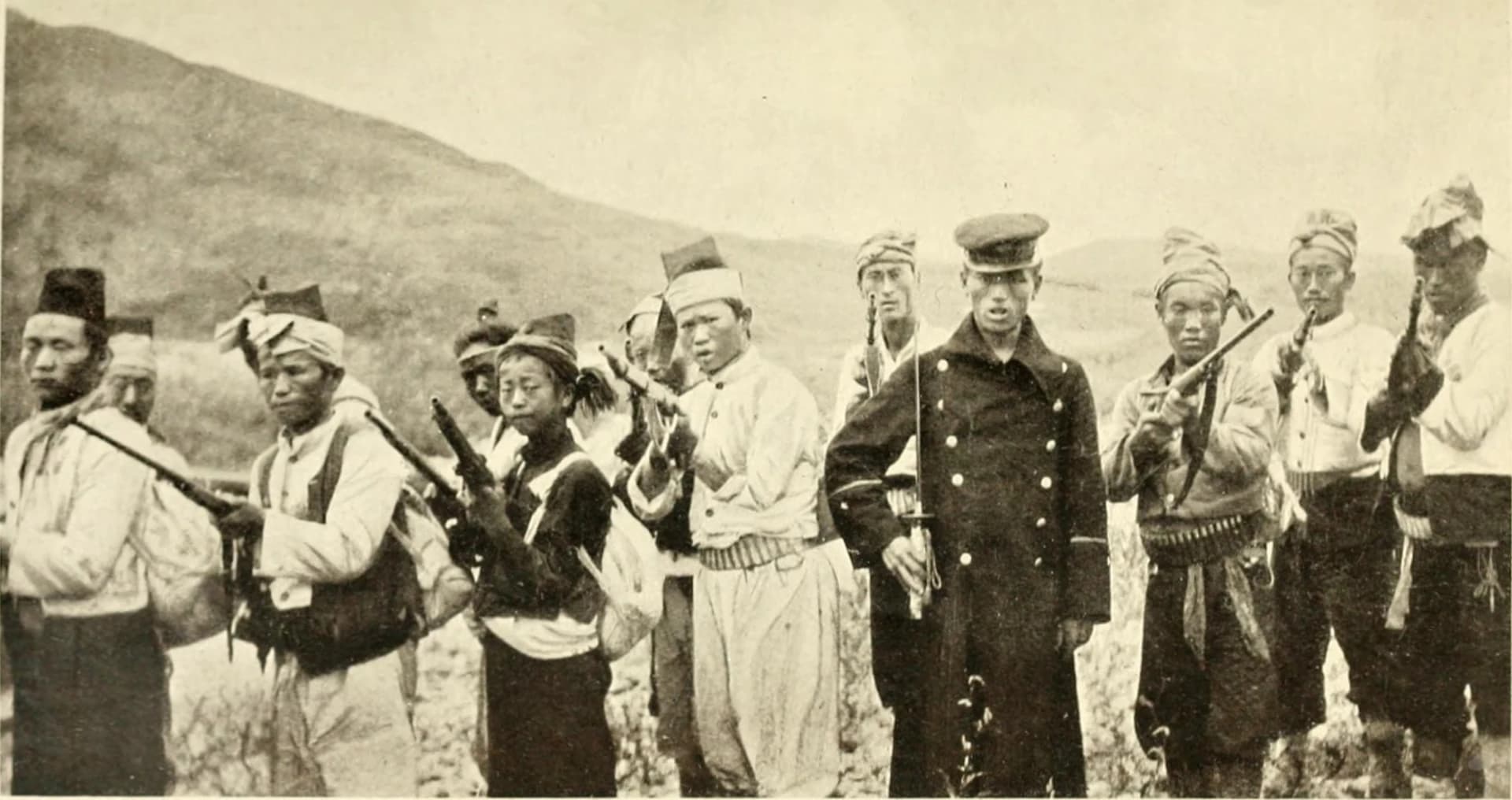
- Global Witness to Righteous Army Struggles: Arriving in Korea in 1907 as a special correspondent for a British newspaper, war correspondent Frederick McKenzie vividly captured the unflinching spirit of Korean Righteous armies through photographs and records despite harsh Japanese massacres. The photographs he left behind—depicting youthful youths mixing regular military uniforms and Hanbok while holding crude rifles—became the most representative historical source symbolizing late Joseon Righteous Army struggles.
- "Better to Die as Free Men Than Live as Slaves": When McKenzie asked young Righteous Army youths equipped with worn matchlock rifles and crude gunpowder pouches whether they thought they could defeat the Japanese army, the soldiers proudly replied, ""We know very well we cannot win. But rather than living miserably as Japanese slaves, it is far better to fight staunchly as free men and die.""
- Exposing Japan's Aggressive Atrocities to the World: Deeply moved by the noble spirit of the Righteous Army, McKenzie published 'The Tragedy of Korea (1908)', recording Japan's brutal atrocities and the struggle of the common people, widely exposing Japan's aggressive ambitions to the world and acting as a spokesperson for Korean history.
11. Escape to the Russian Legation and Proclamation of the Korean Empire:
- The King's Tearful Flight, Agwan Pacheon (1896): Fearing for his life after his wife was brutally murdered inside the palace during the Eulmi Incident, Gojong executed Agwan Pacheon in 1896, escaping Gyeongbokgung Palace in a palanquin to take refuge in the Russian Legation. It was a painful period of national trial where the king of a country had to lodge inside another nation's legation to conduct state affairs.
- Banner of Sovereign Independence, Proclamation of the Korean Empire (1897): Returning to Gyeongungung Palace (today's Deoksugung) a year later, Gojong held an imperial ascension ceremony in 1897 to reclaim fallen royal dignity and sovereignty, proclaiming the country's name as the Korean Empire. Naming the era 'Gwangmu', he vigorously promoted independent modernization reforms (Gwangmu Reform) including land reform and establishing modern factories.
12. The Hague Secret Envoys, Forced Deposition, and the Catalyst for the March 1st Movement:
- When Japan forcibly concluded the Eulsa Treaty stripping the Korean Empire of its diplomatic rights in 1905, Gojong dispatched secret envoys to the International Peace Conference held in The Hague, Netherlands, to protest.
- Using this dispatch of The Hague secret envoys as a pretext, Japan forcibly dragged Gojong down from the imperial throne. Afterward, Gojong lived in lonely confinement in Deoksugung Palace until his sudden passing in 1919; widespread rumors that he was poisoned by Japan served as the direct catalyst for the explosion of the March 1st Independence Movement, a nationwide anti-Japanese national movement timed to coincide with his state funeral.
13. Recommended Destinations: Scenes of Turmoil in Gojong's Era
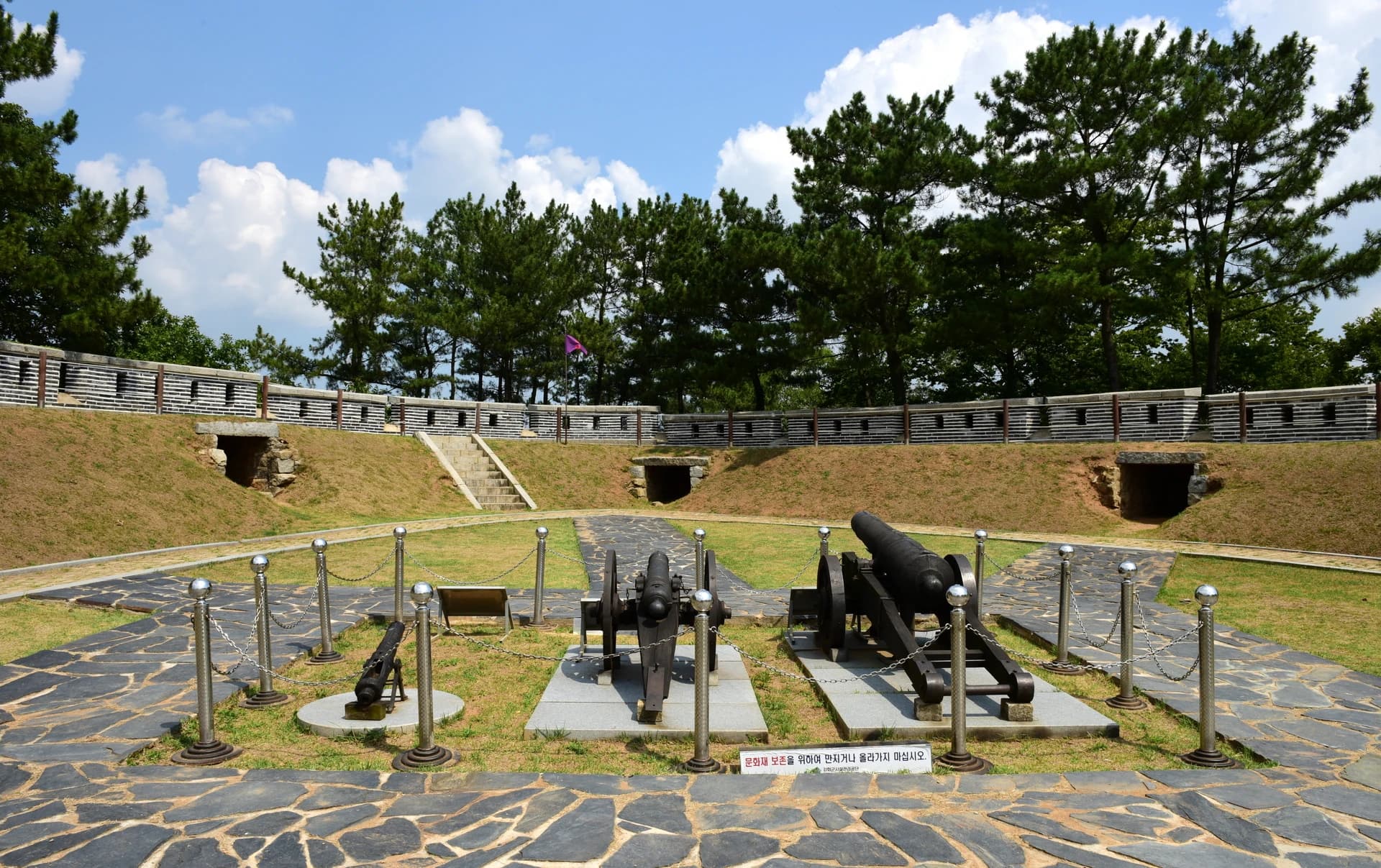
- Ganghwa Museum of History and Gwangseongbo: A battlefield where desperate resistance was mounted against the US fleet during the Sinmi Yangyo (1871). The Ganghwa Museum of History houses General Eorae-yeon's commander flag 'Sujagi', which was plundered by US forces and returned in 2007, while Gwangseongbo preserves redoubt sites and tombs of fallen soldiers (Sinmiui-chong), honoring ancestral patriotic spirits.
- Ujeongchongguk: Opened in 1884, this is Korea's first modern post office and the historic scene where reform politicians like Kim Ok-gyun launched the Gapsin Coup for establishing an independent modern state on the day of the opening celebration banquet. Operating as a postal history museum, it conveys the start of modern communication and the aspirations of pioneers.
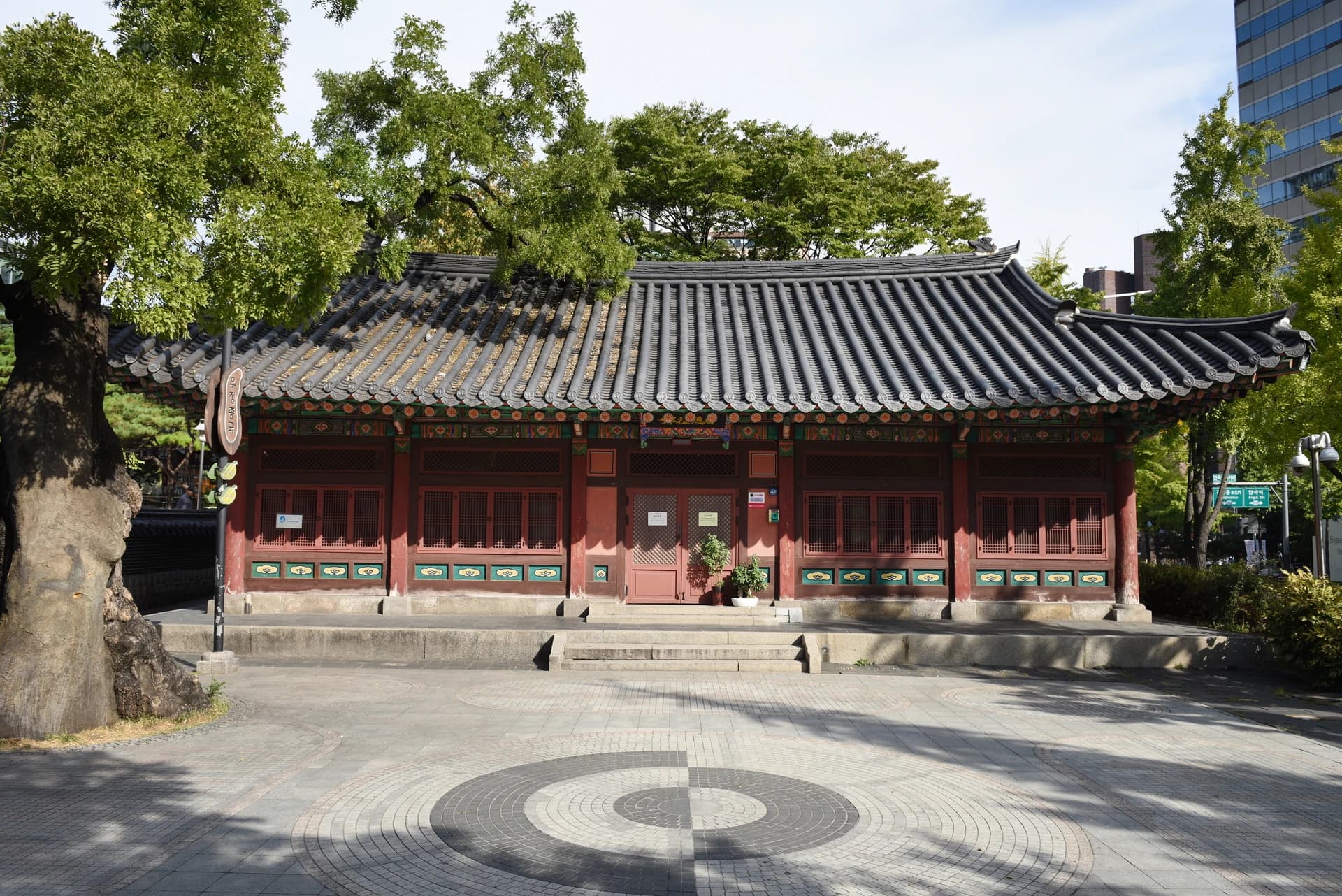
- Geoncheonggung at Gyeongbokgung Palace: Located deep inside Gyeongbokgung Palace, this was a small palace within a palace built when Gojong broke away from Heungseon Daewongun's regency. As the birthplace of electric lighting in Korea, it is also the tragic site of the Eulmi Incident (Okhoru) where Empress Myeongseong was assassinated by Japanese ronin in 1895, embracing both the bright and dark sides of modern history.
- Deoksugung Palace (Gyeongungung): The center of turbulent periods such as the proclamation of the Korean Empire (1897) and the conclusion of the Eulsa Treaty (1905), as well as the sad historical site where Gojong passed away, triggering the March 1st Movement. Remaining with Western-style Seokjojeon Hall and Junghmyeongjeon where the Eulsa Treaty was signed, it is the beating heart of the Korean Empire where you can experience both struggles for independent sovereignty and the pain of national subjugation.
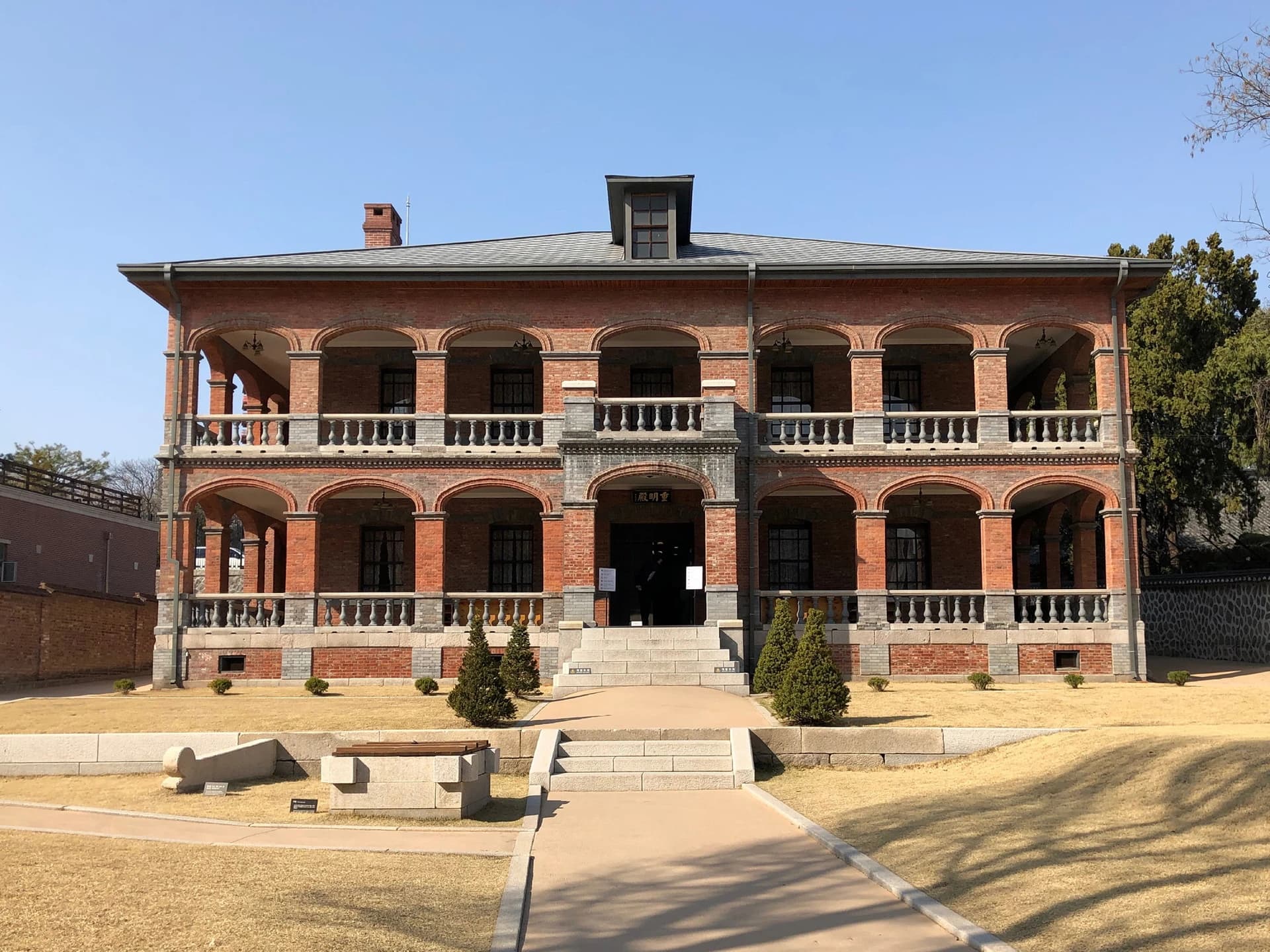
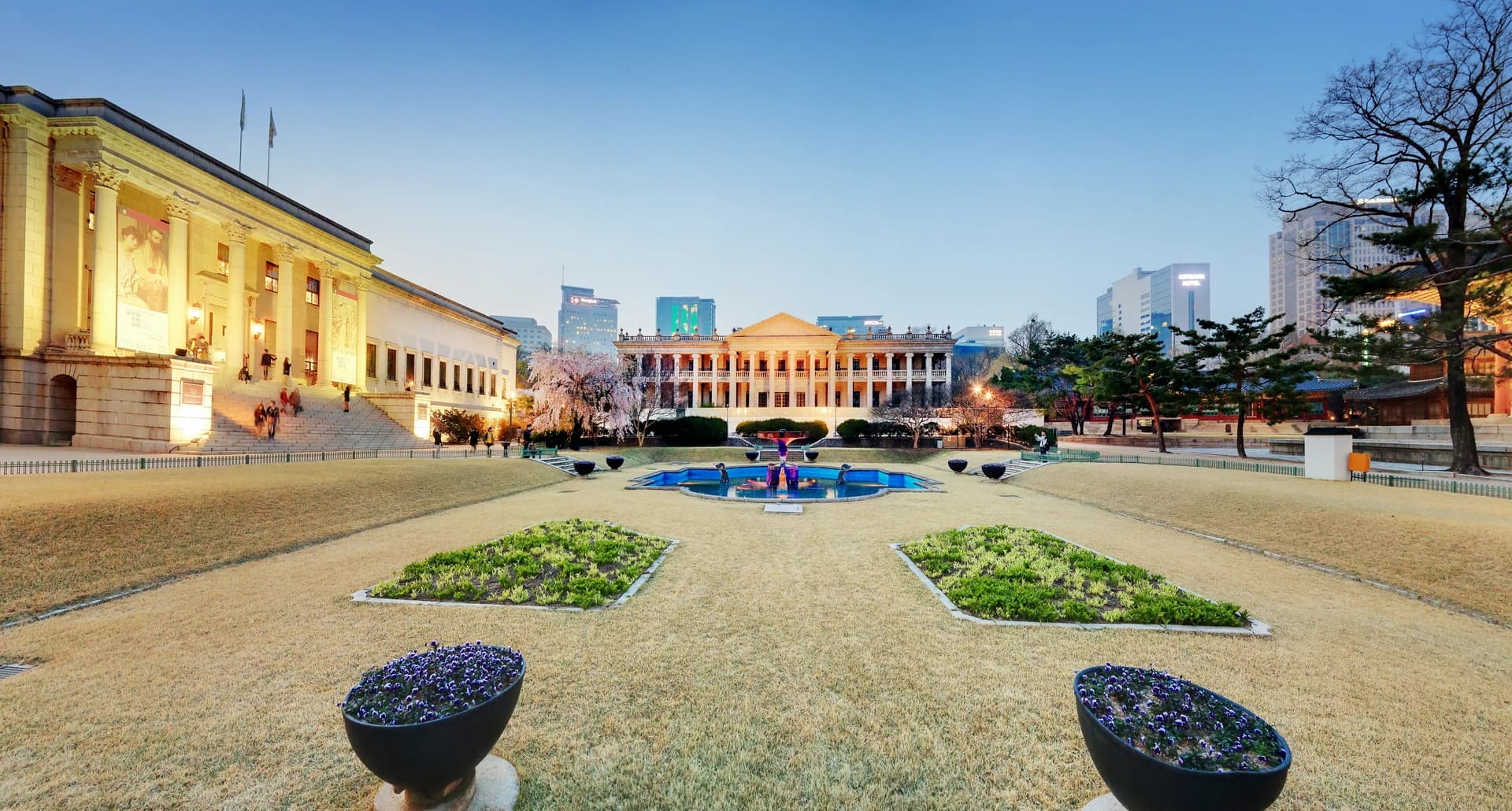 1 / 2
1 / 2Deoksugung Junghmyeongjeon, featuring a recreated space inside depicting the time of the Eulsa Treaty. ©heritage.go.kr - Hwanggudan (Wongudan): The altar for rituals to heaven where Gojong held the proclamation of the Korean Empire and imperial ascension ceremony in 1897. It was a symbolic altar proclaiming to domestic and foreign realms that Joseon was an independent imperial state, but demolished during the Japanese colonial period; today, only remnants remain within the Chosun Hotel grounds—such as Hwanggungu, a 3-story spirit tablet storage building, and stone drums—representing burning aspirations for sovereignty protection.
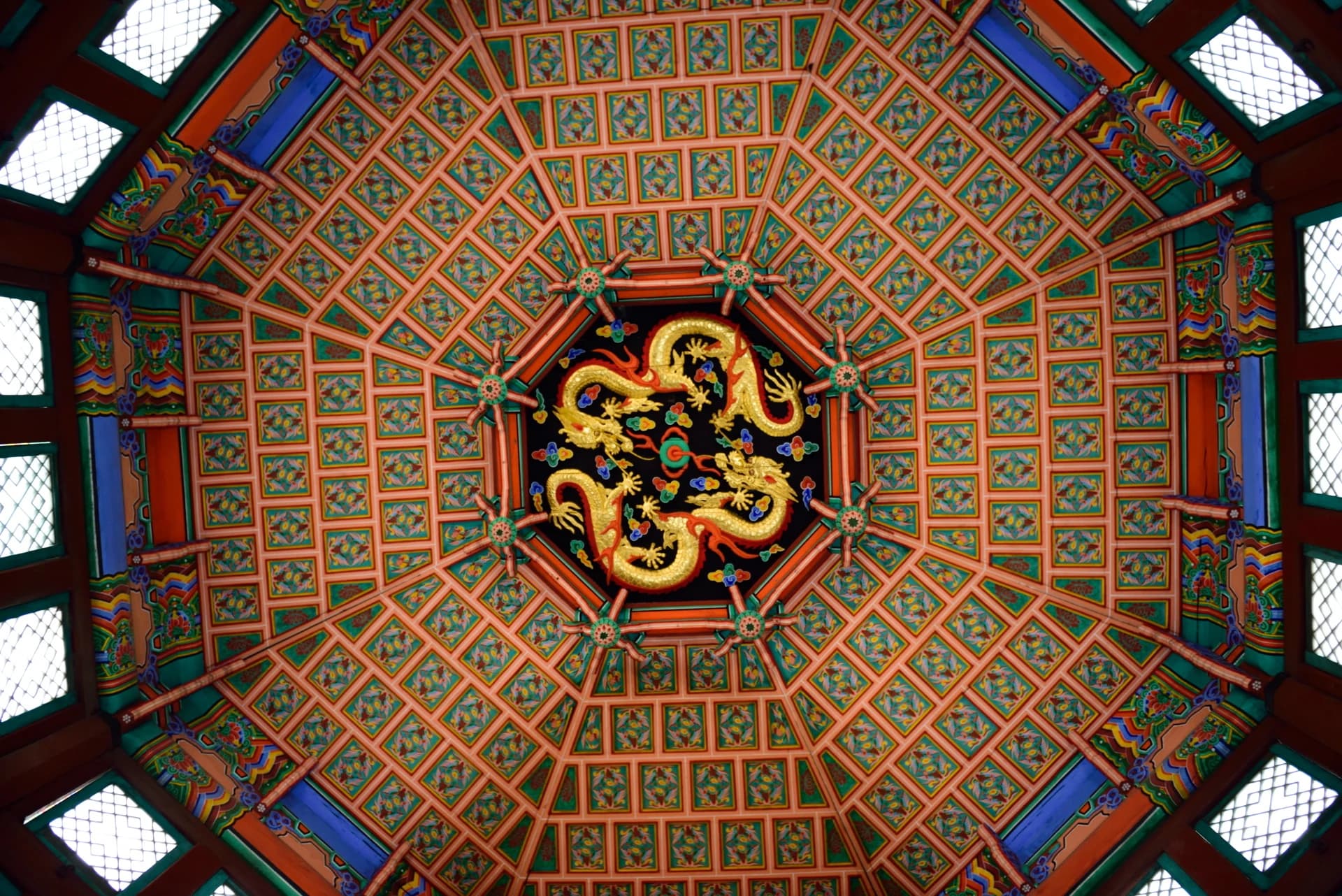
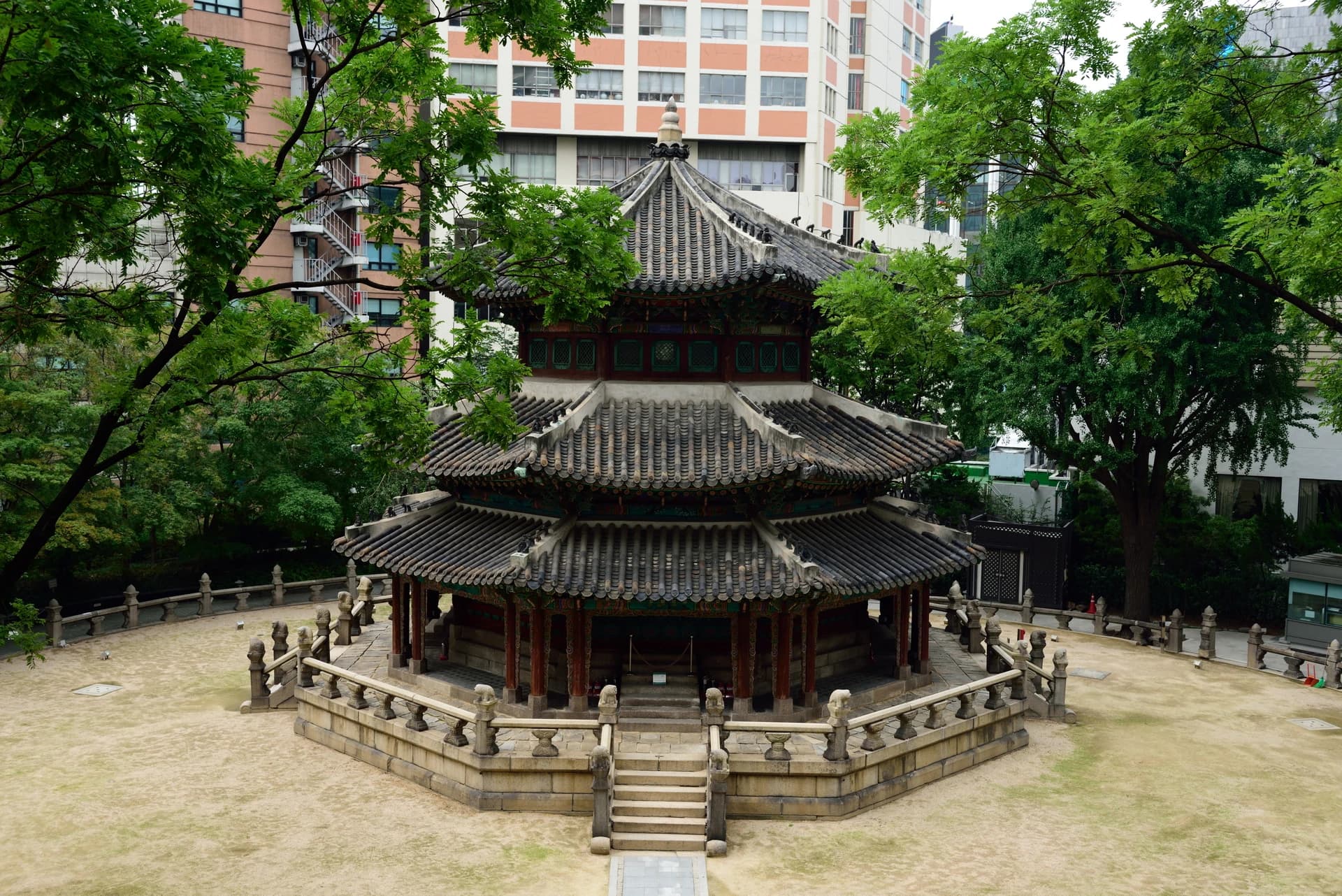 1 / 2
1 / 2Interior view of Hwangwudan Hwanggungu (Internal viewing prohibited for cultural asset protection) ©heritage.go.kr - Daehan Gwangbokdan Memorial Park: Located in Yeongju-si, Gyeongsangbuk-do, this park honors the noble spirit of 'Daehan Gwangbokdan', the first military-style secret anti-Japanese organization formed in 1913. Uniquely, the faces of Ito Hirobumi and the Eulsa Five Traitors are drawn on the floor at the exhibition hall entrance so visitors must step on them with their feet to enter, serving as a historical education site of retribution. It is a profound space to realize unwavering determination not to forget the atrocities of arch-criminals and traitors who stole the country.
(27th King and Last Emperor of the Korean Empire) Sunjong: The Last Monarch Who Vanished Carrying the Sorrow of a Fallen Nation
Sunjong (reigned 1907–1910) was the son of Gojong and Empress Myeongseong, serving as the second Emperor of the Korean Empire and the final king to bring down the curtain on 519 years of Joseon Dynasty history. Having no children, he made his younger half-brother Crown Prince Yeongchin (Yi Eun) the Crown Prince after accession.
He was a sorrowful monarch who met a lonely end while experiencing firsthand the sorrow of losing a country as his military was disbanded and sovereignty was usurped under Japan's brutal pressure.
1. An Emperor Reduced to a Shell and Forced National Annexation:
- He ascended the throne after Emperor Gojong was forcibly deposed, but the country was already under Japan's complete control. Upon accession, the Japan-Korea New Treaty (Jeongmi 7-Treaty) was concluded, disbanding the army, and even judicial rights were stripped away, leaving zero authority as emperor.
- Ultimately, on August 29, 1910, the Gyeongsul Gukchi (Japan-Korea Annexation) treaty transferring national governing rights completely to Japan was forcibly promulgated, destroying the Korean Empire in 13 years and ending the long history of the Joseon Dynasty founded by Taejo Yi Seong-gye with a tragic period.
- Eight Traitors Who Spearheaded National Destruction, Gyeongsul Gukjeok (庚戌國賊): Refers to the 8 senior officials who actively sympathized with and signed the treaty to completely hand over the country to Japan during the Gyeongsul Gukchi (Japan-Korea Annexation) in 1910. Following the Eulsa Five Traitors, those spearheading treason were Yi Wan-yong (Prime Minister), Yun Deok-yeong (Lord Chamberlain), Min Byeong-seok (Minister of the Imperial Household), Go Yeong-hee (Minister of Finance), Park Je-sun (Minister of Interior), Cho Jung-eung (Minister of Agriculture, Commerce and Industry), Yi Byeong-mu (Minister of Military), and Cho Min-hee (Head of Seungnyeongbu). Granted massive peerage titles (baron/marquis) and monetary grants by Japan as rewards for usurping sovereignty, they lived in luxury, recorded forever in our history as major traitors.
Pro-Japanese Yoon Deok-yeong Who Lived a Luxurious Life at the Price of Selling the Country, and the Royal Seal Incident:
- Fate of the Country Hidden Inside a Skirt: When the Japan-Korea Annexation Treaty was about to be forcibly concluded in 1910, Sunjeong Hyohwanghu, the last Empress of the Korean Empire, hid the royal seal deep inside her skirt to prevent losing the country. It was a desperate final struggle thinking ministers would not dare search inside the Empress's skirt as a woman.
- Betrayal by a Relative and Plunder of the Royal Seal: However, Yun Deok-yeong, the Empress's uncle and a staunch pro-Japanese collaborator, unhesitatingly threatened the Empress and forcibly lifted her skirt to snatch the royal seal. Ultimately, as this seal was stamped onto treaty documents, sovereign rights were plundered and the Korean Empire vanished into history.
- A Mansion Called an Imperial Palace, Byeoksu Sanjang: Rewarded with a barony and massive grants from Japanese imperialism for selling the country, Yun Deok-yeong used this money to build 'Byeoksu Sanjang' (aka the Apgung Palace)—a grand French-style mansion spanning over 20,000 pyeong in Ogin-dong, Jongno-gu—living in opulent luxury. In particular, this mansion was arrogantly built on high ground overlooking Gyeongbokgung Palace, Joseon's primary palace, drawing fierce public resentment. Built upon the Empress's tears and the nation's fall, this luxurious mansion stands as historical evidence exposing the ugliest, most extravagant greed of a traitor.
2. Demotion to King Yi and Lonely Later Years at Changdeokgung Palace:
- Sorrow of a Monarchy That Lost Its Country, Demoted to 'King Yi': Following the loss of national sovereignty, Sunjong's status was demoted from Emperor to 'King Yi', and he was practically confined to Changdeokgung Palace, spending lonely, sickly later years cut off from the outside under the strict surveillance of Japanese military police.
- Gojong's (Then King Yi Tae) Refusal to Visit Japan and Japanese Pressure: In 1917, Japan coerced Gojong into visiting Tokyo under the pretext of conveying gratitude for the annexation. When Yi Wan-yong conveyed this humiliating demand, Gojong stubbornly refused, stating, ""Even though we lost our country, we cannot bow our heads to the Japanese king.""
- Yun Deok-yeong's Vicious Asset Seizure and Privacy Blackmail: When Gojong refused to yield, Yun Deok-yeong stepped forward, slapping red warning tags (seizures) arbitrarily on royal assets to tighten economic chokeholds, even mobilizing vicious blackmail threatening to expose Gojong's past romantic affairs to the public to stubbornly compel a humiliating visit to Japan.
- Sunjong's (Then King Yi) Proxy Visit to Japan and the Humiliation of National Fall: Following persistent blackmail and pressure, Gojong ultimately compromised on the condition of sending his son Sunjong (then King Yi) to Tokyo in his place to offer forced expressions of gratitude to the Japanese Emperor. Consequently, Sunjong was dragged to Tokyo under Japanese surveillance to offer humiliating bows as the protagonist of a sorrowful history.
- Lonely Passing at Changdeokgung Palace and the June 10th Independence Movement: In April 1926, Sunjong closed his eyes lonely at age 53 in Daejojeon Hall of Changdeokgung Palace without children. His tragic death and state funeral served as the catalyst for the June 10th Independence Movement, where citizens enraged by colonial rule rose in revolt, accompanied by the passionate anti-Japanese aspirations and tears of the people until his final path.
3. Tragedy of the Last Imperial Family Members Fading Under the Shadow of National Fall:
- Crown Prince Yeongchin and Lady Yi Bang-ja, Hostages of Fate: Crown Prince Yeongchin (Yi Eun), Gojong's fourth son and final crown prince, was dragged to Japan as a hostage at age 11, arranged in a political marriage with Japanese imperial relative Lady Yi Bang-ja (Masako) and living his life under surveillance.
Even after liberation, entry refusals due to political checks by the Syngman Rhee regime prevented him from returning to his homeland until he finally returned in poor health in 1963, finishing his lonely remaining days at Nakseonjae in Changdeokgung Palace. Lady Yi Bang-ja stayed by her husband's side, remaining on Korean soil for life and dedicating herself to welfare projects for underprivileged groups and people with disabilities. - The Saddest Flower of National Fall, Tragic Princess Deokhye: Princess Deokhye, Gojong's cherished late-born daughter in his sixties, was also forcibly sent to study in Japan in her teens, entering an unwanted political marriage with a Tsushima count family. Suffering severe personal tragedies—including her daughter's disappearance, divorce, and institutionalization for schizophrenia—she could finally return to her dream homeland in 1962, spending her final days guarding the final loneliness of the royal family at Nakseonjae Su-gang-jae in Changdeokgung Palace.
Sungnyung (Scorched Rice Water), a Trace of Baekje Food Culture Left in the Japanese Imperial Family:
- Sungnyung Culture of the Japanese Imperial Family Revealed by Lady Yi Bang-ja: Lady Yi Bang-ja, the last Crown Princess of the Korean Empire and a member of the Japanese imperial family, testified to an interesting fact during her lifetime. She stated that within the Japanese imperial family (such as Emperor Showa), the tradition of enjoying 'scorched rice water' very similar to Korea's Sungnyung as a post-meal beverage had been maintained generation after generation within the imperial household.
- Traces of Ancient Culture Transmitted from the Korean Peninsula: General Japanese people do not have a dietary culture of boiling scorched rice to drink. This tradition was preserved strictly within the Japanese imperial family alone. Historians believe that long ago when ancestors from the Korean Peninsula, including Baekje, crossed to Japan to found the imperial family and begin life, this dining method was transmitted and passed down secretly within the Japanese imperial family without becoming known to the outside world.
4. Recommended Destinations: Sorrowful History of the Late Joseon Period and Cries for Independent Sovereignty
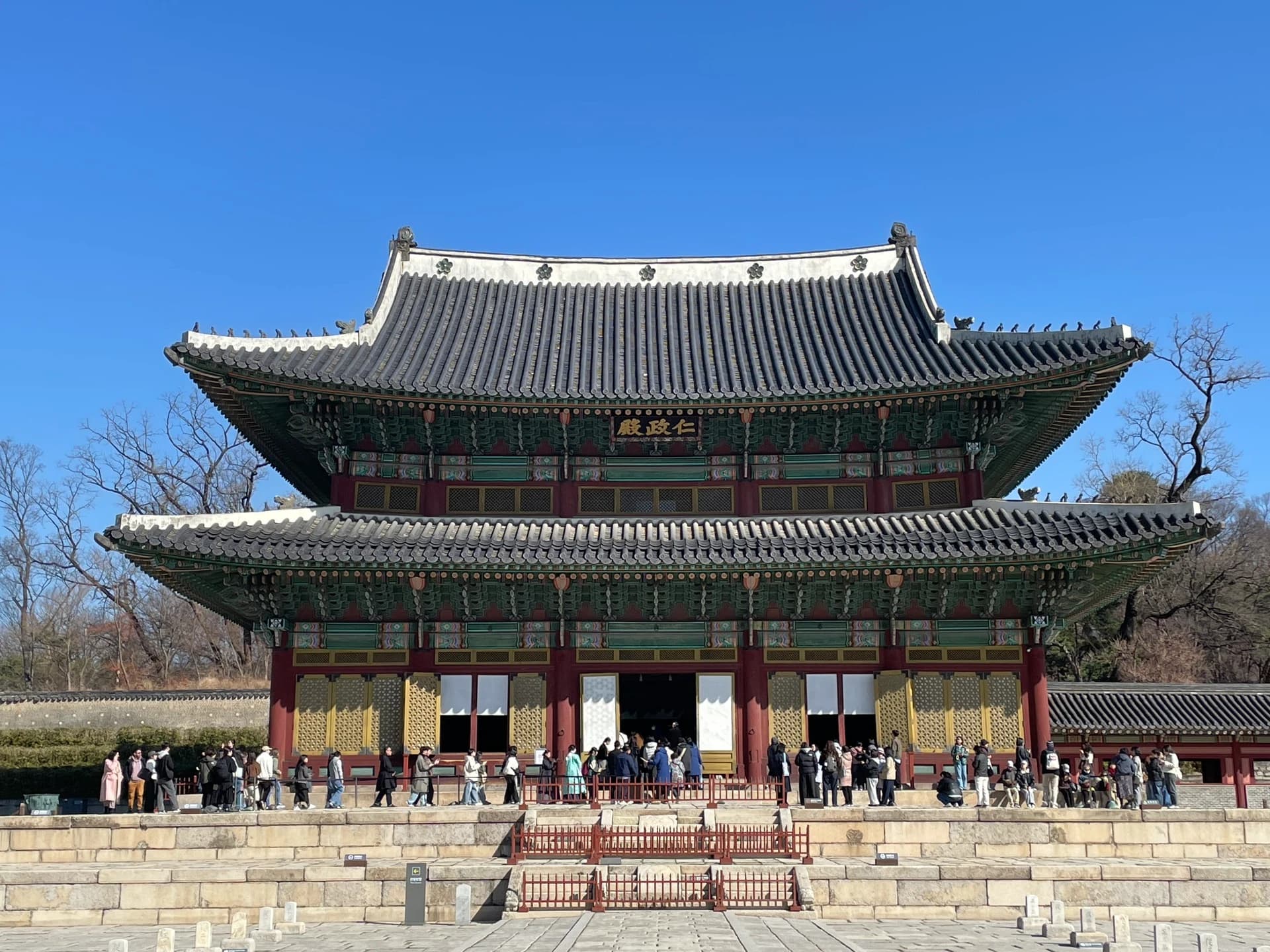
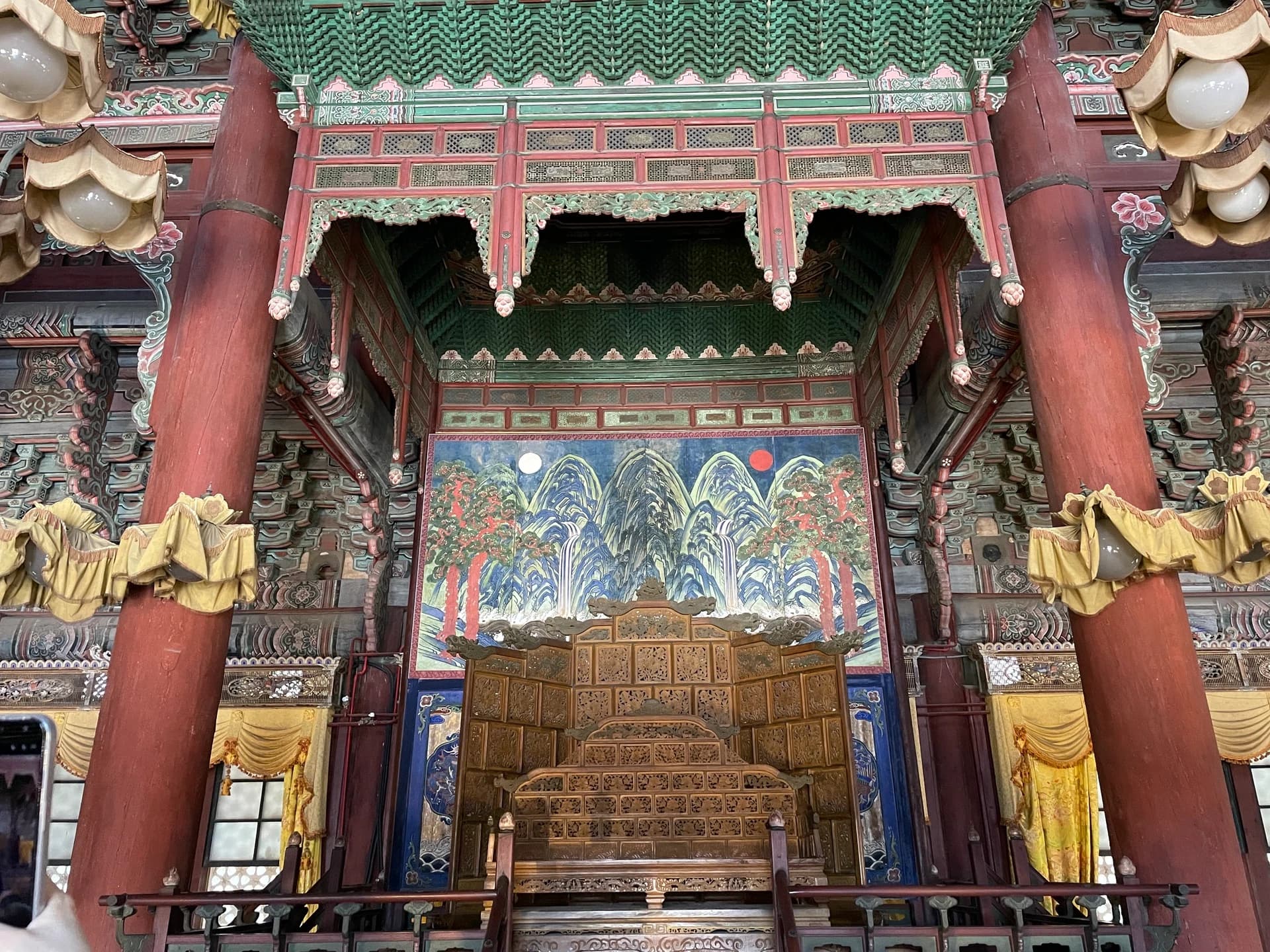
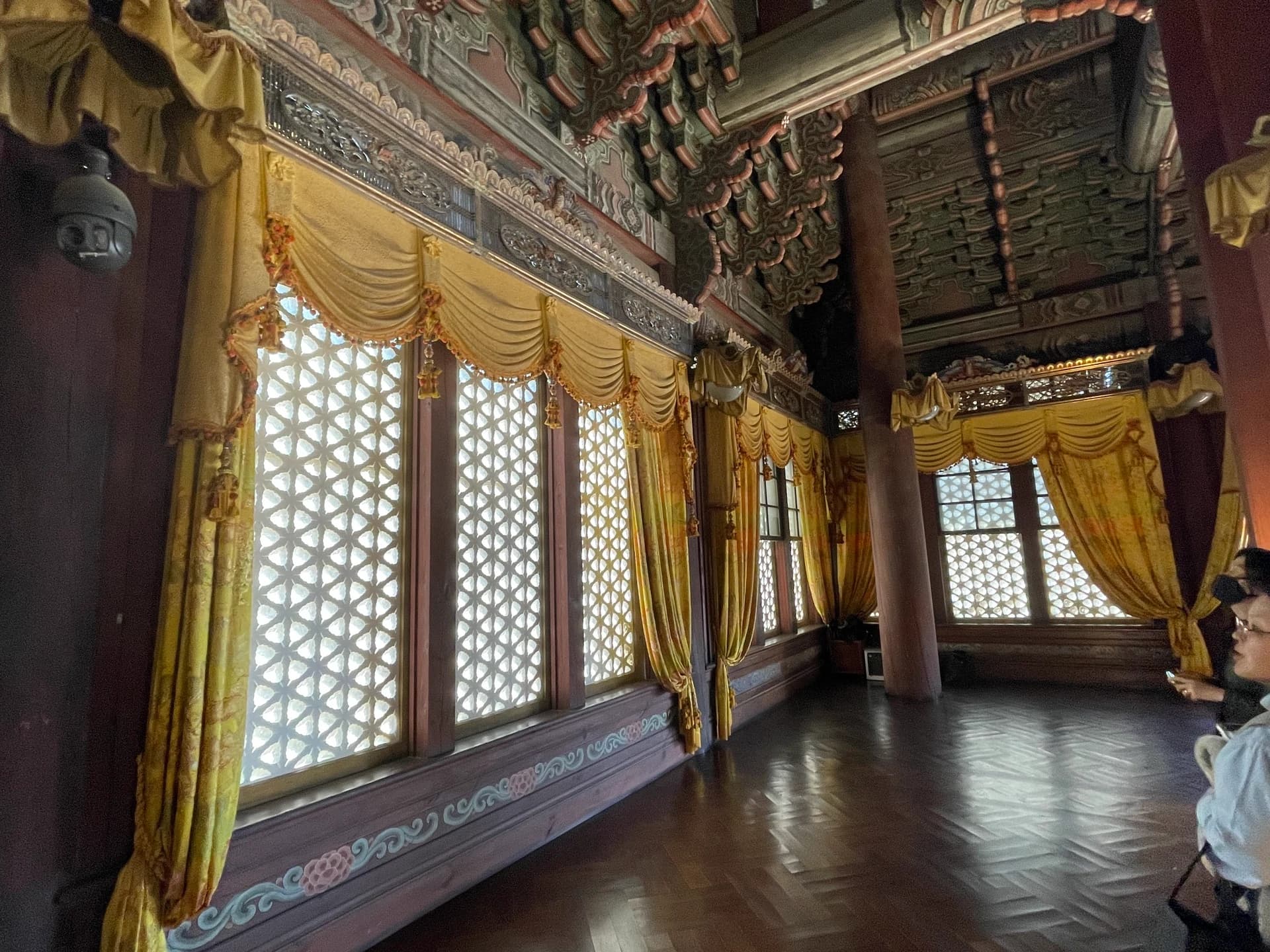
- Injeongjeon Hall at Changdeokgung Palace: The main throne hall remodeled into Western styles inside after Emperor Sunjong moved his residence to Changdeokgung following accession. Inside the traditional wooden building, paper windows were replaced with glass windows and gorgeous curtains, while Western-style electric lights (chandeliers) were installed on the ceiling, and wooden flooring was replaced with yellowish-brown ceramic bricks (Jeondol).
In particular, the main ridge of the building's roof features metallic decorations of five plum blossom (Ihwamun) patterns—the symbol of the Korean Empire's royal family—serving as a site showing the lonely transitional phase of a fallen imperial family where traditional Eastern palaces and modern Western culture awkwardly mixed.
- Huijeongdang Hall at Changdeokgung Palace: The king's unofficial office and living space, whose interior was remodeled into a complete Western-style parlor by Japan during 1920 reconstruction. In particular, the building's front features a protruding Western-style stone porch (drop-off pavilion) allowing Emperor Sunjong's royal vehicle (automobile) to drive directly under the roof to board and alight without getting rained on, possessing a unique exterior letting you vividly observe the turbulent modernization site where new automobiles drove in and out of traditional Joseon palaces.
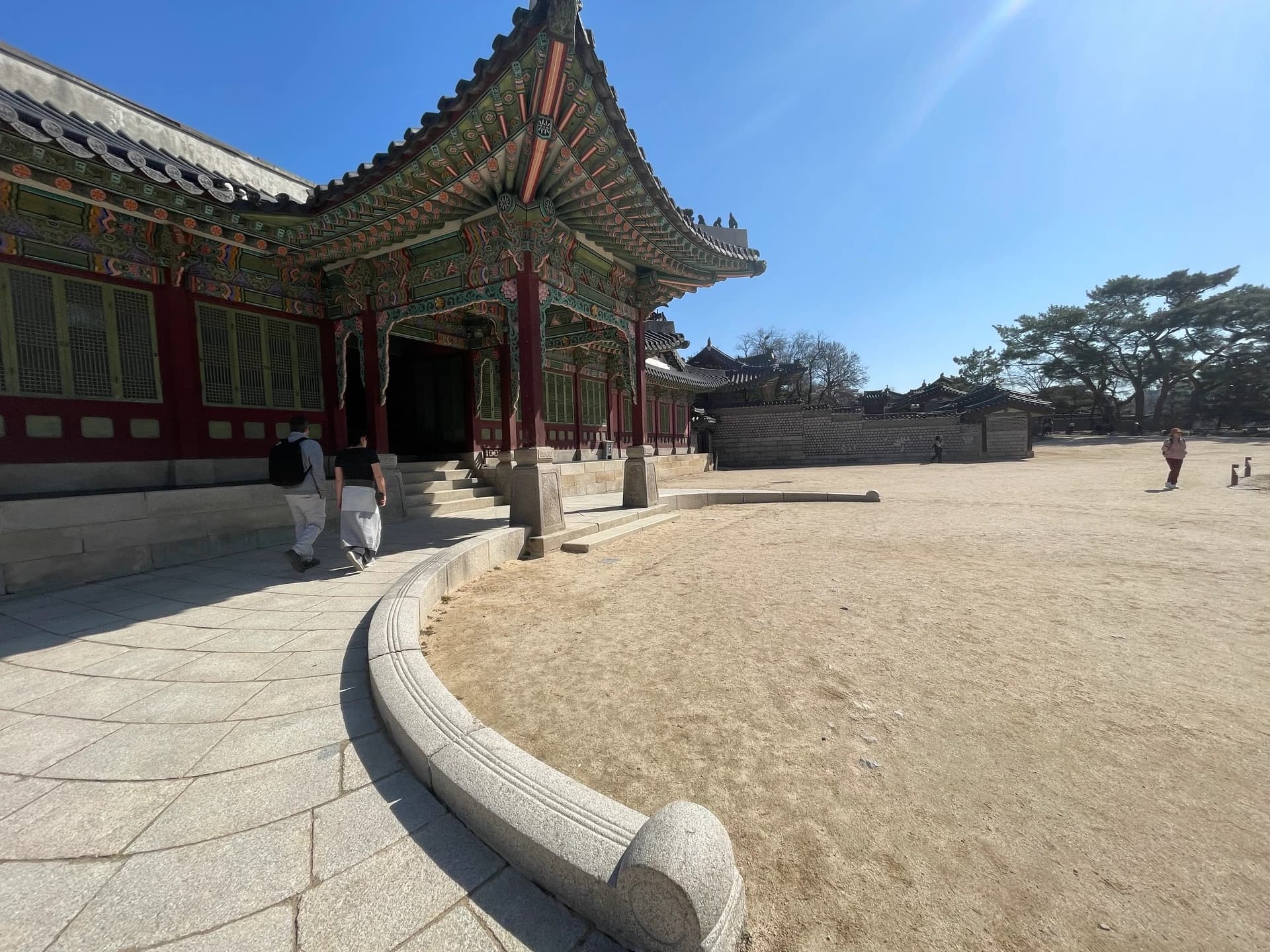
- Nakseonjae at Changdeokgung Palace: The final residence of the last imperial family members of the Korean Empire, including Crown Prince Yeongchin and Lady Yi Bang-ja, who lived and passed away here after returning to Korea. It is a historic site where you can retrace the pathetic and lonely life trajectories of the fallen final imperial members amidst the beauty of understated Hanok architecture.
- Remnants of Byeoksu Sanjang in Ogin-dong (Gate Pillar of Yun Deok-yeong's House): The sole remaining stone gate pillar (Munju) of 'Byeoksu Sanjang', a grand 20,000-pyeong luxury mansion built by pro-Japanese collaborator Yun Deok-yeong as a reward for selling the country. You can witness the vain greed of a traitor by looking at the pillars and stone foundations quietly embedded in the alleyway walls of Seochon.
- Hongneung and Yureung Tombs in Namyangju (Hongyureung): The resting place of Emperor Gojong and Emperor Sunjong, constructed following Chinese imperial tomb systems in accordance with the Korean Empire's imperial status, differing from existing Joseon royal tomb styles. It is great for reflecting on the end of an era while viewing unique stone statues guarding the tombs, such as elephants, giraffes, and lions.
The End of 500 Years of the Joseon Dynasty and Korean Empire, and a New Beginning:
- Sorrowful End of a 518-Year Dynasty: The Joseon Dynasty founded by Taejo Yi Seong-gye in 1392 and the following Korean Empire vanished into history after 518 years, suffering the tragic loss of national sovereignty known as Gyeongsul Gukchi in 1910. Amidst strict foreign aggression and the greed of internal traitors, the royal family was demoted and sovereignty was brutally plundered.
- Transformation Into a Democratic Republic Where Citizens Are Masters: However, the tragic end of the dynasty did not mean the end of our history. Thanks to the tearful dedication of numerous independence activists who fought lifelong to reclaim the country, our people passed through the establishment of the Provisional Government of the Republic of Korea in 1919 to finally achieve liberation, proudly continuing historical threads today as 'the Republic of Korea, a democratic republic where citizens are the masters' rather than a king's country.
- Lessons Taught by Heritage: Grand royal tombs and old palace sites like Nakseonjae soaked in sorrow are not mere old ruins. They serve as vivid historical education sites teaching us never to forget the painful history of losing our country and reminding us what lofty sacrifices underlie the freedom and sovereignty we enjoy today.
Recommended Guides
Korean History and Major Historic Sites Travel Guide
Behind-the-Scenes Stories of the Annals of the Joseon Dynasty: Secrets of Kings' Names and Temple Names
Taejo, Taejong, and Sejong: Behind-the-Scenes Stories of the Kings Who Built Joseon's Foundation