This guide introduces the hidden anecdotes of the four kings (Munjong, Danjong, Seojo, and Yejong) who lived through a turbulent period after King Sejong the Great, along with top travel destinations across the country tied to their steps.
(5th King) King Munjong: Unfulfilled Dreams of a Prepared MonarchIntroduces his scientific genius seen in the rain gauge and fire cart, his filial devotion with cherry fruits for King Sejong, and Hyeongneung, where he rests.
King Munjong (reigned 1450–1452) was the eldest son of King Sejong the Great and the 5th king of Joseon. He was the first eldest son born to the official Queen (legitimate firstborn son) since the founding of the dynasty, ascending the throne with unparalleled legal legitimacy. Although his reign was short at only 2 years and 3 months, he spent 29 years as Crown Prince, helping his father King Sejong lead Joseon's golden age as a prepared ruler.
1. Scientific Genius Inherited from King Sejong:
- Although often misunderstood as a frail and sickly king who died young, Munjong was a genius who fully inherited Sejong's talents in scholarship, science, and military affairs. The Cheugugi, world-famous as the first rain gauge, is widely known as an invention of Jang Yeong-sil or King Sejong. However, the person who came up with the actual idea and designed its detailed specifications was Munjong during his time as Crown Prince. He also personally designed the 'Munjong Hwacha,' a mobile rocket-launcher cart capable of firing large numbers of Singijeon rocket arrows simultaneously, greatly enhancing Joseon's defense power.
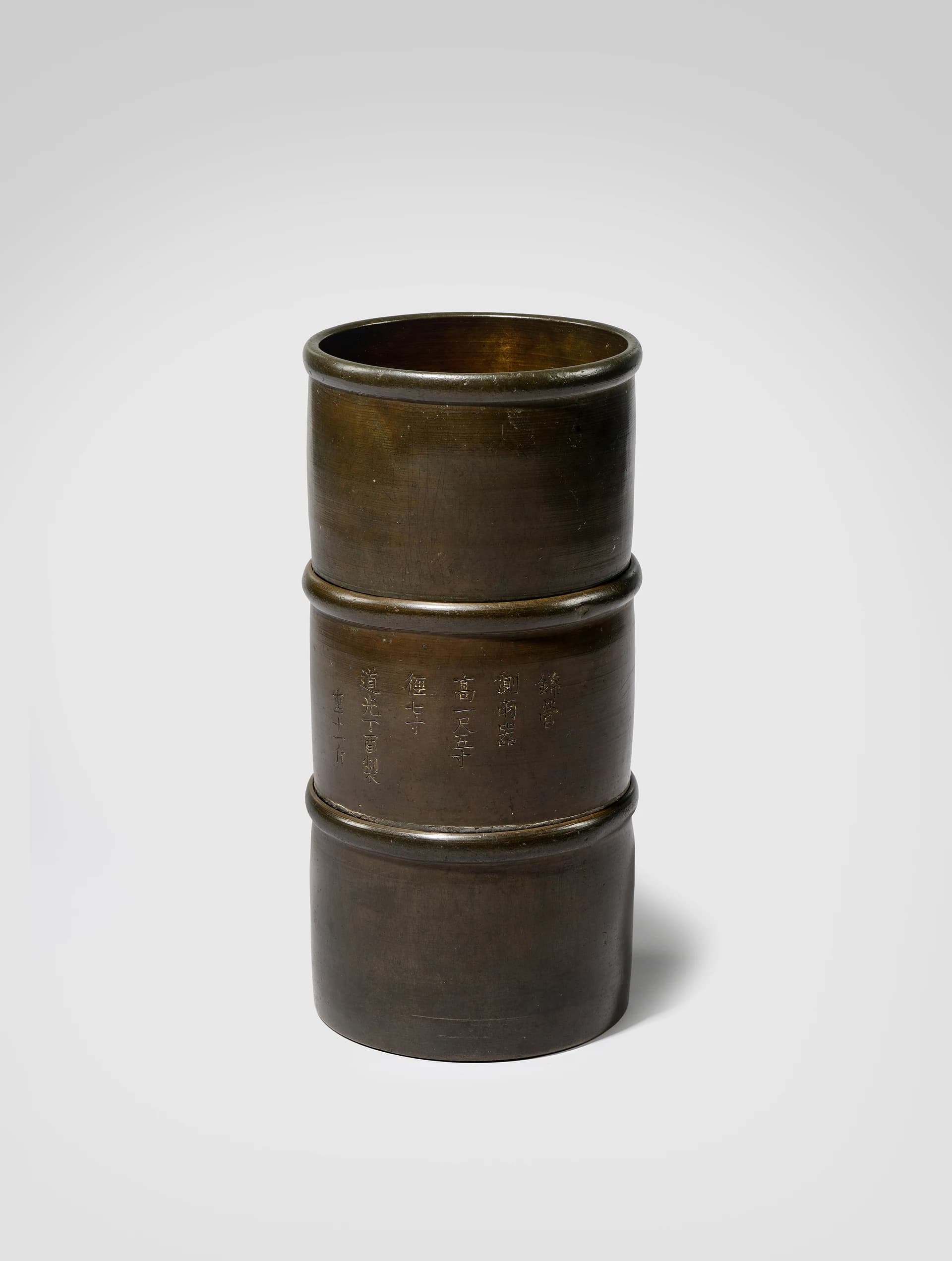
A Weather Miracle 200 Years Ahead of the West: Joseon's Cheugugi Rain Gauge: Invented in 1441 by Munjong during his time as Crown Prince, the Cheugugi is a historic invention that rewrote the history of global meteorology.
- World's First Rain Gauge: The West's first rain gauge was designed in 1639 by Castelli in Italy, but Joseon's Cheugugi began operating 198 years (approx. 200 years) earlier as a precision rain gauge.
- Scientific Match with Modern Standard Specs: The size specifications recorded in the Annals of King Sejong (diameter of approx. 15cm) match modern meteorological standards (approx. 14cm to 20cm) with remarkable precision and minimal error. It was a great 15th-century achievement that scientifically minimized water evaporation and rain-splashing physics.
2. Health Decline Caused by Extreme Filial Duty and Early Passing:
- Munjong suffered from chronic boils starting from his time as Crown Prince and was never in fully good health. In that condition, he went through mourning periods for his mother Queen Soheon and father King Sejong back-to-back (6 years in total), conducting state affairs without resting his body. Deep grief following Confucian rites combined with overwork caused his health to collapse completely. He passed away at the young age of 39, just 2 years and 3 months after ascending the throne. His premature death marked the beginning of a tragic era for his young son, King Danjong.
3. Behind-the-Scenes Story in the Annals: Cherries Handpicked by the Crown Prince:
- Munjong was famous for his deep filial piety. Knowing that his father King Sejong loved the cherries growing in the palace backyard, Crown Prince Munjong handpicked ripe cherries himself every year to place them on his father's dining table. Whenever King Sejong ate the cherries, he boasted to his ministers, "These cherries were picked and offered by the Crown Prince himself, so they taste far better than any cherries sent from outside," rejoicing in his eldest son's deep filial devotion.
4. Recommended Destination: Hyeongneung at Donggureung in Guri, Gyeonggi-do
- Hyeongneung, located within Donggureung in Guri, Gyeonggi-do, is the joint tomb of 5th King Munjong and his wife, Queen Hyeondeok. Strolling along the quiet forest paths, it is a peaceful historical site to reflect on Munjong's intellect and warm filial love before his life was cut short.
(6th King) King Danjong: The Tragic Monarch Resting in YeongwolIntroduces local legends surrounding Sukju-namul sprouts and Meokgol pears, tragic traces at Cheongnyeongpo and Jangneung, and the sorrowful life of his wife, Queen Jeongsun.
King Danjong (reigned 1452–1455) was the only son of Munjong, ascending the throne at the young age of 12 as the 6th king of Joseon. Following his father, he was a symbol of bright legitimacy—the first and only instance in Joseon history where the throne passed from legitimate eldest son to legitimate eldest son for two consecutive generations. Despite this strong legitimacy, he was deposed by his uncle Grand Prince Suyang (King Seojo) and exiled to Yeongwol, meeting a tragic end as Joseon's most sorrowful king.
After being deposed, he was stripped of his royal status and demoted to 'Nosangun' (Prince Nosan). Because of this, historical records of his reign were demoted for a long time and titled Nosangun Ilgi (Diary of Prince Nosan) instead of official Annals. However, 240 years later during the reign of King Sukjong (1698), he was officially reinstated as King Danjong, and the records were restored as the Annals of King Danjong (Danjong Sillok).
1. His Uncle's Bloody Coup: From Hwangpyo Jeongsa to the Death List:
- When young Danjong ascended the throne, powerful ministers held control over appointing palace officials. When selecting officials, ministers placed yellow paper tags ('Hwangpyo') over their recommended names and presented them to the king, forcing young Danjong to approve whoever had the yellow tag attached. This system was called 'Hwangpyo Jeongsa'. Watching this, his uncle Grand Prince Suyang (King Seojo) claimed that "ministers are ignoring the king and abusing power," launching a brutal coup in 1453 where he eliminated powerful ministers and seized control. This was the blood-stained coup known as Gyeyu Jeongnan. Young Danjong became a powerless puppet king before losing his throne and being sent into lonely exile.
- Han Myeong-hoe and the Secret Death List (Salsaengbu): On the night of Gyeyu Jeongnan, Han Myeong-hoe, the key strategist and right-hand man of Grand Prince Suyang, controlled the palace gate holding a secret notebook containing lists of ministers marked for 'Death' (殺) or 'Life' (生). Warriors hidden behind the gate struck down incoming ministers with iron maces according to signals from Han Myeong-hoe. The modern Korean term 'Salsaengbu' (Death List) originates from this historic coup.
Shin Suk-ju, King Sejong's Cherished Scholar: From Favorite to Icon of Betrayal and the Origin of 'Sukju-namul':
- Accompanying Suyang on a Mission to Ming: The Start of Betrayal: Shin Suk-ju was originally a genius scholar at Jiphyeonjeon whom King Sejong cherished so much that he personally covered him with his own dragon robe when he fell asleep studying late at night. On his deathbed, King Munjong also held his hand, asking him to take good care of young Danjong. However, in 1452 prior to Gyeyu Jeongnan, when Grand Prince Suyang was sent to Ming China as an envoy (Saeunsa), Shin Suk-ju accompanied him as a recording officer, intertwining their fates. During the long journey, they engaged in deep conversations; Suyang admired Shin's diplomatic knowledge, and Shin became fascinated by Suyang's leadership and charisma, becoming lifelong allies. This journey served as the catalyst for Shin turning his back on his loyalty to King Sejong and joining Seojo's coup without hesitation.
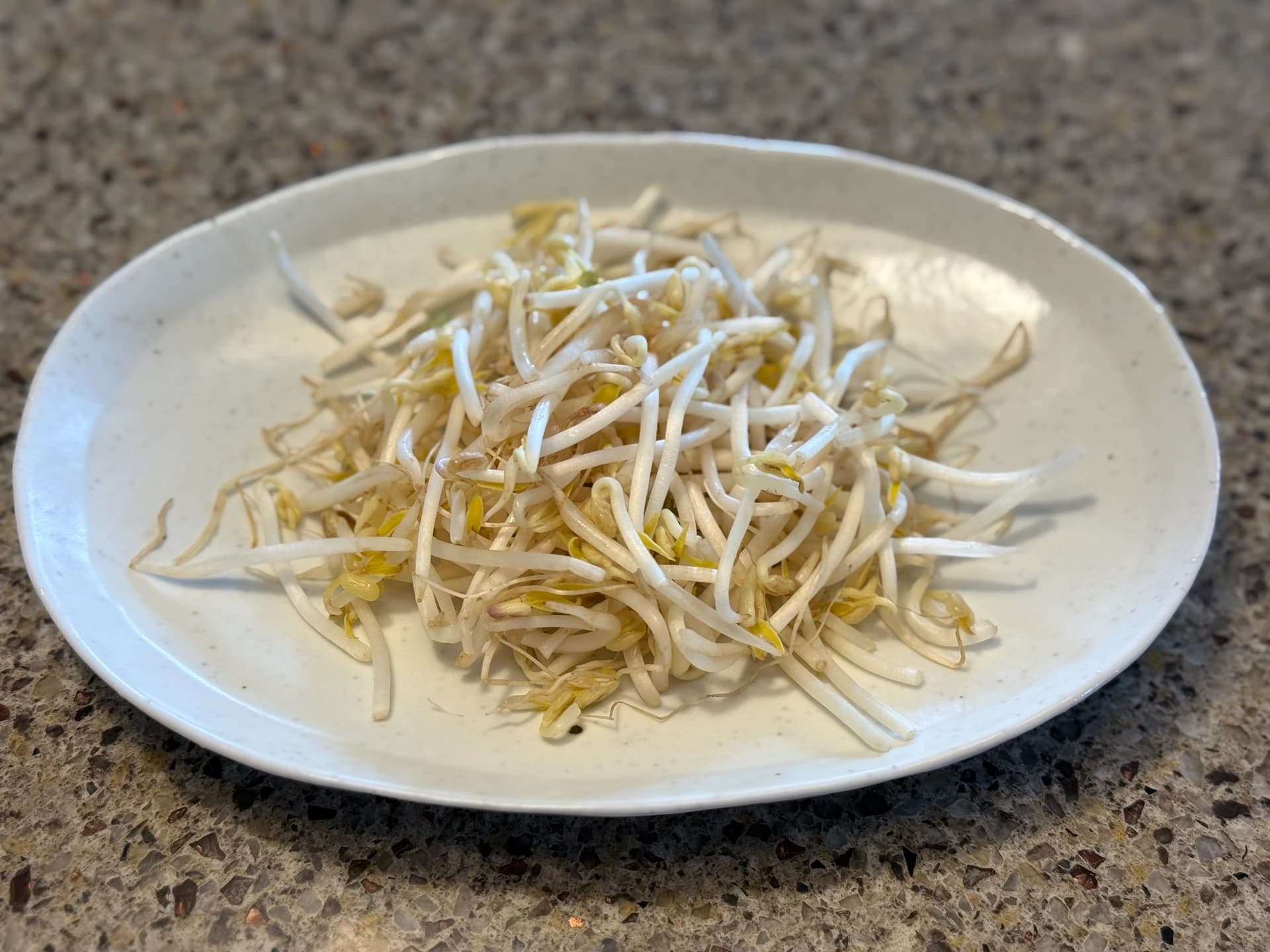
- Easily Spoiled Loyalty: The Origin of Sukju-namul (Mung Bean Sprouts): When Gyeyu Jeongnan broke out, Shin Suk-ju broke his promise to fellow scholars (the Six Martyr Ministers), abandoning Danjong to become Seojo's closest advisor and rising to Chief State Councillor. The public deeply resented Shin Suk-ju for throwing away his loyalty. When people noticed that mung bean sprouts raised in fields spoiled easily when temperatures rose slightly, they began calling mung bean sprouts 'Sukju-namul', mocking "how easily they spoil just like Shin Suk-ju's changing mind." A sorrowful popular story also says that crushing mung bean sprouts when cooking reflected public anger toward Shin Suk-ju.
2. Sorrow That Made Even Fish Weep and the King Who Became a Mountain Spirit:
- Exiled by his uncle to Cheongnyeongpo in Yeongwol, a deep mountain valley in Gangwon-do, Danjong climbed steep rocky mountains every night to recite sorrowful poems, longing for his queen and mother left behind in Hanyang. According to legend, when Danjong wept aloud, fish in the nearby river surfaced with open mouths to cry along with him, and pine trees bowed their heads toward Danjong in the wind.
- Legend of the Taebaeksan Mountain Spirit: When Danjong met a tragic death in Yeongwol, locals believed his soul rode a white horse into Mount Taebaeksan to become the Mountain Spirit of Taebaeksan. This warmhearted legend reflected the people's desire to comfort the wronged young king. To this day, a shrine dedicated to Danjong (Danjong Bigak) is preserved on Mount Taebaeksan where annual memorial rituals are held.
3. The Story of Meokgol Pears and a Minister's Regret:
- Wang Bang-yeon, the official ordered to escort young Danjong to his place of exile and later deliver the poison cup under King Seojo's command, felt heartbroken with grief and guilt. He resigned from his high office and moved to an area near present-day Meokgol Station in Seoul to grow pear trees.
When Danjong was traveling to his exile, he felt thirsty and asked for water. Due to strict guards at the time, Wang was unable to give him even a single drink of water, leaving a deep emotional scar for the rest of his life. Every autumn when harvesting pears, Wang Bang-yeon picked the finest pears and shed tears while offering them toward Yeongwol, Gangwon-do, where Danjong was buried.
These pears became famous in the royal court, marking the origin of Meokgol pears. When the original farming area in Seoul was developed into apartment complexes, farmers relocated to nearby Namyangju-si, Gyeonggi-do, to continue growing them. Today, they remain a famous local specialty of Namyangju.
4. Recommended Destinations: Cheongnyeongpo and Jangneung in Yeongwol, Gangwon-do
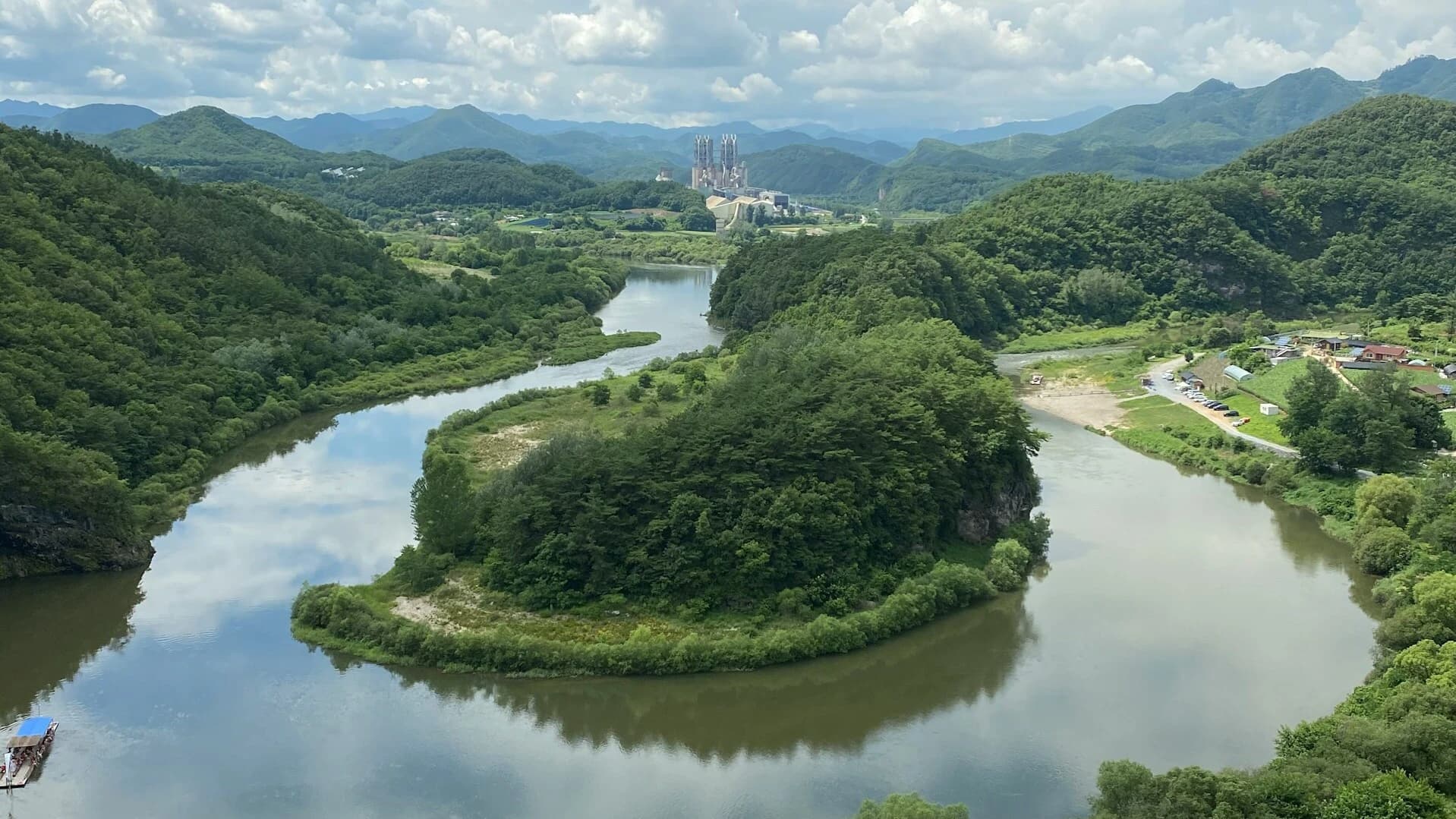
- Cheongnyeongpo: Surrounded by deep river waters on three sides and blocked by steep cliffs behind, it is an island-like prison impossible to leave without a boat. A mysterious pine forest holding tragic history is preserved here.
- Gwaneumsong Pine Tree: A 600-year-old pine tree standing in the center of the forest (Natural Monument). The exiled King Danjong sat on its split branches to rest, looking toward Hanyang while weeping. The tree was named Gwaneumsong because it 'saw' (Gwan) Danjong's sorrowful sight and 'heard' (Eum) his weeping sounds.
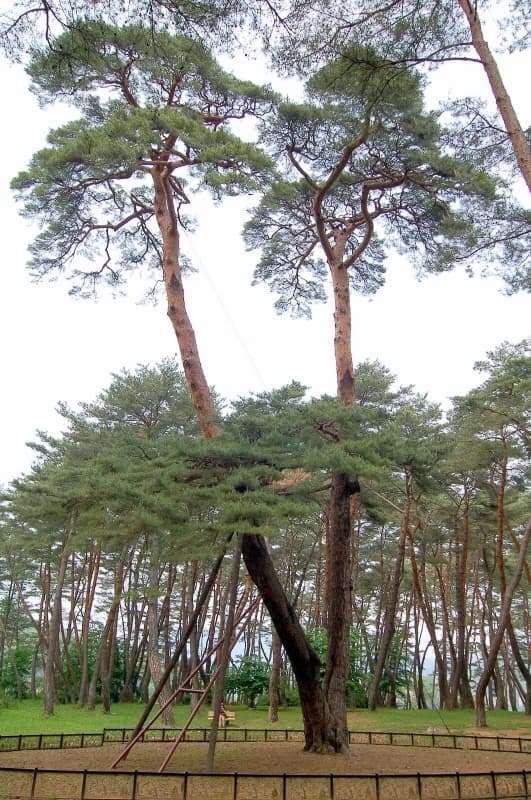
Gwaneumsong, the only pine tree companion that shared Danjong's sorrow ©heritage.go.kr - Nosandae and Manghyangtap: The rocky cliff at the western edge of Cheongnyeongpo is Nosandae. Danjong climbed here to gaze toward Hanyang in sorrow, stacking small stones one by one to build Manghyangtap to express his longing. It remains as Danjong's only physical trace, conveying his deep solitude.
- Pine Trees of Loyalty: Uncannily, pine trees around Cheongnyeongpo and Jangneung do not grow straight up. Instead, they tilt gently toward Danjong's residence and tomb, as if bowing in respect to the young king. Locals have long revered them as Cheongjeol (Loyalty) Trees, treating them as symbols of steadfast loyalty.
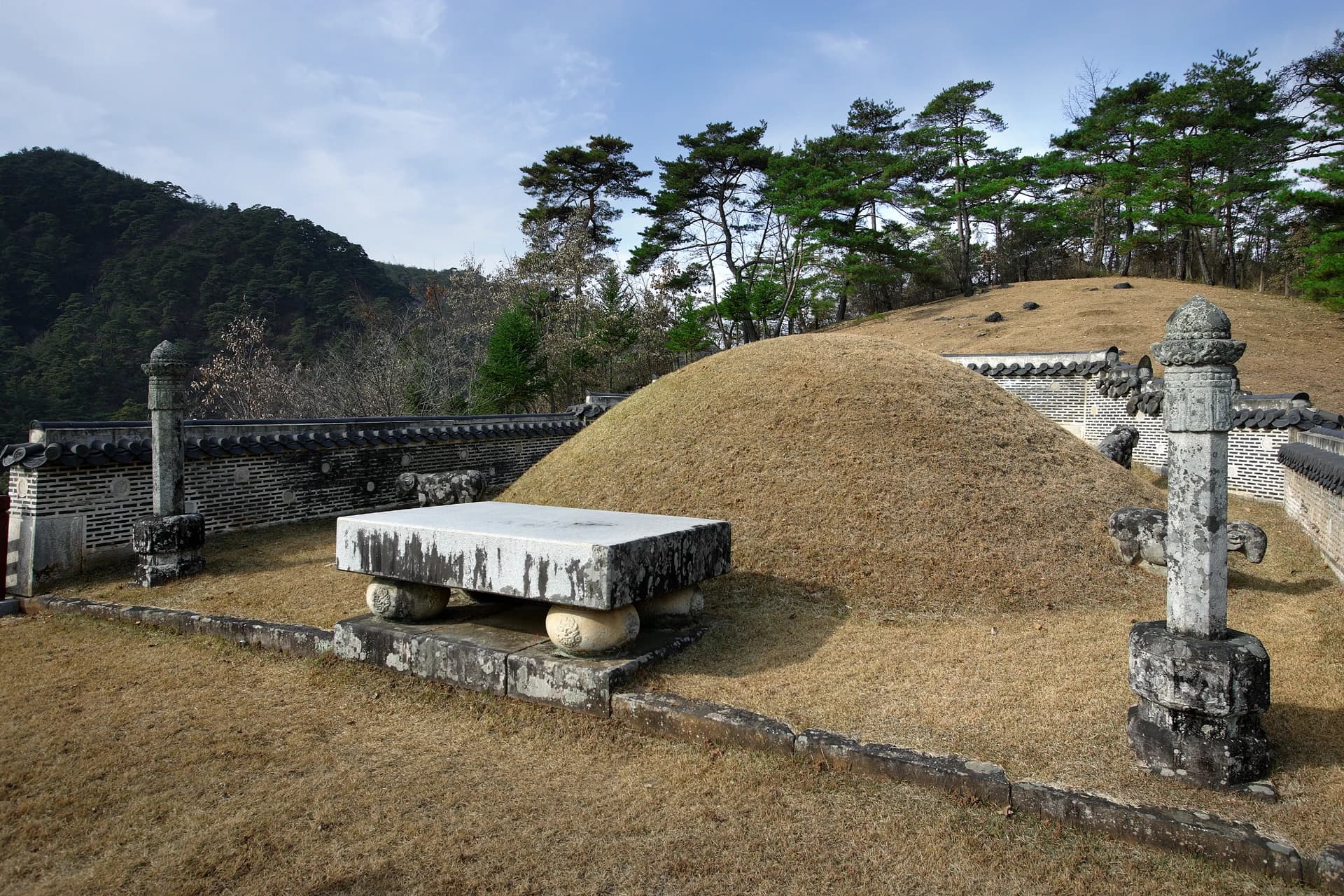
- Jangneung: Despite Seojo's order threatening to execute the family of anyone who touched Danjong's body, Eom Heung-do, a low-ranking official in Yeongwol, risked his life to retrieve the body from the river at night and bury it. Legend says that while searching for a grave site in the frozen winter mountains, he found a spot where a roe deer had been sitting. The snow was melted and the ground was unfrozen only at that exact spot, giving birth to the 'Roe Deer Auspicious Site' legend. Later restored as an official royal tomb, it is a quiet historical spot to reflect on tragic history.
5. Queen Jeongsun's Lifelong Longing for Danjong and Traces in Seoul:
- Queen Jeongsun (Lady Song), Danjong's wife, endured a long life of sorrow until age 82 after her husband passed away at age 17 in Yeongwol. Traces of her emotional life remain preserved across Jongno-gu and Seongbuk-gu in Seoul today:
- Yeongdogyo Bridge: Located at Cheonggyecheon 7-ga, this bridge is where Danjong and Queen Jeongsun bade their final tearful farewell before he left for exile in Yeongwol. It was also called 'Yeong-ibyeol-dari' (Bridge of Eternal Farewell), meaning 'a bridge crossed never to return.'
- Cheongryongsa Temple, Jeong Eop-won Site in Sungin-dong, and Jajudongsaem Spring: After being expelled from the palace, Queen Jeongsun stayed at Cheongryongsa Temple, a Buddhist nunnery at the foot of Naksan Mountain, praying for Danjong's soul. Uhwaru Pavilion inside the temple grounds preserves the spot where the royal couple spent their final tearful night together. At the site of Jeong Eop-won (present-day Sungin-dong) where she lived, King Yeongjo later erected a memorial pavilion. A short distance away along the valley lies Jajudongsaem Spring. Legend says that when Queen Jeongsun dyed fabrics for a living and laid them on rocks, the spring water flowed over them, naturally dyeing the cloth a beautiful purple shade.
- Dongmangbong Peak and Dongmangjeong Pavilion: Every morning and evening, Queen Jeongsun climbed the mountain peak behind the temple to gaze east toward Yeongwol, weeping for her husband. The peak was named 'Dongmangbong' (Peak Looking East), and Dongmangjeong Pavilion stands on top to commemorate her.
- Women's Market in Front of Dongmyo (Geumnam Market): When Queen Jeongsun made a living dyeing purple fabrics, local women established a women-only market near Dongmyo (Geumnam Market/Women's Market) outside the court's view to share vegetables and food, quietly supporting her livelihood in a warm display of solidarity.
- Sareung Tomb in Namyangju: The tomb where Queen Jeongsun rests after living a life of devotion longing for her husband. It was named Sareung using the character 'Sa' (思, thinking/longing) to represent her lifelong longing for Danjong. Located far from Danjong's tomb at Jangneung in Yeongwol, the two could not meet even in death. Touched by sadness, pine trees around Sareung also tilt their branches east toward Yeongwol where her husband rests, creating a sorrowful connection with the pine trees of Jangneung.
Yeongwol Danjong Cultural Festival and the Official Funeral 550 Years Later:
- An Official Funeral Held 550 Years Later: To resolve Danjong's tragic sorrow, Yeongwol-gun and historians conducted historical research to recreate royal funeral rites and host an official royal funeral for King Danjong in 2007, 550 years after his death.
- Festival Details: The 'Danjong Cultural Festival' is held annually on the last weekend of April (Friday to Sunday) around Jangneung and the Donggang River in Yeongwol-gun. Hundreds of participants wear traditional Joseon clothing to carry a royal bier in the Danjong Royal Funeral Procession, offering a grand historical event.
(7th King) King Seojo: A Bloody Coup and Iron-Fisted RuleIntroduces the loyalty of the Six Martyr Ministers who sought Danjong's reinstatement, the compilation of Gyeongguk Daejeon, the Odaesan legend tied to Seojo's skin disease, and stories of Gwangneung.
King Seojo (reigned 1455–1468) was Munjong's younger brother and Danjong's uncle (Grand Prince Suyang), who seized the throne through a bloody coup. Although criticized morally, he was a powerful ruler who established the nation's legal foundation.
1. The Six Martyr Ministers (Sayuksin) and a Betrayal:
- The secret plan to restore the dethroned King Danjong was the Danjong Reinstatement Movement (1456). Six ministers, including Seong Sam-mun and Bak Paeng-nyeon, planned to eliminate Seojo at a palace banquet. However, the plan was delayed when weapon-bearing guards were suddenly canceled from entering the banquet hall.
- Anxious over the delay, co-conspirator Kim Jil betrayed the group and reported the plot. Following this leak, Seong Sam-mun, Bak Paeng-nyeon, and others were arrested, tortured, and executed; they are remembered as the 'Sayuksin' (Six Martyr Ministers).
- Even under severe torture, they refused to yield. Seong Sam-mun mocked Seojo by calling him 'Nari' (a lower title) instead of King, leaving his official government salary untouched in his room to express opposition. Bak Paeng-nyeon avoided using the character for 'subject/servant' (臣) in his written reports to Seojo, replacing it with subtle brushstrokes forming the character 'Great' (巨). When Seojo confronted him in anger, Bak replied, "Re-examine my submitted reports. I never recognized you as king and never wrote the character for subject," surprising Seojo. When this reinstatement plan failed due to betrayal, young Danjong was stripped of his royal title and exiled to Cheongnyeongpo in Yeongwol.
2. Compilation of Gyeongguk Daejeon and Strengthening Royal Authority:
- To maximize royal power, Seojo reformed the bureaucratic system and initiated the compilation of Gyeongguk Daejeon, the foundational code of law serving as Joseon's constitution, establishing a legal state framework.
3. Severe Skin Disease and His Sister-in-Law's Curse Dream:
- A eerie legend surrounds the cause of Seojo's severe skin disease. Shortly after Seojo exiled his young nephew Danjong to Yeongwol and took his life, Danjong's deceased mother and Seojo's sister-in-law, Queen Hyeondeok, appeared in Seojo's dream.
- Filled with rage, his sister-in-law cursed him, saying, "You brutally killed my son, so your children will not be safe either!", before spitting on Seojo's entire body and disappearing. Waking in shock, Seojo developed severe skin boils starting where the spit touched his skin. Shortly after the dream, Seojo's eldest son (Crown Prince Uigyeong) passed away suddenly from an unknown illness. Seojo's life spent in pain from skin disease was viewed in folklore as retribution for taking his nephew's life.
4. Recommended Destinations: Gwangneung in Namyangju, Gyeonggi-do & Sangwonsa Temple on Mount Odaesan in Pyeongchang
- Sayuksin Historical Park in Seoul: Located in Noryangjin-dong, Dongjak-gu, Seoul, this park houses the shrine and graves of loyal ministers who died trying to restore King Danjong.
- Why There Are 7 Graves for 6 Ministers: The Sayuksin originally refer to 6 ministers (Seong Sam-mun, Bak Paeng-nyeon, Yi Gae, Yu Seong-won, Ha Wi-ji, Yu Eung-bu), but the park contains 7 grave mounds. Originally, only 4 graves were preserved through oral tradition until the park was renovated in the 1970s. Historical re-examination of the Annals recognized the contributions of Kim Mun-gi, a key figure in the reinstatement plan. Adding Kim Mun-gi's memorial grave created 7 graves side-by-side. Overlooking the Han River from Noryangjin Hill, it is a quiet historical spot in Seoul.
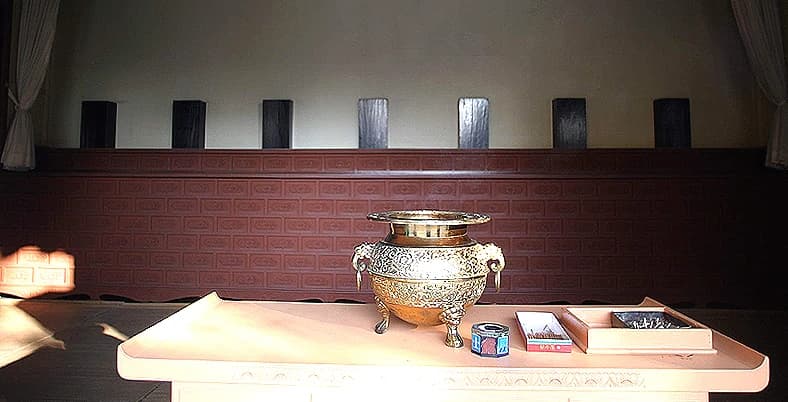
The shrine also houses 7 spirit tablets instead of 6. ©heritage.go.kr - Gwangneung Tomb in Namyangju, Gyeonggi-do, is the royal tomb of King Seojo and Queen Jeonghui. The tomb's interior was designed with stone-free earth chambers to reduce burden on commoners, reflecting Seojo's pragmatic approach. The surrounding forest has been strictly preserved, featuring beautiful tree-lined walking paths.
- Sangwonsa Temple on Mount Odaesan in Pyeongchang, Gangwon-do: A peaceful temple on Mount Odaesan holding legends of Seojo curing his skin disease and a story of a cat saving his life.
- Manjusri Boy Washing His Back: While Seojo was bathing alone in a mountain stream due to his skin disease, he asked a young novice monk to wash his back. After bathing, Seojo requested, "Do not tell anyone you washed the king's body." The boy smiled and replied, "Your Majesty, please do not tell anyone that you met Manjusri Bodhisattva in person," before disappearing into thin air. Afterward, Seojo's skin disease was cured completely. A National Treasure seated wooden statue of Manjusri Boy is preserved inside the temple.
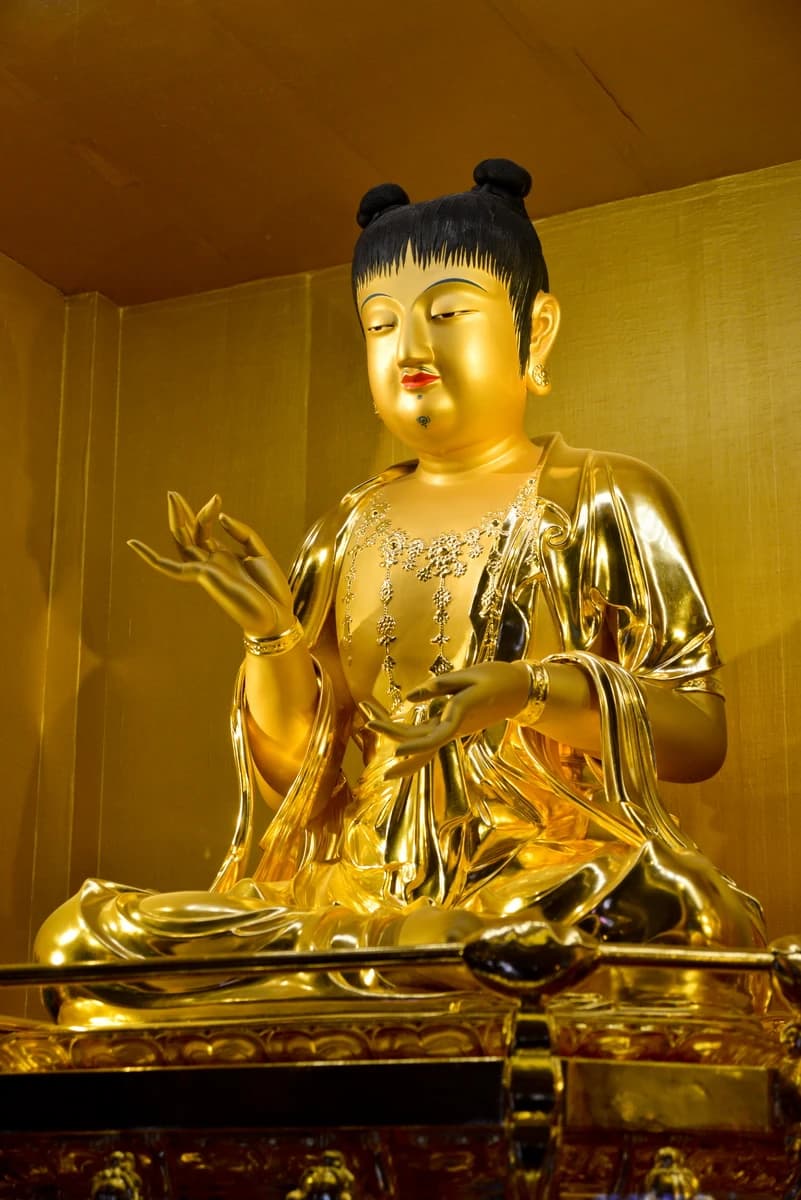
Seated Wooden Manjusri Boy Statue ©Gangwon State, 2018 - Blood-Stained Undershirt (Believed to Have Been Worn by Seojo): In 1984 during regilding work on the Manjusri Boy statue, a soft silk undershirt (Jeoksam) and a written prayer by Seojo's daughter, Princess Uisuk, were found inside the statue.
Some traces resembling blood and pus from an actual skin disease patient remain on the front collar and sleeves. Records show Princess Uisuk offered the statue praying for her father's recovery, and the 15th-century clothing style matches royal garments of the period. Today, it is designated as a Treasure of South Korea. - The Cat's Favor: When Seojo was entering the main hall, a cat grabbed his sleeve to stop him. Upon inspection, hidden assassins were discovered under the floor, saving Seojo's life. In gratitude, Seojo gifted paddy fields to the temple. A marble cat statue remains preserved in front of the main hall today.
Han Myeong-hoe, Seojo's Prematurely Born Strategist: From Gatekeeper to Ultimate Power:
-
Dramatic Rise and Gyeyu Jeongnan: Han Myeong-hoe was born prematurely ('Chilsakdongi'). Failing civil service exams repeatedly in his youth, he failed to obtain an official post until his late thirties, starting as a gatekeeper at Gyeongdeokgung. However, meeting Grand Prince Suyang (King Seojo) through his close friend Kwon Ram changed his life. He compiled the secret death list during Gyeyu Jeongnan, bringing Seojo to the throne as a top contributor.
-
Unrivaled Power Across Three Generations: After Seojo ascended the throne, Han enjoyed total trust, serving as Chief State Councillor three times. He married his two daughters to 8th King Yejong and 9th King Seongjong respectively, wielding authority as royal in-law across three reigns (Seojo, Yejong, Seongjong).
-
Apgujeong Pavilion Built on Power: At the height of his power, Han Myeong-hoe built a luxurious pavilion named 'Apgujeong' along the Han River (present-day Apgujeong-dong, Gangnam-gu, Seoul). Meaning 'laying down worldly power to befriend seagulls', he actually used it for endless luxury and political entertaining. This pavilion site gave rise to the name of present-day Apgujeong-dong, one of South Korea's wealthiest neighborhoods.
-
Severe Posthumous Fate: Bugwan Chamshi: Although he lived in luxury until passing away at an advanced age, historical retribution arrived after his death. During the political purges under Yeonsangun, figures involved in executing Yeonsangun's mother (Deposed Queen Yun) were targeted. Han Myeong-hoe was named guilty posthumously; his grave was dug up, and his remains were decapitated in a punishment called Bugwan Chamshi.
(8th King) King Yejong: A Short Reign and Tragic EraIntroduces the tragic purge of General Nami, Yejong's filial duty leading to an early death, and Changneung at Seoorung where he rests.
King Yejong (reigned 1468–1469) was Seojo's second son, ascending the throne after his older brother Crown Prince Uigyeong passed away early. Although his reign lasted only 1 year and 2 months (14 months), he tried to protect royal authority amidst checks from powerful ministers before passing away at the young age of 20.
1. General Nami's Tragedy and False Treason Charges:
- Shortly after Yejong took the throne, a major political event shook the court. General Nami, a young military hero in his twenties who gained fame suppressing Yi Si-ae's rebellion under Seojo, was arrested and executed on treason charges.
- Yu Ja-gwang, who envied Nami, subtly altered a line in Nami's poem from "if a man cannot conquer the country by age twenty" by changing the character 'conquer' (平) to 'obtain' (得), framing Nami to Yejong as plotting to "seize the country." Under political pressure from court factions, Yejong executed General Nami. His name was cleared years later, and his story survives as a legendary hero's tale in folklore.
Yu Ja-gwang: An Ambitious Figure Who Overcame Status Class Limits:
-
Dramatic Rise as a Concubine's Son: Yu Ja-gwang was born to a high official father and a slave mother. In status-conscious Joseon society, office paths were blocked for concubine sons, but his achievements in suppressing Yi Si-ae's rebellion caught Seojo's attention, leading to rapid promotions to senior third-rank official and meritorious minister status.
-
Purge of General Nami: Early in Yejong's reign, Yu manipulated a poem written by his rival General Nami to frame him for treason, leading to Nami's execution. Gaining power from this event, Yu became remembered as an icon of treacherous ambition.
-
Leading the First Literati Purge (Muo Sahwa): During Yeonsangun's reign, Yu led the Muo Sahwa purge in 1498 to eliminate the Sarim literati faction. He provoked Yeonsangun by claiming Kim Jong-jik's writing criticized Seojo's throne usurpation, executing many Sarim scholars and exhuming Kim Jong-jik's remains for posthumous punishment.
-
Obsession with Power and Tragic End: As Yeonsangun's tyranny worsened, Yu joined the Jungjong Coup to secure power once again. However, his long history of opportunistic framing led to severe impeachment from court ministers, stripping his honors and sending him into exile. He spent his final years blind in exile before passing away.
2. Filial Devotion and Early Passing:
- Yejong showed deep filial piety toward his father King Seojo. When Seojo passed away, Yejong observed strict Confucian mourning rites, eating little food and insisted on fulfilling his mourning duties despite severe boils and swelling on his legs that made walking difficult.
- Neglecting his physical health during harsh mourning rites weakened his immunity, and Yejong passed away suddenly in the palace after reigning 1 year and 2 months at age 20. His sudden death weakened royal power and enabled in-law factions led by Han Myeong-hoe to take control of the court.
3. Recommended Destinations: Changneung at Seoorung in Goyang, Gyeonggi-do & Nami Island in Chuncheon
- Seoorung, a UNESCO World Heritage site in Goyang, Gyeonggi-do, contains Changneung, the joint tomb of Yejong and his second wife, Queen Ansun. Strolling through the hornbeam forest trails of Seoorung offers a quiet historical path to remember King Yejong.
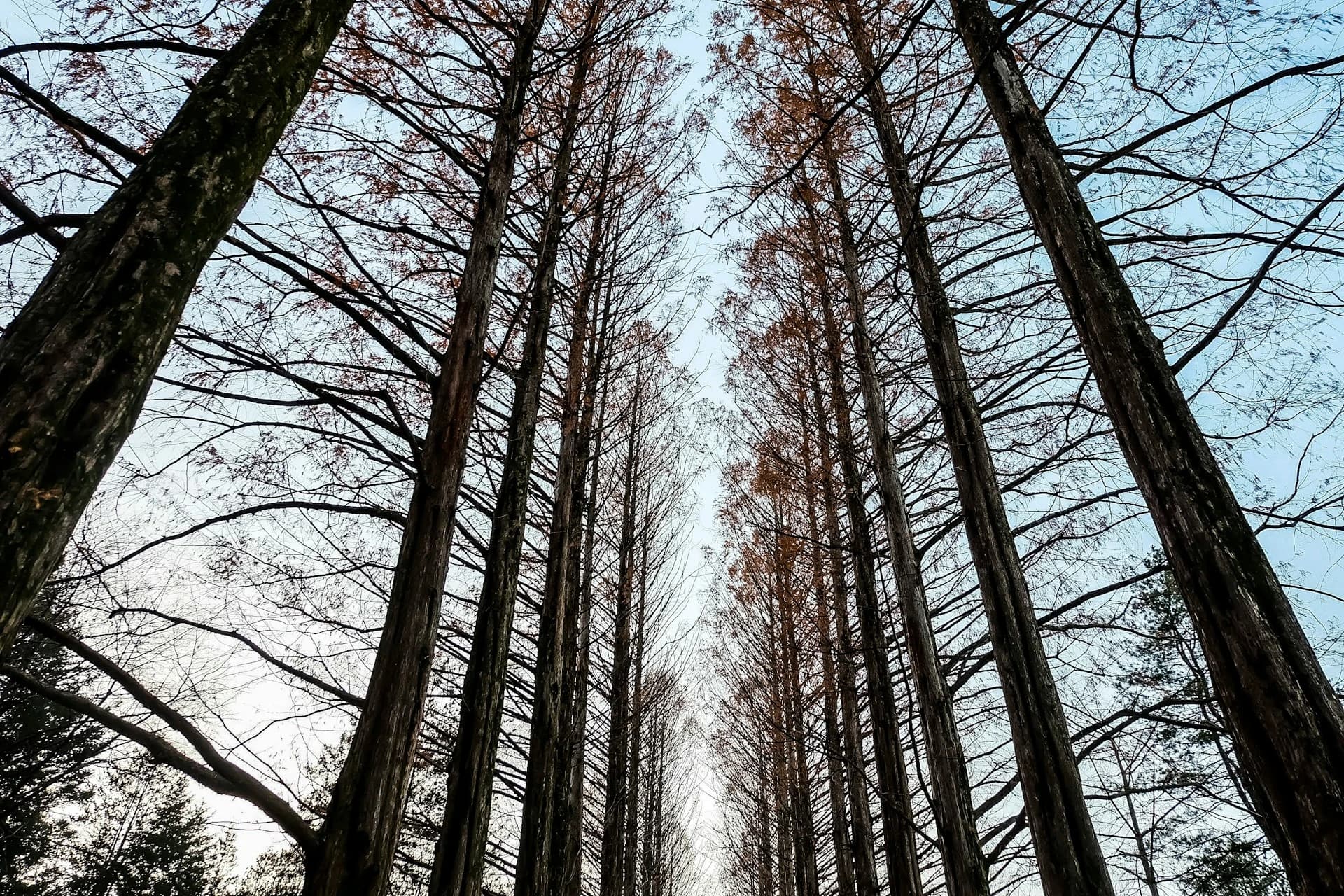
- Nami Island in Chuncheon, Gangwon-do, is a famous tourist destination named after a pile of stones said to be General Nami's grave. While a stone mound originally existed, a memorial grave stands on the site today. Walking along the beautiful Metasequoia lane offers a meaningful stop to remember the young general lost to political rivalries.
Recommended Guides
Seongjong, Yeonsangun, Jungjong, Myeongjong: The Turbulent Royal History of the Mid-Joseon Dynasty
King Seonjo and King Gwanghaegun: The Whirlwind of the Imjin War and Practical Neutral Diplomacy
Injo, Hyojong, Sukjong, and Gyeongjong: Humiliation of Foreign Invasions and the Secret History of Hwankuk Politics