This guide introduces the hidden anecdotes of the four kings (Taejo, Jeongjong, Taejong, and Sejong) who founded and established the foundation of Joseon, along with top travel destinations across the country tied to their steps.
(1st King) Taejo Yi Seong-gye: The Birth of Joseon and Royal TragedyIntroduces the retreat from Wihwado, the capital move to Hanyang, conflicts with Jeong Mong-ju, the Strife of Princes, and the father-son story tied to the silver grass at Geonwolleung.
Taejo Yi Seong-gye (reigned 1392–1398) overcame the chaos of the Goryeo Dynasty to found the Confucian state of Joseon and designated Hanyang (Seoul) as its capital.
1. The Wihwado Retreat and the Birth of Joseon:
- In 1388, General Yi Seong-gye led an army to Wihwado Island on the Yalu River near the Chinese border. However, he decided to stop an unreasonable war and turned his army back to the capital to take power. This decisive event, known as the 'Wihwado Retreat,' marked the end of the Goryeo Dynasty and the starting point of the Joseon Dynasty.
2. Yi Bang-won, Jeong Mong-ju, Hayeoga, and Dansimga:
- Yi Bang-won, the fifth son of Yi Seong-gye, tried to persuade Jeong Mong-ju, a loyal minister who opposed the new dynasty to protect Goryeo. He sent him a metaphorical poem titled 'Hayeoga', suggesting they hold hands and adapt to the new era.
Hayeoga (何如歌)
What matter if it is this way, or that way?
What matter if the vines of Mount Mansu entangle together?
Why not entangle like them and enjoy a hundred years together?
(Meaning: Just as arrowroot vines entangle, why not forget the complicated affairs of Goryeo, join hands to build a new country, and live in prosperity together?)
- Jeong Mong-ju firmly rejected the offer by reciting his famous poem 'Dansimga', stating that his loyalty to his single king would never change, even if his bones turned to dust.
Dansimga (丹心歌)
Though I die and die again, a hundred times over,
Though my bones turn to dust and my soul remains or not,
Could my single-hearted loyalty toward my lord ever fade?
(Meaning: Even if my body dies a hundred times, my bones crush into dust, and my soul vanishes without a trace, my single-hearted loyalty toward the king of Goryeo will never disappear.)
- Seeing that compromise was impossible, Yi Bang-won ordered an attack on Jeong Mong-ju at Seonjukgyo Bridge in Gaegyeong (present-day Kaesong, North Korea). This event destroyed the last supporting pillar of the Goryeo Dynasty, paving the way for the creation of Joseon.
3. Capital Move to Hanyang and the Construction of Gyeongbokgung Palace
- After founding Joseon, Taejo Yi Seong-gye left Gaegyeong, the old capital of Goryeo, and moved the capital to Hanyang (present-day Seoul) in 1394. To build the foundation of the new nation and demonstrate royal authority, he built Gyeongbokgung Palace in 1395 as the primary palace of the dynasty. Gyeongbokgung was designed based on Confucian ideals to pray for the prosperity and great blessings of the new dynasty. Its main halls and the names of Seoul's Four Main Gates were carefully designed by the founding contributor Jeong Do-jeon.
4. Royal Tragedy: The First Strife of Princes
- After Taejo Yi Seong-gye founded Joseon, strong backlash arose when he named his youngest son (Yi Bang-seok), born to his second wife Queen Sindeok, as Crown Prince instead of his older sons from his first wife. In response, his fifth son, Yi Bang-won, who played the biggest role in founding Joseon, launched a coup in 1398 to remove the Crown Prince and his supporting ministers. This event is called 'The First Strife of Princes.'
Two Key Reasons Why Yi Bang-seok Was Chosen as Crown Prince: Taejo Yi Seong-gye's decision to select his youngest son, Yi Bang-seok, over his grown sons involved both personal affection and political strategy.
- Deep Love Between Taejo and Queen Sindeok: Yi Seong-gye deeply cherished his second wife, Queen Sindeok (Lady Kang), who helped and supported him during the founding of Joseon. Queen Sindeok wanted her son on the throne, and Taejo favored her youngest son, choosing him as Crown Prince.
- Jeong Do-jeon's Prime Minister-Centered Political Ideal: The founding minister Jeong Do-jeon dreamed of a nation led by wise prime ministers rather than a single autocratic king. He believed that the gentle and young Yi Bang-seok, who could be educated through Confucian teachings, was far better suited for his political ideals than the grown and ambitious Yi Bang-won.
5. Behind-the-Scenes Story in the Annals: Hamheung Chasa
- Taejo Yi Seong-gye was deeply shocked after witnessing the violent event (the Strife of Princes) where his son Yi Bang-won killed his brothers to seize power. He abdicated the throne and left for his hometown, Hamheung (present-day Hamhung, North Korea). His son Yi Bang-won (King Taejong) sent messengers (Chasa) to reconcile and bring his father back to the capital, but most of them never returned.
- While folklore often describes Taejo shooting every messenger with arrows out of rage, official historical records (the Annals) contain no record of Taejo directly killing messengers. In reality, Taejo detained them from returning to Hanyang, or the messengers were killed along the way by Hamgyong-do rebel forces opposing Taejong. This originated the famous Korean expression 'Hamheung Chasa', used when someone goes on an errand and is never heard from again.
Legend of the Final Confrontation Between Father and Son at Salgotidari Bridge: Unofficial historical books like Yeollyeosilgibut record the dramatic event between father and son along the Han River when Yi Seong-gye returned from Hamheung:
- Salgoti, the Land Where the Arrow Struck: When Yi Seong-gye arrived at the Han River in Seoul, his son Yi Bang-won (Taejong) set up a tent on the fields of present-day Seongdong-gu and held a feast to welcome his father. Spotting his son from afar, Taejo could not contain his anger and shot an arrow directly at Yi Bang-won. However, Yi Bang-won quickly hid behind a thick tent pillar, and the arrow struck deep into the wood. The place was later called 'Salgoti', meaning 'the field where an arrow struck,' which remains today as the origin of Salgotidari Bridge in Seongdong-gu.
- The Cold Iron Mace and Handing Over the Royal Seal: Still angry after the missed shot, Yi Seong-gye tried to strike Yi Bang-won with a hidden iron mace during the banquet. Anticipating this, Yi Bang-won's advisor Ha Ryun advised him not to hand over a cup directly. Yi Bang-won offered a wine cup placed at the far end of a long tray, saving his life once more. Realizing he could not kill his son, Taejo threw his iron mace to the ground and sighed, "This is indeed the will of Heaven!" He then handed the royal seal to Yi Bang-won, officially recognizing his ascension.
6. Recommended Destinations: Gyeongbokgung Palace in Seoul, Geonwolleung at Donggureung in Guri, and Gyeonggijeon Shrine in Jeonju
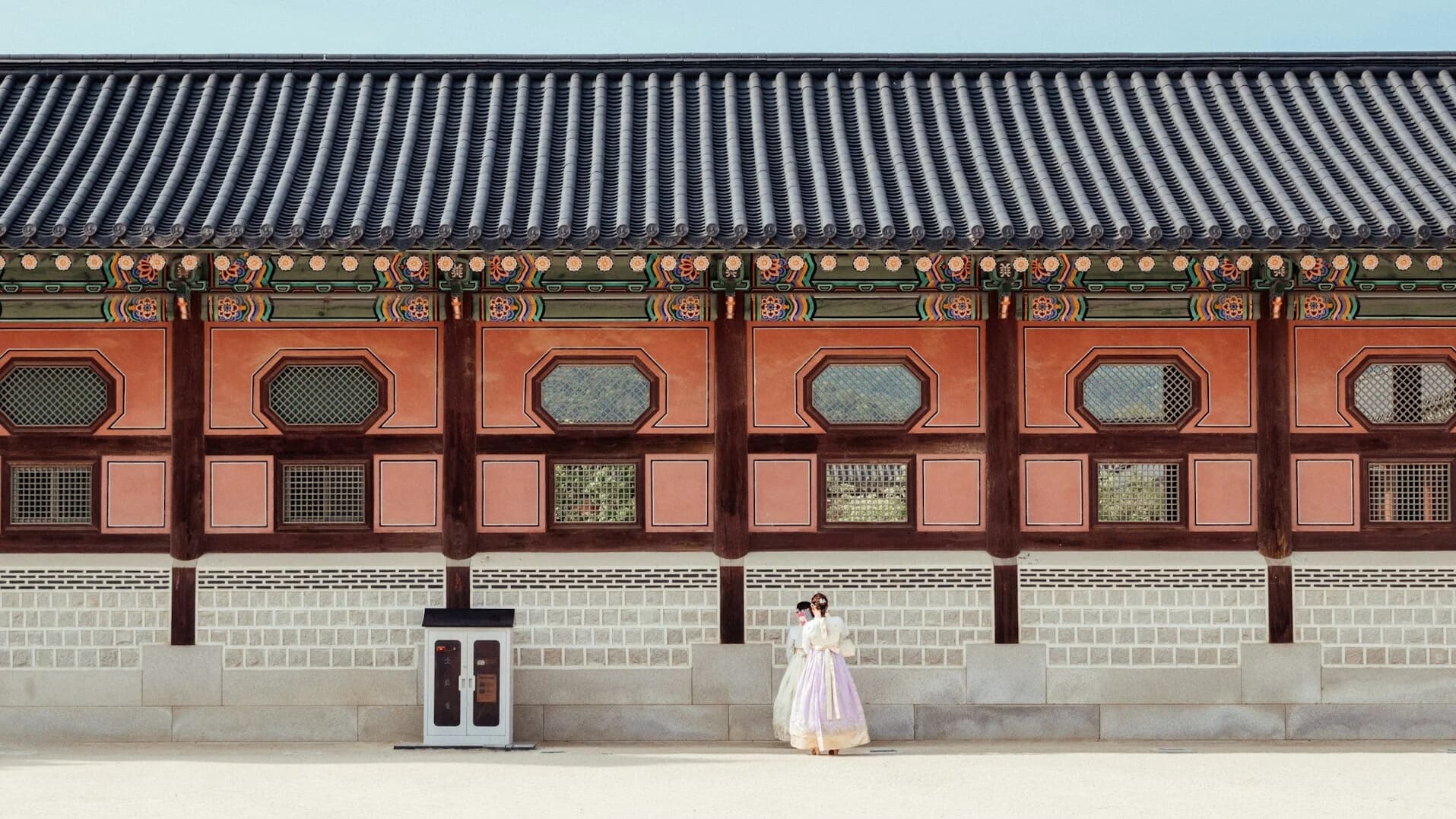
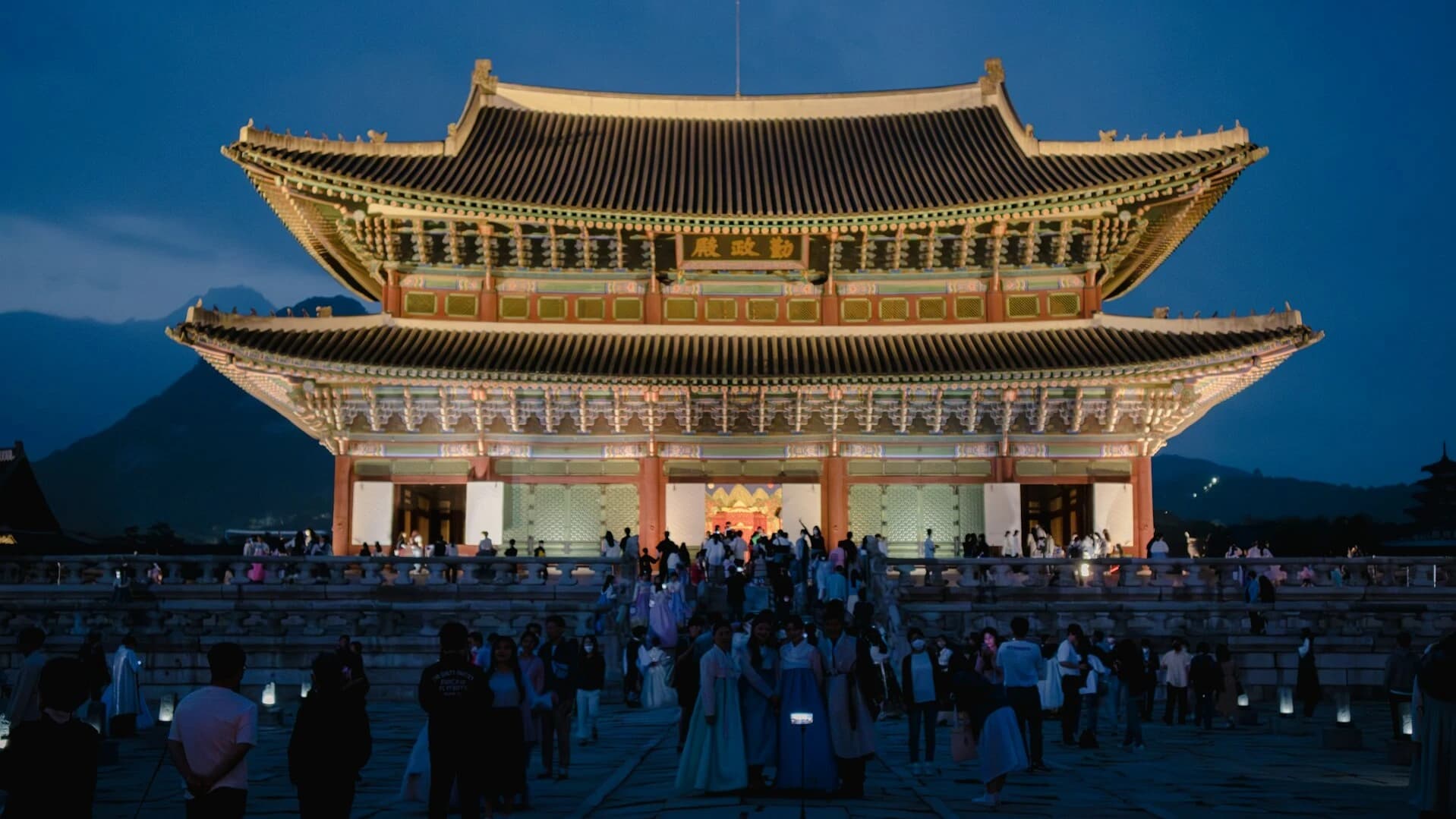
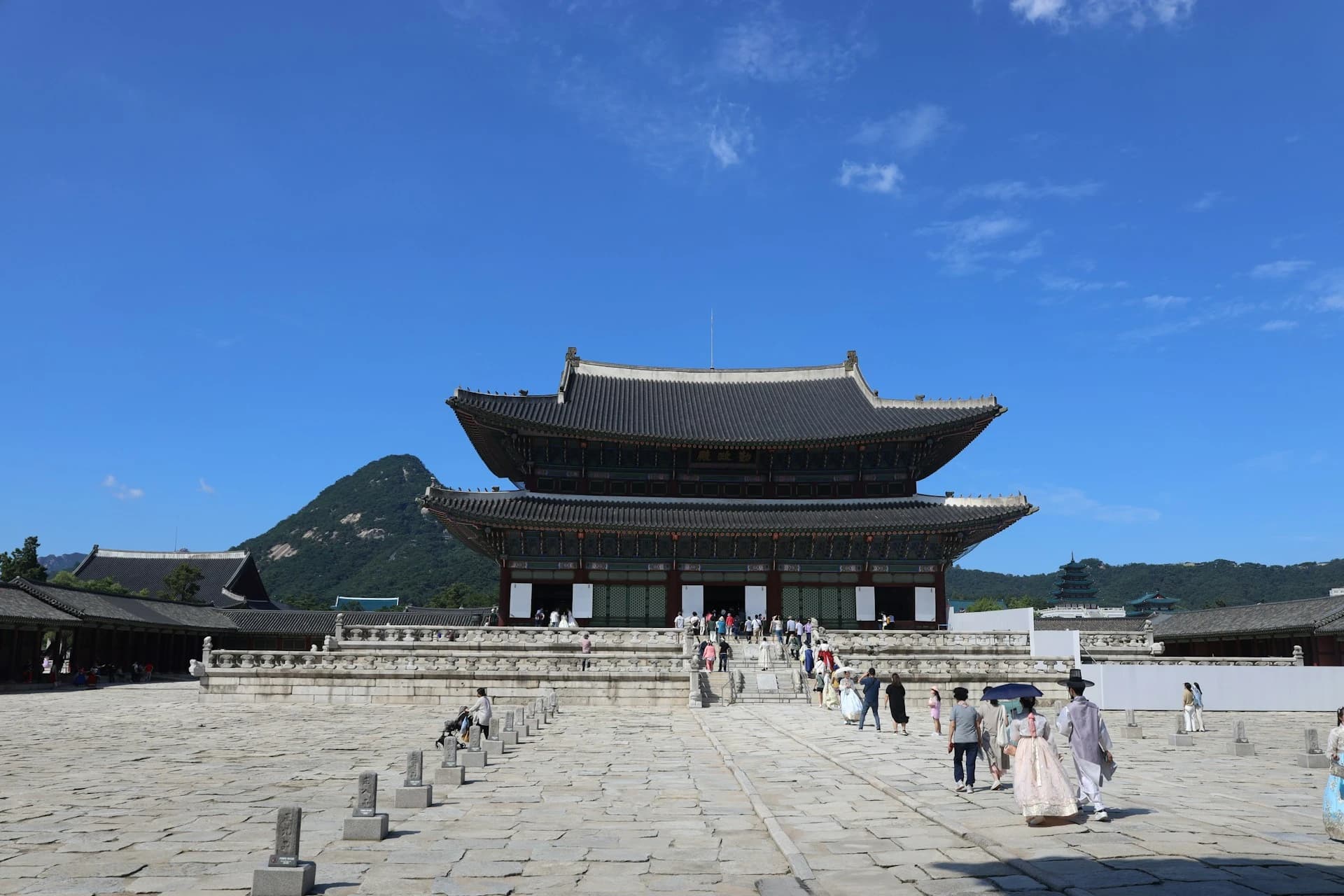
- Located in Jongno-gu, Seoul, Gyeongbokgung Palace is the main royal palace of Joseon built by Taejo Yi Seong-gye when moving the capital. When planning the capital Hanyang, he applied the traditional Confucian layout rule 'Jwamyo Usa' (Ancestral Shrine on the Left, Altar on the Right). Based on the king facing south from the palace, Jongmyo Shrine (ancestral shrine) was placed on the left (east), and Sajikdan Altar (altar for land and grain gods) was placed on the right (west). Strolling past Gyeonghoeru Pavilion and Geunjeongjeon Hall offers visitors a firsthand look at the Confucian design aesthetic of the Joseon royal family.
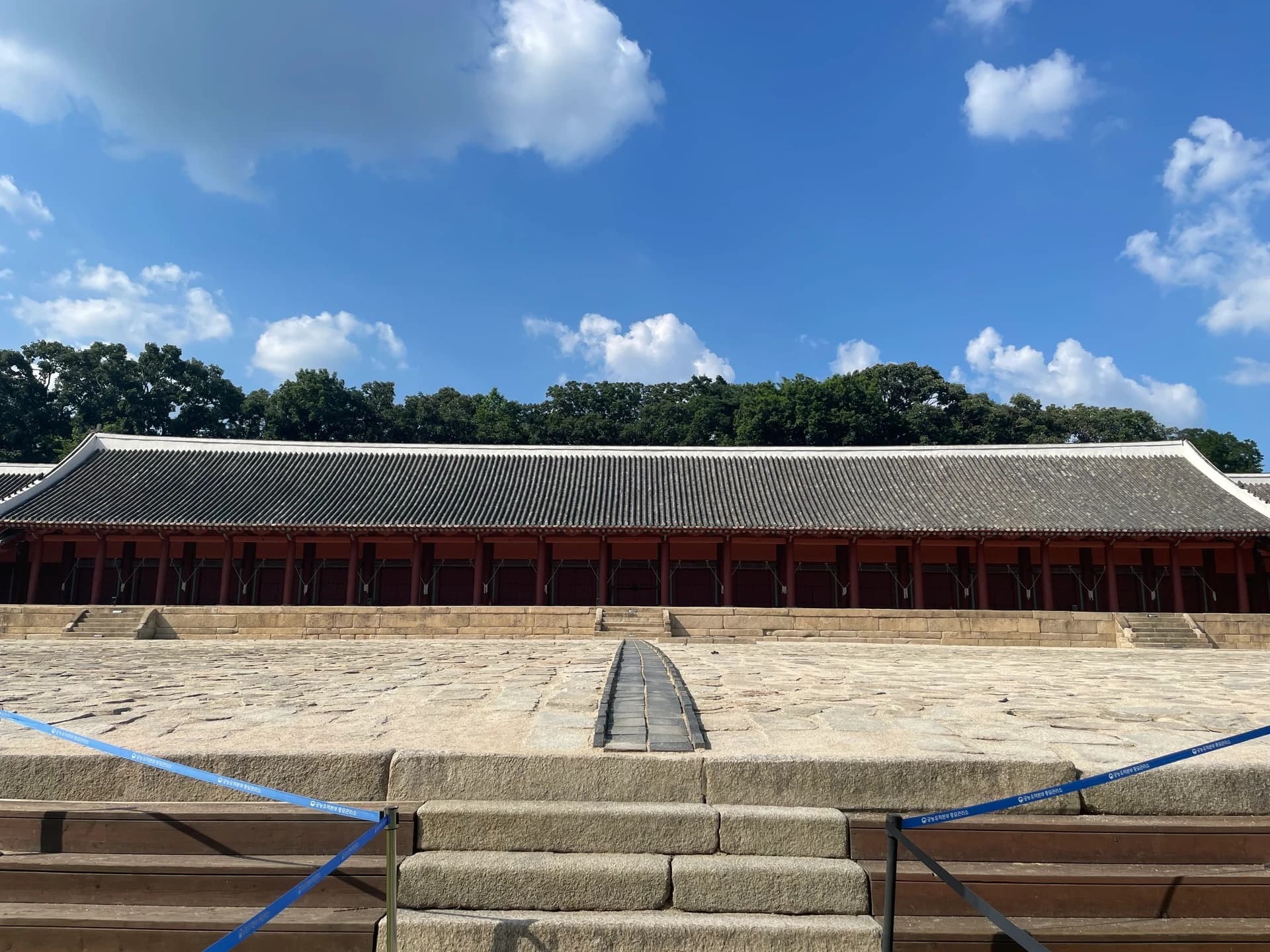
 1 / 3
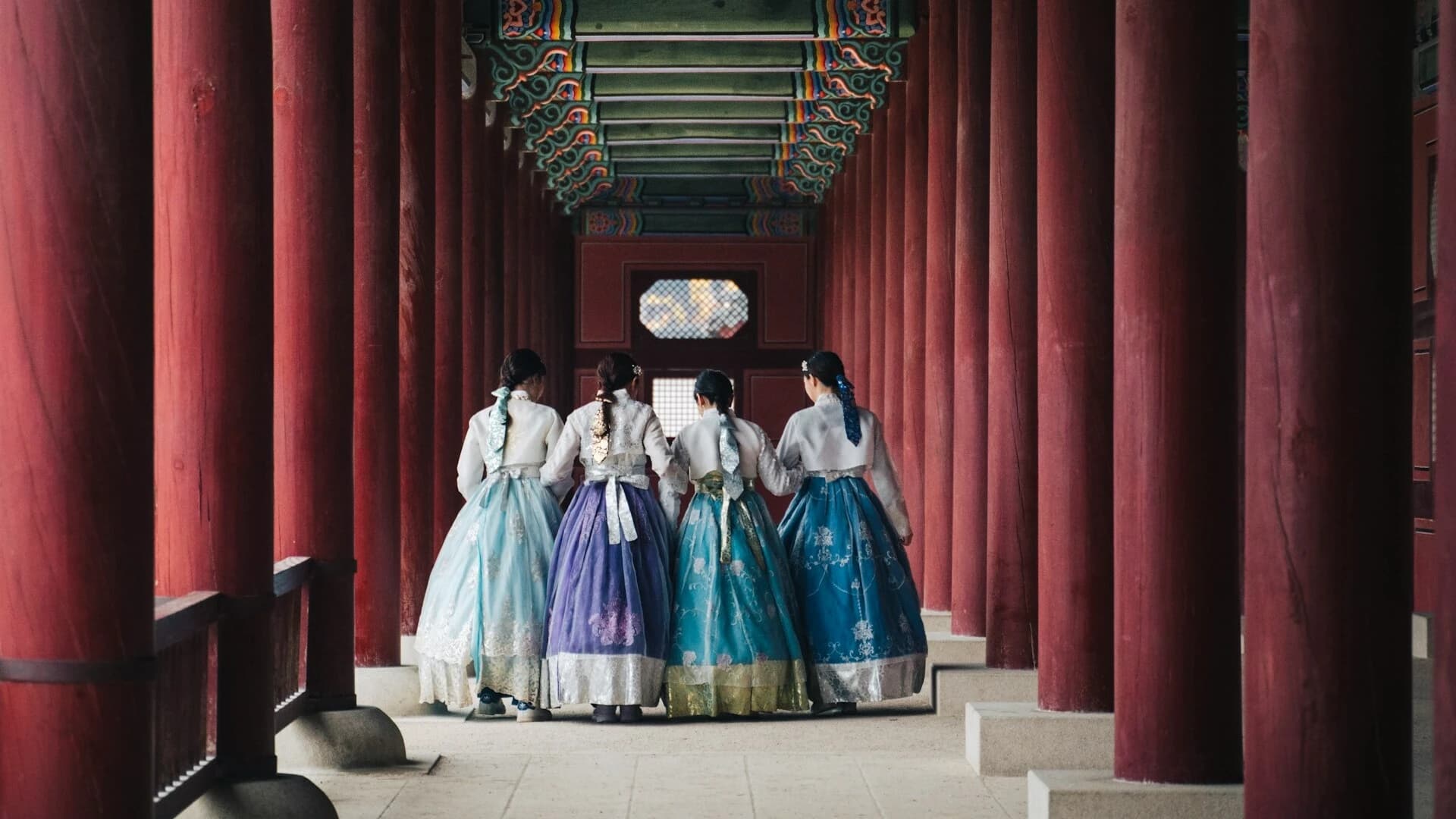
1 / 3Gyeongbokgung Palace offers free admission to visitors wearing Hanbok
The Meaning Behind the Famous Historical Line: "Preserve Jongmyo and Sajik":
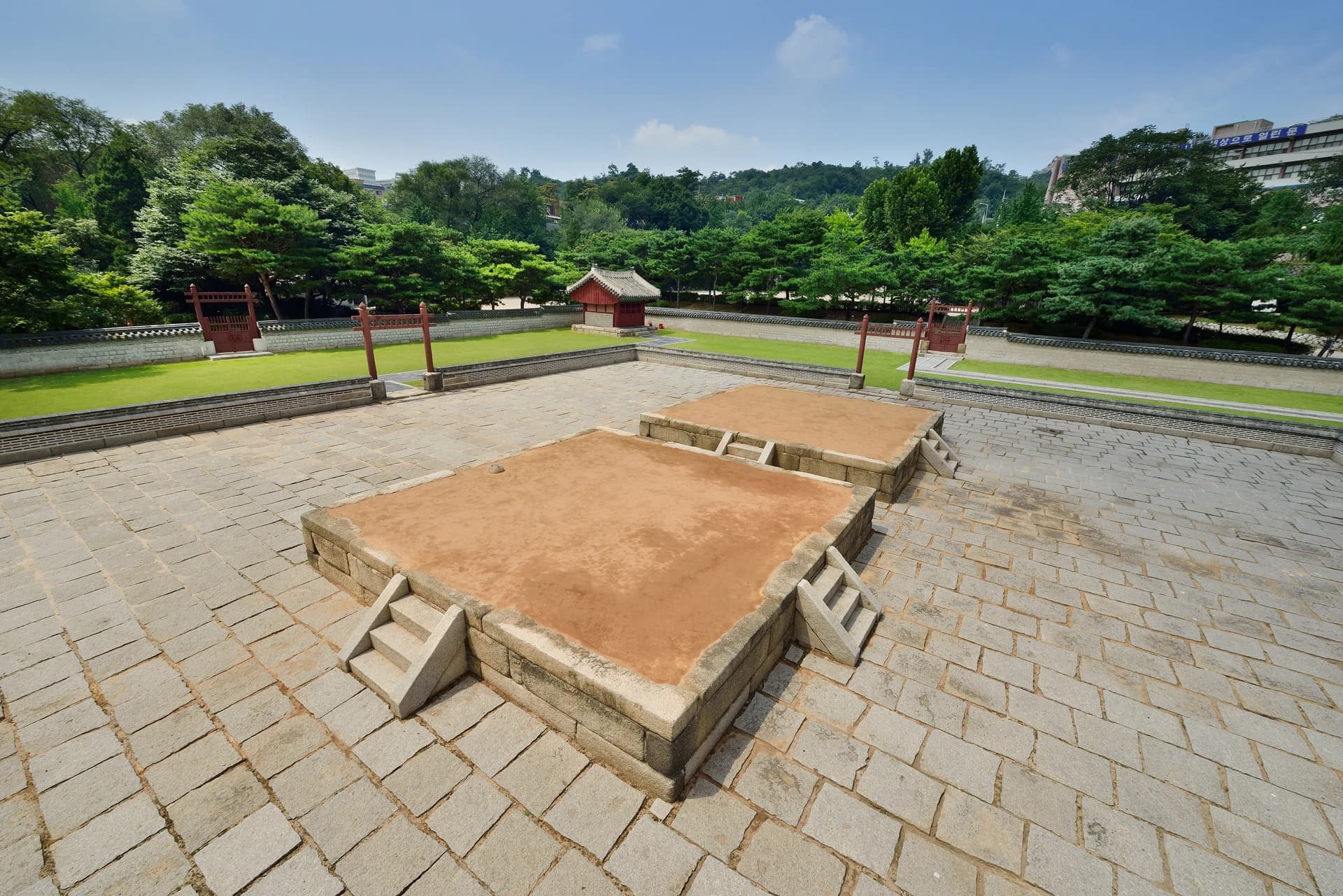
In Korean historical dramas set in the Joseon Dynasty, ministers often kneel before the king and cry, "Your Majesty! Please preserve Jongmyo and Sajik!" Here, 'Jongmyo Sajik' does not simply refer to a shrine and an altar, but serves as a symbol representing the nation of Joseon itself.
- Jongmyo (宗廟): The royal shrine housing the spirit tablets of past kings and queens. In Confucian Joseon, it symbolized royal lineage and legitimacy.
- Sajik (社稷): The altars where sacrifices were made to the gods of land (Sa) and grains (Jik). In an agricultural nation, land and crops were the foundation of life, symbolizing the people's livelihood and the nation's territory (economic base).
- Combined Meaning: Together, Jongmyo (royal ancestors) and Sajik (territory and people) represented the existence of the kingdom. The ministers' plea was a passionate plea asking the king to "Protect the nation's sovereignty and the lives of the people, and make wise decisions so the royal line continues." Today, the placement of Jongmyo to the east (left) and Sajikdan to the west (right) of Gyeongbokgung visually demonstrates how these two elements served as the main pillars supporting the country.
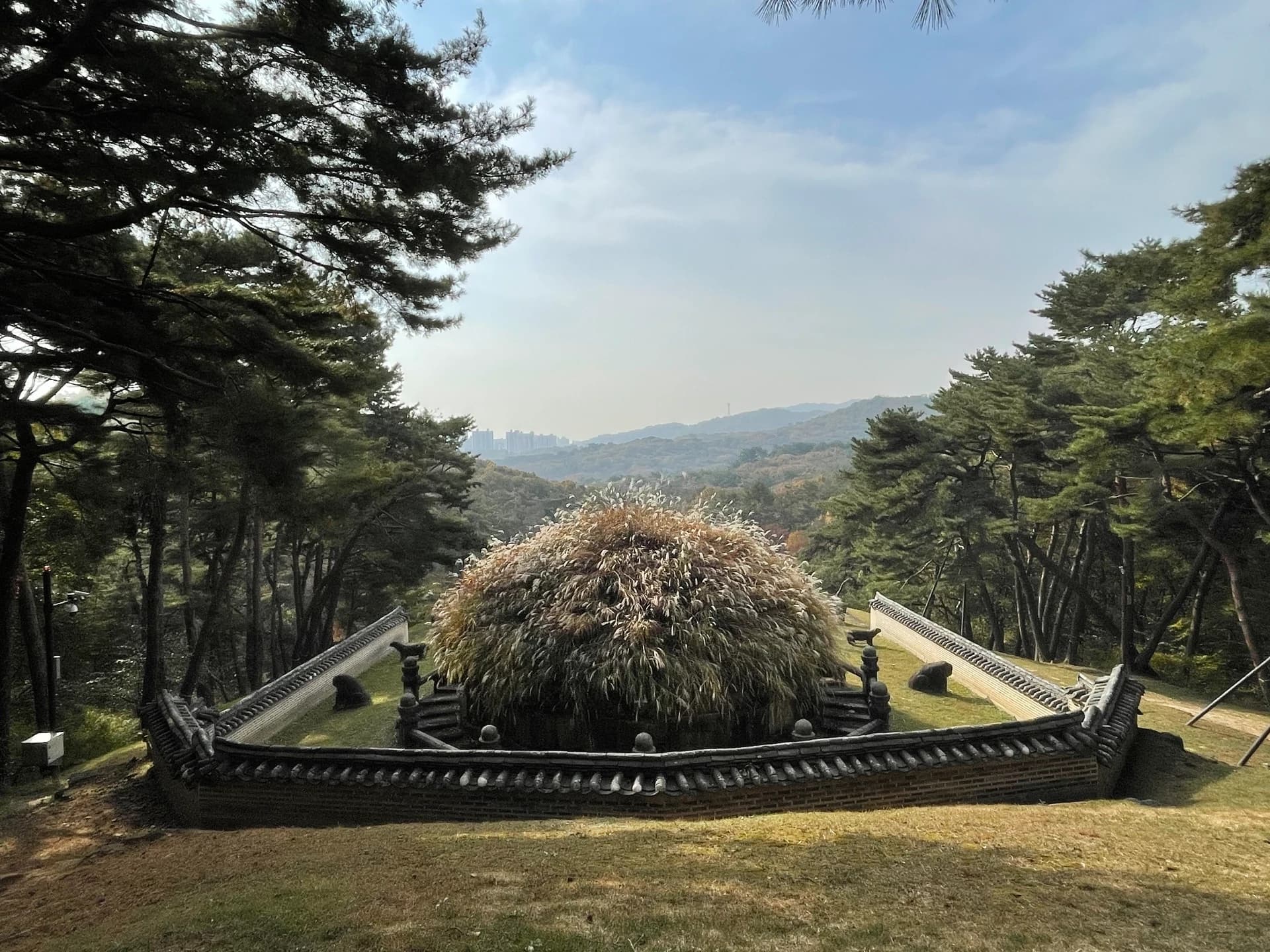
- Donggureung in Guri, Gyeonggi-do, houses Geonwolleung, the tomb of Taejo Yi Seong-gye. Unlike other Joseon royal tombs, its mound is covered with wild silver grass. His son, King Taejong, brought soil and silver grass directly from Taejo's hometown of Hamheung to honor his father's longing for home. It stands as a unique historical site reflecting Taejo's lonely final years and his complex relationship with his son.
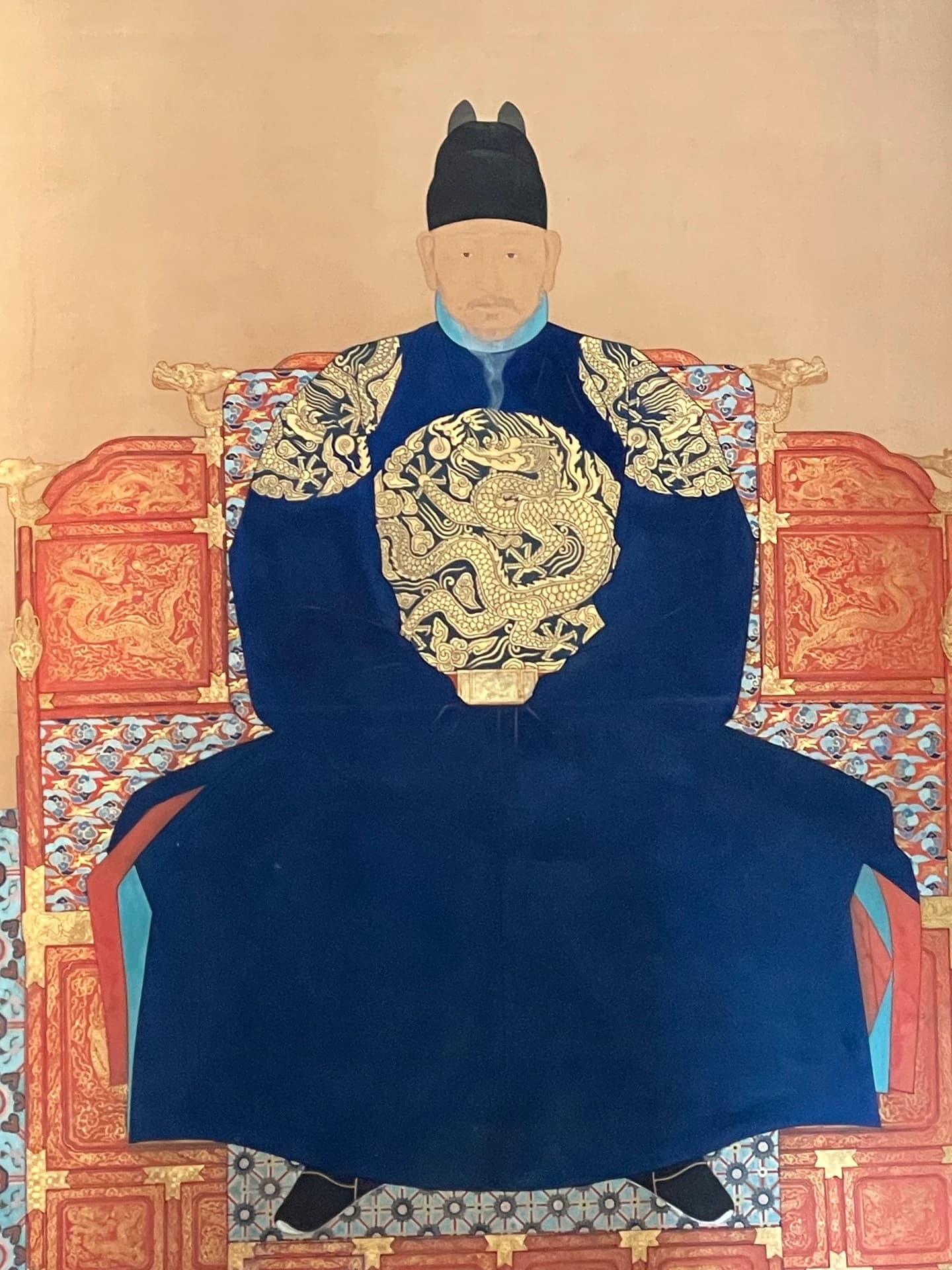
- Located in the Jeonju Hanok Village in Jeollabuk-do, Gyeonggijeon Shrine is a sacred building housing the portrait (Eojin) of Taejo Yi Seong-gye. Jeonju was considered the ancestral home and origin of the Joseon Yi Dynasty, which is why his portrait was enshrined here. It is the only place in South Korea where you can see the real portrait of Taejo Yi Seong-gye (National Treasure). Inside Gyeonggijeon Shrine, dense bamboo forests and quiet stone-wall paths create a peaceful environment representing traditional Korean aesthetics. The Jeonju History Archives located inside is also the historical site that safely preserved the Annals of the Joseon Dynasty when all other national archives were destroyed during the Japanese invasions of Korea (Imjin War).
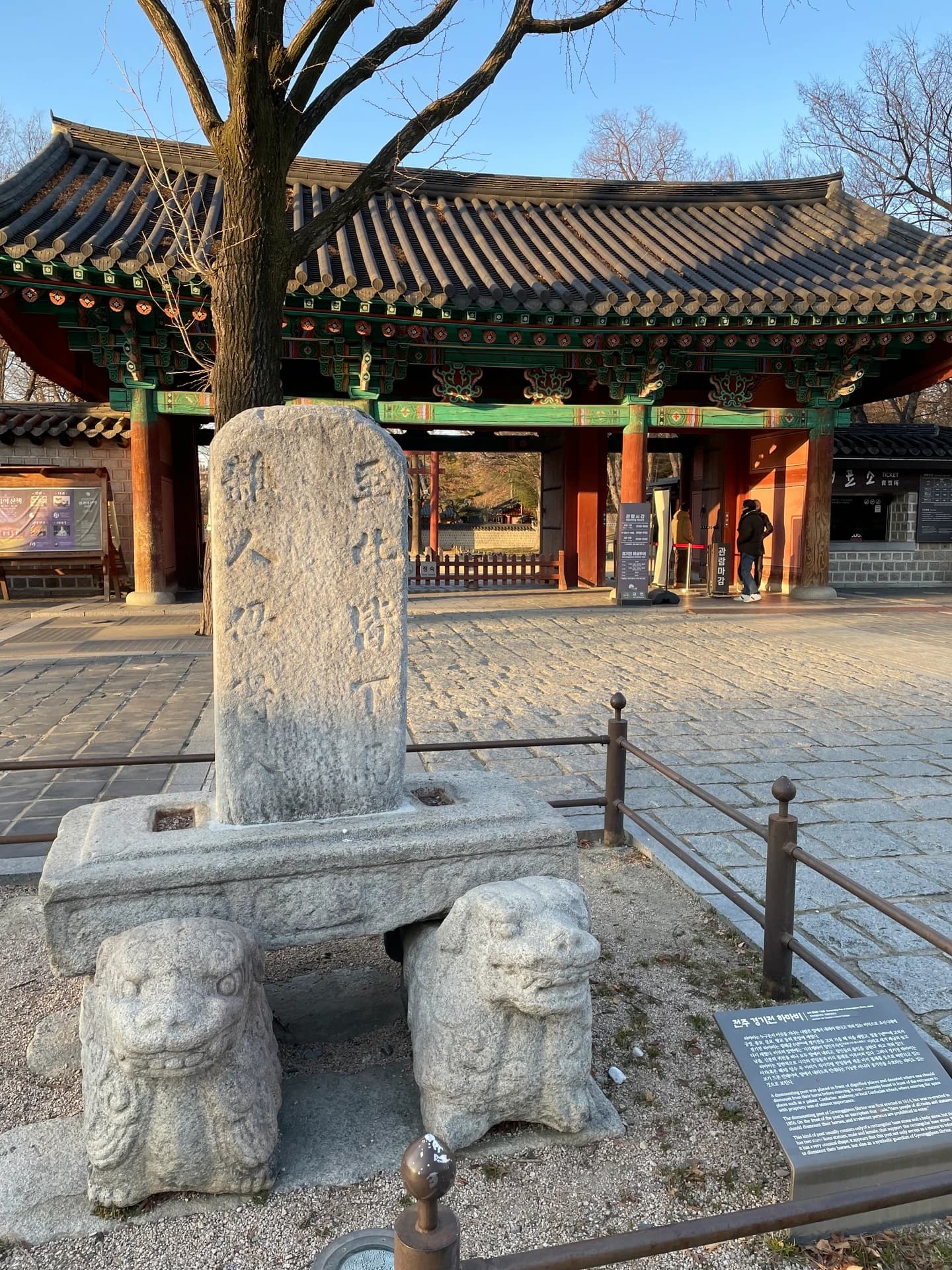
1. Construction Order: Gyeongbokgung vs. Forbidden City: The grand layout of Gyeongbokgung Palace sometimes reminds people of the Forbidden City in Beijing. While it is easy to assume Gyeongbokgung was modeled after the Forbidden City, both palaces were built independently based on the ancient Zhou Dynasty manual 'Zhou Li' (Rites of Zhou). Construction of Gyeongbokgung (started in 1394) began 12 years earlier than the Forbidden City and was completed 26 years ahead of it.
2. Twice a Year! Special Viewing of Geonwolleung Silver Grass Mound: The area directly in front of Taejo Yi Seong-gye's tomb mound at Geonwolleung is normally closed, but opens to the general public only twice a year.
- Every Hansik Day (April 5 or 6): An annual ritual called 'Goyuje' is held to cut the silver grass. After the ceremony, visitors can participate in a rare royal food culture experience tasting ritual foods.
- Autumn Special Opening (Early to Mid-November): Open for 5 days during autumn when the golden silver grass is at its peak (10 sessions total per day). Registration is limited to 20 online reservations and 10 on-site spots per session.
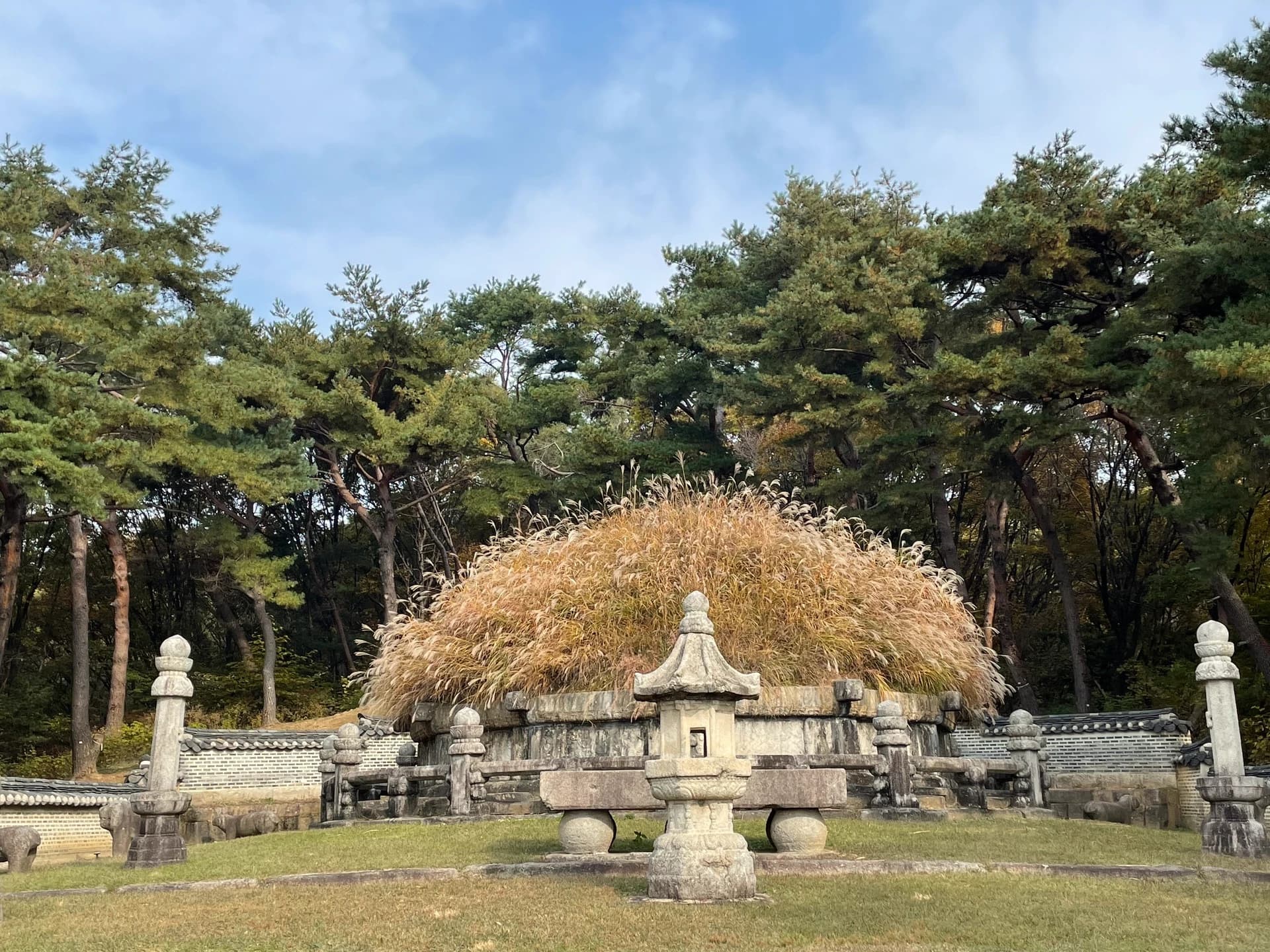
- Traveler Tip: Online reservations can be difficult for foreign tourists due to local identity verification requirements. Trying for an early on-site spot (10 available) at the ticket office in the morning or enjoying views of the silver grass from the walking path below is recommended.
(2nd King) King Jeongjong: The King Who Chose Survival Over PowerIntroduces the capital return to Gaegyeong, the Second Strife of Princes, and Jeongjong's clever survival strategy focusing on Gyeokgu to protect his life.
King Jeongjong (reigned 1398–1400) was the second son of Taejo Yi Seong-gye and the second king of Joseon. He temporarily ascended the throne to stabilize the political situation after the First Strife of Princes, fully aware that real power lay with his younger brother, Yi Bang-won (King Taejong).
1. Moving the Capital Back to Gaegyeong:
- Jeongjong wanted to leave Hanyang (present-day Seoul), where the bloody strife among his brothers had taken place. To stabilize the political climate, he moved the capital back to Gaegyeong (present-day Kaesong, North Korea), the old capital of the Goryeo Dynasty, in 1399. Because of this, most of his short reign took place in Gaegyeong.
2. The Second Strife of Princes in Gaegyeong:
- In 1400, shortly after moving the capital to Gaegyeong, another brother, Yi Bang-gan (the fourth son), raised an army to attack Yi Bang-won and claim the throne. This street battle fought between brothers in broad daylight in the middle of Gaegyeong is called 'The Second Strife of Princes.' After Yi Bang-won won once again, Jeongjong, tired of the endless royal conflicts, appointed Yi Bang-won as his successor and peacefully abdicated the throne.
3. Gyeokgu: Traditional Sport for Survival:
- During his reign, Jeongjong stayed away from politics to protect his life during power struggles. Instead, he focused on 'Gyeokgu' (Joseon-style polo), a traditional equestrian sport played on horseback with wooden mallets, as well as hunting and hot spring trips. This sent a clear message to his younger brother Yi Bang-won: "I have no interest in royal power." This clever survival strategy worked, allowing Jeongjong to retire safely and live a long life, which was rare for Joseon kings.
4. Recommended Destinations: Gyeokgu Exhibition at National Palace Museum of Korea & Hwanghakjeong at Sajikdan
- National Palace Museum of Korea: View equipment and historical records related to 'Gyeokgu', the traditional equestrian martial art Jeongjong practiced for survival.
- Hwanghakjeong: A historical archery range where you can experience traditional Korean archery culture and imagine the atmosphere of the Joseon royal court.
(3rd King) King Taejong Yi Bang-won: The Iron-Blooded Monarch Who Built Joseon's FoundationCovers the truth behind purges, the coin-toss capital relocation story, the falling-from-a-horse record incident, and stories surrounding Changdeokgung Palace and Gwangtonggyo Bridge.
King Taejong Yi Bang-won (reigned 1400–1418) significantly strengthened royal authority and established the nation's legal system. However, even as an absolute ruler, he could not escape the sharp pens of the royal historians writing the Annals.
1. Joseon's Only Elite King to Pass the Civil Service Exam:
- Although Taejong Yi Bang-won is often remembered as a fierce military figure, he was actually the only Joseon king to pass the official Civil Service Exam (Mungwa) as an elite scholar.
- In 1383, during the late Goryeo period, he passed the civil exam at the age of 17, bringing great joy to his father, Yi Seong-gye. For Yi Seong-gye, who had felt self-conscious about coming from a military family in the rugged northern region, his fifth son passing the elite exam was a moment of pride for the family.
- Thanks to his strong academic background, Taejong maintained authority in scholarly debates with high-ranking ministers after taking the throne, which helped him build Joseon's administrative and legal systems.
2. The Truth Behind Modern Korea's 'Kill Bang-won' Meme:
- Modern Koreans often refer to Yi Bang-won by the nickname 'Kill Bang-won' (Kill + Yi Bang-won). This comes from his relentless purges of political rivals, founding ministers, and even his own in-laws who posed a threat to royal power. Paradoxically, this strong rule maximized royal authority and established a stable, peaceful foundation for his son, King Sejong, to rule wisely and advance science and welfare without political bloodshed.
3. Seoul's History Decided by a Coin Toss:
- After taking the throne, Taejong wanted to leave Gaegyeong—where his brother Jeongjong had returned—and move the capital back to Hanyang (Seoul). As ministers held divided opinions, Taejong made a decision at Jongmyo Shrine in 1404. He performed a coin-toss divination ritual before the ancestral spirits using brass divining coins to evaluate three candidate sites (Gaegyeong, Muak, and Hanyang). While Gaegyeong and Muak yielded unfavorable results, Hanyang received favorable signs twice. Taejong then designated Hanyang as the permanent capital and relocated the court. Today's metropolis of Seoul was confirmed through this coin-toss divination.
4. Humiliation on the Hunting Field: Proof of the Annals' Reliability:
- One day while hunting, Taejong fell off his horse. Embarrassed and noticing a historian standing nearby, Taejong commanded, "Do not let the historian know of this incident." However, the historian recorded the event word-for-word in the Annals: "The King fell from his horse. He then commanded that the historian not be informed of this." This incident demonstrates the thorough recording process that even absolute royal power could not alter, symbolizing the high reliability of the Annals of the Joseon Dynasty.
5. Recommended Destinations: Changdeokgung Palace and Gwangtonggyo Bridge along Cheonggyecheon Stream
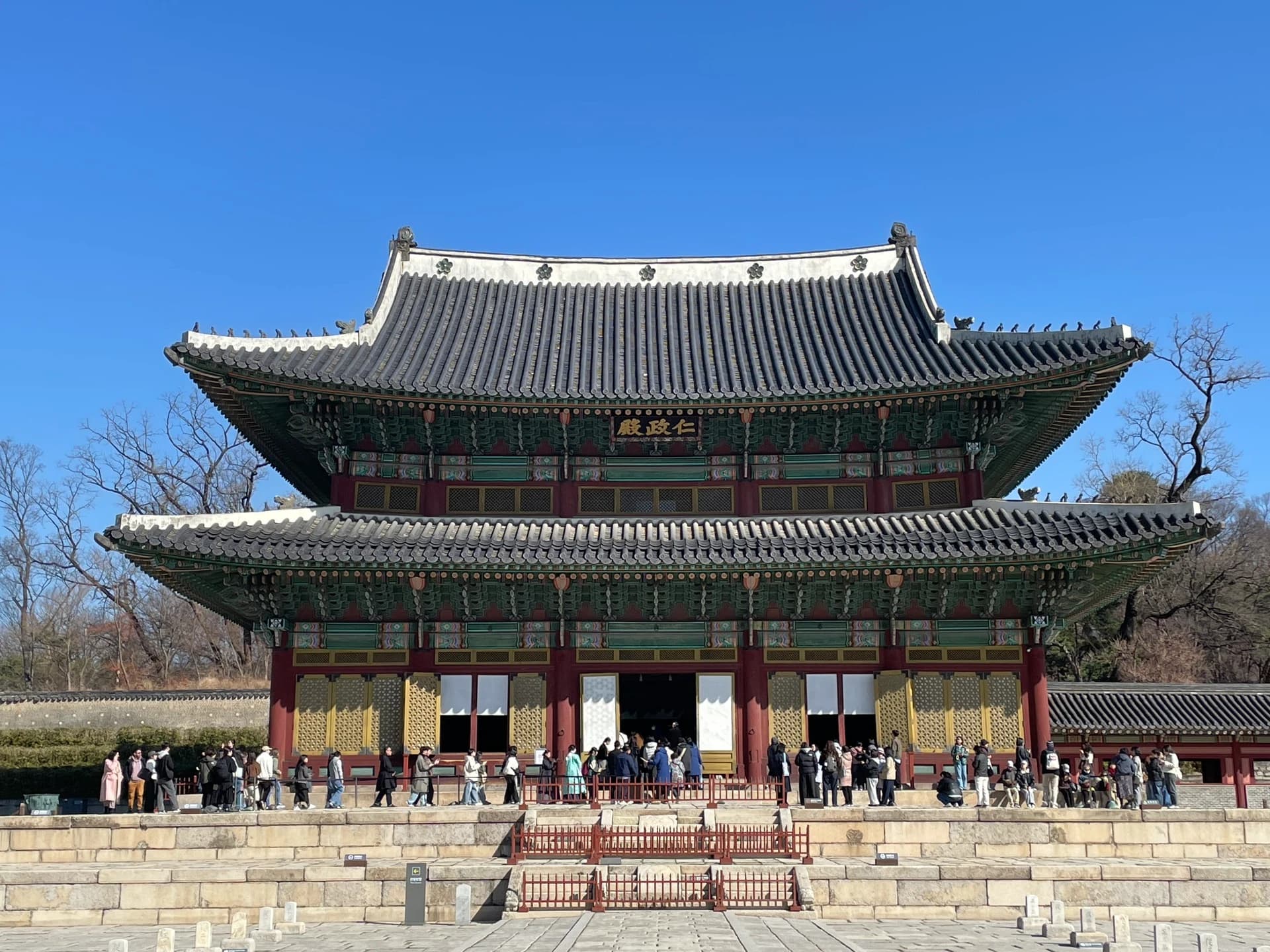
- Although Taejong decided to move the capital back to Hanyang, he avoided staying at Gyeongbokgung Palace, the site where he had purged his rivals and brothers. Thus, he built a new palace to the east of Gyeongbokgung, which is Changdeokgung Palace, a UNESCO World Heritage site (completed in 1405). After moving the capital, Taejong resided at Changdeokgung and conducted state affairs from there. Visiting Injeongjeon Hall, the main hall of Changdeokgung, offers insight into the history and decisions of King Taejong.
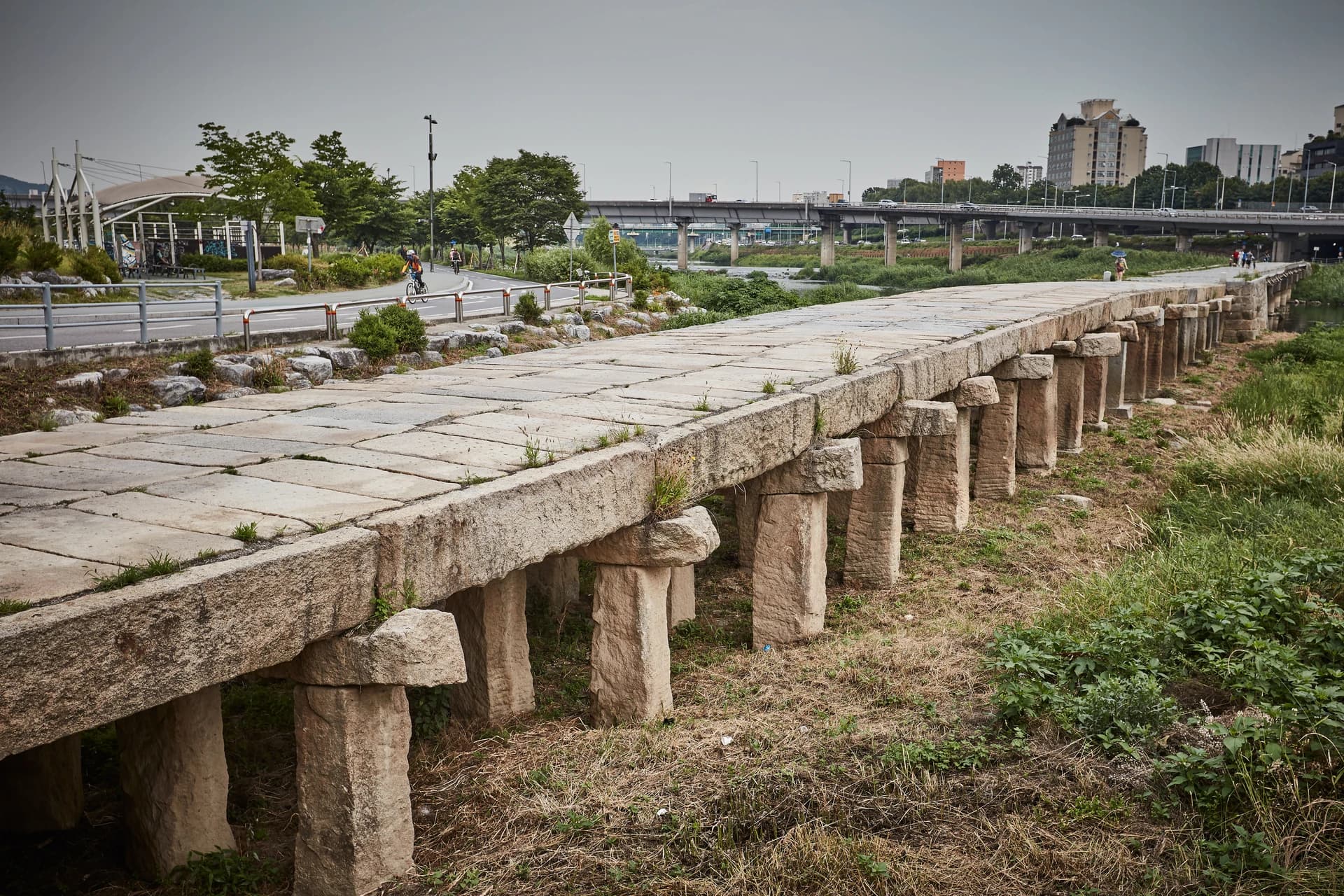
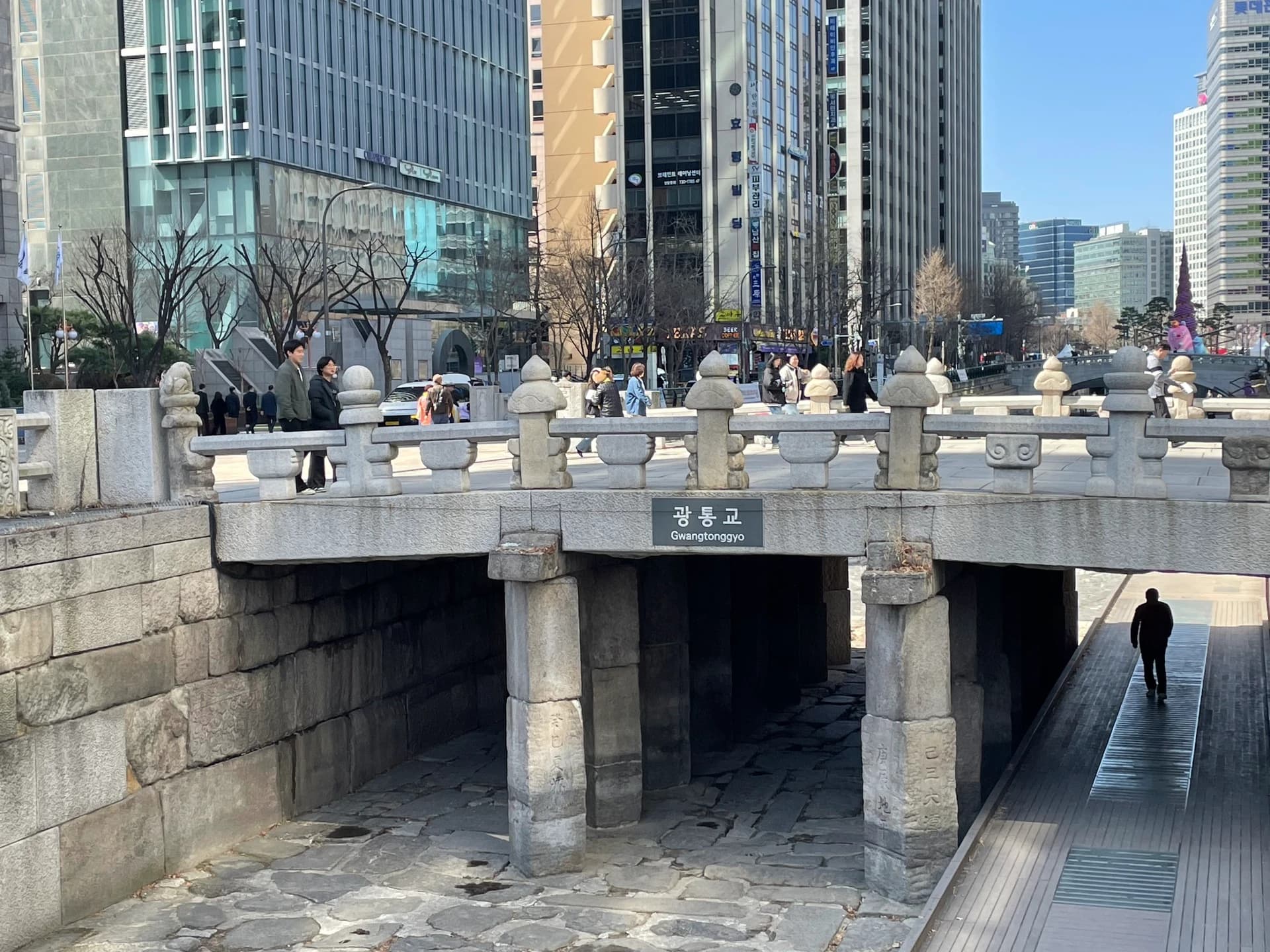
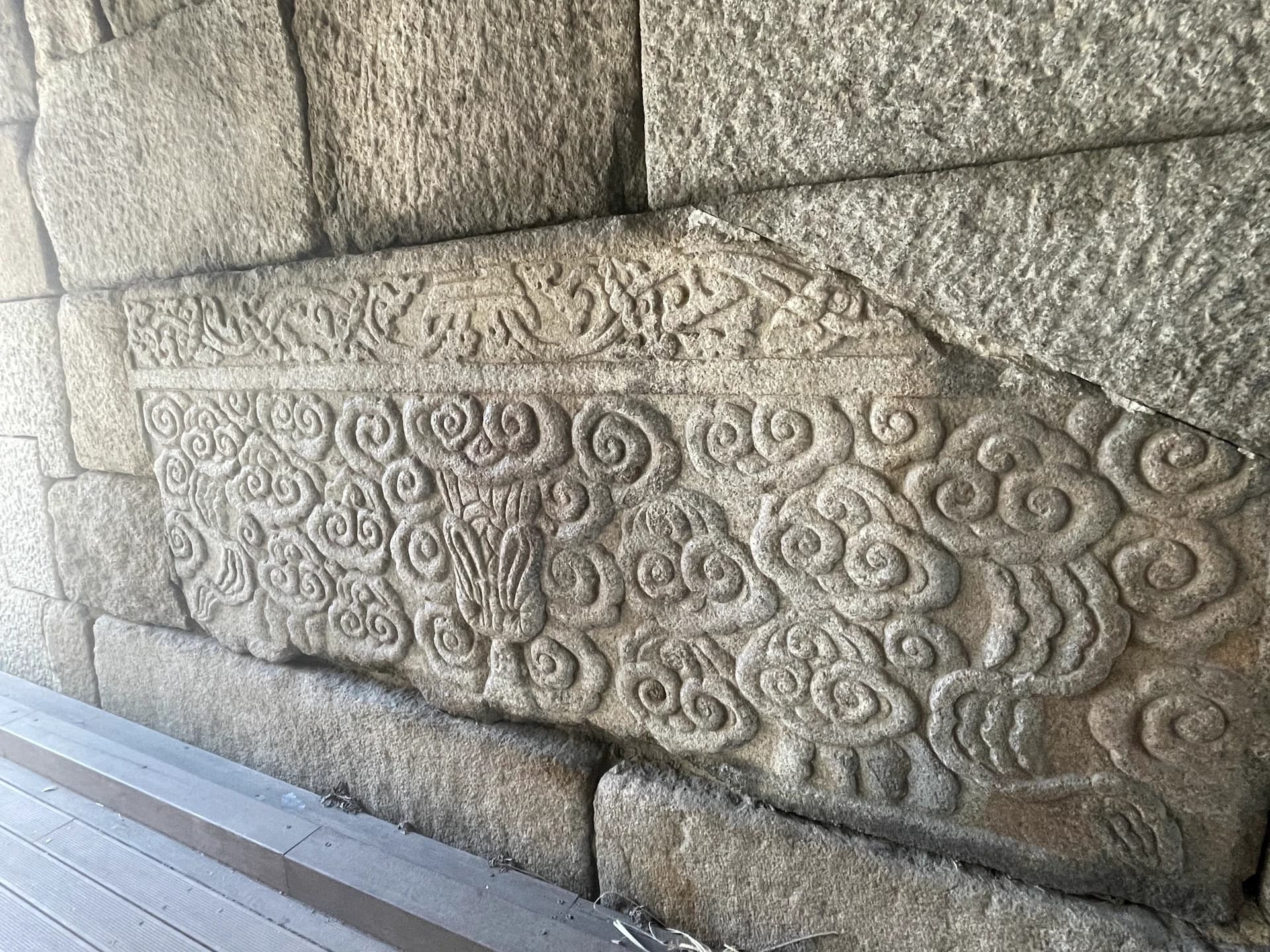
- Gwangtonggyo Bridge along Cheonggyecheon Stream in central Seoul is a stone bridge tied to King Taejong's history with his stepmother. Taejong held a grudge against Queen Sindeok (Taejo's second wife), who had supported her birth son (Yi Bang-seok) for Crown Prince over Yi Bang-won. After Queen Sindeok passed away and Taejong took the throne, he moved her tomb (Jeongneung) outside the city walls. When Gwangtonggyo Bridge washed away in a flood in 1410, he used the carved stones (screen stones and guardian spirit stones) from her former tomb as foundation stones and pillars for the bridge. This ensured that citizens, horses, and carts would walk over the stones from his stepmother's tomb. Down under Gwangtonggyo Bridge, visitors can still see carved guardian spirit stones placed upside down supporting the bridge.
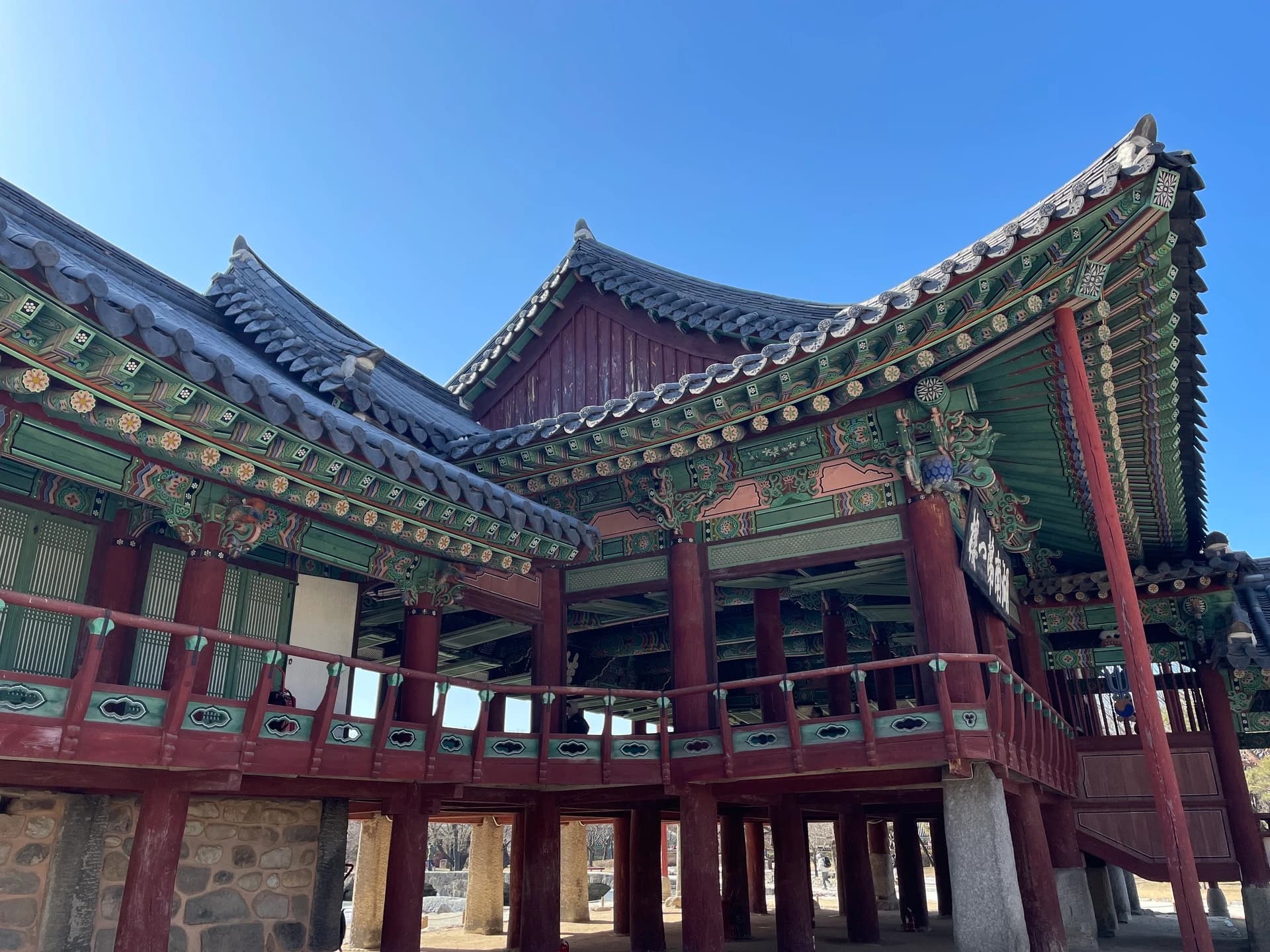
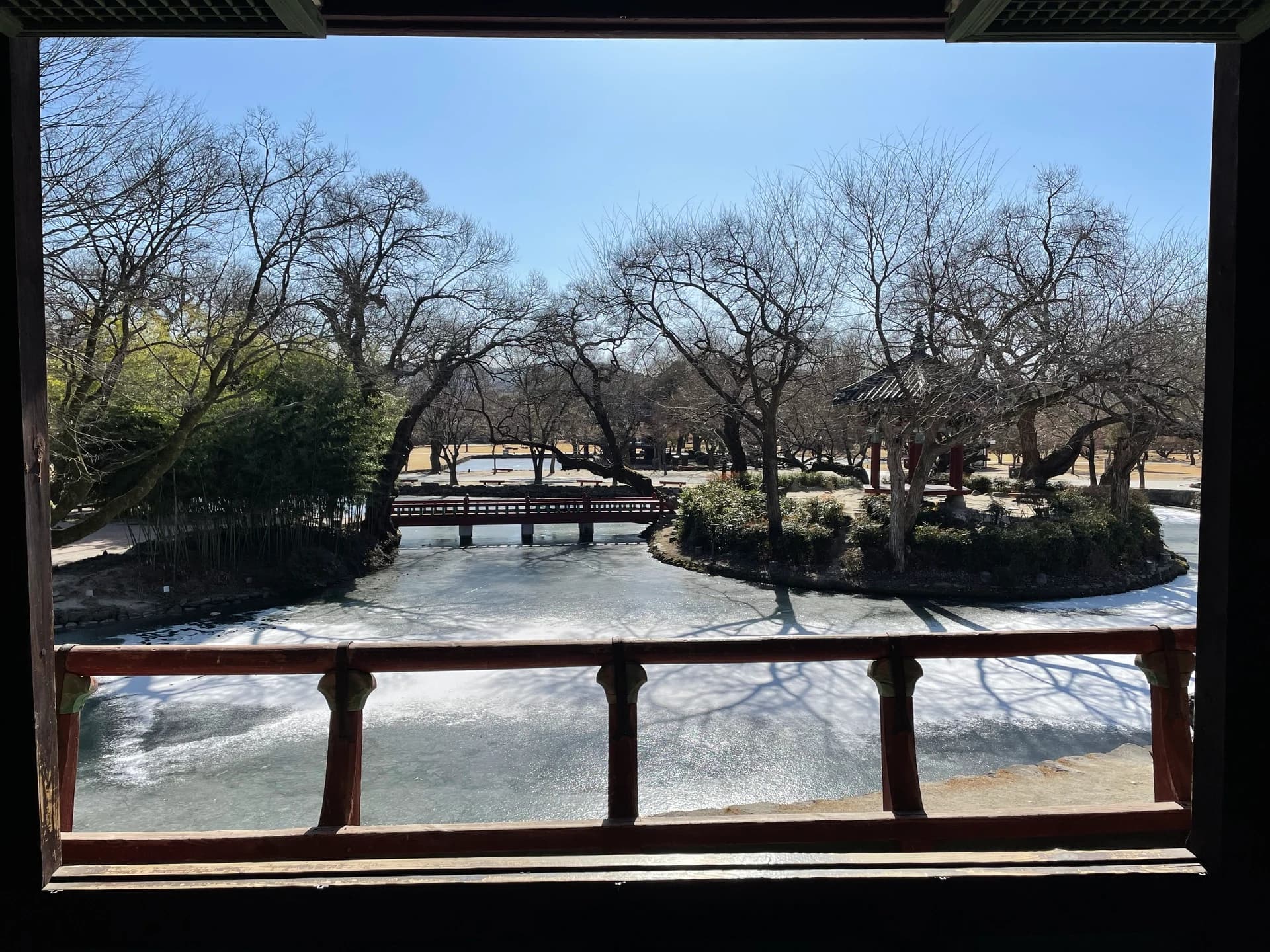
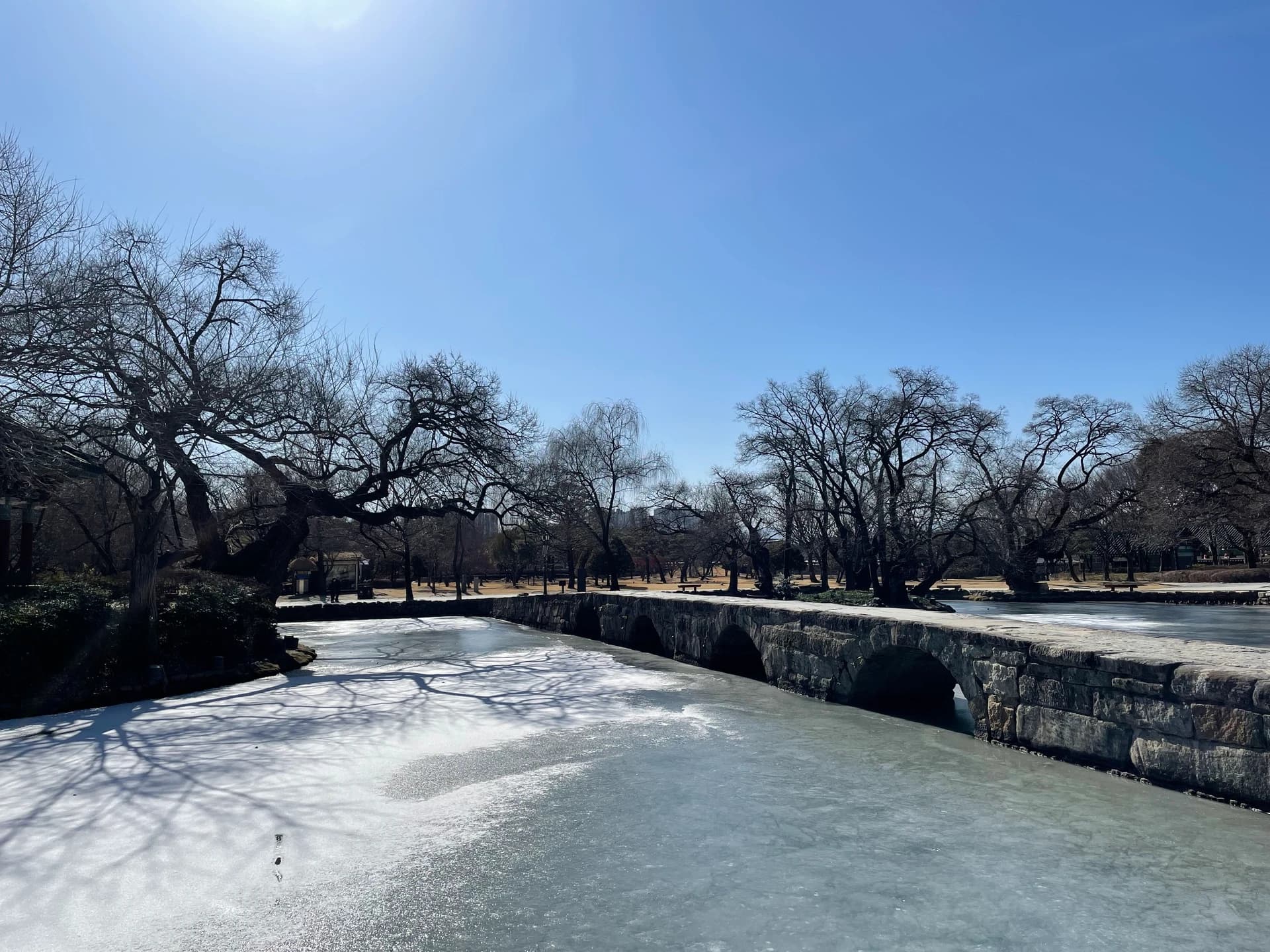
- Gwanghanruwon Garden in Namwon: This Joseon-style garden originated from 'Gwangtongru', built by prime minister Hwang Hui to comfort himself when exiled to Namwon for opposing Taejong's decision to depose Crown Prince Yangnyeong. When King Sejong later ascended the throne, Hwang Hui was recalled from exile and appointed Chief State Councillor, and the pavilion was renamed Gwanghanru.
It is also famous as the setting for the classic novel Tale of Chunhyang, where Seong Chun-hyang and Yi Mong-ryong first met at Ojakgyo Bridge and Gwanghanru. It is a major attraction in Namwon where historical sites tied to Taejong coexist alongside classic Korean literature.
(4th King) King Sejong the Great: The Wise Ruler of a Peaceful EraCovers accomplishments including the creation of Hangeul, scientific inventions, perfect pitch anecdotes, Chojeong Haenggung, and Sujeongjeon Hall at the site of Jiphyeonjeon.
King Sejong the Great (reigned 1418–1450) is one of the most respected figures in Korean history. Beyond his achievements, he placed deep love for his people at the core of his policies. He created Hangeul for commoners unable to read Chinese characters and advanced agricultural science, devoting his life to improving the lives of his people and bringing about a golden age for Joseon.
1. Dramatic Ascension: Prince Chungnyeong Takes the Throne:
- Originally, Prince Yangnyeong, Taejong's eldest son and King Sejong's older brother, held the position of Crown Prince for a long time. However, Prince Yangnyeong disliked strict palace life and Confucian studies. He spent time outside the palace with gisaengs and hunting, causing concern for King Taejong.
- A major scandal occurred when Prince Yangnyeong brought a married woman named 'Eori' into the palace. The Annals record that "Even without washing her face, her beauty was obvious at a glance." When Taejong scolded him, Prince Yangnyeong submitted a rebellious memorial asking, "Father, you have many concubines (18–19), so why do you scold only me?" In 1418, Taejong deposed Prince Yangnyeong from his position as Crown Prince.
- Instead of Prince Yangnyeong's young son or his second son Prince Hyoryeong, Taejong chose his third son, Prince Chungnyeong (King Sejong), who read day and night and possessed a wise, benevolent character. Two months after being named Crown Prince, Prince Chungnyeong ascended the throne as King Sejong the Great.
2. Creating Hangeul (Hunminjeongeum) for the People:
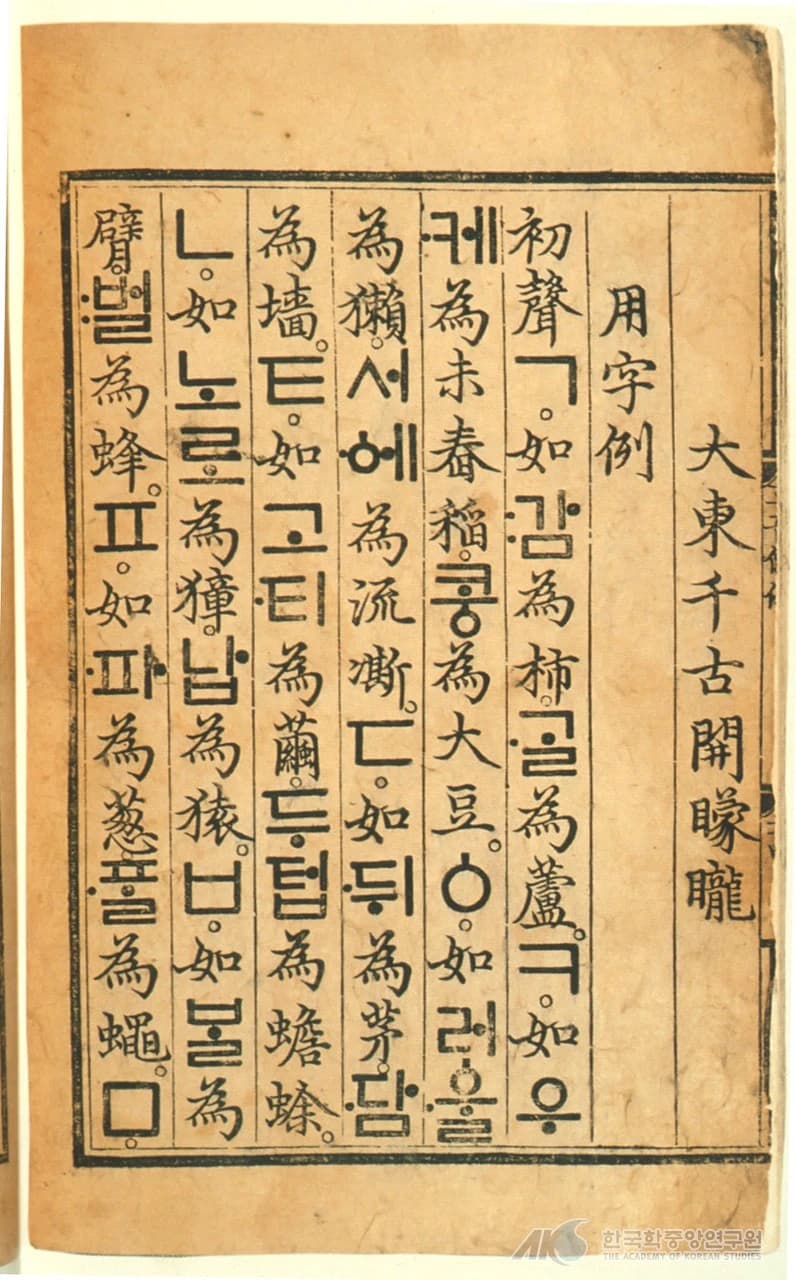
- For common people who suffered because they could not read Chinese characters, King Sejong created and distributed Hangeul (Hunminjeongeum), an alphabet system designed to be easy to learn.
3. Scientific Inventions with Jang Yeong-sil:
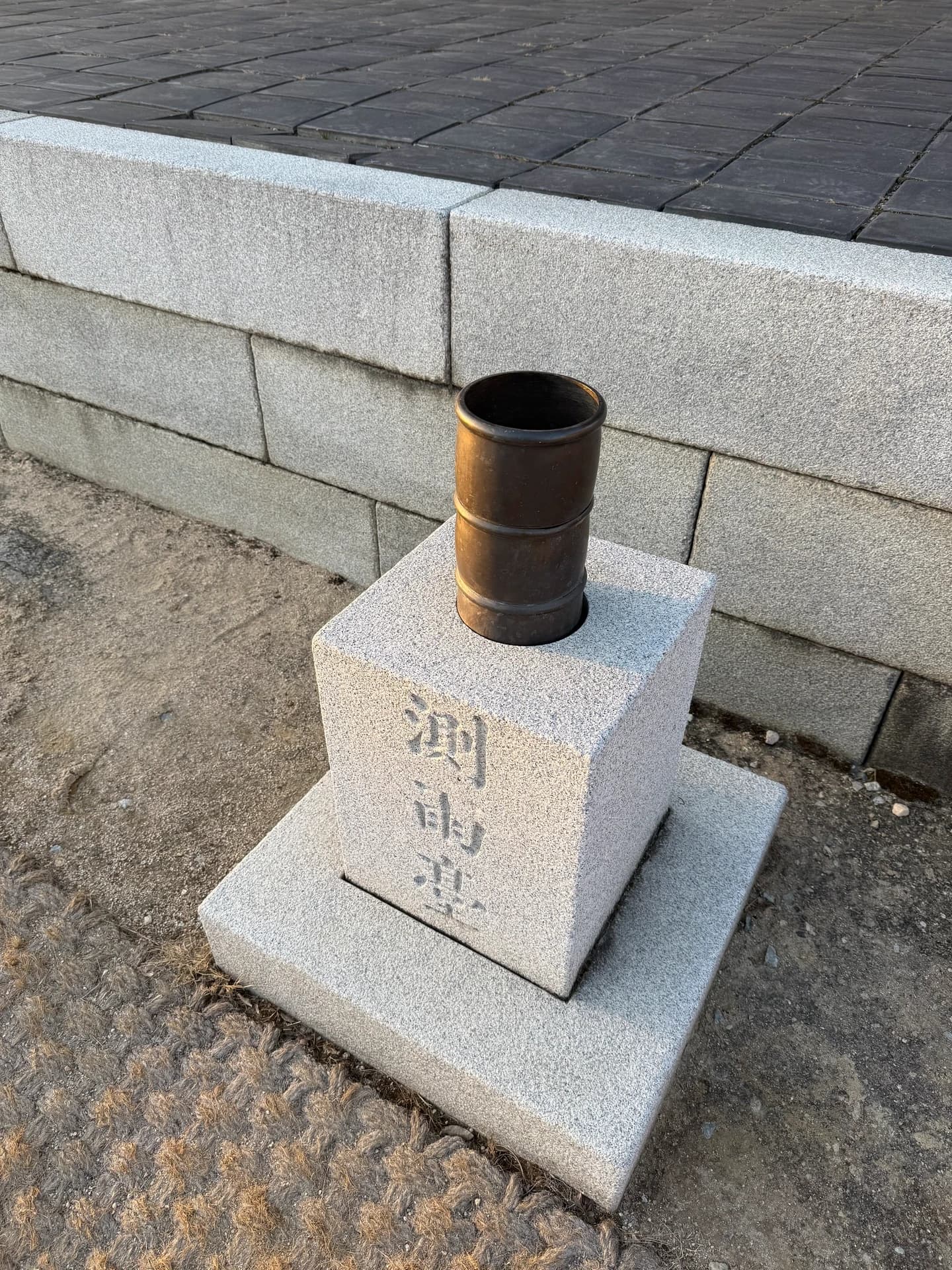
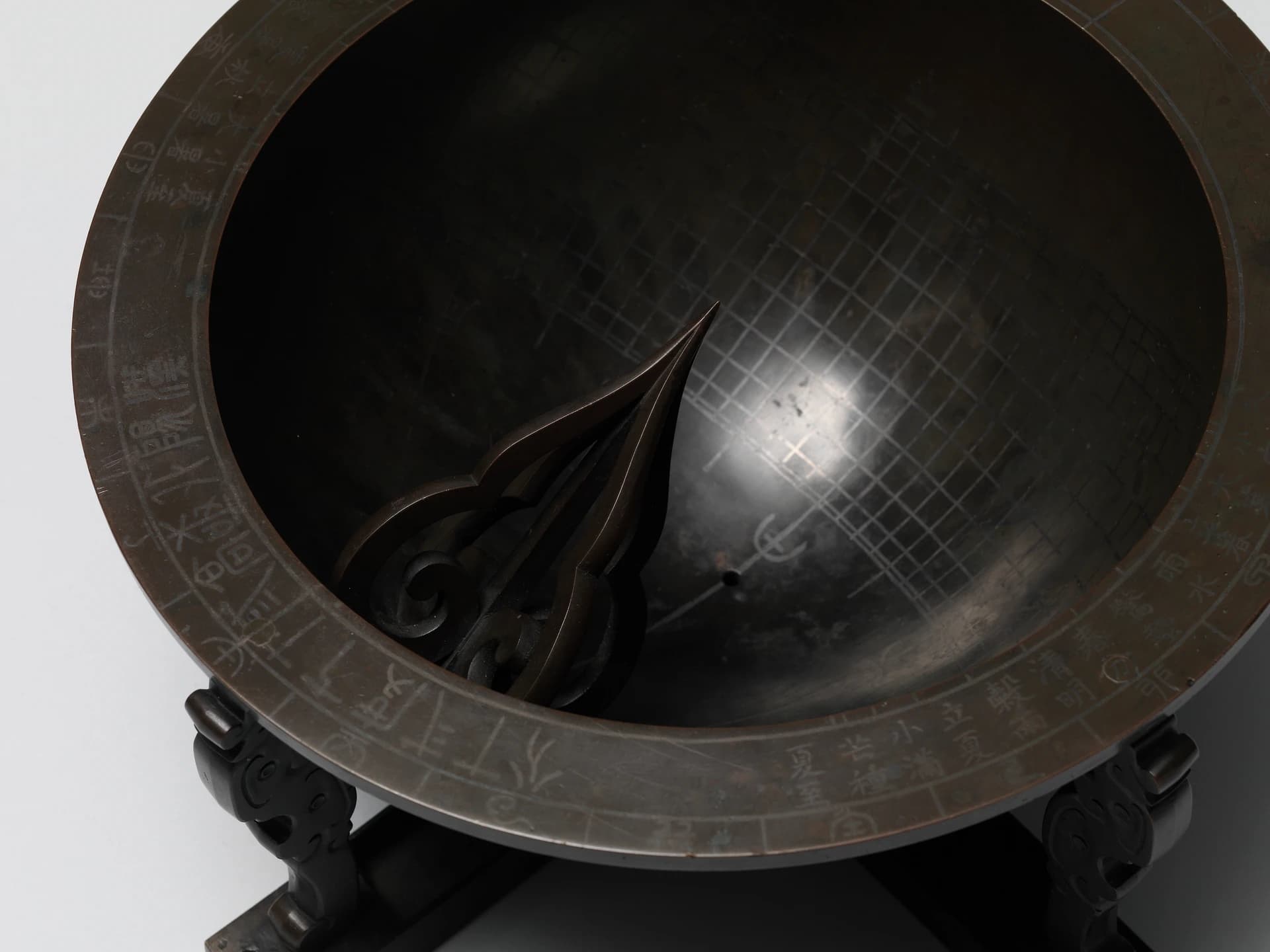
- Overcoming status class barriers, King Sejong appointed Jang Yeong-sil, an inventor from the commoner class. Together, they invented the Cheugugi (the world's first rain gauge), Jagyeongnu (an automatic water clock), and Angbuilgu (a sundial), elevating Joseon's astronomical science.
4. Territorial Expansion Setting Korea's Modern Borders:
- He established 4 Counties and 6 Posts in the northern region, securing the Yalu and Tumen River borders that define the Korean Peninsula today. In the south, he led an expedition to Tsushima Island to suppress Japanese pirates, strengthening national defense.
5. The King Who Covered His Minister with His Robe:
- The Annals of King Sejong record many stories showing his care for others. Once, Sin Suk-ju, a scholar at the royal research institute Jiphyeonjeon, fell asleep in the royal library after reading late into the night. King Sejong saw him while on night patrol, took off his own Gonryongpo (dragon robe), and gently covered the sleeping scholar. Moved by this gesture, scholars served the king with loyalty.
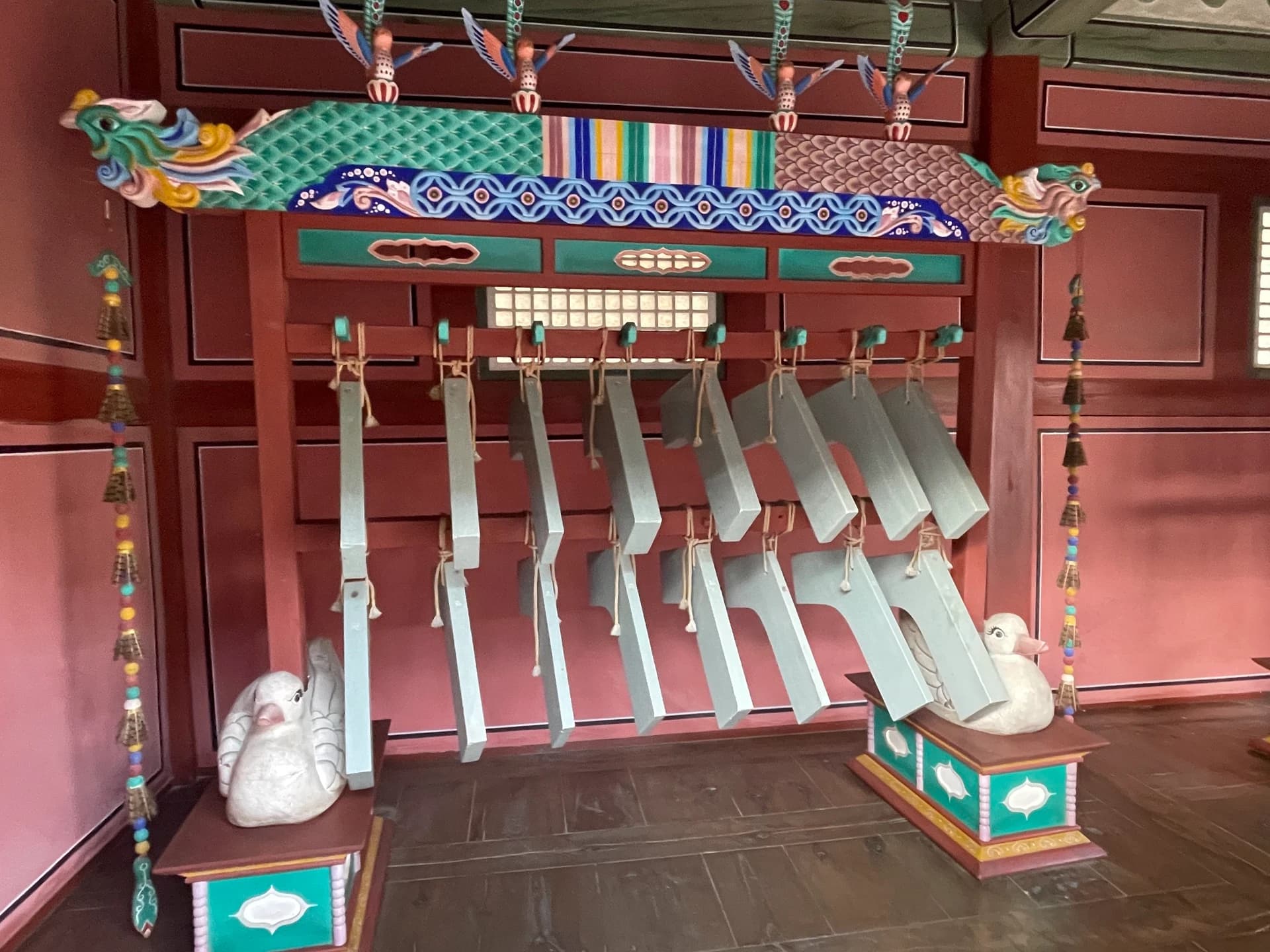
6. King Sejong's Perfect Pitch and the Pyeongyeong Story:
- King Sejong possessed musical talent and perfect pitch. When music master Bak Yeon completed and played the Pyeongyeong (a traditional stone chime instrument), King Sejong noted, "The sound is harmonious, but one tone (Yichik) sounds slightly high. Was the ink line drawn when carving the stone left uncarved?" Upon inspection, a faint ink line remained on the stone surface, making the tone slightly sharp.
7. Composing Jongmyo Jeryeak by Tapping His Walking Stick:
- At the time, the Joseon court mainly played Chinese-style ritual music. King Sejong questioned, "Why should our ancestral spirits listen to Chinese music after passing when they listened to our music in life?" Tapping a wooden stick on the floor in his chamber at night to keep rhythm, he composed original court music. This became the origin of Jongmyo Jeryeak, which is designated as a UNESCO Intangible Cultural Heritage of Humanity.
8. Reading Despite Fading Eyesight:
- King Sejong was a reader from a young age. When his father King Taejong hid all books in his room out of concern for his health, Sejong found a remaining book behind a folding screen and read it over 100 times. Even after becoming king, he worked late into the night reading and managing state affairs, suffering from eye conditions in his later years. The Annals record his words: "My eye condition is so severe that I cannot distinguish the person in front of me."
9. Love for Meat and King Taejong's Final Will:
- King Sejong was known for his fondness for meat. Historical records note, "King Sejong would not lift his chopsticks if there was no meat served." Aware of this, King Taejong left a specific instruction before he passed away. Although Confucian rites required a mourning child to eat only vegetarian food for 3 years after a parent's death, Taejong gave a directive: "Sejong cannot eat meals without meat, so ensure he eats meat even during my mourning period."
10. Recommended Destinations: Gansong Art Museum in Seoul, Sujeongjeon Hall at Gyeongbokgung, Chojeong Haenggung in Cheongju, and Yeongneung in Yeoju
- Gansong Art Museum in Seoul: Houses the National Treasure Hunminjeongeum Haeryebon, the manuscript detailing the creator, creation date, and principles behind Hangeul. During the Japanese colonial period, Gansong Jeon Hyeong-pil purchased and preserved this document at great personal expense, and protected it during the Korean War.
He carried it with him while fleeing and kept it inside his pillow at night to keep it safe.
Jeon Hyeong-pil's dedication to preserving national cultural heritage using his personal fortune is remembered as an example of Korean Noblesse Oblige.
- Sujeongjeon Hall at Gyeongbokgung Palace in Seoul: Located next to Gyeonghoeru Pavilion, this site housed Jiphyeonjeon (Hall of Worthies), the center for academic research, the creation of Hangeul, and scientific inventions during King Sejong's reign.
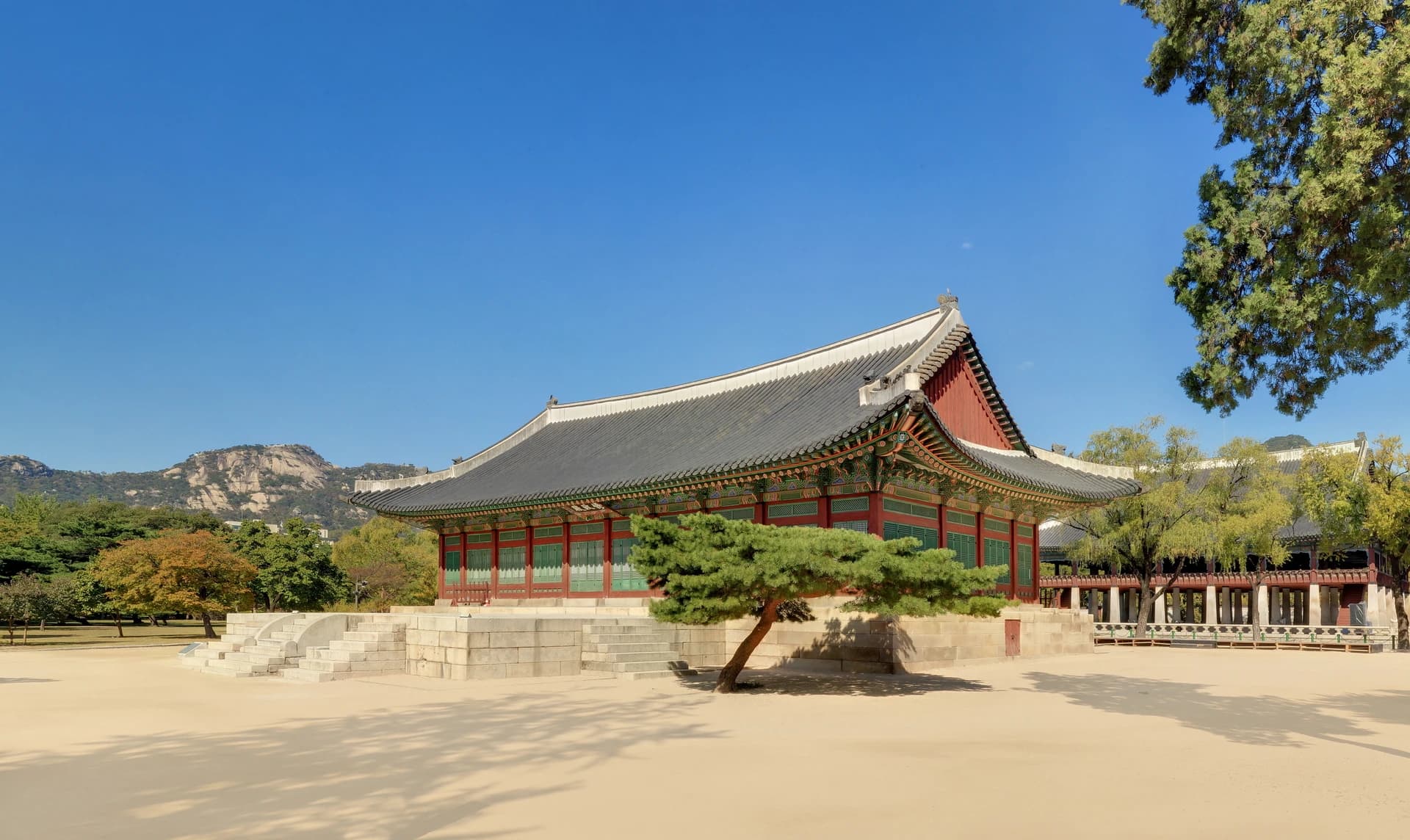
- Chojeong Haenggung in Cheongju: A temporary palace where King Sejong stayed to treat his eye condition and skin ailments. It features Chojeong Mineral Water, one of the world's top three mineral waters. Today, it offers foot bath experiences and historical exhibits.
- Yeongneung in Yeoju: The joint tomb of King Sejong and Queen Soheon. After royal family tragedies occurred at the original site in Naegok-dong, Seoul, the tomb was relocated to Yeoju, considered an auspicious site under Feng Shui principles. Legend says this move extended the dynasty's lifespan by 100 years.
The Story Behind King Sejong's Portrait on the 10,000 Won Bill: The face of King Sejong on current 10,000 Won banknotes is not his actual historical portrait. During the Korean War, royal portraits were moved to Busan for safety, but most were destroyed in the 1954 Yongdusan Fire in Busan. As a result, few original royal portraits survived.
In 1973, the government designated an official 'Standard Portrait' painted by Kim Ki-chang. However, this standard portrait faced two main debates:
- The Painter's History: Kim Ki-chang's pro-Japanese activities during the colonial period created historical controversy.
- Self-Portrait Controversy: Debate remains as the painted face of King Sejong closely resembles the facial features of the painter himself, leading to questions over its depiction.
Although he created Hangeul and remains a respected historic figure, his exact facial features remain unknown today.
- Kings with Remaining Authentic Portraits:
- Taejo Yi Seong-gye: Preserved at Gyeonggijeon Shrine in Jeonju, keeping his actual appearance intact.
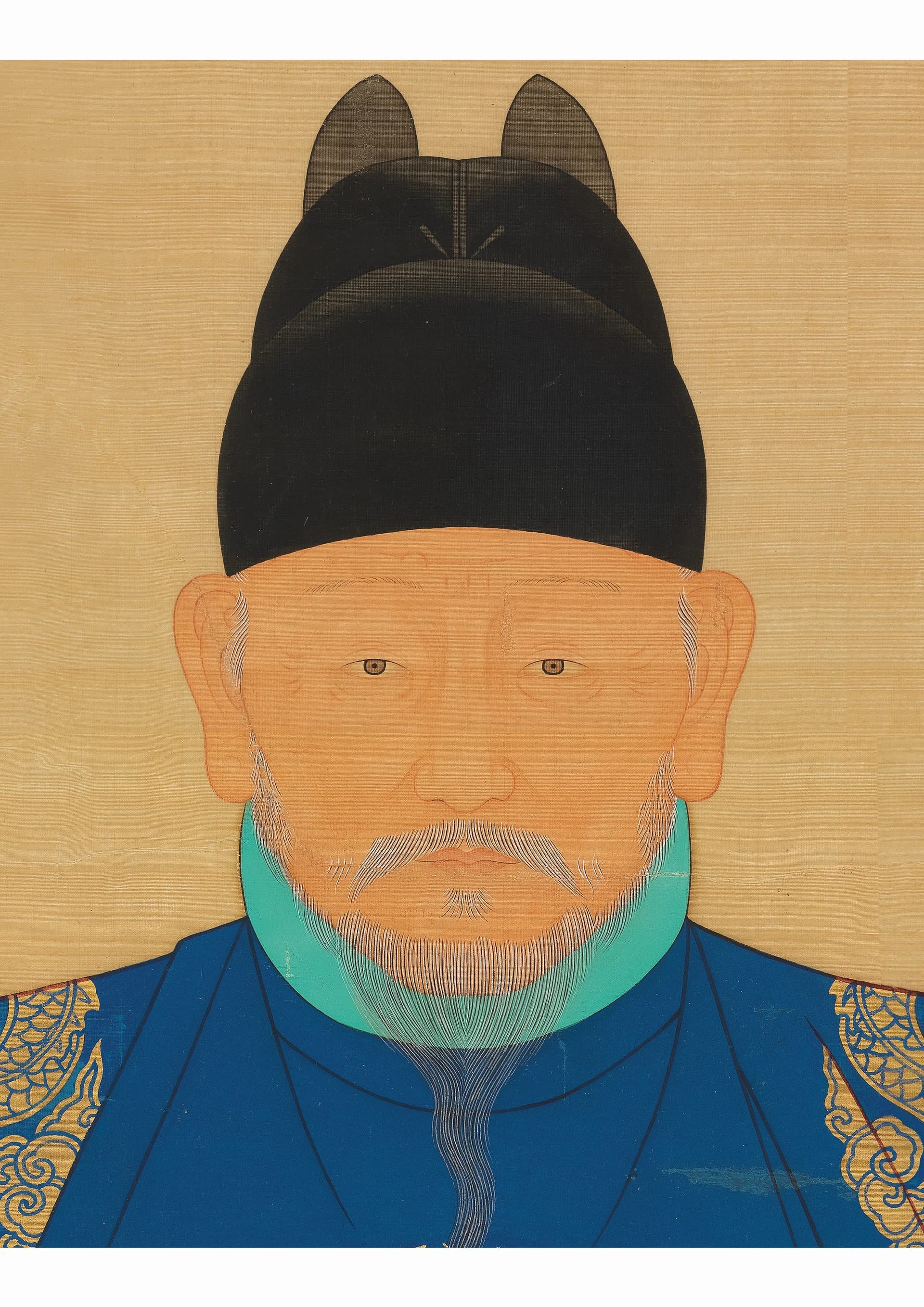
Taejo Yi Seong-gye ©heritage.go.kr - King Yeongjo: His portrait from his younger days as Prince Yeoning and his official 51st-birthday portrait remain preserved.
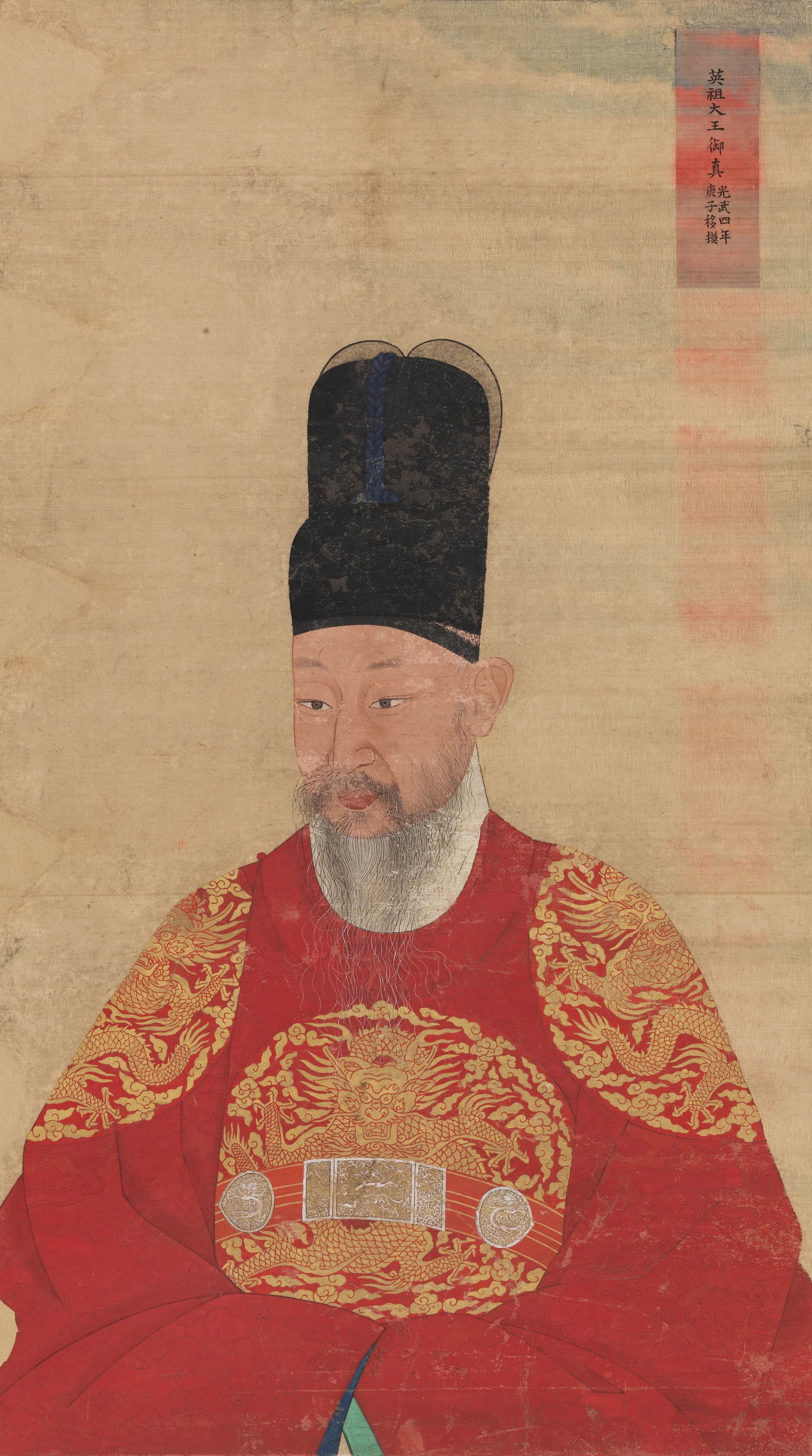
Portrait of King Yeongjo ©heritage.go.kr - King Cheoljong: Although the right side burned in the Yongdusan fire, the left side of his face remains visible to identify his features.
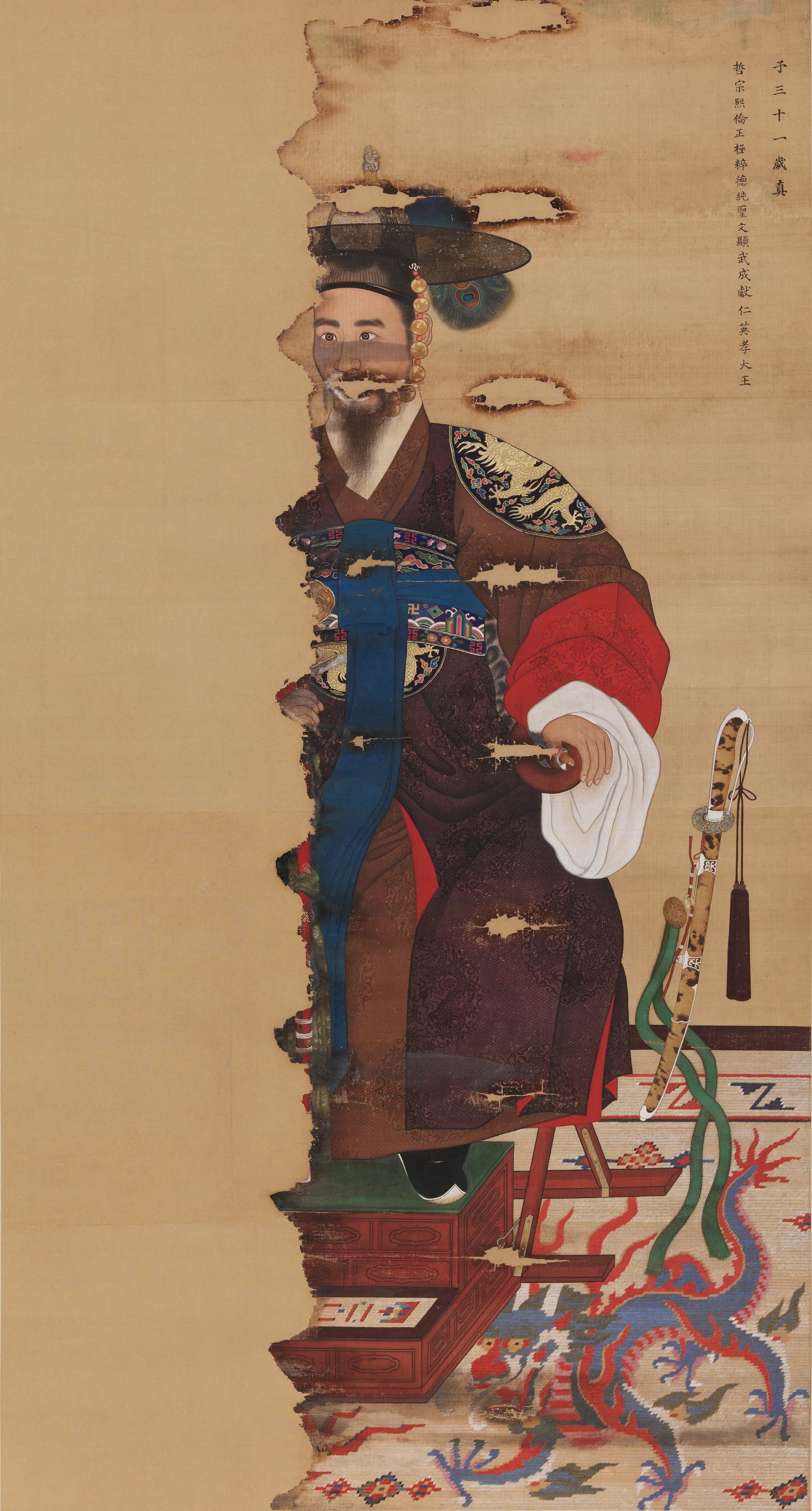
Portrait of King Cheoljong ©heritage.go.kr - Emperors Gojong and Sunjong: Detailed portraits and black-and-white photographs from the Korean Empire period remain preserved.
Recommended Guides
Munjong, Danjong, Seojo, Yejong: Tragic Royal History and Hidden Stories of Joseon
Seongjong, Yeonsangun, Jungjong, Myeongjong: The Turbulent Royal History of the Mid-Joseon Dynasty
King Seonjo and King Gwanghaegun: The Whirlwind of the Imjin War and Practical Neutral Diplomacy