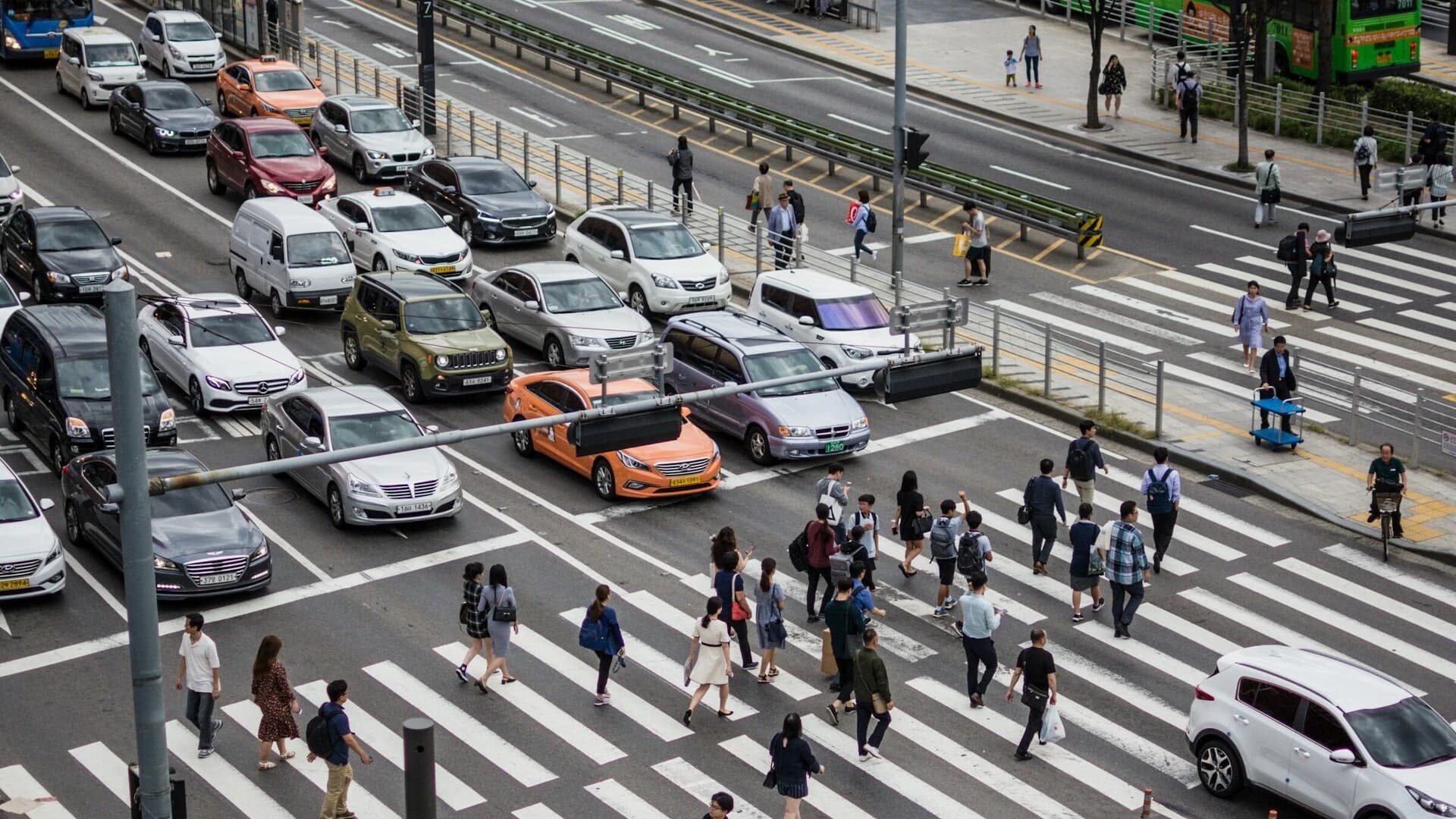
South Korea boasts a world-class public transportation system. The subway and bus networks closely connect the Capital Area as well as major cities nationwide, systematically designed so that foreign travelers can use them easily and affordably. In this chapter, we will learn about standard public transportation (subway, bus, taxi, etc.) that can be conveniently used without advance seat reservations, their fare systems, and transit cards (such as Tmoney) that help you use them effortlessly.
Standard Fare System for Unreserved Public TransportationProvides age categories, fare standards, and discount benefits for transportation modes without assigned seats, such as subways, city buses, and express buses.
The basic age and fare system for city public transportation (subway, city bus, etc.) is as follows. You can receive discount benefits by purchasing and registering a prepaid or postpaid transit card in advance.
- Adult (Standard): Ages 19 and older. Standard public transportation base fare is charged.
- Youth: Ages 13 to 18. A discounted youth fare applies. You must register your date of birth when registering the transit card for the discount to be charged correctly.
- Child: Ages 6 to 12. A child fare of approximately 50% of the adult fare applies. Like youth cards, you need to register the card for a child discount upon purchase.
- Infant (Toddler): Under age 6 (Ages 0 to 5). When traveling with an accompanying adult, up to 3 infants can travel for free. However, if an adult travels with more than 3 infants, or if an infant travels alone, a child fare will be charged for the additional infants.
- Other Transportation Modes (Express/Intercity Buses and Trains):
- Express buses, intercity buses, and trains (KTX, SRT, etc.) that require assigned seats operate under a separate fare system different from standard city public transit. Detailed age criteria and reservation requirements for these can be found in their respective detailed sections in this guide.
How to Register Child/Youth Transit Cards: When purchasing a transit card at a convenience store or customer information center inside a subway station, present the user's date of birth (or passport) to the clerk to register the card type for a child or youth discount. Please note that if used without registration, the standard adult fare will be deducted.
Types of BusesDescribes the roles and types of buses nationwide across South Korea.
Buses in South Korea are systematically classified according to travel distance and route characteristics, ranging from inner-city buses to long-distance buses connecting different cities.
- Express buses and intercity buses requiring assigned seats are detailed in the Korea Train & Express Bus Booking Guide.
1. City Buses, Village Buses, Circular Buses, and Night Buses
- City Bus:
- Standard daily buses that run extensively within a city, stopping at all designated stops. Fares are calculated based on a base rate system, making them convenient for short daily travel.
- Village Bus (Maeul Bus):
- Small buses running through narrow alleys, dense residential areas, or elevated hill zones where large city buses cannot easily enter. They quickly connect residents to nearby subway stations or major bus stops.
- Circular Bus:
- Buses that loop only around major commercial districts and famous tourist zones (e.g., Namsan in Seoul) within the city center. They are specialized to maximize travel convenience within specific areas.
- Night Bus (Late-Night Bus):
- Special buses operating during late-night hours (mainly from midnight to early morning) when general public transit services stop. They are a valuable option to reduce taxi expenses late at night.
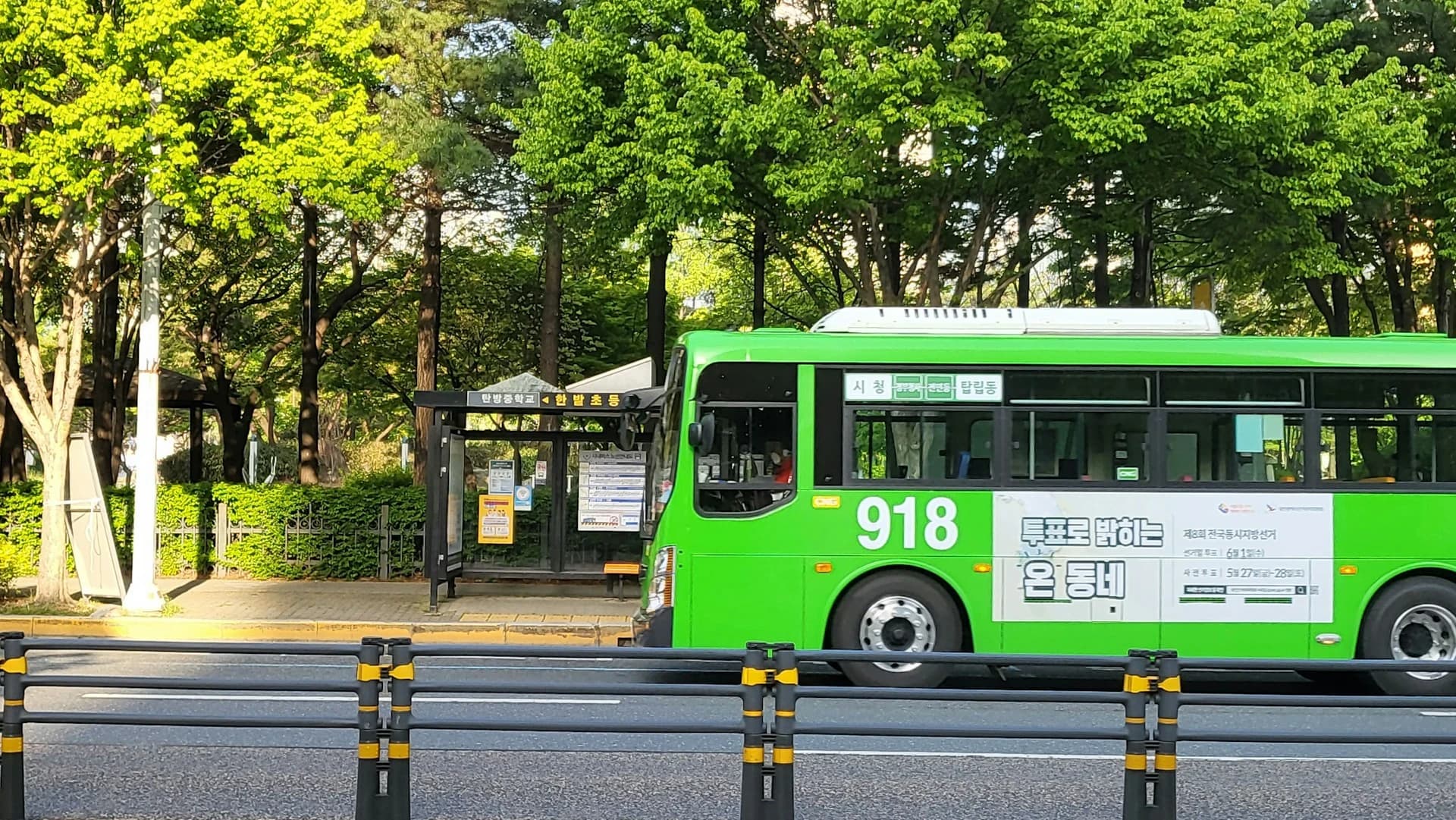
💡 Carry-on Luggage Standards for City Buses: The weight and size limits for carry-on items (luggage) on city buses are as follows:
- Weight Limit: Luggage weighing between 10 kg and under 20 kg per person is allowed on board.
- Size Limit: Only luggage of carry-on size under 50 × 40 × 20 centimeters can be brought into the bus.
- Boarding Denial for Safety Hazards: Even if luggage is within the size and weight limits, drivers may deny boarding if they determine that it blocks aisles or doors, hindering passenger movement or posing a safety hazard.
- Important Note: Detailed criteria may vary by region, so be sure to check the local 'City (Village) Bus Transport Terms and Conditions' before boarding with large suitcases or bulky luggage.
2. Rapid Transit / Express City Bus (Gwangyeok Bus)
- Public transit buses that rapidly connect major city centers with outer satellite cities (e.g., Gyeonggi-do in the Capital Area, Gyeongnam in the Busan Area). Unlike standard intercity buses, you can conveniently tag on and off with a transit card, and integrated transfer discounts apply when transferring to/from subways and city buses.
- Because these buses travel via expressways or designated motorways, standing passengers are strictly prohibited for safety reasons. Boarding is not permitted if no seats are available. During peak commuting hours in the Capital Area, buses often reach full capacity quickly, so plan your itinerary accordingly.
Core Rules for Metropolitan Transit: Card Tapping and Integrated Transfer Discounts:
- Transit Card Usage and Boarding Method:
- On express city, city, village, circular, and night buses, you can board and alight simply by tapping your transit card on the reader.
- Generally, the standard rule is to board through the front door and tap your card, and alight through the rear door while tapping again on the exit reader.
- However, during congested peak hours, boarding through the rear door and tapping your card is exceptionally permitted. When alighting, simply tap your card on the rear exit reader as usual.
- Mandatory Exit Tap and Transfer Benefits: You must tap your card on the exit reader again when getting off the bus. Completing the exit tap enables you to receive integrated transfer discounts when transferring to another bus route or subway, saving significantly on base fares. Please note that transfer discounts will not apply if you fail to tap off.
Other Buses
- Airport Limousine Bus:
- Large buses that connect major city areas directly to international airports. With spacious luggage compartments and comfortable seating, they are the most convenient choice for travelers with travel luggage heading to or from the airport.
- Sightseeing City Tour Bus:
- Specialized circular sightseeing buses allowing tourists to conveniently explore key city landmarks. You can get on and off freely at desired tourist attractions throughout the day by presenting your day ticket.
💡 Airport Limousine Bus Luggage Regulations: The rules for carry-on items taken inside the bus and checked luggage loaded into the lower luggage compartment of airport buses are as follows:
- Carry-on Luggage inside the Bus:
- Allowed up to 2 items per person, limited to small luggage under 50 cm width × 40 cm length × 20 cm height and weighing under 20 kg.
- Checked Luggage in the Lower Compartment:
- Up to 2 suitcases under 28 inches or 1 large suitcase over 28 inches can be loaded free of charge per ticket.
- An excess luggage fee of 50% of the corresponding bus fare (approx. 8,000 KRW) will be charged for each item exceeding the free allowance.
Tips for Using and Booking Incheon/Gimpo Airport Limousine Buses:
- When traveling from the airport to the city center: Departing passengers with reserved seat tickets receive priority boarding, and transit card boarding is allowed only if remaining seats exist. Therefore, when departing from the airport, it is recommended to purchase a ticket in advance at ticket counters or automated kiosks.
- When traveling from the city center to the airport: No advance booking is required; simply tap your transit card on the reader upon boarding just like a regular city bus.
Metro and SubwayCovers features of urban railway (subway) systems and commonly used terminology.
In South Korea, the terms 'Jeoncheol' (electric train) and 'Jihacheol' (subway) are used interchangeably without a strict distinction. Whether running above ground or underground, passengers use the same platforms and transfer systems, so you can treat them as the same system.
- How to Ride the Subway (Using Transit Cards or Single-Use Cards):
- When you have a Transit Card:
- Tap your transit card on the card reader at the turnstile gate to enter, then board the train. When exiting at your destination, tap your card on the exit turnstile reader to pass through.
- When you do not have a Transit Card (Using Single-Use Transit Cards):
- You must purchase a single-use transit card from the 'Single-Use Ticket Vending and Deposit Refund Machines' located inside subway stations. Select your destination and pay the subway fare plus a 500 KRW deposit in cash to issue the card.
- After tapping this single-use card at turnstiles to complete your trip, insert the card into a 'Deposit Refund Machine' in the concourse to get your 500 KRW deposit back in cash.
- When you have a Transit Card:
- World-Class Infrastructure:
- South Korea's subway system is globally recognized for its clean air-conditioning and heating systems, real-time arrival screens, platform screen doors installed across all lines for safety, and wireless internet (Wi-Fi) access onboard.
- Extensive Route Networks in Major Cities:
- Convenient subway networks are established in the Seoul Metropolitan Area, as well as major cities nationwide like Busan, Daegu, Gwangju, and Daejeon, allowing you to reach your destination on time.
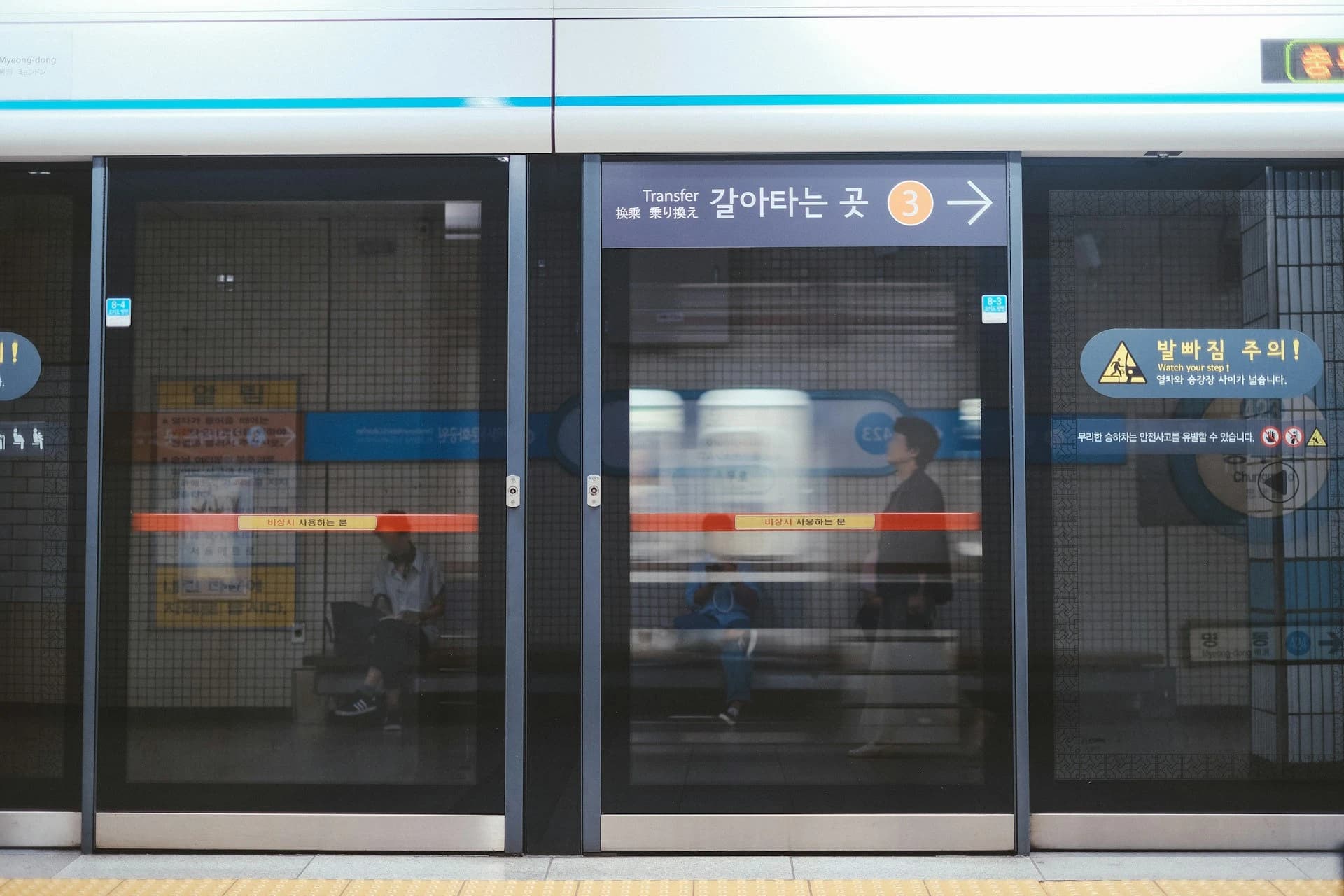
Important Payment and Discount Rules for Subway Trips:
- No Multi-Passenger Payments on Subways: Unlike buses where one card can pay for multiple passengers, subways strictly enforce a 1-card-per-person rule. When traveling together, each person must hold and tap their own transit card at turnstiles.
- Transit Card Required for Discount Benefits: Capital Area subway 15-minute re-entry fare exemptions and public transit transfer discounts apply exclusively when using prepaid or postpaid transit cards. Single-use transit cards are ineligible for these benefits, making a reusable transit card essential for traveling in Korea.
Transfer System in KoreaDescribes integrated transfer fare systems and detailed rules across South Korean transit modes.
South Korea (especially the Capital Area and major metropolitan cities) operates an integrated transit fare system that maximizes transfer benefits between public transportation modes. To save on fares and travel efficiently, make sure to understand the following transfer rules.
1. Basic Transfer Rules (Common)
- Mandatory Exit Tap:
- You must tap your transit card on the reader when getting off a bus or exiting subway turnstiles. If you miss tapping off, transfer discounts will not apply to your next transit ride, and a base fare will be charged doubly.
- Transfer Window Time:
- You must board the next transport mode within 30 minutes from the time of your exit tap to receive a transfer discount.
- Late-Night Extension Benefit: During late-night hours (9:00 PM to 7:00 AM the next day) when transit intervals are longer, the transfer window is extended to within 60 minutes.
- Maximum Allowed Transfers:
- Discount benefits are maintained for up to 4 transfers (5 total rides) during a single journey to your destination.
- One Card Per Person Rule:
- Even if multi-passenger fares are paid simultaneously on a bus with a single card, transfer discounts apply only to the primary cardholder. Accompanying passengers cannot receive transfer discounts, so it is best for each traveler to carry their own card.
2. Cases Where Transfers Are Not Allowed (Precautions)
- No Transfers on the Same Route:
- Transfer discounts do not apply if you board a bus with the same route number again or exit a subway turnstile and re-enter the same station.
- No Out-of-Station Subway Transfers:
- When transferring between subway lines, use the transfer passageways inside turnstiles. If you exit subway turnstiles completely, tap out, and enter turnstiles again for a different subway line (e.g., a different line train), it is not recognized as a transfer and a new base fare will be charged.
3. Special Features and Distance-Based Fares
- Distance-Proportional Fare System:
- When using the transfer system, if your total travel distance exceeds the basic distance of 10 kilometers (30 kilometers for express city buses), an additional fare of about 100 KRW for every 5 kilometers is added and charged upon your final exit tap.
Preventing Common Mistakes: Same Card Rule for Transfer Discounts:
- Always Use the Same Card for Entry and Exit: Integrated transfer discounts apply only when the exact same transit card is used continuously throughout all transfer legs. For example, if you tap a mobile transit card on your smartphone for the subway and tap a physical credit card for the bus, they are recognized as separate cards, resulting in double base fare charges.
- Consistent Card Usage Recommended: To ensure you never miss transfer discounts, we recommend using a single Tmoney card—Korea's representative prepaid transit card—for all public transportation taps throughout your trip.
Tmoney: Korea's Representative Transit CardProvides usage, recharge, and refund guidelines for Tmoney prepaid transit cards, an essential travel item in Korea.
Here is how to buy, reload, and get refunds for Tmoney, the most widely used prepaid transit card for traveling conveniently on public transit and receiving transfer discounts in Korea.
- Payment on Public Transit and Partnered Stores:
- Tmoney is the most universal transit card accepted on buses, subways, and taxis nationwide. Besides public transport, it can also be used as a payment method at convenience stores and major franchise chains (select cafes, bakeries, etc.), though it cannot be used at regular restaurants or small retail shops.
- Notifying Staff at Partnered Stores: When paying with Tmoney at partner stores like convenience stores, inform the clerk "I'll pay with Tmoney" before tapping your card. The staff needs to switch the payment terminal mode to transit card payment for successful processing.
- How to Purchase and Reload:
- You can easily buy a physical card at convenience stores, subway station ticket offices, or automated reload machines nationwide. (Card prices range from approximately 3,000 KRW to 5,000 KRW.)
- Reloading is available only with physical Korean Won (KRW) cash at convenience store counters or subway station reload machines, so keep a reasonable amount of cash on hand for top-ups.
- Card Validity and Balance Retention:
- Permanent Lifetime: Tmoney cards have no expiration date and can be used permanently as long as the card is not physically damaged.
- Balance Preservation: Even if 5 years pass since your last use, your reloaded balance does not expire and can be fully refunded or used anytime, making it fine to keep for your next trip to Korea.
- Refund Guidelines and Fees:
- Instant Refunds for Small Balances: Remaining balances can be refunded on the spot at convenience stores (GS25, CU, Seven-Eleven, etc.) or subway station customer information centers.
- Refund Limits and Processing Fees: Small amounts up to 20,000 KRW at convenience stores and up to 50,000 KRW at subway stations can be refunded in cash, with a 500 KRW refund fee deducted. The initial cost of the physical card (3,000 to 5,000 KRW) is non-refundable.
Taxis in KoreaExplains taxi types, fare systems, convenient payment options, and mobile ride-hailing app tips in South Korea.
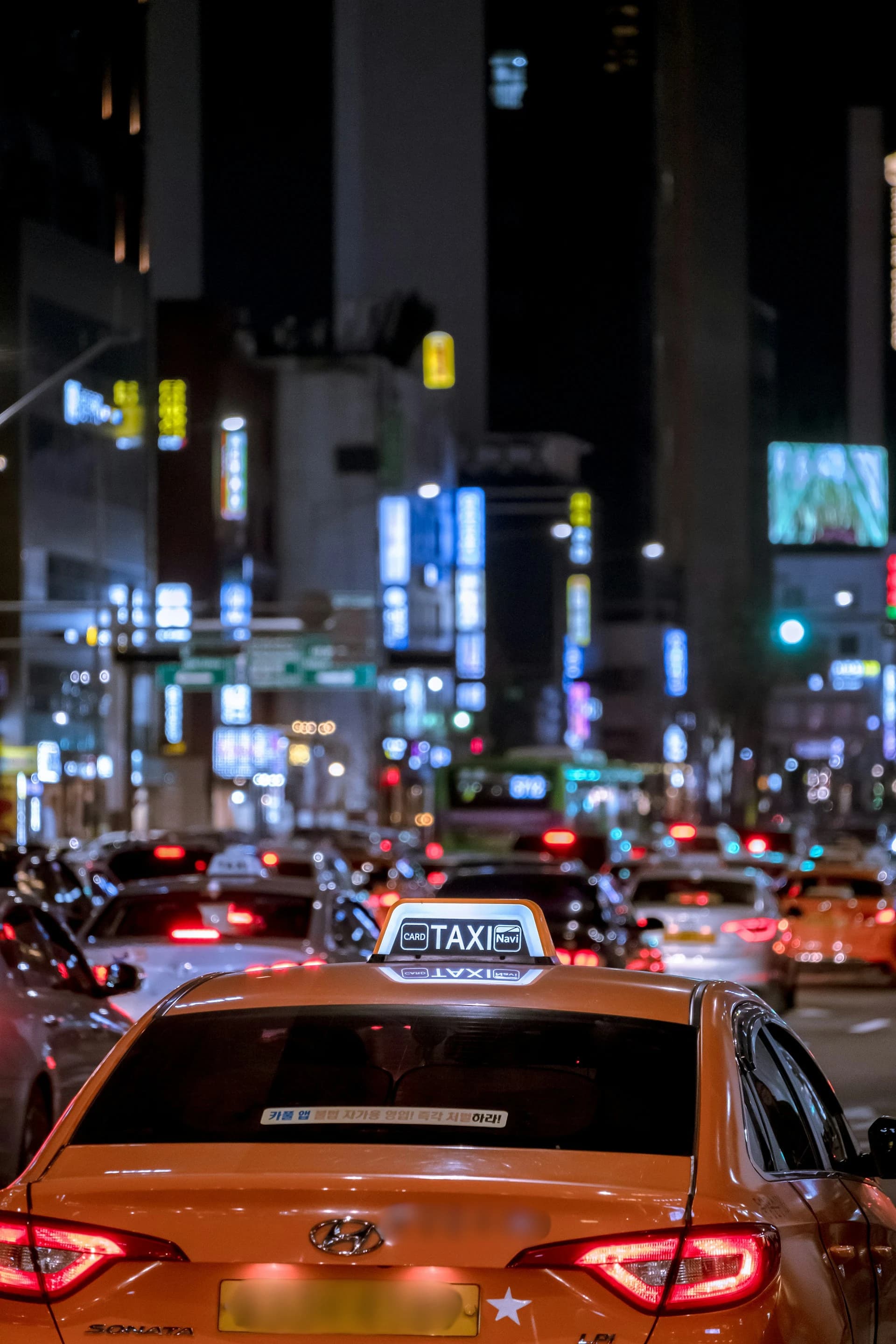
Taxis in South Korea offer relatively affordable fares, excellent accessibility, and clean vehicles, making them a very useful transport option when carrying heavy luggage or traveling late at night after public transit stops.
1. Types and Features of Taxis
- Standard (Mid-sized) Taxi:
- Comes in various colors by municipality, such as orange (Haechi taxi) in Seoul, white, silver, or black. It is the most common taxi type with the lowest base fare.
- Deluxe Taxi and Jumbo Taxi:
- Deluxe Taxi (Mobeom Taxi): Features a black body with a yellow roof cap and gold side stripes. Operated by veteran drivers with long accident-free records, offering a comfortable ride with a higher base fare than standard taxis.
- Jumbo Taxi (VAN): Van-type vehicles (Carnival, Staria, etc.) useful when carrying extra luggage or traveling in groups of 4 or more.
- International Taxi (Foreigner-Exclusive Taxi):
- Taxis operated by drivers capable of communicating in foreign languages (English, Japanese, Chinese, etc.), available through advance booking at Incheon Airport or major tourist information centers.
2. Fare System and Payment Methods
- Meter-Based Metered Fares:
- All taxis in South Korea calculate fares using taximeters. The trip starts at a base fare, and the meter automatically increases based on distance and travel time.
- Late-Night and Out-of-City Surcharges:
- Late-Night Surcharge: A late-night surcharge of 20% to 40% is automatically applied during late hours (usually 10:00 PM to 4:00 AM).
- Out-of-City Surcharge: Applied when leaving the city of departure (administrative district) and entering another city.
- Incheon Airport Out-of-City Surcharge Exception: When taking a taxi from Incheon International Airport to 6 designated cities—Seoul, Incheon, Goyang, Gwangmyeong, Gimpo, and Bucheon—a joint business area exemption applies, meaning no out-of-city surcharge is charged. (However, for destinations outside these 6 cities, such as Suwon or Seongnam, the out-of-city surcharge applies normally.)
- Various Payment Methods Supported:
- Almost all taxis accept credit cards (including international cards), prepaid transit cards (Tmoney, etc.), and cash. Tap your card on the vehicle terminal or pay cash when alighting.
3. Boarding Tips and Using Mobile Ride-Hailing Apps
- Using Taxi Stands at Airports and Major Train Stations:
- At dedicated taxi stands at Incheon Airport, Gimpo Airport, major train stations (Seoul Station, Yongsan Station, etc.), and bus terminals, taxis queue up continuously, so you can board directly in line without using a mobile app.
- Mobile App Hailing Essential in Downtown Areas (Kakao T and UT):
- Unlike at airports or train stations, hailing a passing empty taxi by waving on regular downtown streets can be difficult, as most taxi drivers move after accepting passenger bookings via mobile apps.
- Therefore, using mobile hailing apps like Kakao T or UT (Uber) is essential when taking a taxi in city centers.
- Specifying your departure point and destination in advance via the app allows foreign travelers unfamiliar with Korean to travel safely and quickly without communication stress.
💡 Safety and Overcharge Prevention Tips for Taking Taxis:
- Check the Taximeter: After boarding, verify that the meter display next to the driver's seat turns on properly starting at the base fare. Pay only the legitimate meter rate to avoid overcharging.
- Keep the Receipt: Ask for a receipt upon alighting. If you leave personal belongings or bags inside the vehicle, the receipt contains the taxi type, license plate number, and driver contact info to help you recover your items quickly.
Sightseeing Tourist Taxi SystemIntroduces usage and booking tips for customized tourist taxis, where you pay for fixed hours to explore desired attractions freely.
The Tourist Taxi System is a customized travel service useful when traveling in areas with limited public transportation or cities where major tourist attractions are spread apart. Instead of fixed routes, you can travel safely and conveniently along your preferred itinerary.
- Flat Time-Based Fare System:
- Unlike regular metered taxis, you pay a fixed flat rate based on hours of use (e.g., 3 hours, 5 hours, 8 hours, etc.). Additional charges apply if time exceeds the base booking.
- Many local governments subsidize part of the fare to attract tourists, allowing travelers to hire a chartered vehicle service at relatively affordable prices.
- Customized Flexible Itineraries:
- You can follow recommended sightseeing routes provided by local municipalities or customize your own itinerary by selecting specific attractions and restaurants you wish to visit.
- Local taxi drivers well-versed in the region serve as drivers and double as local guides, providing brief introductions and local dining recommendations.
- Important Guidelines:
- Advance Reservation Required: Tourist taxis cannot be hailed on the street on the day of travel; reservations must be made at least 1 to 3 days in advance.
- Additional Expenses Excluded: The flat rate usually covers vehicle charter fees and fuel only. Extra costs like entrance fees, parking fees, highway tolls, and personal meals must be paid separately by travelers, so check inclusion details carefully upon booking.
- How to Book:
- Bookings can be made online or by phone through official municipal tourism websites or local tourist information centers (call centers).
- Recently, reservations and payments can also be made easily via private tourist taxi booking platforms (e.g., ROYKU) or mobile transportation apps.
Demand Responsive Transit (DRT) BusesProvides usage instructions and limitations for Demand Responsive Transit buses that alter routes based on passenger bookings.
Demand Responsive Transit (DRT) is a modern public transportation system operating flexible routes adjusted in real time based on passenger calls, without fixed routes or timetables. DRT buses mainly operate in peripheral areas with limited public transit or around specific tourist zones.
- Representative DRT Services:
- Well-known services include TABARA Gijang operating in Gijang-gun, Busan, and C-Tour Bus running in Buyeo-gun and Gongju-si, Chungcheongnam-do.
- Limitations and Precautions for Foreign Travelers:
- Mobile App Identity Verification Required: Calling a vehicle via smartphone apps requires completing identity verification using a Korean phone number. This makes it difficult for international travelers without a Korean SIM card or phone number to use the service.
- Phone Booking & Language Limitations: While vehicle hailing via phone call is supported, language barriers with operators may occur, presenting limitations for foreign tourists trying to use the service independently.
Recommended Guides
Korea Accommodation Types and Booking Guide
Korea Train & Express Bus Booking Guide
Must-Have Korea Travel Apps