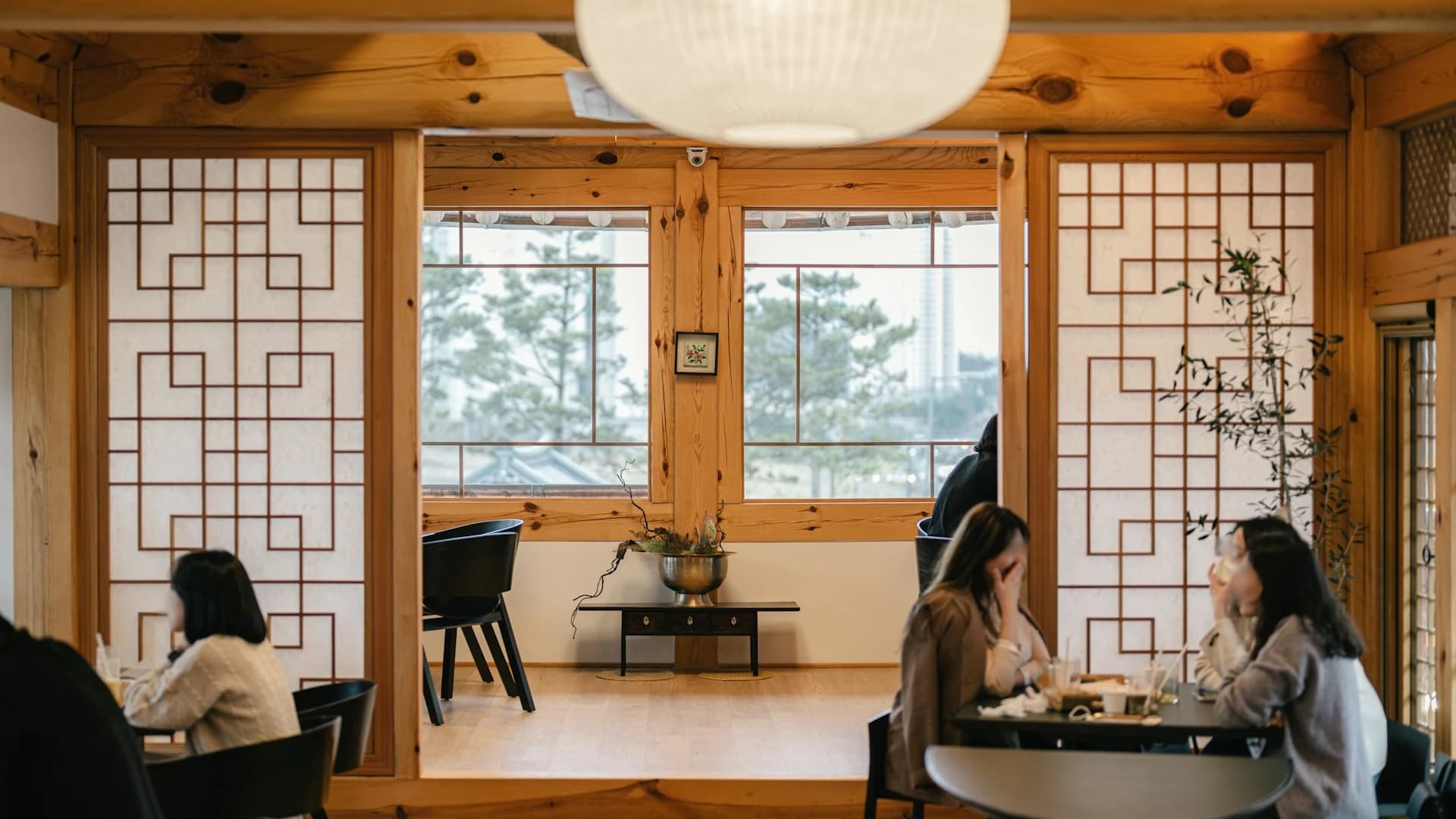
South Korea combines a long history with a dynamic modern society, presenting foreign travelers with a fascinating and unique daily culture. Here are interesting aspects of Korean lifestyle that are natural to locals, but often surprise and intrigue international visitors.
Three Unique Age Calculation Methods in KoreaExplains the differences between traditional Korean age (counting age), legal age (international age), and year age used for administrative convenience.
One of the most confusing things foreign travelers experience when making Korean friends is how age is calculated. Korea historically used three different age systems based on tradition, law, and administrative practice.
- Korean Age (Counting Age - 1 Year Old at Birth):
- Traditionally, Korea counted a newborn baby as 1 year old at birth, recognizing the roughly 10-month pregnancy period as part of life.
- Everyone gained a year together on New Year's Day (January 1st), regardless of their actual birthday. (For example, a baby born on December 31st became 2 years old on January 1st, just two days after birth.)
- International Age (Official Legal & Administrative Age):
- Identical to the international standard, starting from age 0 at birth and adding 1 year on every birthday.
- To prevent age confusion in daily life, recent legal revisions unified Korea's official legal and administrative standards to 'International Age'. However, many locals still use Korean age in casual social settings.
- Year Age (Legal Standard for Youth Regulation):
- To ease administrative complexity caused by individual birth dates, special laws apply 'Year Age', calculated simply by subtracting the birth year from the current year.
- Mainly used for alcohol/tobacco purchase limits and military service duties. Individuals are legally treated as adults (exempt from youth protection laws) on January 1st of the year they turn 19, even if their birthday has not yet passed.
- A Unique Scene on New Year's Eve: Due to this 'Year Age' rule, every December 31st night, high school seniors holding their IDs line up outside popular nightlife bars, eagerly waiting for the midnight countdown to legally enter at 00:00 on January 1st.
💡 Unique Age and Addressing Culture in Korea: When meeting people in casual settings, Koreans often ask about age early in the conversation. This helps determine the correct polite terms and respectful language level. When addressing older people, friendly family-style terms are widely used depending on both people's genders:
- If you are male:
- Hyung: Friendly term for an older male
- Noona: Friendly term for an older female
- If you are female:
- Oppa: Friendly term for an older male
- Unnie: Friendly term for an older female
Friendly Terms Used in Restaurants and Daily Life:
- Imo (or Imonim): Literally meaning "aunt", this term is used to address middle-aged female staff in traditional markets, older local spots, or Korean BBQ restaurants without call buttons. It creates a warm, friendly connection even without actual family ties.
- Sajangnim: Meaning "boss" or "owner", this is the safest and most respectful universal term for store managers regardless of age, gender, or exact title. When calling younger staff or dining in formal restaurants, using a polite "Jeogiyo" (Excuse me) is standard.
The Relational Word 'Woori' (We/Our)Introduces how the word 'Woori' reflects Korea's unique community-oriented culture that values group connections over individualism.
One of the most frequently used and interesting Korean words for travelers is 'Woori' (meaning "we" or "our"). Koreans habitually use 'Woori' instead of 'My' when describing personal possessions or relationships.
- 'Our Mom' Instead of 'My Mom':
- Western languages commonly use first-person singular possessives like "my family", "my spouse", or "my house".
- In contrast, Koreans say "our mom", "our wife", "our husband", "our house", and "our country". Even an only child without siblings naturally refers to their parents as "our mom" and "our dad".
- Community Culture and Relational Sentiment:
- This unique language habit comes from Korea's community-oriented mindset, viewing individuals as part of family or societal relationships rather than isolated units.
- Expressing things as "ours" builds emotional solidarity, welcoming people into a shared, friendly boundary rather than separating them as strangers.
- A Common Misunderstanding for Travelers:
- When Koreans introduce their spouse by saying "This is our wife" or "This is our husband", foreign travelers translating literally sometimes feel confused, thinking the spouse is shared.
- Rest assured, this is simply a warm, customary expression showing close bond, not literal shared ownership.
Etiquette for Travelers with Babies and the Culture of 'Jeong'Describes etiquette changes around young children in Korean society and the warm culture of 'Jeong' (affectionate bond).
Here is helpful etiquette when traveling in Korea with babies, along with everyday examples showing Korea's unique culture of 'Jeong' (warmhearted affection).
- Changing Perspectives on Touching Babies:
- In the past, strangers or neighbors touching a baby's cheek on the street was accepted as a friendly gesture of affection.
- Today, out of hygiene and health concerns for babies with weaker immune systems, not touching a child's face or body without permission has become standard etiquette.
- If elderly locals reach out affectionately toward your child, it comes from innocent fondness. Handle the situation flexibly, and politely decline if you feel uncomfortable.
💡 Warm Neighbors on the Street: Cool Expressions of 'Jeong':
- Koreans have a warmhearted culture called 'Jeong', often showing deep kindness to strangers while walking away quietly as if it were nothing.
- For example, when a foreign couple visiting N Seoul Tower with a baby faced sudden cold weather without baby socks, a passing local kindly put their own extra baby socks on the infant and walked away casually. This warm care for strangers is an unexpected, touching experience you may encounter while traveling in Korea.
Korean Dining Etiquette: Harmony of Tradition and ModernityExplains traditional table manners, such as elders eating first and keeping rice bowls on the table.
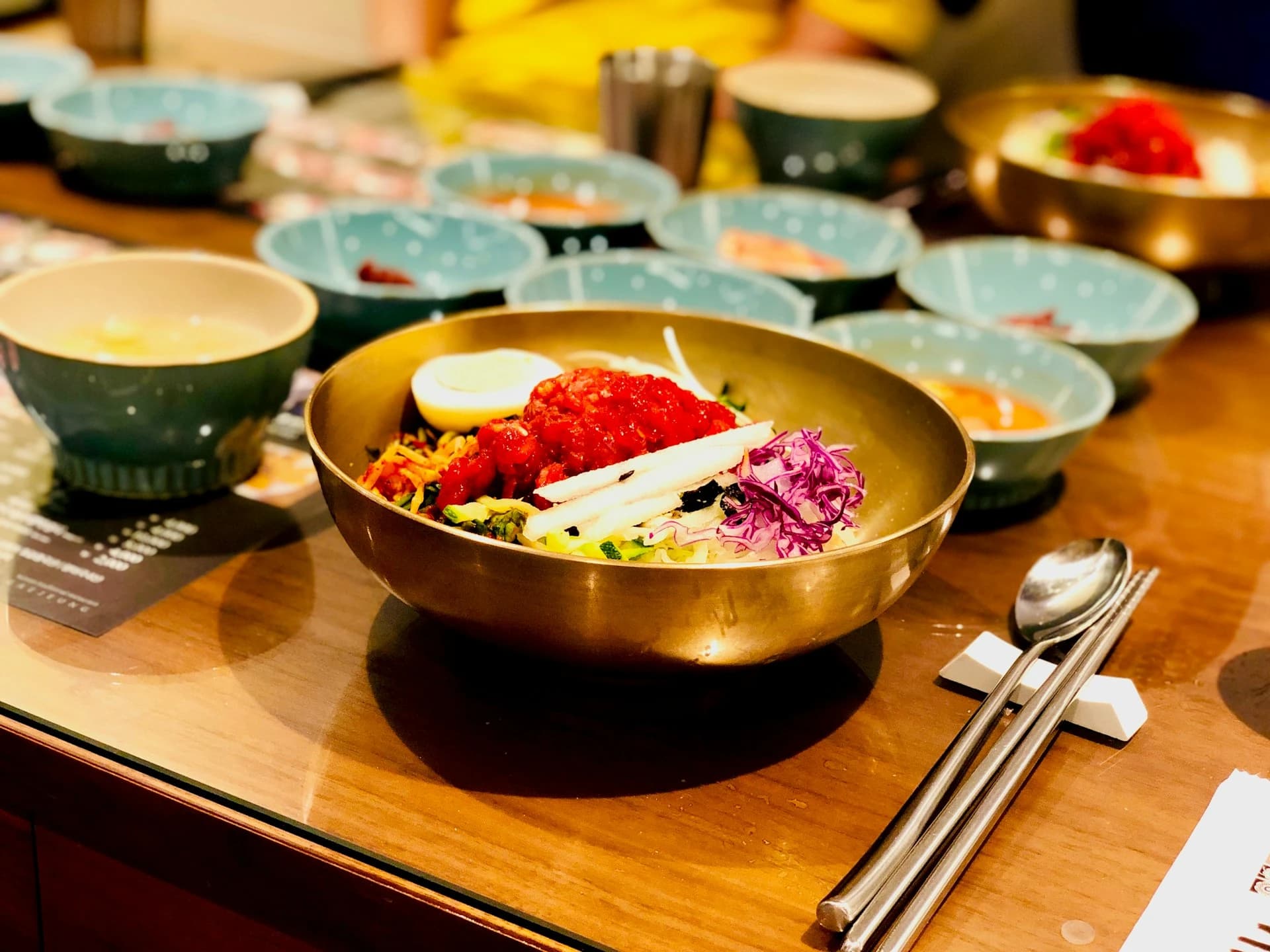
Dining etiquette is a key topic in travel guidebooks for Korea. While rules have become more relaxed in modern times, keeping essential table manners in mind remains helpful for formal occasions.
💡 Korean 'Babsangmeori Etiquette': In Korea, traditional table manners and dining etiquette are collectively called Babsangmeori Etiquette. Beyond dining rules, it is often viewed as a measure of basic home upbringing and courtesy.
- Wait for Elders to Start Eating:
- When dining with older adults, wait for them to pick up their spoon or chopsticks and begin eating first. Starting to eat before elders can be considered impolite.
- Keep Rice Bowls on the Table:
- Unlike neighboring Japan or China where lifting rice bowls to one's mouth is common, in Korea, bowls remain on the table while eating with spoons and chopsticks. Lifting bowls with your hands while dining is considered untidy in Korean culture.
- Using Spoons and Chopsticks Correctly:
- Do Not Stick Utensils Upright into Rice (Most Important): Never stick spoons or chopsticks vertically into a bowl of rice. This mirrors traditional memorial and funeral rites offered to deceased ancestors, making it an impolite gesture for Koreans.
- Do Not Hold Spoon and Chopsticks Together: Holding both utensils in one hand at the same time is considered bad manners. Use your spoon for soup and chopsticks for side dishes, holding one utensil at a time.
- Do Not Dig Through Side Dishes: Rummaging through shared side dish plates to pick out favorite pieces is unhygienic and impolite.
- Eat Quietly and Politely:
- Chew with your mouth closed to avoid making chewing noises.
- When eating noodle dishes like Ramyeon or Naengmyeon, eat politely with minimal slurping sound rather than slurping loudly.
- Handle utensils carefully to prevent clinking noises against bowls.
- Dish Combinations and Dining Tips:
- Mix Bibimbap Thoroughly: To enjoy the full intended flavor of Bibimbap, mix the rice, seasoned vegetables, and red pepper paste (Gochujang) thoroughly together before eating.
- Eat Wraps (Ssam) in One Bite: When making wraps with lettuce or sesame leaves filled with meat, garlic, and Ssamjang, eat the entire wrap in one bite. Eating it in one bite keeps all ingredients combined for full flavor and prevents meat juices or sauces from dripping.
Practical Tip for Formal Settings: While these rules are relaxed in casual daily meals, respecting basic etiquette when invited to a partner's parents' home or attending formal business meals with elders creates a polite and respectful impression.
Unique Drinking Culture: Courtesy and Warm ConnectionsCovers pouring and receiving drinks with both hands, drinking etiquette in front of elders, and enjoying Pajeon with Makgeolli on rainy days.
Drinking gatherings in Korea serve as an important social space for building connections and showing respect to elders beyond simple socializing. Here are polite traditional rules welcomed at Korean drinking tables:
- Pouring Drinks:
- Pour Respectfully with Both Hands: Hold the bottle with your right hand, supporting your right wrist or chest lightly with your left hand.
- Fill Appropriately: Fill glasses about 70–80% full without overflowing.
- Avoid Refilling Partial Glasses: Wait until a glass is completely empty before refilling. Pouring more alcohol into a partially filled glass is generally avoided in Korea.
- Receiving Drinks:
- Hold Glass with Both Hands: When an elder or senior pours a drink, hold your glass respectfully with both hands.
- Slight Bow: Bow your head lightly as a gesture of thanks and respect while your glass is being filled.
- Toasting and Drinking:
- Meaning of Geonbae: Derived from Chinese characters meaning "drying the glass", it literally means emptying your drink.
- Toasting Calls (Geonbaesa): Koreans enjoy short group calls before clinking glasses. The most popular phrase is "Wi-ha-yeo!", wishing health and happiness to everyone present. In formal settings, a simple "Geonbae!" is more standard.
- Casual "Jjan!" Culture: In friendly, casual settings, people use "Jjan!"—an playful sound mimicking clinking glasses—instead of formal toasts. Everyone clinks glasses saying "Jjan!", takes a drink, enjoys side dishes, and chats comfortably. Clinking glasses with "Jjan!" repeats naturally throughout the meal to keep spirits high.
- Clink Lower Than Elders' Glasses: When clinking glasses together (Geonbae), lowering the rim of your glass slightly below an elder's glass shows politeness and humility.
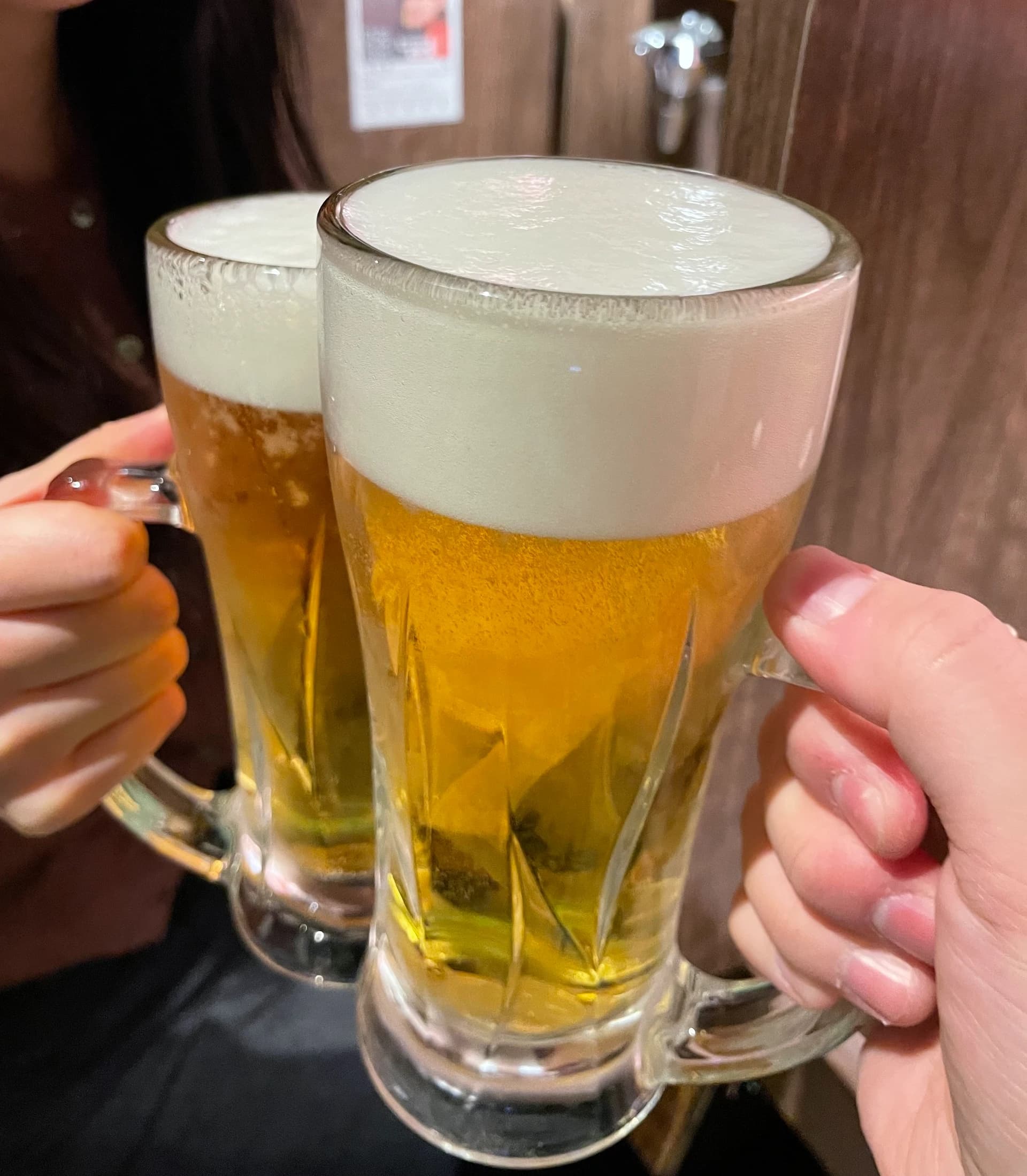
When clinking glasses with someone older, lower your glass slightly below theirs. - Turn Your Head Away When Drinking: In front of elders, avoid drinking while facing them directly. Turn your head slightly to the side and cover your mouth and glass lightly with one hand.
💡 Rainy Day Tradition: Pajeon and Makgeolli: On rainy days, Koreans naturally crave Pajeon (green onion pancake) and Makgeolli (traditional rice wine). A popular story says the sizzling sound of frying pancakes on a pan mirrors the sound of falling rain outside, naturally whetting the appetite.
The Mystery of Saying "Siwon-hada" (Refreshing) for Hot FoodExplains the unique Korean sensation of describing hot soup or hot baths as 'Siwon-hada'.
One of the most interesting words for Korean learners is 'Siwon-hada' (Refreshing). While dictionary definitions describe cold or pleasant temperatures, in Korea, it is broadly used whenever experiencing a soothing, satisfying feeling that relieves body tension or indigestion.
- Drinking Hot Soup:
- Taking a sip of piping hot hangover soup or stew, Koreans often exclaim, "Ah, Siwon-hada!" This expresses a soothing, refreshing sensation that relieves heaviness inside rather than describing cold physical temperature.
- Entering Hot Baths:
- Soaking in a hot bath at a public bathhouse, locals softly say "Siwon-hada". It describes muscle relaxation and fatigue melting away as warmth wraps around the body.
- Relieving Tension or Discomfort:
- Koreans also use "Siwon-hada!" when feeling muscle relief during a shoulder massage, experiencing relief after indigestion, or feeling refreshed after using the restroom.
💡 Language Tip to Sound Like a Local: When eating piping hot soup with Korean friends, close your eyes gently and exclaim, "Eoh, Siwon-hada~". Your friends will be impressed by your deep understanding of natural Korean nuances!
Expressive Diversity in Korean LanguageDescribes how Korean offers nuanced vocabulary for sensory details, emotions, colors, and textures.
Korean features highly detailed vocabulary for describing sensory feelings, emotions, colors, and textures, capturing subtle differences in nuance. Because of this, finding exact one-to-one translations in foreign languages can sometimes be challenging.
- Detailed Color Descriptions:
- Korean describes colors richly based on brightness, tone, and feeling. For example, beyond the standard word for 'yellow', Korean uses 'Saet-norat-da' for vivid bright yellow, 'Noreuseureum-hada' for soft yellowish tones, and 'Noreut-noreut-hada' for appetizing golden-yellow cooked foods.
- Texture Expressions:
- Food textures are described with precise nuance. Starting from 'Jjolgit-hada' (chewy and firm), expressions shift to 'Jjeondok-hada' (denser and stickier) or 'Jjeon-jjeon-hada' (elastic and tight).
- Nuances in Translation:
- These fine sensory nuances showcase the unique beauty and depth of the Korean language, though capturing their exact intensity in translation requires careful expression.
💡 Historical Milestone: Nobel Prize in Literature: Translating the delicate emotional nuances of Korean literature internationally was long considered difficult. However, in 2024, author Han Kang made history as the first Korean and first Asian female writer to win the Nobel Prize in Literature, showcasing the creative depth and beauty of Korean literature to the world.
World-Class Nighttime SafetyIntroduces Korea's safe nighttime environment, urban infrastructure, and evening street culture.
South Korea is recognized worldwide as one of the safest countries where people can walk freely at night.
- Safe Streets Even Late at Night:
- Nighttime safety in Korea allows individuals to walk alone or jog comfortably late at night or during early morning hours.
- Dense Safety Infrastructure:
- Urban areas are lit with bright LED streetlights, 24-hour convenience stores, and high-definition CCTV camera networks, keeping nighttime crime rates exceptionally low.
- Thanks to this safe environment, foreign tourists can enjoy evening walks or night travel comfortably well past midnight.
⚠️ Basic Precautions for Night Travel: While Korea boasts high safety levels, basic precautions are always advisable everywhere. Avoid wandering into extremely secluded alleys late at night, drink responsibly, and follow standard travel safety habits.
Public Trust and Leaving Belongings Unattended in CafesCovers Korea's unique cafe culture where people leave personal belongings on tables without fear of theft.
One of the most surprising things travelers notice in Korea is how people reserve tables in cafes and restaurants.
- Reserving Tables with Laptops:
- In Korean cafes, people comfortably leave laptops, smartphones, or bags on tables when going to the restroom.
- Thanks to dense CCTV coverage and high public honesty regarding personal belongings, theft risks are very low, serving as a prime example of Korea's public safety.
💡 Trust in 'Unattended Reserving' and Luggage Queues:
Leaving items at a cafe table while visiting the restroom is a convenient aspect of local public trust.
However, excessive cases have sparked discussion recently. At airport tax refund lines or popular restaurant queues, some people leave unattended suitcases standing in line while sitting far away. This practice creates severe hallway blockages and raises criticism for being inconsiderate toward travelers standing in line patiently.
Generous Side Dish Refills and 'Service' CultureDescribes how to politely ask for free side dish refills and the warm culture of complimentary food gifts ('Service').
Korean dining features a warm culture of 'Jeong', welcoming guests generously with complimentary food gifts and side dish refills.
- Politely Requesting Side Dish Refills:
- At Korean restaurants, basic side dishes like Kimchi, seasoned vegetables, and lettuce can be refilled for free when finished.
- Instead of simply asking for more, offering a light compliment like "This side dish is delicious, could we please have a little more?" brightens the staff's day, often bringing generous refills served with a smile.
- Complimentary Food Gifts: 'Service' Culture:
- When ordering large meals, visiting in groups, or becoming a regular customer, restaurant owners often bring extra items like drinks, dumplings, or savory pancakes to your table, saying "This is Service". In Korean dining, "Service" means a complimentary gift provided free of charge as a gesture of appreciation.
Tabletop Cooking Culture and Kitchen ScissorsIntroduces dynamic Korean tabletop grilling and using kitchen scissors to cut ingredients at the table.
Korean dining turns the table into an extension of the kitchen for an interactive meal experience.
- Tabletop Grilling:
- Unlike Western dining where meals are fully plated in the kitchen, Korean BBQ places feature gas burners or charcoal grills built directly into table centers so guests can cook meat fresh.
- Food stays hot and delicious throughout the meal, offering an engaging culinary experience.
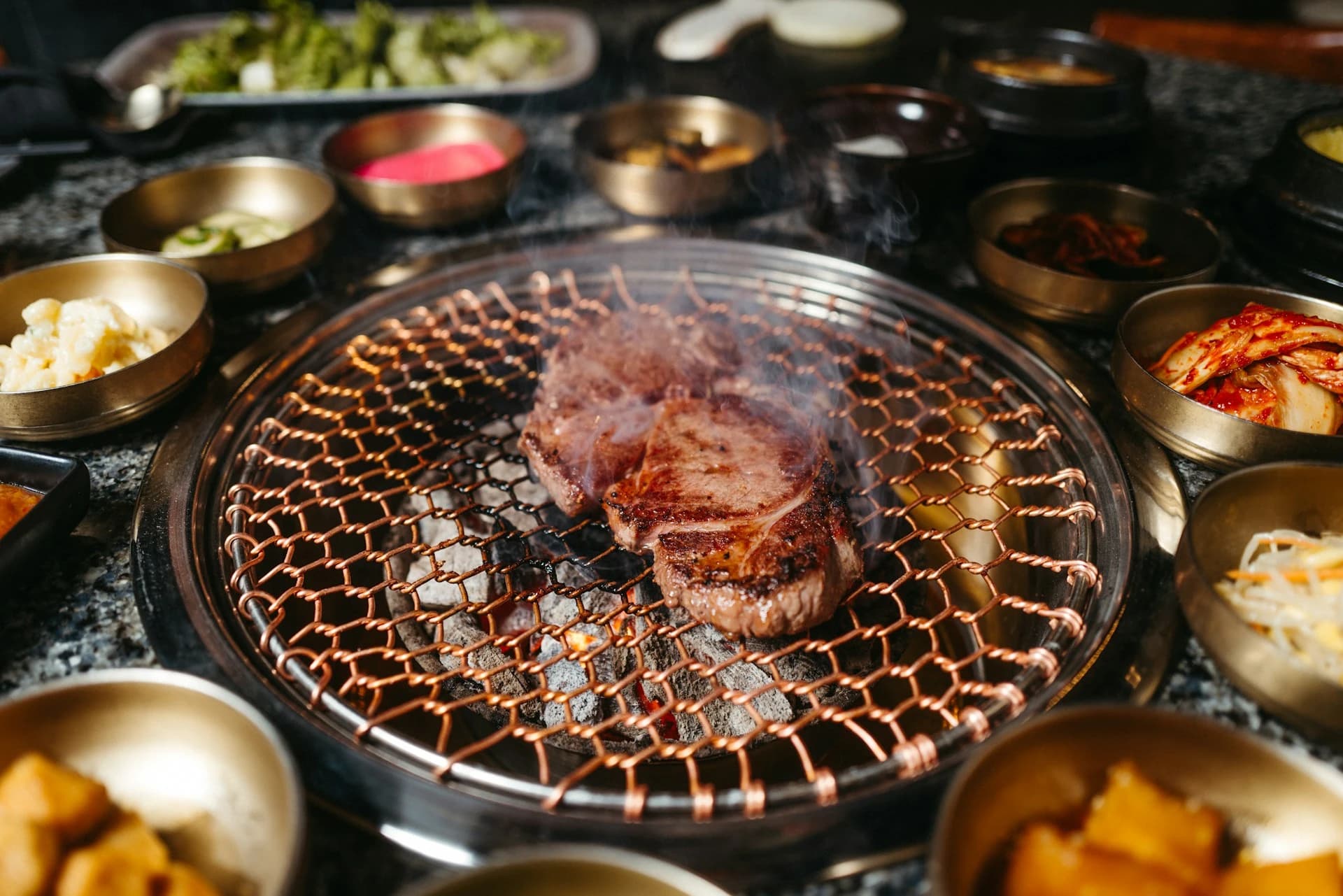
Grilling meat directly at the dining table - Kitchen Scissors at the Table:
- At Korean BBQ spots, servers and diners use sharp kitchen scissors to cut meat into bite-sized pieces right on the grill.
- Scissors are also used at the table to cut long noodles, Kimchi, and ingredients in stews for ultimate dining convenience.
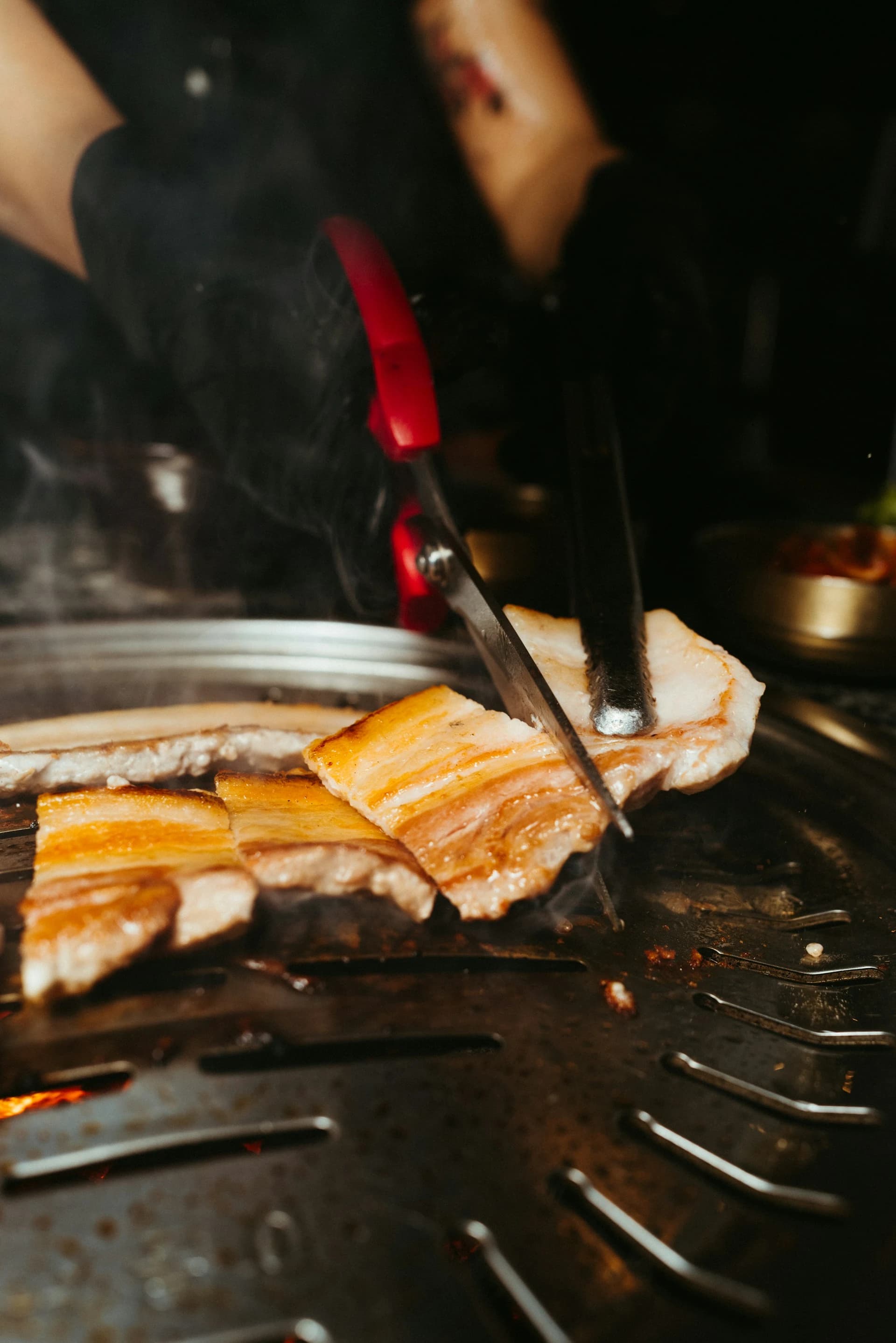
Cutting grilled meat with kitchen scissors
💡 Traditional Korean Soup Method: 'Toryeom':
At traditional Korean Gukbap (rice soup) spots, soup is served warm and ready to eat rather than piping hot. This comes from 'Toryeom', a traditional cooking technique where warm broth is poured over rice or noodles multiple times and drained to heat ingredients evenly.
Toryeom prevents scalding your mouth while allowing rich broth to soak deeply into the rice grains for a balanced, harmonious flavor. Try Toryeom Gukbap at traditional markets to experience this thoughtful culinary heritage.
Removing Shoes Indoors: Ondol Heating and Floor LivingExplains floor heating systems originating from traditional Gudeol and the custom of walking barefoot indoors.
Homes, traditional restaurants, and Hanok stays in Korea follow indoor customs distinct from Western settings.
- Removing Shoes Indoors is Standard Etiquette:
- In Korean homes, shoes are always removed at the entryway (Hyeon-gwan) before stepping inside. People walk barefoot, in socks, or wearing indoor slippers to keep floor surfaces as clean and comfortable as a bed.
- Traditional Korean restaurants and tea houses often feature floor-seating rooms requiring shoe removal, so wearing clean, comfortable socks is recommended when traveling in Korea.
- Warm Ondol Floor Heating:
- Rather than heating air through radiators or convection heaters, Korea uses 'Ondol' (Underfloor Heating), circulating warm water pipes beneath floors to warm the ground directly.
- Lying on a warm Ondol floor in winter offers a relaxing, cozy healing experience similar to a traditional saunas (Jjimjilbang).
💡 Check Shoe Rules at Accommodations: When checking into hotels, guesthouses, or Hanoks in Korea, verify whether shoes are allowed inside or must be removed at the entrance. Take extra care not to wear shoes inside Ondol rooms or floor-seating areas where bedding is prepared on the floor.
Elevator Customs and Hidden Features in KoreaCovers useful elevator features like double-tapping to cancel floor selections and fast-paced button habits.
Elevators in Korea feature convenient hidden functions and reflect local fast-paced habits.
- Canceling Wrong Floor Selections (Double-Tap):
- If you accidentally press the wrong floor button in an elevator, simply press the lit floor button once more to cancel it. (On some elevator models, holding the button for 2–3 seconds cancels the selection.)
- Travelers often discover this feature with delight when visiting Korea.
💡 Rapid 'Close Door' Button Usage: Koreans value speed and efficiency. Upon entering an elevator, many people press the 'Close Door' (▶◀) button multiple times immediately to close doors without waiting 2–3 seconds. It is a lighthearted reflection of Korea's energetic daily pace!
Recommended Guides
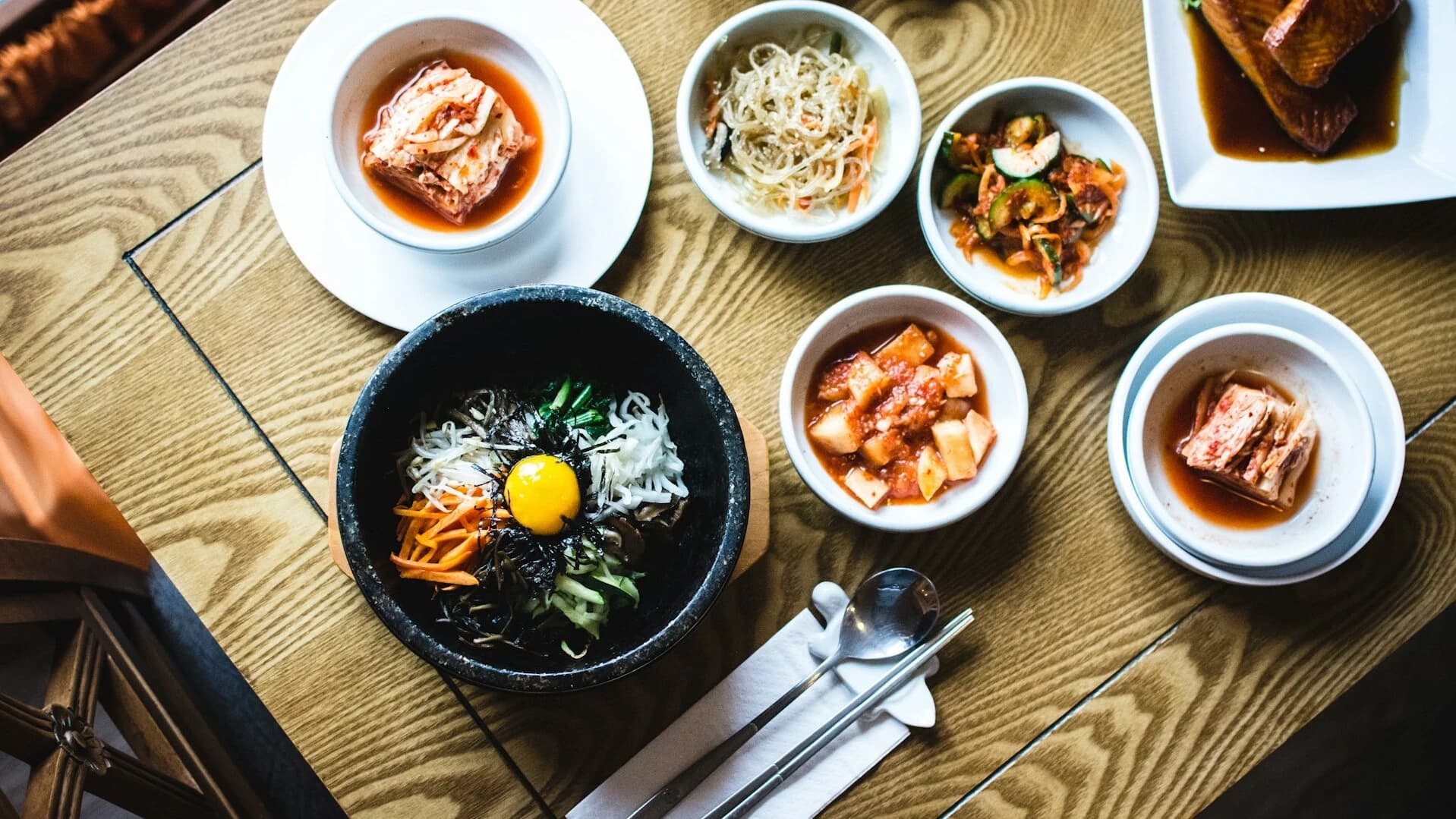
Korea Daily Life Culture and Practical Guide