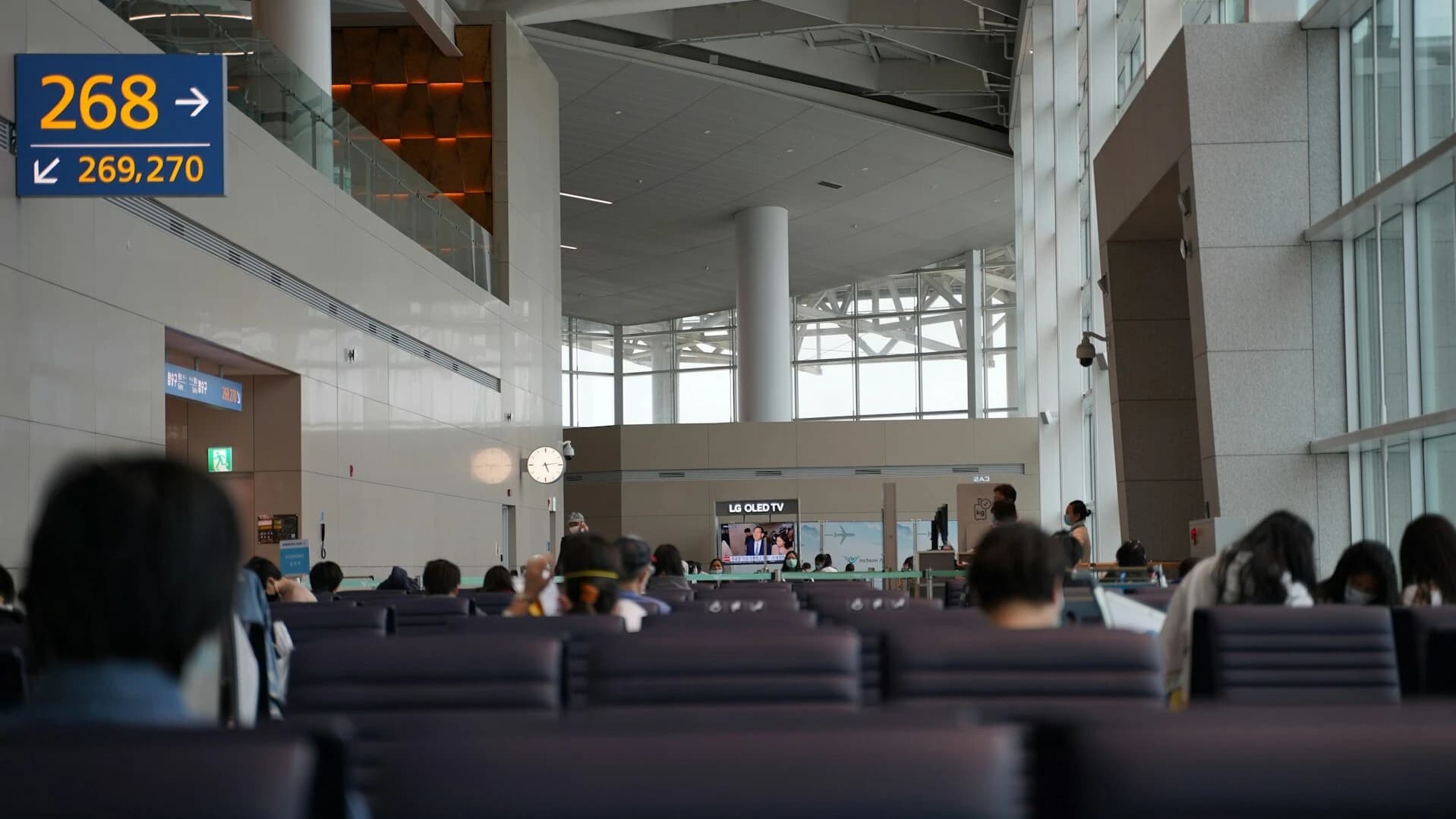
The primary way to enter South Korea is by flight. Choosing the right arrival airport based on your final destination and departure location is a smart way to save time and money. South Korea operates international airports at major hubs nationwide, including Incheon, Gimpo, Gimhae, and Jeju. This chapter introduces the features of major gateway airports used when entering South Korea and recommended airports by destination.
Major Gateway Airports in South KoreaProvides information on the location and features of major airports used by foreign travelers entering Korea.
The main airports you will pass through depend on your international flight route and location upon arrival in Korea:
1. Incheon International Airport
- South Korea's Representative Hub Airport:
- Located about 50 kilometers west of downtown Seoul, it is the largest airport in South Korea. Most long-haul international flights from around the world arrive here.
- State-of-the-Art Facilities and Services:
- Divided into Terminal 1 and Terminal 2, it features world-class transportation networks connecting to the city center, including the Airport Railroad, limousine buses, and taxis. The airport offers various convenience facilities for travelers, such as capsule hotels, spas, free shower rooms, and transit lounges.
Using City Airport Terminals
Passengers departing via Incheon International Airport can complete check-in, baggage drop, and immigration pre-clearance before heading to the airport by using City Airport Terminals located at Seoul Station or Gwangmyeong Station. This useful service drastically reduces waiting time by allowing you to travel to the airport conveniently without heavy luggage.
City Airport Terminal Guide1) Locations and Operating Hours
Locations and operational hours by service for City Airport Terminals at Seoul Station and Gwangmyeong Station are as follows:
| Category | Seoul Station City Airport Terminal | Gwangmyeong Station City Airport Terminal |
|---|---|---|
| Location | Airport Railroad Seoul Station B2 Floor | KTX Gwangmyeong Station West Side B1 Floor |
| Check-in & Baggage Drop | 05:20 ~ 19:00 | 06:30 ~ 17:00 |
| Immigration Inspection | 05:30 ~ 19:00 | Not operated (Processed at Incheon Airport) |
2) Eligibility and Conditions
- Common Conditions: Limited to passengers boarding international flights departing from Incheon International Airport on the same day.
- Seoul Station City Airport Terminal: Available exclusively to passengers purchasing Airport Railroad Express Train (AREX) tickets.
- Gwangmyeong Station City Airport Terminal: Available to any traveler departing via Incheon International Airport.
- Important Notice: Airlines supporting check-in service vary by City Airport Terminal. You must verify whether your airline is supported at the terminal before visiting.
3) Train and Limousine Transport Information
Dedicated connecting transportation options to move conveniently to the airport after completing procedures are as follows:
| Category | Seoul Station Express Train | Gwangmyeong Station Airport Limousine |
|---|---|---|
| Boarding Location | B7 Platform after passing ticket gates at B2 Floor, Airport Railroad Seoul Station | Exit 4, 1st Floor, West Side of Gwangmyeong Station (Dedicated KTX-Airport Bus Stop) |
| Operating Hours | 06:10 ~ 22:50 | 05:00 ~ 20:20 |
| Interval | Every 30 to 40 minutes | Every 20 to 30 minutes |
4) Dedicated Departure Channel Benefits
- Passengers who successfully complete check-in (and immigration clearance in the case of Seoul Station) at the City Airport Terminal can use the dedicated departure channel located on the 3rd floor departure hall of Incheon International Airport. You can undergo security checks and depart quickly without waiting in regular departure queues, saving significant time at the airport.
- Since Gwangmyeong Station does not offer immigration clearance within its terminal, you must undergo immigration inspection separately after arriving at Incheon International Airport with only check-in and baggage drop completed.
Scenario for 200% Smart Utilization of City Airport Terminal (For Late Afternoon or Evening Flights):
- Send heavy luggage first: After checking out of your hotel on the last day of travel, head to Seoul Station City Airport Terminal with your heavy luggage.
- Quick pre-departure processing: Purchase an Express Train ticket and complete check-in, baggage drop, and immigration inspection all at once without hassle.
- Luggage-free city sightseeing: Since your luggage is already checked in, explore downtown Seoul (Myeongdong, Insadong, etc.) or enjoy shopping freely before heading to the airport, carrying only light personal belongings like your passport and wallet.
- Direct airport transfer & ultra-fast departure: After sightseeing, take the Express Train to the airport at your scheduled time. You can skip long departure queues and enter the duty-free area directly through the 'Dedicated Departure Channel' after a quick security check, enjoying maximum travel convenience.
2. Gimpo International Airport
- Excellent Accessibility to Downtown Seoul:
- Located within Seoul, it is the fastest airport for traveling to central Seoul areas (Hongdae, Myeongdong, etc.).
- Limited Short-Haul International Routes:
- Primarily operates limited short-haul routes connecting major city centers in neighboring Asian countries, such as Japan (Haneda, Osaka, Nagoya), China (Hongqiao, Beijing), and Taiwan (Songshan, Kaohsiung). If your departure point is in these regions and your destination is central Seoul, using Gimpo Airport saves much more time than Incheon Airport.
3. Gimhae International Airport
- Gateway to Southern Region Travel:
- Located adjacent to Busan, South Korea's second-largest city. Ideal for travelers planning to visit Busan, Gyeongju, Ulsan, Geoje, and other scenic southern coastal or Gyeongsang-do areas.
- Centered on Asian Short-Haul Routes:
- Mainly operates international flights connecting major cities in Japan, China, Taiwan, and Southeast Asia.
4. Cheongju International Airport
- Hub for Chungcheong Region and Inland Travel:
- Located in central South Korea (Sejong, Daejeon, Chungcheong-do), making it the most convenient airport for traveling into the Korean inland region.
- Budget-Friendly Short-Haul International Routes:
- Low-Cost Carriers (LCCs) actively operate budget-friendly routes connecting major tourist destinations in Japan, Taiwan, and Southeast Asia. Accessible via public transportation (trains or intercity buses) from southern Capital Area regions like southern Gyeonggi-do or Gangnam in Seoul, serving as a useful alternative airport. Travel time from Cheongju Airport to Gangnam, Seoul takes about 1 hour longer than from Incheon Airport, but it serves as a reasonable alternative choice when international airfares to Incheon Airport are high.
5. Jeju International Airport
- Gateway to World-Famous Resort Island Jeju:
- Used when flying directly to Jeju Island, Korea's representative island and tourist destination.
- Direct Routes and Entry Convenience:
- Direct flights connect major Asian cities directly to Jeju. Travelers from certain countries entering Jeju Island directly may enjoy separate visa-free benefits different from mainland entry, so check requirements in advance.
Recommended Entry Airport Guide by DestinationRecommends optimal arrival airports matching your itinerary and destination.
We recommend selecting an airport considering your international departure location and primary destinations within Korea:
- When Focusing Your Trip on Seoul and the Capital Area:
- If departing from nearby Asian countries (Japan, China, Taiwan, etc.) and wanting fast access to central Seoul, choosing a Gimpo Airport route is overwhelmingly convenient due to subway connections. On the other hand, for long-haul flights or varied international airlines, Incheon Airport is the standard entry point.
- When Focusing Your Trip on Southern Regions like Busan or Gyeongju:
- To avoid arriving at Incheon Airport and transferring to KTX trains or domestic flights heading south, taking a direct flight from your origin to Gimhae Airport is recommended. This significantly reduces travel time and transportation costs.
- When Your Purpose Is Solely Vacationing on Jeju Island:
- Boarding a direct flight from overseas cities to Jeju Airport without transiting through mainland airports is the most efficient choice.
Exclusive TourCast Tips!
Multi-City Flight Booking Tips
If planning a travel itinerary visiting multiple regions in South Korea, purchasing multi-city flight tickets with different arrival and departure airports is the smartest way to dramatically save travel time and long-distance transport costs.
- Inefficient Round-Trip Itinerary Example:
Arrive at Incheon Airport ➔ Travel Seoul ➔ Travel to Busan via KTX ➔ Travel Busan ➔ Travel back to Seoul (Incheon Airport) via KTX ➔ Depart from Incheon Airport
(One-way KTX cost of about 60,000 KRW from Busan to Seoul on the last day and at least half a day of travel time are wasted redundantly.) - Efficient Multi-City Itinerary Example (Highly Recommended):
Arrive at Incheon Airport ➔ Travel Seoul ➔ Travel to Busan via KTX ➔ Travel Busan ➔ Depart directly from Gimhae Airport (Busan)
(Saves extra train fares and precious travel time on your last day by eliminating unnecessary return trips to Seoul.)
Recommended Guides
South Korea Entry Preparation Guide (Passport, Visa, K-ETA, Q-CODE)
Guide to South Korea Entry Procedures and Baggage Regulations

Korea Travel Essentials and Checklist