Miyazaki, the setting of Japan's founding myths, features a warm tropical climate where beautiful nature and mystical legends come together. From Takachiho Gorge, home to the cave where the sun goddess hid, to Aoshima Shrine, which keeps the legend of the underwater dragon palace, and Udo Jingu Shrine, built inside a sea cliff cave overlooking the Pacific Ocean, each major attraction in Miyazaki holds an interesting myth.
Miyazaki Official Tourism WebsiteHow to Get There from Miyazaki AirportThis section covers train and bus options from Miyazaki Airport to downtown Miyazaki and major attractions.
Miyazaki Airport offers excellent access to the city center, with well-connected train and local bus routes that make traveling to downtown or the southern coast very convenient.
- By Train: You can take a train from Miyazaki Airport Station, which connects directly to the airport passenger terminal, to reach Miyazaki Station in the heart of the city.
- Travel Time and Fare: It takes about 10–15 minutes to Miyazaki Station on a local train, and the fare is 400 yen.
- By Local Bus: You can board a bus from the airport bus stops to Miyazaki Station in the city center or Miyako City, a major transit hub.
- Travel Time and Fare: The bus takes about 25–30 minutes to Miyazaki Station, and the fare is 490 yen.
- Direct Bus to Aoshima: Direct buses also run from the airport to Aoshima (about 25 minutes) or Udo Jingu Shrine, allowing you to travel straight toward the Nichinan Coast without passing through downtown.
Exclusive TourCast Tips!
Tip for Riding Non-Reserved Seats on Limited Express Trains
The section between Miyazaki Airport Station and Miyazaki Station is a special exemption zone where you can ride non-reserved seats on Limited Express trains using only a regular train ticket without buying a separate limited express ticket. Taking a limited express train is recommended for this route.
- If you choose to sit in a reserved seat, you will need a separate limited express ticket, which costs 530 yen one-way.
Miyazaki Transport TipsThis section provides useful information on bus passes, train routes, and a transport comparison for exploring downtown Miyazaki, the Nichinan Coast, and Takachiho.
Miyazaki's major attractions are located far apart from one another, so choose your transport method carefully. The main public transit options are local buses and trains, and using the right money-saving pass is recommended.
1. Bus Options and Major Passes
Miyazaki Kotsu buses stop directly in front of key attractions along the Nichinan Coast, such as Aoshima and Udo Jingu Shrine, making them the most convenient choice for public transit travelers.
- VISIT MIYAZAKI BUS PASS (For Foreign Tourists Only): This pass offers unlimited rides on Miyazaki Kotsu local buses for one day. A single round-trip from Miyazaki Station to Aoshima or Udo Jingu Shrine covers the cost of the pass. (The 1-day pass costs 2,000 yen for adults.)
- Note that there is no child price for this specific pass. When traveling with children aged 6 to 11, it is cheaper to buy the standard 1-Day Pass for children (1,000 yen).
- Holiday Pass: A heavily discounted weekend pass that gives unlimited rides on local buses around the Miyazaki suburbs. It is valid only on weekends (Saturdays and Sundays), public holidays, and the New Year period. (The 1-day pass costs 700 yen for adults / 350 yen for children.)
- If you travel on a weekend, this should be your top choice, as it is much cheaper than the tourist pass. (Must be bought in advance at airport ticket counters, tourist information centers, or bus terminals.)
- This pass only covers the area between downtown Miyazaki, Miyazaki Airport, and Aoshima. If your itinerary includes traveling out to Udo Jingu Shrine, you should buy the VISIT MIYAZAKI BUS PASS instead.
- Other regional holiday passes include the Miyakonojo Area Pass and the Nobeoka Area Pass.
2. Train Options and Passes
Trains are punctual and comfortable, but services are infrequent and stations are often located away from the main sights.
- Train Information: Taking a train from Miyazaki Station to Aoshima Station takes about 30 minutes, which is faster than the bus. However, there is no train station near Udo Jingu Shrine in the south, so you cannot get there by train alone.
- Recommended Pass: If you hold an unlimited train pass that covers the entire Kyushu region or the Southern Kyushu area (such as the JR South Kyushu Rail Pass), you can ride the trains with no extra fee.
Exclusive TourCast Tips!
Transport Comparison and Recommendations
Should you choose the bus or the train for your trip to Miyazaki?
- Standard Transit Travelers (Recommended): Using a bus pass is much more convenient. Buses go straight to coastal sights like Udo Jingu Shrine, and the weekend Holiday Pass (700 yen) or the tourist pass (2,000 yen) offer excellent value.
- Train Pass Holders: We recommend taking the punctual train to reach Aoshima Station quickly, and then catching a one-way local bus to travel from Aoshima to Udo Jingu Shrine.
- Check Timetables Carefully: Buses and trains in Miyazaki run only once every 1–2 hours. Always check the departure and arrival timetables before setting out to plan your day.
Downtown MiyazakiThis section covers Heiwadai Park, a major downtown park that holds a controversial history, and its Peace Tower.
1) Heiwadai Park
Located on a low hill overlooking Miyazaki city, Heiwadai Park is a beautiful green space popular with residents and travelers. However, the massive 'Peace Tower' rising in the center of the park holds a dark history linked to the militarism of the Japanese colonial era.
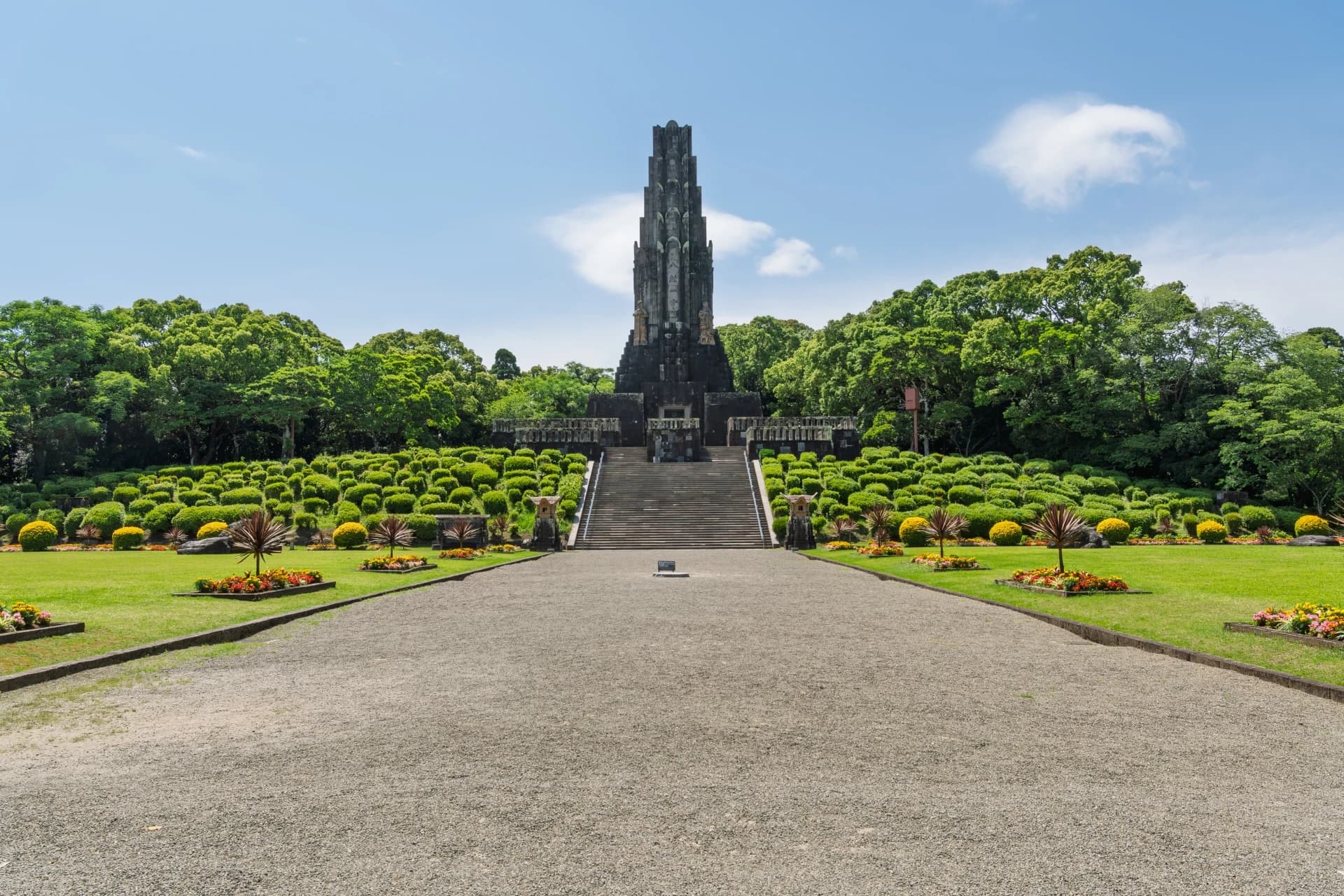
- A Symbol of Militarism and 'Hakko Ichiu': Built in 1940 during the era of Japanese imperialism, this tower marked the 2,600th anniversary of the mythical Emperor Jimmu's ascension, symbolizing dreams of global conquest. The phrase 'Hakko Ichiu' carved on the front of the tower translates to 'all eight corners of the world under one roof'. It was a primary slogan used by the military to justify aggression in Asia and establish total wartime mobilization.
- Renaming to Peace Tower and Restoring the Script: Following Japan's defeat in 1945, the US military occupation intended to tear down the tower. However, the Miyazaki prefectural government argued it was a 'work of art' and received permission to preserve it on the condition that the 'Hakko Ichiu' slogan be removed. At this time, it was renamed the 'Peace Tower'. Despite this, during the 1964 Tokyo Olympics, Japanese authorities used the tower as the starting point for the torch relay, and in 1965, they quietly restored the removed 'Hakko Ichiu' characters.
- Stones of Aggression and Plunder: The foundation stones of the tower were forcibly brought from conquered nations across Asia, and the names of the plundered locations remain clearly carved into the rocks. The tower incorporates 123 stones from the Korean Peninsula, 198 from China, and 40 from Taiwan, preserving visible traces of wartime aggression.
- Ongoing Historical Controversy: Institutions like the Nanjing Anti-Japanese War Museum in China have officially requested the return of these stolen cultural foundation stones. However, local administrative authorities in Miyazaki have avoided giving a clear answer. Meanwhile, Japanese civic groups that support returning the stones face threats from right-wing factions, leaving the site as a source of ongoing historical tension.
Experience the Sound Echo: Before climbing the front steps of the Peace Tower, stand on the octagon-shaped stone in the center of the plaza. Look toward the tower and clap your hands. You will experience a unique echo effect as the sound reflects cleanly back to you.
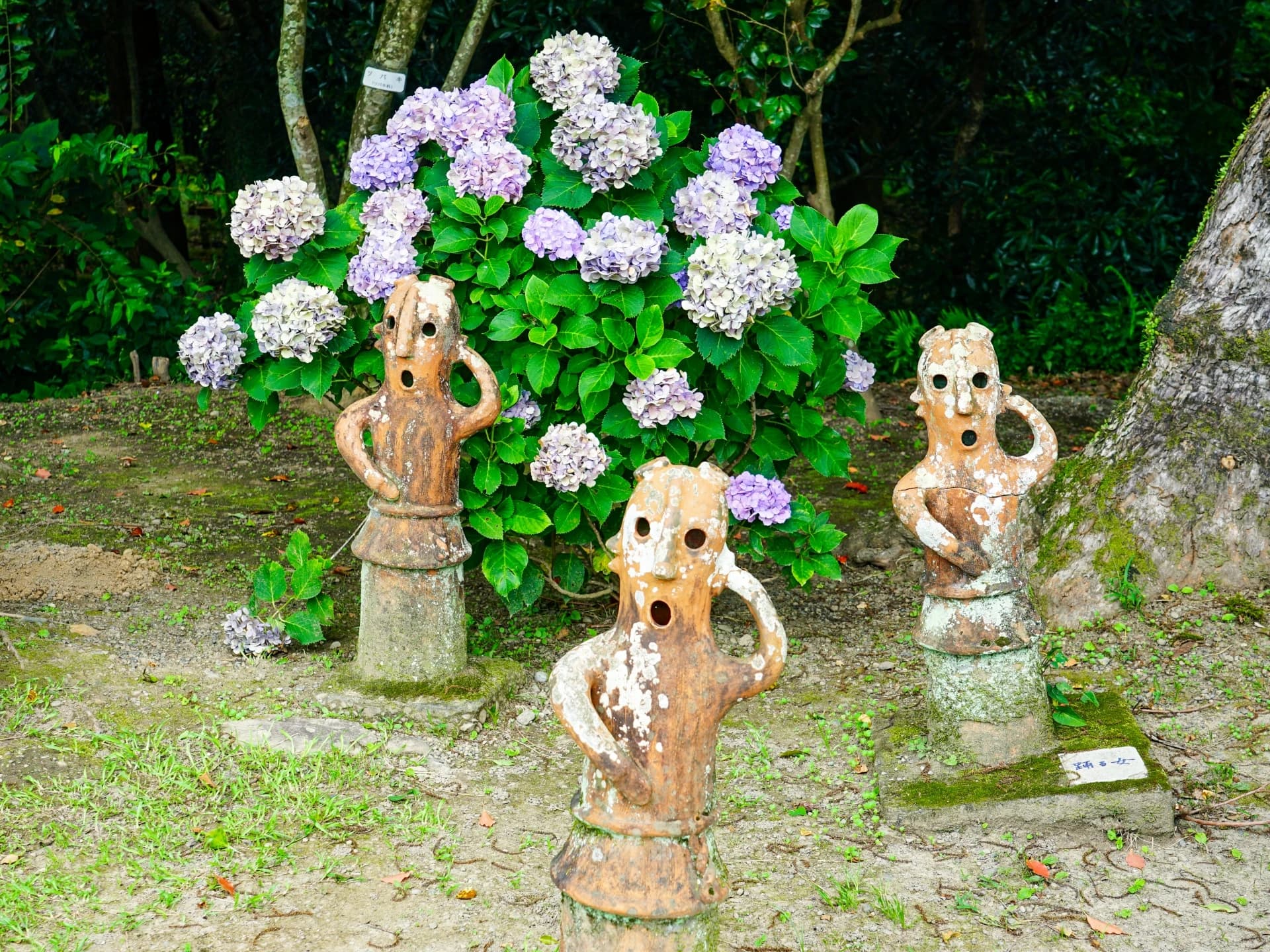
- Haniwa Garden: A unique garden located along a thick forest path behind the Peace Tower, displaying replicas of 'Haniwa'—terracotta clay figures excavated from ancient burial mounds.
- Recreating Ancient Clay Art: Around 400 clay figures—including samurais, priestesses, singers, animals (horses, dogs), and houses—are placed throughout the forest. During the Kofun period (3rd to 7th century), these figures were set around burial mounds to guard the tombs and comfort the spirits of the dead.
- A Unique Forest Walk: The moss-covered trees and the amusing expressions of the ancient clay figures come together to create a mystical atmosphere, making you feel as if you are walking through a timeless, ancient forest.
2) Miyazaki Jingu Shrine
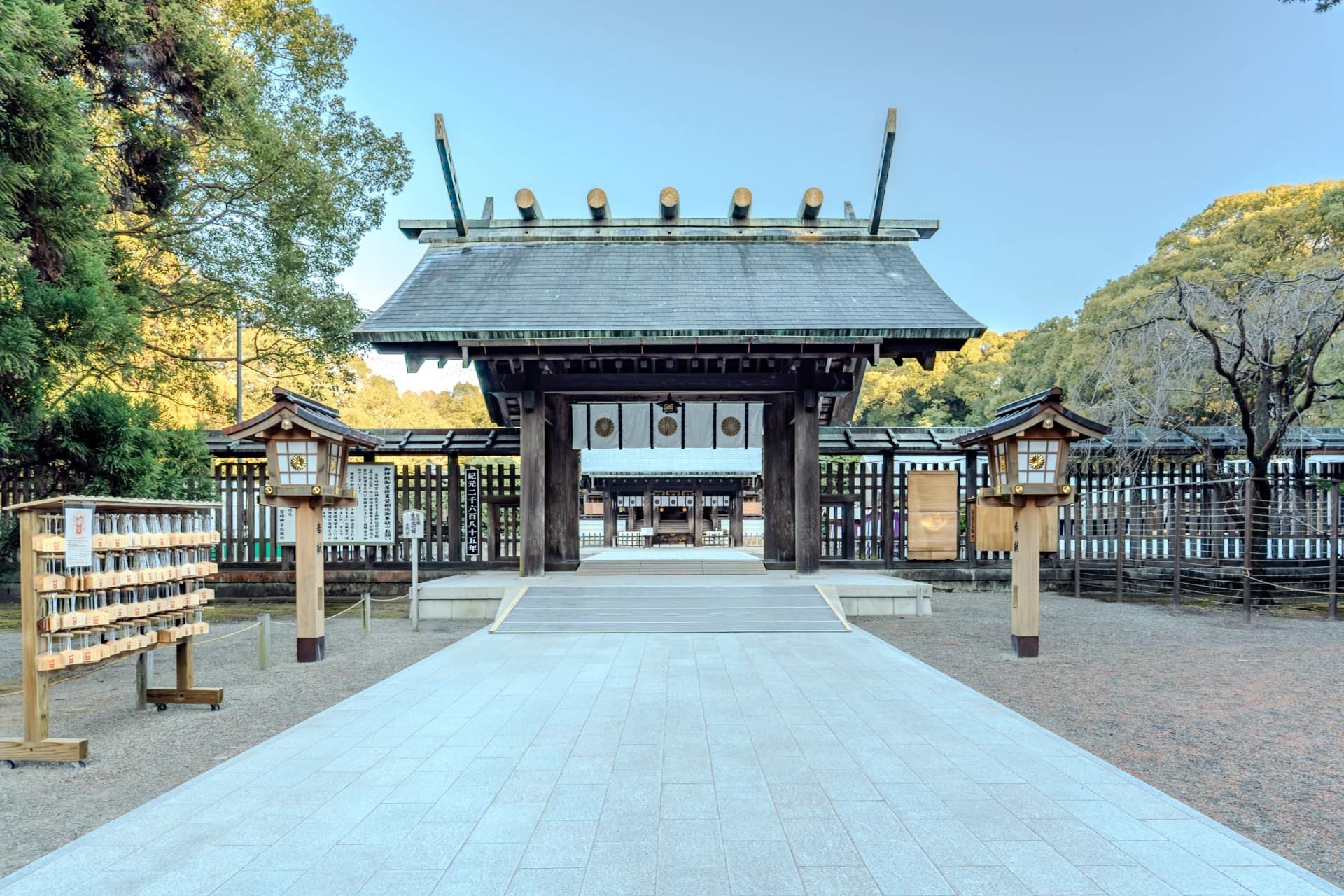
Surrounded by a thick forest in the center of the city, Miyazaki Jingu Shrine is an ancient and traditional site dedicated to Emperor Jimmu, the mythical first Emperor of Japan. It is a symbolic location closely tied to founding myths and imperial history.
- The Legend of Emperor Jimmu and the Nation's Founding: Legend says that Emperor Jimmu was born and gathered his forces in Miyazaki before setting out on an eastern conquest to ascend the throne in the Nara region. Miyazaki Jingu Shrine originated from a sanctuary built on the palace grounds where he lived before heading east.
- A Hub of State Shinto and Rise in Status: Known for a long time as 'Miyazaki Palace', the site began receiving national importance after the Meiji Restoration to highlight the legitimacy of the imperial family. It was renamed 'Miyazaki Jingu Shrine' in 1913. Due to its close ties with the imperial court, it ranks as one of the highest-status shrines in the Kyushu region.
- Traditional Cedar Architecture with No Nails: Rebuilt on a grand scale in 1907, the current main hall follows the ancient 'Shinmei-zukuri' architectural style. Built without using a single nail, it relies entirely on local Kyushu cedar wood, creating a simple yet grand atmosphere.
- A 400-Year-Old White Wisteria: The shrine grounds feature a natural monument designated by the national government: an 'Oshirafuji' (white wisteria) estimated to be around 400 years old. Visitors can see beautiful hanging white wisteria blossoms during the spring season.
3) Florante Miyazaki
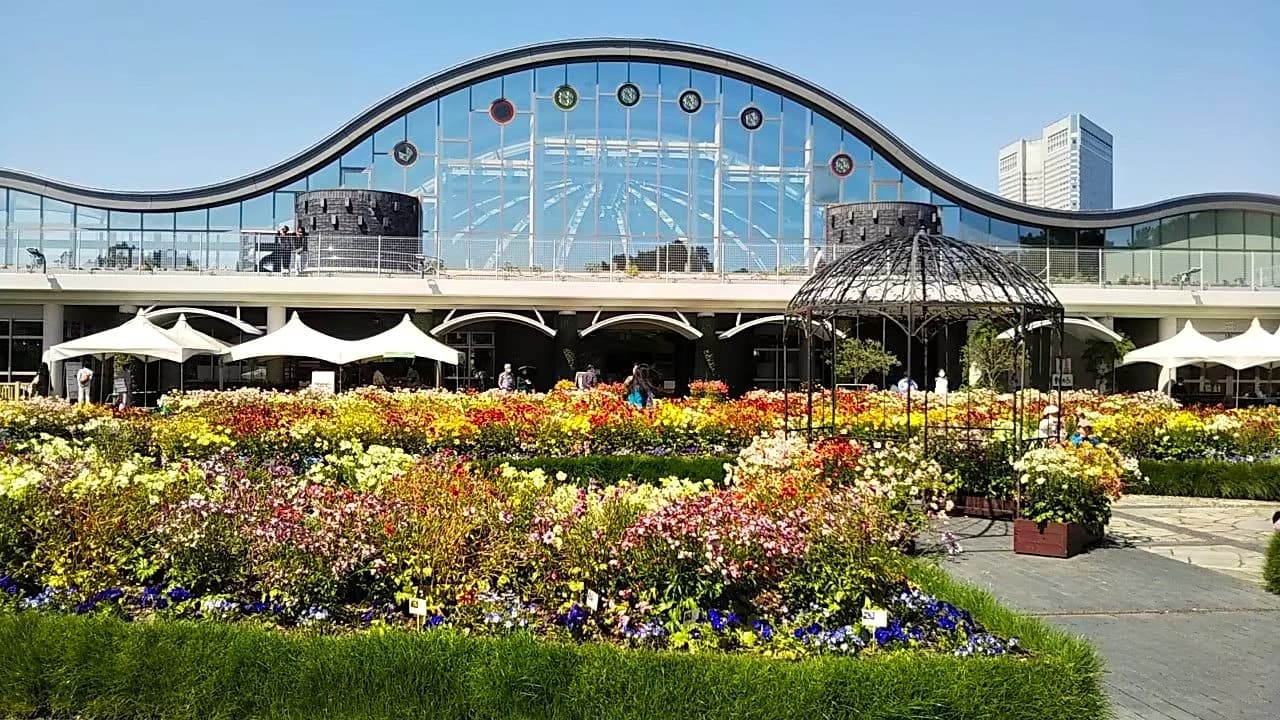
A beautiful botanical theme park where you can enjoy Miyazaki's warm climate. It features brilliant seasonal blossoms and well-maintained gardens, offering a perfect place to relax.
- A Festival of Year-Round Blooms: The park hosts colorful flower festivals in every season, showcasing tulips in spring, sunflowers in summer, and cosmos in autumn. A wide, manicured central lawn is surrounded by layered flower beds, making it ideal for a walk.
- Exotic World Gardens: The park features beautifully designed themed spaces, including an English garden, showcasing landscaping styles from around the world that offer picturesque views.
- Winter Night Illumination Festival: Every winter, the entire park fills with thousands of colorful lights for an evening illumination festival. It is one of the premier light festivals in southern Kyushu, creating a magical winter view.
- Hours: 9:00 AM – 5:00 PM
- Closed: Every Tuesday, and December 31
- Admission: Adults 310 yen / Elementary and junior high students 150 yen
4) Tachibanadori
The main street cutting north-south through the center of Miyazaki City, serving as Miyazaki's premier entertainment district for shopping, dining, and nightlife. Exotic palm trees line the street, creating a tropical resort atmosphere.
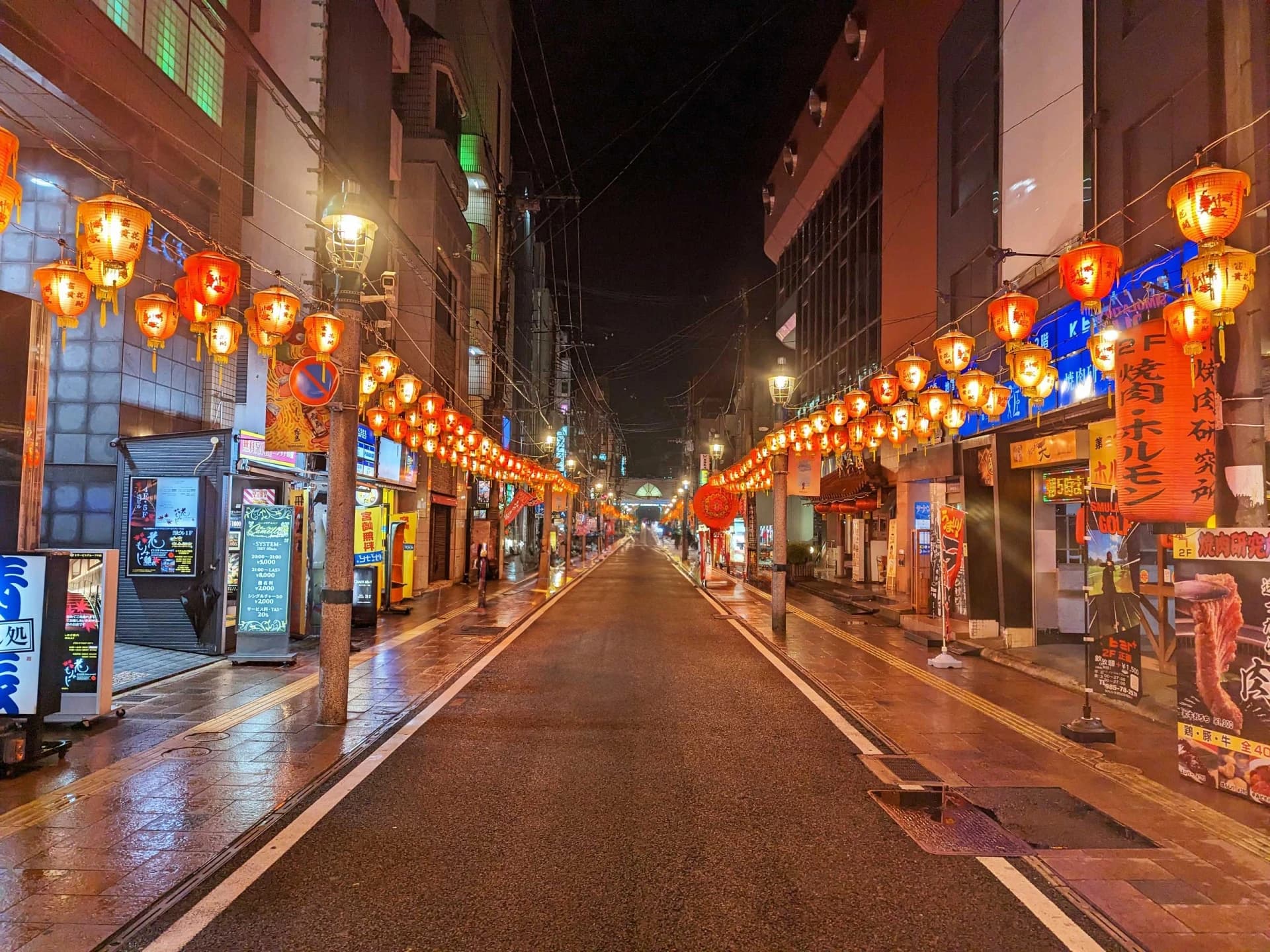
- The Heart of Shopping and Culture: This area is excellent for shopping, featuring the historic Yamakataya Department Store and a large MEGA Don Quijote for souvenirs, alongside covered shopping arcades.
- Nishitachi: Miyazaki's Premier Dining Alley: Located just west of Tachibanadori, 'Nishitachi' is a major food and nightlife alley where you can sample Miyazaki's signature dishes in one place.
- At night, the area turns lively as countless izakayas and restaurants light up their signs. We highly recommend trying local specialties here, such as Chicken Nanban, charcoal-grilled local chicken (Jitokko), and premium Miyazaki Wagyu beef.
- How to Get There: Located about a 10-minute walk from Miyazaki Station. Almost every local bus route in the city passes through Tachibanadori. You can take a bus from the airport or suburbs and get off at the 'Tachibanadori 2-chome' or 'Tachibanadori 3-chome' bus stops.
Mythology of the Southern Miyazaki CoastThis section introduces the legendary tales of brother gods and the underwater dragon palace that form the origin of Aoshima Shrine and Udo Jingu Shrine.
To fully appreciate southern Miyazaki's coastal destinations—Aoshima Shrine and Udo Jingu Shrine—it helps to understand the myths of the brother gods and the dragon palace that connect these sites.
- The Brother Gods Swap Tools and Lose a Hook: Long ago, there were two brother gods: the younger brother, Yamasachihiko, who was a skilled hunter in the mountains, and the older brother, Umisachihiko, who was a skilled fisherman at sea. One day, the brothers decided to swap tools to try each other's work. However, Yamasachihiko accidentally dropped his brother's treasured fishhook into the sea and lost it. The older brother became furious and demanded that his brother find and return the exact original hook.
- Journey to the Sea Dragon Palace and Marriage: As Yamasachihiko wept on the shore, a god of the tides helped him journey to the Dragon Palace, the home of the sea god. There, he met the sea god's beautiful daughter, Toyotamahime. They fell in love and married, and he spent 3 years living happily in the dragon palace, forgetting about the lost fishhook.
- Finding the Hook and Receiving Mystical Jewels: When it came time for Yamasachihiko to return to the surface, the sea god gathered the creatures of the ocean and found the older brother's hook stuck inside the throat of a sea bream. The sea god returned him to the surface with two magical jewels that could control the tides to cause floods or drain water: the Shiomitsu-tama and the Shiohiru-tama.
- The Brother Yields and Swears an Oath: Although the younger brother returned the fishhook on the surface, the older brother continued to mistreat him. The younger brother used the magical jewels to raise the water and drown his brother, leading the older brother to regret his actions. He knelt before Yamasachihiko and swore to serve as his protector for life. (The site where Yamasachihiko and his wife Toyotamahime first stayed upon returning from the dragon palace became the origin of Aoshima Shrine.)
- A Broken Taboo and a Sad Farewell: The pregnant Toyotamahime came to the surface to give birth to their child, building a delivery hut on a sea cliff cave. She asked her husband, "Please do not look inside while I am giving birth." However, Yamasachihiko could not resist his curiosity and peeked in. Inside, he saw his wife transformed into her true form—a massive shark—giving birth. Ashamed and saddened that her true form was seen, Toyotamahime returned permanently to the underwater dragon palace, leaving the newborn baby behind. (The setting of this birth myth is Udo Jingu Shrine.)
Legends of the Sea: Aoshima Shrine and the Devil's WashboardThis section highlights Aoshima Island, surrounded by the unique rock formations of the Devil's Washboard, and Aoshima Shrine, which holds the love story of Yamasachihiko.
Located just south of downtown Miyazaki, Aoshima is a small island rising from the sea. The entire island is covered in tropical plants and connects to the mainland by a bridge, allowing visitors to walk across.
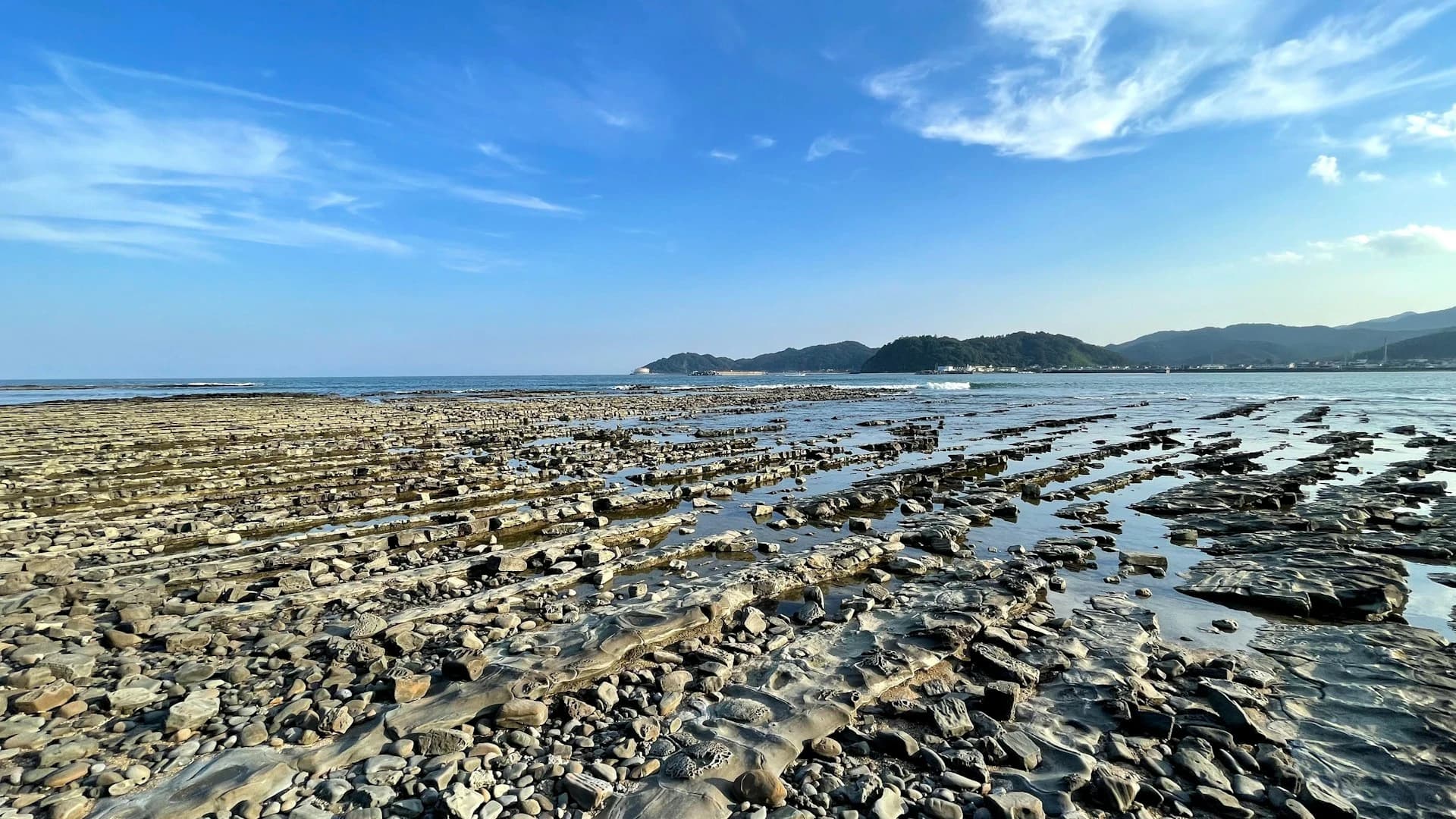
- The Devil's Washboard (Oni no Washing Board): A unique rock formation surrounding Aoshima Island. Over a long period, wave erosion shaped flat layers of rock into regular ridges, creating a natural wonder that looks like a giant washboard.
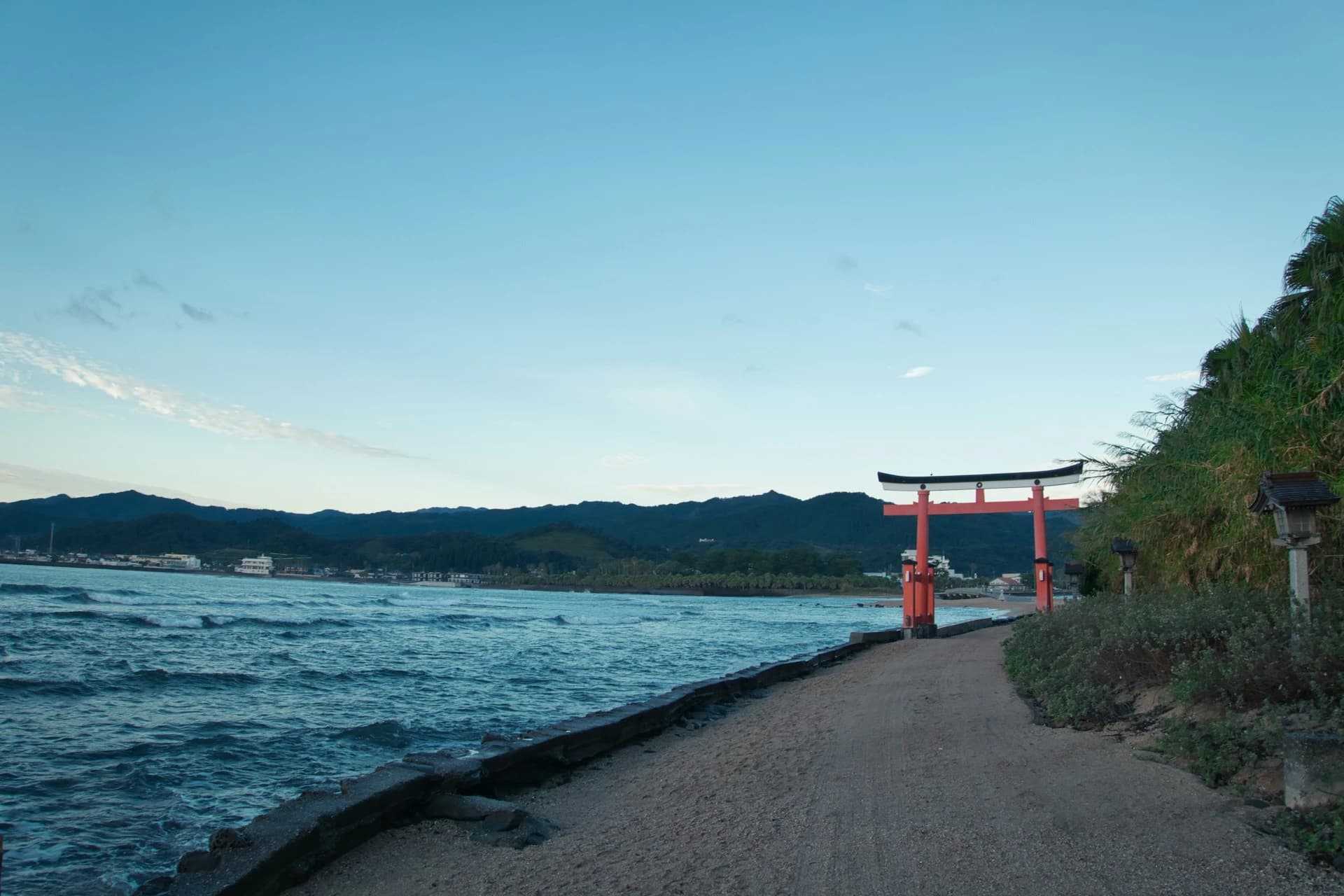
- Aoshima Shrine: This shrine is dedicated to the love story of the sea myth figures, Yamasachihiko and the dragon king's daughter, Toyotamahime. Honoring the bond between the two deities, it is famous as a powerful spot for love and relationships, making it popular with couples. The thick tropical forest path behind the shrine offers an exotic walk.
Sun Messe NichinanThis section introduces the official Moai statue replicas from Easter Island standing against the Pacific Ocean and the surrounding coastal park.
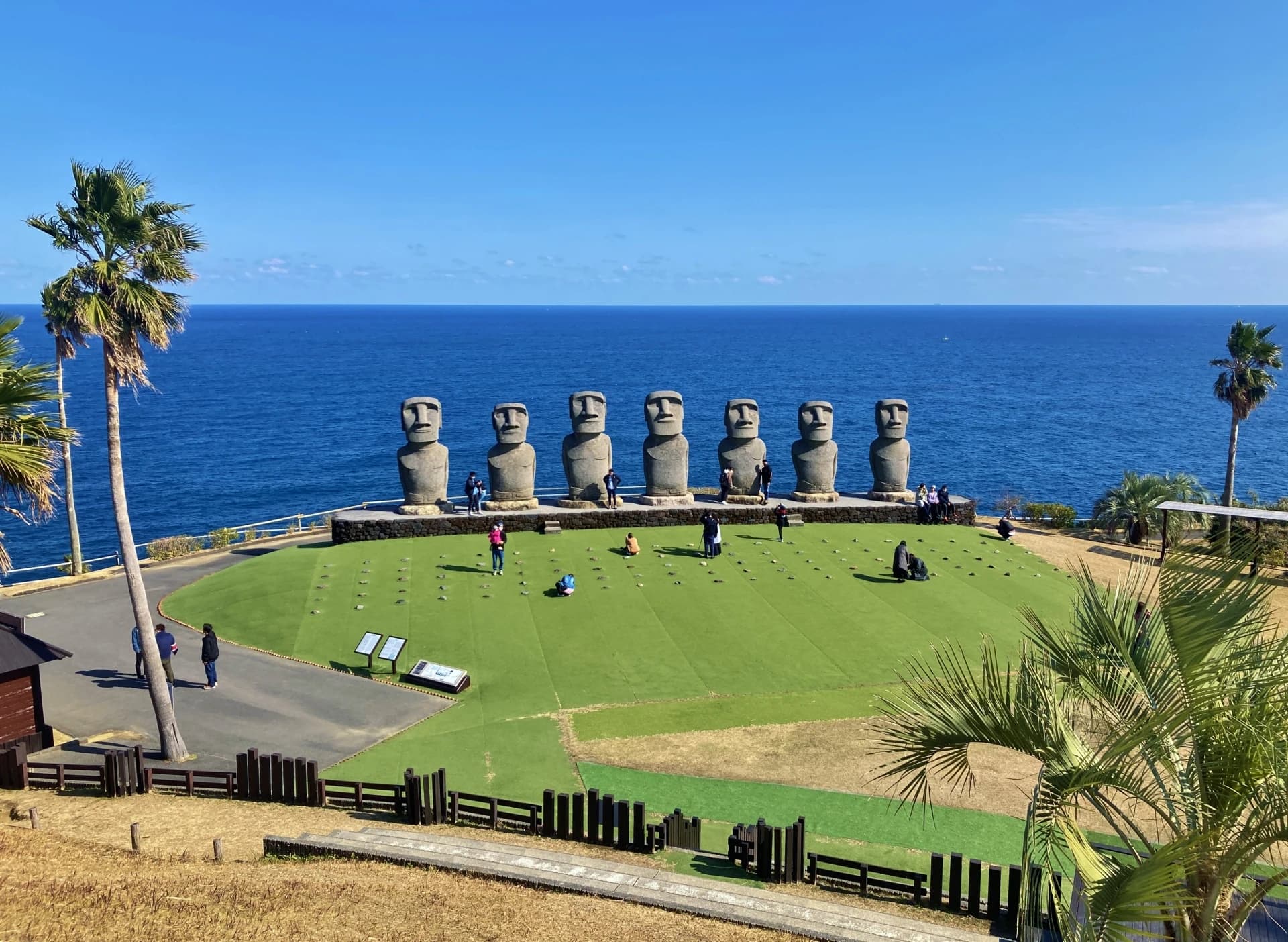
A scenic theme park built on a hill overlooking the blue Pacific Ocean along the Nichinan Coast. It is famous for housing full-scale replicas of the Moai statues from Easter Island, Chile.
- Official Easter Island Moai Statues: As a token of gratitude to a Japanese archaeological team that helped restore the original Moai statues on Easter Island, the Easter Island Elders Council granted exclusive permission to recreate 7 Moai statues in their original size. This is the only location in the world with such authorization.
- From left to right, the 7 statues represent business, health, love, overall luck (leisure), marriage, wealth, and academics. Many travelers touch the statues to make a wish.
- Exotic Sculptures and Photo Spots: The coastal park is filled with great photography backdrops, including colorful human-shaped figures sitting together looking at the sea, and a hillside swing that feels like flying out toward the Pacific.
- Hours: 9:30 AM – 5:00 PM (Last entry at 4:30 PM)
- Closed: Every Wednesday (Open if Wednesday falls during a local holiday period)
- Admission: Adults 1,000 yen / Junior high and high school students 700 yen / Ages 4 and older 500 yen
Shrine in a Sea Cliff Cave: Udo Jingu ShrineThis section covers the founding myths and the custom of throwing lucky Undama stones at Udo Jingu Shrine, set inside a Pacific coast cave.
Located on a steep cliff along the Nichinan Coast, Udo Jingu Shrine is a unique site where the main hall is built inside a natural cave overlooking the ocean. It is the mythical birthplace of the father of Emperor Jimmu, Japan's first Emperor.
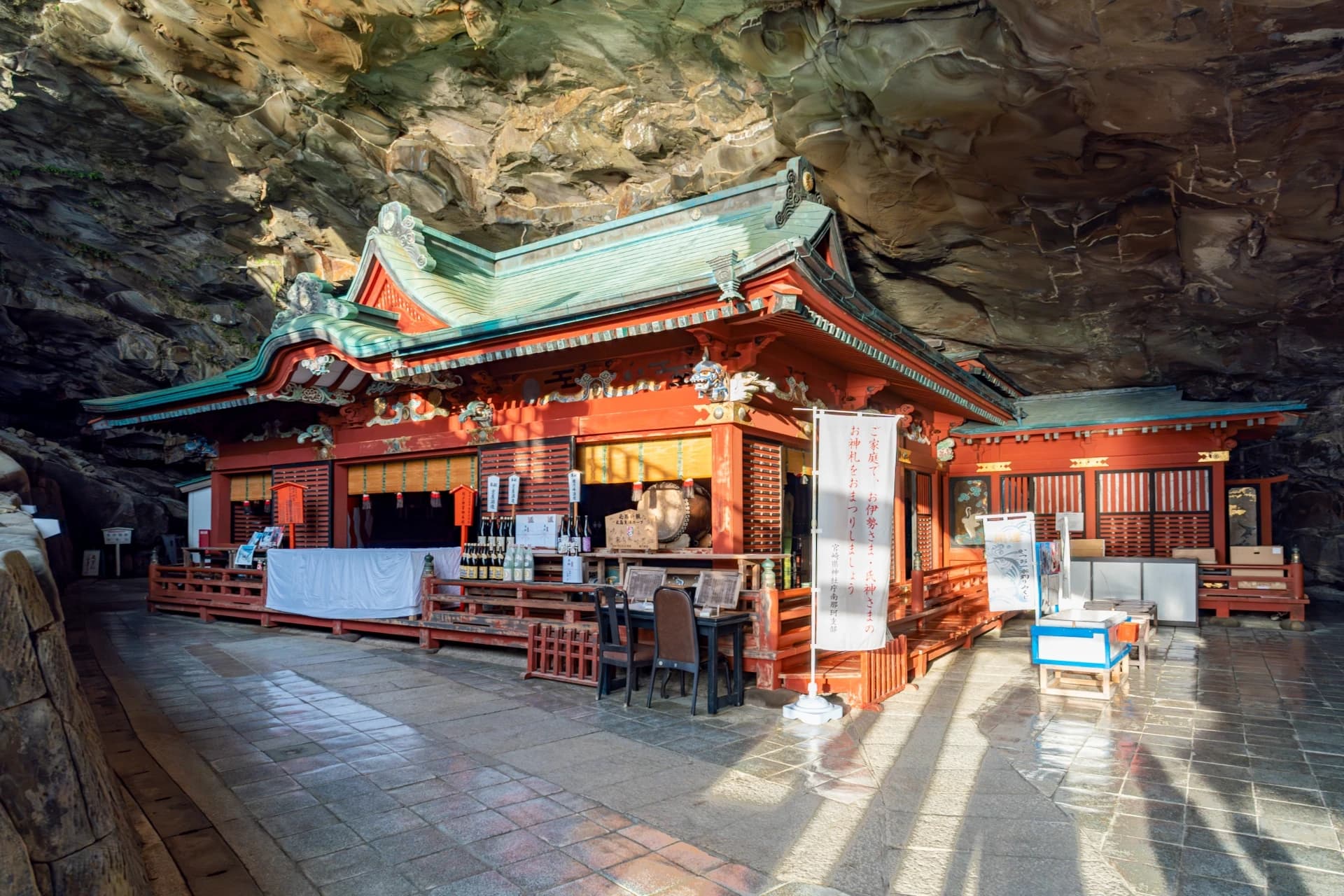
- Toyotamahime's Birth Myth and Farewell: Legend says that Toyotamahime, daughter of the sea god from the Dragon Palace, built her delivery hut inside this cave to give birth to her child with Yamasachihiko.
- The Broken No-Peeking Taboo: She asked her husband never to look inside during the birth, but Yamasachihiko broke his promise and peeked. He was shocked to see his wife transformed into her true form—a massive shark (or dragon)—and fled.
- Return to the Sea and Sad Separation: Saddened and angered by the broken promise, Toyotamahime left her newborn baby behind and returned to the sea, closing the pathway between the ocean and land forever.
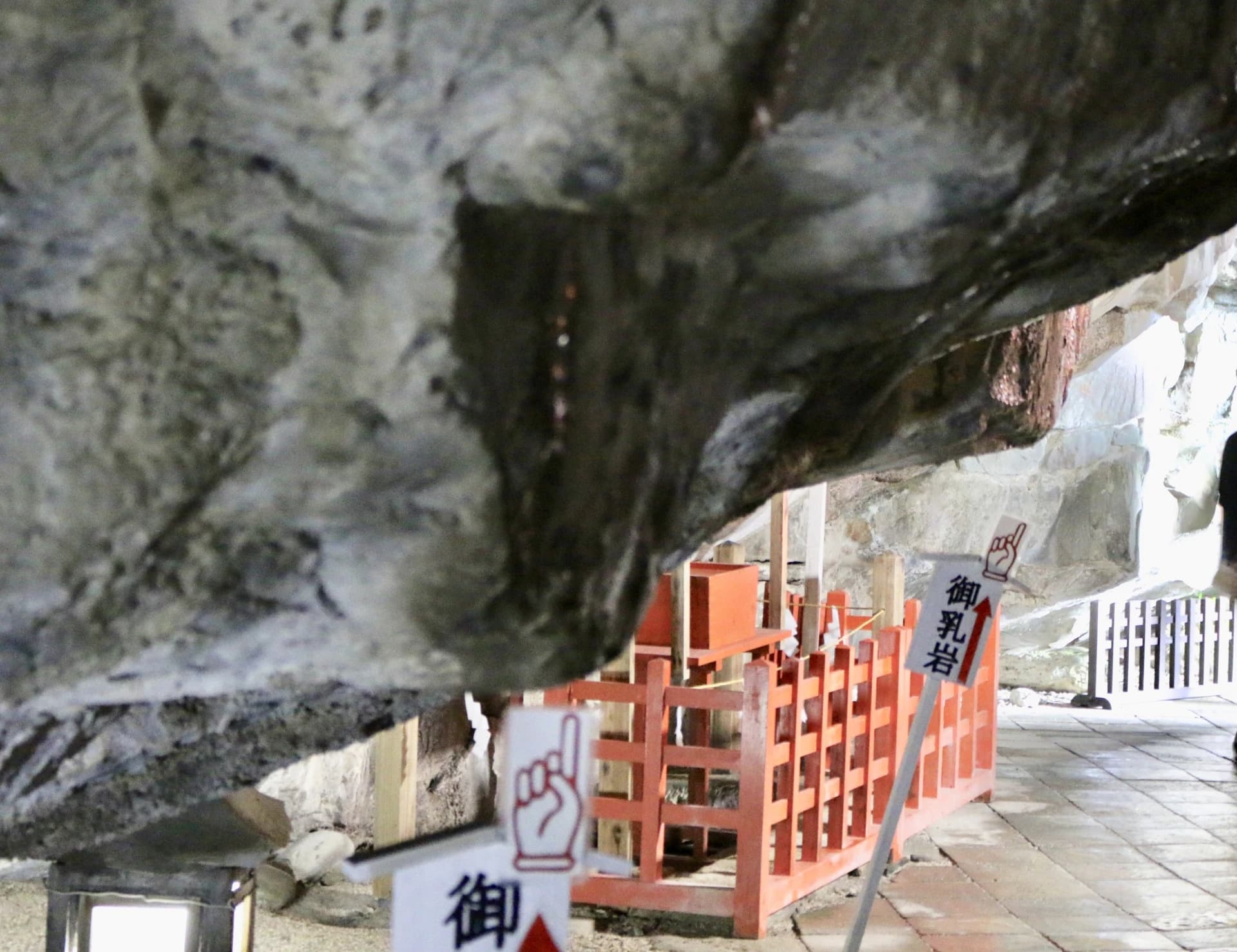
- The Legend of the Breast Rock (Ochichi-iwa): Pitying her abandoned baby, she attached her breasts to the cave wall before leaving. Today, this is the 'Ochichi-iwa' rock formation inside the cave, where water drips continuously. Worshipers eat candies made from this water (Ochichi-ame) to pray for safe delivery, parenting, and good health.
- Throwing Undama Luck Stones: Below the cliff lies a giant turtle-shaped rock with a circular hollow on its back. Visitors throw small clay balls called 'Undama' (luck stones) into the hollow to make a wish, throwing with their left hand if male and their right hand if female.
Mythology of TakachihoThis section covers the myth of the goddess Amaterasu that connects Amano Iwato Shrine, Takachiho Gorge, and Takachiho Shrine.
Takachiho's premier attractions—Amano Iwato Shrine, Amano Yasukawara, Takachiho Shrine, and Takachiho Gorge—are closely connected by two of the most important events in Japanese mythology: the Myth of the Heavenly Rock Cave and the Descent of the Heavenly Grandson.
- Stage 1: The Sun Goddess Hides inside a Cave (Amano Iwato Shrine Nishi-hongu):
- Hurt by the violent actions of her younger brother Susanoo no Mikoto, the sun goddess Amaterasu Omikami hid inside the heavenly rock cave, Amano Iwato, and sealed the door. With the sun goddess gone, the world fell into pitch darkness, and many disasters began to occur.
- Stage 2: The Gods Gather to Plan a Strategy (Amano Yasukawara):
- To bring light back to the world, eight million gods gathered at Amano Yasukawara, a massive natural cave located upstream along the Iwato River, to brainstorm a solution.
- The gods held a festival in front of the cave, where the goddess of dance, Ame no Uzume, performed an amusing, lively dance that made the gods laugh loudly. Hearing the laughter and celebration outside, a curious Amaterasu Omikami cracked open the rock door to look out.
- Stage 3: Opening the Rock Door to Light up the World (Amano Iwato Shrine Higashi-hongu & Takachiho Shrine):
- As the goddess peeked out, a powerful god named Ame no Tajikarao hidden next to the cave pulled open the rock door with all his strength, filling the world with bright light once more. The spot where the goddess first stayed after leaving the cave is where Higashi-hongu stands today.
- The celebration and dance performed by the gods to lure out the goddess were preserved through generations. Today, they form the core motif of the 'Takachiho Yokagura' theatrical plays, performed nightly at Takachiho Shrine as a National Important Intangible Folk Cultural Property.
- Stage 4: The Sacred Site of the Heavenly Descent (Takachiho Gorge):
- Having saved the world, Amaterasu Omikami sent her grandson, Ninigi no Mikoto, to govern the earth and end its chaos, giving him the Three Sacred Treasures and rice seeds. His descent onto the peaks of Takachiho is known as the 'Tenson Korin' (Descent of the Heavenly Grandson).
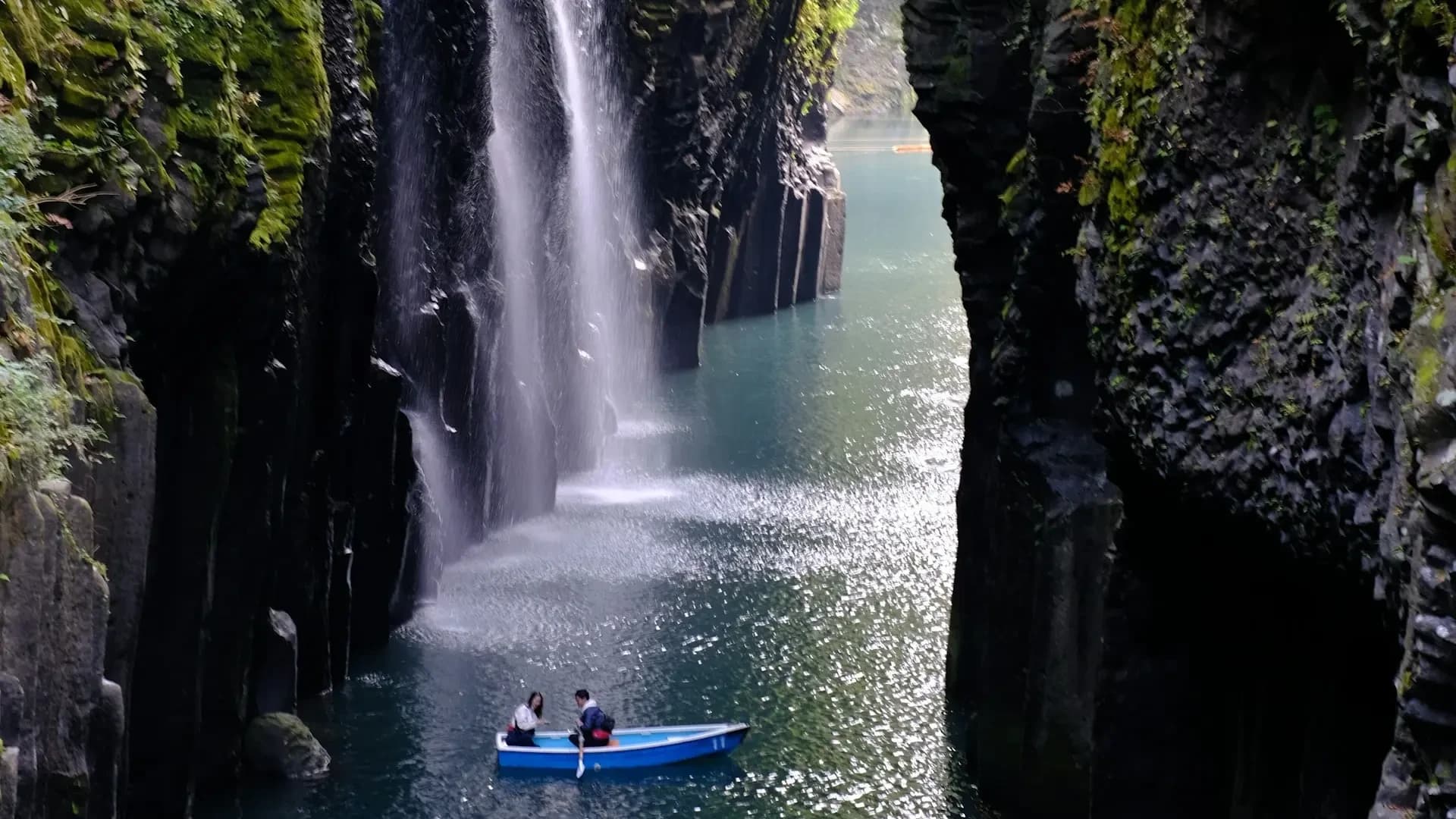
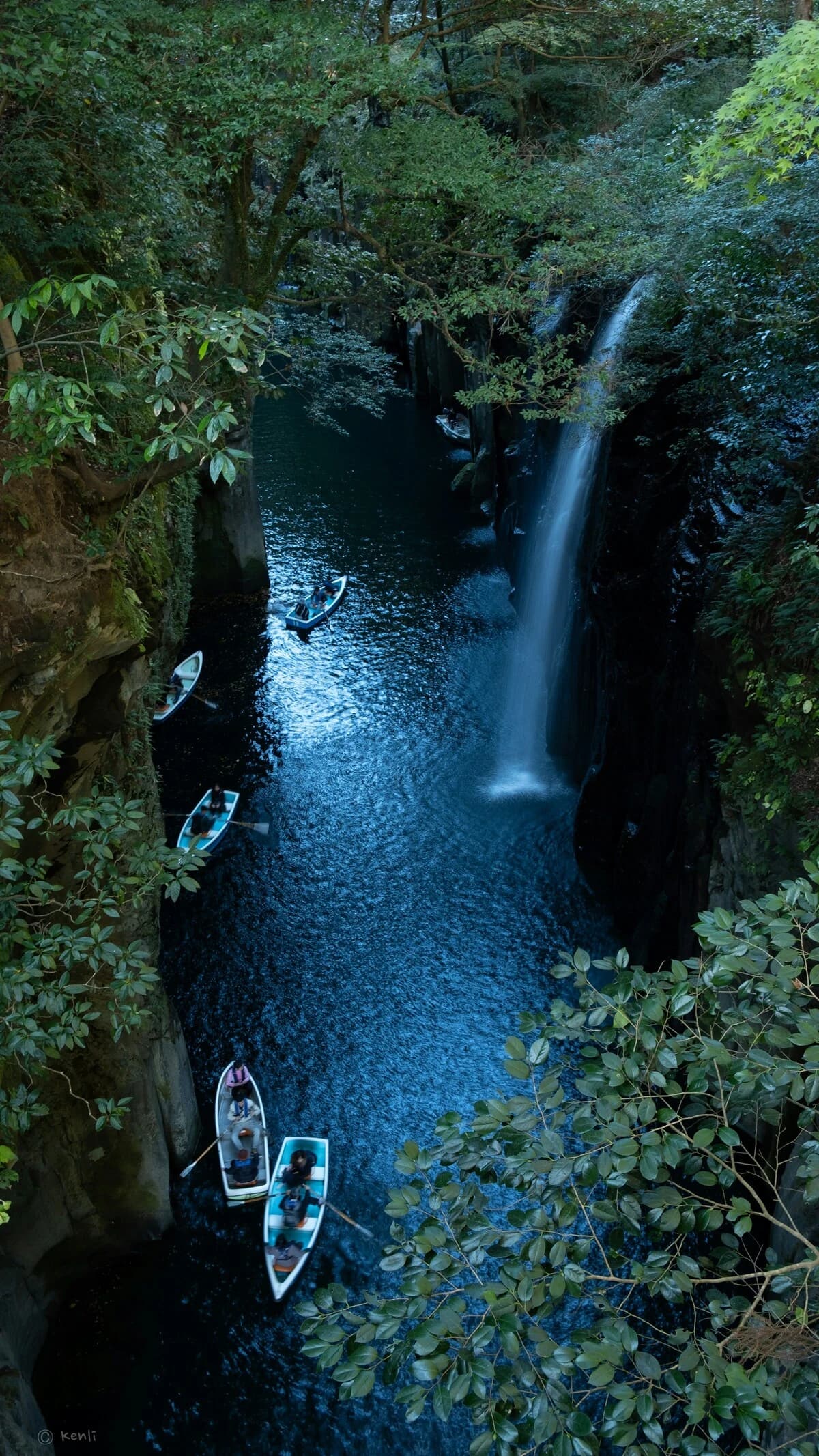
- Because there was no water on earth at the time, the gods moved water from a heavenly spring to this location, creating a waterfall. Today, this is Manai Falls in Takachiho Gorge, falling beautifully through steep volcanic basalt cliffs.
The Sun Goddess Myth: Takachiho Gorge and Amano Iwato ShrineThis section guides you through the mythical sights of Takachiho Gorge, Amano Iwato Shrine, and the Amano Yasukawara cave linked to Amaterasu Omikami.
Located deep in the mountains of northern Miyazaki, Takachiho is a sacred land regarded as the birthplace of Japanese mythology. It serves as the setting for the 'Tenson Korin' myth, where Ninigi no Mikoto—grandson of the sun goddess Amaterasu Omikami—descended from heaven carrying the Three Sacred Treasures and rice seeds to rule the earth. Because of this, Takachiho is revered as the birthplace of the imperial lineage and the foundation of the nation. Takachiho Gorge, where emerald waters flow between steep columns of basalt rock, offers a grand and beautiful landscape fitting for this ancient myth.
1. How to Get There
There is no direct public transport from downtown Miyazaki to Takachiho, so renting a car is highly recommended for convenience. If you travel by public transit, take a train from Miyazaki Station to Nobeoka Station, and then transfer to a local bus heading toward Takachiho.
- Travel Time and Bus Fare: The local bus from Nobeoka Station to Takachiho takes about 1 hour and 30 minutes one-way, costing 1,880 yen.
- Bus Pass Money-Saving Tip: If you plan a day trip to Takachiho, we highly recommend buying the VISIT MIYAZAKI BUS PASS to cover the bus fare and save money.
Express Bus Alternative: Express buses run directly from Fukuoka or Kumamoto to Takachiho Gorge 1–2 times a day.
2. Takachiho Gorge
Renting a rowboat to paddle along the river under the canyon walls is the most popular activity in Takachiho. It lets you view Manai Falls up close as it drops into the river and admire the massive, unique basalt cliff formations right beside you.
- How to Rent and Reserve a Boat:
- Online Advance Reservations Recommended: Due to high popularity, we strongly recommend booking your boat via the official reservation website. Bookings open 2 weeks prior to your visit date (from 9:00 AM) up to 2 days prior (until 9:00 AM). Reservations cannot be made over the phone or via a waitlist.
- Same-Day Walk-ins: If there are remaining slots or cancellations, same-day tickets are sold at the ticket window on a first-come, first-served basis after boat operations are confirmed around 8:00 AM.
- Rental Fees and Capacity: Boat rental fees range between 4,100 yen and 5,100 yen for a 30-minute slot, depending on the date (weekdays, weekends, peak seasons, etc.). An extra fee of 1,000 yen applies for every 10 minutes over the initial slot. A single boat fits a maximum of 3 adults (or up to 4 people if preschool children are included).
- Hours and Cancellation Policy: Open from 8:30 AM to 5:00 PM (Last registration at 4:30 PM). Boat operations stop immediately for safety if river water levels rise sharply due to bad weather or heavy rain.
- The closest parking lot to the boat rental dock is the Oshiochi Parking Lot (paid), but booking a boat does not guarantee a parking space.
- All parking lots operate on a first-come, first-served basis and often fill up early in the morning on weekends or during the autumn foliage season.
- If the central lot is full, you must park in outer lots located about 1 to 1.5 kilometers away and walk over. We recommend arriving at least 30 minutes to an hour before your reservation time to ensure you find parking.
3. Takachiho Shrine
Founded around 1,900 years ago, this historic site serves as the main shrine for the 88 shrines of the Takachiho region.
- The Husband and Wife Cedar (Meoto-sugi): Two massive cedar trees that grow from a single connected root. Legend says that if a couple or partners hold hands and walk around these trees clockwise three times, their wishes for marital harmony, family prosperity, and thriving descendants will come true.
- Nightly Kagura Performances (Yokagura): Every evening from 8:00 PM to 9:00 PM, the shrine's Kagura Hall hosts a performance showcasing 4 key dances from 'Takachiho Yokagura', designated as a National Important Intangible Folk Cultural Property. (Closed on December 31 and January 1.)
- Performance Details: The show consists of 4 acts: 'Tajikarao's Dance', searching for the cave where the sun goddess hid; 'Uzume's Dance', performing a dance to lure her out; 'Totori's Dance', pulling open the heavy rock door; and 'Goshintai's Dance', humorously depicting the bond between a husband and wife.
- How to Ticket and Book: The daily capacity is around 250 people. Tickets are split between advance online bookings (200 slots, first-come, first-served, credit card only) and same-day walk-ins (50 slots, sold from 7:00 PM at the shrine ticket window). Seating is unreserved, so arriving early to grab a good spot is recommended. (Admission costs 1,000 yen for adults / free for elementary school students and under.)
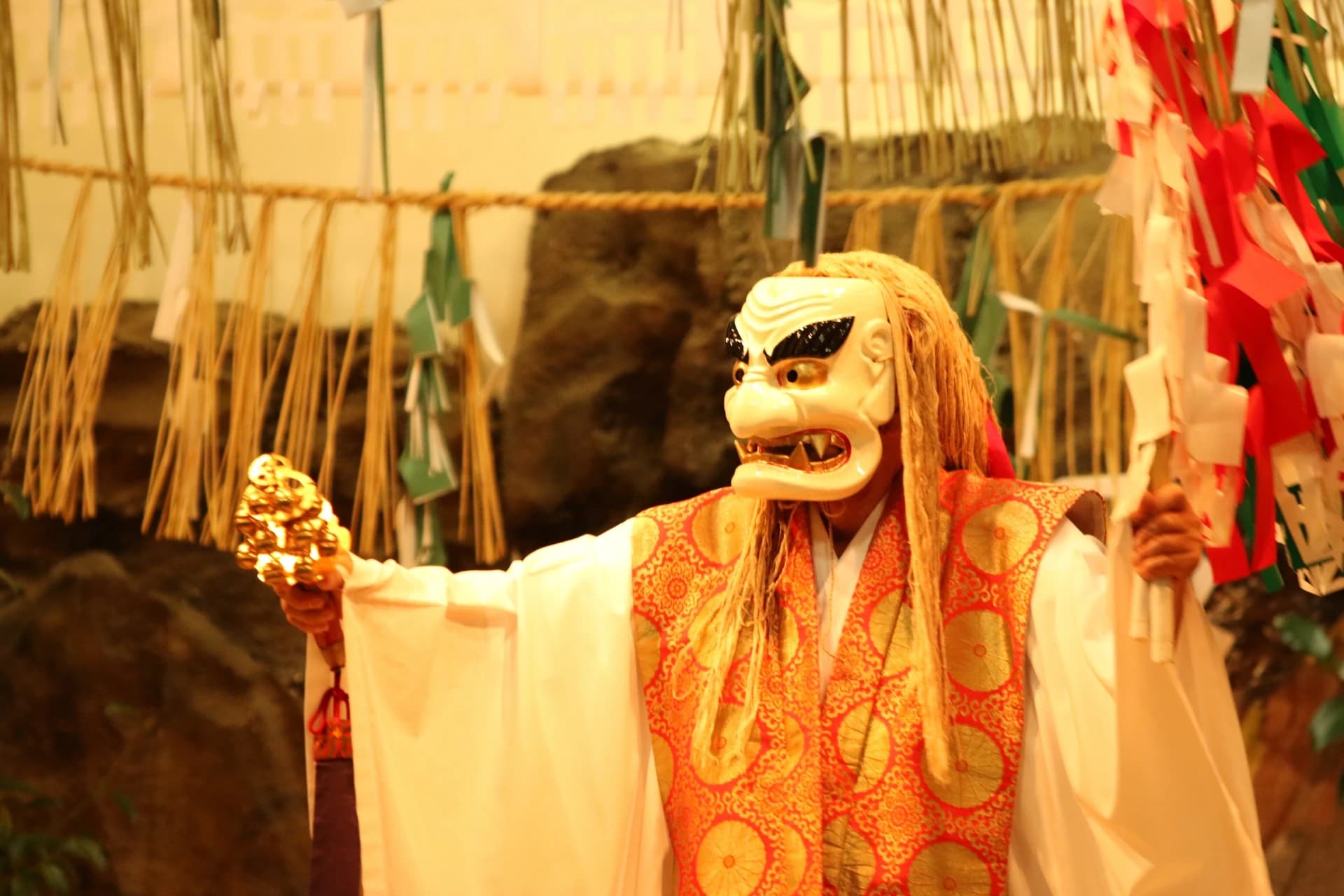
4. Amano Iwato Shrine
This shrine honors the legendary rock cave 'Amano Iwato', where the sun goddess Amaterasu Omikami hid away to escape her brother's misdeeds. The Nishi-hongu and Higashi-hongu compounds face each other across the Iwato River.
- Nishi-hongu (West Shrine): This side honors the sacred rock cave itself as the dwelling of the deity.
- Deity and Prayers: Dedicated to 'Ohirume no Mikoto' (Amaterasu Omikami), it is famous for granting deeply held wishes.
- Unique Worship Custom: There is no statue of the deity inside the main hall. Instead, the sacred cave on the opposite cliff face is worshiped directly. Visitors gather at designated times for guided tours led by a priest, moving to an observation deck to pray while looking across the canyon at the rock cave entrance.
- Cave Name Disclaimer: The sacred, restricted cave where the goddess hid is 'Amano Iwato', while the open cave where the eight million gods held their meeting is 'Amano Yasukawara', located a 10-minute walk away. They are entirely separate locations, so take care not to confuse them.
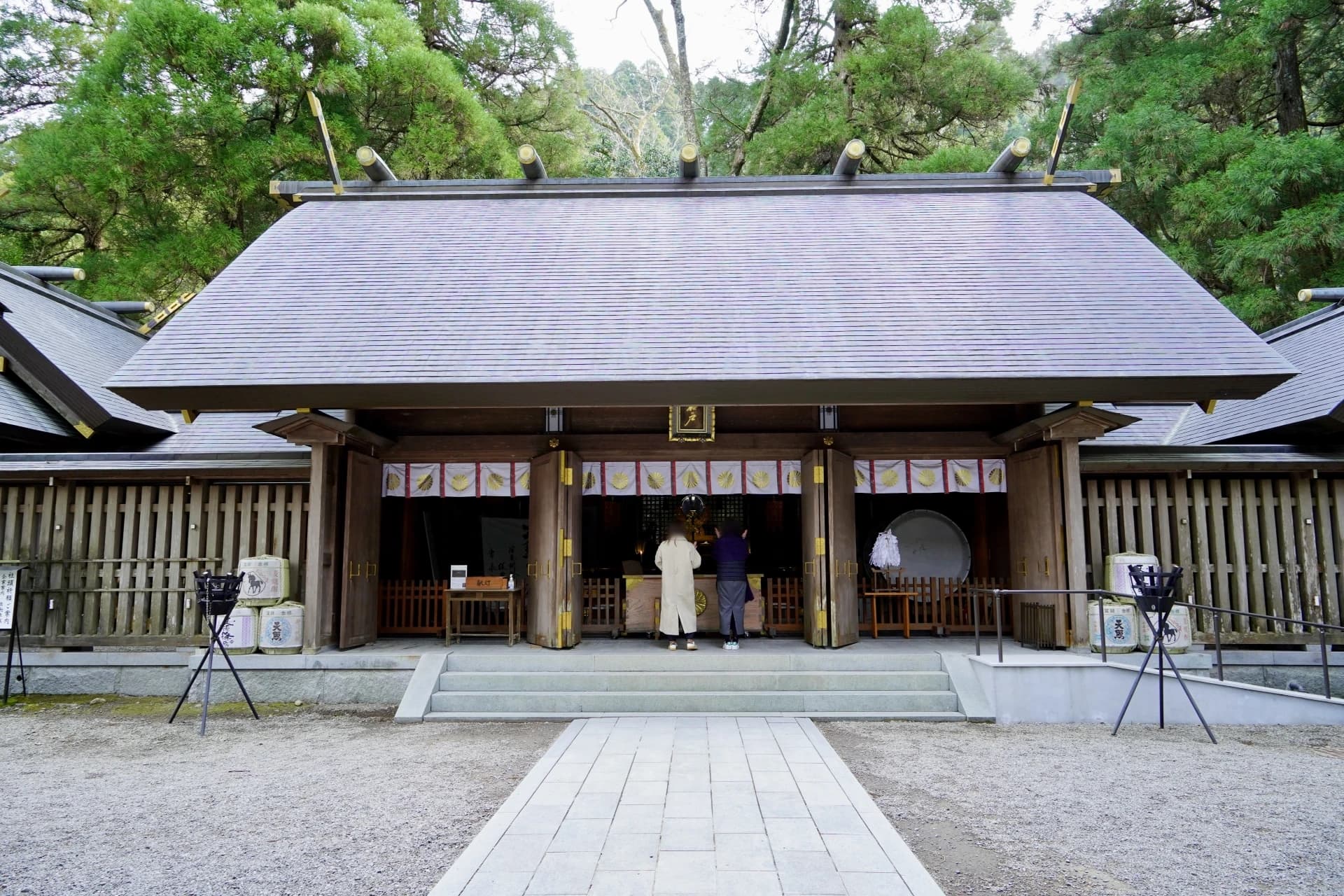
- Higashi-hongu (East Shrine): Located about a 10-minute walk across the river from Nishi-hongu, this shrine marks the site of the palace where the sun goddess first stayed after stepping out of the cave.
- Deity and Prayers: Honors 'Amaterasumi Oomi-kami' as the main deity, supporting all prayers for wish fulfillment.
- The Sacred Cedar: The grounds feature the 'Nanahon-sugi' (Seven Cedars), a large and unusual sacred tree where seven trunks rise together from a single shared root.
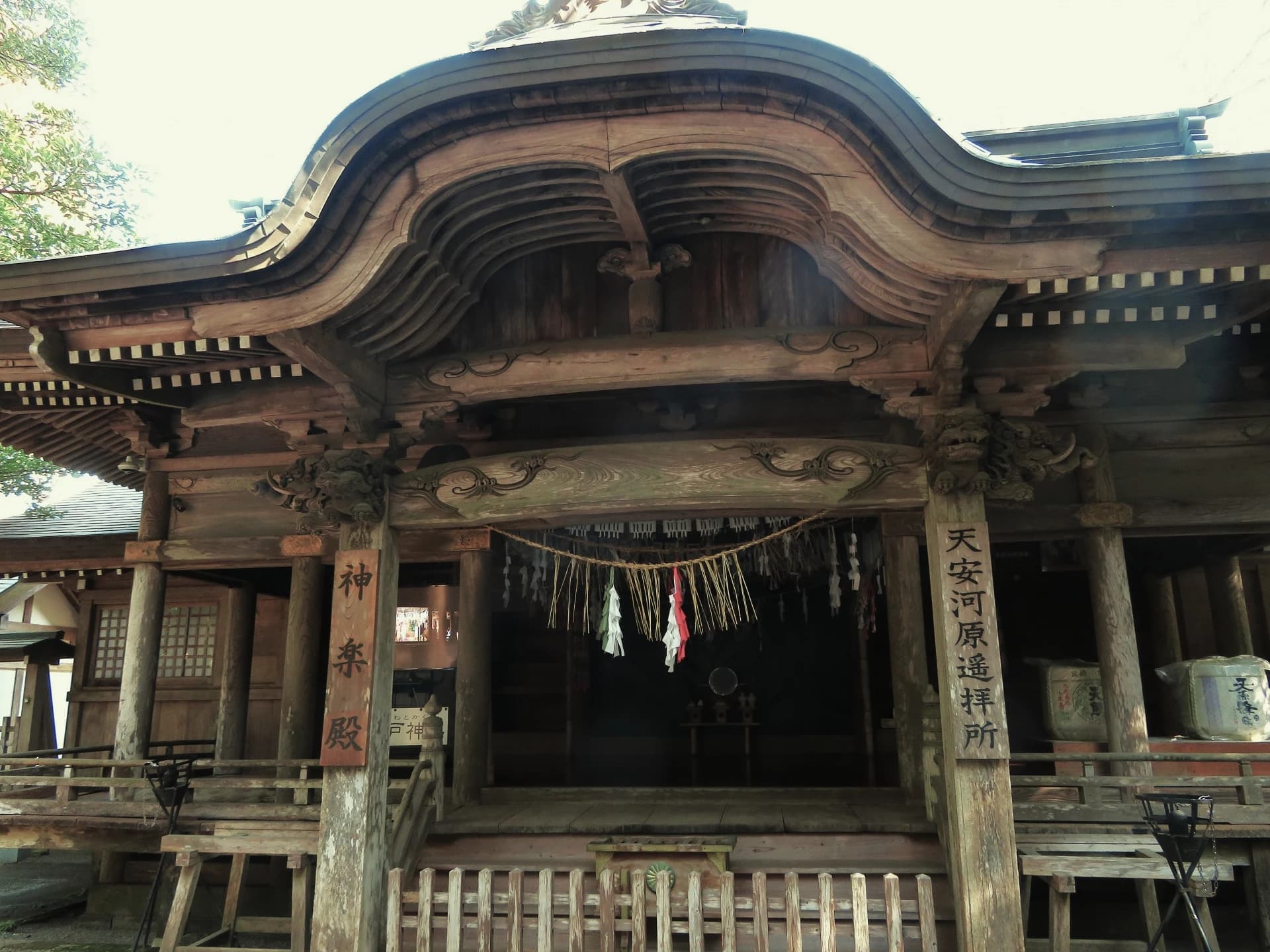
5. Amano Yasukawara
A massive natural cave located a 10-minute walk along a valley path from Nishi-hongu, also known by the nickname 'Gyobogaiwaya'.
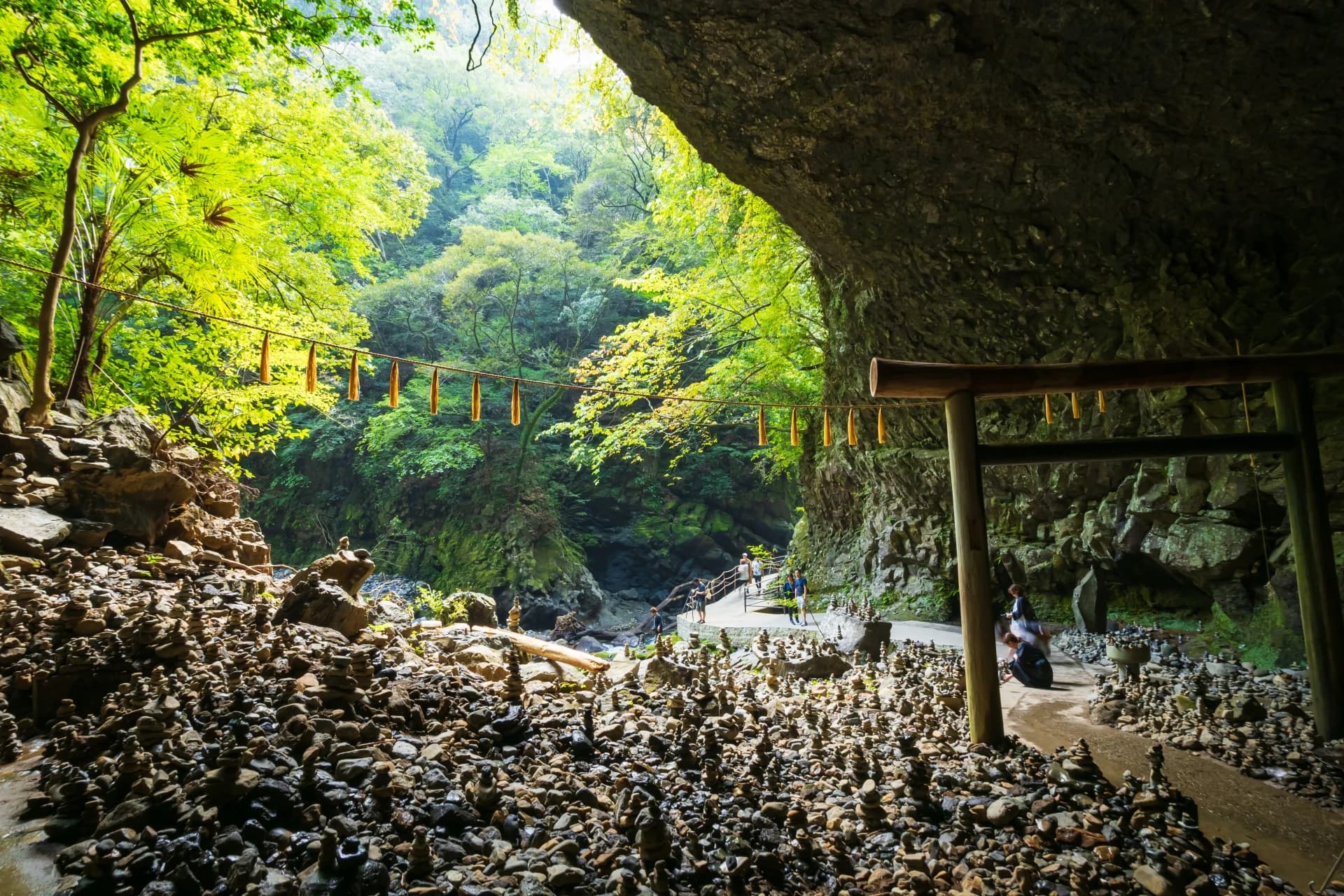
- Deities Worshipped: Dedicated to the god of wisdom, Omoikane no Kami, alongside the eight million deities.
- Meeting Place of the Gods: This riverside cave is the legendary site where eight million gods gathered to plan their strategy to lure out the sun goddess when the world fell into darkness.
- A Landscape of Countless Stone Towers: The inside of the cave and the surrounding riverbank are filled with thousands of small stone towers stacked by visitors making a wish, creating a mystical, otherworldly atmosphere.