ForewordHard to reach without a rental car, but highly recommended
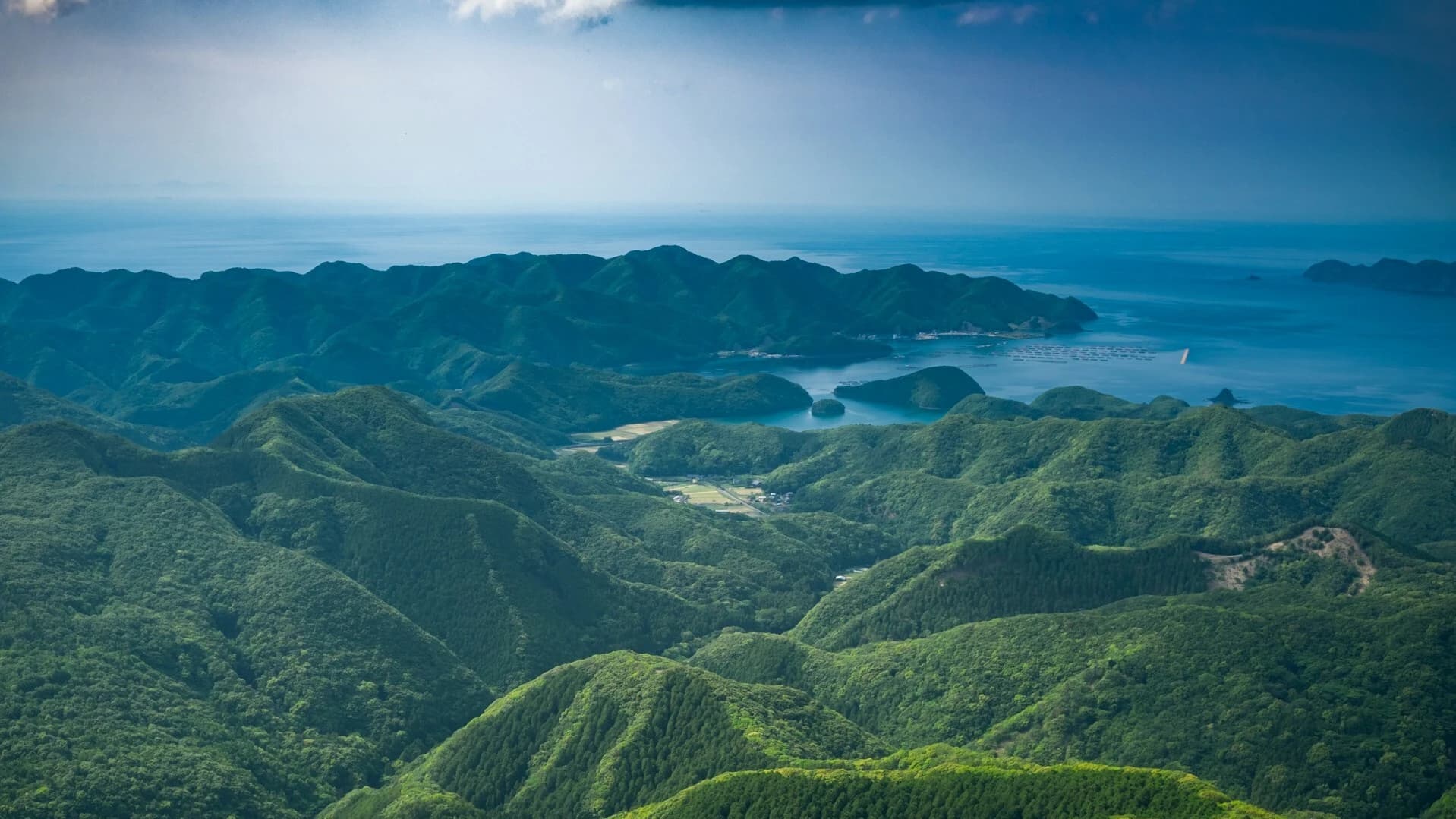
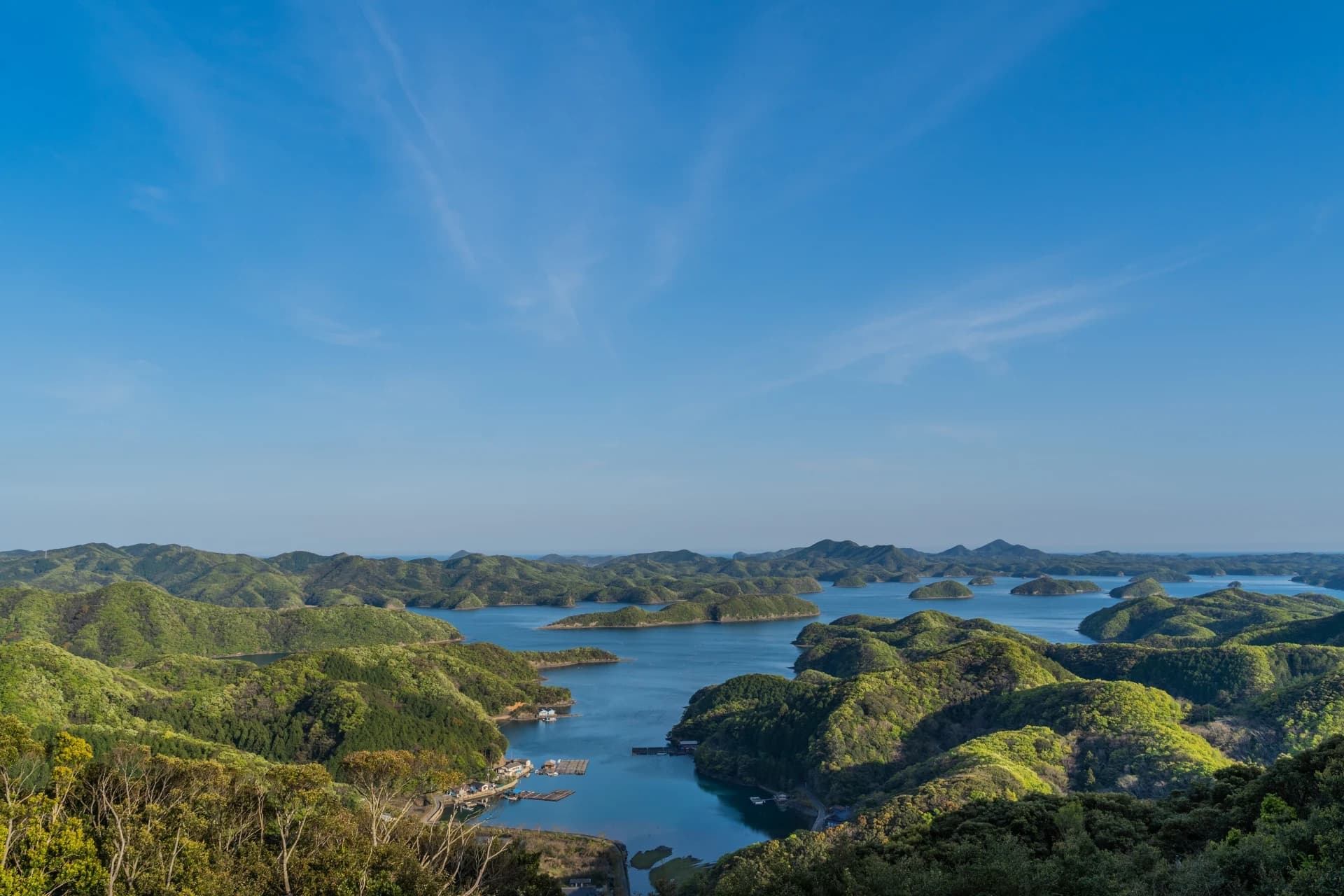
While difficult to visit without a rental car, the most recommended viewpoint in Tsushima is undoubtedly the Eboshidake Observatory. It offers a 360-degree panoramic view of the complex rias coastline and layered islands of Aso Bay (浅茅湾), earning it the nickname "The Halong Bay of Tsushima."
However, please note that Watazumi Shrine, located on the way to the observatory, currently has entry and viewing restrictions for certain visitors. Please keep this in mind when planning your itinerary.
Watazumi ShrineA mysterious tale of underwater torii gates and Dragon Palace legends
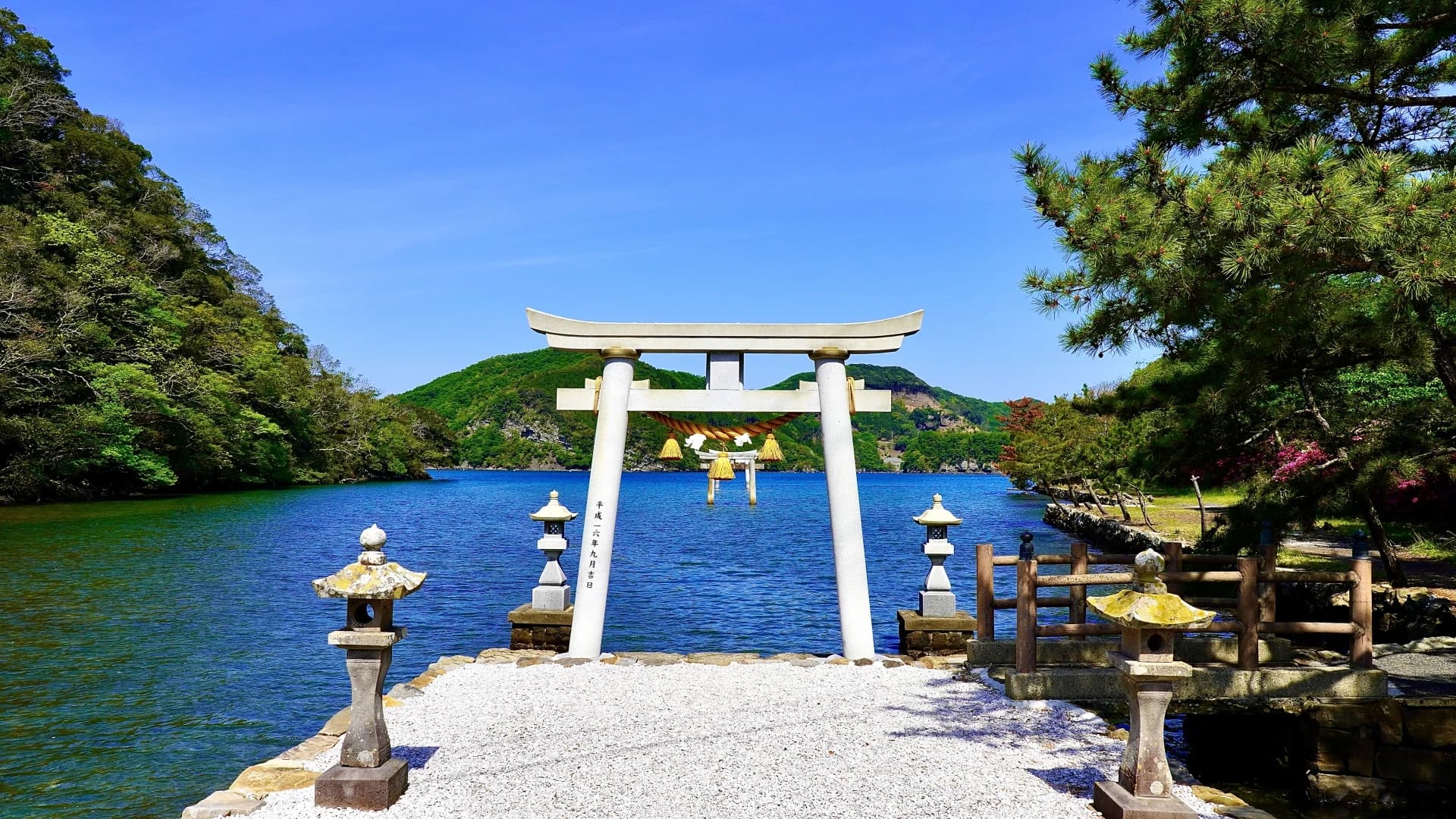
1. The "Five Torii Gates" Connecting Sea to Land
In the sea in front of Watazumi Shrine stands five torii gates lined up in a row. Two of them are built directly in the water, creating a mystical scene that changes with the ebb and flow of the tide.
- Pathway of the Sea God: According to mythology, these gates symbolize the path taken by the Sea God when moving from the sea to the land.
- Entrance to the Dragon Palace: The shrine itself is said to be the site of the palace of Toyotama-hime, the daughter of the Sea God, often referred to as the "Dragon Palace."
2. The Brothers of Mountain and Sea: Yamasachihiko and Umisachihiko
1) Fates Divided by a Fishhook
Ancient Japanese mythology tells of two brothers: the elder brother Umisachihiko (Luck of the Sea), a skilled fisherman, and the younger brother Yamasachihiko (Luck of the Mountain), a skilled hunter. One day, they decided to swap tools.
- The Incident: Yamasachihiko, unskilled at fishing, accidentally lost his brother's precious fishhook in the ocean.
- The Anger: The furious elder brother demanded the original hook back and drove Yamasachihiko away.
2) Connection at the Dragon Palace and Magic Jewels
Descending into the deep sea to find the hook, Yamasachihiko arrived at the Dragon Palace, the home of the Sea God Watatsumi.
- Love and Marriage: He fell in love with and married the Sea God’s daughter, Toyotama-hime, living happily for three years.
- Tools of Victory: When he finally found the hook and prepared to return to the surface, his father-in-law gifted him two jewels: the Tide-flowing Jewel and the Tide-ebbing Jewel. Using these powers, the younger brother was able to subdue his elder brother.
3) A Tragic Farewell and the Closed Sea Path
- The Broken Promise: When it came time for Toyotama-hime to give birth, she went to the shore and made her husband promise never to look at her during delivery. However, Yamasachihiko broke his promise and saw her true form—a giant shark (or dragon).
- Eternal Separation: Overcome with shame, Toyotama-hime returned to the sea, leaving her newborn child behind. She blocked the passage between the sea and land, forever separating the worlds of humans and gods.
The Legacy of Toyotama-hime: Udo Shrine in Miyazaki, said to be her place of delivery, remains a famous site for praying for safe childbirth. Additionally, Toyotama-hime Shrine in Ureshino Onsen honors her legendary beauty; it is said that pouring water over the white porcelain catfish statue there improves one's skin.
3. Historical Significance of the Myth
This myth is not just a legend; it is tied to the roots of the Japanese Imperial Family.
- Origin of the Emperor: The child born of this union became the father (Ugayafukiaezu) of Emperor Jimmu, the legendary first Emperor of Japan.
- Symbol of Lineage: This serves as a key foundation for the claim that the Imperial Family carries the lineage of the Sea God.
According to the myth, after Toyotama-hime returned to the sea, her sister Tamayori-hime raised her nephew Ugayafukiaezu. Later, the child born between the adult nephew and his aunt, Tamayori-hime, is said to be the first Emperor of Japan, Emperor Jimmu.
4. The Tomb of Toyotama-hime (豊玉姫御陵墓)
Located behind Watazumi Shrine is the Tomb of Toyotama-hime. As she is a mythological figure, it is considered a symbolic sacred site for rituals rather than a grave containing actual remains.
- Characteristics: It is a simple site with a mound of stones under a massive tree, evoking a folk atmosphere similar to a Korean Seonangdang.
Eboshidake ObservatoryThe Halong Bay of Tsushima! The island's best view
1. Location and Overview
Located in central Tsushima near the summit of a 176m mountain, this observatory overlooks Aso Bay (浅茅湾). Its central position makes it the best place to grasp the island's overall geography.
- Feature: Enjoy a 360-degree panorama of Aso Bay, where dozens of small islands are scattered like jewels.
2. The Mystery of Aso Bay and Rias Coast
Aso Bay is an inner sea formed by a rias coastline with complex indentations.
- Geographic Features: The deeply curved shoreline and many islands keep the water very calm.
- Historical Value: These natural features have made it a natural harbor since ancient times, and it is known for its highly developed fishing industry.
3. Origin of the Name 'Eboshidake'
The name 'Eboshidake' (烏帽子岳) comes from the traditional Japanese hat, 'Eboshi' (えぼし).
- Origin: The mountain's shape, when viewed from a distance, is said to resemble the unique triangular form of the Eboshi hat.
4. Viewing Points
A well-maintained wooden deck is available at the summit for visitors.
- Best Moments: It is a prime photo spot with clear views in every direction. It is especially famous for the deep blue sea on sunny days and the stunning sunsets.
Manzeki Bridge and Manzeki ObservatoryA turning point in the Russo-Japanese War and the history of the red arch bridge
1. Geographic Background: An Artificial Cut
Originally, Tsushima was one single island, and the site of the current Manzeki Bridge was its narrowest point (isthmus). This point connected the northern Kamijima and southern Shimojima.
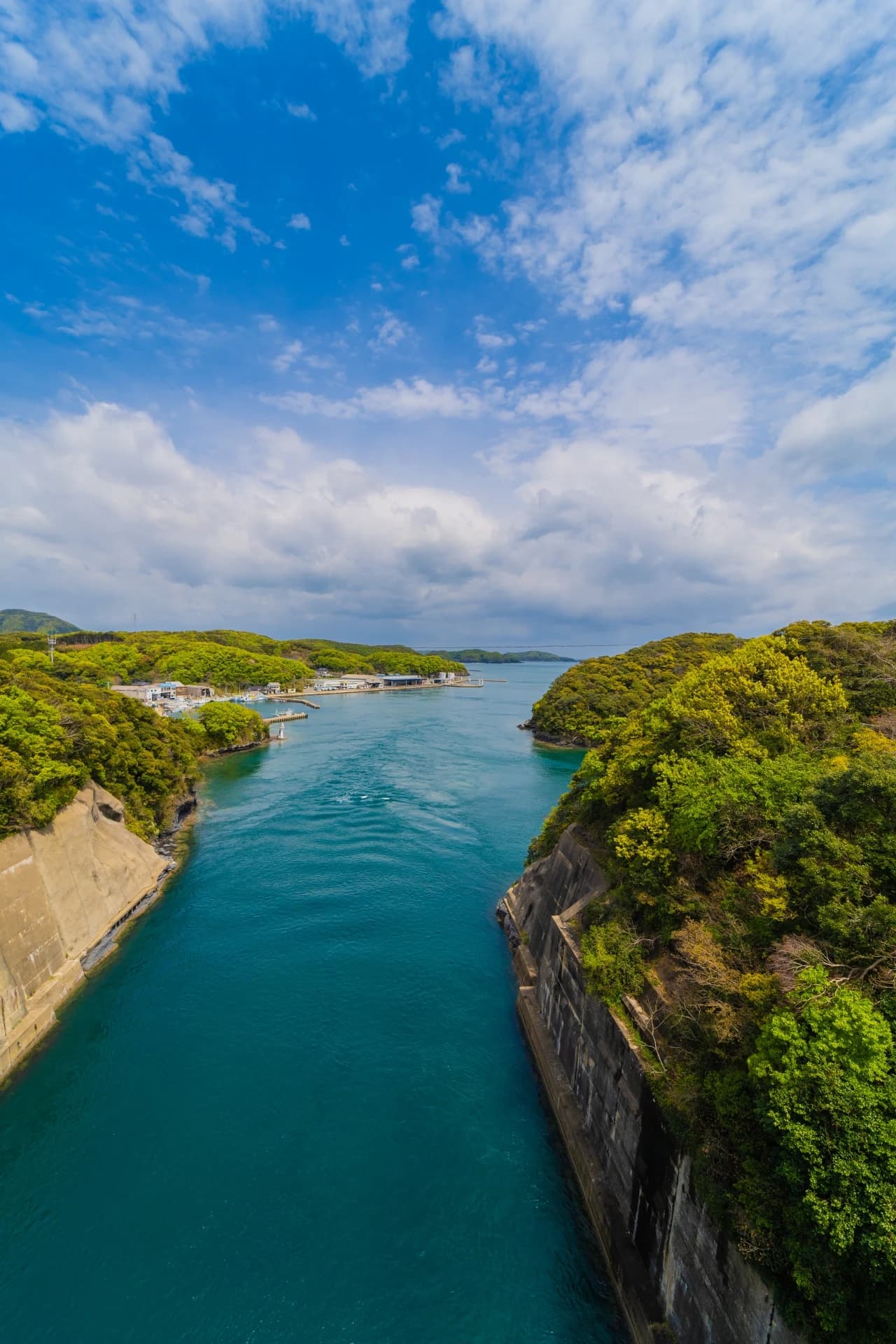
- Birth of the Canal: In 1900, the Japanese Navy excavated this narrow neck of land to create an artificial canal, Manzeki Seto (万関瀬戸), for rapid naval movement.
- Divided Tsushima: This construction physically divided Tsushima into two islands. The bridge built to reconnect them is Manzekibashi.
2. Historical Turning Point: The Russo-Japanese War
This canal and bridge were key strategic assets during the Russo-Japanese War (1904–1905).
- The Strategic Move: During the Battle of Tsushima in 1905, Japanese torpedo boats utilized this canal to move quickly from Aso Bay to the East Sea, avoiding the rough outer seas.
- The Ambush Path: This movement was instrumental in ambushing the Russian Baltic Fleet, serving as a strategic stepping stone for the Japanese naval victory.
3. History from Manzeki Observatory
Located on a hill near the bridge, the Manzeki Observatory offers a view of this historic site.
- Viewing Point: From the top, you can see the red arch bridge and the strong currents flowing beneath it.
- Vestiges of History: What was once a tense battlefield for warships is now one of Tsushima's top scenic spots for tourists.
Visiting Tip: The water below Manzeki Bridge flows powerfully like a river depending on the tides. We recommend walking across the bridge or observing the flow from the observatory while considering the historical background.
Tsushima Green ParkA comprehensive park with clear seas and various leisure facilities
1. Overview and Features
This is one of the largest leisure and park facilities in central Tsushima. It is a complex resort space where you can enjoy land leisure and maritime activities against the backdrop of Aso Bay.
2. Major Leisure and Sports Facilities
It features professional facilities for everyone from families to local sports enthusiasts.
- Sports: Includes a baseball field and tennis courts within the large grounds.
- Family Area: Features a safe playground for children and ample picnic spaces for families.
3. Beaches and Marine Activities
The park features two beautiful sandy beaches, making it a popular spot for summer swimming.
- Snorkeling Spot: The water is very clear and calm, making it ideal for swimming and snorkeling.
- Underwater Scene: The water quality is so clean that you can even observe various tropical fish near the shore.
YuttarilandA multi-purpose hot spring facility in Mitsushima, central Tsushima
Located near the airport in central Tsushima, this is a comprehensive hot spring resort. It is a great place for rental car travelers to stop and relieve fatigue while on the move.
- Features: Includes indoor baths, outdoor baths (rotenburo), and saunas. The smooth water is known for skin benefits and fatigue recovery.
- Amenities: Features a restaurant and rest area serving local specialties.
- Usage Tips: Very accessible, located 5–10 minutes by car from Tsushima Airport and Manzeki Bridge.
- Fees:
- Adults 800 JPY, Seniors (70+) and Students 650 JPY, Children 400 JPY, under 3 free.
- Family Bath: 2,000 JPY (60 min) / 2,500 JPY (90 min)
- Up to 2 adults and 3 children.
- Separate bathing tax: 150 JPY per person.
- Hours:
- Onsen: 10:00 – 23:00
- Family Bath: 10:00 – 21:00
- Morning Bath: 06:00 – 08:00 (Main and outdoor baths only)
- Preparation: Bringing your own towel is more economical, though paid rental is available. - Note: Check for regular closures or seasonal hours before visiting.
Kaneda Castle RuinsA 1,300-year-old Baekje-style mountain fortress built against invasion
1. Historical Background: The Threat of Invasion
Kaneda Castle was born from the turbulent politics of the mid-7th century. Following the defeat at the Battle of Hakusukinoe (663), Japan (Wa) feared an invasion by the Tang and Silla forces.
- Frontline Defense: In 667, Kaneda Castle was built on the summit of Mt. Jojo (Shiroyama), the strategic point closest to the Korean Peninsula.
- Defense System: It was a high-tech defense fortress designed to protect Dazaifu in Kyushu and block the path to mainland Japan.
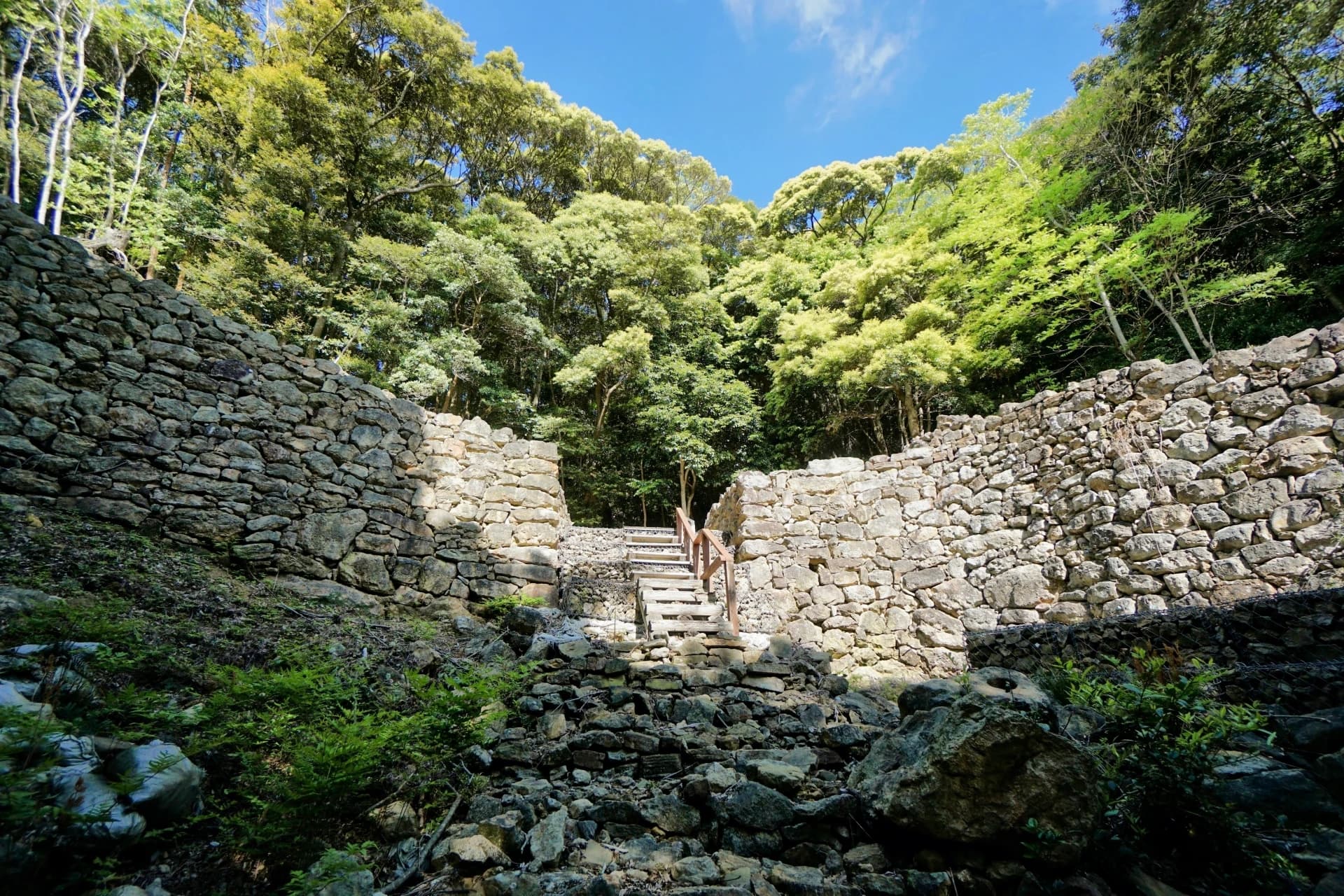
2. Features: A "Baekje-style Fortress"
The most significant historical feature of Kaneda Castle is that it is a Baekje-style mountain fortress, reflecting the technology of refugees from the fallen Korean kingdom of Baekje.
- Solid Stonework: The method of building walls across valleys while utilizing steep terrain is very similar to the fortress construction techniques of Goguryeo and Baekje on the Korean Peninsula.
- Preservation: Stone walls at the 1st, 2nd, and 3rd gates remain nearly in their original form.
3. Modern History: Russo-Japanese War Batteries
1,200 years later, this ancient fortress returned to the historical stage.
- Battery Construction: In the early 1900s, the Japanese military installed the Shiroyama Battery (城山砲台) near the summit to monitor the Russian fleet.
- Layered History: Ancient stone walls and modern concrete batteries coexist, proving the enduring strategic importance of Tsushima.
4. Historical Value and Today
- Special Historic Site: It is designated as a Special Historic Site of Japan.
- The View: Standing at the summit, you can see Geoje Island and Busan in Korea on clear days, realizing its past role as the ultimate watchtower.
Visiting Tip: The trail is well-maintained but requires a light hike of about 2–3 hours round trip. Wear comfortable sneakers and bring water.