Passport and Visa BasicsIs checking passport validity enough?
For citizens of visa waiver agreement countries, Japan allows visa-free entry for up to 90 days if you have a valid Regular Passport.
- Regular Passport: A standard passport that allows international travel until the expiry date
- Emergency/Temporary Passport: A passport issued for loss or urgent situations, usually valid for one-time use or a short period
Unlike some countries, Japan does not require at least 6 months of passport validity. However, your passport must not expire during your stay.
List of visa waiver agreement countriesIf you are not a citizen of a visa waiver agreement country, you must prepare a visa in advance when traveling to Japan.
Apply for a Japan visaThere are occasional cases where travelers put their passport in checked baggage. In this case, you cannot enter Japan. You must always carry your passport with you when boarding your flight, and whenever you move around at the airport or in Japan.
Travel Rules for MinorsPrepare an accommodation consent form
Recently, more minors are traveling to Japan alone. This is partly because Japan is generally safe, and it is easy to stay in contact by smartphone.
On international flights, solo travel is allowed from age 12, and Japan entry also has no age-based restriction. It is possible without notarized documents.
The most important difference for minor travel is accommodation.
In Japan, if a minor under 18 stays alone, some hotels may require a separate accommodation consent form.
Also, some properties such as capsule hotels may not allow minors to stay at all, so you must check in advance.
1) How to Check If a Minor Can Stay
- Choose a hotel on a booking site.
- Find the hotel’s official website and translate it.
- Check the FAQ or “Frequently Asked Questions” for minor stay policies. (If the site has an AI chat feature, search with the keyword “minor” or “未成年者”.)
If the hotel provides a consent form, download it, fill it out, and bring it with you. If there is no form, you must email the hotel in Japanese to ask if the stay is allowed and request a consent form.
If you ask an AI to “write a Japanese business email asking if a minor can stay and requesting an accommodation consent form”, you can easily get a ready-to-use email template without Japanese skills.
- Some hotels allow only ages 15 to under 18 (check carefully, as some do not accept middle school students)
- Mixed-gender shared rooms are not allowed for minors under 18
- Even for same-gender minors traveling together, each person may need a separately signed consent form
- Even for families, if one person is an adult and one is a minor, confirm with the hotel in advance and bring an English family relationship certificate
- Example: siblings where one is an adult and one is a minor / a relative traveling with a nephew or niece
- If the hotel does not provide a form, use the PDF file below and submit it
2) How to Book a Hotel for a Minor 🏨
Many hotels have systems where you cannot complete a booking unless you enter adult details. So, if you have confirmed with the hotel that a minor can stay, select “adult” during booking, and then write the date of birth and gender in the notes section.
Then, submit the completed consent form at check-in.
Exclusive TourCast Tips!
How to Get a Consent Form Easily
In the Guidebook - Recommended Hotels/Ryokan tab, you can find hotels with an “Accommodation Consent Form” button. Click the button to download the form immediately.
If there is no hotel that matches your needs, post in the TourCast Q&A board with your check-in/check-out dates, number of guests, room type, age, and budget per night to get hotel recommendations that match your conditions.
TourCast is always with you! 👍
Japan Weather and Outfit PreviewBefore you leave, check real street outfits (with live cams)
Before traveling to Japan, many people wonder what to pack and what to wear.
Temperatures vary by region. In general, Tokyo, Osaka, Kyushu, and Okinawa are warmer than Korea, while the Tohoku region (Fukushima, Sendai, etc.) has a similar climate, and Hokkaido is colder.
It is important to pack based on your destination and season. The most practical method is to check local outfits through live cams right before your trip.
Using the links below, you can view live cameras across Japan and see what people are wearing right now, which makes packing much easier.
However, you should still understand the general seasonal climate in advance, and prepare your clothes and travel items with enough time before departure. 😁
Japan nationwide live cams Tokyo live cams Osaka live cams Fukuoka live cams Hokkaido live cams Okinawa live camsWhy Travel Insurance MattersA few dollars can save you thousands
Many travelers plan flights and hotels carefully, but still think, “Do I really need travel insurance?”
Of course, returning home safely is the best outcome. But no one can predict what will happen during a trip. Travel insurance is an important preparation item for unexpected accidents or illness.
Like health insurance or life insurance, travel insurance is a way to prepare for different problems that may happen during your travel dates.
1) Common Coverage Items
- Accident/Injury: Treatment for fractures, burns, and other injuries
- Illness: Treatment for conditions such as colds or stomach issues
- Personal belongings: Damage, water damage, or theft of items like cameras and phones
- Personal liability: Damage to hotel property, or injury/damage to others
- Death: Death due to an accident or illness during travel
Notes on Liability and Exclusions ⚠️
Travel insurance personal liability generally applies when you accidentally cause injury or property damage to others during your trip. However, the cases below are usually excluded, so you must check your policy.
- Rental item incidents: Damage or loss of rented items such as bicycles, e-scooters, and cars, and accidents involving injuries (to people) or property damage while using them
- Special/high-risk leisure activities: Skiing, snowboarding, water skiing, scuba diving, jet skiing, and other water sports
- High-risk activities defined by insurers: Paragliding, bungee jumping, rafting, and similar activities
These activities or rental-related incidents are often not covered. In that case, it is safer to buy separate rental insurance or activity insurance from the provider.
As travel risks become more diverse, travel insurance is now considered essential—some even call it a “second passport”.
Plans vary, so you should check the coverage details and limits before buying. For example, even a plan that costs about KRW 4,000–5,000 for a 2-night, 3-day trip can include up to KRW 100 million coverage in case of death.
In particular, overseas medical costs are much higher than in Korea, and most Korean private health insurance does not cover overseas hospital bills. Saving a few dollars can lead to big expenses, so travel insurance is strongly recommended.
If a problem happens, being able to contact your insurer 24/7 helps you get faster and more stable support.
2) Real Accident Examples During Japan Travel
- A child had a fever → diagnosed with otitis media and tonsillitis, received fever medicine and IV fluids
- Phone screen broken → full front replacement (personal belongings coverage limit: KRW 2,000,000)
- Camcorder theft
- Ankle ligament injury from running while cutting in line for a ride
With travel insurance, you can contact the insurer immediately and handle it on the spot.
3) Insurance Fraud Is Also Punishable
If you stage an accident on purpose or claim falsely, it can be treated as insurance fraud and is punishable, so never misuse it.
5) Medicines 💊
You can bring basic medicine or your regular medication for personal use. For details, refer to the guide below.
Guide to bringing medicines into JapanExclusive TourCast Tips!
Preventing Airplane Ear (Ear Pain During Flights)
If you have ear, nose, and throat conditions, you may experience airplane ear during flights.
This happens due to pressure imbalance from altitude changes. It can cause blocked ears, ringing, dizziness, and in severe cases, eardrum bleeding.
Pressure-regulating earplugs or prescribed medicine in advance can help prevent it.
The best option is to visit an ENT clinic about one week before departure and get a prescription. If time is limited, buying a recommended medicine at an airport pharmacy is also an option.
※ Many regular pharmacies may not be familiar with airplane ear medicines. (Based on experience)
TourCast wishes you a safe trip and safe return home 🙏🏻
Data Roaming and Mobile Connection SetupPrepare for ear pain during flights
Even if an “analog” travel style is trending these days, you will not carry a heavy guidebook and a paper map while traveling.
This is because your guidebook can be replaced by TourCast (😄), and map apps let you search locations and check routes on the spot.
So, data roaming has also become essential for international travel.
If you use automatically connected roaming data without applying in advance, you may face unexpectedly high charges, so be careful.1) Carrier Data Roaming
- Apply with your mobile carrier before departure and use it immediately after arrival
- Convenient, but expensive
- If it connects automatically without your request, you may be charged a large amount
- You can receive calls and texts, and the speed may be slower than at home
2) Overseas eSIM
- Check device compatibility
- Data only; calls and texts use your existing uSIM
- Easy setup with a QR code, but be careful not to keep domestic data turned on
- Local networks are stable, and roaming network settings require extra care
3) Overseas uSIM
- Remove your current uSIM and replace it with an overseas SIM
- Check with your carrier about country lock and mobile protection service settings
- Mostly data-only, and many plans do not include calling
- Keep your original uSIM safe
4) Pocket Wi-Fi
- Can be shared with your travel group
- Turn off mobile data and connect by Wi-Fi only
- Must charge the router; a power bank is recommended
- Pickup and return can be inconvenient
Exclusive TourCast Tips!
Safe Use of Roaming and International Calls
- Apply to block overseas data roaming in advance
- Check with your carrier whether country lock and mobile protection service are disabled
- How to call your home country while abroad
- iPhone: automatic setup or enter +country code + the rest of the number
- Android: select international dialing or enter +country code + the rest of the number
- How to call a local number
- Tokyo: +81-3-1234-5678
- Mobile: +81-80-1234-5678
Exclusive TourCast Tips!
So, how much data do you need?
Data usage increases the most when watching videos. Data consumption depends on resolution and bitrate (Kbps). Watching for 1 hour in 720p (HD) usually uses about 1.2GB to 1.8GB.
In comparison, watching for 1 hour in 1080p (FHD) uses about 2.0GB to 2.2GB. So your plan choice depends on how often you will watch videos during your trip.
Many travelers watch fewer videos during a trip, but if you often stream videos while moving around, at least 1GB per day is recommended. If you only watch short clips and mainly use Google Maps, messaging, and search, 1GB per day can be enough.
Plug AdapterWhich plug works in Japan?
When using electronics while traveling, differences in voltage and frequency can cause problems.
In Japan, you should also know that the frequency varies by region.
Most devices show the Input Voltage on the model label, so check it before you leave.
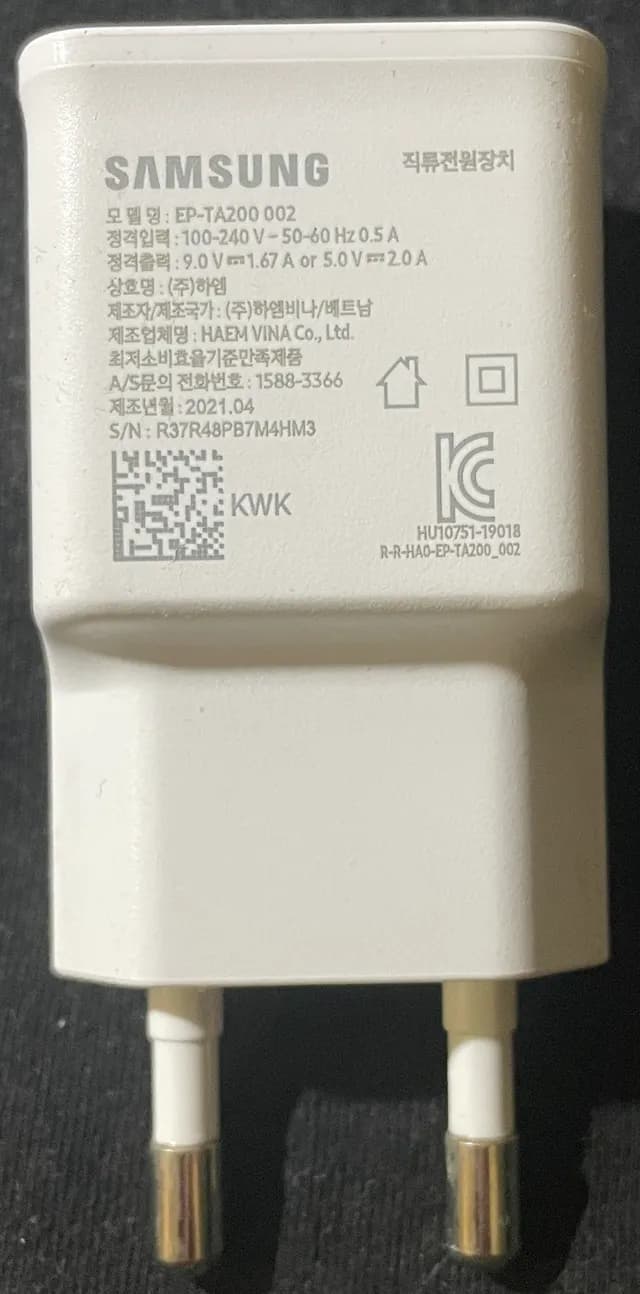
Most travel electronics (smartphones, laptops, etc.) support input 100–240V, 50/60Hz and are universal voltage (Universal Voltage), so they work in Japan as long as you use the correct plug adapter.
(Universal voltage is also called “free voltage.”)
However, Japan uses different frequencies by region, so you should double-check. Using Shizuoka as the reference point, the west (Fukuoka, Osaka, etc.) uses 60Hz, and the east (Tokyo, Hokkaido, etc.) uses 50Hz.
- 100–240V, 50/60Hz: Universal voltage devices. You can use them anywhere in Japan with only a plug adapter.
- 220V, 60Hz: Devices made for specific countries (e.g., Korea). They will not work in Japan with only a plug adapter. There is a risk of damage depending on the transformer and frequency.
- 110V, 50Hz: May work in some parts of Japan, but if used in a 220V country outlet, it can damage the device.
Because many travelers carry multiple devices, a plug adapter alone may not be enough. It is useful to bring a multi-plug adapter.
- Cheap plug adapters may cause malfunctions, poor contact, sparks, or other risks
- For a multi-adapter, check 2000W+ rated power and fast charging (PD 35W) support
Can I Bring My Hair Straightener?Universal voltage?
- If it is a corded hair iron with universal voltage, you can use it (see above).
- A cordless hair iron can be carried on board only if the battery can be removed and separated.
- If the battery is built-in, it is not allowed
- Some ladies’ rooms provide a hair iron.
Why a Travel Card Is UsefulHow convenient is a travel card?
Recently, instead of exchanging a large amount of cash, many travelers use a Travel Card.
Simply put, it is a prepaid debit card that can be used overseas.
When you top up the card, the exchange rate for that currency is applied. Then you can use it for card payments or ATM withdrawals in Japan.
If you exchange any remaining balance back to your home currency, the exchange rate is applied again. There is usually no separate exchange fee, but you may have exchange loss.
Conditions for Use
- You must register it with the same English name shown on your passport.
- You can use it at most stores that accept card payments. It is useful as a cash alternative and helps reduce leftover coins.
- Limits (top-up, payment, ATM withdrawals) vary by issuer, but the usage is similar.
ATM Withdrawal Fees
When using a Travel Card at an ATM in Japan, fees depend on the card network.
- Visa cards → AEON ATM (found in large shopping malls, stations, airports, etc. in Japan)
- MasterCard cards → Seven Bank ATM (available nationwide at 7-Eleven convenience stores)
- Other networks → ATM withdrawal fees may apply in many cases
Travel cards on the Master network may sometimes have ATM withdrawals locked due to security reasons. In some cases, using a different ATM may unlock it, but exceptions are possible, so keep this in mind.
How Much Cash Should You Exchange?How much cash should you bring to Japan?
Exchanging money at a bank branch is usually cheaper than exchanging at the airport.
Example: Bank branch fees about 16–20 USD, airport about 45 USD (based on exchanging 1,000 USD)
However, instead of exchanging everything into cash, it is recommended to use a Travel Card as well and split your payment methods.
1) How much should you exchange?
A common travel budget is about 10,000 yen per person per night.
Example: For a 3-night, 4-day trip, about 30,000 to 40,000 yen is reasonable (excluding shopping).
Also, buying or topping up transport IC cards is still cash-only in many places, so you should carry some cash.
ATMs or IC card sales locations may not be nearby, so it is efficient to exchange 10,000 to 20,000 yen in advance and use a Travel Card for the rest.
2) What should you watch out for when exchanging money?
Japan still uses cash often, so you can use 10,000 yen bills even at convenience stores.
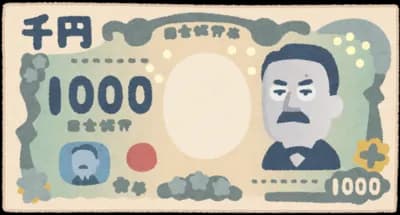
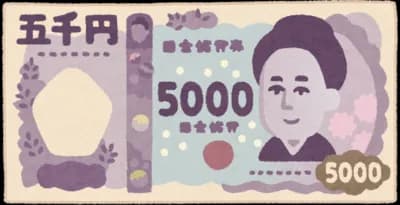
However, if you take an airport bus right after arrival, a 10,000 yen bill may be refused. So it is best to prepare smaller bills, such as one 5,000 yen bill and five 1,000 yen bills.
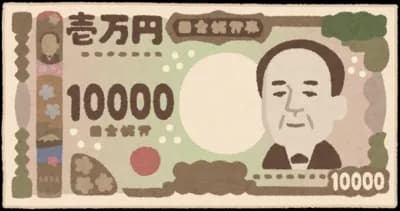
3) Can you use old banknotes after new ones are issued?
New banknotes have been issued since July 2024, but older banknotes are still accepted.
However, some kiosks may not recognize the new banknotes. In that case, ask a staff member for help.
Exclusive TourCast Tips!
How to Avoid a Coin Disaster
To avoid a coin disaster, use coins together when you pay.
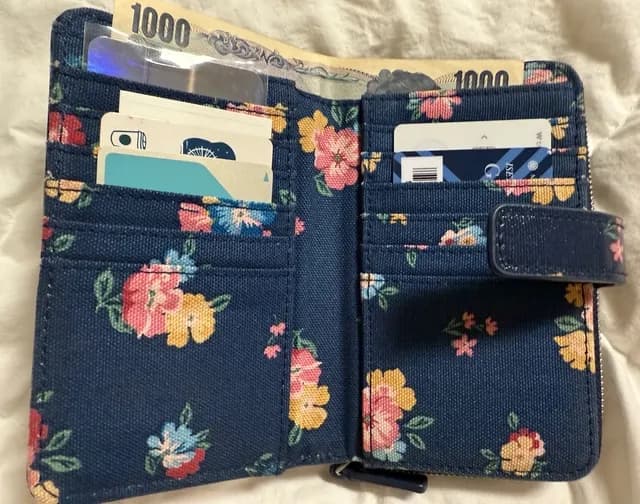
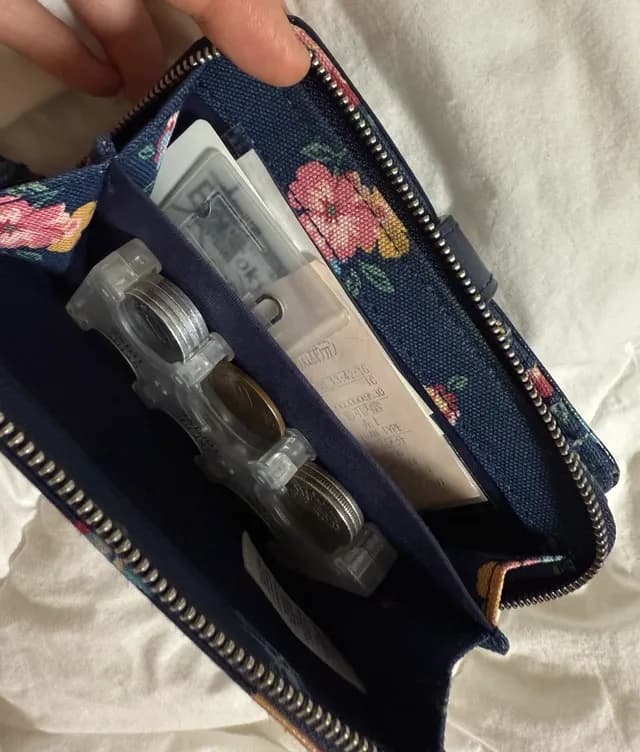
In Japan, coins are used often, so a coin wallet is very useful.
A travel wallet can separate bills, cards, and coins, and it is even more convenient if it can also hold a uSIM case.
Credit and Debit Card TipsFor emergencies, prepare this credit card checklist
Prepare a credit card for emergencies as well.
- Check that the cardholder name matches the English name on your passport
- When paying, choose local currency (JPY) — choosing your home currency may cause double fees
- Debit cards must allow overseas payments to work
- Installment payments are not available overseas; only one-time payment is possible (you may apply for installment payment after returning home)
Using Coin LockersThe most basic way to store luggage in Japan
In Japan, luggage lockers are called coin lockers (コインロッカー). Coin lockers are paid lockers found at stations, underground shopping areas, and large commercial facilities. They are useful for short-term storage, including day trips and short stays.
1. Locations
- Near ticket gates at major JR and private railway stations
- Inside subway stations
- Department stores and shopping malls
- Facilities near tourist attractions
※ During peak travel seasons, large lockers can sell out quickly.
2. Locker Sizes and Fees
| Size | Fee (per day) | Typical items |
|---|---|---|
| Small | 300 ~ 400 yen | Backpack, small bag |
| Medium | 500 ~ 600 yen | Carry-on suitcase |
| Large | 700 ~ 800 yen | 24 ~ 26-inch suitcase |
| Extra large | 1,000 yen ~ | 28-inch+ suitcase |
- Fees are automatically renewed per day
- Fees and sizes can vary depending on the locker
3. How to Use
1) Choose an empty locker
Choose a locker marked ‘空 (empty)’.
2) Store your luggage
Open the door, put your luggage inside, and close it.
3) Pay
- Pay with cash (coins) or a transport IC card
- Some newer lockers also support QR and electronic payments
4) Keep the key or code
- Key type: keep the key safe
- Code type: do not lose the password or receipt
4. Storage Time Limit (Important)
In Japan, coin lockers usually allow storage for up to 3 days (72 hours).-
Within 3 days: normal use
-
Over 3 days:
- Staff may force the locker open
- Your luggage is moved to a separate storage area at the station or facility
- Extra storage fees + handling fees apply
-
If you do not pick it up for a long time:
- It may be disposed of after a certain period
※ The exact timing depends on the station or facility.
5. Notes
- You cannot store items beyond the time limit
- Do not store valuables or passports
- Some locations may be inaccessible late at night or after the last train
- Large lockers are limited and often sell out quickly
6. Travel Tip
- For large luggage, station coin lockers + same-day pickup is the safest option
- If you plan to store luggage for 2–3 days or more:
- Hotel storage
- Station baggage storage counters
- Luggage delivery services are better options
For example, with an itinerary like Osaka 1 night → Kyoto 1 night → Osaka 1 night again, luggage storage can become the biggest issue during transfers. If you carry all your luggage, there is no problem, but if you plan to travel with only essentials, storing your luggage can be much more efficient.
The best option is to book the same hotel in Osaka and explain your schedule in advance, then ask the hotel to store your luggage. Many hotels offer luggage storage for a certain time after check-out.
However, hotel luggage storage is often available only until the check-out day. If the hotel cannot store it longer, consider a coin locker as an alternative.