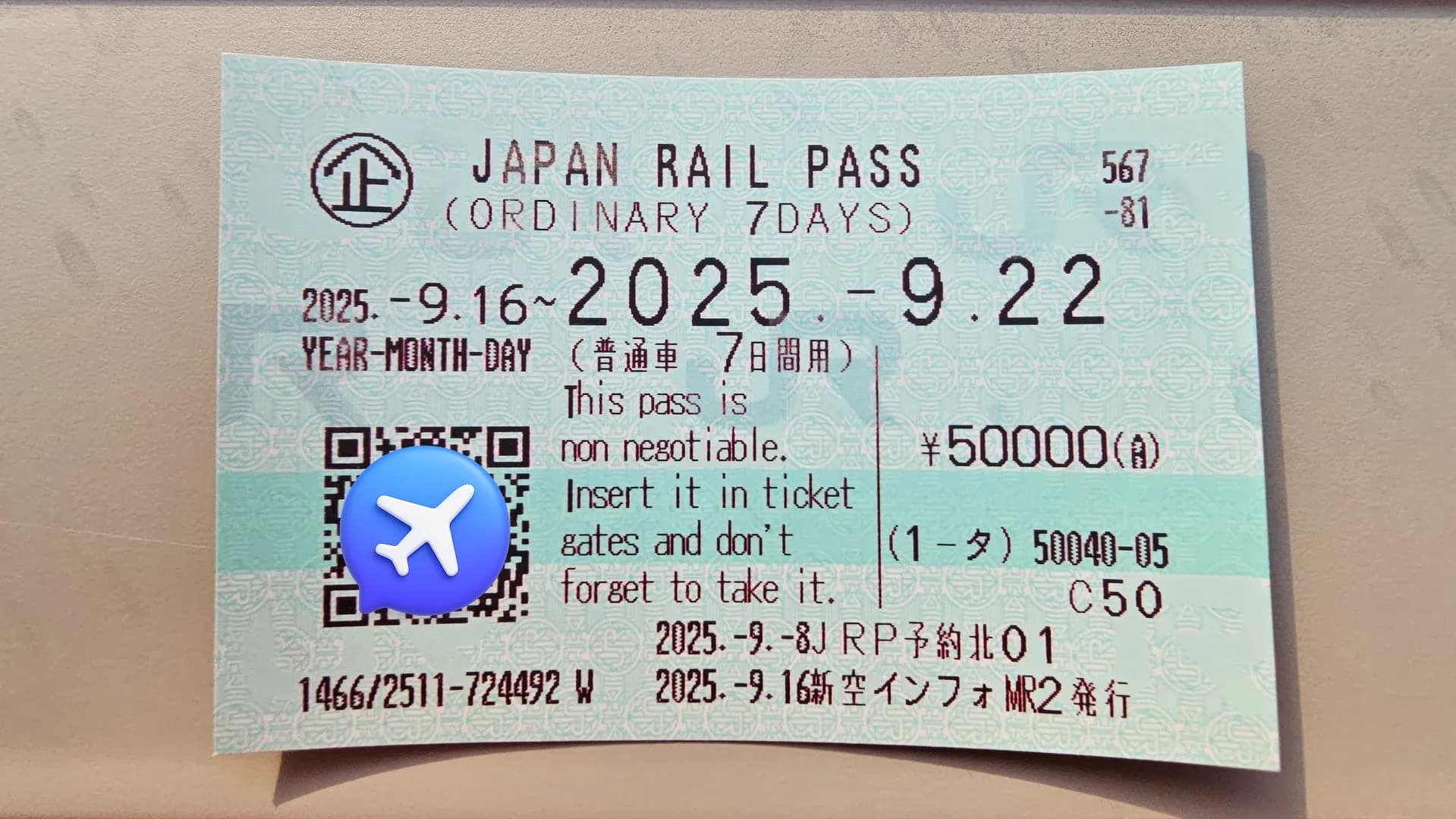
JR Pass and Train Travel Guide for JapanCheck pass types, conditions, and prices before long-distance travel.
To efficiently handle long-distance travel, which is the core of a trip to Japan, you must accurately understand the features of the JR Pass and apply them to your itinerary. Especially since the major price increase in late 2023, comparing the cost of a pass with individual section tickets has become essential rather than simply assuming a pass is better.
1. First Step in Choosing a Pass: Nationwide vs. Regional
Japan offers passes that cover the entire country and those focused on specific regions.
- JR Nationwide Pass (Japan Rail Pass): Allows use of JR lines and Shinkansen throughout Japan, from Hokkaido to Kyushu. (Available for 7, 14, or 21 days.)
- JR Regional Pass: Valid only within specific areas like Kansai, Kyushu, or Tohoku. These are often preferred as they are cheaper than the nationwide pass and offer concentrated benefits for a specific region.
2. JR Pass Value Checklist (as of 2026)
In the past, a nationwide pass was profitable just for a Tokyo-Osaka round trip, but now the criteria are much stricter.
- When a pass is advantageous: When traveling long distances across three or more major regions (e.g., Tokyo–Osaka–Hiroshima–Fukuoka) within 7 days.
- When individual tickets are advantageous: When traveling only the 'Golden Route' (Tokyo–Kyoto–Osaka) over a 10–14 day period. (The pass price is often higher than individual Shinkansen bookings.)
3. Major JR Regional Passes (2026 Update)
From March 2026, some pass names and zones will be reorganized, so be sure to check for the latest information.
| Pass Name | Major Benefits & Sections | Price (Adult) |
|---|---|---|
| JR EAST PASS | All JR East lines and some private railways | 35,000 yen (5-day) |
| JR Kansai Wide Area Pass | Osaka, Kyoto + Okayama, Kurashiki, Kinosaki Onsen, etc. | Approx. 12,000 yen (5-day) |
| JR TOKYO Wide Pass | Areas near Tokyo like Kawaguchiko, Nikko, Karuizawa, etc. | 16,000 yen (3-day) |
| JR Kyushu Rail Pass | All of Kyushu including Fukuoka, Kumamoto, Kagoshima | 22,000 yen+ (All Kyushu 3-day) |
4. Smart Train Booking Tips
If you decide not to buy a pass, the smartest move is to aim for early bird discounts.
- Smart EX / JR-WEST Online: Reservation services for the Tokaido and Sanyo Shinkansen. Significant discounts are available for bookings made 21 days in advance (Hayatoku-21).
- Shinkansen e-Ticket: On JR East lines, you can link your booking to an IC card (like Suica) to board by just tapping, without printing a paper ticket.
💡 TourCast Tip: Caution on Nozomi Boarding JR Nationwide Pass holders must pay an additional fee to ride the 'Nozomi' and 'Mizuho,' the fastest Shinkansen. To avoid extra costs, use the 'Hikari' or 'Kodama,' which are one grade lower. The travel time difference is usually only about 20–30 minutes.
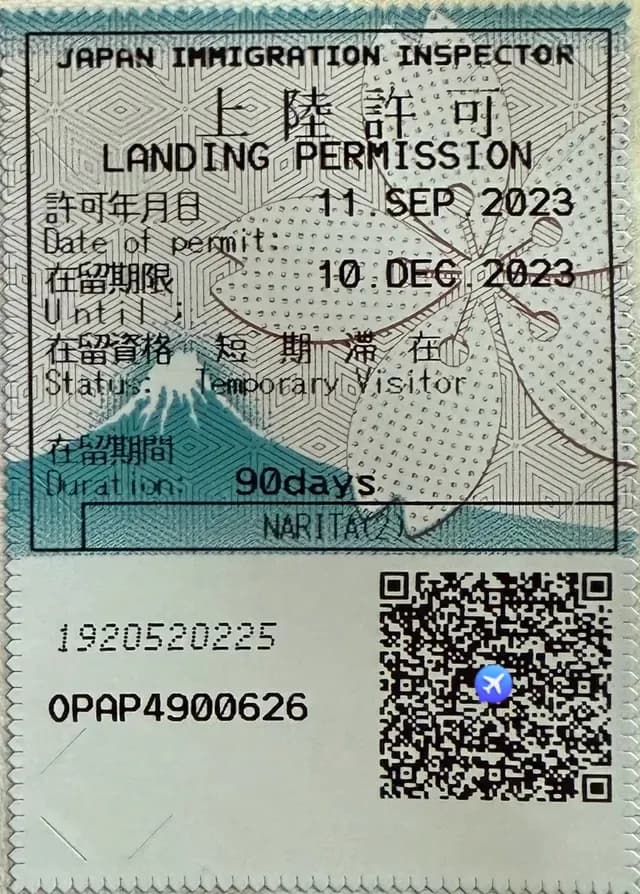
⚠️ Warning: Check Passport Before Use All JR Passes are available only to foreigners with 'Temporary Visitor' status. When entering Japan, you must receive a landing permission sticker at a manned immigration counter (not an automated gate) to exchange your pass.
Detailed JR Pass Guide2026 latest fares, conditions, and integrated regional pass info
The JR Pass is a special ticket that allows unlimited travel on the JR network, the foundation of Japan's national rail system, for a set period. Following the major price hike in 2023, it is much more economical in 2026 to choose a pass for long-distance regional travel or intensive travel within a specific area rather than simple point-to-point moves.
1. Eligibility and Essential Requirements
The JR Pass can only be used by foreign visitors who receive 'Temporary Visitor' status upon entering Japan.
- Landing Permission Sticker: A sticker attached to your passport during immigration is absolutely necessary. Since you may not receive one at automated gates, be sure to request the sticker at a manned counter if you plan to exchange a pass.
- Carry Your Passport: Always carry your passport, as station staff may ask to see it when purchasing, exchanging, or using the pass on actual trains.
2. Types and Classification of JR Passes
Generally, 'JR Pass' refers to the nationwide version, while passes used only in specific regions are distinguished by the name of the respective JR company.
① JR Nationwide Pass
Allows use of Shinkansen (with some exceptions) and Limited Express trains throughout Japan.
- Types: 7, 14, 21-day (Standard / Green Car)
- Note: Green Cars are superior class cars that are more spacious than standard cars. Use of Gran Class or sleeper cars requires additional fees even with a pass.
② Regional Passes
The six JR passenger companies operate specialized passes for their respective jurisdictions.
| Company | Jurisdiction | Representative Pass |
|---|---|---|
| JR HOKKAIDO | All of Hokkaido | Sapporo-Furano Area Pass, etc. |
| JR EAST | Kanto, Tohoku, Shinetsu | Tokyo Wide Pass, JR East Pass |
| JR CENTRAL | Tokai (Chubu) Region | Takayama-Hokuriku Area Tourist Pass, etc. |
| JR WEST | Kansai, Chugoku, Hokuriku | Kansai Wide Area Pass, Hiroshima-Yamaguchi Area Pass |
| JR SHIKOKU | All of Shikoku | All Shikoku Rail Pass |
| JR KYUSHU | All of Kyushu | All/Northern/Southern Kyushu Rail Pass |
3. Booking and Seat Reservation Comparison
There is a significant difference between purchasing from the official site versus a travel agency regarding online seat reservation capability.
| Category | Official Website Purchase | Agency/Reseller Purchase |
|---|---|---|
| Seat Reservation | Online reservations possible before arrival | Only at counters/machines after local exchange |
| Price | Full list price (relatively higher) | Often cheaper due to promotional discounts |
💡 TourCast Tip: Oversized Baggage Reservation When using the Tokaido, Sanyo, or Kyushu Shinkansen, if you have luggage with dimensions totaling more than 160cm (like a large suitcase), you must book a 'Seat with an Oversized Baggage Area.' A 1,000 yen fee applies if brought without a reservation.
4. How to Use: From Exchange to Boarding
① Pass Collection and Exchange
You must exchange your voucher for a physical pass after arriving in Japan.
- Requirements: Passport with temporary visitor sticker + reservation number (if official) or voucher/QR code (if agency).
- Locations: Available at 'Midori-no-madoguchi' (JR Ticket Offices) at major stations or automated ticket machines equipped with passport readers.
② Passing Gates and Boarding
- Automated Gates: Insert your pass into the slot and walk through, making sure to collect it as it pops out. (At Shinkansen gates, insert both your pass and seat ticket together.)
- Manned Gates: You can also show your pass directly to a staff member to pass through.
- Ticket Inspection: Conductors may ask to see your pass and passport on the train, so keep them handy.
5. Usage Precautions ⚠️
- Nozomi/Mizuho Restriction: The nationwide pass cannot be used for 'Nozomi' and 'Mizuho' trains without purchasing a special supplemental ticket.
- No Reissue for Loss: The pass is like cash. It will not be reissued under any circumstances if lost or stolen, so keep it very secure.
- Consecutive Use Rule: All passes are valid only for consecutive days starting from the first day of use. You cannot skip days.
- No Duplicate Purchases: You cannot exchange duplicate passes for the same person with overlapping validity periods.
- Non-transferable: The pass is for the owner's use only and cannot be given or lent to others.
⚠️ Warning: Essential Value Calculation JR Pass prices are currently very high. For a simple Tokyo-Osaka round trip, individual tickets may be cheaper. Always check the total cost of your planned sections before buying.
Guide to Discount Train ReservationsHow to book Shinkansen and Limited Express sections in advance for potentially lower prices than a JR Pass
A JR Pass is not always the best answer for long-distance travel. If you are only using specific sections or moving infrequently, booking individual tickets in advance is much more economical. Major Japanese rail companies operate 'Early Bird' (Hayatoku) systems where discounts increase the earlier you book.
1. Essential Pre-Booking Checklist
- Timing: Seats usually open one month before the travel date at 10:00 AM. Popular sections or travel during peak holidays sell out immediately, so act fast.
- Discount Rates: Depending on the timing and seat availability, you can save up to 30–50%.
- Limited Quantity: Discount tickets have a fixed number of seats and are sold on a first-come, first-served basis.
💡 TourCast Tip: Use Booking Agencies If joining Japanese websites is difficult or discount seats are sold out, platforms like Klook allow for convenient booking in English. Sometimes you can apply exclusive discount codes to make it cheaper than buying on-site.
2. Comparison of Major Booking Platforms
① Smart EX (Tokaido, Sanyo, Kyushu Shinkansen)
Covers the golden route connecting Tokyo, Nagoya, Osaka, Hiroshima, and Fukuoka.
| Product | Deadline | Features |
|---|---|---|
| Hayatoku-21 | 21 days prior | Maximum discount. Best way to use Nozomi reserved seats cheaply. |
| Hayatoku-7 | 7 days prior | Discounted reserved seats for major trains like Nozomi and Hikari. |
| Hayatoku-3 | 3 days prior | Enjoy Green Cars (superior class) for roughly the price of a standard seat. |
- Features: Supports an English UI. You can board using a QR code without registering an IC card.
- Note: The dedicated app may be restricted in some regions; use the website instead.
② Eki-net (East Japan & Hokkaido Shinkansen)
Useful for routes from Tokyo toward Nikko, Karuizawa, Aomori, and Hokkaido.
- Tokudane: Offers tiered discounts like 30% off (14 days prior) or 10% off (1 day prior).
- Shinkansen e-Ticket: You must register an IC card (like Suica) to receive the discount. Be sure to link your card number after booking.
- Check frequently as 50% off specials for specific sections occasionally appear during events.
③ JR Kyushu Online Booking (All of Kyushu)
Essential for travel from Fukuoka to Kumamoto, Kagoshima, and Nagasaki.
- Online-only Tickets: Provides significant discounts for Shinkansen and Limited Express trains (like Yufuin no Mori) within Kyushu.
- Kyushu is particularly popular for individual bookings because they often offer better value than a pass for short-term travelers.
3. Usage Precautions ⚠️
- Refunds & Changes: Discount tickets often have higher refund fees or cannot be changed compared to standard tickets. Only book once your plans are firm.
- Missing the Train: If you miss your booked train, the Limited Express portion of your ticket usually becomes invalid. You may have to buy a new ticket for a later train, so be punctual.
- No Stopovers: For discount tickets, getting off before your designated destination station makes the remaining portion of the ticket invalid.
- Ticket Collection: For products not supporting mobile QR boarding, you must print a physical ticket at a station machine. You will need the password you set during reservation, so be sure to remember it.
⚠️ Warning: Fare Adjustment (Norikoshi) If you travel beyond your booked section, you must pay the difference at your destination. Note that the difference is calculated based on the standard fare without the discount, which can be expensive.
Complete Guide to the Seishun 18 TicketThe slowest and most romantic way to traverse Japan on JR local trains
The Seishun 18 Ticket (青春18きっぷ) is a seasonal rail pass issued by the JR Group. It is a super-budget travel pass that allows unlimited use of JR local and rapid trains across Japan. Despite the '18' in its name, it can be used by anyone regardless of age or nationality.
In late 2024, the usage rules that had been in place for decades were completely overhauled to a consecutive-use system, so you must understand the latest rules.
1. Latest 2026 Changes and Key Points
① Usage Rule: Consecutive Days (No non-consecutive or group use)
The previous system of '5 non-consecutive days' or 'sharing among multiple people' is no longer possible. You must now use it for consecutive days starting from your chosen date.
- 3-Day Consecutive Pass: ¥10,000
- 5-Day Consecutive Pass: ¥12,050
- 1 Ticket per Person: One ticket cannot be used by multiple people simultaneously; each person must have their own.
② Improved Convenience: Automated Gate Use
Previously, you had to show the ticket to staff for a stamp, but it is now issued as a magnetic ticket that can be inserted into automated gates like a regular ticket.
③ Hokkaido Shinkansen Option Ticket Reorganization
While you cannot take the Shinkansen with just the Seishun 18, purchasing an 'Option Ticket' allows use of specific sections.
- Section: Shin-Aomori to Kikonai (Hokkaido Shinkansen) + Donan Isaribi Railway.
- Price: Approximately ¥4,500 – ¥4,650 (Check for 2026 price increases).
2. Valid Lines and Conditions
| Category | Valid | Details |
|---|---|---|
| JR Local/Rapid Trains | O | All non-reserved local/rapid JR trains nationwide. |
| JR Miyajima Ferry | O | Miyajimaguchi to Miyajima Island (separate 100 yen visitor tax applies). |
| BRT (Bus Rapid Transit) | O | Alternative highway bus routes operated by JR East, etc. |
| Shinkansen/Limited Express | X | Not valid. Requires purchasing both basic and express tickets anew. |
| Green Cars (Superior) | △ | Valid only for non-reserved Green Cars with a separate Green Ticket (not for reserved seats). |
3. 2026 Sales and Usage Periods
Issued three times a year during Japanese student vacation seasons.
| Season | Sales Period (2026) | Usage Period (2026) |
|---|---|---|
| Spring | Feb 13 – Apr 8 | Mar 1 – Apr 10 |
| Summer | Jul 3 – Sep 6 | Jul 18 – Sep 8 |
| Winter | Nov 27 – Jan 9, 2027 | Dec 11 – Jan 11, 2027 |
4. Travel Tips for Seishun 18 Ticket
-
💡 TourCast Tip: A Test of Time and Stamina Traveling from Tokyo to Osaka by local trains takes about 9–10 hours and involves 5–6 transfers. Rather than seeing it just as transport, it is better to treat the 'slow travel' itself as the goal, stopping at small towns for local food.
-
💡 Validity Rules The ticket is valid from 0:00 on the day of use until the last train of the day (the first station reached after midnight). Within specific urban zones in Tokyo or Osaka, it is valid until the very last train regardless of the time.
-
⚠️ Warning: Shinkansen Parallel Sections Lines that were formerly JR but became private 'Third Sector' lines after Shinkansen openings (e.g., Ainokaze Toyama Railway) are generally not valid. There are exception rules for certain transit sections, so check your route carefully before moving.
5. Summary
While the Seishun 18 Ticket offers overwhelming value, the new 'consecutive use' condition makes for a tighter schedule. While it may be a hindrance for those wanting fast travel, it remains the ultimate choice for romantic travelers who love rustic stations and watching the world go by through a train window.