IntroductionKey Accommodation Info to Know Before Booking
This section explains general things to know when using hotels in Japan. For how to book hotels by region, see the guide on each region’s introduction page.
Business Hotels and Semi-Double RoomsChoose a Good-Value Place to Stay
When booking Japan travel packages or hotels, you will often see the term business hotel.
This name comes from the fact that Japanese office workers often use this type of hotel for business trips. You can understand it as a place with reasonable prices and basic comfort.
Japan also has a unique room type, and a representative example is the semi-double room.
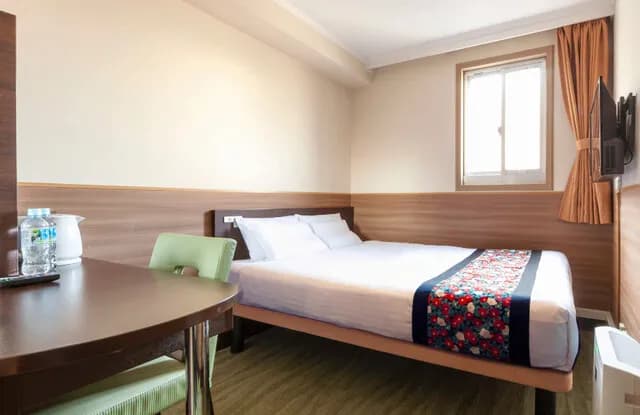
A semi-double room originally means a single room in a business hotel arranged for two guests. In other words, it is a one-person room set up so two people can stay together in a simple way.
The bed width is usually about 120–140 cm, smaller than a typical double bed. It is roughly the size of a super single.
For two women, it is usually fine, but it can feel cramped for two men. If you are sensitive to sleep quality, a semi-double room is not recommended.
Double Room vs Twin RoomRoom Prices Depend on Bed Setup
In most countries outside Japan, standard hotel rooms are typically for two people, and they are usually divided into double rooms and twin rooms.
A double room has one double bed (or queen bed), while a twin room has two single beds. Because of this difference, depending on local situations, you may sometimes be assigned a different room type than you requested.
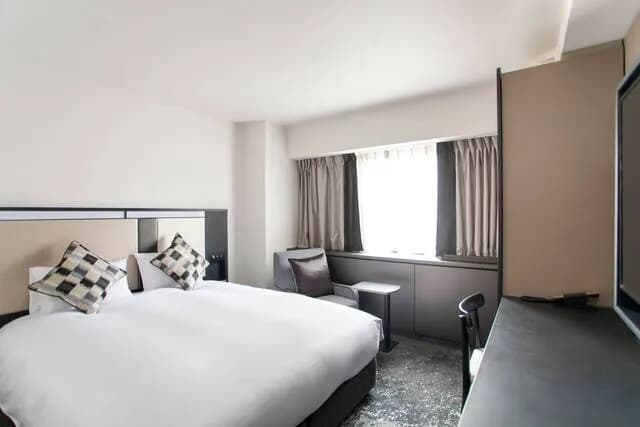
However, Japan is different. Due to cultural and operational practices, your requested room type is usually reflected accurately. If you book a double room, you will get a double room, and if you book a twin room, you will get a twin room.
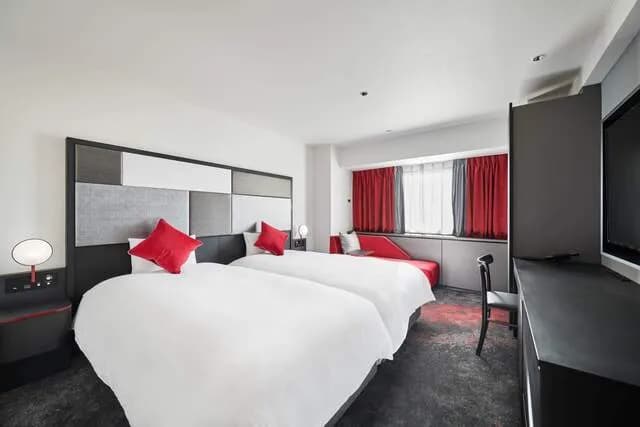
In general, twin rooms are often a bit more expensive than double rooms. This is due to differences such as room size, number of beds, and room setup. Choose based on your budget and preferences.
Japan Hotel Check-in & Check-outFrom Luggage Storage to Fast Check-out Options
- Under Japanese law, hotels must keep a copy of foreign guests’ passports, so they will ask to see your passport.
- Check-in and check-out times vary by hotel, so you must confirm in advance
- Check-out is usually 10:00–11:00, and late check-out requires an extra fee
- Check-in usually starts from 15:00, but if you arrive early, you can leave your luggage and come back to check in at the right time.
Most hotels also offer same-day luggage storage after check-out- In rare cases, some hotels do not accept luggage storage
- Useful Japanese phrases:
- チェックインの前に荷物を預けたいんですけど...
- chekkoin no mae ni nimotsu o azuketai n desu kedo...
- I’d like to leave my luggage before check-in...
- If you plan to check in after 22:00, you must contact the hotel in advance
- There may be no room due to overbooking
- In that case, you may be moved to another hotel, which can disrupt your trip
- If you booked breakfast, confirm the restaurant location and opening hours at check-in
- Example: If you stay 3 nights, you may receive 3 breakfast vouchers at once, or receive them daily
- Sometimes it is missing due to staff mistakes, so you must check
- Even without a voucher, you can ask the restaurant if you can eat by confirming your room number and name
- If you use the mini bar, you may need to pay at check-out (depends on the hotel)
- If there is no bottled water in the room:
- If it says '食料水', the sink water is safe to drink
- There may be water dispensers or ice dispensers on each floor
- If you are unsure, buy bottled water from a vending machine or convenience store
- For multi-night stays, most hotels provide daily room cleaning and towel replacement
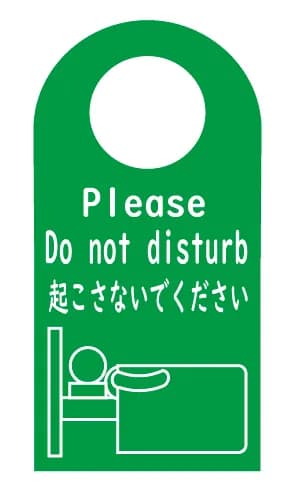
- If you do not want cleaning, use a DO NOT DISTURB sign
- Some hotels use indicator lights, so check
- If you only want towel replacement, leaving used towels by the door may result in fresh towels being provided (varies by hotel, so ask the front desk)
- When going out, leaving your room key (card) at the front desk can reduce the risk of loss
- Since service charge is included, you do not need to tip separately
- Elevators can be crowded at check-out time, so plan ahead considering your transport
- Busy times: check-in, check-out, breakfast hours
- More hotels now offer self check-out. Methods vary, such as kiosks, key drop boxes, or phone check-out (However, if you have extra charges such as the mini bar, you must settle them at the front desk)
Hotel Deposit (Security Deposit) GuideWhy Is an Extra Amount Held Besides the Room Rate?
A deposit is a system where the hotel takes an advance payment or authorization to cover paid services such as mini bar, pay TV, and room service, or to prepare for possible room damage, item loss, or theft.
Policies vary by hotel, but most 4-star and above hotels ask for a deposit. On the other hand, business hotels and many 3-star or lower hotels may skip the deposit.
In most cases, the deposit is a temporary credit card authorization, and if there is no issue at check-out, it is automatically released.
Some hotels charge the amount first and refund later. Even in that case, if there is no issue, it will be refunded in full later.
However, refunds can take up to 1–2 months, and if it is not refunded even after 3 months, you should email the hotel to confirm.
If you use a debit card (including travel cards), the money may be withdrawn immediately, so be careful. If you do not have a credit card, you may need to pay the deposit in cash.
Deposit amounts vary, but ¥10,000–¥15,000 per room is common. If you pay in cash, you will usually receive a full refund at check-out if there is no issue.
Accommodation Tax and Bathing TaxCheck Extra Local Taxes You May Need to Pay
When staying at a hotel or ryokan in Japan, if accommodation tax or bathing tax is not included in your booking, you may need to pay the tax separately on site.
If you do not know this in advance, you may feel uncomfortable even though the amount is small, so it is best to check your booking conditions.
Accommodation tax (宿泊税) depends on the room rate and the city, and is usually about ¥200–¥500 per person per night. You typically pay it at the front desk at check-in or check-out.
If you stay at a hotel or ryokan with an onsen, a separate bathing tax (入湯税) may apply. It is usually ¥150 per person, and you must pay it on site.
Apartments and Airbnb: Important NotesCheaper, but You Must Check the Rules in Advance
In Japan, a building similar to a Korean “mansion” is often called an apartment, and travelers can stay there if the property is registered for accommodation.
It can be a cheaper option for families or groups of friends, but many places do not have a front desk, so it can be hard to store luggage before check-in or after check-out.
After booking, you may be asked by email to submit a copy of your passport. Under Japanese law, accommodation providers must keep passport copies for foreign guests, and properties without a front desk often collect this by email in advance.
The biggest advantage of this type of accommodation is the lower price compared to hotels. However, there are important rules you must check and follow, so you need to be careful.
For example, rules on damage, smoking, and garbage disposal are often strict.
If you break the rules, you may be charged a fine or extra fees that can be higher than the room rate, so you must check the property rules and conditions before booking.
Also, some places do not provide amenities or towels, so it is best to check in advance before you book.
Finally, these properties are sometimes farther from stations or city centers, so you should also consider access and your travel route.
Exclusive TourCast Tips!
What to Check Before Booking an Apartment or Airbnb
Many travelers choose apartments, private rentals, or Airbnb as good-value accommodation in Japan. However, recently in Japan, there are more cases where properties with past incidents (“jiko bukken”) are operated as accommodation, so you should be careful.
In Japan, for regular rentals and property sales, there is a duty to disclose past incidents (death, fire, crime, etc.). However, this disclosure rule may not apply to some private rentals and accommodation businesses, so travelers may stay with no information.
⚠️ Places to Be Extra Careful With
If your accommodation matches any of the conditions below, checking incident history is essential.
- Accommodation in a central area with an unusually low price
- A large apartment-style place for 3–8 people or more
- Near major tourist areas such as Shinjuku, Ikebukuro, Ueno, and Kabukicho
- Reviews mention phrases like “noisy at night” or “strange/unsettling atmosphere”
- Reviews mention police patrols
Even if it looks clean and well located, it may have a history such as arson/fire, violence, or lonely death incidents.
How to Check Incident History (Required)
In Japan, there is a website where you can check past incidents on a map.
- Oshimaland (大島てる) : a map-based website for incident-property information in Japan
- Use the map to check history such as fire, death, and incidents
Before booking, we recommend checking the exact location of the accommodation.
Guesthouse TipsCheck Price, Facilities, and Gender Separation
If your group has 2 to 6 people and wants to share one room together, a guesthouse can be a very practical choice.
If you are traveling alone and want a low-cost stay, it is best to book a dormitory room with separate male/female areas.
The biggest advantage of guesthouses is the lower price compared to regular hotels.
However, the same price may apply to adults and children, and you may need to bring personal items such as towels and toothbrushes, so it is important to check the conditions carefully before booking.
- For guesthouses run by Japanese owners, the dormitory may be mixed-gender, so you must confirm whether spaces are separated by gender.
Accommodation Etiquette ChecklistFollow Quiet Hours, Amenity Rules, and Check-out Manners
- It is basic etiquette to keep quiet inside the room. (Japanese hotels can have surprisingly weak soundproofing.)
- You may take disposable amenities if needed, but do not take items meant to be replaced or washed, such as robes or towels.
- Before check-out, it is polite to throw trash into the bin and tidy up the bedding lightly.
- If you damage items in the room, the rule is to inform the front desk and pay the stated cost before checking out.
- Even if you check out without reporting it, the hotel may notify the booking platform, and if you paid by credit card, the amount can be charged automatically.