Japan Bicycle Travel Guide: From Rental to Full Mastery of Traffic RulesEssential bicycle traffic rules for foreign travelers
In Japan, bicycles are one of the best ways to travel, allowing you to freely explore every narrow alley. Many travelers rent a bicycle and set off immediately upon arrival without much preparation.
However, bicycle traffic rules in Japan are significantly different from other countries, and enforcement levels are very high. Riding without knowing the rules can lead to unexpected fines or disadvantages, so if you plan to ride a bicycle locally, be sure to check the regulations in advance.
💡 Essential Checklist for Bicycle Use in Japan
- Anti-Theft Registration (防犯登録): Registration is mandatory when purchasing a bicycle in Japan. For rental bicycles, the shop has already completed the registration. If you are stopped by the police for an inspection, simply provide the rental shop's information or your rental confirmation.
- Using Lights: Riding without lights after sunset is a target for strict enforcement. Always check if the lights are working when renting.
- No Abandoning Bicycles: Leaving your bicycle randomly around stations or on the street can result in it being impounded by enforcement teams. To reclaim it, you must pay a fine ranging from approximately 2,000 to 5,000 yen. Always use dedicated parking lots (駐輪場, Churinjo).
A passport is almost always required when renting a bicycle, so be sure to bring it with you.
Japan Bicycle Laws Frequently Overlooked by ForeignersThings allowed in your home country but restricted in Japan
We have summarized bicycle-related regulations that are often allowed in many countries but prohibited or restricted in Japan from a traveler's perspective. If you plan to cycle on Japanese roads, you must check the following items.
- Helmet Use: Since April 2023, it has become a 'duty to make an effort' (recommended) for all ages, but it remains mandatory for children under 13.
- Riding Side-by-Side: Like most countries, riding two or more bicycles side-by-side is prohibited.
- Tandem (Two-Seater) Bicycles: Since 2023, these are in principle only allowed on roadways and are prohibited on sidewalks. *Permission and specific zones depend on local government regulations, so check local signs and ordinances.
| Category | Most Countries | Japan |
|---|---|---|
| Two Adults Riding | Some allowed (under conditions) | Prohibited in principle |
| Riding with Lights at Night | Front light required | Front + Rear lights mandatory |
| One-hand/Umbrella Riding | Enforcement is rare | Strictly prohibited (Use raincoats) |
| Direction of Travel | Keep right (mostly) | Keep left |
| Earphones/Headphones | Generally allowed | Prohibited |
| Sidewalk Riding | Possible depending on conditions | Roadway riding is the rule |
| Cycling Under Influence | Varies by country | Strictly enforced (same as cars) |
Penalties related to bicycles were significantly strengthened following the amendment of the Road Traffic Act on November 1, 2024.
- Using a mobile phone while riding: Up to 6 months imprisonment or a fine of up to 100,000 yen.
- Causing an accident while using a phone: Up to 1 year imprisonment or a fine of up to 300,000 yen.
- Cycling under the influence: Up to 3 years imprisonment or a fine of up to 500,000 yen.
❌ Example of Violations
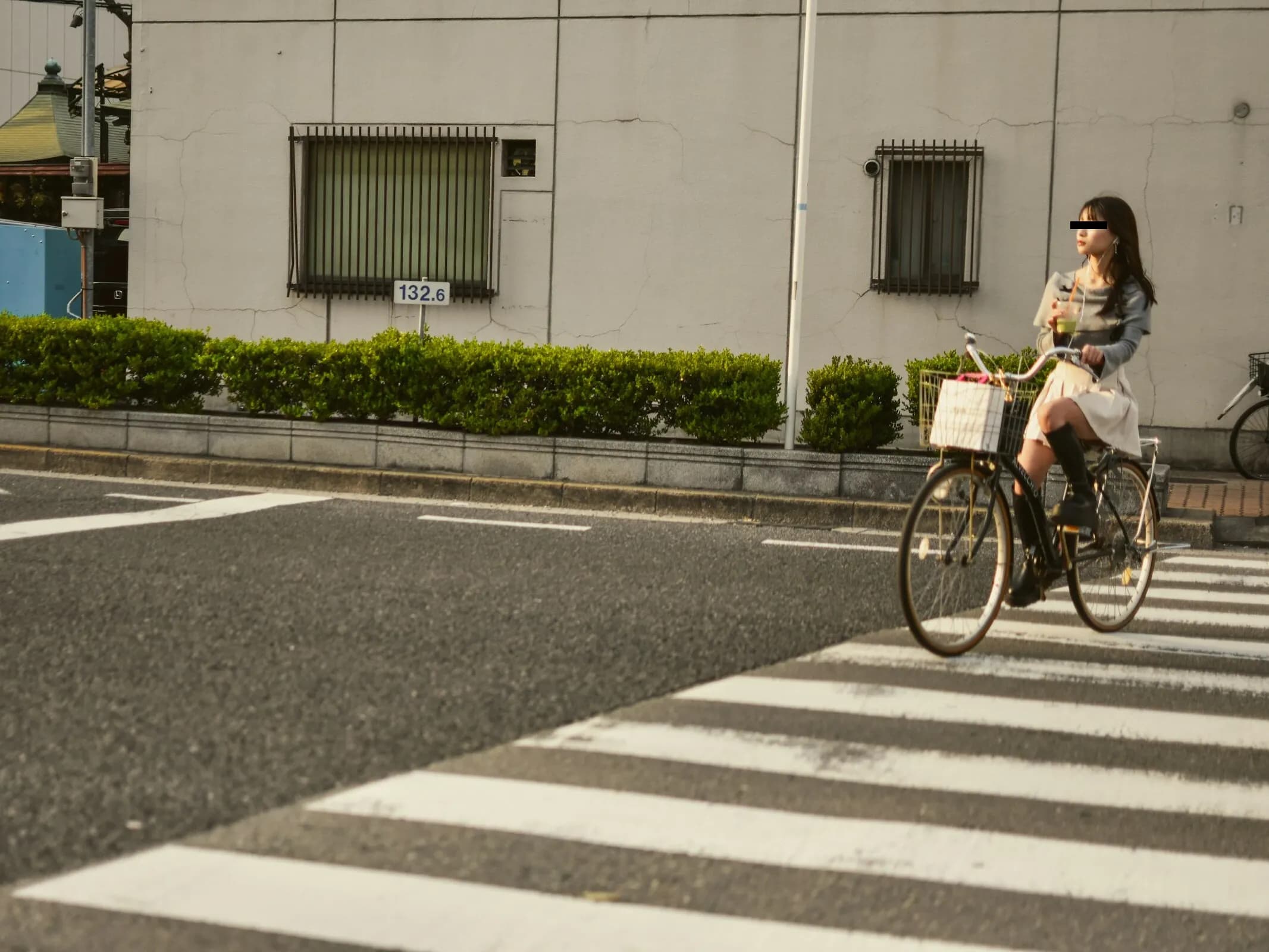
As shown in the image, riding while holding a coffee in one hand and listening to music violates multiple rules simultaneously and can make you a subject of police inspection.
Core Rules for Cycling in JapanSummary of 5 core safety rules
In Japan, bicycles are classified as 'light vehicles' and follow laws similar to those for automobiles. You must familiarize yourself with these core rules to prevent accidents and ensure a smooth trip.
1) Five Principles of Bicycle Safety
- Keep Left: Use the left edge of the road; riding against traffic (on the right) is strictly prohibited.
- Mandatory Lights at Night: You must turn on your headlight after dark, and a rear light or reflector must be attached.
- Sidewalk Precautions: The general rule is to ride on the roadway. Even where sidewalk riding is permitted, pedestrians have priority; you must slow down or stop as necessary.
- Two-Stage Right Turn: When turning right at large intersections, you must cross straight on the green light, turn your direction, and wait for the next green light to proceed straight again.
- No Drunk Riding: Just like with cars, operating a bicycle after consuming alcohol is subject to strict punishment.
2) Insurance and Safety Checks
- Check Travel Insurance: Standard travel insurance often excludes damage to rental items (bicycles) or liability for bicycle accidents. We recommend signing up for dedicated insurance offered by the rental shop.
- Pre-Ride Inspection: Always check brake function, tire pressure, and lights before setting off.
Japan Bicycle Parking GuideParking types, prohibited zones, and enforcement/towing regulations
Japan is very strict about bicycle parking order. Most areas around stations or shopping districts are designated as No-Abandonment Zones (放置禁止区域). Parking illegally can result in immediate towing without warning.
1) Types of Bicycle Parking (駐輪場, Churinjo)
| Type | Features | Estimated Fare |
|---|---|---|
| Paid Parking | Located at stations/city centers. Supports IC card (Suica, etc.) payments. | Approx. 100–300 yen (per 24 hours) |
| Free Parking | Found in small towns or in front of government offices. Usually limited to same-day use. | Free (Watch for time limits) |
| Store-Specific | For customers of supermarkets/drugstores. Offers free parking for a limited time. | First 1–2 hours free |
2) Prohibited Parking & Towing Regulations
- Towing Procedure: Illegally parked bicycles are moved to city/ward storage centers by enforcement teams.
- Reclaim Fee: To retrieve a towed bicycle, you must present identification (passport) and pay a fee, typically between 2,000 and 5,000 yen.
- Prohibited Locations: Station entrances, sidewalks in front of shops, areas around crosswalks, and places marked '駐輪禁止'.
3) Tips for Use
- Use Dedicated Maps: In unfamiliar areas, use parking search apps or websites to find locations in advance.
- Use Locks: Even in free parking lots, you must use a lock as there is a risk of theft.
- Check Operating Hours: Underground or gated parking lots may close late at night, making it impossible to retrieve your bike. Always check the hours.
💡 Caution in Small Towns
Enforcement might be slightly more relaxed in rural areas, but abandoning a bike for 2–3 days or more will make it a target for towing. Always check road markings for phrases like "Customers Only" or "Same-day Use Only."
Master Japanese Bicycle Travel with These Rules!16 essential rules for Japanese roads and intersections
In Japan, bicycles are regarded as 'vehicles' and are subject to strict Road Traffic Acts. We have summarized detailed riding rules you must know to prevent accidents and avoid fines.
1) Basics of Road Riding: Roadway and Keeping Left
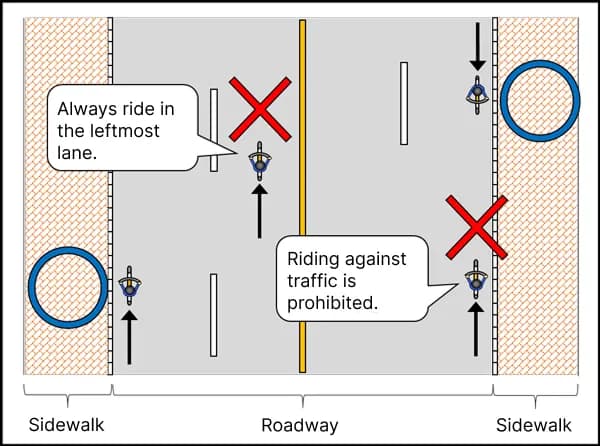
- Roadway Principle: Where a sidewalk and roadway are separated, riding on the roadway is mandatory.
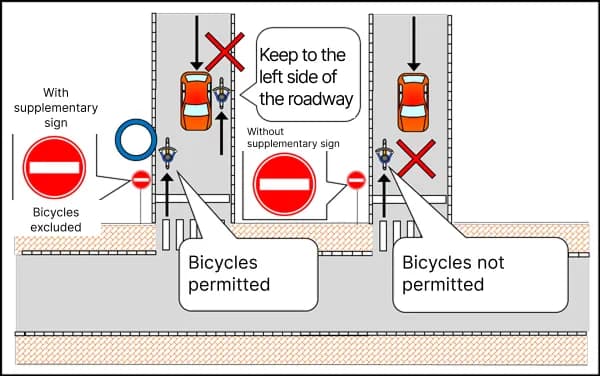
- Ride on the Left: You must use the left side of the roadway center. If lanes are present, you must ride in the leftmost lane.
- One-way Street Caution: You may ride against traffic on one-way streets marked with 'Bicycles Excepted (自転車を除く)', but even then, you must stay on the far left edge of the road.
2) Using Sidewalks and Shoulders
- Sidewalk Riding: Even on sidewalks where cycling is permitted, you must stay on the roadway side and slow down. If you might obstruct pedestrians, you must come to a temporary stop.
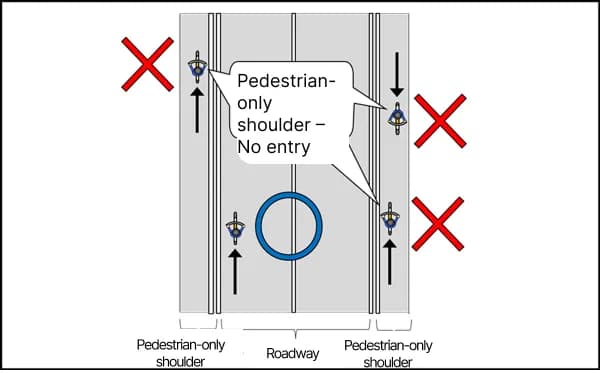
- Shoulder Distinctions: You may use standard shoulders marked with a single solid white line. However, 'Pedestrian-only shoulders' marked with double white lines are strictly off-limits for bicycles.
3) Navigation Marks and Crossing
- Guidance Marks: If you see blue arrows or bicycle symbols known as Navi-marks or Navi-lines on the road surface, follow their direction and position for safety.
- Using Crosswalks: When pedestrians are present, you must dismount and walk your bicycle across. If a dedicated bicycle crossing line is drawn, you may ride along that line.


4) The Most Important: 'Two-Stage Right Turn'
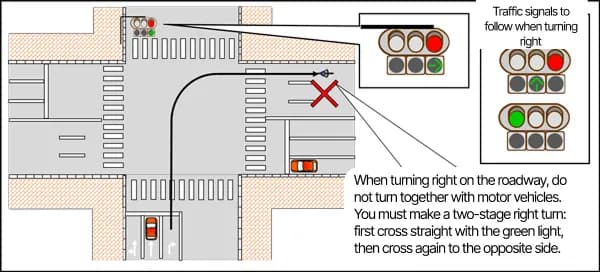
Turning right on a bicycle in Japan is completely different from cars. Regardless of the size of the intersection, you must perform a two-stage right turn at all intersections.
- Step 1: Proceed straight to the far side of the intersection on the green light.
- Step 2: Stop and turn your bicycle toward your intended direction.
- Step 3: Wait for the signal in front of you to turn green, then proceed straight.
- Caution: Do not follow the right-turn arrow signal for cars. You must move only on the straight-ahead green signal.
5) Signal and Stop Rules
- Follow Signals: If there is a 'Pedestrians and Bicycles Only' signal, follow it. If not, follow the vehicle signal.
- Temporary Stop (とまれ): At intersections with a red inverted triangle sign, you must come to a full stop with your feet on the ground immediately before the stop line before proceeding.
⚠️ Penalty Provisions
Violating the above rules can result in more than just a warning; you may face imprisonment for up to 3 months or a fine of up to 50,000 yen. Enforcement has been particularly strengthened since November 2024, so please exercise extreme caution.