Kawagoe: Starting Your Journey in 'Little Edo (Koedo),' Preserving the Atmosphere of the Edo PeriodA 'Little Edo' that preserves the atmosphere of the Edo period.
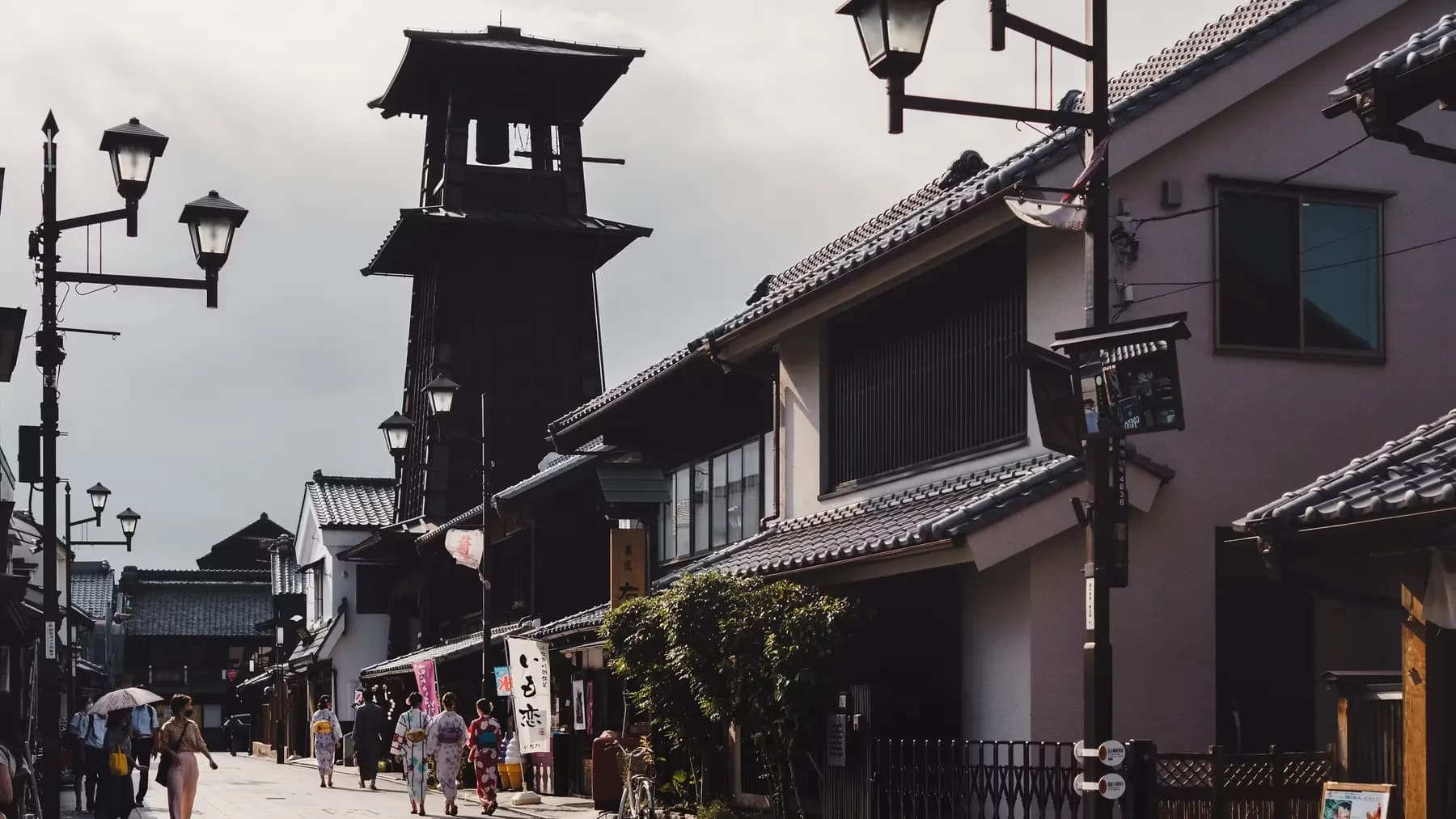
Kawagoe is also known as 'Koedo' (Little Edo), and it is an area that perfectly preserves the atmosphere of the Edo period. As a spot where you can experience the traditional Japanese vibe, it is popular as a day-trip destination from Tokyo, reachable in about 30 to 50 minutes.
1) Kurazukuri (蔵造り) Traditional Warehouse District
The highlight of a Kawagoe trip is the Kurazukuri Street, famous for its impressive black exterior walls.
- Historical Background: The style originated from the warehouse architecture used to store rice and supplies in Kawagoe, which was a center of commerce during the Edo period.
- Architectural Features: It features a fireproof structure with thick layers of clay and plaster on the exterior walls to prevent fires. Since this was an extremely expensive construction method at the time, these buildings themselves served as symbols of wealth for the merchants.
2) The Symbol of Kawagoe, Toki no Kane (Bell of Time)
This is a 16-meter-high clock tower standing in the center of the Kurazukuri district. It is the landmark of Kawagoe and has been telling time for citizens for about 400 years.
- Operation: In the past, a bell ringer would strike it manually, but it is now operated mechanically. The unique, atmospheric bell of Kawagoe rings four times a day (6 AM, Noon, 3 PM, 6 PM).
- Soundscape: This bell has been selected as one of the '100 Soundscapes of Japan' for how well it harmonizes with Kawagoe's atmosphere.
3) Kawagoe in Spring: Cherry Blossom Spots
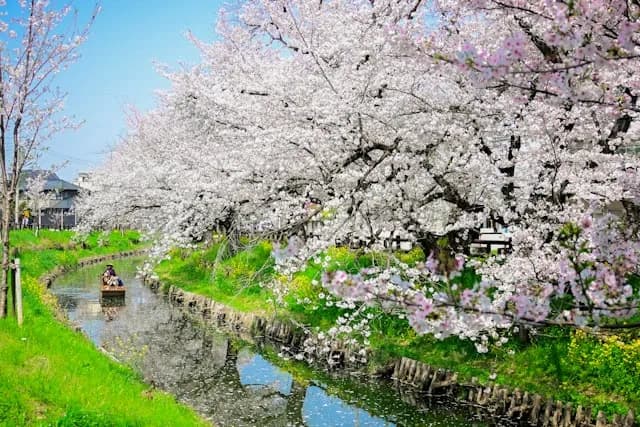
In spring, Kawagoe creates fantastic scenery where cherry blossoms harmonize with historical architecture.
- Shingashi River (新河岸川): An approx. 500-meter cherry blossom path stretches along the river behind Kawagoe Hikawa Shrine. The Hanaikada (flower rafts), where cherry petals fall and float on the water, is a masterpiece of scenery.
- Kita-in Temple (喜多院): A temple with deep ties to the Tokugawa clan. The weeping cherry blossoms and 500 Rakan statues create a unique atmosphere combined with the spring blooms.
💡 Travel Tip
Since sweet potatoes are a specialty of Kawagoe, it is fun to stroll while enjoying street snacks like sweet potato soft-serve ice cream or sweet potato chips. Be sure to visit 'Kashiya Yokocho' (Candy Alley), which is filled with retro snacks.
Proposed Kawagoe Travel Course and Efficient RouteConvenient accessibility via Tobu and Seibu lines.
There are primarily two railway lines to get to Kawagoe. The distance to the tourist attractions varies depending on the station you use, so choose according to your itinerary.
- Tobu Tojo Line: Get off at Kawagoe Station or Kawagoeshi Station (Advantageous if starting from Ikebukuro).
- Seibu Shinjuku Line: Get off at Hon-Kawagoe Station (Advantageous if starting from Shinjuku).
Kawagoe Station and Hon-Kawagoe Station are about 1km apart. Hon-Kawagoe Station is about 10 minutes closer on foot to the main street, 'Ichiban-gai Shopping District'.
Exclusive TourCast Tips!
Traveling Kawagoe on a Half-day or Full-day Schedule
If you are planning a half-day trip, it is efficient to follow the blue route shown on the tourist map.
The recommended route is a slow walk through Crea Mall Shopping Street → Kawagoe Kumano Shrine → Ichiban-gai Shopping District → Kashiya Yokocho.
To return, you can take a bus to save stamina, or if you are in a group of 3 to 4 people, a taxi is a good way to get back to the station.
If you want to visit Hikawa Shrine, it is much easier to take a bus or taxi from the station to Hikawa Shrine first and then walk back toward the station while exploring the sights.
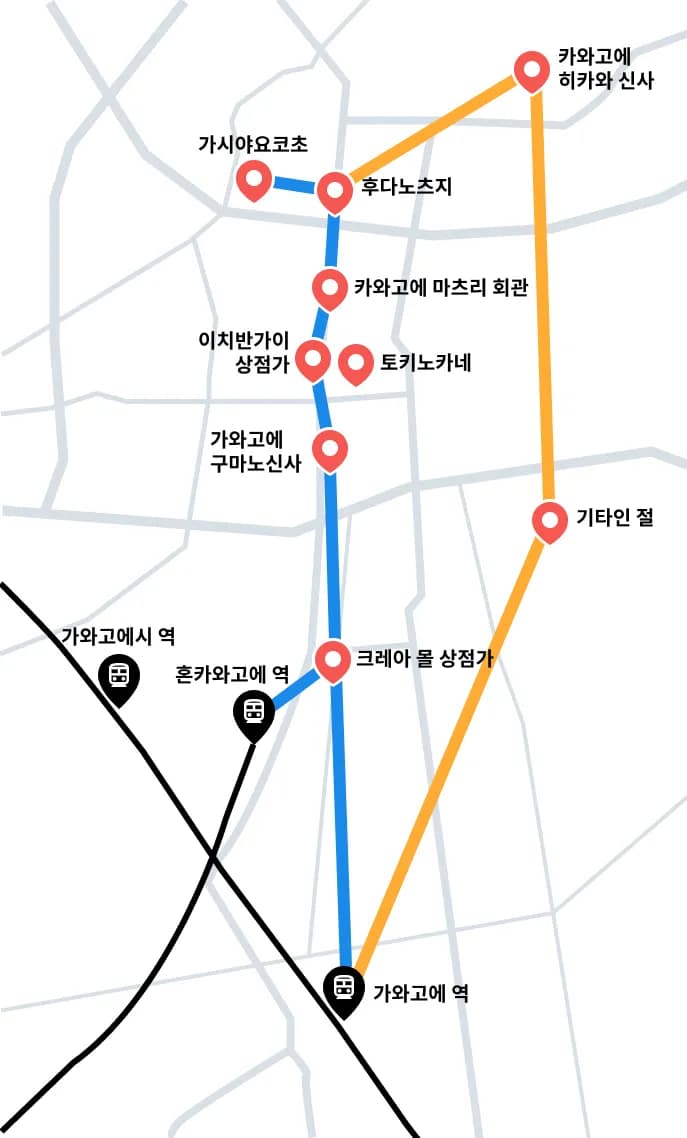
If you have a full-day schedule, we recommend the 'Koedo Famous Spots Loop (小江戸名所めぐ리) Bus' departing from platform 3 at the Kawagoe Station East Exit.
Take this bus to tour Kita-in Temple → Hikawa Shrine → Kashiya Yokocho → Ichiban-gai Shopping District → Kumano Shrine → Crea Mall in a counter-clockwise direction to see all major Kawagoe landmarks.
How to Get to Kawagoe from Tokyo: Complete Tobu and Seibu Access GuideComparison of fares, train types, and travel times.
You can choose between Tobu Railway and Seibu Railway lines depending on your departure point and preferred train type.
1) Using the Tobu Tojo Line (From Ikebukuro)
The most common way, departing from Ikebukuro Station.
- Fare: 490 yen one-way.
- Train Types: You can significantly shorten travel time by taking the 'Kawagoe Limited Express,' 'Rapid Express,' or 'Express' (Fare is the same as local trains).
- Arrival Station: Kawagoe Station or Kawagoeshi Station.
2) Using the Seibu Shinjuku Line (From Shinjuku)
The most convenient line for travelers staying in the Shinjuku area.
- Fare: 600 yen one-way from Seibu-Shinjuku/Takadanobaba (560 yen from Ikebukuro).
- Train Types: It is advantageous to take an 'Express' or 'Semi-Express.'
- Limited Express (Red Arrow): Trains marked as 'Limited Express' on the timetable have all-reserved seating. You must purchase a separate Limited Express Ticket (600 yen), but it is much more comfortable and faster.
- Arrival Station: Hon-Kawagoe Station (Closest to the traditional warehouse district).
💡 Pro Tip: Going without transfers (Via Fukutoshin Line)
By taking the Fukutoshin Subway Line from Shibuya Station, you can catch trains that operate through-service onto the Tobu Tojo Line. You can reach Kawagoe in one go without transferring. If you are a Tokyo Subway Ticket holder, you only need to pay the additional fare of 330 yen from the subway boundary station, making it very economical.
While you can take the Saikyo Line from JR Shinjuku Station via Omiya, the fare is more expensive than private rail (Tobu/Seibu) and there is no significant time advantage, so it is generally not recommended.
Kawagoe Loop Bus Guide: Distinguishing Between Tobu Bus and Eagle BusUnderstanding the difference between 'Famous Spots Loop' and 'Koedo Loop'.
While major attractions in Kawagoe are walkable, many use loop buses for efficiency. However, you must realize there are two operating companies, and each has its own dedicated pass. If you board a bus that doesn't match your pass, you may end up paying double, so be careful.
1) Koedo Famous Spots (Meisho) Loop Bus (Operated by Tobu Bus)
Mainly departs from Kawagoe Station East Exit and uses standard large buses.
- Starting Point: Kawagoe Station East Exit Platform 3
- Features: Loops through major attractions in a counter-clockwise direction. On Google Maps, it appears as route '名01'.
- Stop Numbers: T1 – T15
- Usage Tip: You can use the 'Kawagoe 1-Day Bus Ticket' for unlimited rides. Simply show the pass to the driver when exiting.
2) Co-Edo Loop (Junkan) Bus (Operated by Eagle Bus)
This route adds to the travel atmosphere with classic bonnet-style buses.
- Starting Point: Kawagoe Station West Exit
- Courses:
- CO1 Course: Toward Kita-in Temple and Kashiya Yokocho (Counter-clockwise loop)
- CO2 Course: Concentrated round-trip between Ichiban-gai and Hikawa Shrine
- Fare: 220 yen one-way (IC cards accepted).
- Stop Numbers: E1 – E18
- Note: This bus only accepts the Eagle Bus-exclusive '1-Day Free Pass'. You cannot board with a Tobu Bus pass.
💡 Tip to Avoid Confusion
Since both buses often use the English name 'Loop Bus', it's hard to distinguish them by name alone. The most reliable way to distinguish them is by the departure platform location.
- If you board at the East Exit, it's the 'Famous Spots Loop' (Tobu Bus).
- If you board at the West Exit, it's the 'Junkan Loop' (Eagle Bus). Check which company issued your transport pass before heading to the platform.
3) Route Comparison Summary
| Category | Famous Spots (Meisho) Loop | Junkan (Co-Edo) Loop |
|---|---|---|
| Operator | Tobu Bus | Eagle Bus |
| Departure Platform | Kawagoe Sta. East Exit | Kawagoe Sta. West Exit |
| Route Code | 名01 (T-numbered stops) | C01 / C02 (E-numbered stops) |
| Dedicated Pass | Kawagoe 1-Day Bus Ticket | Eagle Bus Free Pass |
Essential Kawagoe Transport Passes: Summary of Bus and Rail Discount PassesValue passes for Kawagoe travelers.
Passes useful for Kawagoe are divided into bus-only passes and passes that include round-trip rail from Tokyo. Choose based on your travel style (walking vs. bus use).
1) Bus-only Passes
These are valid only for the loop buses of a specific company. Note that the bus designs and routes differ.
| Pass Name | Adult Price | Usable Bus |
|---|---|---|
| Koedo Kawagoe 1-Day Bus Ticket | 500 yen | Famous Spots Loop Bus (Tobu) |
| 1-Day Free Pass | 600 yen | CO-EDO Loop Bus (Eagle) |
- Tobu Bus Ticket: Digital tickets are available for purchase via the Japan Transit Planner app.
- Eagle Bus Ticket: There is an event where you can buy it for 400 yen if you board wearing a Kimono on the 8th, 18th, or 28th of every month. (Cash payment only.)
2) Tobu Tojo Line Rail Pass (From Ikebukuro)
The most economical choice when visiting Kawagoe from Ikebukuro Station.
- Kawagoe Discount Pass Premium: Adult 1,200 yen / Child 600 yen.
- Includes round-trip rail + unlimited Tobu loop bus rides. This is advantageous if you plan to take the bus twice or more.
3) Seibu Line Rail Pass (From Shinjuku/Takadanobaba)
Recommended for travelers departing from Shinjuku or those who want to keep a beautiful physical ticket shaped like a charm.
- Seibu Kawagoe Pass: Adult 1,000 yen (No child version).
- Basic pass including only the round-trip rail ticket. Features a charm-like design for good luck.
- Seibu Kawagoe Pass + CO-EDO Bus Ticket: Adult 1,500 yen.
- Combines the round-trip rail with a 1-day Eagle Bus (CO-EDO Loop Bus) pass. (Blue ticket)
💡 Selection Guide
Most shopping district discounts apply regardless of the pass type, often just by presenting it. However, remember you must show it before payment (when ordering) to receive the benefits!
Exclusive TourCast Tips!
Two Highlights of Hikawa Shrine, Full of Bonds and Romance
1) Hikawa Shrine, Symbol of Bonds and Tradition
Hikawa Shrine is the most widely known shrine in Kawagoe, boasting a history of over 1,500 years.
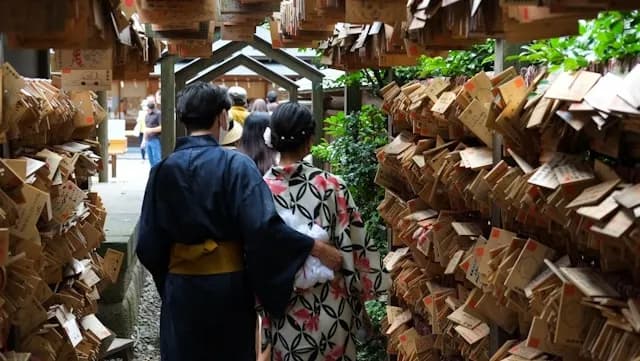
It is particularly famous for love and matchmaking. Every morning at 8 AM, 20 limited 'Enmusubi-dama' (matchmaking stones) are distributed for free. These are pebbles purified by a shrine maiden and provided in a net. Competition is so fierce that people line up early in the morning for a numbered ticket.
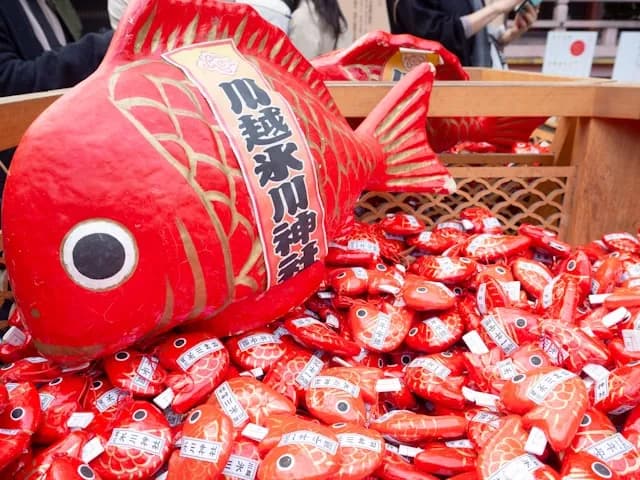
Also, the Sea Bream Fishing Omikuji is a fun experience not to be missed. In Japanese, sea bream (tai) sounds like 'medetai' (auspicious), signifying good luck.
Pink breams symbolize love luck, while red breams symbolize general fortune for the year. The phrase 'Ryoen Ai Tai' on the pink bream is a cute pun meaning both 'matchmaking sea bream' and 'I want to meet/see a good partner.'
2) Summer Night Romance: Matchmaking Wind Chimes (Furin)
Every summer (July to early September), the 'Enmusubi Furin' (Matchmaking Wind Chimes) festival is held, featuring over 2,000 glass wind chimes.
The sound of chimes swaying in the wind symbolizes the freshness of a Japanese summer. Worshipers hang paper strips (tanzaku) with their wishes on the chimes, letting the wind carry their earnest hearts.
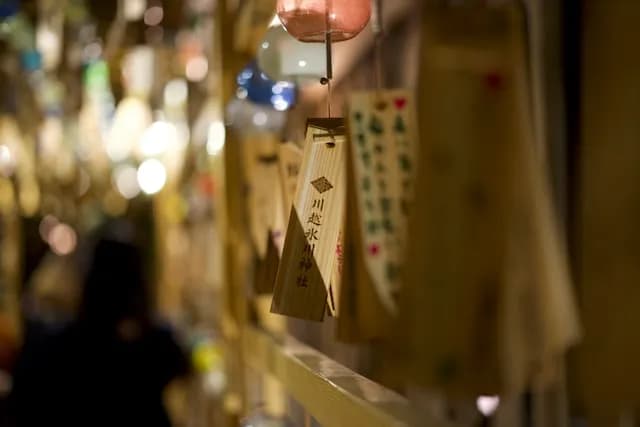
Notably, after sunset, the 'Hikaru Kawa' (Glowing River) display illuminates the stream inside the shrine. For ethereal photos, we recommend visiting between 18:30 and 20:00.