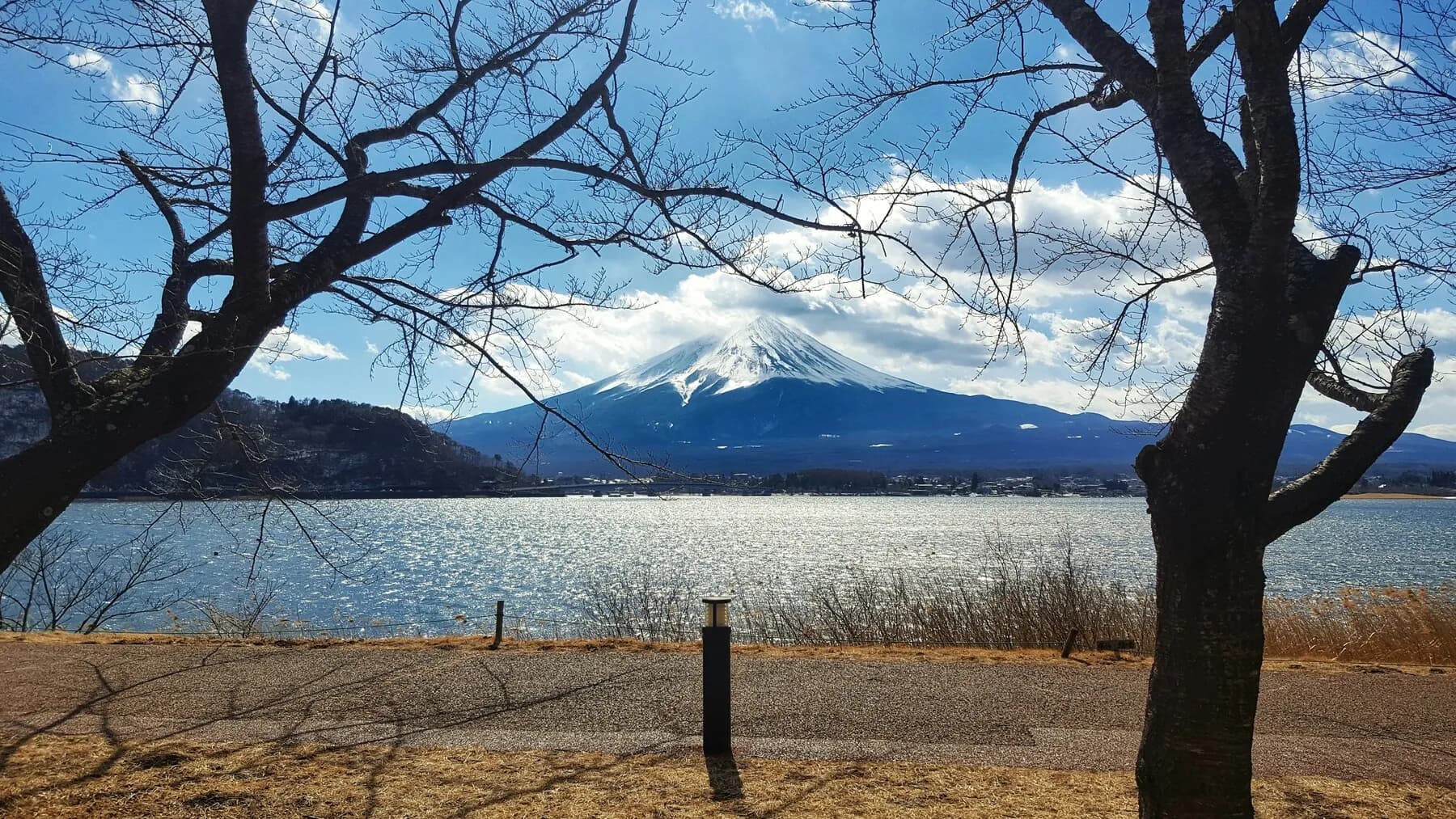
Breathtaking Views of Mt. Fuji: The Charm of Kawaguchiko in Yamanashi PrefectureSummary of duration, fares, and transfer info for buses and trains
Kawaguchiko in Yamanashi Prefecture is one of the best spots to view Mt. Fuji up close. On clear days, it is famous for the 'Sakasa Fuji' (Upside-down Mt. Fuji), where the mountain is reflected perfectly on the calm surface of the lake. The area is well-equipped with tourist infrastructure, including sightseeing boats, ropeways, and footbath cafes, making it ideal for a relaxed stay.
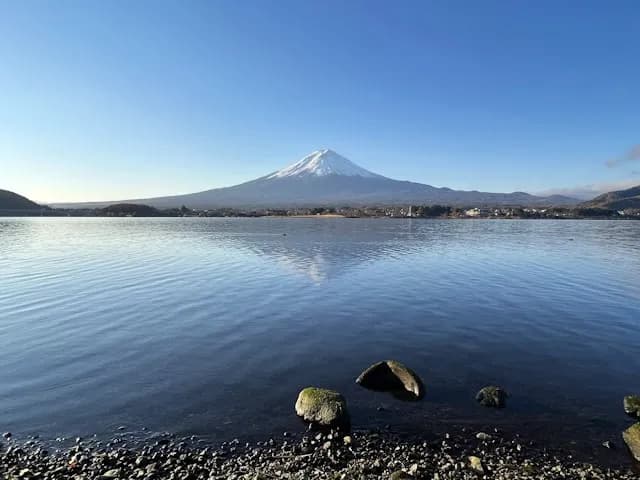
1) Nearby Sights: Oshino Hakkai & Sengen Park
The area surrounding Mt. Fuji is full of charming spots beyond Lake Kawaguchiko.
- Oshino Hakkai: A traditional village consisting of eight springs fed by Mt. Fuji's snowmelt. The landscape of crystal-clear spring water and old thatched-roof houses preserves Japan's classic beauty.
- Arakurayama Sengen Park: Located in the Shimoyoshida area, this spot offers the iconic postcard view of a vermilion five-story pagoda and Mt. Fuji in a single frame. You must climb about 400 steps, but the view from the top is well worth it.
- Honcho Street: An old shopping street near Shimoyoshida Station. Recently, it has become a social media sensation for its unique perspective where Mt. Fuji appears to stand majestically at the end of the road.
2) Thrilling Theme Park: Fuji-Q Highland
If you want active fun, we recommend Fuji-Q Highland. It holds Guinness World Records for roller coasters with overwhelming drops and speeds, attracting thrill-seekers from around the globe. You can experience the thrill of vertical drops with Mt. Fuji as your backdrop.
💡 Travel Tip
The Kawaguchiko area is at a high altitude, so temperatures are lower than in the city and weather can change rapidly. Since Mt. Fuji is often hidden by clouds, it's best to check real-time weather and Mt. Fuji Visibility indexes before departing.
Recommended Courses Around Kawaguchiko & Mt. Fuji: Day Trip vs. OvernightRecommended courses to enjoy Kawaguchiko and nearby attractions
The area around Lake Kawaguchiko features numerous attractive spots such as Fuji-Q Highland, Oshino Hakkai, Shimoyoshida Honcho Street, and the Sengen Park Observatory. Therefore, it is better to select 2–3 locations that fit your taste rather than just visiting the lake.
1) Itinerary Planning Guide
- Day Trip: If departing early from Tokyo, you can see up to three spots. To save time, keep your route short starting from Kawaguchiko Station.
- 1 Night 2 Days: Stay at a ryokan near the lake to leisurely enjoy the views of Mt. Fuji that change every hour from sunset to sunrise.
- Recommended Bus Tour: If public transport transfers or complex scheduling seem burdensome, a dedicated bus tour is the best choice. Depart from a set meeting point and comfortably explore key sights with a guide.
2) Precautions for Highway Buses
Highway bus routes in the Kawaguchiko area are very specific, so check carefully during booking.
- Shimoyoshida Stop: Some highway buses from Shinjuku do not stop at Shimoyoshida (near Sengen Park). If you plan to visit Shimoyoshida first, verify the stop before booking.
- Prevent Wrong Drop-offs: If you take a route that doesn't stop there, you'll have to go all the way to Kawaguchiko Station and take a train back, wasting time and money.
- Set Precise Boarding Points: If the stop you booked differs from where you actually wait, you risk being marked as a No-show. Always book for the specific stop you plan to use.
💡 Seating Tip When taking a highway bus from Tokyo to Kawaguchiko, sitting on the left side of the bus (relative to the direction of travel) allows you to enjoy the view of Mt. Fuji as it gradually grows larger outside your window.
Exclusive TourCast Tips!
Create the Perfect Route: Lake in the Morning, Coaster in the Afternoon via Q-Pack
It is entirely possible to visit Lake Kawaguchiko in the morning and enjoy thrills at Fuji-Q Highland in the afternoon.
- Utilize Q-Pack: A value product combining a round-trip highway bus ticket and a Fuji-Q Highland Free Pass.
- See the Tokyo Part 2 Theme Park section for details.
- Recommended Route: Shinjuku/Shibuya → Exit at Kawaguchiko Station → Move to Fuji-Q Highland → Arrive at Shinjuku/Shibuya.
- Transfer Tip: Even if you booked via Q-Pack, you can get off at Kawaguchiko Station first. The two stations are just 2 minutes (180 yen) apart by train or a base fare by taxi.
- Flexible Stays: For overnight stays, you can set different departure and return dates.
Checking the weather is essential to see Mt. Fuji clearly and enjoy the rides.
Mt. Fuji won't be visible in heavy clouds or fog, and **major attractions may stop operating** during rain. Check real-time visibility via live cams and the attraction schedule before visiting. Note that companions not using rides can get a free entrance ticket at the gate to enter together.
Highway congestion returning to Tokyo can be severe on weekends and holidays, so weekday visits are highly recommended.
Master Lake Kawaguchiko: Bicycle Tours and the Ropeway ObservatoryViewpoints enjoyed via bicycle or ropeway, the 'Mt. Fuji view hotspots'
Kawaguchiko has emerged as one of the most noted travel destinations near Tokyo. 'Kawaguchiko' is well-known for its spectacular scenery blending Mt. Fuji with the lake.
There are two primary ways to properly enjoy the view of Mt. Fuji and the lake:
- Renting a bicycle and riding along the lake to Nagasaki Park.
- Taking the Mt. Fuji Panoramic Ropeway to the observatory.
1) Bicycle Rental
- Requirement: A passport may be required for rental, so bringing it is recommended.
- Fares:
- Standard: ~500 yen/hr / 1,500 yen/3hrs / ~2,500 yen/day.
- Electric: From ~600 yen/hr (Since there are many slopes, electric bicycles are highly recommended.)
2) Mt. Fuji Panoramic Ropeway
The setting of the Japanese folktale 'Kachi Kachi Yama.' You can find tanuki and rabbit characters from the story throughout the ropeway area.
- Usagi Jinja (Rabbit Shrine): On the observatory deck, the standing rabbit on the left symbolizes strong legs, and the sitting rabbit on the right symbolizes a clever head. Touch the statues for good luck.
- Hours: 08:30 – 17:00 (May be extended seasonally; last boarding 30 mins before close)
- Fare: Adult 1,000 yen / Child 500 yen (Round-trip); Adult 600 yen / Child 300 yen (One-way).
3) Key Kawaguchiko Photo Spots
- Kawaguchiko Station Railway Tracks: Capture classic trains and Mt. Fuji in one frame.
- Nagasaki Park: Approx. 5km from the station, offering a direct front-facing view of Mt. Fuji over the lake.
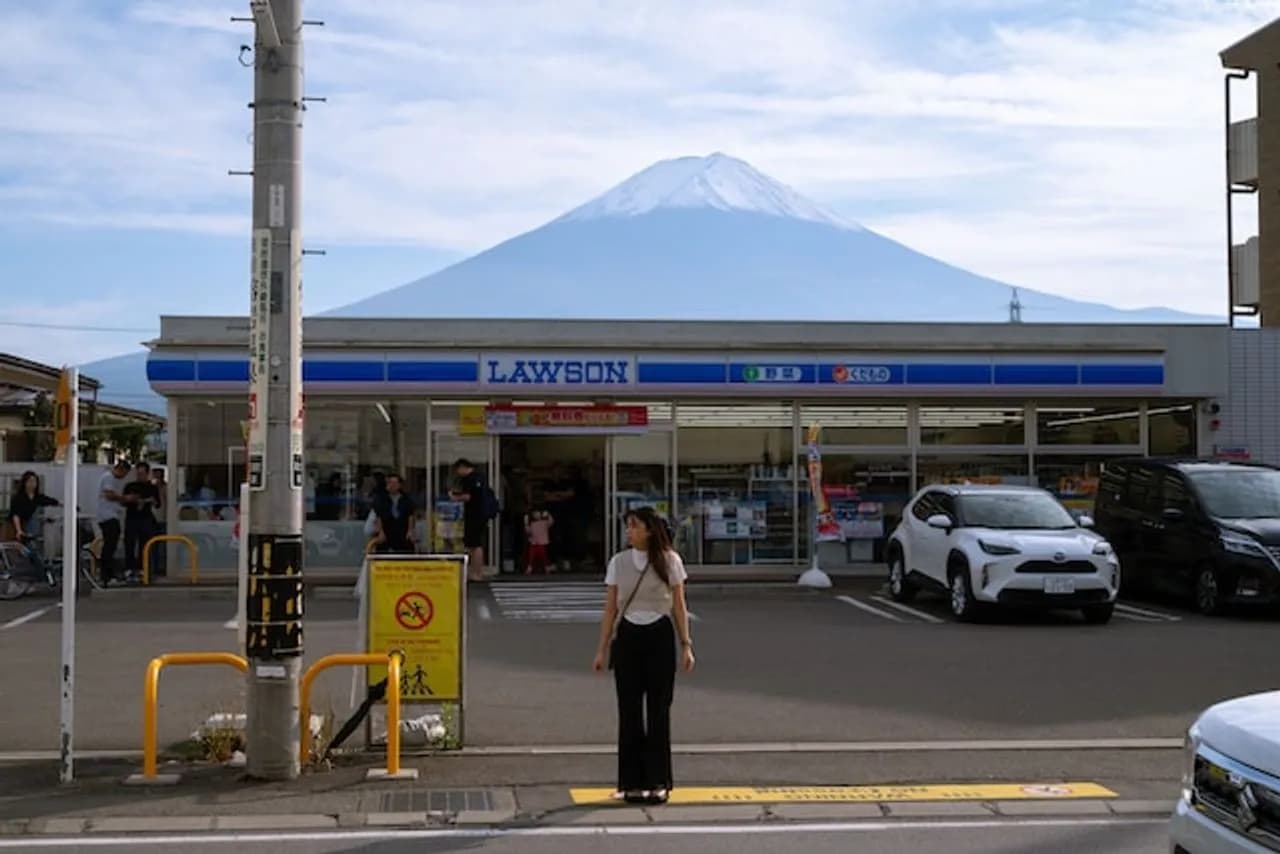
- Lawson Kawaguchiko Station Store:
- Due to over-tourism, barriers were installed and then modified. Currently, fences and low screens for pedestrian safety are maintained.
- Photography is still possible, but jaywalking is strictly prohibited. Follow the instructions of on-site staff for polite viewing.
💡 Travel Tip
The ropeway is famous for long queues. To save time, visit before 9:00 AM or rent a bicycle for a relaxed ride toward Oishi Park on the north side of the lake.
The Mystical Eight Springs: Guide to Oshino Hakkai Traditional VillageA pure village formed by Mt. Fuji's spring water
The name 'Oshino Hakkai' combines the location 'Oshino' with 'Hakkai' meaning 'eight seas.' It does not actually contain seas; it refers to eight spring ponds fed by groundwater from Mt. Fuji's melting snow.
Traditional houses in the Gassho-zukuri style are preserved throughout the village. These feature steep thatched roofs resembling hands in prayer, designed to withstand the weight of heavy snow without collapsing.
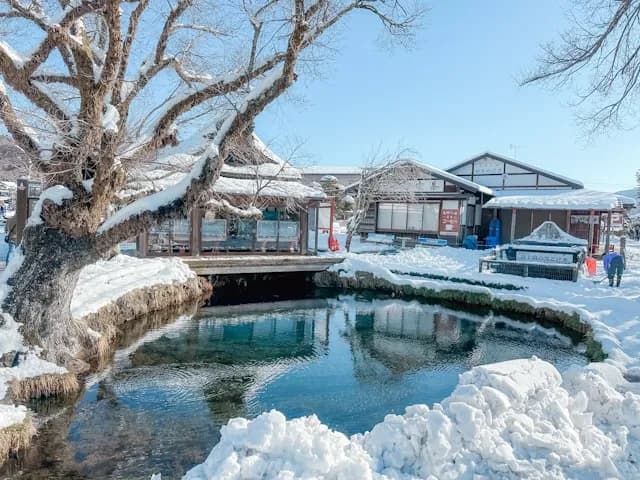
As Oshino Hakkai is a naturally formed village, you can explore it freely without an admission fee. Charges only apply for the observatory or the folk museum.
💡 Spring Water Tip
There is a spot where you can directly drink Mt. Fuji spring water. While ladles are provided, bringing your own tumbler or empty bottle is much more convenient. (Empty bottles can be purchased on-site for about 200 yen.)
1) How to Get There
From Kawaguchiko Station or Mt. Fuji Station, take the Fujikkogo Loop Bus, the Limited Express Oshino Hakkai Bus, or a local bus toward Gotemba, and get off at the 'Oshino Hakkai' stop.
- From Kawaguchiko Station: Approx. 20–30 mins (620 yen one-way)
- From Mt. Fuji Station: Approx. 15–20 mins (450 yen one-way)
2) The Eight Mystical Ponds
The flashy Naka-ike pond in the center is incredibly clear despite being 8m deep, but it is actually an artificial pond not included in the official eight springs.
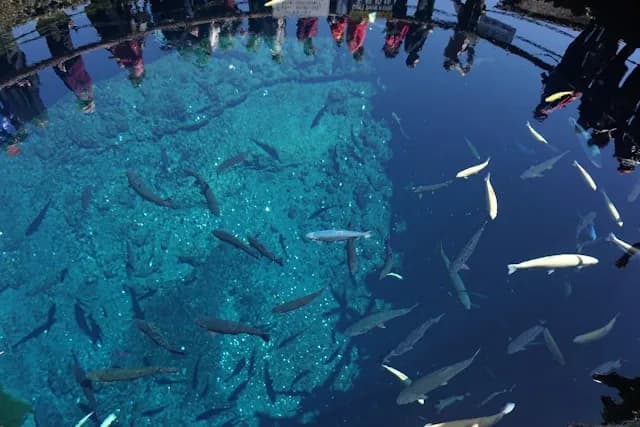
The locations and features of the true Oshino Hakkai 8 Ponds are:
- Deguchi-ike: The largest, where Mt. Fuji pilgrims used to purify themselves.
- Okama-ike: Smallest, but impressive for water gushing out like a boiling cauldron.
- Sokonashi-ike: Legend says it has no bottom. Located inside the folk museum (paid entry required).
- Choshi-ike: Shaped like a sake carafe; sand dances as water rises from the bottom.
- Waku-ike: The village's main pond with abundant water. Once selected for NASA space water experiments.
- Nigori-ike: Name means 'cloudy,' but it's actually clear. Legend says it turned cloudy for a stingy person.
- Kagami-ike: Water acts as a mirror, making it a photo spot for a sharp Sakasa Fuji.
- Shobu-ike: Famous for iris flowers; said to heal illnesses.
Instagrammable Shimoyoshida: Sengen Park Pagoda and Honcho StreetPhoto spots to capture Mt. Fuji dramatically
Shimoyoshida is a sanctuary for landscape photography, where you can capture Mt. Fuji most dramatically. Specifically, Arakurayama Sengen Park is a landmark that never fails to appear in Japan travel promotions.
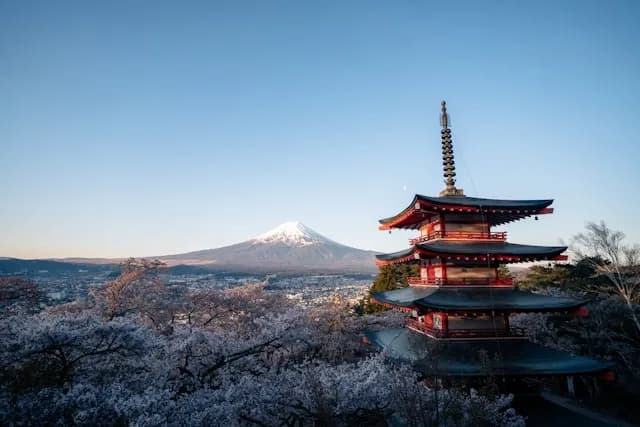
1) Arakurayama Sengen Park
This world-famous photo spot frames Mt. Fuji, the five-story pagoda (Chureito), and seasonal cherry blossoms or autumn leaves in a single shot.
- Viewing Point: The path to the observatory is beautiful year-round. The most beautiful moment is right at sunset when the pagoda lights turn on against the sunset-lit Mt. Fuji.
- Visitor Info: Admission is free. It's a 10–15 minute walk from Shimoyoshida Station to the staircase entrance.
2) Nostalgic Honcho Street
The area around Shimoyoshida Station retains a retro atmosphere reminiscent of the Showa era. Honcho Street, with its unique perspective of the grand Mt. Fuji standing at the end of the long shopping street, has gained massive popularity on social media.
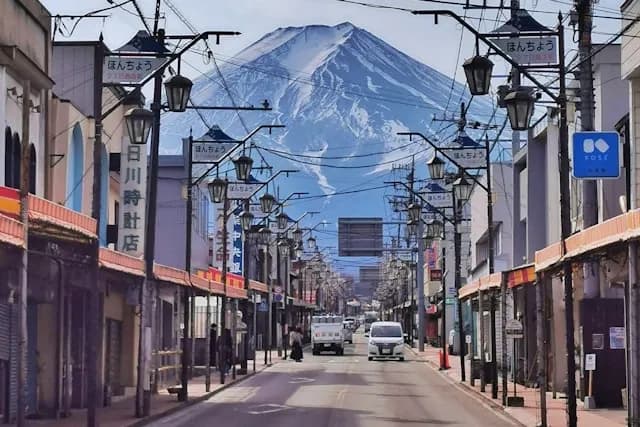
💡 Visitor Safety Rules
There are 397 steps to the Sengen Park observatory. This is equivalent to about 22 floors, so comfortable shoes are essential. (A winding slope path is available for those who avoid stairs.)
Also, Honcho Street is a public road with frequent vehicle traffic. Standing in the middle of the road for photos is extremely dangerous. Guide staff are now deployed for safety; please follow their instructions and shoot safely from the sidewalk.
3) How to Get There
- By Train: Take the Fuji-Q Railway and exit at 'Shimoyoshida Station.'
- By Bus: Choose a highway bus route from Shinjuku that stops at 'Chuo-do Shimoyoshida'. (It's about a 10-minute walk from the highway stop to the village.)