ForewordThe one thing you should know about Shikoku transportation before you go!
Shikoku, unlike Japan’s major cities, is a region where public transportation is not densely connected. Rather than being “hard to travel,” this is best understood as: there are no Shinkansen or subways, and buses/trains run less frequently.
In fact, because there is no subway, the overall transport structure is relatively simple and easier to understand, and it mainly consists of JR lines and private railways (non-JR operators)—so all you really need is to distinguish between the two.
Rail Line CategoriesJR lines vs. private railways
Shikoku’s rail network is largely dominated by JR Shikoku lines, with additional private railway lines operated within each prefecture. So if you understand which JR lines exist, and can distinguish the key private lines by area, it’s not difficult to grasp Shikoku’s rail system.
However, understanding this structure accurately is the first step to traveling Shikoku. Depending on whether you know it or not, it can make a big difference not only in buying/using transport passes but also in building an efficient itinerary.
The content below is organized to match how Google Maps displays routes, so if you learn just the key points first and then check Google Maps, you’ll be able to distinguish everything accurately.
1. JR Lines
Broadly speaking, JR lines connect major areas such as Matsuyama and Takamatsu. They are organized into the 7 main lines below, and you only need to know which JR lines exist in each prefecture.
- Yosan Line - Ehime Prefecture, Kagawa Prefecture
- Kotoku Line - Kagawa Prefecture, Tokushima Prefecture
- Naruto Line - Tokushima Prefecture
- Mugi Line - Tokushima Prefecture
- Tokushima Line - Tokushima Prefecture
- Dosan Line - Kagawa Prefecture, Kochi Prefecture
- Yodo Line - Ehime Prefecture, Kochi Prefecture
2. Private Railways
1) Matsuyama (Ehime Prefecture) · Iyo Railway (伊予鉄道 / Iyotetsu)
- Tram: Streetcars that circulate within Matsuyama city
- Iyotetsu Kanjo Line Iyotetsu Matsuyama City Station Line Iyotetsu JR Matsuyama Station Front Line Iyotetsu Honmachi Line Botchan Train
- Rail lines
- Iyotetsu Takahama Line Iyotetsu Yokogawara Line Iyotetsu Gunchu Line
2) Takamatsu (Kagawa Prefecture) · Takamatsu-Kotohira Electric Railroad (Kotoden)
- Kotohira Line Nagao Line Shido Line
3) Tokushima (Tokushima Prefecture) · Asa Coast Railway (阿佐海岸鉄道)
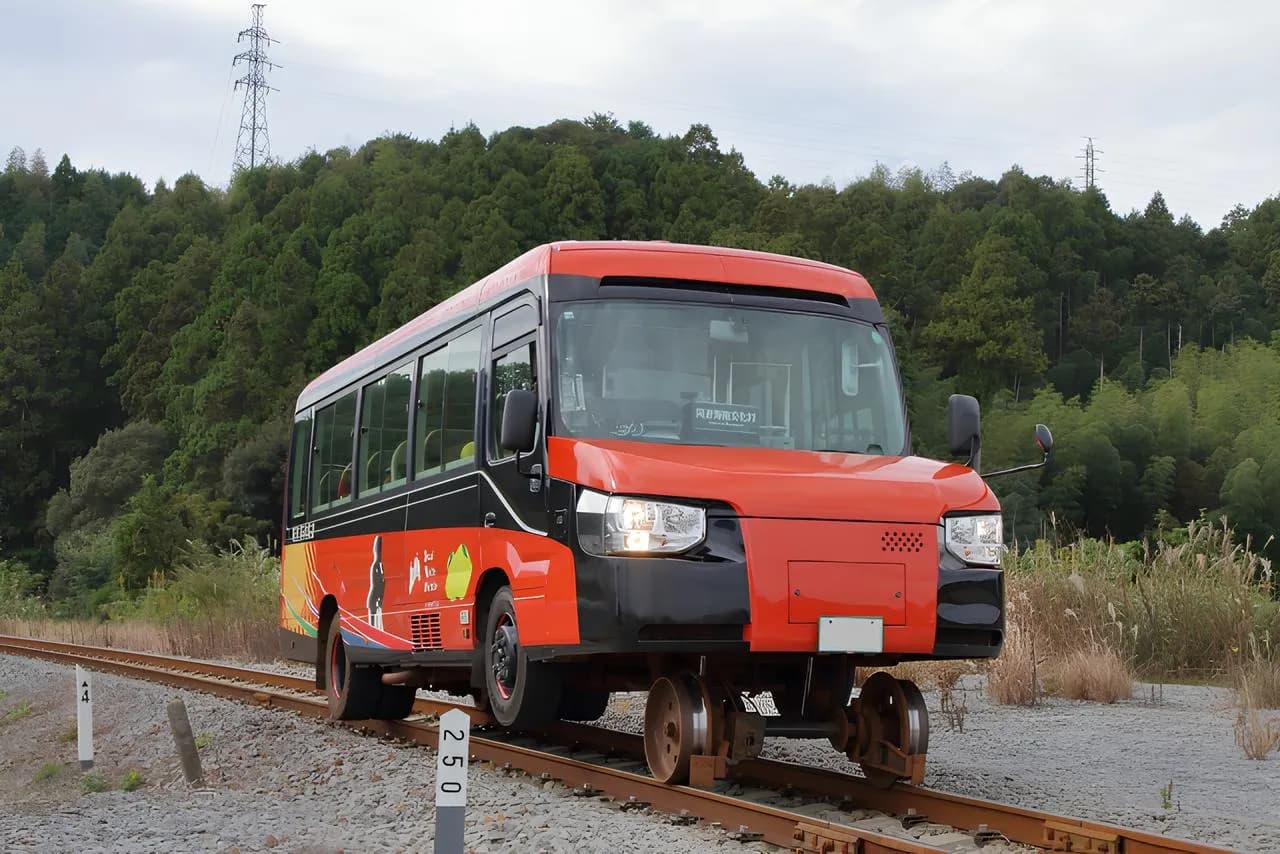
- DMV Kainanshishikui Line
- Operates Japan’s first commercially successful DMV (Dual Mode Vehicle)
- A hybrid vehicle combining bus and train
- Runs like a bus on roads
- Runs like a train on railway tracks
- Operating route: Awa Kainan Cultural Village - (bus) - Awa Kainan Station - (train) - Kannoura Station - (bus) - Michi-no-Eki Shishikui Onsen
- With only 18 seats, you may not be able to board if it’s full. If you must ride, advance reservation is essential. Asa Coast Railway Official Website Asa Coast Railway Reservation Page
4) Kochi (Kochi Prefecture)
- Tosaden (tram)
- Streetcar Tosaden
- Tosa Kuroshio Railway (土佐くろしお鉄道)
- Tosa Kuroshio Railway Asa Line Tosa Kuroshio Railway Nakamura Line Nakamura Sukumo Line
IC CardsLines with a 20-yen discount vs. lines where IC cards are not accepted
In Shikoku, there are more lines where IC cards cannot be used. In particular, Tokushima Prefecture and Kochi Prefecture do not accept IC cards at all, and IC-card-compatible services are limited to some lines in Ehime Prefecture (Matsuyama) and Kagawa Prefecture (Takamatsu).
Let’s look at the usable lines by area below.
1. Ehime Prefecture (Matsuyama, etc.)
The following services operated by Iyo Railway (伊予鉄道) accept IC cards.
- Airport bus, tram (streetcar), rail lines, city bus
- When paying with an IC card, the base fare is discounted by 20 yen for adults and 10 yen for children.
- Areas where IC cards are NOT accepted
- All other rail/bus lines, including JR lines, do not accept IC cards
- Where to buy ICOCA - ICOCA with the penguin design
- Iyotetsu Ticket Center
- Purchase is limited to select stations only
The 20-yen discount in Ehime Prefecture is limited to Iyo Railway operated services.
See details of the 20-yen discount2. Kagawa Prefecture (Takamatsu, etc.)
The following services operated by Takamatsu-Kotohira Electric Railroad (Kotoden) accept IC cards.
- Kotoden rail, Kotoden bus, airport bus
- Unlike Ehime Prefecture, there is no separate fare discount program.
- Kagawa Prefecture is the only one of Shikoku’s four prefectures where you can use IC cards on JR lines.
- All stations on the Takamatsu Station - Tadotsu Station segment
- Kanonji Station, Takuma Station, Kotohira Station, Zentsuji Station, Ritsurin Koen Kitaguchi, Ritsurin Station, Yashima Station
- Also usable at JR stations outside Shikoku on Honshu
- Where to buy SHIKOKU ICOCA - ICOCA without the penguin design
- Available at ticket offices at Takamatsu, Sakaide, Utazu, Marugame, Tadotsu, Takuma, Kanonji, Zentsuji, Kotohira, and Ritsurin stations (however, child ICOCA cannot be purchased)
- Like other IC cards, it can be used anywhere where out-of-area IC cards are accepted
Contactless cards with a Wi-Fi symbol are not accepted on any lines in Shikoku.
Shikoku Rail Passes and Bus PassesRegional rail/bus passes usable across all of Shikoku
The passes introduced below are wide-area passes usable across all of Shikoku. Regional transport passes for each prefecture (Ehime, Kagawa, Tokushima, Kochi) are explained separately in “Shikoku Part 2 – Regional Transportation Guide”.
1. ALL SHIKOKU Rail Pass
The ALL SHIKOKU Rail Pass is a pass that allows unlimited consecutive travel during the selected period on all JR Shikoku lines and participating partner services.
ALL SHIKOKU Pass details1) Types and prices
- 3-day: 12,000 yen / 4-day: 15,000 yen / 5-day: 17,000 yen / 7-day: 20,000 yen
- Children are half price, and purchasing locally adds 500 yen
2) Eligible lines/services
- All JR Shikoku lines
- Limited express and local trains (non-reserved seats)
- Travel possible as far as Kojima Station (児島駅) in Okayama Prefecture
- Ehime (Matsuyama): Iyo Railway
- ⚠️ Not valid after March 7, 2026
- Kagawa (Takamatsu): Takamatsu-Kotohira Electric Railroad (Kotoden)
- Tokushima: Asa Coast Railway
- Kochi: Tosaden Kotsu (including trams), Tosa Kuroshio Railway
- Takamatsu ↔ Shodoshima ferry (Shodoshima Ferry)
- All routes of Shodoshima Olive Bus
3) Not eligible
- Sunrise Seto (Tokyo-bound sleeper train)
- Matsuyama Botchan Train
- All buses/ferries not explicitly listed above
4) Notes
- If you want reserved seating, you must purchase a separate ALL SHIKOKU Pass reserved-seat coupon booklet.
- Adults 1,200 yen (4 tickets) / Children 600 yen (4 tickets)
-
Anpanman (アンパンマン) Train
- A limited express service wrapped in Anpanman design as a sightseeing train
- With the ALL SHIKOKU Pass, non-reserved seats are available
-
Sightseeing trains
- Operate more slowly than limited express/local trains, allowing you to enjoy scenic views while having meals, tea, etc. provided on board
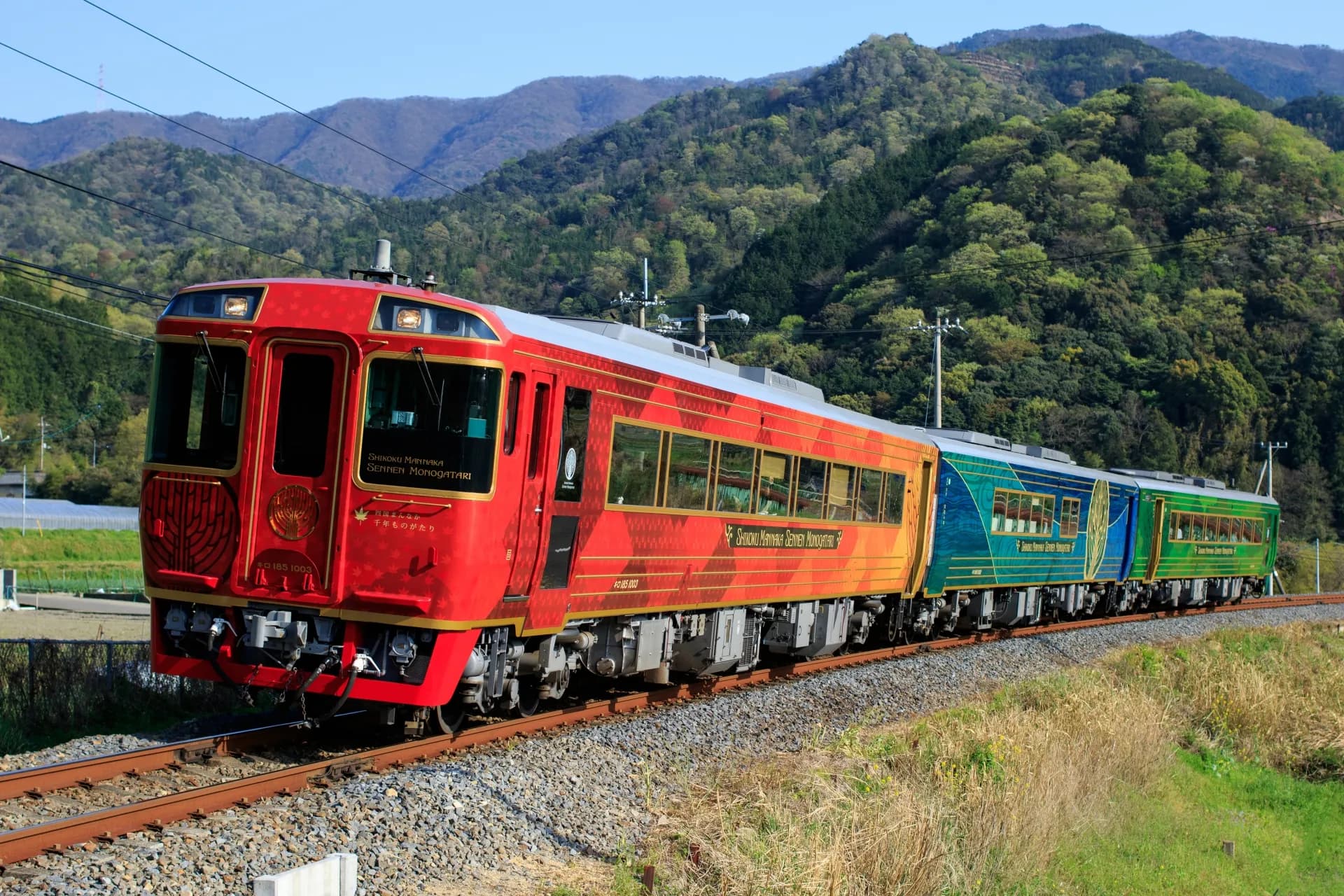
- Iyonada Monogatari, Shikoku Mannaka Sennen Monogatari, Tosa’s Dawn Monogatari
- Additional fees are required on top of the pass
- Advance reservation required
5) How to decide
The table below summarizes travel time and one-way fares between major areas based on limited express non-reserved seats. Compare your trip length and travel route with this table to decide whether passes like the ALL SHIKOKU Rail Pass are worth it.
| Route | Fare | Travel time | Notes |
|---|---|---|---|
| Matsuyama - Takamatsu | 6,160 yen | Approx. 2 hr 30 min | — |
| Takamatsu - Tokushima | 2,840 yen | Approx. 1 hr 10 min | — |
| Tokushima - Kochi | 4,830 yen | Approx. 3 hr 36 min | 1 transfer |
| Kochi - Matsuyama | 10,420 yen | Approx. 4 hr 15 min | 1 transfer |
2. Shikoku Highway Bus Free Pass
A pass that lets you ride highway buses within Shikoku on the dates you choose within one month from the purchase date. The prices are as follows.
- 2-day: 10,000 yen
- 3-day: 11,000 yen
- 5-day: 12,000 yen
The 2-day and 3-day passes do not offer a big price advantage compared to the ALL SHIKOKU Rail Pass, but the 5-day pass is 5,000 yen cheaper than the rail pass.
If you are traveling across Shikoku and staying longer in each area, the highway bus pass often works out better than a rail-focused pass.
In particular, the Matsuyama - Kochi segment takes about 4 hr 15 min one way by train, but about 2 hr 15 min by highway bus—making it roughly 2 hours faster than the train. If this segment is in your plan, the bus pass becomes a clear advantage.
Shikoku Highway Bus Free Pass details (purchase, etc.)