ForewordJapan’s famous small-city destination: Matsuyama!
Among Japan’s small-city destinations, Matsuyama has quickly grown in popularity—so much so that it often comes to mind first. There are many reasons for this, but in particular, proactive tourism policies such as free coupons & discount vouchers and free shuttle buses seem to have played a big role.
The free coupon program was funded by Takamatsu City’s budget, and given how much it increased visitor numbers, it can be seen as an effective example of regional marketing.
Matsuyama Official Tourism WebsiteA key figure to know for Matsuyama travelFormer 1,000-yen banknote figure - novelist Natsume Soseki
There is one person you should know before visiting Matsuyama: the novelist Natsume Soseki (夏目漱石), a major figure in modern Japanese literature. Even today, his works are taught in Japanese elementary, middle, and high school textbooks, and he consistently ranks high on lists of classic books that many Japanese people read.
He was also a national symbol, as his portrait appeared on the 1,000-yen banknote from 1984 to 2004.
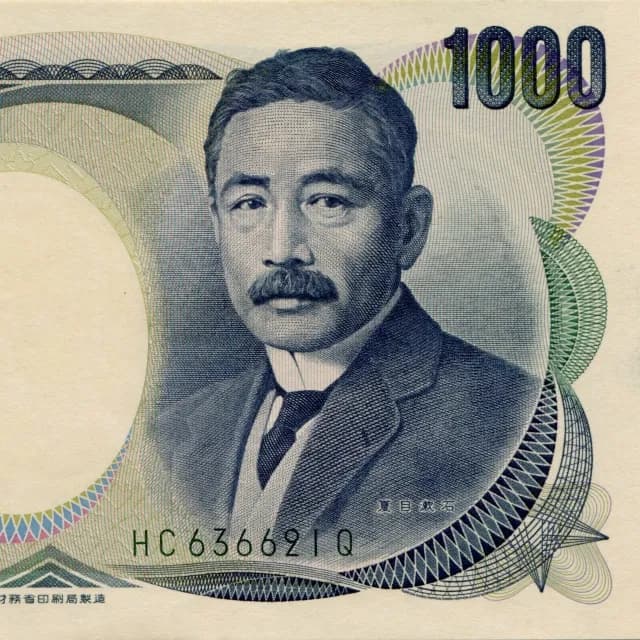
In 1895 (Meiji 28), Soseki was appointed to Matsuyama as an English teacher, and that became the start of his deep connection with the city. His famous novel 『Botchan (坊っちゃん)』, based on his experiences there, satirically depicts the school, the city atmosphere, and people around him—so it remains widely loved even today.
Because of this, Matsuyama has many sightseeing elements that celebrate Soseki and his works.
- Botchan Train (坊っちゃん列車)
- Botchan Karakuri Clock
- Botchan Train Museum
Since the world of the novel overlaps with real travel routes, visiting with this background in mind adds more depth to your Matsuyama trip.
Exclusive TourCast Tips!
How to plan your Matsuyama trip easily
In Matsuyama, two famous sunset spots are Shimonada Station and Baishinji Station. If you also set aside one day for a Dogo Onsen experience, it becomes fairly easy to build an itinerary.
For example, on a 2-night, 3-day trip, it is natural to visit Shimonada Station on the first afternoon, then enjoy Dogo Onsen on the second evening. In that case, you can place downtown sightseeing—such as Matsuyama Castle—on the morning of Day 2 to create a solid plan.
With a 3-night, 4-day trip, you can include both sunset spots and the hot spring with even more time to spare—one per day. A practical flow is: Day 1 in Baishinji, Day 2 combining Uchiko and Ozu with Shimonada Station, and enjoying Dogo Onsen on the last afternoon.
- Matsuyama’s sunset time is about 15 minutes earlier than Seoul. If you want the exact time, search Google for “Matsuyama sunset time on Month Day” to quickly find the latest information.
Airport shuttle, free coupons & discount vouchersJapan’s famous small-city destination: Matsuyama!
Currently, Matsuyama Airport offers free shuttle and coupon benefits for foreign travelers.
In terms of real value, considering that the Matsuyama Airport ↔ Matsuyama Station airport limousine bus is 1,000 yen one way, the free shuttle and free coupons feel like a combined benefit of roughly 3,000–4,000 yen.
Since these benefits are renewed every half-year, it is best to check the latest information before you depart.
1. Free coupons & discount vouchers
After arriving at Matsuyama Airport and exiting immigration, go to the right. On your left, you will find the Tourist Information Center (Information). Show your passport there to receive one free coupon per person.
| Area | Attractions | Notes |
|---|---|---|
| Matsuyama | Matsuyama Cable Car/Lift, Matsuyama Castle Keep, | Free entry |
| Uchiko | Uchikoza (construction until 2025, Kakeya as an alternative), | Free entry |
| Tobe | Tobe-yaki Traditional Industry Hall | Free entry |
| Ozu | Ozu Castle discount voucher, Bansenso discount voucher | Discount vouchers |
| Imabari | Imabari Castle discount voucher | Discount vouchers |
Free coupons are only provided to travelers who arrive at Matsuyama Airport on an international flight. If you arrive on a domestic flight within Japan, or enter the airport via other transport, you cannot receive the coupons.
However, depending on the information desk’s operating situation, there are cases where they may be provided as an exception if you arrive around the international arrival time and your passport can be used to confirm an international entry.
- Since you must show both your passport and the coupon at each attraction, it is best to carry your passport at all times during your trip.
- Other detailed conditions and notes should be checked before visiting.
2. Free airport shuttle bus
After receiving your free coupons, exit the airport and you will see the shuttle bus waiting right in front. The bus departs after all passengers from the same flight have exited, so there is no need to rush off the plane.
However, seating is limited, so if it is full, you may have the inconvenience of sitting on a temporary seat. If there are many passengers and one bus is not enough, an additional bus is deployed immediately, so there is usually no need to worry.
Bus stop locations in the city
- JR Matsuyama Station
- Matsuyamashi Station
- Ichibancho (Okaido)
- Dogo Onsen Station
- Dogo Prince Hotel
- Okudogo Ichiyu-no-Mori
How to get from the airportBackup options if you miss the free shuttle
From Matsuyama Airport to JR Matsuyama Station, it takes about 15 minutes by car, so the distance is not far. There are two main options: airport limousine bus and regular route bus.
- Airport limousine bus: about 15 minutes / 1,000 yen one way / Timetable
- Regular route bus: about 22 minutes / 490 yen one way / check Google Maps for the timetable
Most travelers will use the free shuttle, but it is helpful to know these alternatives in case you cannot board for unexpected reasons.
Getting around Matsuyama cityUse trams and route buses in the right mix
In older blog posts or auto-generated AI articles, you may see information such as “Tram 1–4 Day Pass” or “ALL IYOTETSU 1–4 Day Pass.” However, foreign travelers currently cannot purchase these passes, and even local residents can only buy some passes via the “Mikyan App (みきゃんアプリ)”.
If a tram 1-day pass still existed as before, you could plan city travel mainly around trams. But since there is no pass now, the most efficient approach is to check routes on Google Maps and combine trams and route buses as needed.
For example, after visiting Matsuyama Castle and taking the cable car (or lift) down, if you want to go to Dogo Onsen by tram, you need to walk to Okaido Stop or Keisatsusho-mae Stop. But if you take a route bus, you can board right next to where you come down, which is much more convenient.
If you have a nationwide IC card such as Suica, you can use both trams and route buses. Even without an IC card, cash payment is enough.
For details such as buying an IC card, see Shikoku Part 1 – “Complete Shikoku Transport Guide”.
Tram routes
Trams operate with a flat fare. One ride costs 230 yen for adults / 140 yen for children. There is no transfer concept, so if you board the wrong tram, you must get off and pay again. Before boarding, be sure to check the tram route number.
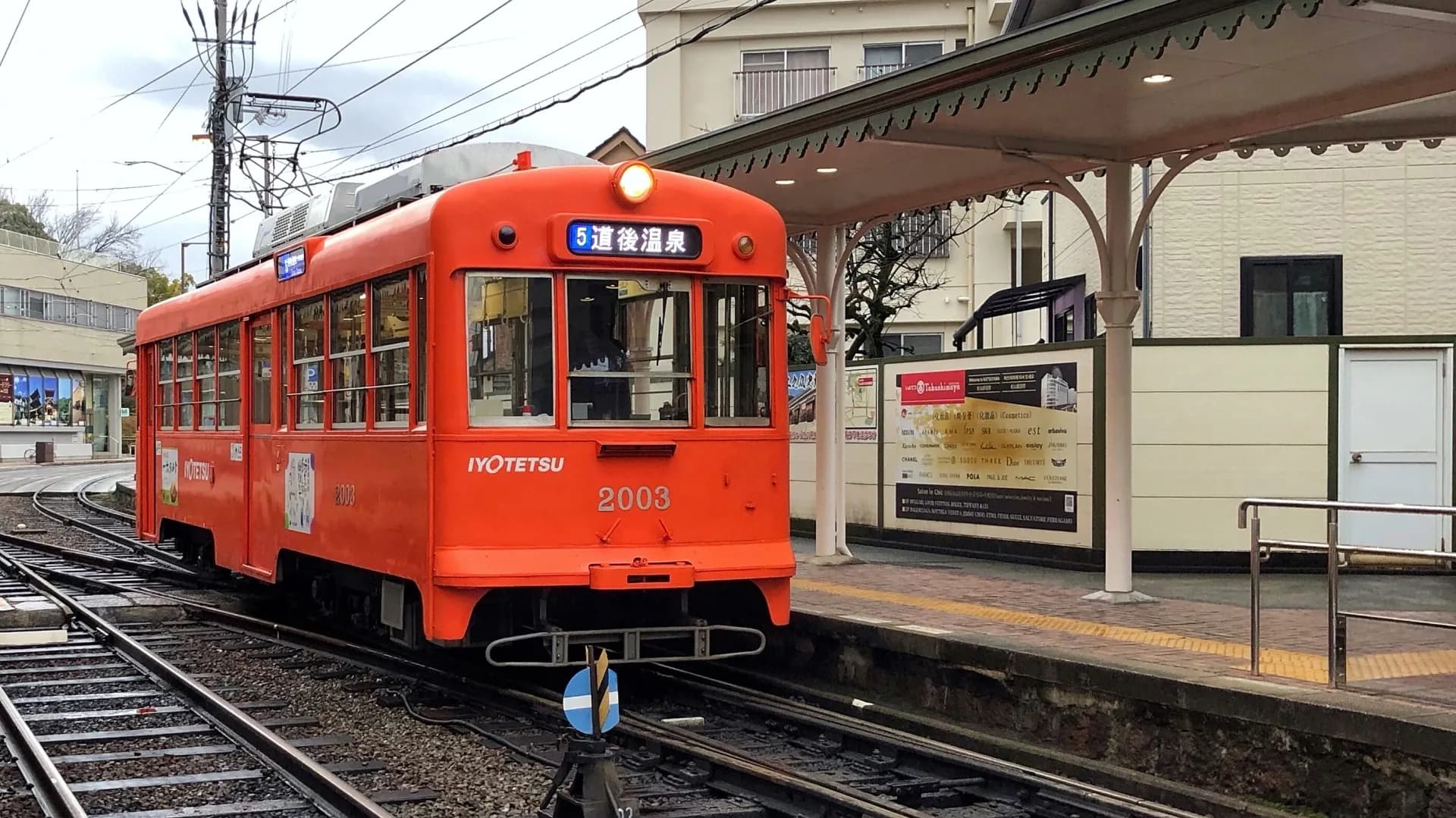
As an example, main tram numbers for key sections are as follows.
- Okaido → JR Matsuyama Station: Lines 1, 2, 5
- Okaido → Dogo Onsen: Lines 3, 5
- Dogo Onsen → JR Matsuyama Station: Line 5
- If using Line 3, transfer at Minami-Horibata Stop
Since Google Maps does not show tram line numbers, it is important to check the route map on site and choose the correct number.
Tram Route MapLoop line toward JR Matsuyama Station from Matsuyama City Station (clockwise)
Loop line toward JR Matsuyama Station from Matsuyama City Station (clockwise)
Loop line toward Okaido from Matsuyama City Station (counterclockwise)
Loop line toward Okaido from Matsuyama City Station (counterclockwise)
Matsuyama City Station ↔ Dogo Onsen (two-way service)
Matsuyama City Station ↔ Dogo Onsen (two-way service)
JR Matsuyama Station ↔ Dogo Onsen (two-way service)
JR Matsuyama Station ↔ Dogo Onsen (two-way service)
Matsuyama City Station ↔ Hommachi 6-chome (two-way service)
Matsuyama City Station ↔ Hommachi 6-chome (two-way service)
Recommended sightsMatsuyama Castle, Dogo Onsen, and more
1. Matsuyama Castle
In Japan, there are only 12 castles with an original, surviving main keep (現存天守)—and Matsuyama Castle is one of them.
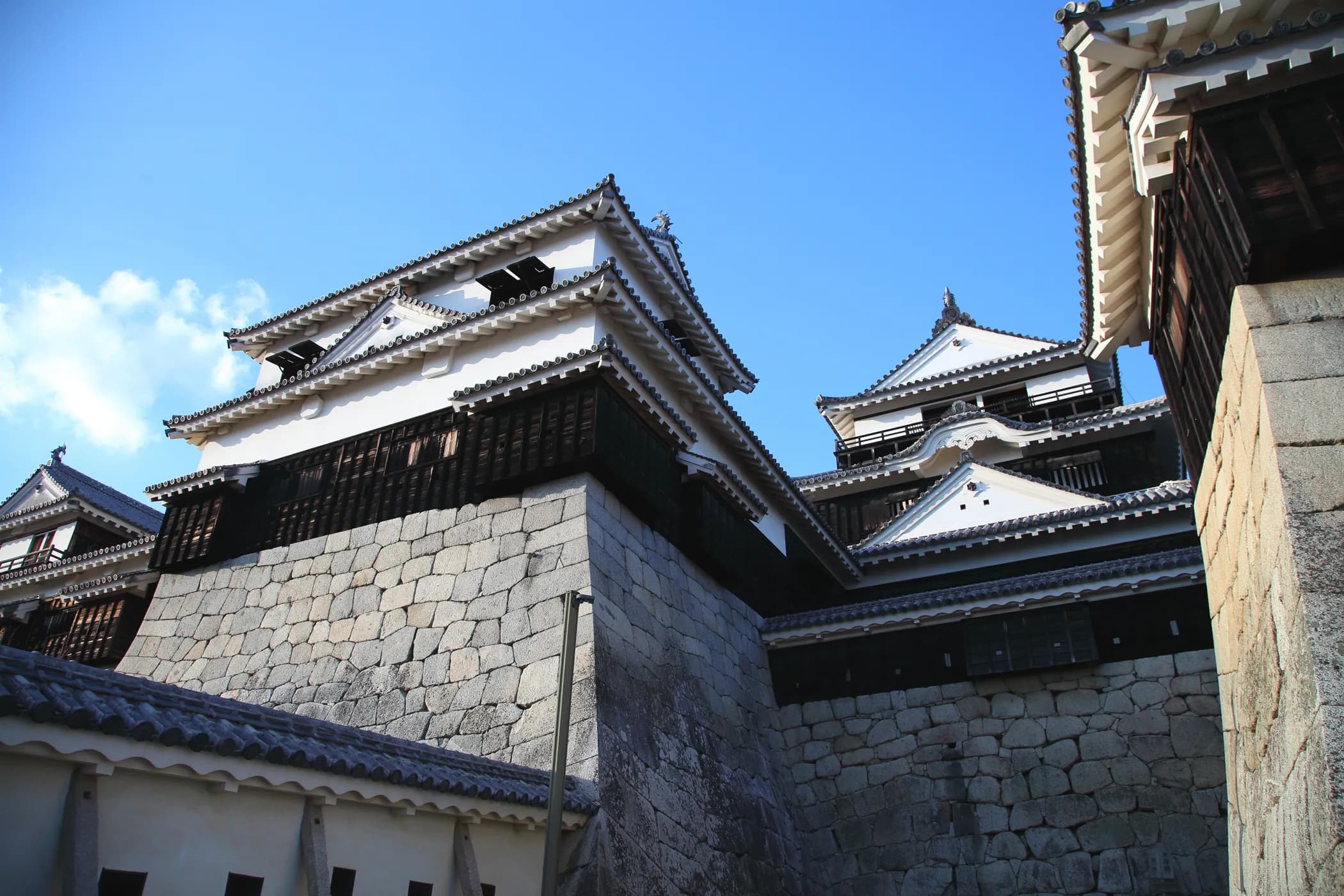
Inside the keep, there are steep staircases, so it is best to visit in comfortable clothing. Skirts are especially not recommended for safety.
1) History
After the Battle of Sekigahara, Kato Yoshiaki became a daimyo with a 200,000-koku domain. In 1602, he began building a new castle on Katsuyama Hill. The following year, the local place name was changed from “Katsuyama” to “Matsuyama”, forming the modern name.
The construction took about 25 years. It was left unfinished when Yoshiaki was transferred to Aizu, but Gamo Tadatomo, who arrived next, continued the work and completed it. In 1635, Matsudaira Sadayuki of the Tokugawa family entered the castle, and until the Meiji Restoration, it continued as the main castle of the Matsudaira clan for 14 generations.
Today, Matsuyama Castle is considered one of the best-preserved mountain castles that shows Edo-period castle structure. With its keep, stone walls, and turrets, it is a key highlight of Matsuyama travel where you can clearly feel the architecture and power structure of that era.
2) Visitor information
- Main keep & Ninomaru Historic Garden
- 09:00 ~ 17:00
- Until 17:30 in August / Until 16:30 from December to January (last entry 30 minutes before closing)
- Adults 520 yen, children 160 yen (up to two preschool children free)
- Cable car
- 08:30 ~ 17:30
- Until 18:30 in August / Until 17:00 from December to January
- Round trip: adults 520 yen, children 140 yen (up to two preschool children free)
- Lift
- 08:30 ~ 17:00
- Available from elementary school age / service suspended in rain
- Round trip: adults 520 yen, children 140 yen (up to two preschool children free)
- With the free coupon + passport, you can use either the cable car or the lift (one option only)
3) How to get there
It is about an 8-minute walk from the Okaido tram stop. This section connects to Ropeway Shopping Street, so it is a good place for light shopping or a short walk before or after visiting the castle.
Cable Car/Lift Boarding Point Official Website2. Around Okaido Shopping Arcade
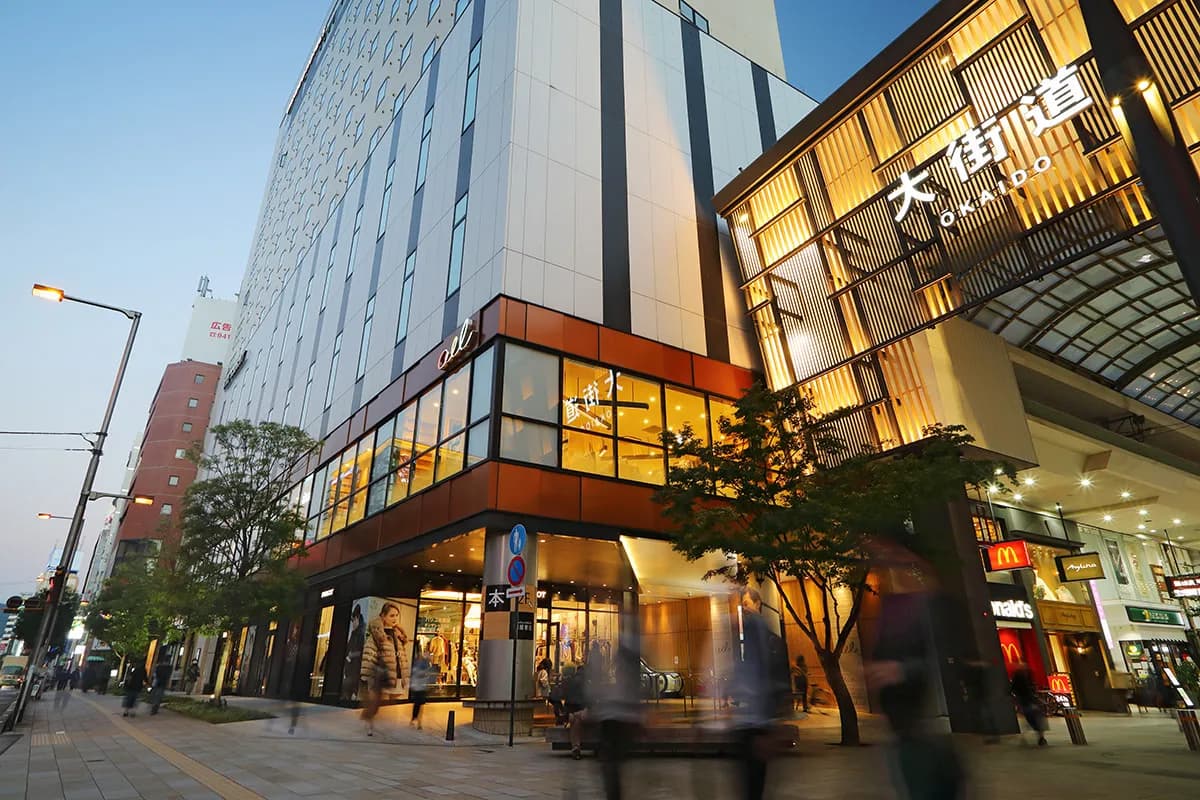
Okaido Shopping Arcade (大街道商店街) is Matsuyama’s main downtown area, packed with restaurants, cafes, drugstores, and souvenir shops. By tram, you can easily reach both JR Matsuyama Station and Dogo Onsen. With convenient routes for sightseeing, meals, and shopping, it is an especially good central base for first-time visitors.
1) Saka no Ue no Kumo Museum
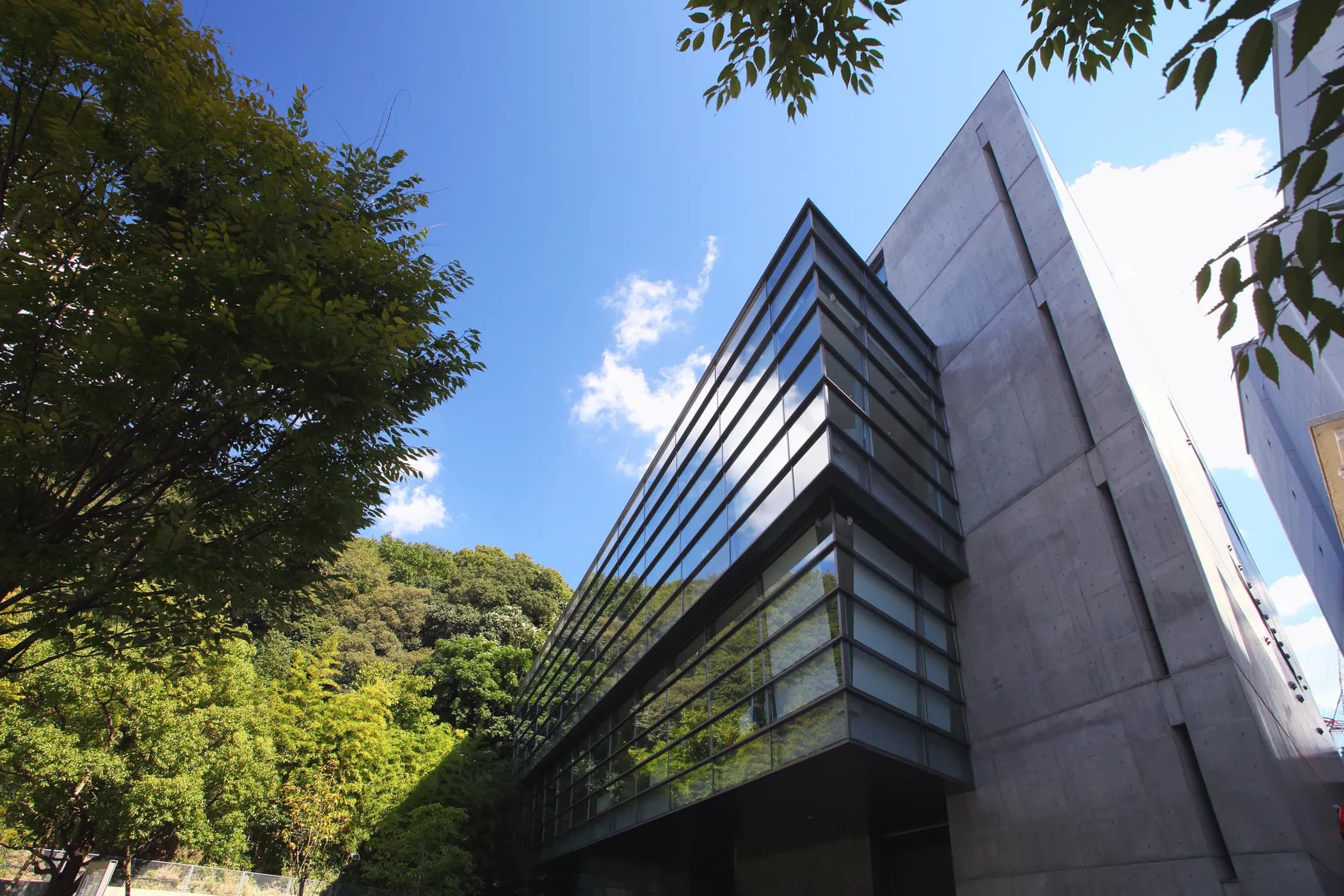
A memorial and exhibition museum based on the novel “Saka no Ue no Kumo,” written by Matsuyama-born author Shiba Ryotaro. It is also famous for its architecture designed by world-renowned Japanese architect Tadao Ando.
Here, you can explore Japan’s modernization and Matsuyama’s historical background. The exhibits include scenes from Matsuyama at the time, recreated key moments from the novel, and materials related to the Russo-Japanese War.
However, you should understand that the exhibition presents Meiji-era national growth and wartime strategy in a positive light from a Japan-centered perspective.
- Hours 09:00 ~ 18:30 (last entry 18:00)
- Children’s Book Forest 09:30 ~ 17:30
- Museum cafe 10:00 ~ 17:00 (last order 16:30)
- Closed: Mondays, plus possible additional closures (check the calendar)
- Adults 500 yen, 65+ 250 yen, high school 250 yen, junior high and under free
2) Bansuiso
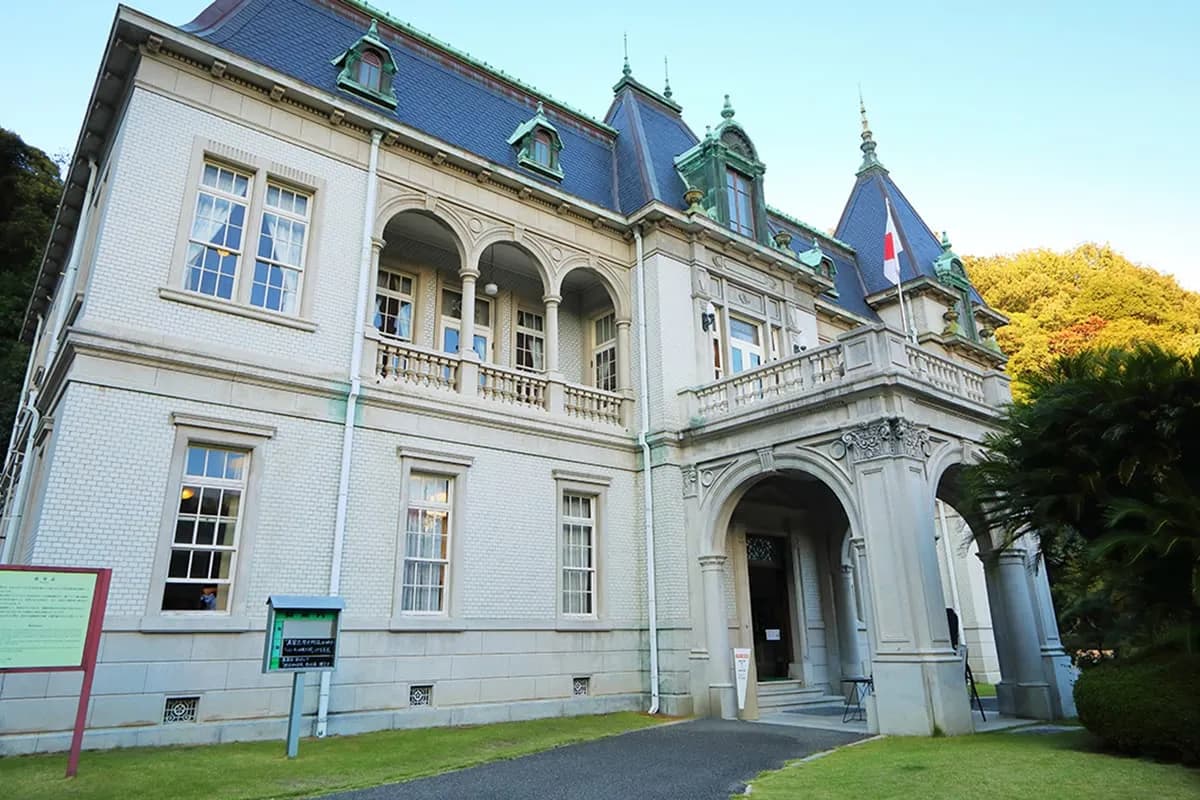
A Western-style building constructed in 1922 as the villa of Count Kataoka Masaaki, a Matsuyama-born military figure and noble. It is known for its French Renaissance-inspired exterior and detailed interior decoration, and it is considered one of the most beautiful Western-style buildings in Matsuyama.
Today, it operates as a multi-purpose cultural venue hosting concerts, art exhibitions, and literary events.
- Hours 09:00 ~ 18:00 (last entry 18:00)
- Closed: Mondays, plus possible additional closures (check the calendar)
- Adults 500 yen, 65+ 250 yen, high school 250 yen, junior high and under free
3) Kururin Ferris wheel
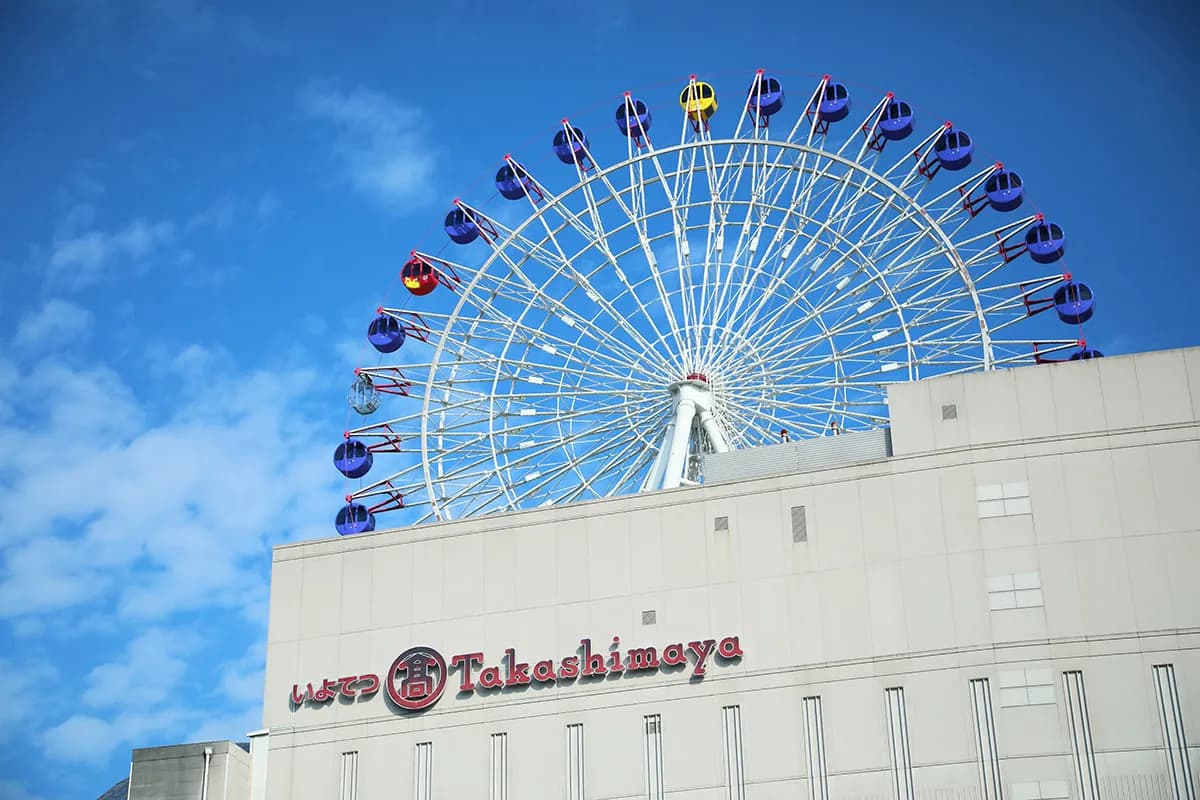
A large Ferris wheel located on the rooftop of Iyotetsu Takashimaya Department Store, near Okaido. It is an easy and popular viewpoint spot you can enjoy right in the city.
In the daytime, you can see a wide view of Matsuyama. At night, you can comfortably enjoy city night views. On clear days, you may even see the distant Ishizuchi mountain range.
The see-through gondola (シースルーゴンドラ) is especially popular. Thanks to great access, it is a simple stop before or after shopping.
- Hours 10:00 ~ 21:00 (last ride 20:45)
- Regular gondola: 800 yen per person / See-through gondola: 1,300 yen per person
- Free for children under elementary school age
- Show your passport to ride for 500 yen (regular gondola only)
3. Around Dogo Onsen Station
The Dogo Onsen area is a traditional hot spring town built around Dogo Onsen Honkan, known as one of Japan’s oldest hot springs. The main bathhouse, Asuka no Yu, foot baths, and the shopping arcade are all within walking distance, making it easy to enjoy hot springs, strolling, and shopping in one place.
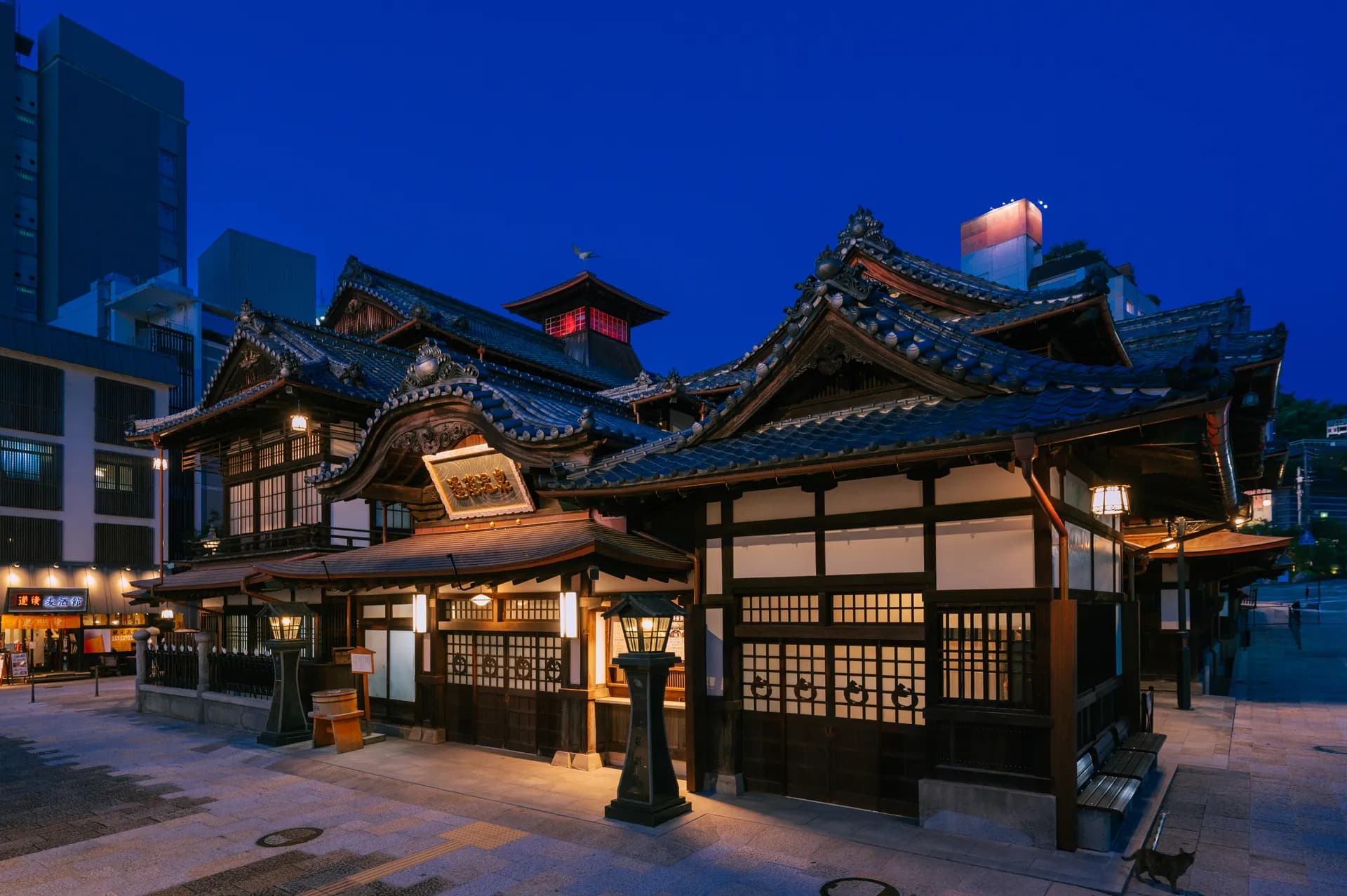
At night, the main building lights up and becomes an even more popular photo spot. With many traditional ryokan and onsen hotels, it is a great area for a calm, rest-focused trip.
Even if you use a foot bath in Dogo Onsen, or bathe at Dogo Onsen Honkan or Asuka no Yu, towels are not provided by default.
If you rent on site, a small towel costs 100 yen and a bath towel costs 300 yen. If you plan to do a foot bath or an onsen visit, bringing your own towel is the most cost-effective option.
1) Botchan Train
A restored classic steam-style train that appears in 『Botchan』. Thanks to its literary symbolism and retro atmosphere, it has become one of Matsuyama’s famous tourism icons.
To recreate the old style, even turning the train around is done by staff manually pushing the car onto a turntable and rotating it. Many travelers wait on purpose to see this unique scene, which you can experience only in Matsuyama.
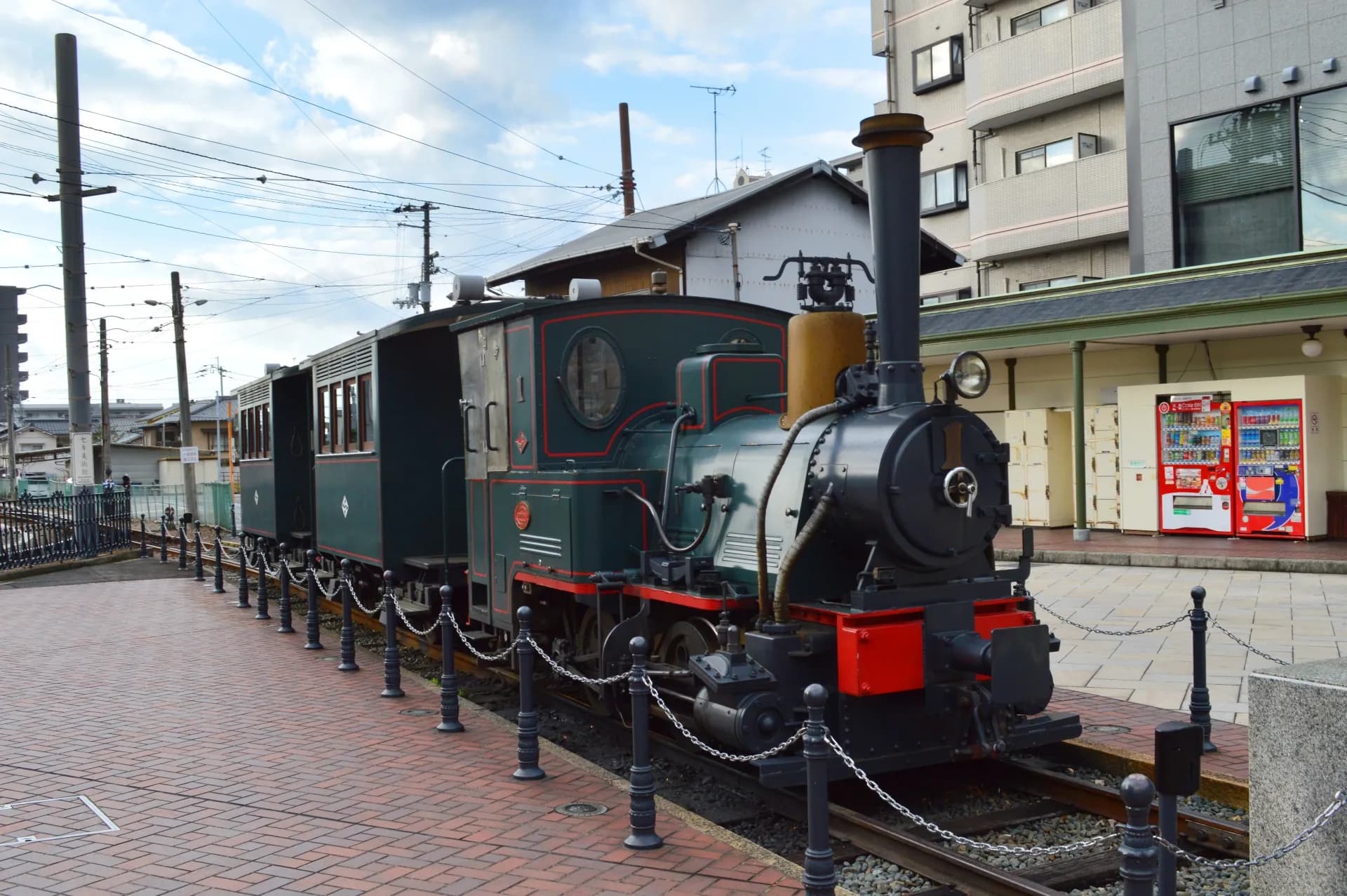
It does not operate on weekdays, and runs only on weekends and Japanese public holidays. The routes are:
- Dogo Onsen ↔ Matsuyamashi Station
- Dogo Onsen ↔ JR Matsuyama Station ↔ Furumachi Stop
Capacity is limited to 36 people, and how you ride depends on where you board.
🚉 Boarding at Dogo Onsen Stop
- Ticket sales and numbered boarding slips start from 08:30 on the day
- Board in numbered order
- When boarding:
- Hand your boarding slip to the staff
- Show your ticket for inspection (punch)
- If using an IC card:
- Pick up only the boarding slip → pay by tapping your card when boarding
🚉 Boarding at other stops
- First-come, first-served
- Pay by cash or IC card
- If full, you cannot board However, Minami-Horibata (南堀端) and Kami-Ichiman (上一万) are drop-off only, so you cannot board there.
The Botchan Train fare is relatively high: 1,300 yen for adults / 650 yen for children per ride. Also, once you get off, you cannot board again. Consider value for money and fit it into your schedule carefully.
2) Botchan Karakuri Clock and foot bath
The Botchan Karakuri Clock is an automated puppet clock in the plaza in front of Dogo Onsen Station. On the hour, characters from 『Botchan』 appear and perform a moving display. It is a popular photo spot for travelers.
Right next to the clock, there is a free foot bath (足湯) open to everyone—one of Dogo Onsen’s signature spots where you can relax while watching the performance.
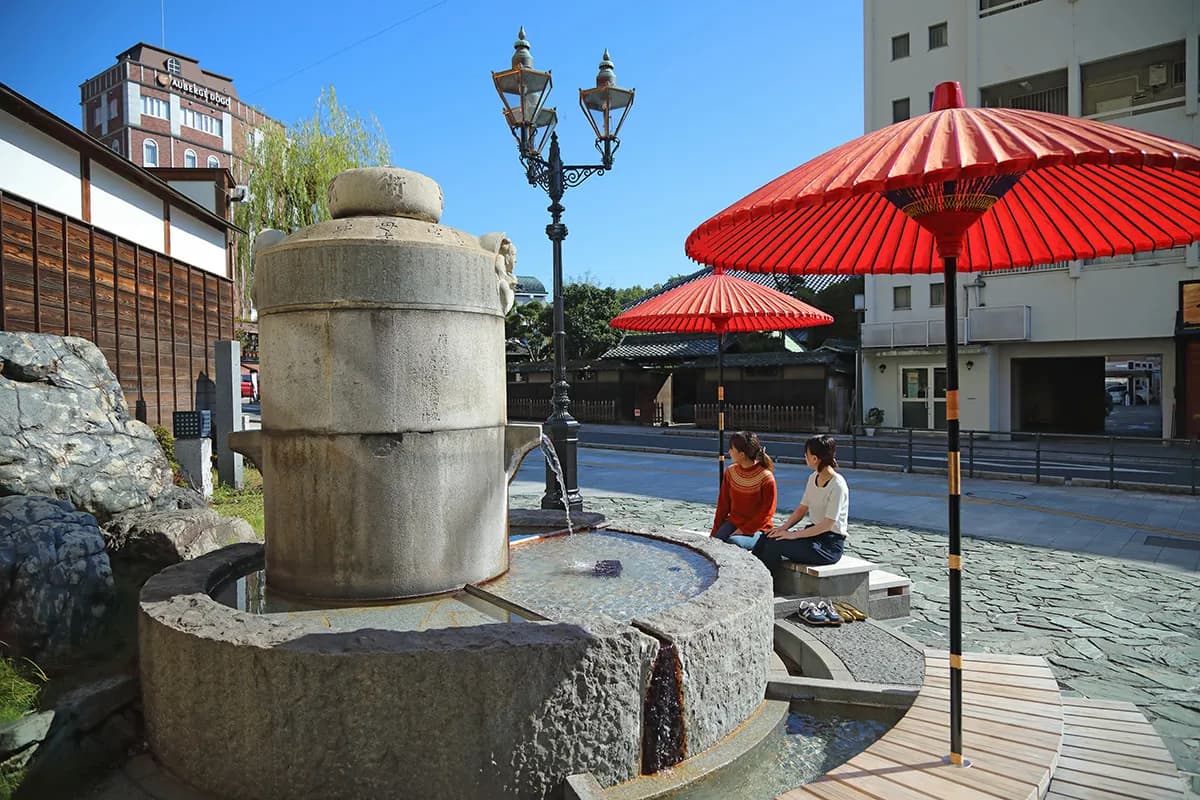
Karakuri (絡繰り) refers to traditional mechanical devices designed to move using strings, springs, or water power.
During the periods below, the puppet show runs not only on the hour but also every 30 minutes.
- Weekends and Japanese public holidays
- March · April · August · November (every day, every 30 minutes)
- Year-end/New Year (12/28 ~ 1/5)
- Golden Week (5/1 ~ 5/5)
3) Haikara-dori (arcade shopping street)
This main shopping arcade connects Dogo Onsen Station to Dogo Onsen Honkan. It has mikan jelly, towels, onsen souvenirs, cafes, and more—making it the central street of Dogo Onsen for strolling, shopping, and snacks.
- Dogo Onsen dango is especially famous
4) Dogo Onsen Honkan
A wooden public bathhouse known as one of Japan’s oldest hot springs, and the iconic landmark of Matsuyama. Its traditional multi-story wooden architecture and quiet atmosphere stand out. It is also famous for its resemblance to scenes from Studio Ghibli’s “Spirited Away”. At night, the building lights up and becomes a night photo spot.
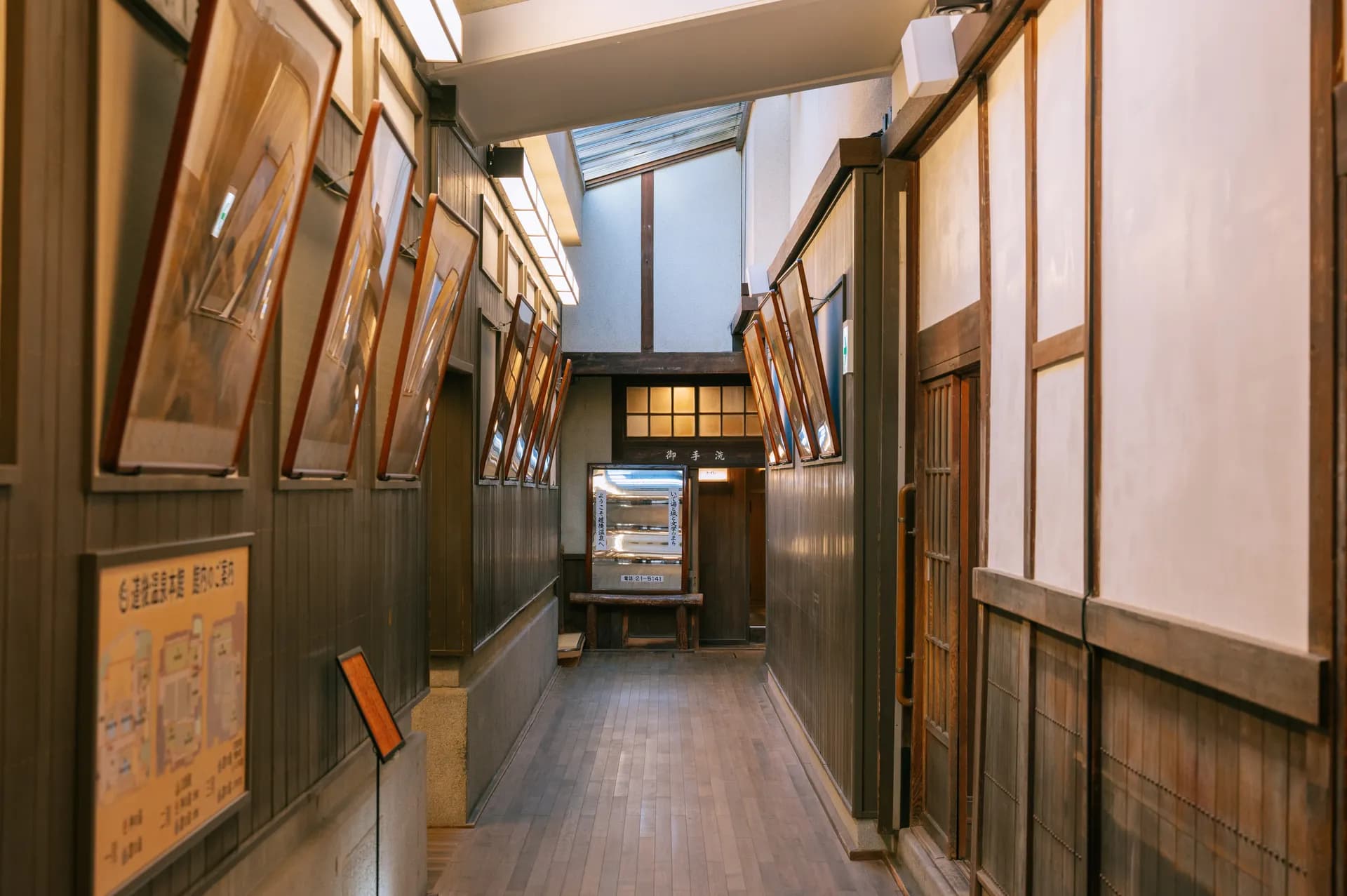
Across from Dogo Onsen Honkan, there is a small walking path and a free foot bath (足湯), great for relaxing before or after bathing. The walkway heading toward Okaido has soft lighting and a nice atmosphere, so it is also popular for an evening stroll.
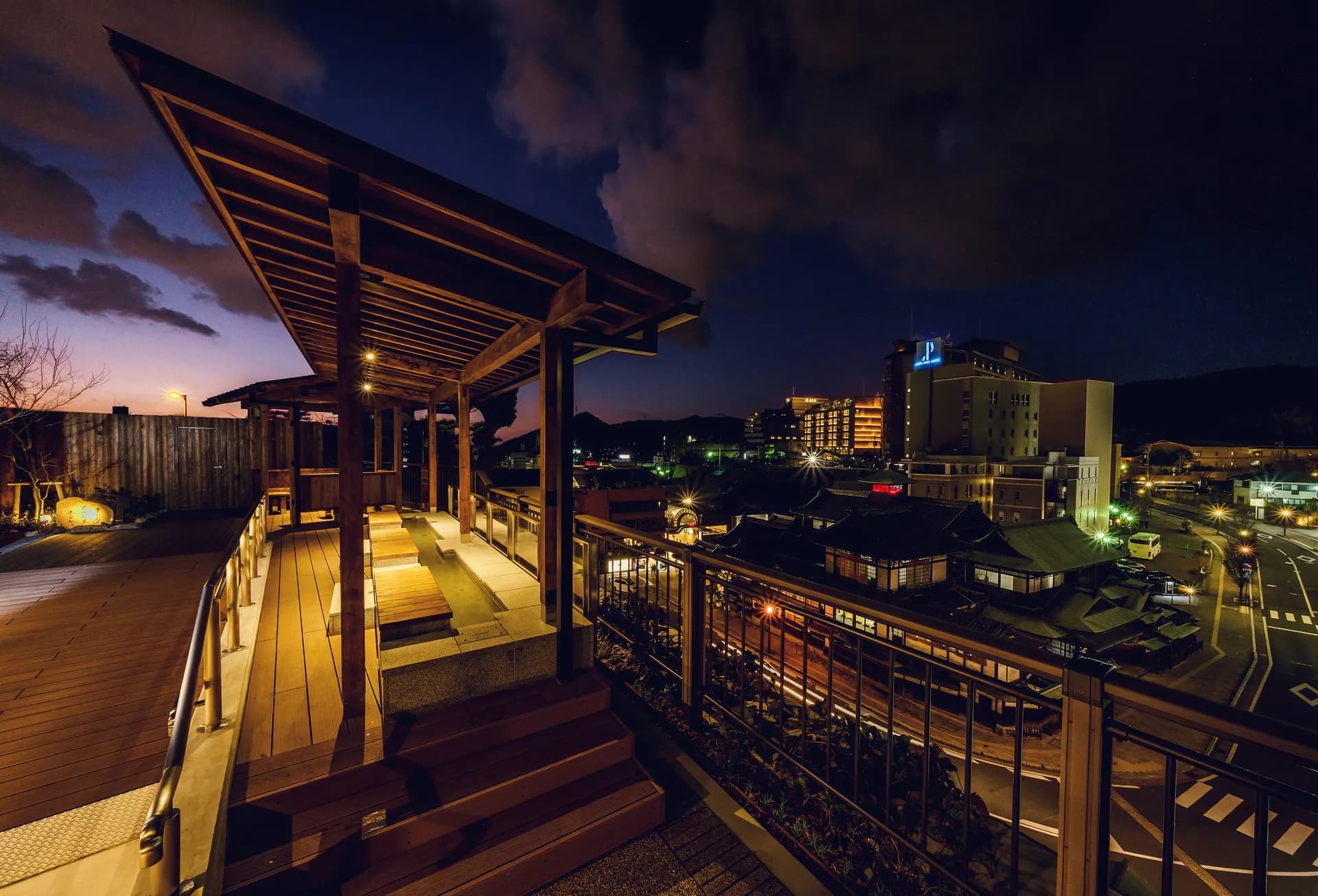
5) Dogo Onsen Annex Asuka no Yu
A public bath facility that modernly reinterprets Asuka-period architectural styles, offering a calm aesthetic that feels different from the traditional mood of Dogo Onsen Honkan.
Inside, you will find gentle, wood-forward bathing spaces using natural materials. It is another representative Dogo Onsen facility used by both travelers and locals.
Asuka no Yu Location Asuka no Yu Official Website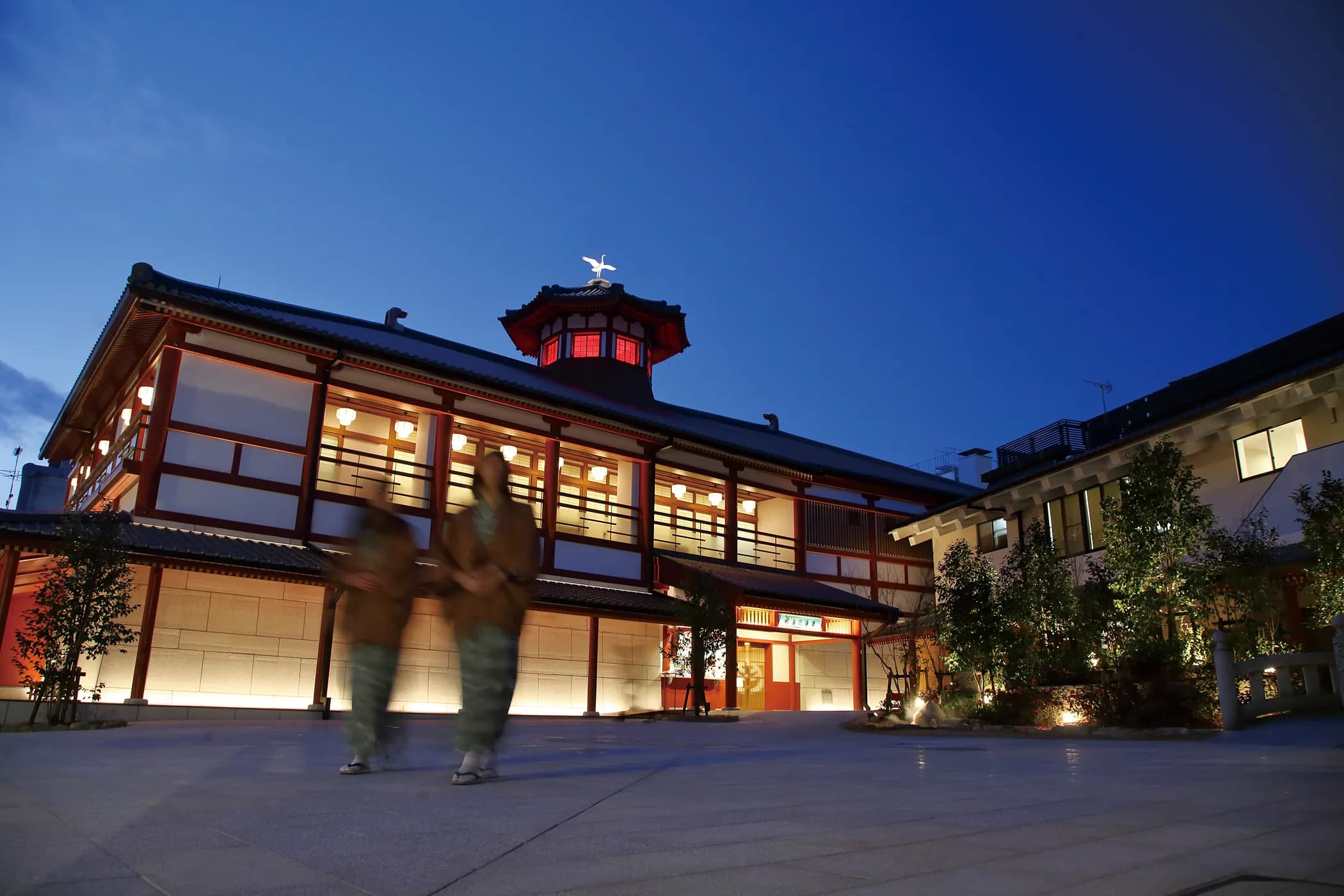
The free coupon applies only to Dogo Onsen Annex Asuka no Yu (1F bath area).
For both Honkan and Asuka no Yu, fees, how to use, and opening hours vary by area and course. For details, it is best to check the official English website before you visit.
5) Dogo BEER BAR (Former Dogo Beer Hall)
A local craft beer spot near the entrance to the Dogo Onsen shopping arcade, where you can try four types of Dogo Beer (Pilsner, Ale, Dark, Weizen) on draft. It is popular as a great break spot before or after the onsen, with light food and cold beer.
Takeout is also available, and it sits in the center of the arcade route leading to Dogo Onsen Honkan, so it is very easy to fit into your walk.
| Beer name | Style | Name origin |
|---|---|---|
| Dogo Botchan | Kölsch (Kölsch) | Novel title |
| Dogo Madonna | Altbier (Altbier) | Nickname of a female character in Botchan |
| Dogo Soseki | Stout (Stout) | Natsume Soseki’s name |
| Dogo Nobosan | Weizen (Weizen) | Soseki’s friend’s nickname |
| Dogo Yuagari IPA | Session IPA / IPA | Yuagari (湯上がり) |
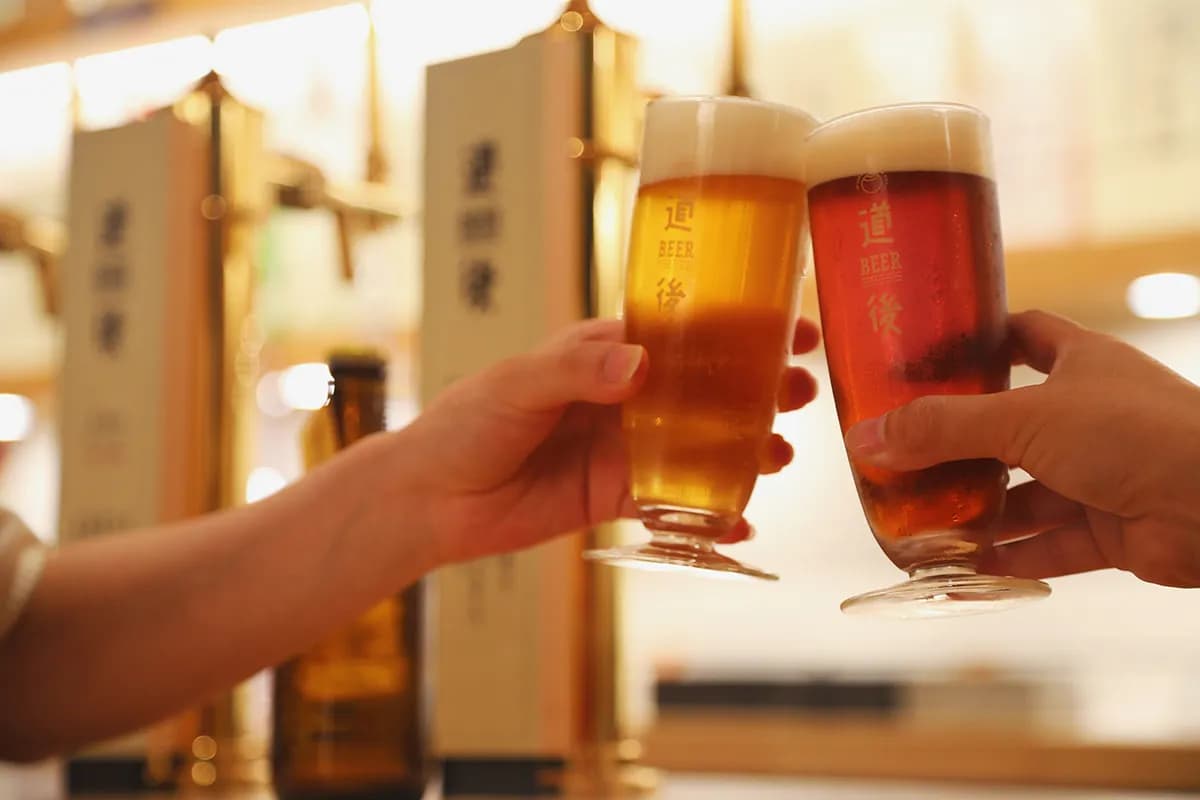
- Hours 17:00 ~ 21:00 (last order 20:30)
Dogo BEER BAR Location