IntroductionA better local destination because there are no direct international flights, and the secret behind the Tosa dog
Kochi Prefecture has an airport, but it has never operated regular international flights. Today, only domestic routes are available. For foreign travelers, access is not easy, and as a result, it is a place with very few international tourists and a very high local population.
Other prefectures in Shikoku are closer to Honshu, so you can travel by ferry to places like Kobe, Wakayama, and Hiroshima. However, Kochi Prefecture does not have these sea routes, so it is seen as a relatively isolated area even within Japan. Because of this, there has been less large-scale tourism development. On the other hand, for travelers who want a truly local-style trip in Japan, this can be a big advantage.
Kochi is also famous in Japan for its drinking culture, with an image that people “keep drinking until the end”. In addition, Yanase Takashi, the creator of Anpanman, is from Kochi Prefecture. That is why you can naturally find Anpanman-themed statues and designs around the city, which is another unique charm of Kochi.
Kochi Prefecture Tourism Association Kochi Main Sightseeing InformationA person you must know for Kochi travelYou cannot talk about Kochi Prefecture without Sakamoto Ryoma.
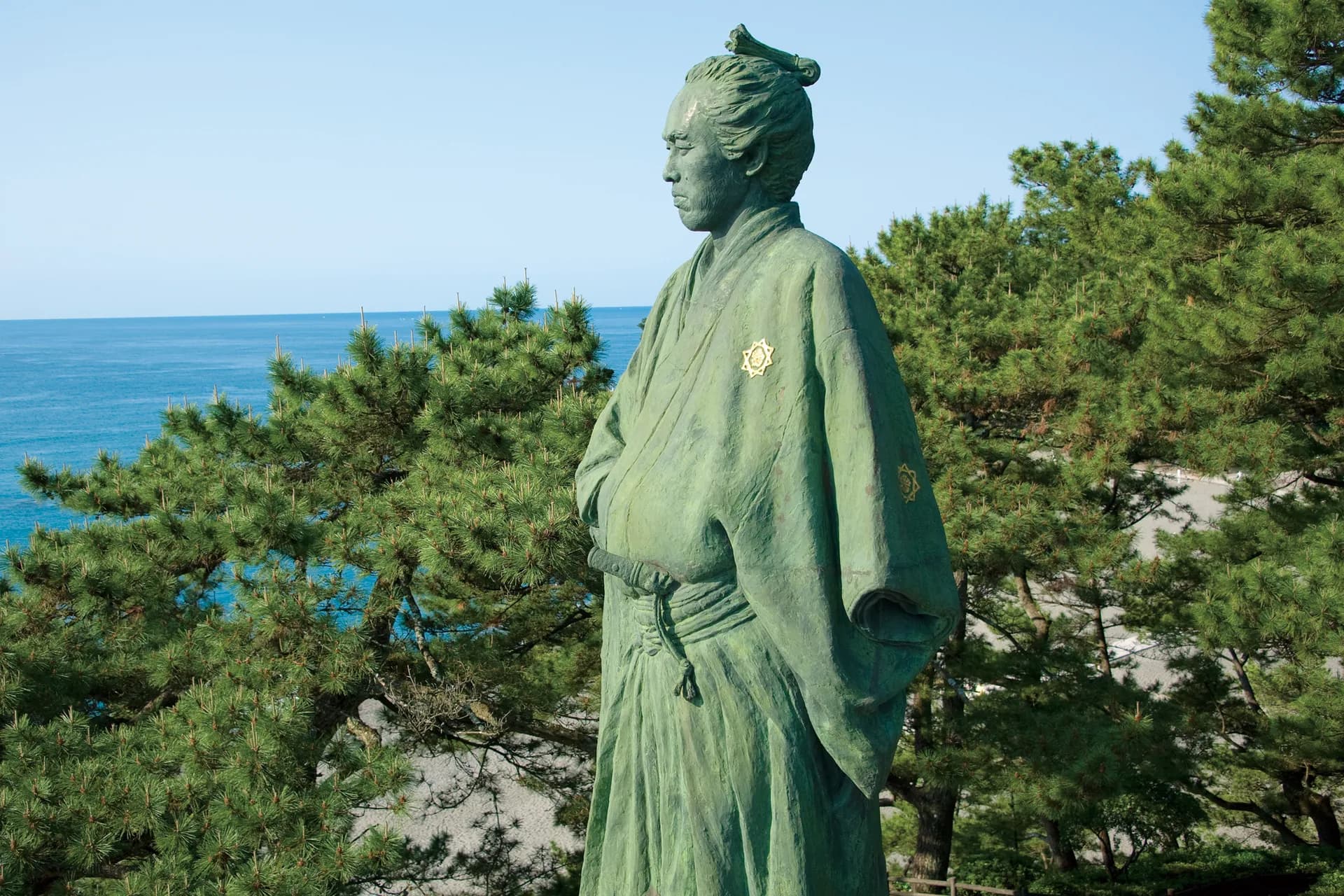
To understand Kochi Prefecture (the former Tosa Domain), Sakamoto Ryoma (坂本龍馬) is an essential figure. He is known as a revolutionary who changed the course of modern Japanese history, but he is also someone who broke through the strict social class system and regional limits of Tosa Domain.
1. Tosa Domain and what “leaving the domain” meant
In the Edo period, leaving your domain (dappan, 脫藩) was not a simple move. It was seen as a serious crime of betraying your domain and family. In principle, collective punishment could apply, and even family members could be punished. Confiscation of property or loss of status was also common. Ryoma left Tosa anyway.
2. After he left: what his family had to endure
Ryoma’s decision was not only personal. His family faced loss of status and financial pressure, and continued surveillance by the domain. They avoided extreme punishment such as execution, but the household was officially labeled as problematic. Their stipend was reduced or cut off, and daily life became difficult. In particular, his older sister Sakamoto Otome had to support the family while also secretly helping Ryoma’s activities, carrying all suspicion and pressure. This is why people sometimes say “Ryoma’s revolution was built on his family’s sacrifice.”
3. Why Ryoma is special in Japan
Sakamoto Ryoma was one of the first to clearly propose a vision to unite Japan as a whole, not just serve one domain’s interests. He mediated the Satsuma–Choshu alliance and imagined a new national system beyond class and origin. This perspective is even more symbolic because he came from Tosa, a region that could easily become isolated from outside ideas.
4. Why you should know Ryoma when traveling in Kochi
When you travel in Kochi, you will be surprised at how often you see traces of Sakamoto Ryoma everywhere. From statues near the station to street murals and paintings, museums, and souvenir designs, Ryoma appears all over the city. This is not just using a famous person as a tourist resource. It reflects that Kochi’s local identity is deeply connected to Ryoma’s life.
How to get to Kochi PrefectureHow to travel from each prefecture in Shikoku
At present, you cannot reach Kochi Prefecture by international flights or local domestic ferries. You can only travel via Matsuyama, Takamatsu, Tokushima, or other areas in Honshu.
1. From Matsuyama
1) By train
If you travel from Matsuyama to Kochi by train, there is no direct route, so at least one transfer is required.
Even via Tadotsu Station in Kagawa Prefecture, it takes about 4 hours 30 minutes one-way. If you take the southern route and transfer at Uwajima Station, there is no limited express service, so you need two transfers and it takes at least 5 hours 30 minutes or more. Overall, train travel is not very efficient for the time spent.
2) By highway bus
Unlike the train routes, highways pass through the mountains in a more direct way, so the Matsuyama–Kochi route is much more efficient by highway bus.
It takes about 2 hours 30 minutes one-way, which is better than the train in both time and energy.
2. From Takamatsu
1) By train
From Takamatsu Station to Kochi Station, you can take a limited express train with no transfers, and the travel time is about 2 hours 15 minutes.
2) By highway bus
From the Takamatsu Station bus terminal, a highway bus takes about 2 hours to reach Kochi, so it can be similar to or slightly faster than the train.
Book a highway bus3. From Tokushima
1) By train
From Tokushima Station, take a limited express train to Awa-Ikeda Station, then transfer to another limited express to Kochi. Total travel time is about 2 hours 30 minutes.
2) By highway bus
From the bus stop in front of Tokushima Station, you can take a highway bus with no transfers, and the travel time is about 2 hours 45 minutes. The biggest advantage is that you do not need to transfer.
Book a highway busKochi transportA city with Japan’s oldest and longest streetcar line
1. Tosaden (tram)
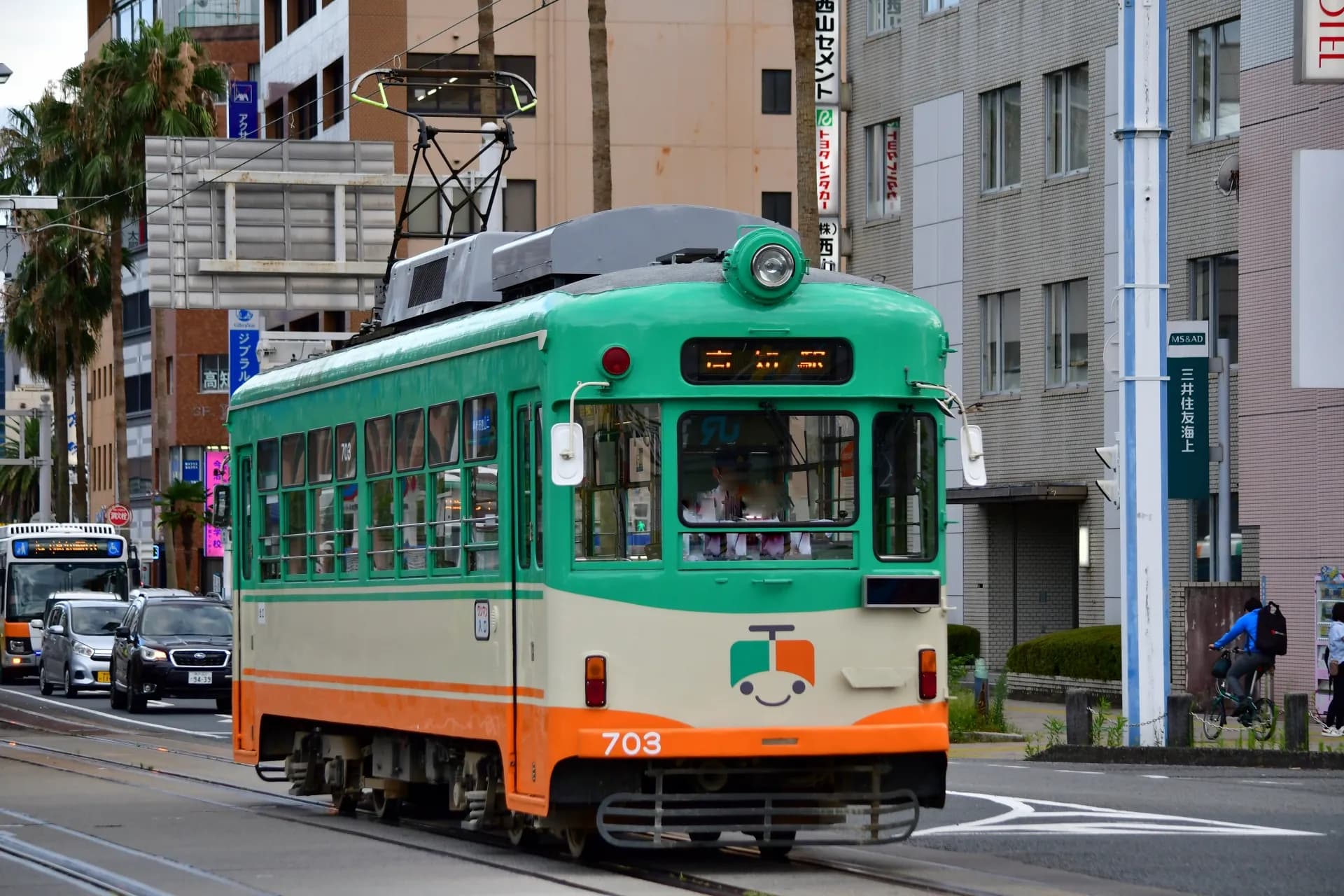
Japan’s first streetcar started in Kyoto (1895), but it was fully discontinued in 1978. The oldest streetcar system still operating today is Tosaden Kotsu (とさでん交通) in Kochi Prefecture, opened in 1904. For this reason, Tosaden is known as the oldest streetcar system still running in Japan.
It also has a total operating length of 25.3 km, which makes it the longest streetcar line in Japan.
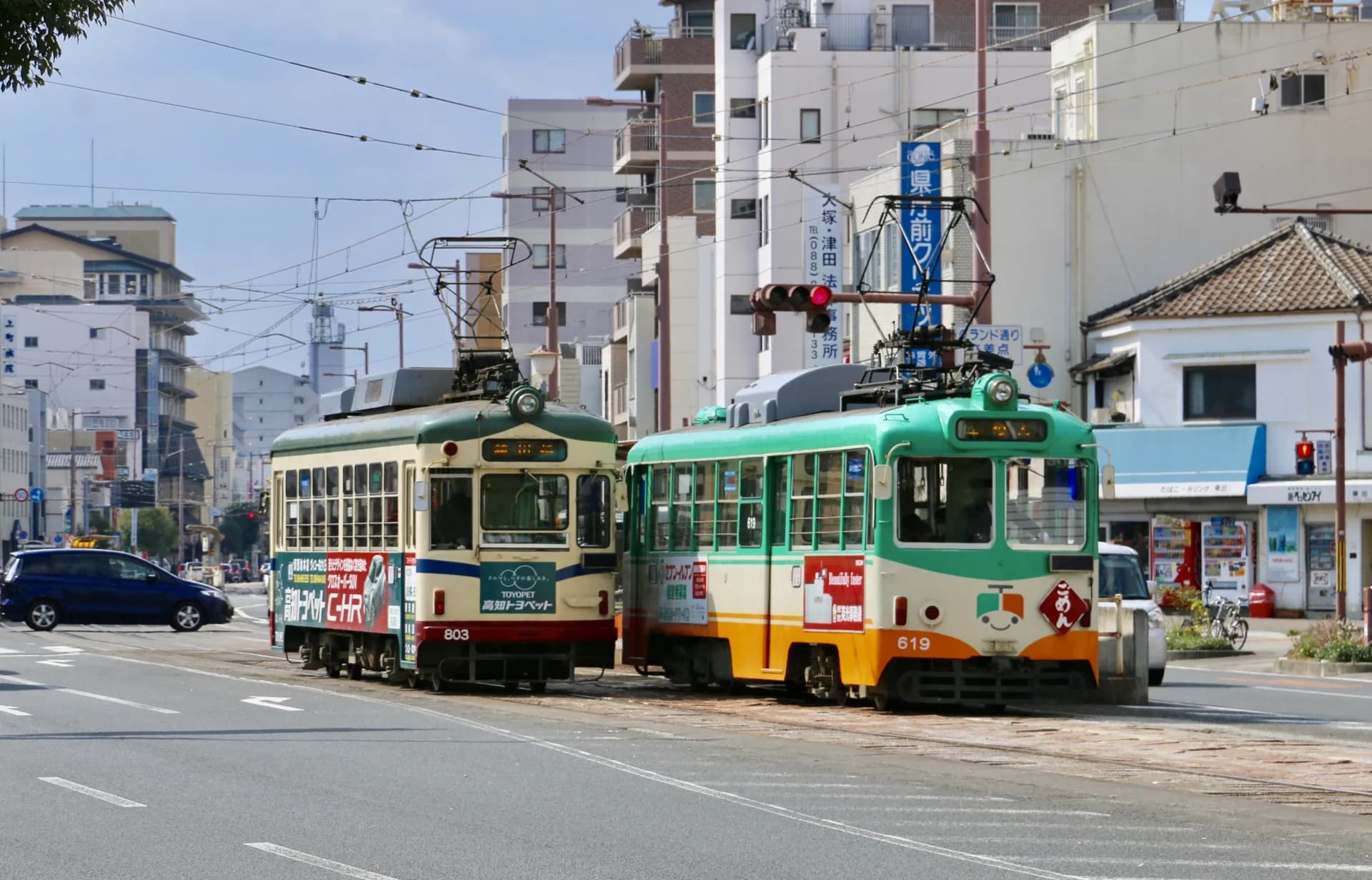
Using Harimayabashi stop as the center, the lines form a long ━━╋━━ shape, and the system is divided into a flat-fare city zone and a distance-based fare zone.
- On the route map below, the red section is the flat-fare zone.
1) 1-day tram pass
The 1-day tram pass is available as a pass for the flat-fare city zone only and a pass for all lines.
- Flat-fare city zone pass: Adults 500 yen / Children 250 yen
- Useful if you ride the flat-fare zone 3 times or more in one day
- All-lines pass: Adults 1,000 yen / Children 500 yen
2) 1-day bus & tram pass
This pass covers the flat-fare tram zone and regular route buses. However, it does not cover the tourist bus MY-YU Bus, so it may be less useful if your route is mainly sightseeing-focused.
Where to buy the 1-day bus & tram pass, etc.You can also buy this pass on Japan Transit. In the app, you can choose not only a 1-day pass but also a 24-hour pass. However, the 24-hour pass is usually about 100–200 yen more expensive than the 1-day pass, so if your day plan is clear, the 1-day pass is a more reasonable choice.
Exclusive TourCast Tips!
Kochi trams with free transfers
Kochi’s tram (streetcar) allows free transfers. However, transfers are not possible everywhere. Because the routes cross in a ━━╋━━ shape, you can transfer between different tram lines only atHarimayabashi (はりまや橋) and Dentetsu Terminal-mae (電鉄ターミナルビル前)stops.
If you use Kochi’s local transit card Desuca (ですか) or a 1-day tram pass, you can transfer without any extra steps. If you pay in cash, you must get a transfer ticket (乗り換え券) from the driver when you get off the first tram, and then submit it when you get off the next tram.
If you travel beyond the section printed on the transfer ticket, you must pay the fare difference for the extra distance, so be careful.
A simple Japanese phrase you can use is below.
Please give me a transfer ticket.→ 乗換券お願いします。
(Norikaeken onegaishimasu)
2. MY-YU Bus
The Kochi MY-YU Bus is a tourist-only loop bus that efficiently connects major sights in Kochi City. It stops only at selected key places such as Kochi Castle, the Kochi Castle Museum of History, Harimayabashi, and Ryoma-related spots, so it is especially useful for first-time visitors.
Compared to regular route buses, the stops are clear and the route is simple, making it a good choice for a one-day trip focused on the city highlights. It can also be more convenient than trains and trams for reaching certain sights. However, it is not covered by the regular 1-day bus & tram pass, so you must buy a separate ticket.
There are two ticket types. The Katsurahama Ticket, which can be used up to the Katsurahama bus stop, costs 1,300 yen. The Godaisan Ticket, which can take you to Chikurin-ji, costs 900 yen. Children pay 50% of the adult fare for all tickets.
- 3 benefits
- Free rides on the tram in the flat-fare city zone
- Discounts at major sights such as Kochi Castle, Chikurin-ji, and Katsurahama Aquarium
- One one-way ride on a regular route bus between Kochi Station bus terminal and Katsurahama (not available with the Godaisan Ticket)
- Shown on Google Maps as 桂浜線 S3桂浜
- Boarding is only available at Kochi Station Bus Terminal, Minami-Harimayabashi, Sanbashidori 4-chome, Nagahama, Motochika-koen Shiseki-mae, In front of Sakamoto Ryoma Memorial Museum, Katsurahama
- Where to buy
- Around Kochi Station at places such as Kochi Tourist Center, Bus Terminal, etc.
- Available in the Japan Transit app
Exclusive TourCast Tips!
How to use the MY-YU Bus pass
In the pass overview above, we explained the three benefits of the MY-YU Bus. In real travel, it is most efficient to understand the routes and combine them well. If you take the MY-YU Bus from Kochi Station to Katsurahama, it goes via major sights and takes about 52 minutes. However, if you take a regular route bus from the Kochi Station bus terminal, it takes about 32 minutes, which is much faster.
There is one important point. The MY-YU Bus boards at the JR Kochi Station bus stop, while the regular route bus departs from the Kochi Station bus terminal. Be careful not to confuse these departure locations.
A recommended route is to take a regular route bus directly to Katsurahama first, then return by using the MY-YU Bus and stopping at sights such as Chikurin-ji. You can also do it the other way: visit Chikurin-ji and Katsurahama first on the MY-YU Bus, then return to Kochi Station by regular route bus.
Also, Godaisan Observation Deck, Chikurin-ji, and Makino Botanical Garden are close to each other and can be reached on foot. If you plan to visit all three, it is easier to get off at the Godaisan Observation Deck bus stop (the highest point) and walk downhill to reduce fatigue.
However, especially on weekdays, the interval can be up to 2 hours, so it is important to check each sight’s bus timetable before you plan your schedule.
3. Tosa Kuroshio Railway
Tosa Kuroshio Railway (土佐くろしお鉄道) is a regional railway connecting eastern and western Kochi Prefecture where JR does not reach. It supports local residents in coastal and mountain areas. At the same time, many sections run along the sea and natural scenery, so it is also valued as a railway for both transport and sightseeing.
There are two main lines: the Gomen–Nahari Line and the Nakamura–Sukumo Line. The Gomen–Nahari Line is used to travel toward Aki and Muroto, and each station is themed with characters created by Yanase Takashi, the Anpanman author. The Nakamura–Sukumo Line is the key line for western Kochi travel, leading toward the Shimanto River and Cape Ashizuri.
If your trip is mostly within Kochi City or you plan to use only the MY-YU Bus, you will rarely need it. However, if you travel mainly in outer areas, it becomes an essential transport option. In that case, there are line-specific passes and also an integrated pass that covers both lines, so choose based on your actual route.
Tosa Kuroshio Railway website Useful passes for Tosa Kuroshio RailwayKochi Prefecture transit card: Desuca?Desuca (ですか), a transit card only for Kochi Prefecture
Nationwide transit cards like Suica cannot be used in Kochi Prefecture. (Contactless payment also does not work.) Instead, in Kochi Prefecture, only the local transit card Desuca (ですか) can be used on trams and regular route buses.
You can buy a Desuca card at the Kochi Station bus terminal counter, or inside trams and regular route buses. How to use it, top up, and refund are the same as standard Japanese transit cards. If you plan to use public transport in Kochi City, you should prepare this card.
Desuca (ですか) transit card websiteFor basic usage such as how to buy, how to use, and top-up and refund steps, see Guidebook Common Part 2 — Japan’s transport system, which explains it in detail.
Recommended places to visit by tramRecommended places in the flat-fare city zone
1. Kochi Castle
Kochi Castle (高知城) is a rare Japanese castle that still keeps its original Edo-period form, and it is one of Japan’s 12 original surviving main keeps.
In 1727, most of the castle (except part of the Sannomaru area) was destroyed by a fire of unknown cause. After about 24 years of restoration starting in 1729, it was completed in 1753. The current main keep is estimated to have been built in 1749. It survived both the Meiji-era castle abolition order and World War II air raids. Its value is very high because all 15 remaining buildings are original historic structures, not reconstructions.
It is located in the center of the city and easy to access. You can also enjoy the city view from the main keep and a pleasant walking route around Kochi Castle Park.
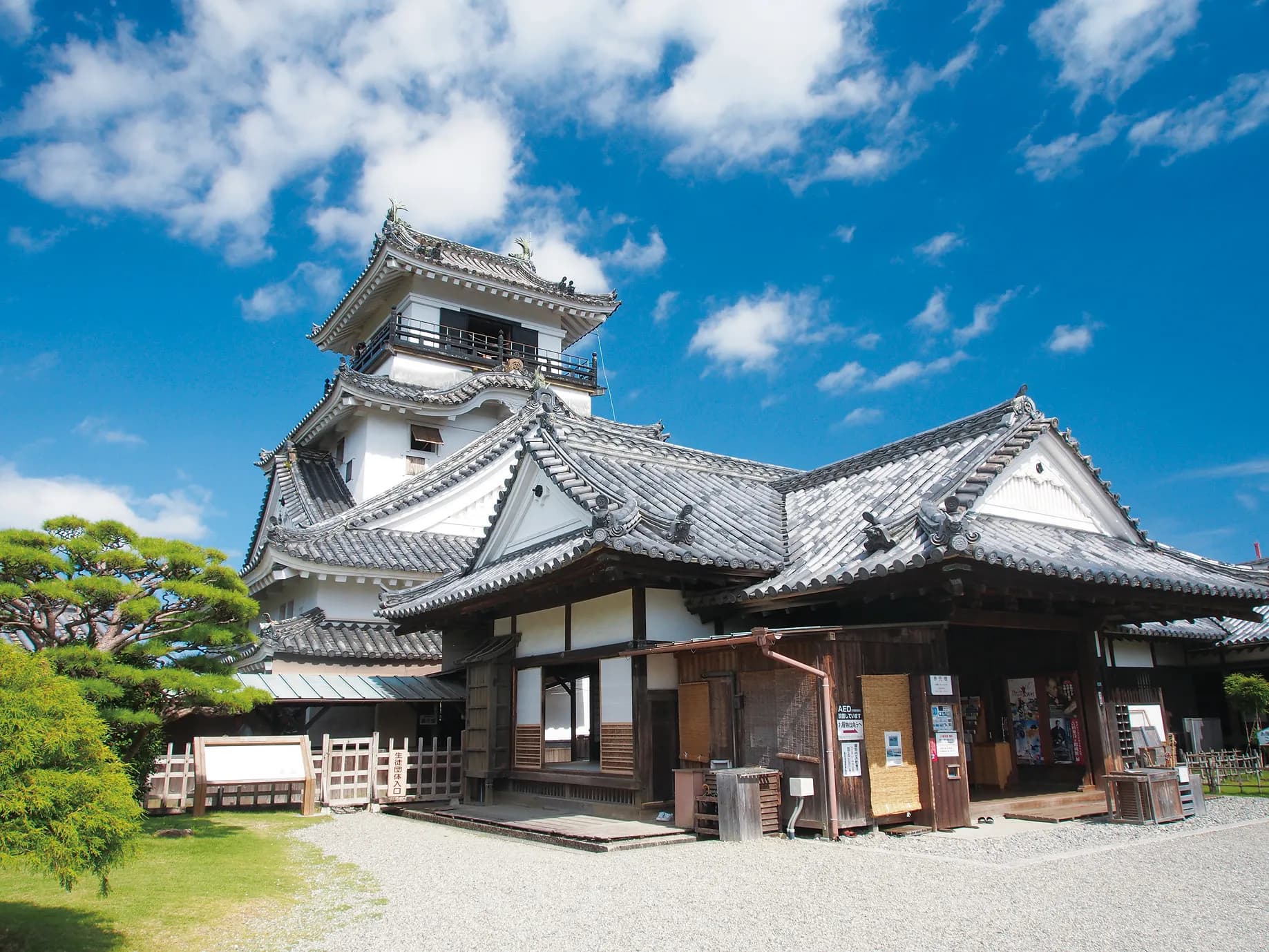
- 09:00 ~ 17:00 (last entry 16:30). Hours may be extended during Golden Week, festivals, and other periods.
- Closed: Year-end and New Year holidays 12/26 ~ 1/1
- Adults (18+) 500 yen, free entry for under 18 (passport required)
- Combined ticket with the Kochi Castle Museum of History: 800 yen (18+), combined ticket during special exhibitions: 1,040 yen
The story of “Chiyo,” known as Japan’s queen of support
Kochi Castle is more than a castle. It is also a symbolic place connected to the story of Chiyo (千代), known in Japan as the “queen of support”. The castle’s lord, Yamauchi Kazutoyo (山内一豊), became the first daimyo of Tosa Domain after the Battle of Sekigahara. It is said that his rise was supported by Chiyo’s devoted help.
When they were poor and he was a low-ranking samurai, Chiyo did not hesitate to use precious funds from her dowry to buy a fine horse for her husband. This horse helped Kazutoyo gain the attention of higher-ranking commanders and become successful. This story spread across Japan and made Chiyo a symbol of a wise, supportive wife.
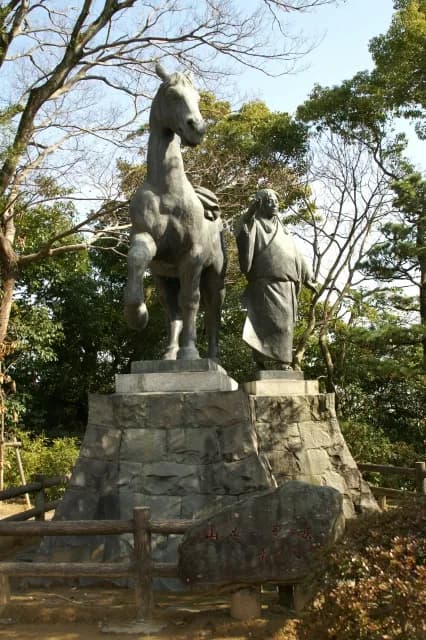
After the Battle of Sekigahara, when Kazutoyo was granted Tosa Domain and entered Kochi Castle, Chiyo organized household management and local affairs in the town below the castle, helping to build the foundation of the castle town. Her frugal and practical approach supported the stability of the domain. This is sometimes seen as one reason Kochi Castle is valued as both a practical fortress and a living center.
Inside Kochi Castle today, you can relatively easily find paintings and historical materials related to Chiyo, and there is also a statue of Chiyo and the famous horse, showing how her story continues today.
Statue location (Chiyo, wife of Yamauchi Kazutoyo)2. Kochi Castle Museum of History
A modern history museum located right in front of Kochi Castle, introducing the history of Tosa Domain and the lives of people from Kochi, including Sakamoto Ryoma, in a well-organized way. Its modern architecture contrasts with the traditional castle, and it is on an easy route to visit before or after Kochi Castle.
- 09:00 ~ 18:00, Sundays 08:00 ~ 18:00 (last entry 17:30)
- Closed: Year-end and New Year holidays 12/26 ~ 12/31
- Adults (18+) 500 yen, free entry for under 18 (passport required)
- During special exhibitions: 800 yen
- Combined ticket with Kochi Castle: 800 yen (18+), combined ticket during special exhibitions: 1,040 yen
3. Sunday Market
Kochi Sunday Market (日曜市) is Japan’s largest open-air market with over 300 years of history. It is held in central Kochi City every Sunday morning until around noon. This traditional market has continued since the Edo period, and even today it stretches for over 1 km, with hundreds of stalls. It is one of the best places to feel Kochi residents’ daily life and food culture.
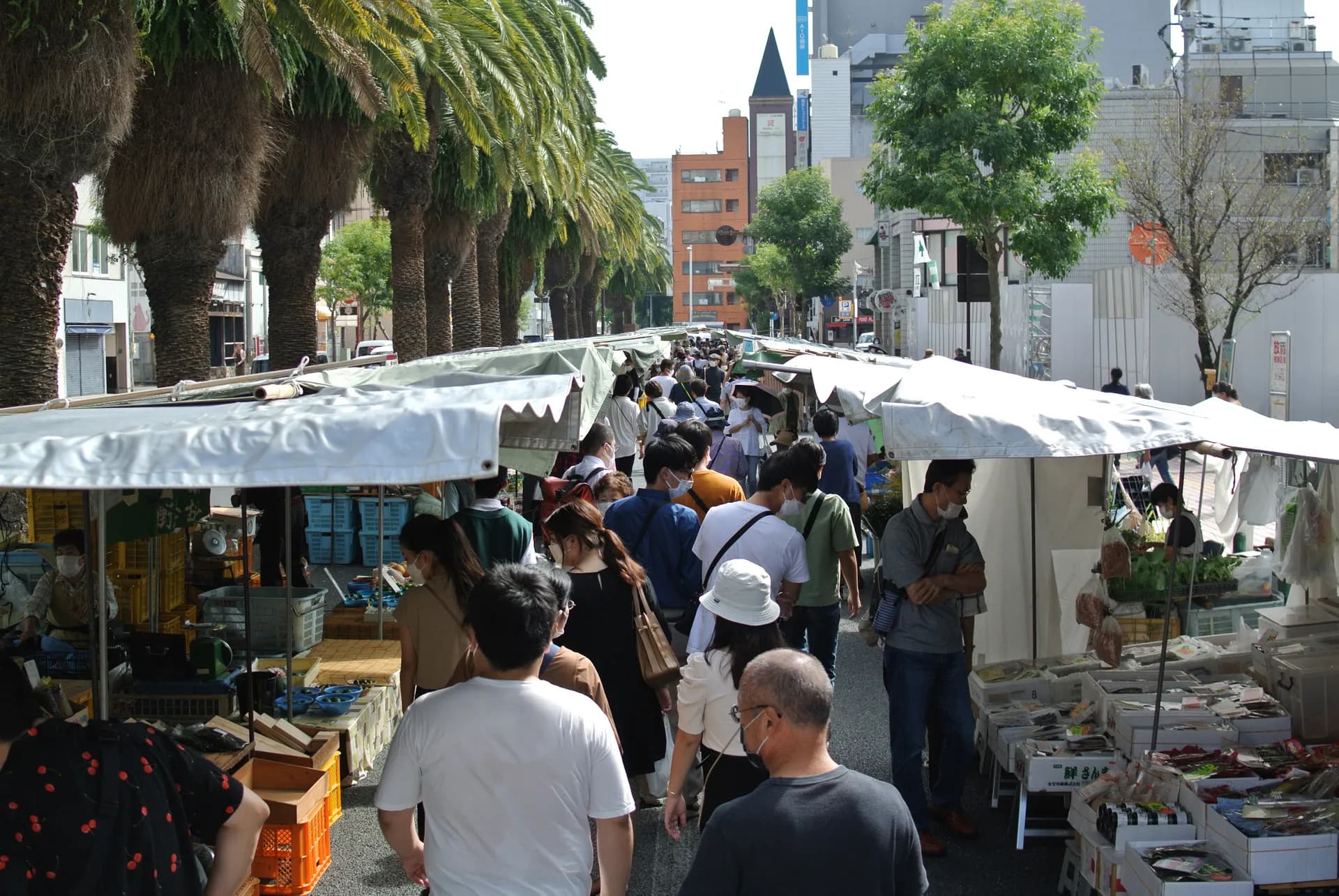
You can buy many items, including katsuo tataki, seasonal vegetables and fruit, Kochi citrus specialties (such as buntan, konatsu, and yuzu), handmade side dishes and snacks, flowers, and crafts. Fresh produce sold directly by farmers and simple local food are especially popular, attracting both visitors and local residents.
Sunday Market location4. Otepia Kochi Library & Future Science Center
Kochi Otepia (オーテピア) is a multi-purpose public cultural complex centered around a library. Both locals and travelers can use it freely, and it is one of Kochi Prefecture’s main cultural hubs. It is designed as more than a library, combining learning, exhibitions, and hands-on experiences in one place.
The main facility, the Kochi Otepia Library, is an open library with a wide range of collections, including general books, children’s books, and local materials. Quiet reading areas and bright rest areas are well separated, so it is easy to drop by during a trip.
In particular, the “Future Science Center” on the 5th floor is a hands-on space where children and teenagers can learn scientific principles through interactive exhibits. It offers experiment devices, interactive displays, and simple science programs, and is especially popular with families.
The planetarium is also popular. It uses a 12 m dome with an optical projector for detailed starlight, together with a digital video system for an immersive experience.
- The planetarium is not shown every hour, so check the official schedule before you visit.
- You must use the 1st-floor elevator to reach it, because the escalator only runs up to the 3rd floor.
Future Science Center entry information
- Opening hours: 09:00 ~ 18:00
- Extended to 20:00 on Fridays and Saturdays in July–August
- Closed: Every Monday (open on public holidays), Year-end and New Year holidays 12/29 ~ 1/4
- Free admission
- However, the planetarium is paid
- Adults (18+) 500 yen
- High school students 300 yen
- Elementary & junior high students 100 yen
- However, the planetarium is paid
5. Hirome Market
Hirome Market is an indoor market located at the west end of the Obiyamachi arcade in central Kochi City. It is Kochi’s top food spot, with about 60 restaurants and souvenir shops. You can casually enjoy Kochi local dishes, such as katsuo tataki and utsubo (moray eel) dishes, together with drinks. It is loved by both tourists and locals.
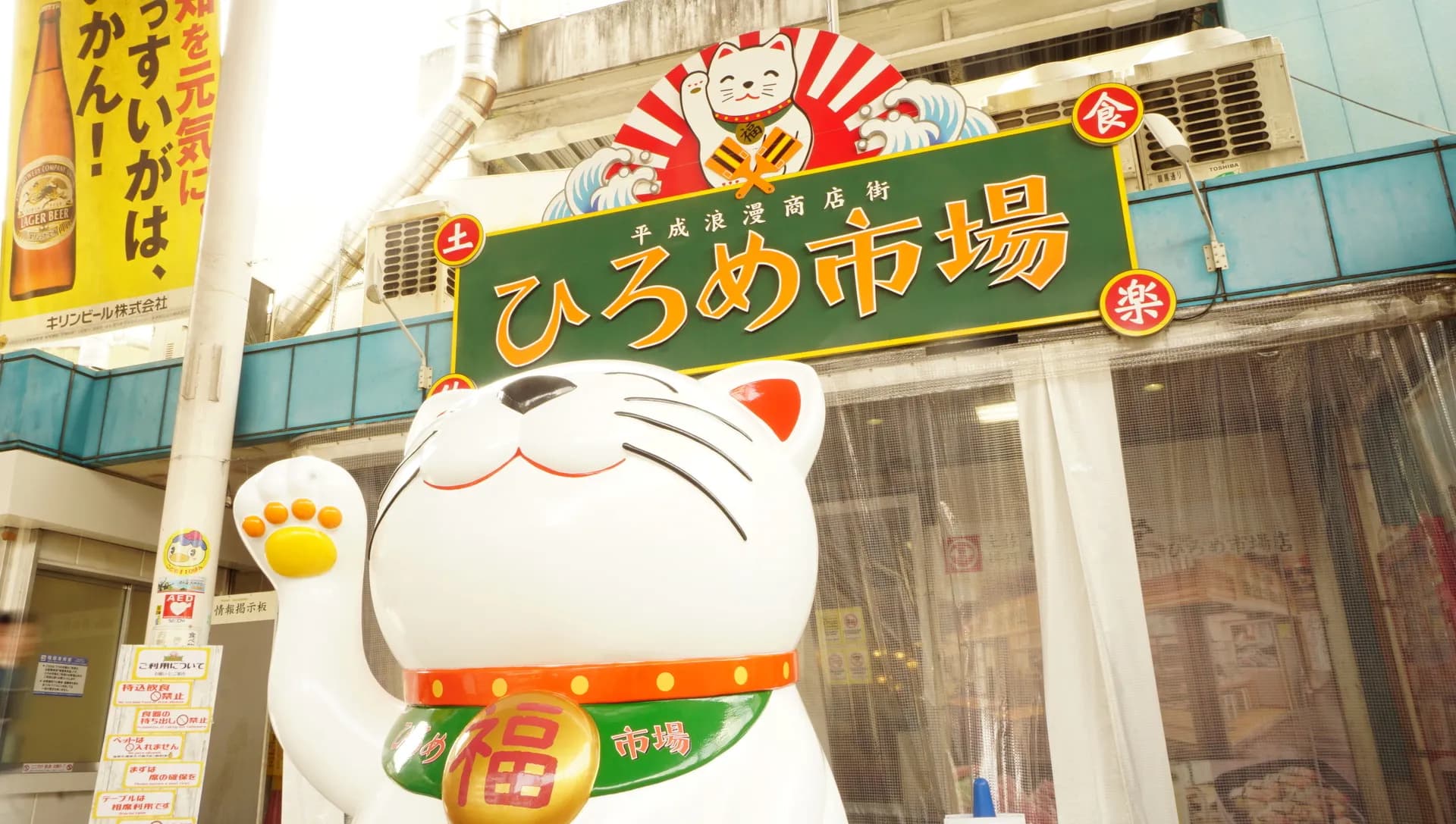
It has a lively stall-like atmosphere and a food-court-style shared table setup. It is common to choose food from different shops and eat together at one table. When you visit, it is important to secure a seat first, and during busy times, sharing a table is a natural part of the culture.
- Mon–Sat 10:00 ~ 23:00
- Sun 09:00 ~ 23:00
Hirome Market is open only until 11:00 pm. So if you want to continue drinking later, move to the nearby izakaya alley Obiyamachikoji (おびや町小路).
Many places in Obiyamachikoji are open until around 2:00 am, so it is a good second stop after Hirome Market.
Was katsuo tataki created by Korean war captives?
The most famous dish at Hirome Market is Katsuo Tataki (鰹のたたき). This method quickly sears only the surface of bonito over straw fire. It is known as a unique style that became established mainly in Kochi, even within Japan.
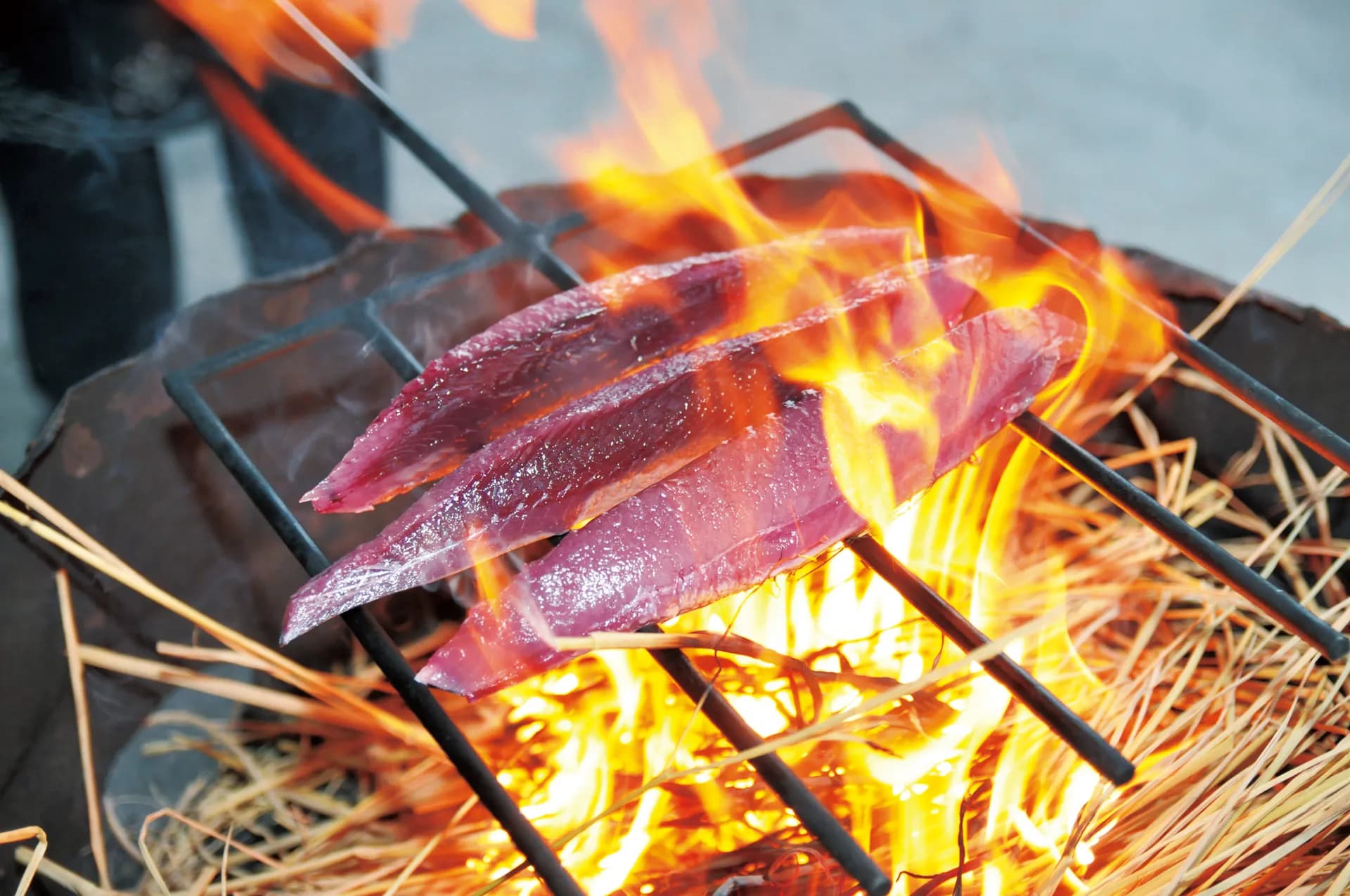
There is a historical story often shared about why people started eating it this way. It says that Yamauchi Kazutoyo (山内一豊), the first daimyo of Tosa Domain, once suffered food poisoning and then ordered people not to eat bonito raw. However, ordinary people did not fully follow the ban. Instead, they developed the “tataki” method—searing only the skin over straw fire while leaving the inside almost raw. Over time, it became one of Kochi’s representative local foods.
1) How to use
- Secure a seat first
- After you enter, find an empty shared table, take a seat, and record the table number on your phone.
- If you are alone, you can place a brochure or personal item to mark your seat.
- If you are in a group, it is best if one person stays at the table to keep the seats.
- During busy times, sharing tables is normal, so if there is an empty seat, you can sit together.
- After you enter, find an empty shared table, take a seat, and record the table number on your phone.
- Order food and drinks
- After you secure a seat, order food and drinks freely from any shop you like.
- It is common to bring food from multiple shops to one table and share.
- Some shops may bring your order to the table.
- In that case, you may need to show a photo of your table number, or
- place a number ticket on the table, or
- use a vibration pager and pick it up when it rings. Each shop has different rules, so it is best to check when ordering.
- Additional orders
- If you want more food or dessert, simply repeat the same process.
- After eating
- Gather dishes and trays on the table, and throw away trash in the designated bins. Staff will collect the rest.
- Tips
- At lunch and dinner peak times, seats fill up quickly, so check for a seat as soon as you arrive.
2) Notes
- Bringing in food bought outside Hirome Market is not allowed.
- However, if you use a shop’s dedicated table inside the market, you may be allowed to bring food from other shops.
- In this case, you usually must order drinks from the shop that owns the table, and rules may vary by shop, so check in advance.
Kochi’s traditional drinking games
Kochi Prefecture is often called “the land of酒, Tosa (土佐)”, with many people who love drinking. It is known for light, dry local sake. The taste is clean and easy to drink, and Kochi also has a unique banquet-game culture that is not common in other parts of Japan.
One representative game is Hashiken (箸拳, chopstick game). Two players hide chopsticks in their sleeves, then show them at the same time and guess the total number of chopsticks. The loser drinks. The atmosphere often becomes more intense as the game repeats. If you share a table at Hirome Market with locals from Kochi, joining once can be a fun travel memory.
Another is Bekuhai (べく杯, cup game). You roll dice, and depending on the number, you drink from a designated cup. These cups may have an uneven base or holes, so once you lift the cup, you must drink it all before you can put it down. There is no “no-drink” result—only the difference between a small cup and a large cup.
Finally, Kikuno-hana (菊の花, chrysanthemum game) is played by hiding a chrysanthemum flower under one of several cups, then turning cups over one by one. The person who finds the flower must pour alcohol into all the cups that were turned over and drink them all, which is a very tough penalty. If you are lucky, you avoid it. If not, you may have to drink many cups at once.
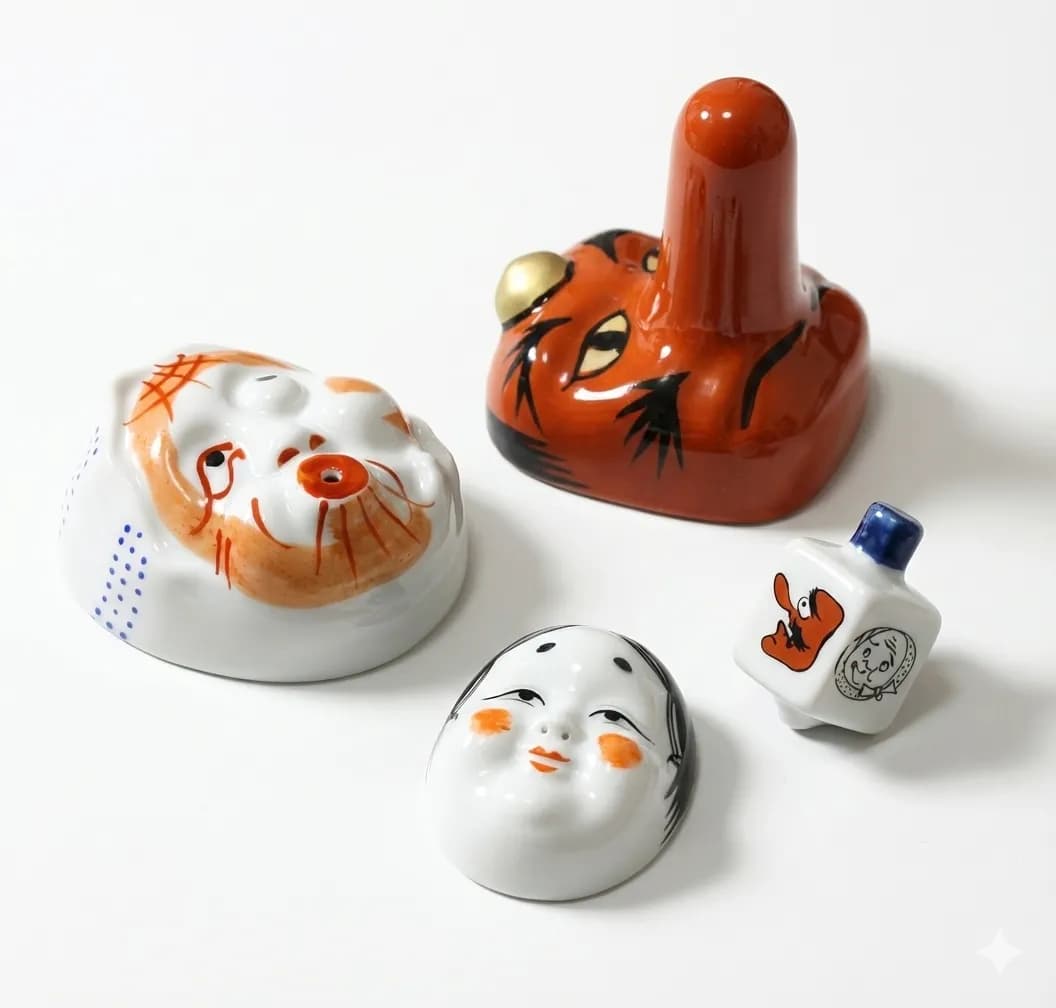
6. Harimayabashi
Harimayabashi is a symbolic bridge in central Kochi City. It is small, but it is known as one of Kochi’s representative historical sights. It is a reconstructed version based on a wooden bridge that existed in the Edo period, so it is often introduced as a place that best represents the atmosphere of a castle town (jokamachi).
Harimayabashi became famous mainly because of the story of Junshin (純信) and Ouma (お馬). In the Edo period, Junshin was a monk at Chikurin-ji, and romance was forbidden for his position. Ouma also had to avoid public attention. It is said the two met secretly near Harimayabashi.
The story says that Ouma was discovered because she wore a kanzashi (簪, hairpin) she received from Junshin. The incident grew, and both were eventually banished to different places, ending their relationship. This story spread across Tosa and later became famous through song lyrics about “seeing a monk buy a hairpin at Harimayabashi,” and it is also linked to the origin of Yosakoi-bushi (よさこい節).
Today, Harimayabashi is maintained as a tourist spot, with red railings and a small canal that make it a good photo point. Nearby, you may also find hairpin-shaped souvenirs and snacks connected to the story.
At night, the lights create a better atmosphere, so if possible, we recommend visiting in the evening rather than during the day.
Harimayabashi location Learn more about Harimayabashi7. Wanpaku Kochi
A park and amusement area near Sanbashidori (桟橋通) in Kochi City. It is especially popular with families and children. The park entrance and animal corner are free, and with wide green areas and various activity spaces, it can be a good half-day or full-day visit.
- 09:00 ~ 17:00
- Free admission
- Pay separately for rides, etc.
- Closed: Every Wednesday (if it is a public holiday, closed the next day), Year-end and New Year holidays (12/28 ~ 1/1)
Recommended sightseeing spots on the MY-YU Bus routeAn easy Kochi trip with the MY-YU sightseeing bus
1. Around Katsurahama
1) Katsurahama Beach
Katsurahama Beach is one of Kochi Prefecture’s representative coastal sights. The scenery is impressive, with a gently curved, arc-shaped sandy beach, a dense pine forest, and the Pacific Ocean. The waves are often strong, so swimming is not allowed. It is best for walking and enjoying the view, and the atmosphere changes through the seasons, making it a popular photo spot.
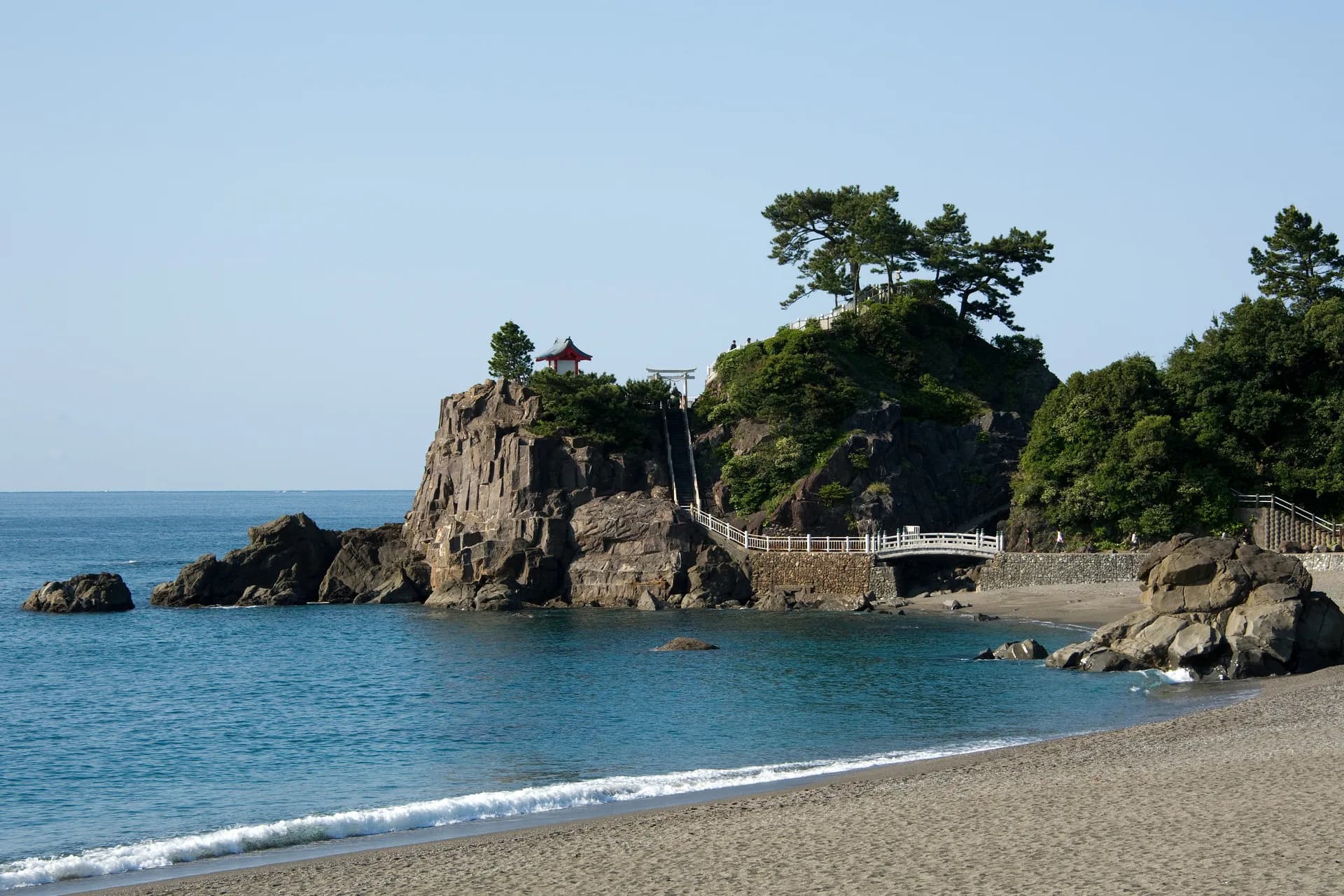
Around the beach, you will also find the Sakamoto Ryoma statue, walking paths, and view points. It is more than just a seaside spot—you can feel Kochi’s history and nature at the same time. In particular, at sunset, the sea and sky turn red, and it is known as one of the most memorable sunset views in Kochi.
Katsurahama Beach location2) Katsurahama Aquarium
A small marine aquarium located right next to Katsurahama Beach. Unlike large aquariums, it is known for a more close-up, hands-on style. It focuses on fish and marine life found in the sea off Kochi, making good use of its location next to the Pacific Ocean.
Its biggest highlights are feeding experiences and close observation. Some animals, such as seals and sea turtles, can be seen from a relatively close distance, so it is especially popular with families with children. The scale is not large, but the advantage is that you can visit while feeling the real sea right next to you.
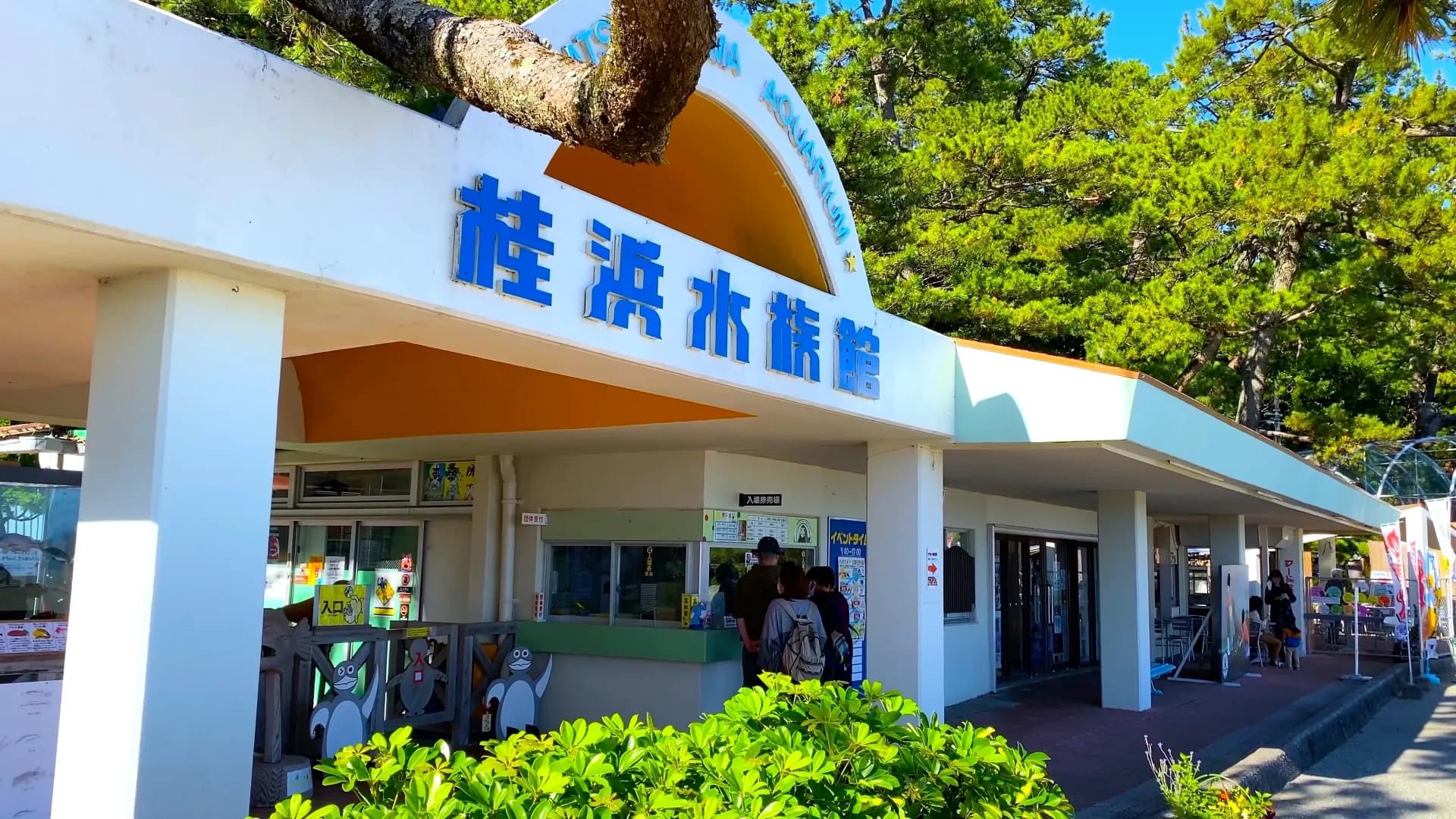
- 09:00-17:00 (last entry 16:30)
- Adults 1,600 yen / Elementary & junior high students 600 yen / Ages 3+ 300 yen
- Open daily
3) Sakamoto Ryoma Memorial Museum
A history memorial museum that focuses on the life and ideas of Sakamoto Ryoma, a symbolic figure of Japan’s modernization in the late Edo period.
Inside, you can learn about topics such as the Satsuma–Choshu alliance, the founding of the Kaientai (海援隊), and Ryoma’s ideas for a modern nation, through documents, models, and videos. Replicas of related materials, including letters and a pistol associated with Ryoma, help you see a more realistic side of him.
It is not only a “great person” exhibition. It also explains the international situation and social changes in the late Edo period, making it easier to understand even if you are not familiar with Japanese history. If you want to learn about Sakamoto Ryoma during your Kochi trip, this is a key place to visit.
- 09:00-17:00 (last entry 16:30)
- Adults 700 yen, free for high school students and younger
- Open daily
2. Around Chikurin-ji
1) Godaisan Observation Deck
An observation spot near the top of Godaisan, with wide views over Kochi City, Urado Bay to the southeast, and the Pacific Ocean. Around sunset, the city view with evening colors is especially popular for photos. If you also visit Chikurin-ji and Makino Botanical Garden, it is efficient to start from the highest point and walk down.
Godaisan Observation Deck terrace location2) Chikurin-ji
Temple No. 31 on the Shikoku 88 Temple Pilgrimage, and one of the most important temples in Kochi. Surrounded by deep forest, the grounds feel calm and quiet, with a five-story pagoda, main hall, and gardens. It is meaningful not only for pilgrims but also for travelers interested in history and Buddhist culture. If you visit Godaisan Observation Deck first and then go to Chikurin-ji, you can use the small side path next to the observation deck bus stop to reach it faster than following the main road.
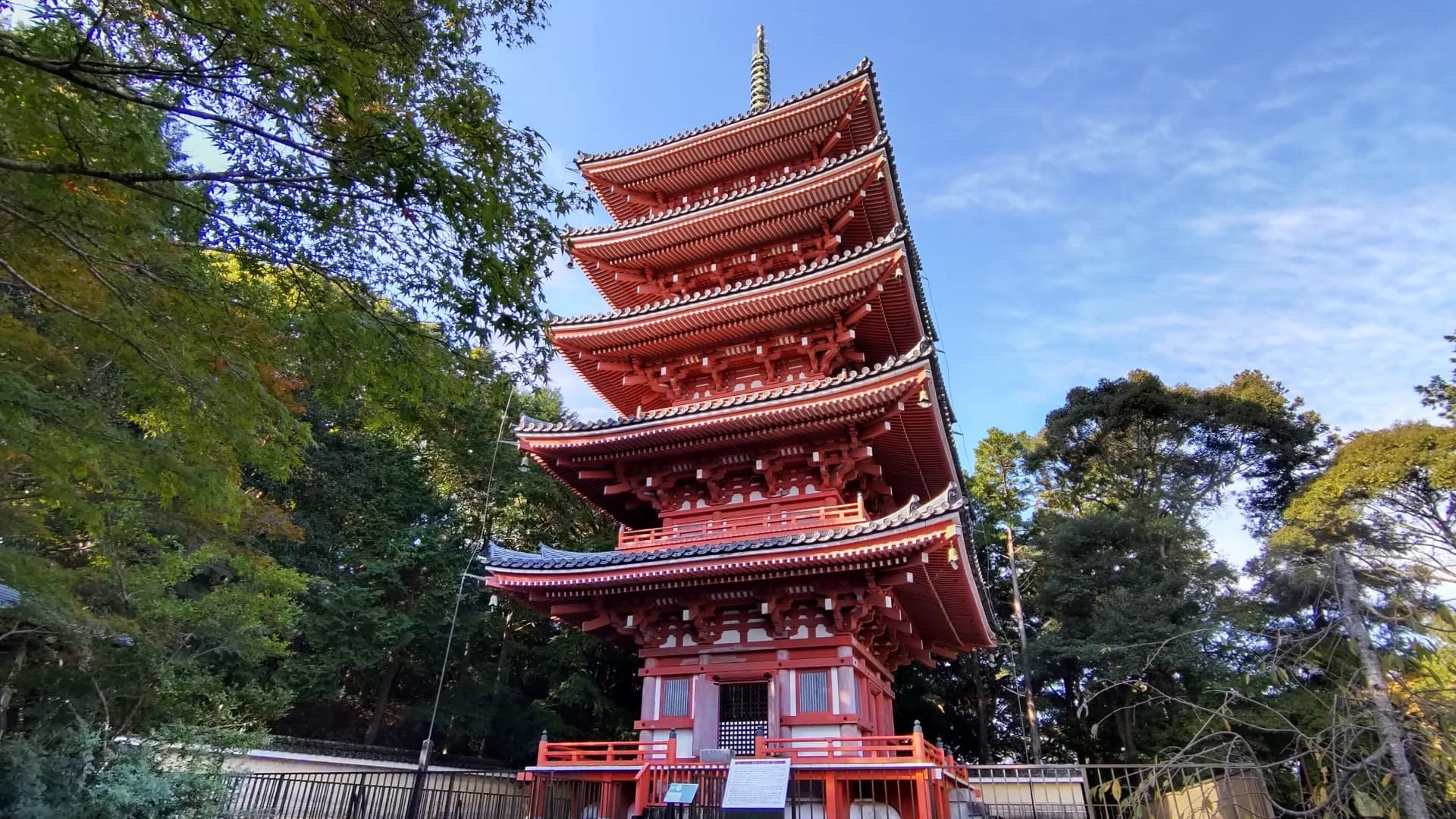
- Visiting hours: 08:00 ~ 17:00
- Open daily
- Outside viewing: Free
- Scenic garden only
- Adults 500 yen / Junior high school and younger 250 yen
- Treasure hall only
- Adults 400 yen / Junior high school and younger 200 yen
- Combined ticket (scenic garden + treasure hall)
- Adults 800 yen / Junior high school and younger 400 yen
- Preschool children: Free
3) Kochi Prefectural Makino Botanical Garden
A large botanical garden created to honor Makino Tomitaro, often called the father of Japanese botany. It is well maintained with greenhouses, outdoor gardens, and walking paths, and it is known for a layout that uses the natural environment of Godaisan. Even if you are not particularly interested in plants, it is easy to enjoy as a relaxing walk, so it is often recommended as a near-city route in Kochi.
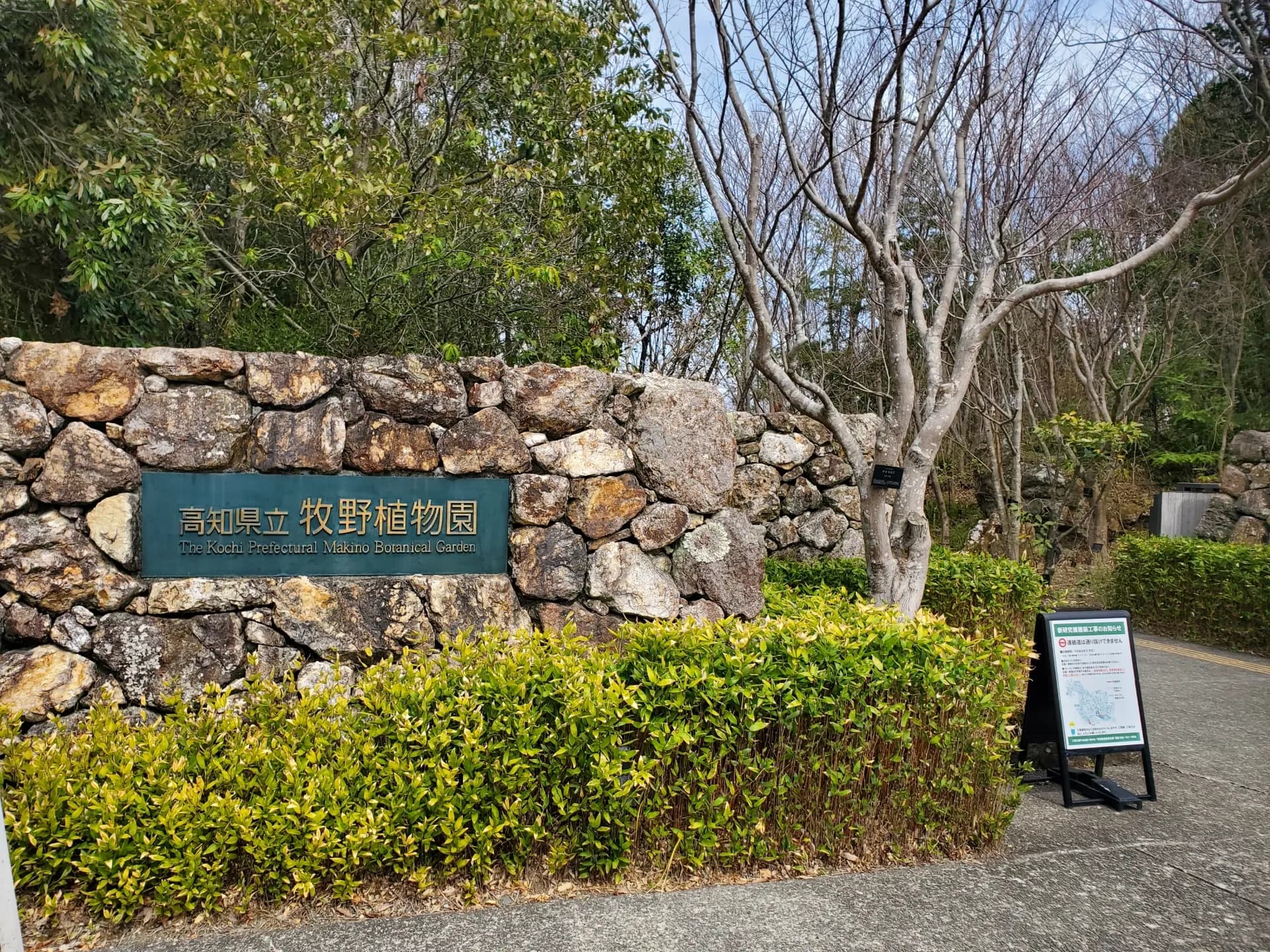
- 09:00 ~ 17:00 (last entry 16:30)
- Closed: 12/27 ~ 1/1, plus maintenance closure about once a month
- Adults (high school and older) 850 yen, free for high school students and younger