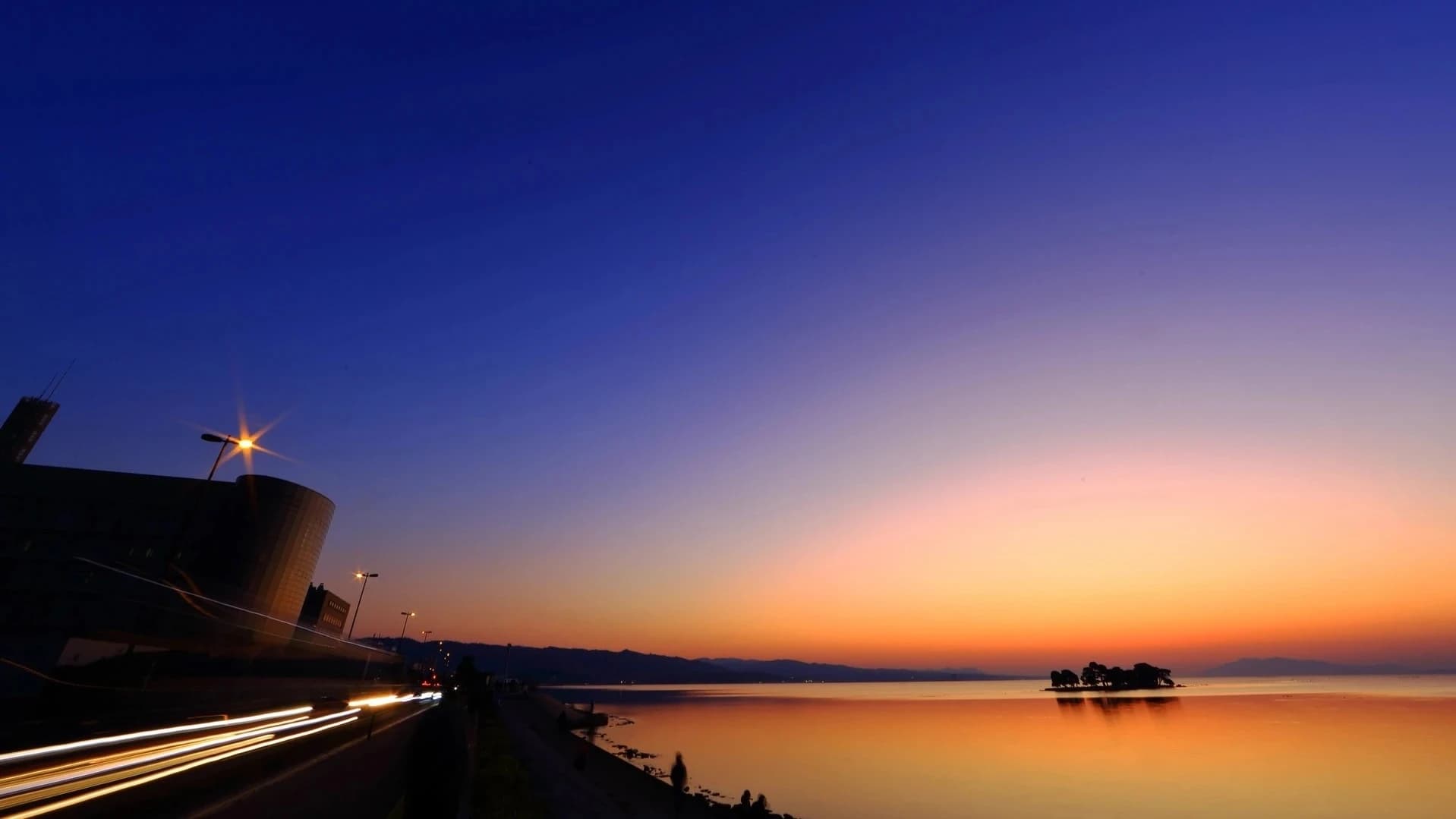
Matsue (松江)A guide to the capital of Shimane Prefecture, known as the City of Water.
Matsue City is nicknamed the 'City of Water' due to the many canals flowing throughout the town. It is a city where history lives on, featuring Matsue Castle—one of Japan's few remaining original castles—and Lake Shinji, one of the largest lakes in the country.
Shimane Joy PassA mobile travel pass to enjoy major attractions in Shimane Prefecture at a discount.
This value-packed pass allows you to choose and use three items from a selection of popular tourist facilities, restaurants, and experience programs in Shimane Prefecture. It is much more economical than paying individual admission fees and is easy to use with just a smartphone.
1. Pass Usage Guide
This pass is valid for one week (7 days) after purchase. Simply show the QR code whenever you visit one of the three selected facilities.
- Price: Usually between 2,000 yen and 2,800 yen. (Prices may vary slightly depending on the season or where you purchase it.)
- Validity: Can be used for 7 days starting from the day you visit the first facility.
2. Major Selectable Sights
The places available with the Shimane Joy Pass may change depending on local circumstances, so it is best to check the list via the link below before purchasing.
Shimane Joy Pass Facility List3. Precautions
Operating hours and closing days vary by facility, so be sure to check before visiting. Also, once a facility has been used, it cannot be visited again with the same pass.
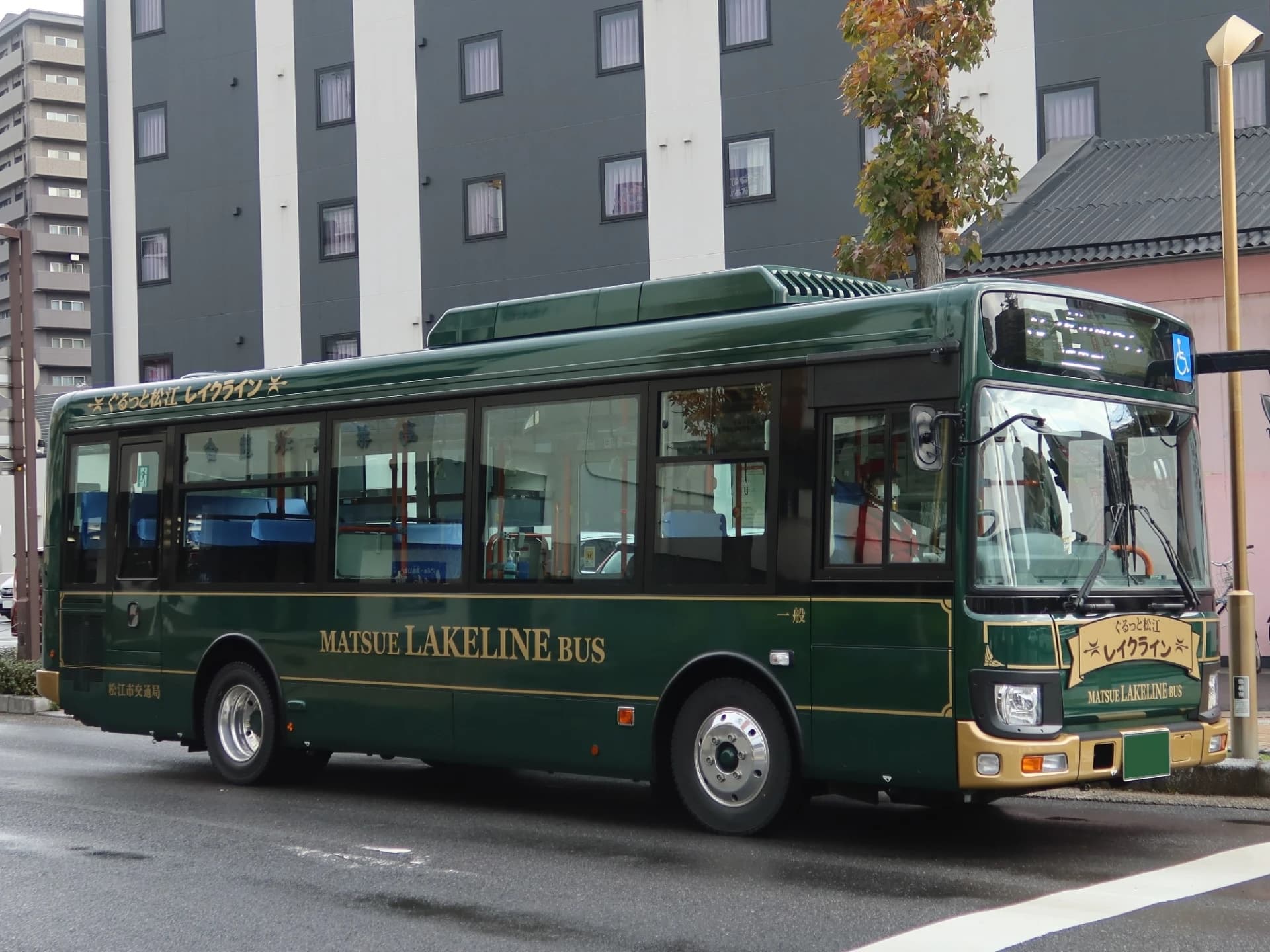
Matsue Lake Line BusA guide to the convenient tourist loop bus that circles major attractions in Matsue city.
This is a loop bus connecting the core attractions of Matsue city. Featuring a retro red design, it is the best transportation for tourists to reach major areas without getting lost.
1. Route and Features
The bus circles clockwise starting from Matsue Station, stopping at all major tourist spots.
- Major Stops: Matsue Station → Kyomise Shopping District → Matsue Castle → Shiominawate → Shimane Art Museum (Lake Shinji sunset point) → Matsue Station
- Service Interval: Runs frequently, usually every 20–30 minutes.
- Tourist Focused: Onboard announcements provide information about major sights, making it easy for first-time travelers to find their stop.
2. Fare Information
Fares can be paid per ride with cash or an IC card, but a pass is much more advantageous if you plan to ride multiple times.
| Category | Adult (Middle school & up) | Child (Elementary) |
|---|---|---|
| Single Fare | 210 yen | 110 yen |
| 1-Day Pass | 520 yen | 260 yen |
3. Travel Tips
1) Value of the 1-Day Pass
If you plan to take the bus three or more times in one day, buying the 1-Day Pass is definitely worth it. You can purchase it at the 'Omiyage Rakuichi Matsue Shamine' store inside Matsue Station.
2) Sightseeing Discounts
Showing your 1-Day Pass grants you discounted rates for Matsue Castle Tower admission, the Horikawa Pleasure Boat, and more.
3) Special Sunset Runs
Service times may be adjusted during sunset hours for better views at Lake Shinji, so it is recommended to check the evening timetable for each season.
Check Matsue Lake Line Bus TimetableTourist spots in Matsue are a bit far to cover solely on foot. We recommend buying a Lake Line Bus 1-Day Pass for an efficient trip.
Matsue Castle (松江城)
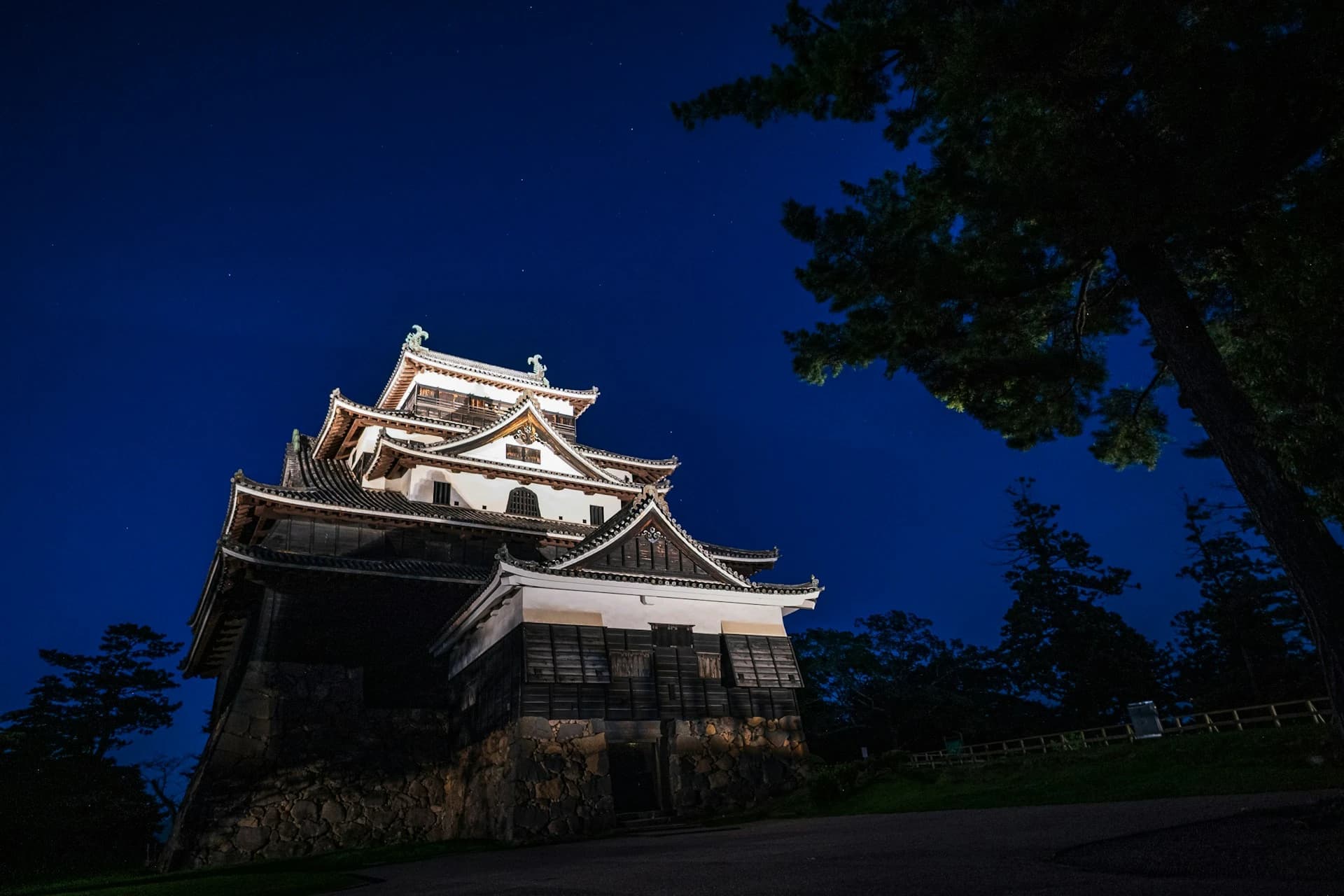
Completed in 1611, Matsue Castle is the symbol of Matsue City. Only 12 castles in Japan have original towers (Tenshu) preserved, and Matsue Castle is recognized as one of them, designated as a National Treasure of Japan.
1. Features and Nickname
- Chidori-jo (Plover Castle): It earned this beautiful nickname because the shape of the castle roofs resembles a plover (chidori) spreading its wings.
- Black Wooden Walls: The castle walls are covered in black-painted wooden boards, giving it a strong and heavy appearance. This was also a practical design for combat preparation.
2. Inside the Castle Tower
Entering the castle allows you to climb up and feel 400 years of history beneath your feet.
- Inside, massive wooden pillars and steep stairs remain as they were. You can explore defensive features such as holes for dropping stones on enemies and windows for firing arrows.
- Reaching the 5th floor—the top of the tower—offers a panoramic view. It is the best spot to see the Matsue city skyline and the vast Lake Shinji at a glance.
3. Visitor Information
- Honmaru Admission: The Honmaru (inner bailey) park area is free to enter.
- Castle Tower Admission: 800 yen (Adults), 400 yen (Elem./Middle School) / From July 1, 2026: 1,200 yen (Adults), Free (Elem./Middle School)
- Castle Tower Hours: Apr 1 – Sept 30 (8:30 AM – 6:00 PM), Oct 1 – Mar 31 (8:30 AM – 5:00 PM) Last entry 30 mins before closing
- Closing Days: Open year-round
Horikawa Pleasure BoatA boat tour along the Matsue Castle moat to enjoy the atmosphere of the castle walls.
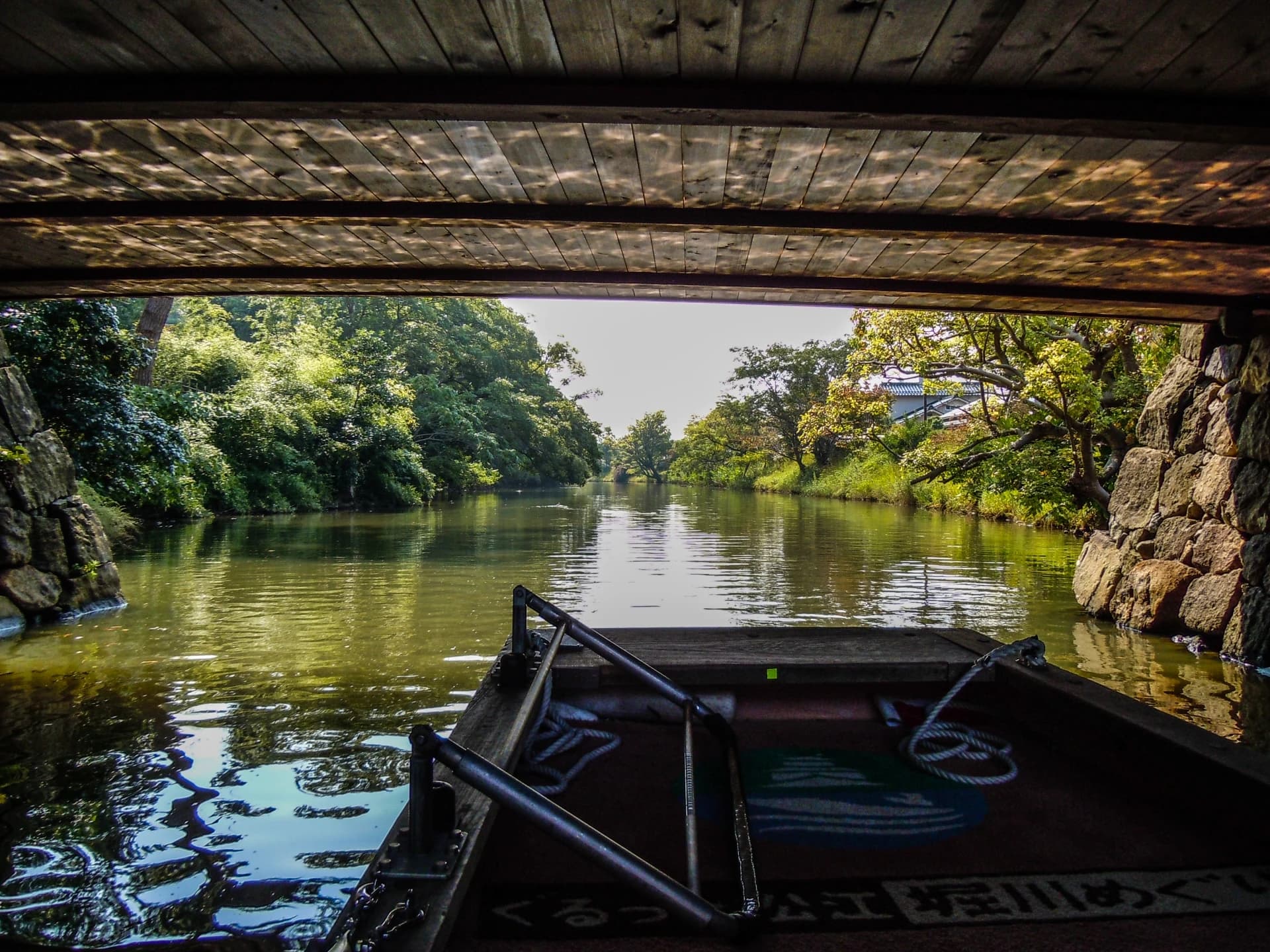
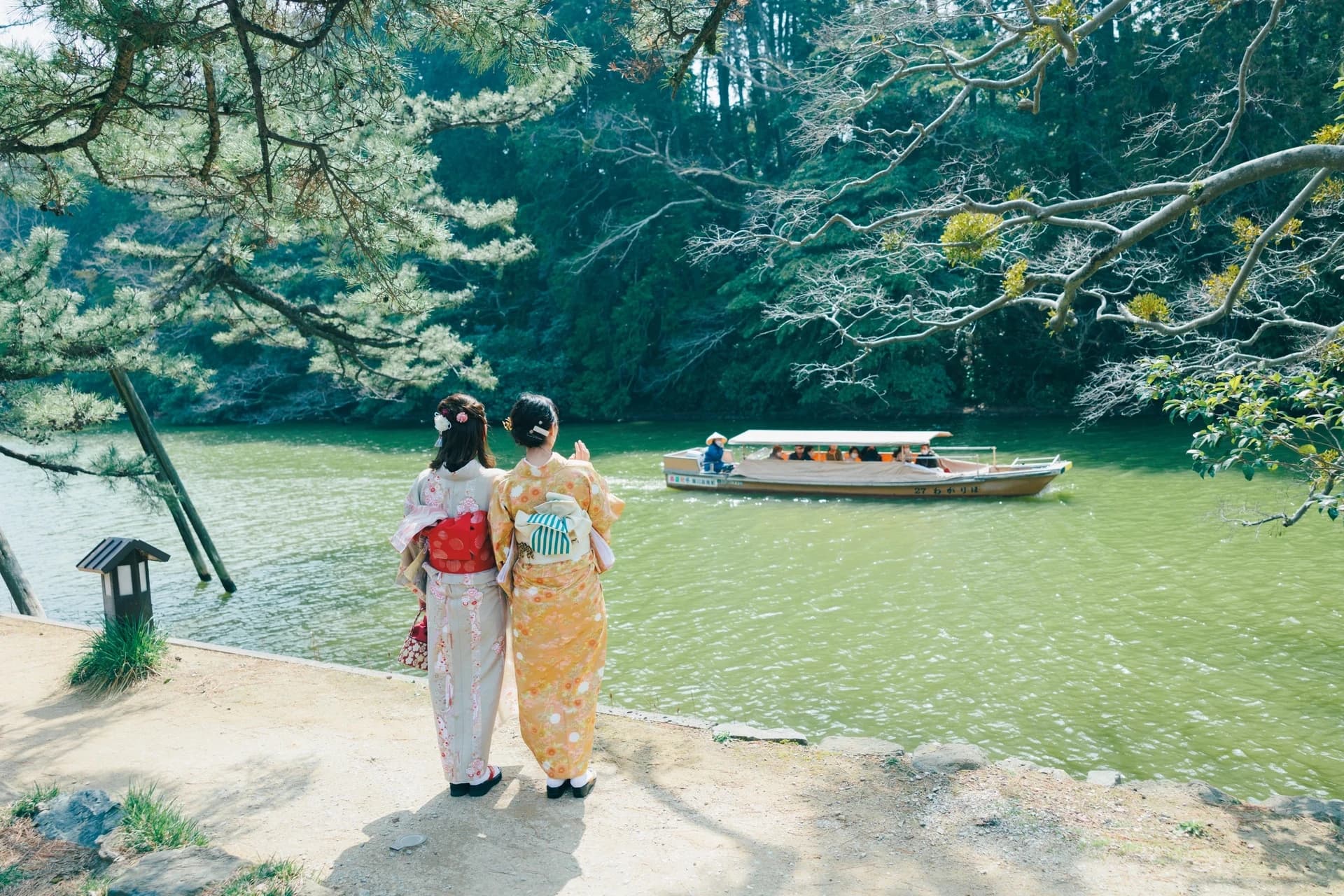
This is a signature Matsue experience where you take a small boat along the 'Horikawa' (moat) surrounding Matsue Castle. Using the same waterways created 400 years ago when the castle was built, you can appreciate the beauty of the castle walls and surrounding forests from the water.
The course circles the 3.7km canal flowing through the center of Matsue. The grandeur of the castle and the view of the nearby samurai residences from the boat offer a different perspective than viewing them from the shore.
- Lowering Roofs: When passing under very low bridges, the boat's roof slides down.
- Ducking Together: Passengers must duck down along with the roof. This process is a fun, ride-like experience for visitors.
1. Visitor Information
1) Operating Hours and Duration
- Operating Hours: Mar 1 – Sept 30 (9:00 AM – 5:00 PM), Oct 1 – Feb 28 (9:00 AM – 4:00 PM).
- Duration: It takes about 50 minutes to complete a full loop.
2) Fare Information
- 1-Day Pass: 1,600 yen (Adults), 1,300 yen (High/Middle School), 800 yen (Elementary).
- Infants: One infant per adult can ride for free.
- Feature: This is a 1-day boarding pass, not a single ride ticket. You can get off and reboard freely at each boarding point.
2. Boarding Points and Intervals
| Boarding Point | Interval & Features | Location |
|---|---|---|
| Fureai Hiroba | Runs every 20–30 minutes. | View Map |
| Otemae Hiroba | Runs every 15–20 minutes. | View Map |
| Karakoro Hiroba | No regular schedule; boarding available only if there are empty seats. | View Map |
Shiominawate Street (塩見縄手)A beautiful walking path preserving the atmosphere of Edo-period samurai residences.
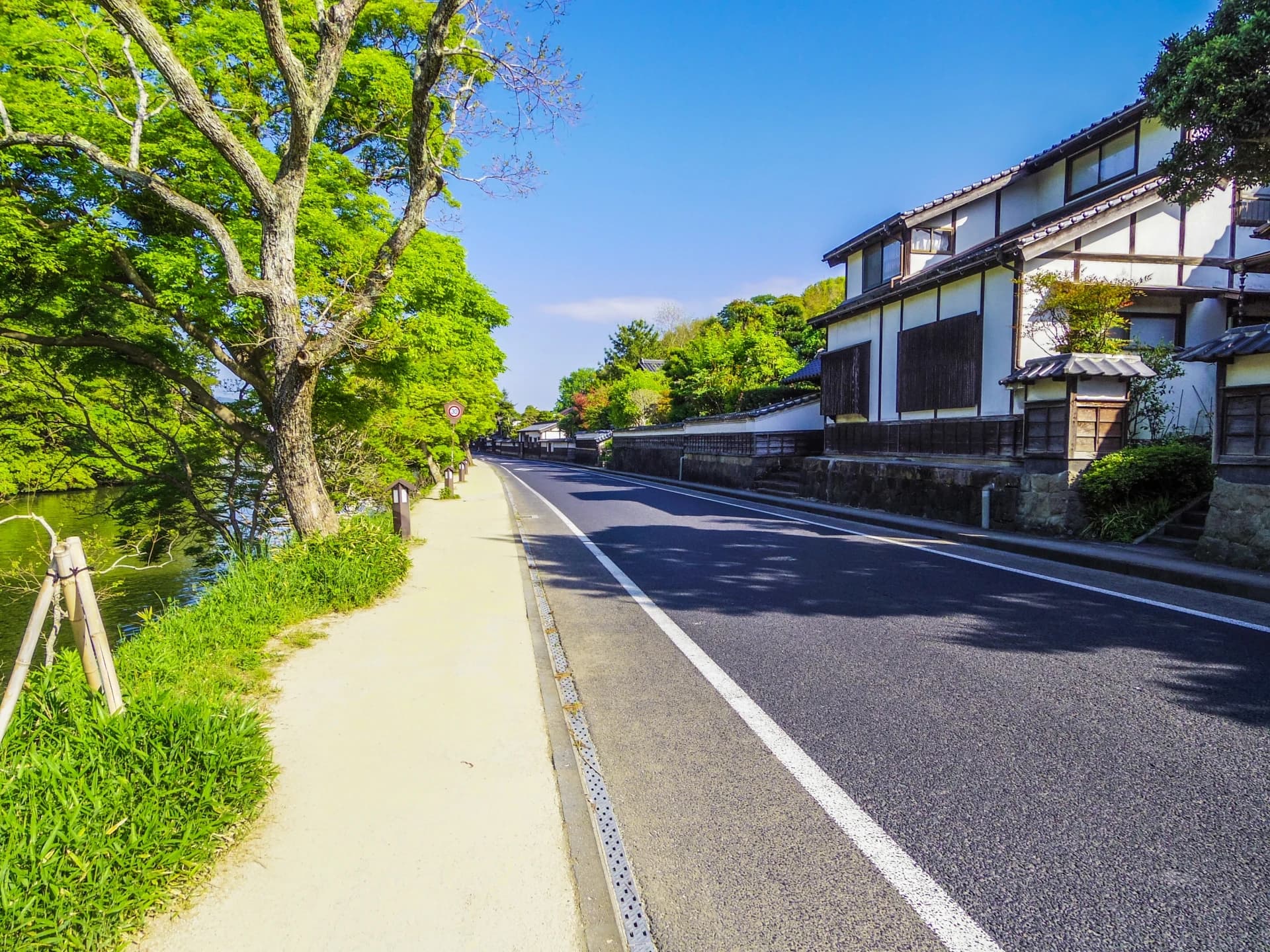
This long street follows the northern moat of Matsue Castle and is lined with former samurai residences. It is recognized as one of Japan's '100 Most Beautiful Streets' for its nostalgic and lovely scenery.
1. Street Atmosphere
Well-preserved from the Edo period 400 years ago, walking down this street feels like traveling back in time.
- Samurai Residence Scenery: Black wooden fences and old pine trees harmonize with the moat waters.
- Walking Course: After visiting Matsue Castle, it is a great place to walk slowly, buy souvenirs, or rest at a traditional tea house.
2. Major Attractions
1) Matsue Samurai Residence (Buke Yashiki)
An actual middle-class samurai house from the era is open to the public. You can glimpse the frugal lifestyle of ancient Japanese samurai through the large yard and simple room structures.
- Admission: 400 yen (Adults), 200 yen (Elem./Middle School).
- Hours: Apr – Sept (9:00 AM – 6:00 PM), Oct – Mar (9:00 AM – 5:00 PM) Last entry 30 mins before closing
- Closing Days: Open year-round
2) Lafcadio Hearn Memorial Museum & Old Residence
This is where the writer Lafcadio Hearn (Koizumi Yakumo), famous for compiling Japanese ghost stories, once lived. The Japanese garden he loved and his personal belongings are on display.
- Admission: Joint ticket for both: 800 yen (Adults), 400 yen (Elem./Middle). (Museum only: 600 yen, Residence only: 400 yen)
- Hours: Apr – Sept (9:00 AM – 6:00 PM), Oct – Mar (9:00 AM – 5:00 PM) Last entry 30 mins before closing
- Closing Days: Open year-round
3) Meimeian
A traditional tea house located on a hill. Built by the Lord of Matsue for the tea ceremony, you can enjoy refined matcha and beautiful wagashi while admiring the rear view of Matsue Castle.
- Admission: 600 yen (Adults), 300 yen (Elementary).
- Tea Ceremony: 600 yen (Adults), 300 yen (Elementary) for a matcha set with two of the Lord's favorite wagashi.
- Hours: Apr – Sept (9:00 AM – 6:00 PM), Oct – Mar (9:00 AM – 5:00 PM) Tea ceremony available until 4:30 PM
Karakoro Art StudioA craft experience center housed in a former bank building, offering various handicraft activities.
This craft experience center uses a classical architectural structure that formerly served as a bank. It preserves the historical atmosphere of Matsue while offering a fun space to browse or create various handicrafts.
1. Major Features
1) Various Craft Experiences
You can try various programs such as making Japanese sweets (wagashi)—a pride of Matsue—as well as glass crafts and accessory making. It is perfect for creating a one-of-a-kind souvenir.
2) Pink Postbox of Luck
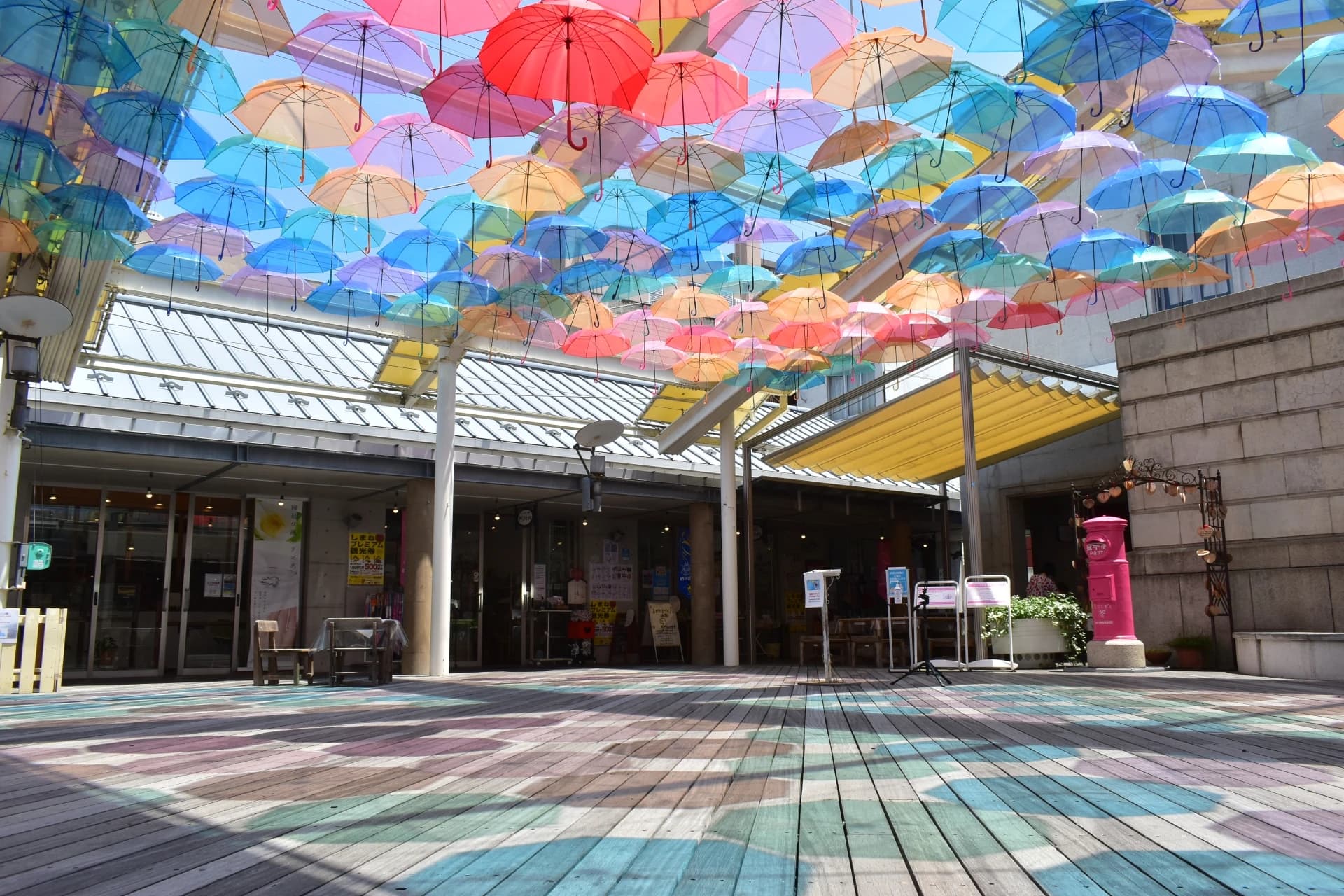
There is a 'Pink Postbox that brings luck' in the courtyard. Legend says that if you send a letter from here, your love will come true, making it very popular with travelers.
2. Special Event: Enshizuku Umbrella Sky
The rain in Matsue is called 'Enshizuku (bond drops)' because it is believed to bring good connections. To celebrate this, a beautiful display of hundreds of colorful umbrellas covering the sky is held here.
- Period: Held annually from early June to late July.
- Note: The venue may vary by year. If planning a trip during this time, it is best to check the location on the Shimane Tourism Association website in advance.
3. Visitor Information
- Operating Hours: Varies by facility, but generally 9:00 AM – 6:00 PM.
- Location: Located near the Kyomise Shopping District and Matsue Castle.
Kyomise Shopping District
This is Matsue's representative bustling street, where charming cafes and restaurants gather along the canal. It is a great place for a walk, blending nostalgic vibes with modern sensibilities.
- Romantic Canal View: Walking along the canal allows you to enjoy the quiet atmosphere unique to Matsue. It becomes even more romantic at night when the soft lights turn on.
- Find the Heart Stones: There are hidden heart-shaped stones in the pavement throughout the shopping district. Legend says that stepping on these stones brings good connections, making your walk as fun as a treasure hunt.
- Delicious Rest: It is a great place for a meal, with various restaurants ranging from refined Japanese home-style cooking to dishes made with local Matsue specialties.
Yuushien Garden (由志園)A beautiful year-round Japanese stroll garden on Daikonshima Island, famous for peonies and Korean ginseng.
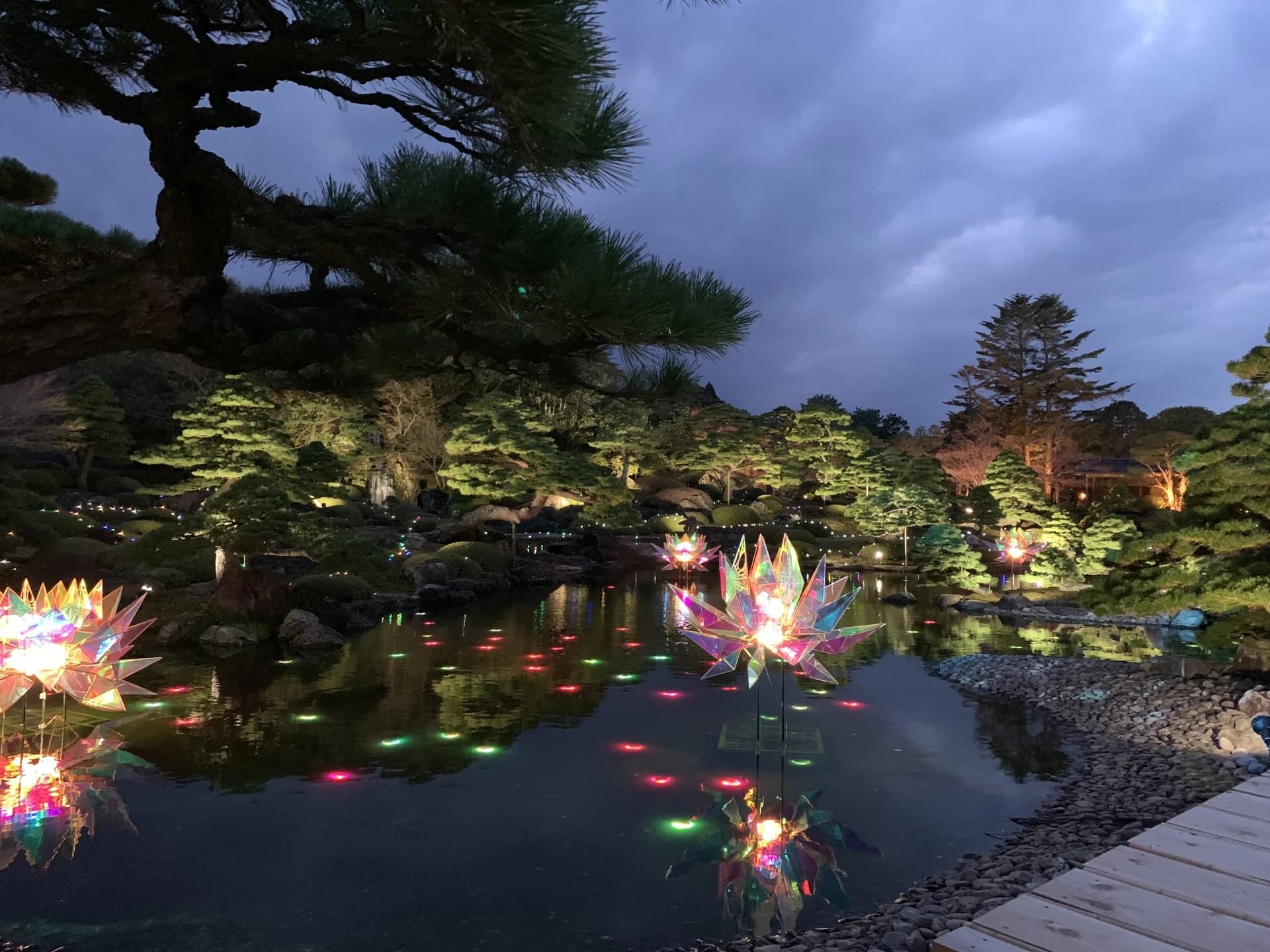
Located in the center of Daikonshima Island in Matsue, Yuushien is the largest stroll-style Japanese garden in the San'in region, spanning approximately 33,000㎡. It is often called a 'miniature Izumo' because it meticulously reflects the geography and mythological elements of the Izumo region.
1. Major Sights and Features
The biggest feature of Yuushien is its year-round appeal, offering different charms in every season.
- Sanctuary of Peonies: Very famous for peonies, the prefectural flower of Shimane. In the indoor 'Peony House,' you can admire blooming peonies all year round.
- Pond of 30,000 Peonies: Every year from late April to early May (Golden Week), a festival is held where the entire pond is filled with tens of thousands of peony blossoms, creating Yuushien's most iconic view.
- Recreating Izumo Landscapes: The artificial waterfall mimics 'Oni-no-Shitaburui,' a famous spot in Oku-Izumo, while the ponds and sand gardens represent Lake Shinji and Mt. Daisen.
- History of Korean Ginseng: Daikonshima is a major producer of Korean ginseng in Japan. There is an exhibition hall recreating an Edo-period ginseng room, and you can enjoy unique treats like ginseng tea or ginseng ice cream.
2. Seasonal Viewing Guide
| Season | Major Sights | Features |
|---|---|---|
| Spring | Peonies, Cherry blossoms, Azaleas | Peony pond festival (Apr–May) |
| Summer | Irises, Hydrangeas | Mist fountains and cool waterfall views |
| Autumn | Fall foliage, Chrysanthemums | Night illuminations of red maple leaves |
| Winter | Winter peonies, Illuminations | Winter peonies in straw capes and light festivals |
3. Visitor Information
- Operating Hours: 10:00 AM – 5:00 PM (Last entry 4:30 PM) Night hours extended during certain seasons
- Closing Days: Dec 30 – 31
- Admission: 1,000 yen – 1,800 yen (Variable pricing based on the season)
- Access: Approximately 55 minutes by bus from JR Matsue Station.
The garden cafe offers a relaxing spot to have tea while overlooking the pond. Try the Ginseng Coffee or Ginseng Soft Serve Ice Cream—unique delicacies found only here.
Tamatsukuri Onsen (玉造温泉)A historic hot spring town known as the 'Bath of the Gods' for its excellent skin-beautifying effects.
Located just outside central Matsue, Tamatsukuri Onsen is one of Japan's oldest hot spring areas. Since ancient times, it has been nicknamed the 'Bath of the Gods' because bathing in its waters was said to beautify the skin and cure illnesses.
1. Features of the Hot Spring Town
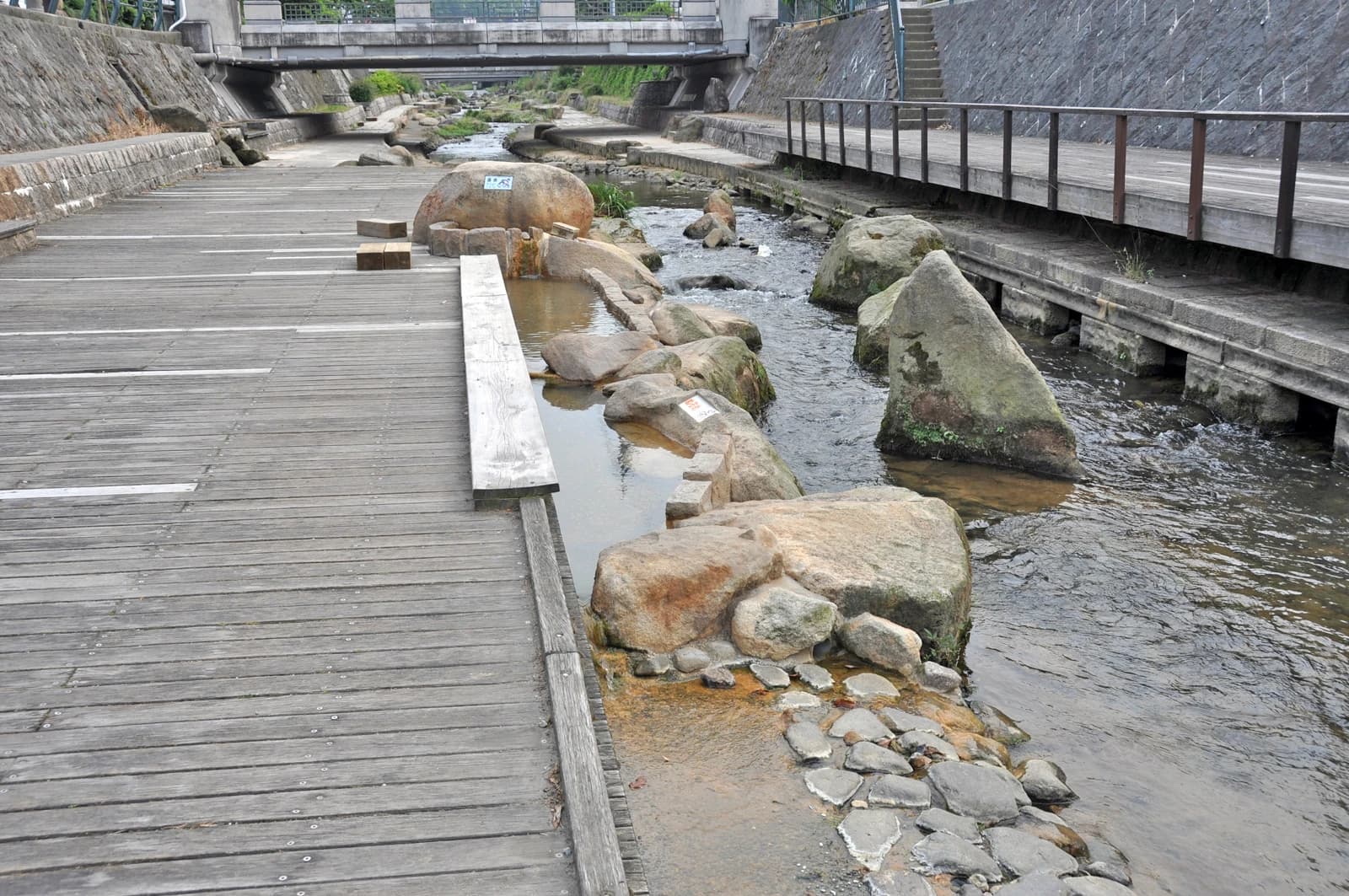
Nostalgic hot spring inns line the river flowing through the center of the town. The walking paths are well-maintained and perfect for a slow stroll.
- Skin Beauty Effects: The spring water is excellent for hydration and is often referred to as natural skin toner.
- Free Foot Baths: There are free foot baths along the river for anyone to use. It is the perfect place to relieve travel fatigue. (Location)
- Take Home the Water: Facilities throughout the town allow you to fill your own bottle with spring water. You can buy a dedicated spray bottle and use the water as a face mist.
2. Tamatsukuri-yu Shrine: 'Negai-ishi' Experience
This shrine is famous for the Negai-ishi (Wishing Stone). Follow these steps to create your own wish amulet.
1) Step-by-Step Experience
- Buy a Stone: Purchase your own small 'Wishing Stone' set at the shrine office. (600 yen)
- Worship: Enter the main hall and pay your respects first.
- Wash the Stone: Carefully wash your small stone with 'Shin-su' (sacred water) believed to hold mystical power.
- Pray Against the Large Stone: Touch your small stone directly to the large rock (the original Negai-ishi) inside the shrine and make a wish. It is said the rock's energy transfers to your stone.
- Create the Amulet: Write your wish on two pieces of paper; leave one at the shrine and put the other in the pouch with your stone to keep as your personal amulet.
2) Meaning of Stone Colors
The meaning varies slightly by the color of the stone you receive:
- Blue/Green tones: Peace of mind, calmness, rest.
- Brown/Beige tones: Earthly stability, health, foundation of life.
- White/Clear tones: Purity, purification, new possibilities.
It is said that one in approximately 1,000 stones is a pink heart-shaped jade. If you draw this stone, special luck may be coming your way.
3. Visitor Information
- Worship Hours: 24 hours
- Admission: Free
- Wishing Stone Sales: Weekdays (9:00 AM – 5:00 PM, break 12–1 PM), Weekends/Holidays (8:30 AM – 5:00 PM)
Lake Shinji (宍道湖)The symbol of Matsue, offering some of the most beautiful sunset views in Japan.
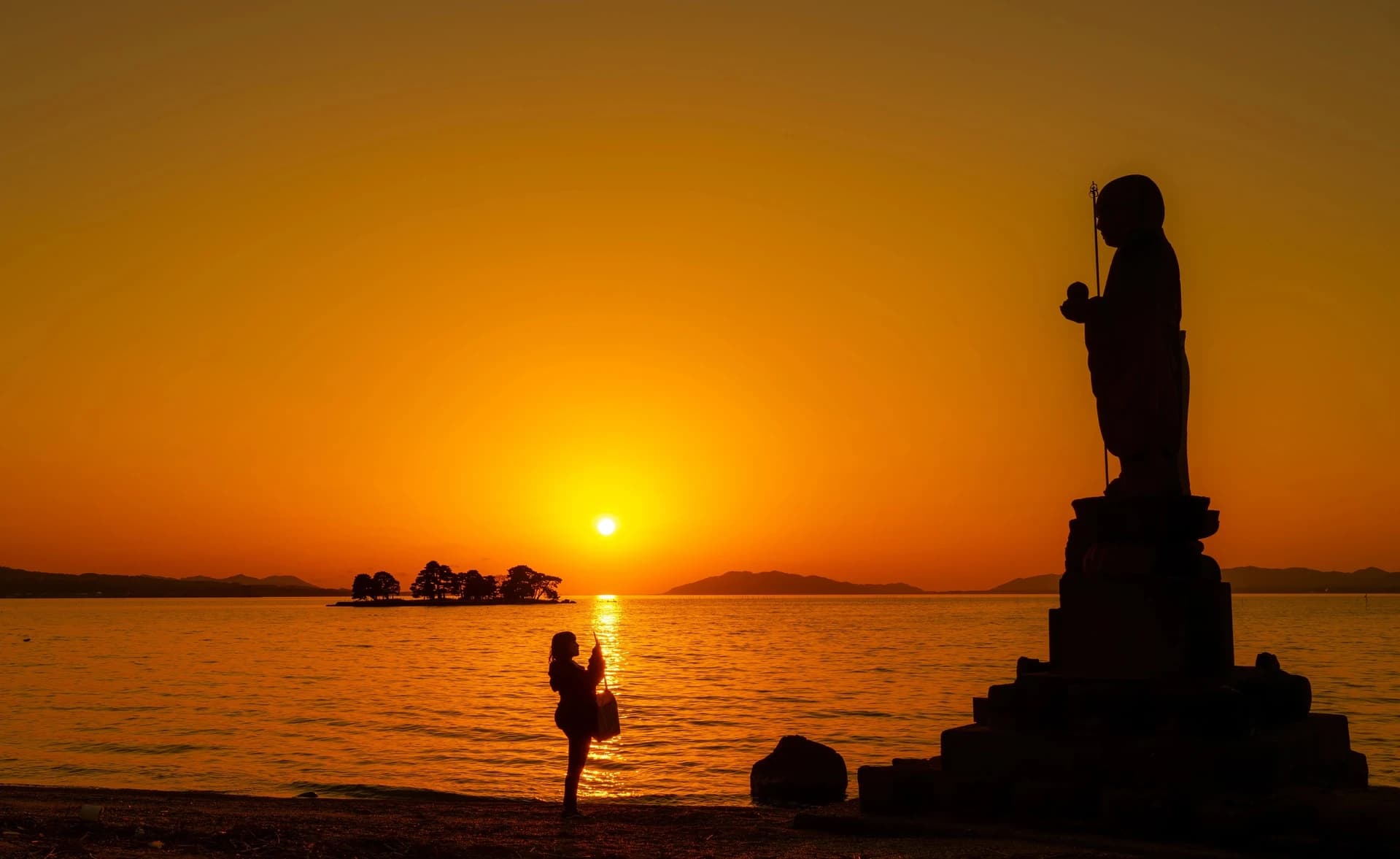
Located on the west side of Matsue city, Lake Shinji is considered one of the best places for sunset views in Japan. The glowing red sunset over the lake is a must-see highlight of any Matsue trip.
1. Fantastic Sunset Viewing Spots
At dusk, the area around the lake turns entirely orange. Here are the best spots to enjoy the view:
- Shimane Art Museum: The lawn in front of the museum is the best sunset viewing spot. You can enjoy the sun setting over the lake with an unobstructed view.
- Lakeside Path: Walking along the path bordering the lake while watching the sunset is very romantic.
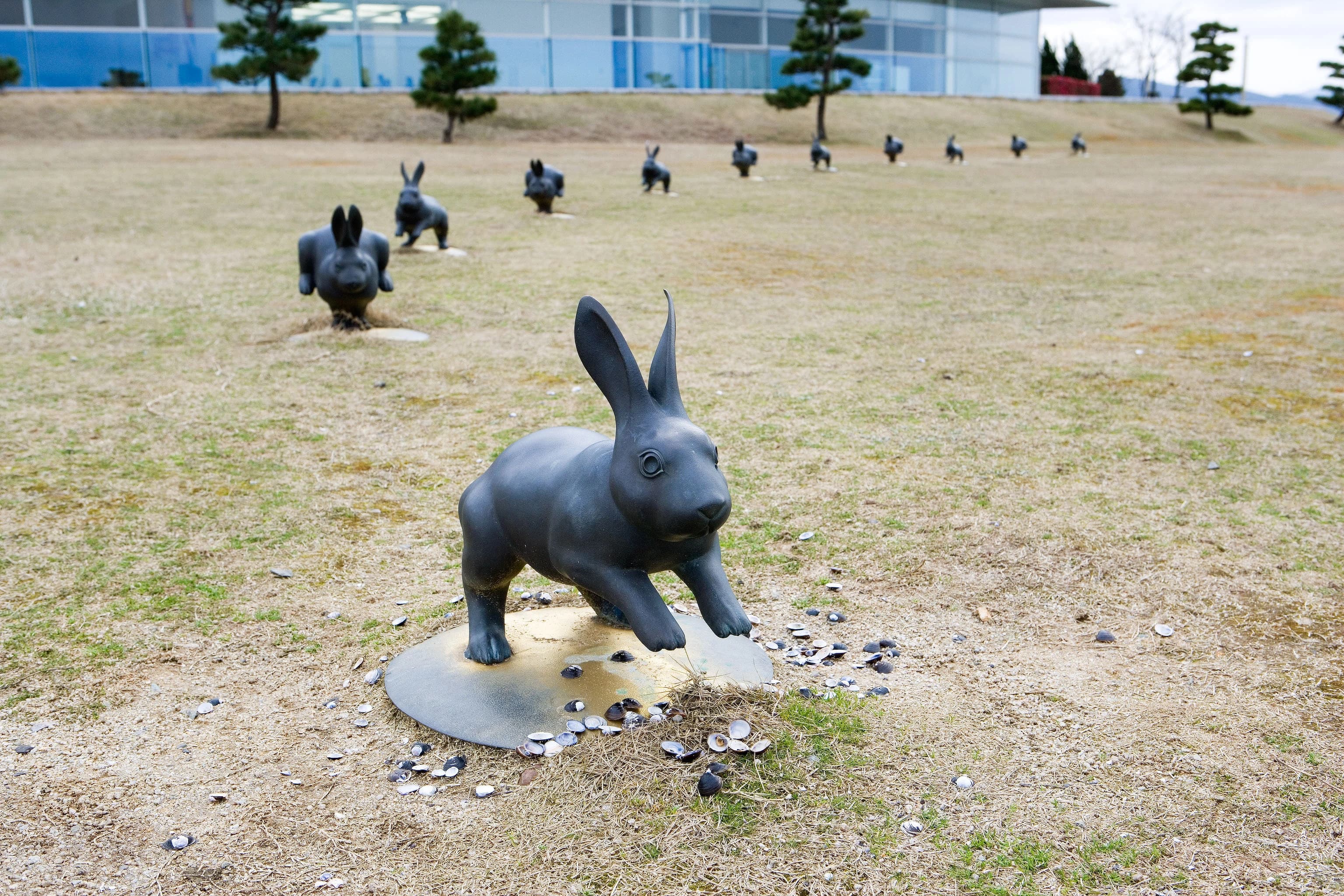
- Rabbits of Lake Shinji: There are 12 rabbit statues near the museum. Legend says if you place clam shells (shijimi) under the front paws of the second rabbit from the front and gently stroke it while facing west (towards Izumo Taisha), your wish will come true.
2. Lake Shinji Sightseeing Boat 'Hakuchou-go'
To see the sunset even closer from the water, we recommend taking the sightseeing boat.
- Sunset on Board: Enjoy the cool breeze on the boat while watching the sun disappear into the lake.
- Operating Times: The 'Sunset Course' timed with the sundown is the most popular. Check times in advance as they vary by season; reservations are recommended.
- Duration: Approximately 1 hour.
- Fare: 2,000 yen (Adults), 1,000 yen (Elementary).
3. How to Check the Sunset Index
Matsue City publishes a 'Sunset Index' daily so travelers don't make a wasted trip. The index analyzes cloud volume and weather to show the probability of seeing a beautiful sunset.
1) Official Website Check
The 'Daily Sunset Index' is updated on the Matsue Tourism Association's official website.
- Index Meaning: Displayed from 0 to 100; higher numbers mean a better chance for a fantastic sunset.
- Sunset Time: You can also check the exact scheduled sunset time, making it easy to plan your schedule.
- Note: The index may change between morning and afternoon, so check frequently.
2) Sunset Viewing Tips
- Even if the index is around 40–50, the red light through the clouds can be very beautiful. Sometimes a few clouds make for a more dynamic and impressive photo.
- The Lake Line Bus adjusts its schedule for sunset; get off at the 'Shimane Art Museum (Shimane-kenritsu Bijutsukan)' stop to arrive directly at the sunset spot.
- The 30 minutes right before the sun fully sets is the most beautiful. Arrive early to secure a spot and enjoy the changing colors of the sky.
| Index Range | Expected Scenery |
|---|---|
| 80 – 100 | Must go to the lake. A chance for a sunset of a lifetime. |
| 50 – 70 | Worth expecting a great sunset combined with clouds. |
| Below 20 | High chance of cloudy weather; better to plan indoor activities. |
Eshima Ohashi Bridge (江島大橋)Famous for the optical illusion of rising into the sky, also known as the 'Roller Coaster Bridge'.
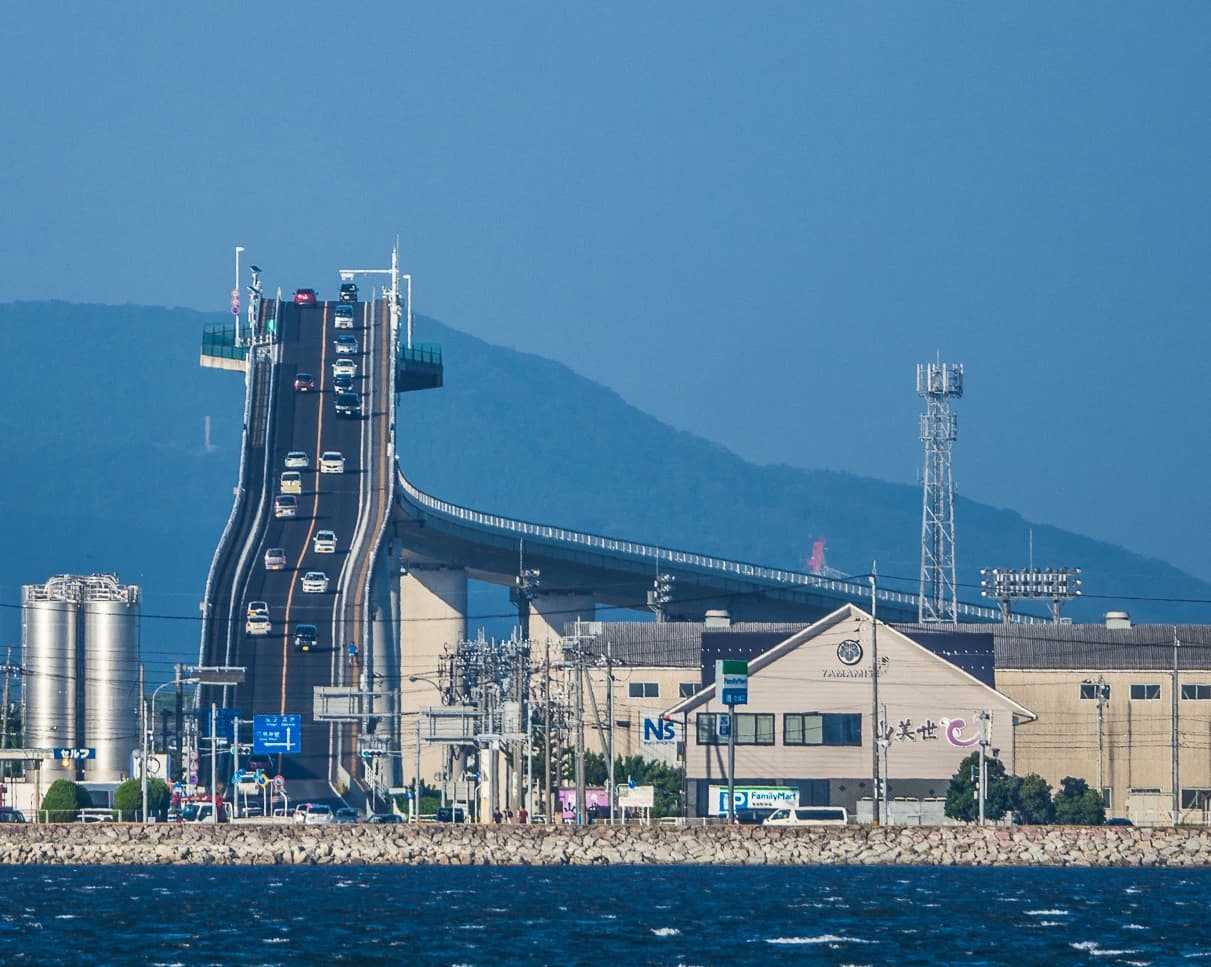
Connecting Matsue City (Shimane) and Sakaiminato City (Tottori), Eshima Ohashi is the largest rigid-frame (Rahmen) bridge in Japan. It was designed high to allow large ships to pass, and gained worldwide fame for an optical illusion that makes the slope look nearly vertical when photographed from a specific angle.
1. The Truth About the Slope
While the slope in viral photos looks terrifying, the actual gradients are:
- Shimane Side: 6.1% (Approx. 3.49°)
- Tottori Side: 5.1% (Approx. 2.92°) In reality, it is only slightly steeper than a normal road and feels like a gentle hill when driving.
2. Photo Spots & Tips for the Perfect Shot
The key to this bridge is 'how steep you can make it look.' If you take a photo from right under the bridge, it looks like a normal bridge. Follow these optical illusion tips:
1) The Best Photo Spot (Shimane Side)
The most dramatic slope can be captured from the approach road on the Shimane side (near Daikonshima Island).
- Recommended Location: By the roadside about 1km away from the bridge entrance.
- Reason: You must shoot from a long distance in a straight line facing the bridge to compress the perspective and make the slope appear steep.
2) How to Shoot (Telephoto Lens Essential)
The 'compression effect' of a telephoto lens completes the illusion.
- Lens Choice: If using a smartphone, use optical zoom (3x to 10x or more). For DSLR/Mirrorless, a 200mm+ telephoto lens is recommended.
- Composition: Move as far from the bridge as possible, then zoom in to fill the frame with the bridge. Placing a car driving up the road at the bottom enhances the contrast and makes the slope look more dizzying.
- Subject Timing: Waiting for a large truck or bus to climb the bridge maximizes the sense of scale.
⚠️ Precautions: Standing in the middle of the road or jaywalking for photos is extremely dangerous. Always shoot from the sidewalk or a safe open area, and be careful not to obstruct local traffic.