Izumo (出雲)The home of Japanese mythology and a mystical city where the gods gather.
Izumo City is a legendary city home to Izumo Taisha, one of Japan's oldest shrines. Legend has it that every October of the lunar calendar, gods from all over Japan gather here. It is well known as a sacred place with powerful energy for forming bonds (Matchmaking).
Before visiting Izumo Taisha, which is a must-see in Izumo, it is recommended to stop by Inasanohama Beach to collect some sand. It is said that offering sand collected from Inasanohama Beach to the Soganoyashiro at Izumo Taisha will protect you from misfortune.
Inasanohama Beach (稲佐の浜)The stage of Japan's founding myth and the sacred beach where gods from across the country enter Izumo.
Located about 1km west of Izumo Taisha, Inasanohama is a beach of great significance in Japanese mythology. It is the background of the 'Kuniyuzuri (Land Transfer) Myth' and is known as a spiritual place that welcomes gods from all over the country every October of the lunar calendar.
1. Main Attractions and Symbols
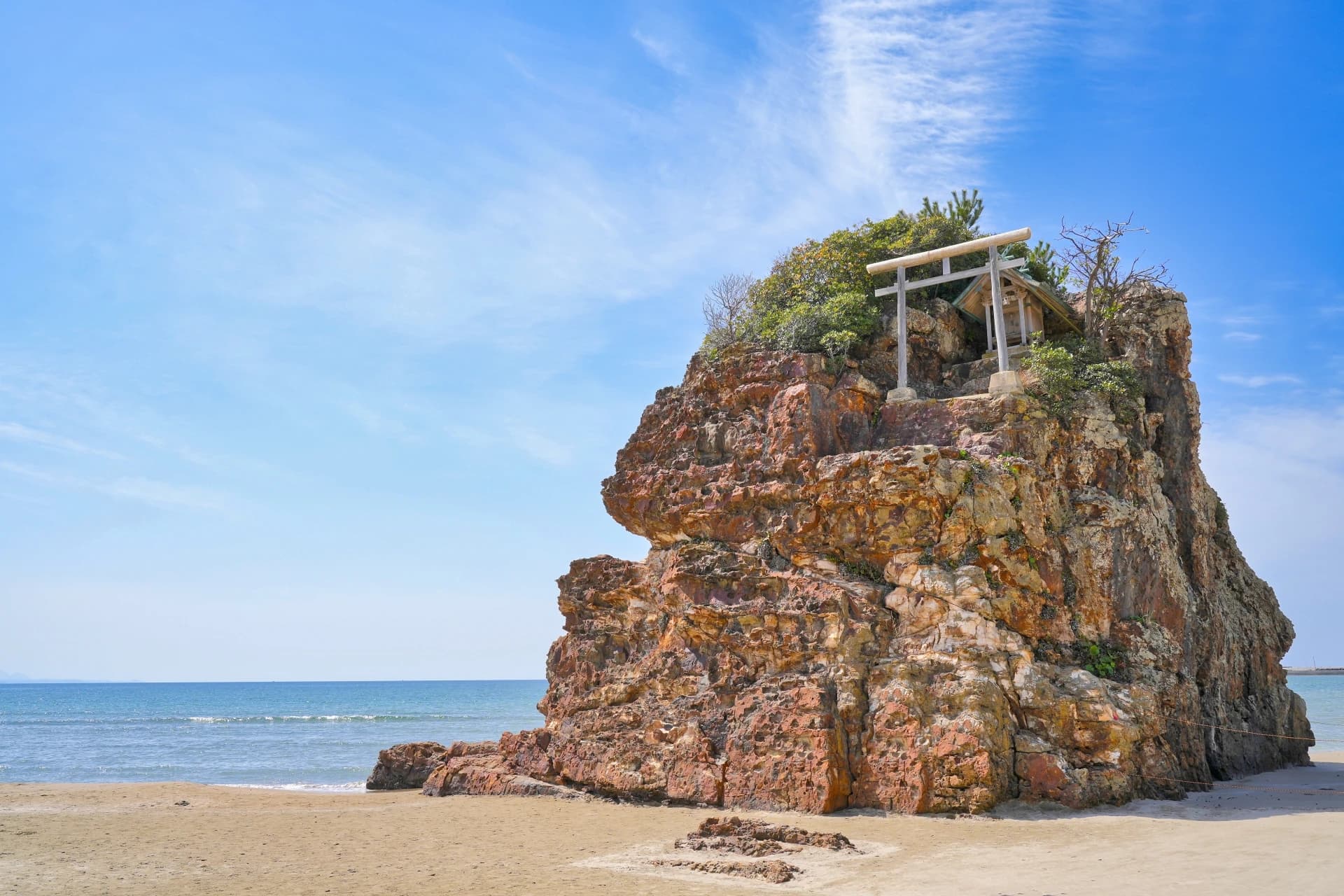
Inasanohama Beach has excellent scenery with its wide white sand and blue sea, and it is especially famous as a sunset spot.
- Bentenjima (弁天島): A large rocky island rising in the middle of the beach. In the past, it was far out in the sea, but sand has accumulated so you can now walk to it. At the top of the rock, there is a small shrine dedicated to the god of bountiful catches and maritime safety, creating a mystical atmosphere.
- The Entrance of the Gods: It is said that on the night of October 10th of the lunar calendar, gods from all over Japan land in Izumo through this beach. At this time, the 'Kamimukae-shinji (God-welcoming ritual)' is held here to welcome the gods.
2. Essential Course for Izumo Taisha Visitors
To properly worship at Izumo Taisha, you must visit Inasanohama first.
- Collecting Sand: Collect a small amount of clean sand from the beach and bring it to Izumo Taisha.
- The Custom of Sand Exchange: Offer the sand you brought to the Soganoyashiro located at the innermost part of Izumo Taisha, and take some of the sacred sand that was already placed there instead. It is believed that keeping this sand at home serves as a powerful charm against misfortune.
It is recommended to prepare a small zipper bag to hold the sand from the beach. Photos taken with Bentenjima in the background at dusk will be the best shots of your Izumo trip.
Izumo Taisha (出雲大社)One of the oldest and most prestigious shrines in Japan, dedicated to the god of bonds in Japanese mythology.
Izumo Taisha, known as the place where gods from all over Japan gather, is very famous as a sanctuary for 'Matchmaking (En-musubi)'. Thanks to its massive scale and unique way of worship, it is a key attraction that cannot be missed when traveling to Shimane Prefecture.
1. Main Attractions
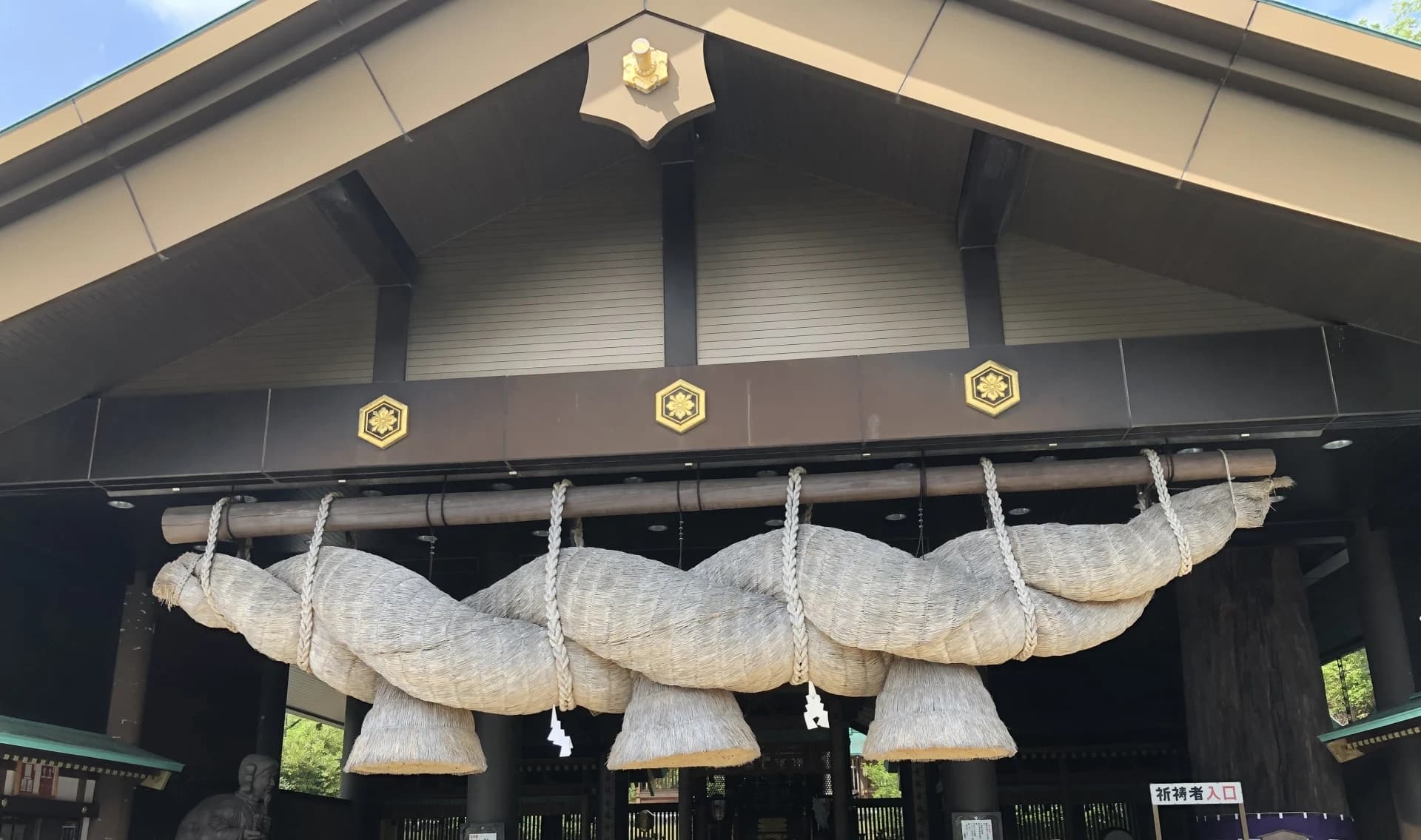
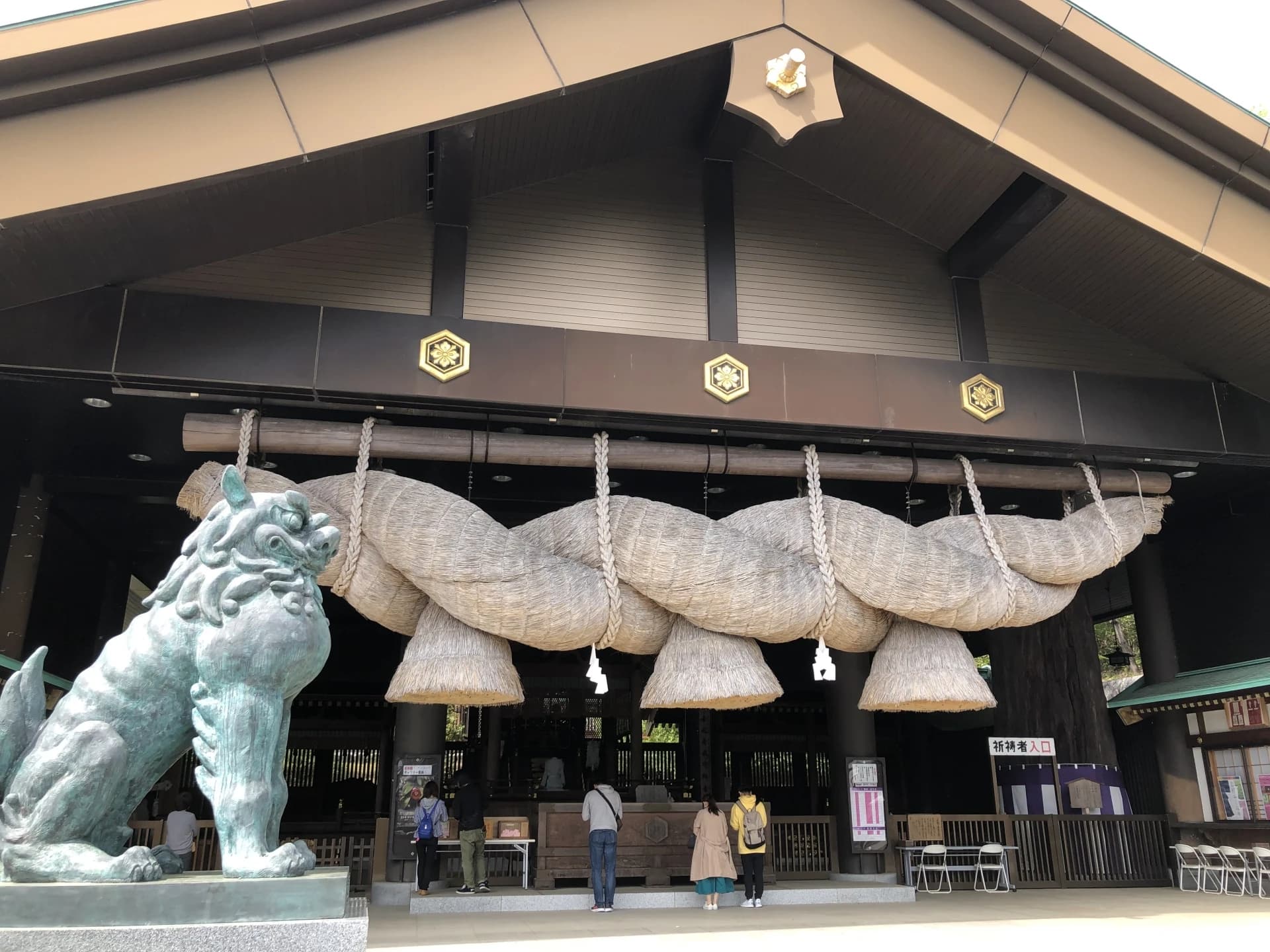
1) The Giant Straw Rope (Shimenawa) of Kaguraden
This is the most symbolic feature of Izumo Taisha. The giant straw rope, measuring 13.6m long and weighing 5.2 tons, is a spectacular sight.
- Feature: It is unique because it is twisted in the opposite direction (from right to left) of general shrines, and you can feel overwhelmed by its grandeur.
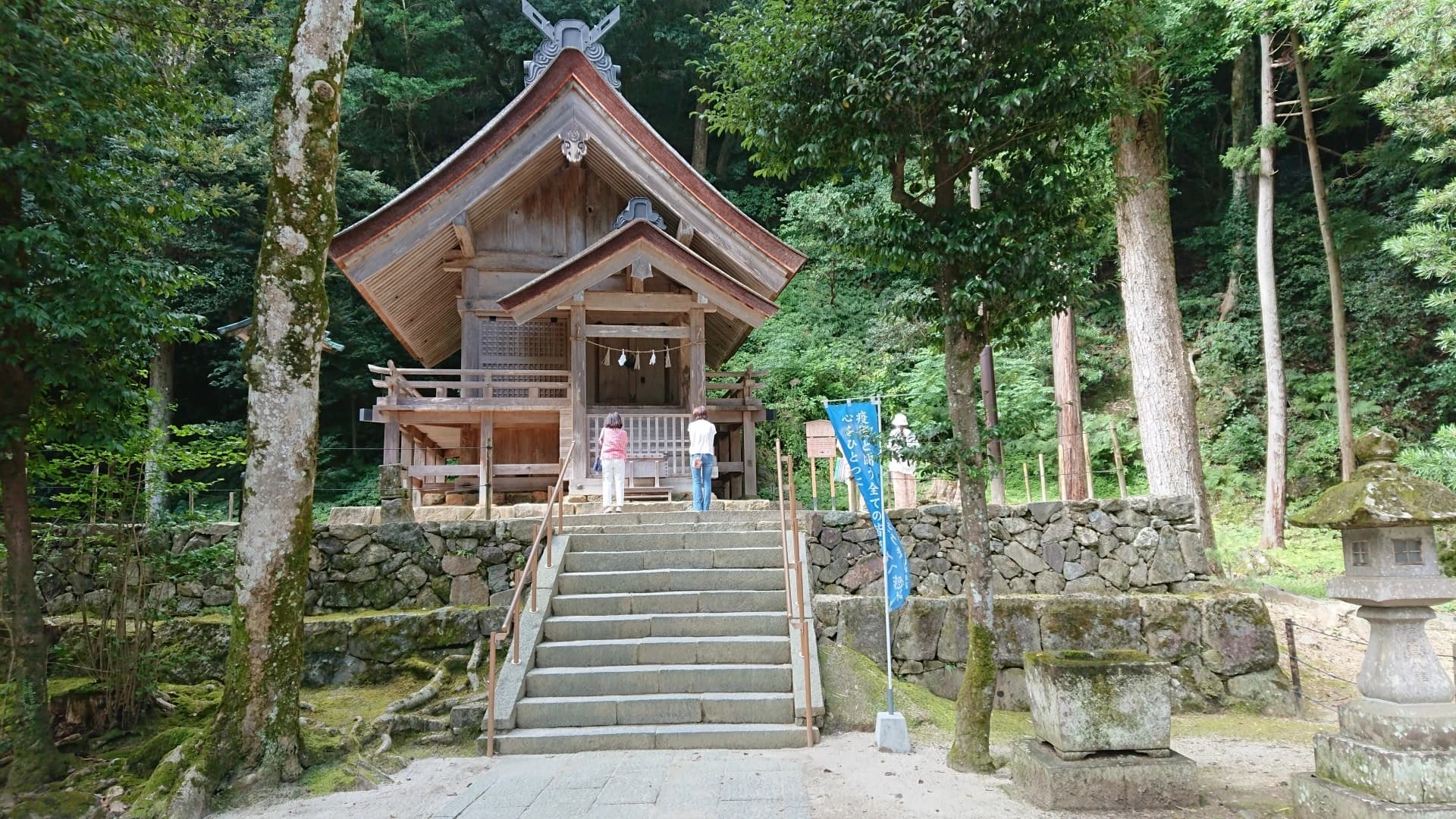
2) Soganoyashiro (Place of Sand Exchange)
A small shrine located at the innermost area, where a special custom is passed down.
- Sand Exchange: If you offer sand brought from nearby Inasanohama Beach here and take some of the sacred sand placed here instead to keep at home, it is said to ward off misfortune.
3) Rabbit Statues
Cute rabbit statues are erected throughout the shrine. These commemorate the story of the 'White Rabbit of Inaba' in Japanese mythology. It is fun to enjoy a hidden rabbit hunt as each statue has a different pose.
- The story of the White Rabbit of Inaba is introduced in detail in the 'Hakuto Shrine' section of the Tottori guide.
2. Unique Way of Worship
Izumo Taisha has a different way of worship from other shrines, so it is good to learn it in advance.
- General Method: 2 bows, 2 claps, 1 bow.
- Izumo Taisha Method: 2 bows, 4 claps, 1 bow.
- The reason for clapping four times is to send greetings to the gods of the four cardinal directions (East, West, South, North), or because the number 4 ('Shi') has the same pronunciation as the 'Shi' in happiness ('Shiawase'), meaning it brings more luck.
3. Visitor Information
- Hours: 6:00 AM – 7:00 PM
- Soganoyashiro until 4:30 PM, Treasure House (Homotsuden) 8:30 AM – 4:30 PM
- Admission: Free
- Treasure House: 300 yen (Adults), 200 yen (Univ./High School), 100 yen (Middle/Elem.)
- Closing Days: Open year-round
Every October of the lunar calendar (mostly November of the solar calendar) is the month when gods from all over Japan come to Izumo for a business trip. During this period, a large festival called 'Kamiarizai' is held, attracting much larger crowds than usual.
How to Worship at Izumo Taisha for MatchmakingThe standard order of worship to invite not only romantic relationships but all good bonds in life.
This is the standard sequence of worship to receive the best energy and form good bonds at Izumo Taisha. It is recommended to worship with a sincere heart according to this order.
1. Preparation: Inasanohama Beach (Sand Collection)
The first place to visit is Inasanohama, the sacred beach where the gods from across the country gather.
2. Entry to the Sacred Realm: Torii and Path
The Torii gate at the entrance of the shrine is the boundary that separates the general world from the realm of the gods.
- Etiquette: Perform a light bow when passing through the Torii. The center of the path is said to be the road for the gods, so it is better to walk on the edges.
3. Purification of Body and Mind: Haraenoyashiro and Temizuya
This is the process of washing away the impurities of daily life before meeting the gods.
- Haraenoyashiro (祓社): Worship first at the small shrine seen on the right side of the path with '2 bows, 4 claps, 1 bow' to shake off impurities.
- Temizuya (手水舎): Wash your right hand and then your left hand in the running water, take water in your left hand to lightly rinse your mouth, and clean your body.
4. Full-scale Worship: Haiden, Honden, Jukyusha
- Worship Method: Strictly follow the '2 bows, 4 claps, 1 bow' method, which is the basic worship at Izumo Taisha.
- Jukyusha (十九社): This is the lodging for the gods, and it is a feature to worship while moving in a counter-clockwise direction.
5. Sacred Sand Exchange: Soganoyashiro (素鵞社)
Located behind the main hall, this is the highlight of the Izumo Taisha worship.
-
Offer Sand: Put the sand brought from the beach into the wooden box.
-
Receive Sand: Take some of the sacred sand that was already in the box instead. It is said that keeping this sand like an amulet or placing it around your home has a powerful effect in preventing misfortune.
Soganoyashiro Location
Collect only a small amount of sand and store it cleanly. Entry may be restricted according to quarantine standards during immigration.
6. Receiving Energy: The Rocks of Mt. Yakumo
The rock wall of the sacred Mt. Yakumo touches the back of Soganoyashiro.
- Feel the Energy: Mystical energy is said to emanate from the large cracks in the rock. Let's touch the rock and feel its energy.
7. Where Prayers Reach Best: West Side Worship Spot of the Main Hall
The god of Izumo Taisha (Okuninushi) is facing West, not forward.
-
Hidden Gem: The small worship spot located on the west side of the main hall is known as the place where wishes are delivered best because it is the position facing the god. Be careful not to miss it as it is small.
West Side Worship Spot Location
8. Final Journey: Kaguraden (神楽殿)
This is the place with the giant straw rope (shimenawa), the largest in Japan.
- Conclusion: Finalize the worship schedule by offering a sincere prayer for the last time in front of the grand straw rope.
The most important thing in all worship processes is sincerity. Follow this sequence calmly and think about the precious bonds with yourself and those around you.
Kamiarizai (神在祭) of IzumoIntroducing the mystical traditional event where gods from all over the country gather in Izumo to decide human bonds.
In Japan, the 10th month of the lunar calendar is called 'Kannazuki (Month of No Gods),' meaning the gods are away, but the Izumo region, where the gods gather, is called 'Kamiarizuki (Month of Existing Gods)'. The festival held at this time is Kamiarizai.
1. Main Schedule and Shrine Events
From the 10th to the 17th of the lunar 10th month, a series of rituals to welcome and send off gods from across Japan are held centered around Izumo Taisha.
- Kamimukae-shinji (God-welcoming Ritual): On the night of lunar October 10th, a ritual to welcome the gods is held at Inasanohama Beach, the setting of the Kuniyuzuri myth.
- Kamiarizai (Meeting of the Gods): Held at Izumo Taisha for 7 days from October 11th to 17th of the lunar calendar. During this period, the gods discuss and decide various matters of human life unknown to mortals.
- Karasadesai (God-sending Ritual): An event to see off the gods. It is held twice: on October 17th (the day they leave Izumo Taisha) and on the 26th (the day they completely leave the land of Izumo).
2. Activity Space of the Gods
Special places where gods stay and hold meetings are designated inside and outside Izumo Taisha.
- Kaminomiya (上宮): Located west of Izumo Taisha, this is where the gods gather to hold 'Kamu-hakari (Meeting of the Gods)'.
- Jukyusha (十九社): Buildings on the east and west sides of the main hall that serve as lodgings for gods from all over the country during the meeting period.
- Mankusen Shrine (万九천神社): Events continue at several shrines besides Izumo Taisha, and it is said that the gods finally return to their respective countries from here.
3. Time When 'Bonds' Are Decided
The biggest feature of the Kamiarizai period is the belief that human destiny is decided beyond just a religious event.
- Decision of Bonds: It has been believed that all social 'bonds' people form, including those between men and women, are decided through the meeting of the gods at this time.
- Interesting Theory: Originally, the event was held for 15 days, but there is a theory that the tradition of the first part remains at Izumo Taisha and the latter part at Sada Shrine.
If you visit Izumo during the Kamiarizai period, you can see the special sight where the doors of Jukyusha, the gods' lodgings, are open. It is polite not to make loud noises on the grounds as the gods are in meeting.
The Deity of Izumo Taisha: Okuninushi-no-Mikoto (大国主大神)The ruler of the earth in Japanese mythology and the supreme god who forms bonds.
The main deity enshrined at Izumo Taisha is Okuninushi-no-Mikoto (大国주大神). He is the god who created and ruled the earthly world in Japanese mythology, and today he is widely known as the god of 'Matchmaking (En-musubi)'.
1. Character and Role of the God
Okuninushi-no-Mikoto is worshiped as the god who governs all bonds in the world, not just romantic love between men and women.
- God of Bonds: He is believed to decide meetings between people, social relationships, and all connection points between work and luck.
- God of Land Formation: He is also the 'God of Nation-Building' who pioneered the land of Japan and passed on wisdom such as agriculture, fishing, and medicine to the people.
- Ruler of the Invisible World: Instead of yielding the rule of the earth to the heavenly gods, he gained the authority to rule the 'invisible world of gods (幽界, Yukai)'.
2. Major Episodes in Mythology
Famous stories representing Okuninushi-no-Mikoto are melted into statues and symbols throughout the shrine.
1) The White Rabbit of Inaba
This is the story of Okuninushi healing a rabbit that had its skin peeled off after being bullied by his brothers. Thanks to this kindness, the rabbit prophesied that he would be joined with a beautiful goddess, which became the beginning of the matchmaking myth.
2) Kuniyuzuri (国譲り)
This is an event in which the rule of the earth was peacefully handed over to the messengers of the heavenly god (Amaterasu). At this time, the grand shrine built so that Okuninushi could retire is the origin of Izumo Taisha.
3. Meaning of Worship Towards the Deity
The unique way of worship at Izumo Taisha is also related to the character of the deity.
- Deity Facing West: Uniquely, the god is enshrined facing West, not forward, inside the shrine. Therefore, after worshiping at the front, worshipers sometimes go around to the left side of the shrine and give a light greeting again facing west.
The Kuniyuzuri (国譲り) MythThe myth about the rule of the earth being transferred to the heavenly gods and the background of Izumo Taisha being established.
This is a Japanese founding myth that contains the process in which Okuninushi-no-Mikoto, who ruled the land on earth, yielded the rule to the descendants of the heavenly god (Amaterasu-Omikami) and retired.
1. Heavenly Command and the Descent of Messengers
The supreme heavenly god Amaterasu-Omikami wanted her grandson Ninigi-no-Mikoto to rule the prosperous land on earth. To this end, she sent messengers like Takemikazuchi-no-Kami, who had the power of a strong martial god, to advise yielding the country.
- Confrontation at Inasanohama: The messengers descended to Inasanohama Beach in Izumo, stuck a sword upside down, sat on it, and asked Okuninushi if he would hand over the country.
2. Contest of Strength and Submission
Okuninushi replied that he would hand over the country if his two sons agreed.
- Kotoshiro-nushi: The first son promised to offer the country in accordance with the heavenly will.
- Takeminakata: The second son, who boasted immense physical strength, proposed a test of strength to the messenger. However, as soon as he grabbed Takemikazuchi's hand, the hand turned into icicles and blades, and terrified, he fled to Lake Suwa in Shinshu (Nagano Prefecture) and finally surrendered.
3. Origin of Izumo Taisha
When all the sons agreed, Okuninushi handed over the rule with one condition.
- Request for a Grand Palace: Okuninushi requested that the palace where he would retire be built as grandly as the palace where the heavenly god lives.
- Birth of Izumo Taisha: The palace built according to this promise is the current Izumo Taisha. According to records from the Heian period, it was said to be the largest building in Japan at the time.
4. Traces Left by the Myth
- Suwa Shrine: Takeminakata, who moved to Nagano Prefecture and developed the country, is currently enshrined as the main deity of Suwa Taisha and is widely loved by the nickname 'Osuwa-sama'.
- Records of Nihon Shoki: In the 《Nihon Shoki》, it is recorded that the two gods, Takemikazuchi and Futsunushi-no-Kami, descended to earth and pacified the country.
Thanks to this myth, Izumo Taisha became the center for ruling the 'invisible world of gods (Yukai)' rather than the visible real world, and has established itself as a sanctuary for forming bonds today.
Hinomisaki Shrine (日御碕神社) and Karakuni Shrine (韓国神社)A beautiful vermilion-lacquered shrine famous for its mystical sand amulets that ward off misfortune.
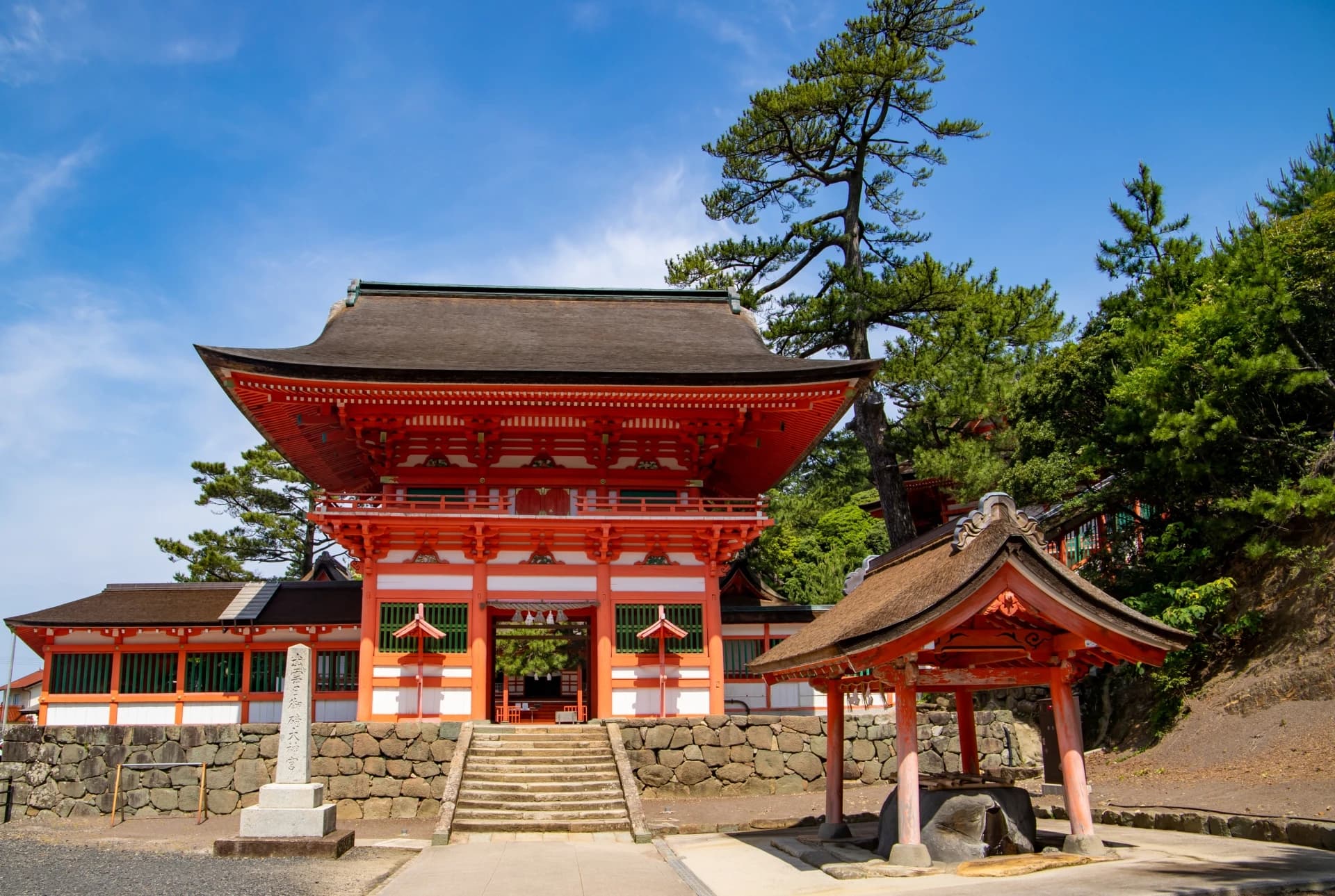
Hinomisaki Shrine, which can be found along the northern coast from Izumo Taisha, is a beautiful place where brilliant vermilion buildings contrast with the blue sea. It is known as the shrine that protects the night of Japan and is said to have strong power to ward off misfortune.
1. Two Sacred Spaces
Hinomisaki Shrine is uniquely divided into upper and lower shrines, enshrining different gods.
- Kaminomiya (Upper Shrine): Enshrines Susanoo-no-Mikoto. He is the hero of the myth who came from Silla and pioneered Izumo, and defeated the eight-headed monster 'Yamata-no-Orochi'. He is the grandfather of Okuninushi-no-Mikoto.
- Hishizumi-no-Miya (Lower Shrine): Enshrines the Sun Goddess Amaterasu-Omikami (Susanoo-no-Mikoto's sister). If Ise Grand Shrine protects 'Japan's day,' Hinomisaki Shrine here holds the special meaning of protecting 'Japan's night'.
2. The Specialness of Hinomisaki Shrine
This place captivates travelers not only with the beauty of the shrine itself but also with its unique amulets and scenery.
1) 'Sand Amulet' to Prevent Misfortune
This is an amulet containing sacred sand from inside the shrine. It originated from a legend that a person with a major illness recovered after sprinkling this sand. It is very popular as it is believed to have a powerful force that protects the body from accidents or disasters.
2) Architectural Beauty of the Gongen Style
The current building, rebuilt in the early Edo period (1644) by order of Tokugawa Iemitsu, is designated as an Important Cultural Property. it shows the essence of the 'Gongen Style' characterized by brilliant carvings and red lacquer.
3) Marvellous Natural Scenery
The magnificent Sea of Japan spreads out right behind the shrine, and Hinomisaki Lighthouse, the tallest stone lighthouse in Japan, is within walking distance, making it a good place to explore together.
Hinomisaki Shrine Website Hinomisaki Shrine Location3. Karakuni Shrine (韓国神社) within Hinomisaki Shrine
While walking through the wide grounds of Hinomisaki Shrine, you can find Karakuni Shrine, which catches your eye starting with its name. This shrine, with the characters 'Gara (韓, Korea)' clearly engraved, is an important place proving the close relationship between ancient Izumo and the Korean Peninsula.
1) Origin and Meaning of the Name
'Gara-kuni (韓国, Korea)' was a term referring to the Korean Peninsula (Silla, Gaya, etc.) in ancient Japan.
-
Connection with the Korean Peninsula: The name of this shrine is based on the myth that Susanoo-no-Mikoto came over from Silla, and contains the meaning of honoring the advanced civilization he brought.
-
Identity of Izumo: Among the 'Gara (韓)' related names remaining throughout the Izumo region, it is characterized by being proudly located within the giant sanctuary of Hinomisaki Shrine.
-
Location: It is quietly located on one side of the Hinomisaki Shrine grounds, making it easy to pass by without noticing, so you should look closely at the information boards.
Karakuni Shrine Location
2) Enshrined Deity
This place also enshrines Susanoo-no-Mikoto, the main deity of Hinomisaki Shrine.
- Journey from Silla: It was built to commemorate the legend that he descended to Soshimori in Silla from heaven and then took a boat to set foot on the Hinomisaki coast of Izumo for the first time.
- Nature of the Guardian God: As a god who crossed the sea, he has the character of protecting maritime safety as well as the new technologies (iron-making, agriculture, etc.) handed down from the Korean Peninsula.
4. Visitor Information
- Hours: The worship hall is from 8:30 AM to 4:50 PM, can visit at other times
- Admission: Free
- Closing Days: Open year-round
At the shopping street near the shrine, you can taste fresh grilled squid and seafood bowls. The coastal walking path leading to the lighthouse especially has strong winds, so it is recommended to bring an outer garment.
Karakama Shrine and the Legend of Susanoo's Rock Boat (Iwafune)Summarizes the mystical myth of Susanoo-no-Mikoto, who crossed from Silla in a rock boat.
Located deep in the mountains of Izumo, Karakama Shrine (韓竈神社) is a symbolic place steeped in the legend of the 'Rock Boat (Iwafune, 岩船)' that Susanoo-no-Mikoto was said to have ridden when he crossed from the Korean Peninsula.
1. Rock Boat from Silla (Iwafune, 岩船)
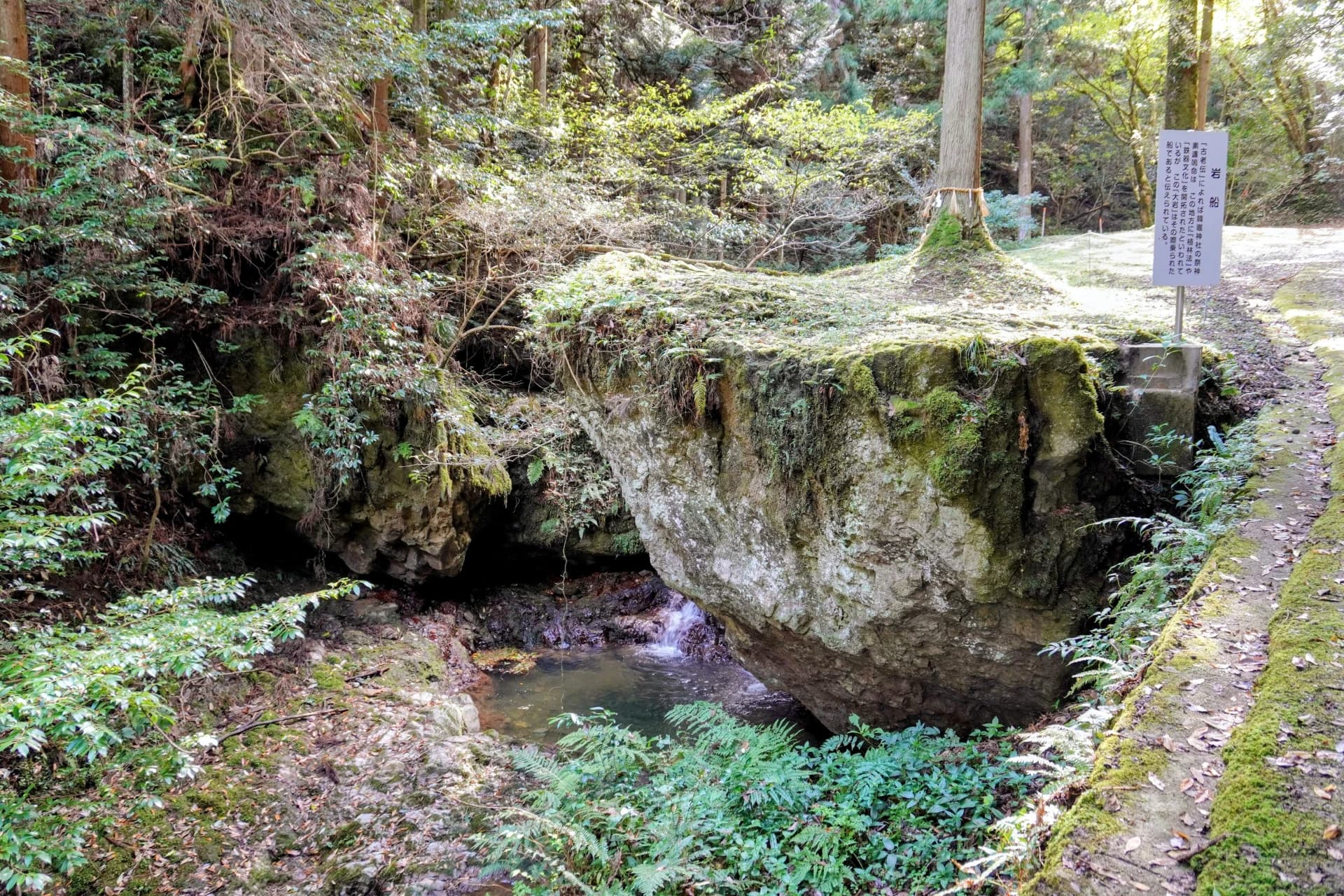
In ancient Japanese literature, there is a record that when Susanoo crossed to Izumo from Soshimori in Silla, he came in a flying rock boat.
- Symbol of Navigation: The 'Rock Boat' is interpreted as symbolizing advanced ancient navigation technology and ironware civilization that were like magic at the time, beyond simply meaning a boat made of rock.
- Landing in Izumo: It is said that Susanoo arrived at the Izumo coast (Hinomisaki, etc.) in this rock boat and then moved to the vicinity of Karakama Shrine deep in the inland mountains.
- Iwafune Location: If you go straight up without passing through the Torii gate at the shrine entrance, you can see the Iwafune.
2. Rock Ruins of Karakama Shrine
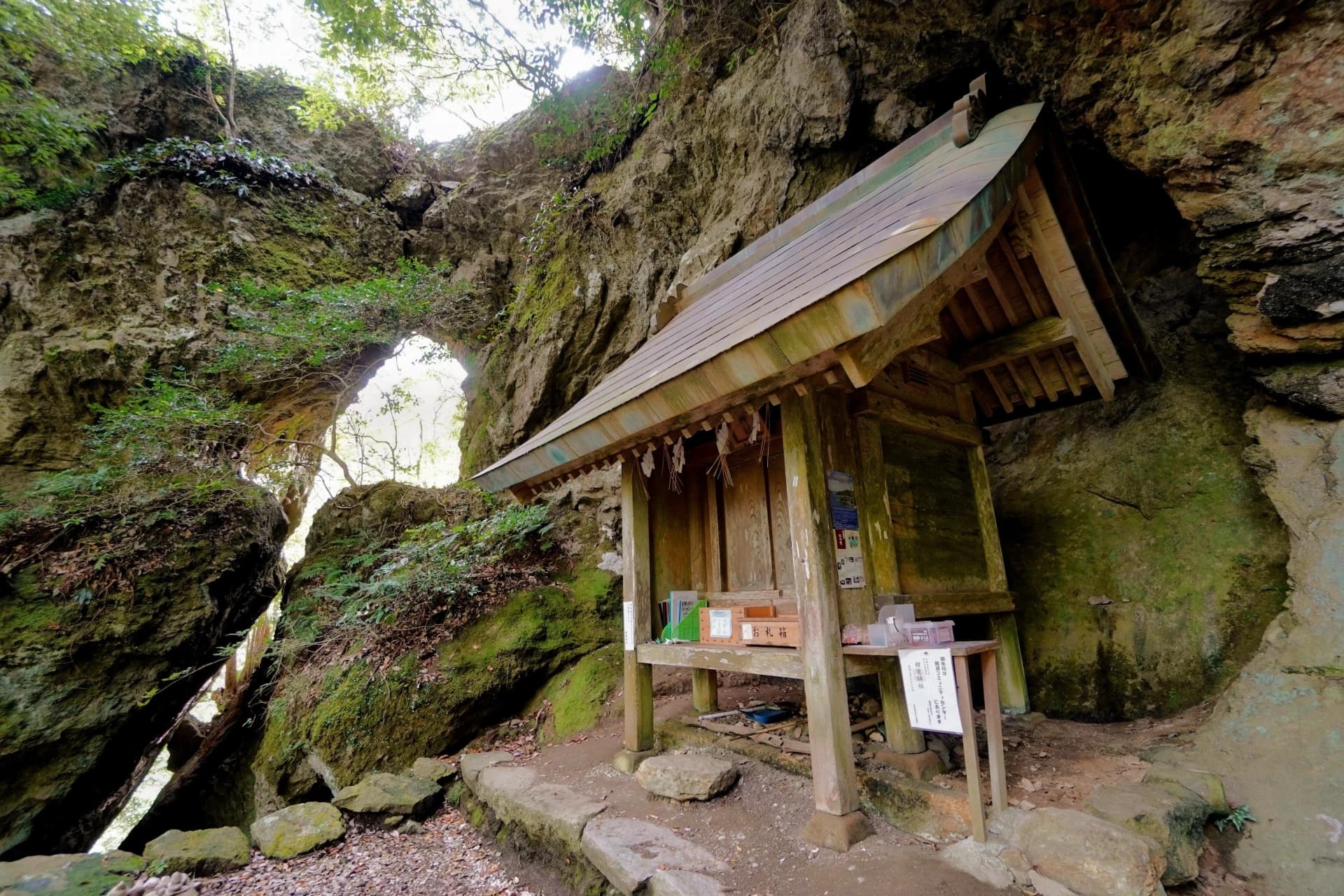
Large rocks rise around the shrine, and these are considered sacred, called Iwakura (the descent place of the god).
- Traces of the Rock Boat: There is a legend that the giant rocks in and around the shrine grounds are what the rock boat Susanoo rode turned into and hardened.
- Rock Fissure: The narrow fissure in the rock that must be passed to reach the main hall is a place where the mystical energy of this rock boat dwells. Passing through here signifies 'rebirth,' washing away karma and being born anew.
3. Connection with Iron-making Technology
There is a close relationship between the 'Rock Boat' myth and 'Kama (竈, iron furnace)' included in the name Karakama (韓竈).
- Propagation of Iron: The setting of coming in a hard rock (Rock Boat) is a metaphorical expression of the powerful iron culture brought by the immigrants from the Korean Peninsula.
- Karasabino-tsurugi: The advanced iron tools and weapons Susanoo brought in this rock boat became the foundation that made the Izumo region prosperous.
4. Visitor Information
- You can visit for free 24 hours a day at any time, but it can be dangerous at night as there are no separate facilities.
Izumo Hinomisaki Lighthouse (出雲日御碕灯台)The tallest lighthouse in Japan, featuring a white stone building that harmonizes with the blue sea.
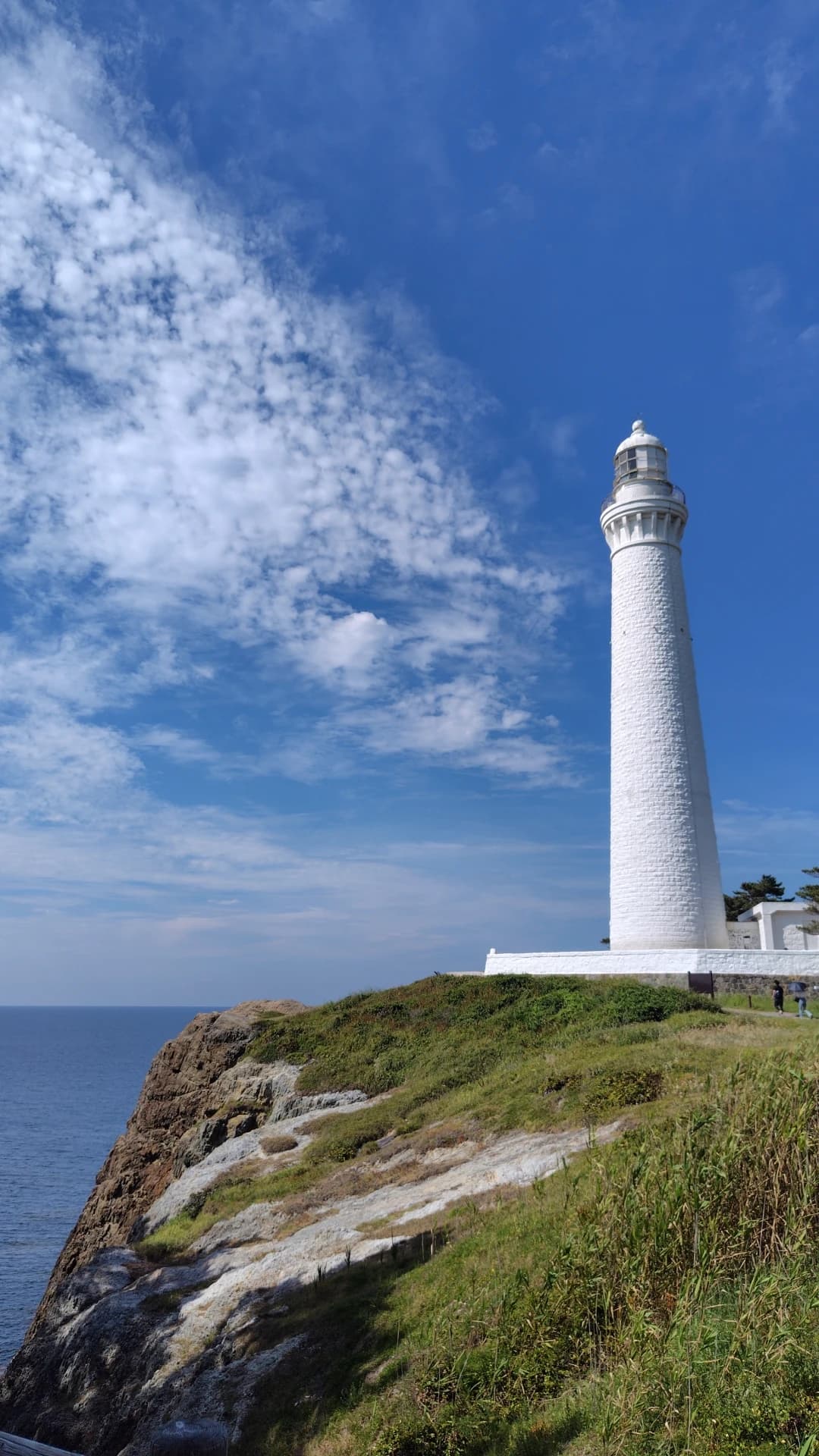
Standing on a sheer cliff at the western tip of the Shimane Peninsula, Izumo Hinomisaki Lighthouse is a spectacular scenic spot not to be missed on an Izumo trip. It has protected the Sea of Japan for over 120 years since its installation in 1903.
1. Main Features and Value
Hinomisaki Lighthouse is counted as a symbolic lighthouse of Japan in recognition of its beauty and historical value.
- Tallest in Japan: At approximately 43.7m from the ground to the top of the lighthouse, it is the tallest stone lighthouse in Japan. The light source is located at a height of 63m above sea level.
- Top 100 Lighthouses in the World: It has been selected as one of the 'Top 100 Lighthouses in the World' and 'Top 50 Lighthouses in Japan' in recognition of its historical importance, and is also designated as an Important Cultural Property of Japan.
- Double-structured Masonry: It was designed with a unique double structure with white stone for the outer wall and bricks for the inner wall to withstand strong sea winds and earthquakes.
2. Viewing Points
- Superb View from the Observatory: You reach the observatory by climbing 163 spiral steps inside the lighthouse. From here, you can appreciate the vast Sea of Japan and the superb view of the rugged rias coast in a 360-degree panorama.
- Contrast of White and Blue: The image of the dazzlingly white lighthouse standing against the blue sea and sky is loved as the best photo zone in Izumo.
- Light Protecting the Night: The lighthouse light is powerful enough to be seen from about 40km away, which connects with the symbolism of Hinomisaki Shrine 'protecting Japan's night.'
3. Visitor Information
- Hours
- March–September: Weekends/Holidays 9:00 AM – 12:00 PM / 1:00 PM – 5:00 PM, Weekdays 9:00 AM – 12:00 PM / 1:00 PM – 4:30 PM
- October–February: 9:00 AM – 12:00 PM / 1:00 PM – 4:30 PM
- Lunch break from 12:00 PM to 1:00 PM, entry until 20 minutes before closing
- Admission: 300 yen for ages 12 and up
- Closing Days: Open year-round
Since the stairs to the lighthouse observatory are narrow and steep, it is recommended to wear pants rather than skirts and wear comfortable sneakers. Also, be aware that access to the observatory may be restricted on days with very strong winds.