Osaka & Nara Travel: Finishing Your Journey Starting with Todai-ji and Nara Park on Day 5The final leg of the standard course starting in the thousand-year ancient capital
Nara (奈良)
The final morning of the standard course has dawned.
This itinerary is designed on the assumption that your return flight is in the late afternoon or later, so please adjust flexibly according to your specific flight time. Nara is reachable from Osaka in about 40–50 minutes by train, making it an ideal spot for a light visit on your final day.
The history continues from the story of the Soga clan mentioned earlier in the introduction to Osaka Shitennoji.
Even after the death of Prince Shotoku, Soga no Umako monopolized power. However, the Nakatomi no Kamatari faction, rebelling against this, staged a coup (Isshi Incident) to oust the Soga clan. Afterward, the Emperor bestowed the surname 'Fujiwara' upon these meritorious subjects, and they rose to become the most powerful aristocratic family in Japanese history.
In 694, the Fujiwara faction moved the capital from Asuka, Prince Shotoku's base, to Fujiwara-kyo, Japan's first Chinese-style capital.
However, Fujiwara-kyo had limitations in scale as a planned city, and above all, the strong influence of local clans of Baekje descent was a political burden for the Emperor, who sought centralization. Ultimately, in 710, just 16 years after the move, the capital was moved again to Heijo-kyo, a massive city modeled after Chang'an of the Tang Dynasty, marking the true beginning of the Nara period.
💡 TourCast Tip
Nara Park, the heart of Nara tourism, is directly connected on foot from Kintetsu-Nara Station. The path leading through the park, where deer roam freely, to Todai-ji is a gentle flat walk, perfect for a stroll on your last day. We recommend storing your luggage in the station's coin lockers to explore with light hands.
Todai-ji TempleA temple housing Japan's largest Buddha and the Buddhist culture of the Nara period
Todai-ji (東大寺)
In 737, twenty-seven years after the start of the Nara period, a smallpox epidemic ravaged Japan. This disease, originating from livestock, caused a national disaster, killing more than half the population of the capital, Heijo-kyo.
In response, the 45th Emperor Shomu established Todai-ji along with a giant Buddha statue, carrying a desperate wish to overcome the disaster through the power of the Buddha.
- The Long Journey of Creating the Great Buddha: The 16m high Great Buddha took 1.5 years to create the mold, 1 year to install the furnace, and finally was completed in 751 after a casting process that saw eight failures over 3 years.
- International Event: The 'Eye-opening Ceremony' held in 752 (the ritual of painting the eyes on the statue) was attended by over 10,000 monks and envoys from various countries, including Silla (ancient Korea), China, and India.
- Economic Crisis: However, it is said that the use of massive amounts of bronze to create this giant statue brought the national finances to the brink of bankruptcy.
The current Great Buddha Hall (Daibutsuden) was rebuilt in 1709. Although reduced in size by about 30% from the original, it remains one of the largest wooden structures in the world.
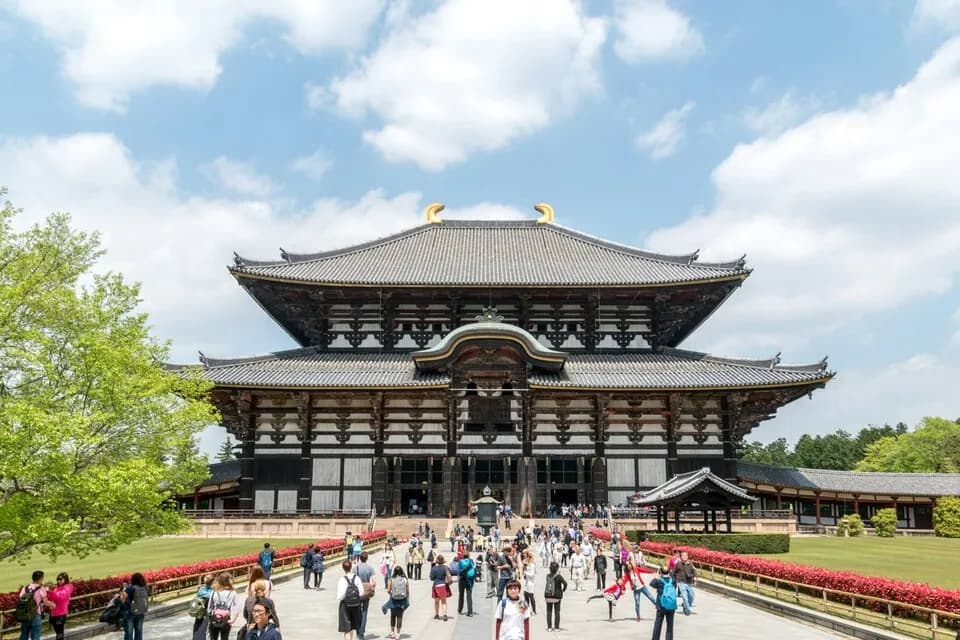
- Hours: 07:30–17:30 (Apr–Oct) / 08:00–17:00 (Nov–Mar)
- Open year-round
Buddhism and Japan's Ban on Meat
The reason Japan became a 'land of sashimi' is largely religious and political. After the 40th Emperor Tenmu issued a ban on eating meat in 675, the Japanese people moved away from meat consumption for approximately 1,200 years.
As a result, protein intake came to rely on fish. Instead of grilled meat dishes, methods such as boiling or blanching, seen in Sukiyaki, Shabu-shabu, and Gyudon, became mainstream. The Yakiniku (焼肉) that many enjoy today is a culture spread by Koreans after the start of the modern era.
💡 TourCast Tip
Inside the Great Buddha Hall of Todai-ji, there is a pillar with a large hole at its base. This hole is said to be the same size as the Great Buddha's nostril. Legend has it that if you can crawl through this hole successfully, you will enjoy a long life and good luck, so many travelers line up to take the challenge.
Nara Park (Deer Park)The symbolic landscape of Nara featuring the 'bowing deer'
Nara Park (奈良公園)
Alongside Todai-ji, Nara Park is an indispensable representative attraction of Nara.
The official name is Nara Park, but it actually refers to a vast area including the surroundings of Todai-ji. Therefore, you can encounter plenty of deer on the way from Kintetsu-Nara Station toward Todai-ji, meaning you don't necessarily have to move deep into the center of the park.
The reason there are so many deer around Todai-ji stems from a legend that 'Mrigadava (Deer Park)' was the site of the Buddha's first sermon to his five disciples. Animals considered sacred in Buddhism naturally settled around the temple.
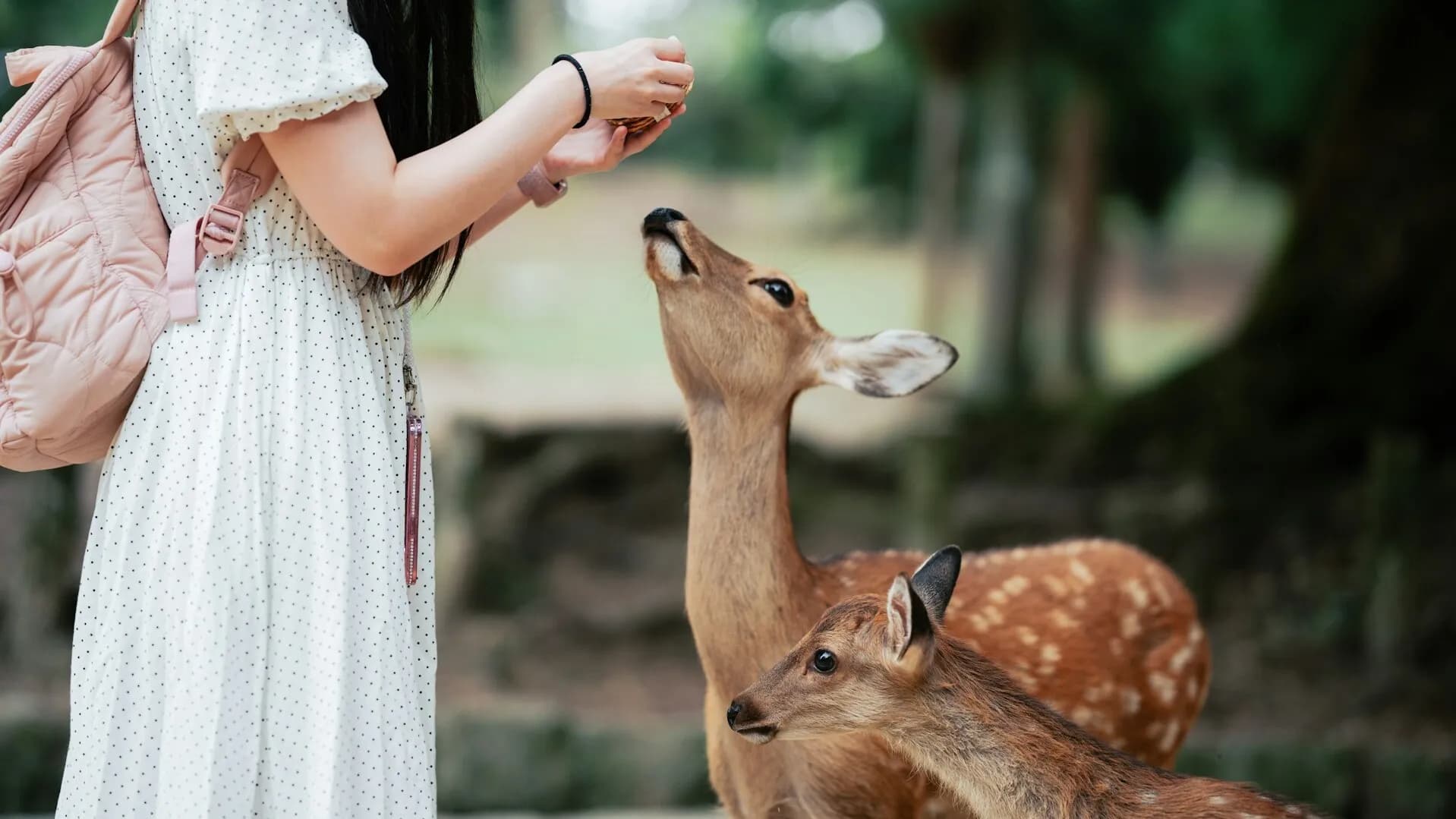
Nara's deer are famous for the image of reacting when you bow to them, but this is the result of deer learning that they can receive food if they lower their heads. In other words, it's not a display of manners but an instinctive behavior expecting 'deer senbei' (special crackers).

- The deer of Nara are designated as National Natural Monuments and are protected.
- Precautions:
- Spring: Caution is needed as mother deer can be sensitive while protecting their fawns.
- Autumn: It is the breeding season, so some stags can become aggressive.
- Early Morning: Deer are often hungry and may approach you more aggressively than usual.
- Hygiene: There is a lot of deer droppings around the park, so it is best to watch your step while walking.
Warning Against Illegal Filming at Nara Park
Recently, there have been several cases at Nara Park where individuals pretend to film deer while secretly recording female tourists. These videos are then illegally posted to SNS or YouTube disguised as Nara Park introductory content.
As instances of travelers' faces being exposed without blurring have been confirmed, please be extra cautious when visiting.
- If you detect suspicious filming nearby: Move away immediately and report it to local facility staff or the police.
- If such a video is discovered: Report it immediately through the platform's customer center or request its deletion.
💡 TourCast Tip
If you buy deer senbei, never hide them in your bag or pocket. The deer can tell exactly where the crackers are by scent alone, and they may bite your clothes or nudge you with their heads if you don't give them out quickly. Once you have given all the crackers, showing your empty palms spread out is the best way to make the deer turn away.
Recommended Courses Before Heading to the AirportBeach walks to leave travel memories and last-minute shopping before departure
The final journey of the standard course concludes near Kansai Airport. Utilize your remaining time before boarding to enjoy last-minute shopping or relieve travel fatigue while soaking in the seaside atmosphere.
1) Sennan Marble Beach
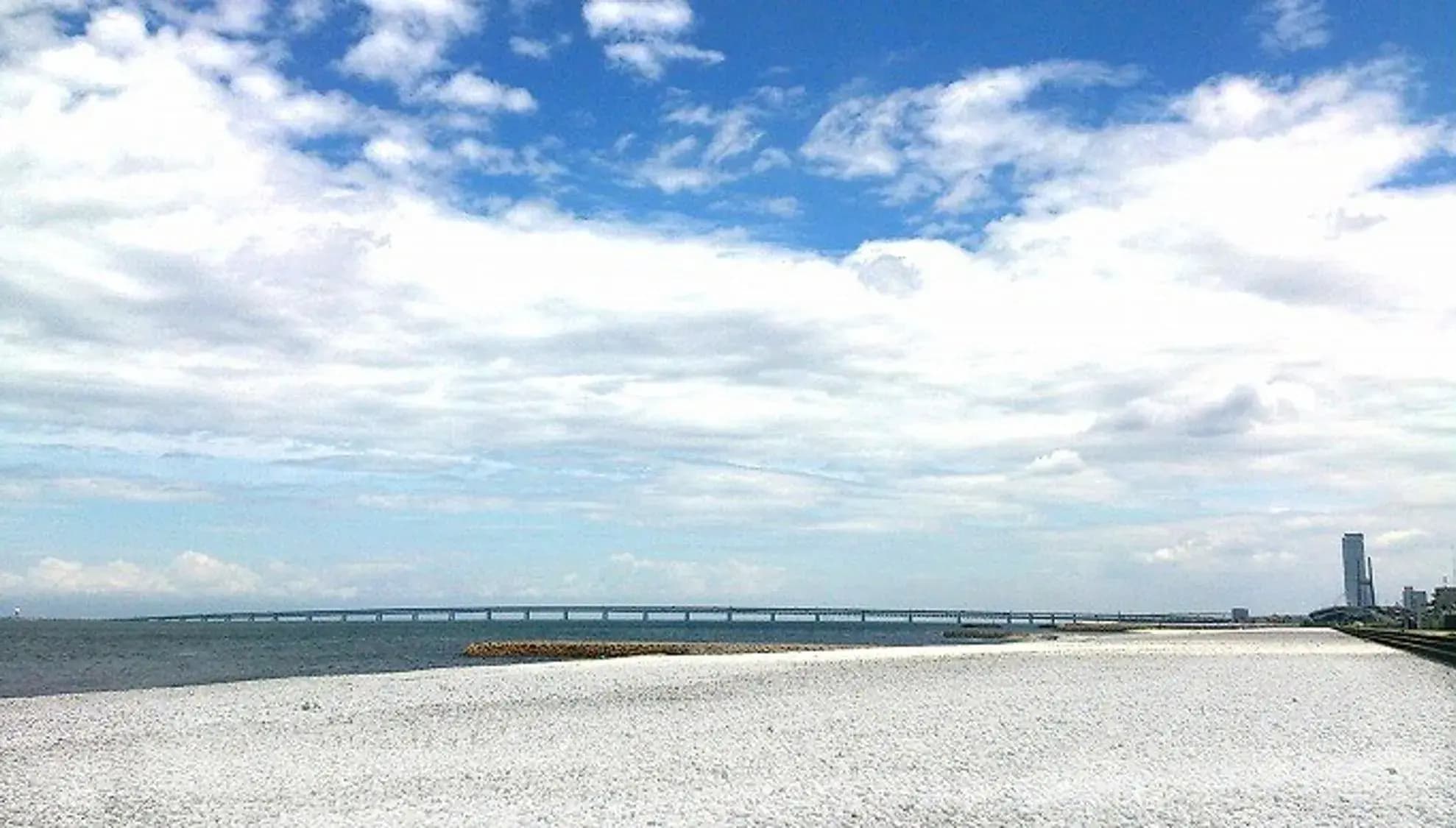
This is a beach made of white marble pebbles rather than sand, offering an exquisite exotic landscape that contrasts with the blue sea. From here, you can see planes taking off and landing at Kansai Airport very closely. Its beautiful sunset makes it a popular date spot for local couples.
2) Rinku Premium Outlets
A large-scale outlet mall where you can finish your shopping right before departure. If you lack time to move to Sennan Marble Beach, visiting Rinku Marble Beach right next to the outlet offers a similar vibe.
- Transfer Tip: After shopping, you can use the paid shuttle bus (Sky Shuttle) going directly to the airport to save yourself the trouble of moving with heavy luggage.
💡 TourCast Tip
Rinku Premium Outlets is well-equipped with large coin lockers, making it convenient to store your suitcases. However, they may fill up on weekends or holidays, so it's better to visit a bit early. If you plan to take the shuttle bus after shopping, be sure to check the stop location and times in advance so you aren't rushed for your departure.