Osaka & Kyoto Travel Plan: Day 2 Standard Guide Embracing the Thousand-Year CapitalThe thousand-year capital; a historic city where one day is not enough.
Kyoto, often called 'Japan's Gyeongju' or the 'Thousand-Year Capital,' is a city where history and tradition breathe. As the name suggests, it embraces numerous tourist attractions, to the point that one day is insufficient to feel Kyoto's true charm.
If you have time, it is most desirable to stay for at least 2–3 days and tour slowly by dividing the city into zones.
- East: Kiyomizu-dera, Gion District, Ginkaku-ji
- West: Arashiyama (Chikurin, Togetsukyo), Kinkaku-ji
- South: Fushimi Inari Shrine (Thousand Torii Gates)
- To properly complete the recommended day trip itinerary, you must depart from Umeda Station or JR Osaka Station before 8:00 AM.
How to Travel Around Kyoto?
Kyoto is very popular as a day trip destination because it can be reached from Osaka in about an hour by train. However, the travel distances between major attractions are longer than expected and involve significant walking, meaning stamina consumption is considerable, especially during the sweltering summer.
For those traveling with parents or on a family trip with young children, consider a comfortable bus tour instead of the hassle of public transportation. These provide a much more relaxing journey by connecting landmarks in a dedicated vehicle along with deep historical commentary from a guide.
💡 TourCast Tip
Kyoto is famous for high public transport congestion even within Japan. Since bus queues become very long during cherry blossom or autumn foliage seasons, you need the flexibility to mix subway and bus lines or utilize taxis to reach major hubs.
Exclusive TourCast Tips!
What if your Kyoto visit falls on a weekend or public holiday?
Kyo-Train Garaku is a special Hankyu Railway sightseeing train that operates only on weekends and public holidays.
It runs from Osaka Umeda Station to Kyoto-Kawaramachi Station, and the biggest advantage is that it can be boarded with just a standard fare, without express fees or reservations. All seats are unreserved, so no separate seat ticket is required.
The interior of each car is decorated with gardens themed after Kyoto's four seasons and Japanese-style aesthetics, turning the travel time itself into an extension of the trip.
However, it only makes 4 round trips per day, making it quite rare. We highly recommend checking the official timetable in advance to fit it into your schedule.
Since it is a popular train, it is best to arrive early at the starting station, Osaka Umeda, to line up. Note that seats facing the window or Japanese garden-themed seats fill up instantly.
ArashiyamaThe western landmark of Kyoto enjoyed through Togetsukyo, the bamboo forest, and Tenryu-ji.
Arashiyama (嵐山)
Arashiyama was loved as a villa district for nobles during the Heian period and remains a premier tourist destination representing Kyoto today. It boasts beautiful scenery year-round, blending exquisite natural landscapes with tranquil temples.
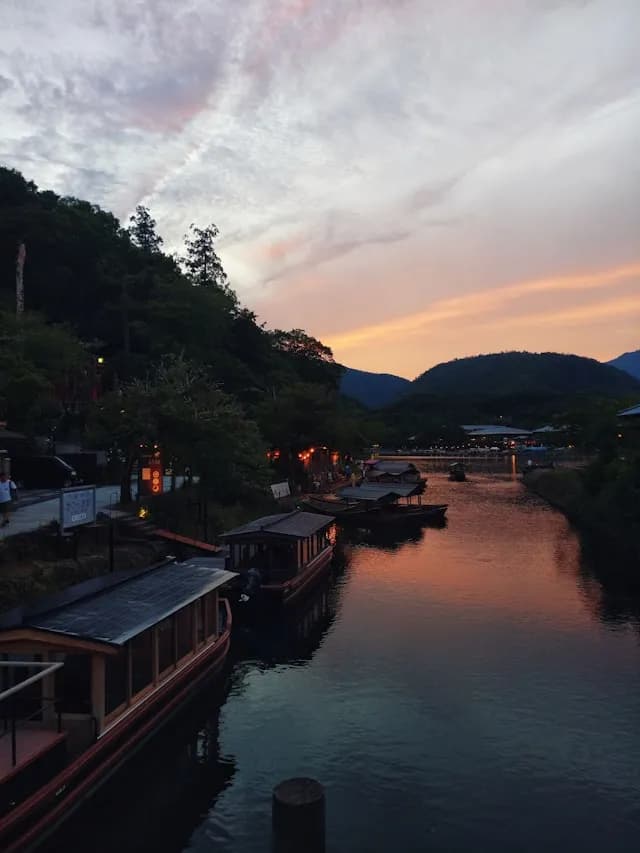
The symbol of this area is the 154m wooden bridge 'Togetsukyo.' Named because 'the moon looks as if it is crossing it,' this bridge serves as the starting point for Arashiyama travel.
Specifically, during the autumn foliage season (mid-Nov to early Dec), visitors skyrocket, and accommodation rates can more than double, so booking months in advance is essential for an autumn trip.
1) Togetsukyo Bridge
Togetsukyo (渡月橋)
Togetsukyo is a historic bridge said to have been first built in the 9th century. The current appearance was rebuilt in 1934 using a concrete structure reinforced with cypress wood, combining traditional beauty with modern safety. The scenery of the surrounding mountains reflected in the river is superb.

2) Chikurin & Bamboo Railway Crossing
Arashiyama Chikurin (嵐山竹林)
The Chikurin (Bamboo Grove), where bamboo towers toward the sky and lines the walking path, is the most popular photo spot in Arashiyama. Google Maps marks two areas, so visit according to your goal.
- Chikurin: The core section featuring a neatly maintained path and dense bamboo forest.
- Bamboo Railway Crossing: A section where an actual railway track harmonizes with the bamboo forest, allowing for more emotional photography.

3) Tenryu-ji Temple
Tenryu-ji (天龍寺)
Designated as a World Heritage Site, Tenryu-ji is famous for the Sogenchi Garden, Japan's first special scenic spot. Looking at the garden from inside the room feels as if you are viewing a landscape painting framed in an ink-wash style.
- Hours: 08:30 – 17:00
- Admission:
- Garden only: Adult 500 yen / Elem. & Middle 300 yen
- Temple Interior: Additional 300 yen to the above fee
- 'Cloud Dragon' (Unryu-zu) ceiling painting: Separate 500 yen (Open Sat/Sun/Holidays; daily during spring/autumn)
4) Kimono Forest
Kimono Forest (キモノフォレスト)
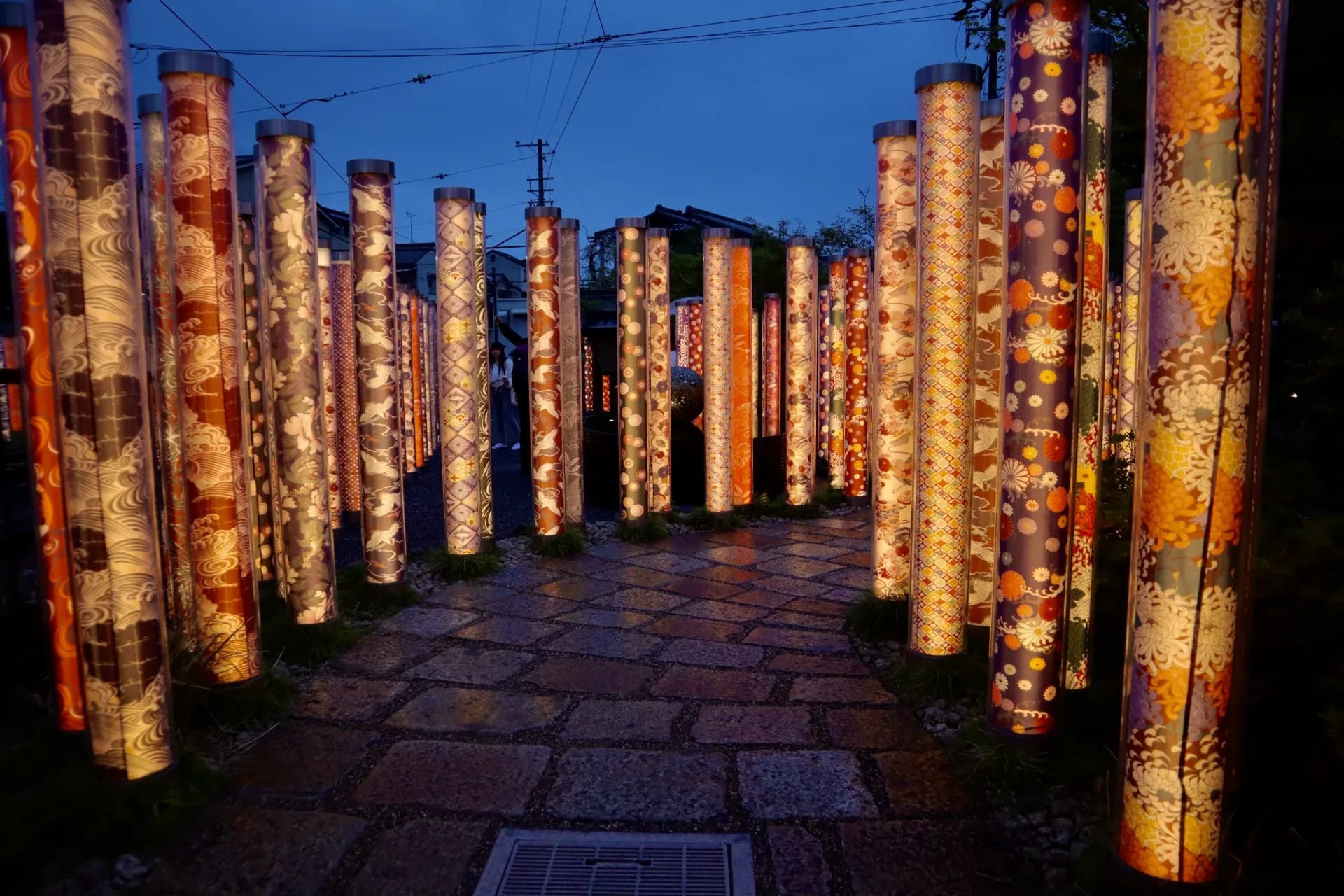
An exotic space installed within the Randen Arashiyama Station grounds, where 600 acrylic pillars containing colorful kimono fabrics are arranged like a forest.
- Illumination: The lights turn on from sunset until 21:00; you must visit at night to see its true splendor.
5) Sagano Romantic Train
Sagano Torokko Train (嵯峨野トロッコ列車)
A sightseeing train where you can enjoy the spectacular views of the Arashiyama valley. Reservations are incredibly fierce, especially during the foliage season.
- Booking Tip: Online reservations open at 10:00 AM exactly one month before the boarding date. Car No. 5, 'The Rich' (an open-air car without glass windows), is the most popular.
- On-site Purchase: Even if online bookings are closed, don't give up as same-day tickets are sold on a first-come, first-served basis.
💡 TourCast Tip
Arashiyama gets extremely crowded even by 10:00 AM. If you want a solo photo without people in the Chikurin, we strongly recommend an 'early bird' strategy, arriving before 8:00 AM. After touring, having a latte at '% Arabica' while looking at Togetsukyo is the standard finishing touch.
Kinkaku-jiThe symbol of Kyoto clad in 20kg of pure gold.
Kinkaku-ji (金閣寺)
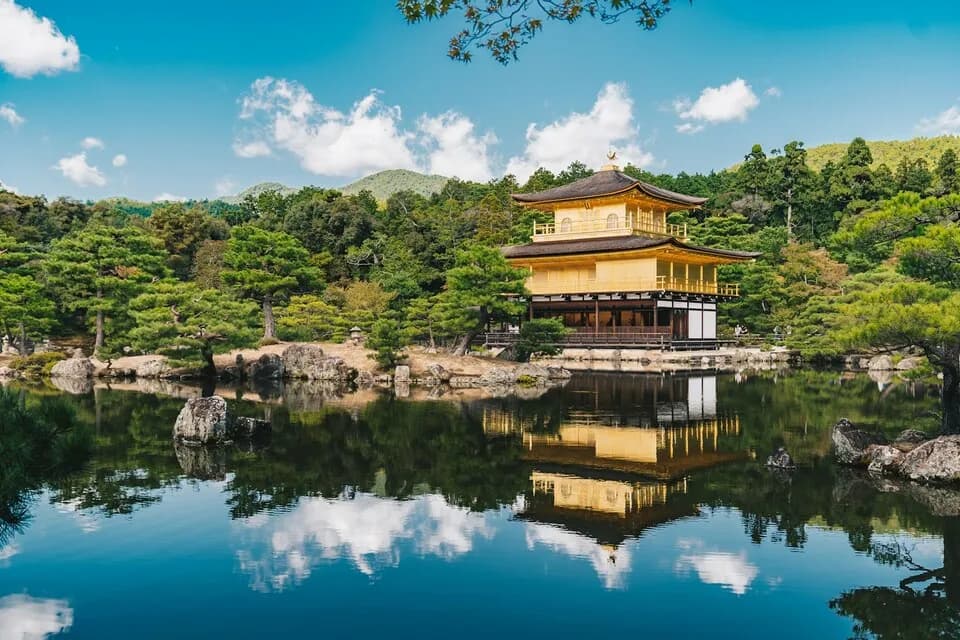
Listed as a UNESCO World Heritage Site, the formal name of Kinkaku-ji is Rokuon-ji. However, it is much more famous worldwide as 'Kinkaku-ji' (Golden Pavilion) due to the overwhelming presence of its 3-story structure entirely covered in gold leaf.
This brilliant temple suffered the tragedy of being destroyed by fire in 1950 by a novice monk but was restored to its current state in 1955. During restoration, approx. 20kg of actual pure gold leaf was used to regain a radiance that is almost blinding. It is also the setting for Yukio Mishima's novel 'The Temple of the Golden Pavilion,' adding to its artistic value.
📖 Interesting Stories Related to Kinkaku-ji
-
Treasure in the Pond: Legends say that gold actually sits at the bottom of the pond below the pavilion.
-
Gold and Silver Harmony: There is a famous story that 'Ginkaku-ji' (Silver Pavilion) was intended to be covered in silver to rival the golden Kinkaku-ji, but due to budget shortages, it was left with the natural beauty of the wood, keeping only the name Silver Pavilion.
-
Hours: 09:00 – 17:00 (Open year-round)
-
Admission:
- High school and above: 500 yen
- Elem. & Middle school: 300 yen
💡 TourCast Tip
Kinkaku-ji is best viewed in the afternoon when the sunlight hits it directly, allowing you to appreciate the golden pavilion's reflection on the water at its most beautiful. Also, the admission ticket is designed like a lucky charm, making it a great travel souvenir.
Nijo CastleA UNESCO World Heritage Site holding the authority of the Tokugawa Shogunate.
Nijo Castle (二条城)
Nijo Castle is the only castle structure in Kyoto that is not a temple or shrine, and it is designated as a UNESCO World Heritage Site. It was constructed by Tokugawa Ieyasu, the founder of the Edo Shogunate, as a residence for his visits to Kyoto and to flaunt his authority.
This is a historic site that witnessed both the beginning and the end (Taisei Hokan) of the Edo Shogunate. The interior is decorated with brilliant gold-leaf murals and exquisite carvings, hinting at the shogun's immense power at the time.

The 'Nightingale Floors' to Alert of Assassins
The highlight of a Nijo Castle tour is the corridor known as 'Uguisubari' (Nightingale Floors). It earned this name because the squeaking sound made when walking on it resembles a bird's chirp.
-
Thorough Security: This is a wisdom of traditional Japanese architecture and a security system that prevented even the most stealthy assassins from entering silently, as metal clamps under the floors create friction and sound.
-
Hours: 08:45 – 17:00 (Last entry 16:00; Ninomaru Palace closes at 16:10)
-
Closing Days: Dec 29 – 31 (Verify annual schedule)
-
Admission:
- General Ticket: Adult 800 yen / Middle & High 400 yen / Elem. 300 yen
- Admission + Ninomaru Palace: Adult 1,300 yen / Middle & High 600 yen / Elem. 300 yen
- Honmaru Palace (Advance booking required): Adult 1,000 yen (Admission separate)
💡 TourCast Tip
To protect cultural properties, you must remove your shoes to enter Nijo Castle, and photography is strictly prohibited inside. The grounds are quite vast with little shade, so carry a parasol on hot days and take time to rest while enjoying the beautiful scenery of the Ninomaru Garden.
Exclusive TourCast Tips!
Route Strategy for Kiyomizu-dera
If you are planning to visit Kiyomizu-dera, Sannenzaka/Ninenzaka, and Gion after arriving at Kyoto-Kawaramachi Station from Umeda, following only the recommended routes on Google Maps might lead you to walk up from Gion.
While this route is possible, Sannenzaka and Ninenzaka have many traditional stone steps and inclined paths, so continuous uphill movement can be physically taxing.
Therefore, taking a bus from Kawaramachi Station to the 'Kiyomizumichi' stop to tour the highest point, Kiyomizu-dera, first, and then walking DOWN through Sannenzaka/Ninenzaka toward Gion is a much more efficient way to save your knees and energy.
Choosing the downhill route makes it easier to spot cute cafes and souvenir shops. Just remember the fun legend that falling on the Sannenzaka steps brings disaster within 3 years—so watch your step even while distracted by the view!
Kiyomizu-deraA legendary temple for praying for safe childbirth and love.
Kiyomizu-dera (清水寺)
Founded in 798 by Sakanoue no Tamuramaro, a representative warrior of the Heian period and a descendant of Baekje immigrants. Legend says he met the monk Enchin while hunting deer to cure his wife's illness and founded the temple to repent for taking life.
Due to this background, it is famous as a temple to pray for safe childbirth. The current buildings were rebuilt by the 3rd Edo Shogun, Tokugawa Iemitsu, after being destroyed during the Onin War in 1467.
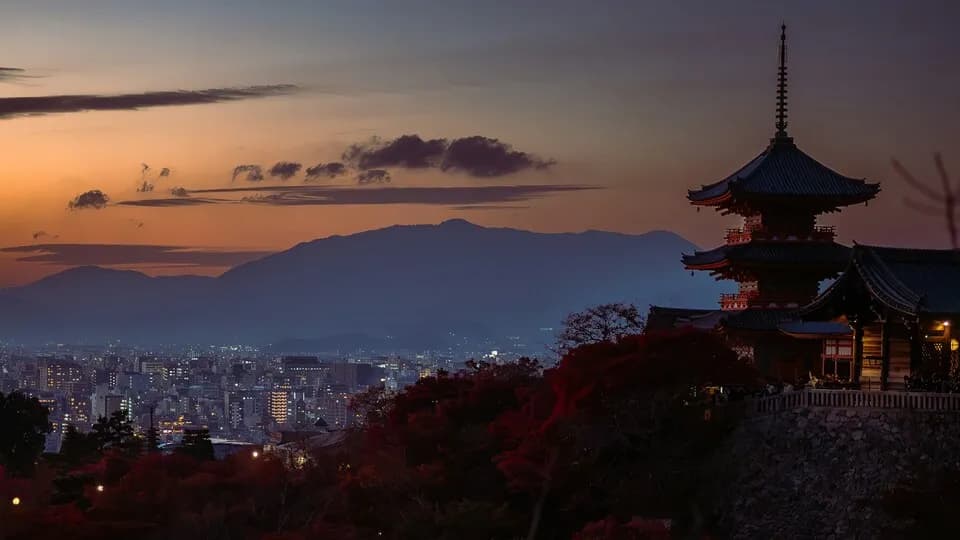
1. Highlights of Kiyomizu-dera
- Kiyomizu Stage: A terrace in front of the main hall supported by 139 massive wooden pillars without a single nail. The Japanese proverb "To jump off the stage of Kiyomizu" means 'to embark on something with life-or-death determination.'
- Jishu Shrine: Famous as a shrine for matchmaking. The 'Koiurana-no-ishi' (Love Fortune Stones) are popular—if you can walk successfully between two rocks with your eyes closed, your love will come true.
- Otowa Waterfall: The water falling into three streams symbolizes wisdom, love, and longevity.
- Legend says drinking from all three out of greed negates the effect, so exercise the virtue of moderation by choosing only the one you desire most.
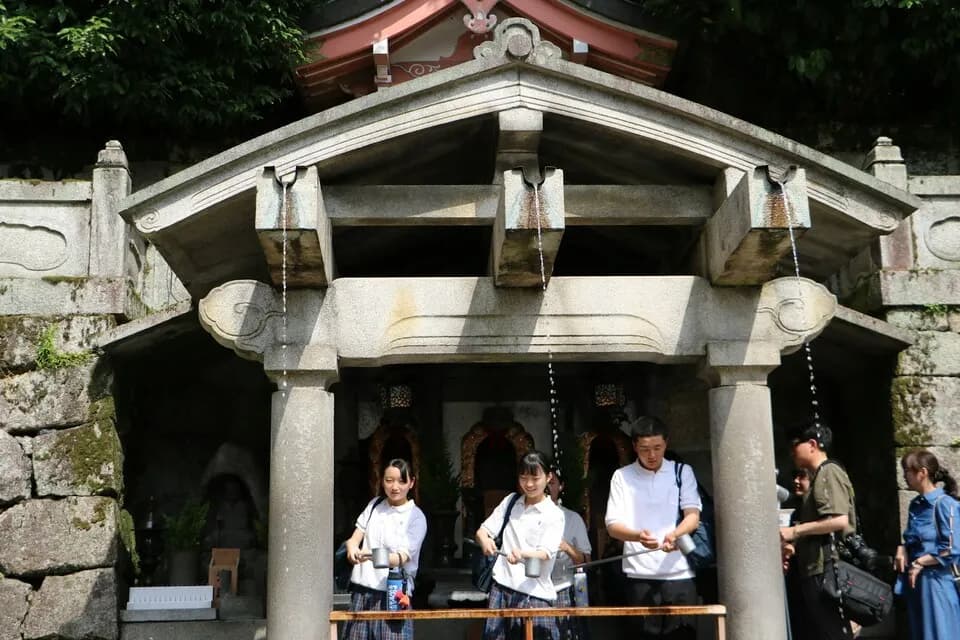
2. Baekje Traces in History
The fact that Tamuramaro was of Baekje descent is an interesting point for historians. Although immigrants were deeply assimilated into Japanese society by then, Kiyomizu-dera stands as a symbol of the harmonious fusion of Baekje's technological influence and Japan's unique culture.
- Hours: 06:00 – 18:00 (Extended to 18:30 depending on season)
- Night Opening: Open until 21:00 during special spring/autumn viewings (Cherry blossoms/Autumn foliage)
- Admission: Adult 500 yen / Elem. & Middle 200 yen
💡 TourCast Tip
The Eleven-headed Thousand-armed Kannon Bodhisattva statue enshrined in the main hall is a 'Hibutsu' (Secret Buddha) not usually shown. It is revealed only once every 33 years; after the last showing in 2000, the next scheduled revelation is in 2033. If you plan to visit Kyoto then, it will be a once-in-a-lifetime opportunity.
Sannenzaka & NinenzakaQuiet streets lined with traditional houses and stone steps.
Sannenzaka, Ninenzaka (三年坂, 二년坂)
Located on the way to Kiyomizu-dera, Sannenzaka (46 steps) and Ninenzaka (17 steps) are the most 'Kyoto-like' streets you shouldn't miss. They are a feast for the eyes, lined with souvenir shops, traditional teahouses, and restaurants converted from wooden houses.

1. Fun Legends and Survival Strategies(?)
- A Chilling Legend: There is a spooky saying that falling on Sannenzaka means disaster or death within 3 years. This likely originated as a warning to 'walk carefully' since the slopes are steep and made of stone.
- Disaster Prevention: If you do trip, don't panic—just buy a gourd-shaped charm from a nearby shop. It is said the gourd sucks in the bad luck and prevents disaster. (Many agree this is a clever marketing tactic by local merchants.)
2. Recommended Photo Spot: Yasaka Pagoda
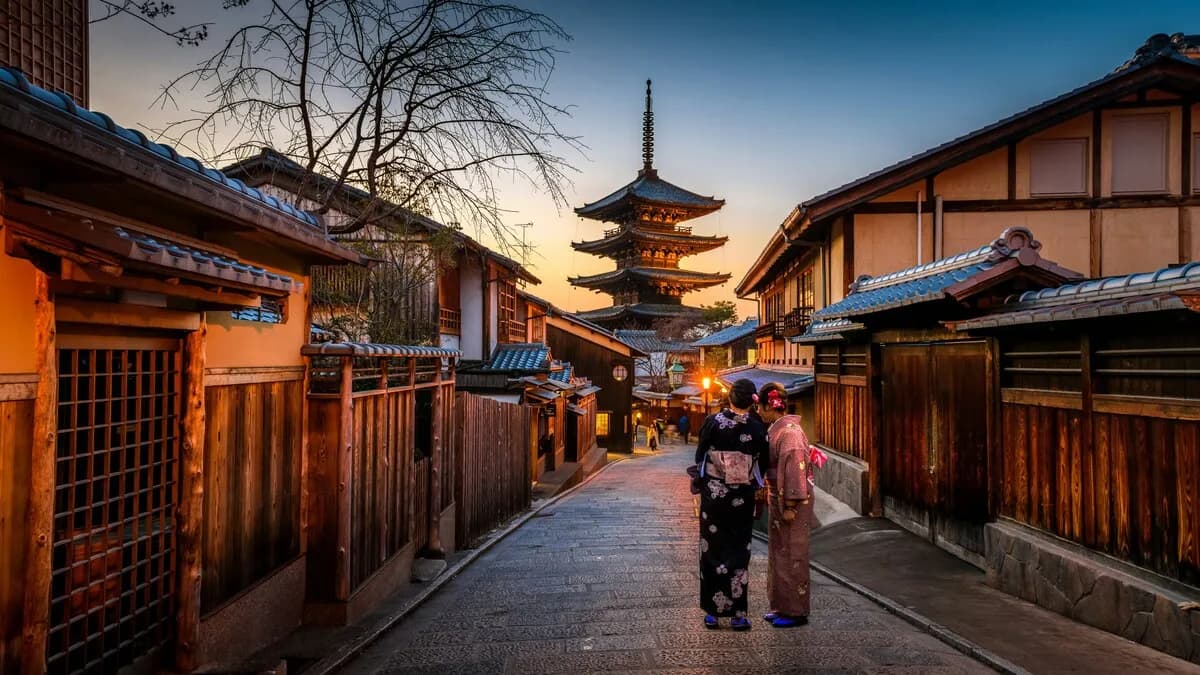
At the junction from Sannenzaka to Ninenzaka stands the massive Yasaka Pagoda (Hokan-ji Five-story Pagoda). The view of this elegant pagoda framed by narrow alleys is the iconic composition representing Kyoto; taking a photo with the pagoda as a backdrop is an essential part of the trip.
💡 TourCast Tip
Ninenzaka is home to the world's first Starbucks Coffee Kyoto Ninenzaka Yasaka Chaya featuring tatami seating. It preserves the 100-year-old house exterior so well that even the sign isn't obvious, so look closely. While it's great to enjoy coffee in a tatami room, be prepared for long waits.
Yasaka Pagoda of Hokan-ji (八坂塔)The only five-story pagoda in Japan where internal viewing is possible.
Yasaka Pagoda (八坂塔)
Prince Shotoku, one of the greatest figures in Japanese history, founded three temples to spread Buddhism. One of those is Hokan-ji, the symbol of Kyoto's Higashiyama.
While the main hall of the temple is gone today, the Yasaka Pagoda (Five-story Pagoda), said to have been built by Iriji, a descendant of Goguryeo immigrants, remains to testify to its history. During the Sengoku period, this pagoda was a strategic point where conquering forces would plant their flags first to display victory.
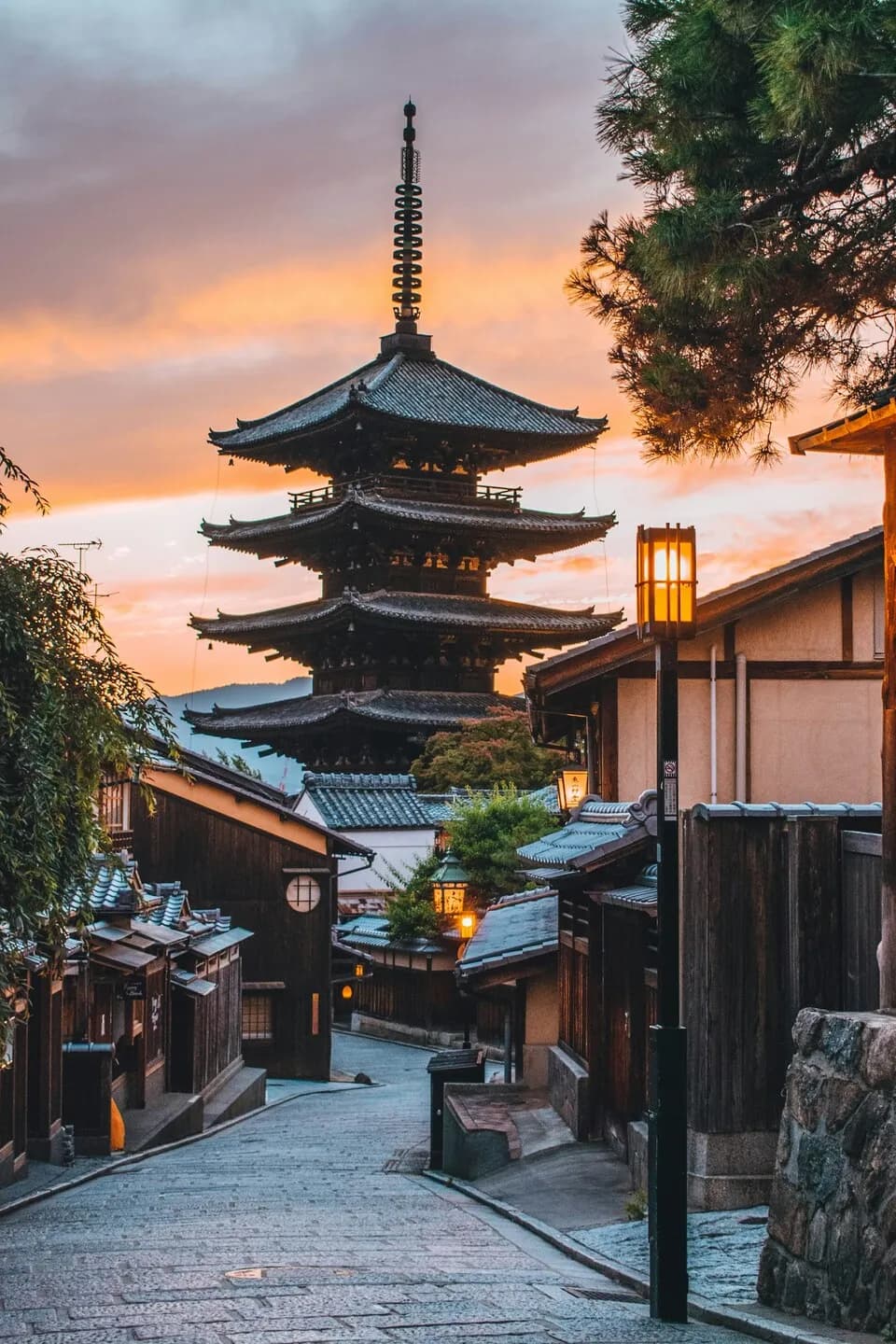
The Uniqueness of the Yasaka Pagoda Tour
- Only Internal Public Access: Although there are many five-story pagodas in Japan, the Yasaka Pagoda is the only one where the general public can view the interior. It is a rare chance to directly witness the exquisite internal structure.
- Most Japanese Scenery: The sight of the Yasaka Pagoda towering at the end of the Sannenzaka and Ninenzaka traditional streets is considered 'the most Japanese street in Japan,' making it a top photo spot in Kyoto.
- Viewing Precaution: Interior access ends at 4:00 PM, which is quite early.
- Itinerary Tip: It is best to stop by on the way down from Kiyomizu-dera, or if internal viewing is your goal, plan to visit here before Yasaka Shrine or Gion.
💡 TourCast Tip
The alleys near Yasaka Pagoda are most beautiful during the sunset. The red sunlight filtering through the pagoda and the street beginning to light up create an illusion of time travel. Even if you miss the internal viewing time, capture a lifelong photo with the exterior as your backdrop in the evening.
Gion (祇園)The street of Geisha and historical ties with Korea.
Gion (祇園)
We recommend the Gion area for concluding your day in Kyoto. At night, its sophisticated wooden buildings blend with brilliant lighting to provide Kyoto's uniquely romantic night landscape.
Gion is placed last in the schedule because the nearby Yasaka Shrine is open 24 hours, allowing for viewing regardless of time, and you must visit during the evening when the iconic Geisha (Maiko) start their activities to fully feel the atmosphere.
⚠️ Photography and Access Restriction Notice
Due to excessive tourist crowds, entry and photography in some private residential alleys of Gion have been strictly prohibited since April 2024. Violations can result in fines, and specifically, unauthorized photography or blocking the path of Geisha are subject to strong penalties, so please be extremely careful.

1) Yasaka Shrine
Yasaka-jinja (八坂神社)
Yasaka Shrine enshrines Susanoo-no-Mikoto from Japanese mythology, who is worshipped as the deity who dispels plagues. Interestingly, this site has deep historical ties with ancient Korea.
- Traces of Silla: According to the 'Nihon Shoki' (Chronicles of Japan), there is a record that Susanoo-no-Mikoto descended to a place called Soshimori in Silla after being expelled from heaven. 'Soshimori' means 'cow head' in Korean, which is the background for him being called Gozu Tenno (Ox-Head Heaven King).
- History of Immigrants: It is known that in the 9th century, Iriji, a former envoy from Goguryeo, brought the deity of Silla's Mt. Gozu to Kyoto and performed rites, which is considered the origin of Yasaka Shrine.
- Komainu: The lion-like stone statues at the shrine entrance mean 'dogs from Koma (Goguryeo)' and serve to ward off bad luck, much like Korea's Haetae.
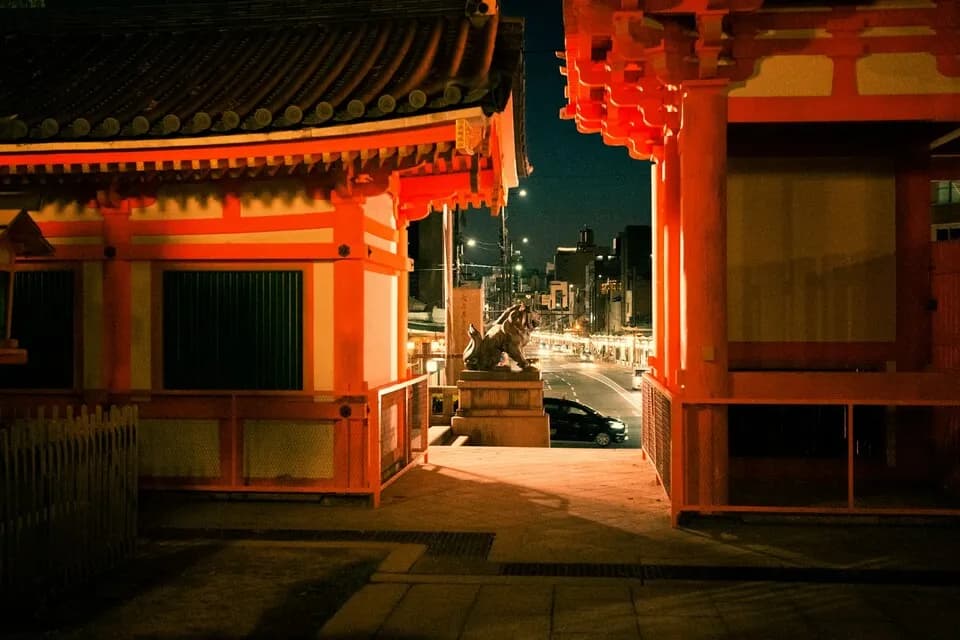
2) Hanamikoji-dori
Hanamikoji (花見小路)
Well known as the street of Geisha, Hanamikoji is a district where 18th and 19th-century traditional houses are perfectly preserved. All utility poles are buried underground, boasting a traditional aesthetic with an open sky.
Around dusk, you might catch a glimpse of a Geisha heading to a banquet. However, you must recognize that they are artists at work, not entertainers, and observe the etiquette of viewing only from a distance.

- Hours: Shrine grounds open 24 hours (Shops and prayers vary by time)
- Admission: Free
💡 TourCast Tip
The 'Gion Matsuri,' one of Japan's top three festivals held every July, is a rite that originated from this Yasaka Shrine. Since crowds from all over the world gather to see the massive float processions (Yamaboko), check your accommodation and transport routes well in advance if traveling during this time.
Returning to OsakaThe return route from Gion Kawaramachi Station to Osaka.
This concludes our recommended one-day course through the heart of Kyoto. While a tight schedule, it is a packed course that allows you to enjoy both Kyoto's day and night if you depart early from Osaka.
After viewing Yasaka Shrine, walk slowly westward along the main street of Gion toward Kawaramachi Station. (Approx. 12-minute walk)
Osaka Return Guide
Before crossing the Kamo River, 'Gion-shijo' Station appears first; this is the station to use if taking the Keihan Line to Yodoyabashi Station. If taking the Hankyu Line to Umeda, you must cross the river to 'Kyoto-Kawaramachi Station,' so be careful not to get confused.
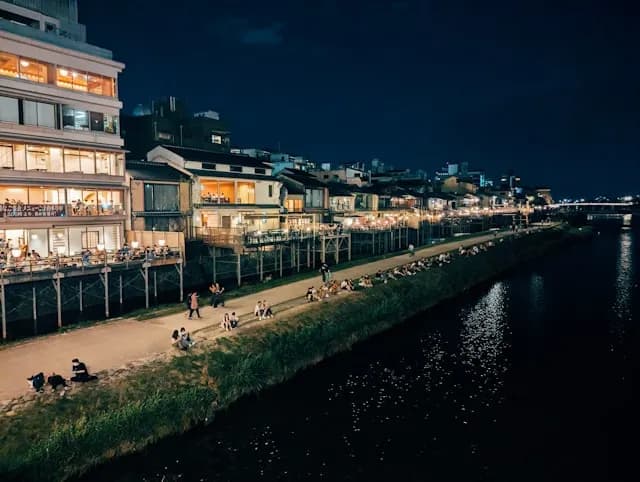
- Via Hankyu Line: Taking a Limited Express train from Kawaramachi Station will get you to Hankyu Umeda Station in about 45 minutes.
- Via Keihan Line: Board at Gion-shijo Station to move to central Osaka (Yodoyabashi, Kitahama, etc.).
💡 TourCast Tip
Walking along the Kamo River in summer, you can see people dining on outdoor terraces (Noryo-yuka) protruding over the river. Before returning to Osaka, sitting by the river for a moment to feel the Kyoto night breeze is a great way to wrap up the trip's lingering emotions.