Okinawa Flight GuideInternational and domestic routes, plus travel tips
The international airports in Okinawa are Naha Airport (OKA) on Okinawa Main Island, Shimojishima Airport (SHI) in Miyakojima, and Ishigaki Airport (ISG) in Ishigaki Island.
Miyakojima and Ishigaki Island
To travel from Okinawa Main Island to Miyakojima or Ishigaki Island, you need to use Japanese domestic flights such as JAL, ANA, or Skymark.
However, these two islands are famous for their scenery and are often called 'the most beautiful sea in Japan' and 'the Maldives of Japan'. If you have time, they are well worth adding to your trip.
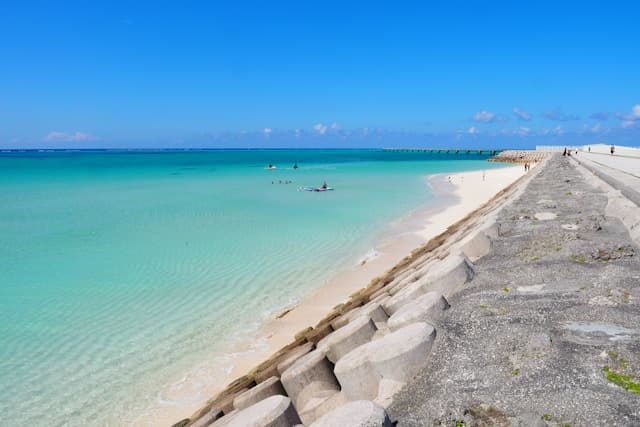
For reference, Miyakojima has two airports.
- Miyako Airport (domestic flights)
- Shimojishima Airport (SHI) (international flights)
For international flights, you will use Shimojishima Airport on Shimoji Island, so be careful not to confuse the airports.
Where to Stay in Okinawa and Recommended HotelsArea features and how to choose your hotel base
1) Where should you stay in Okinawa?
In Okinawa, the main hotel areas are divided into four key locations.
- Around Kokusai-dori (Naha)
- Around American Village
- Onna resort area
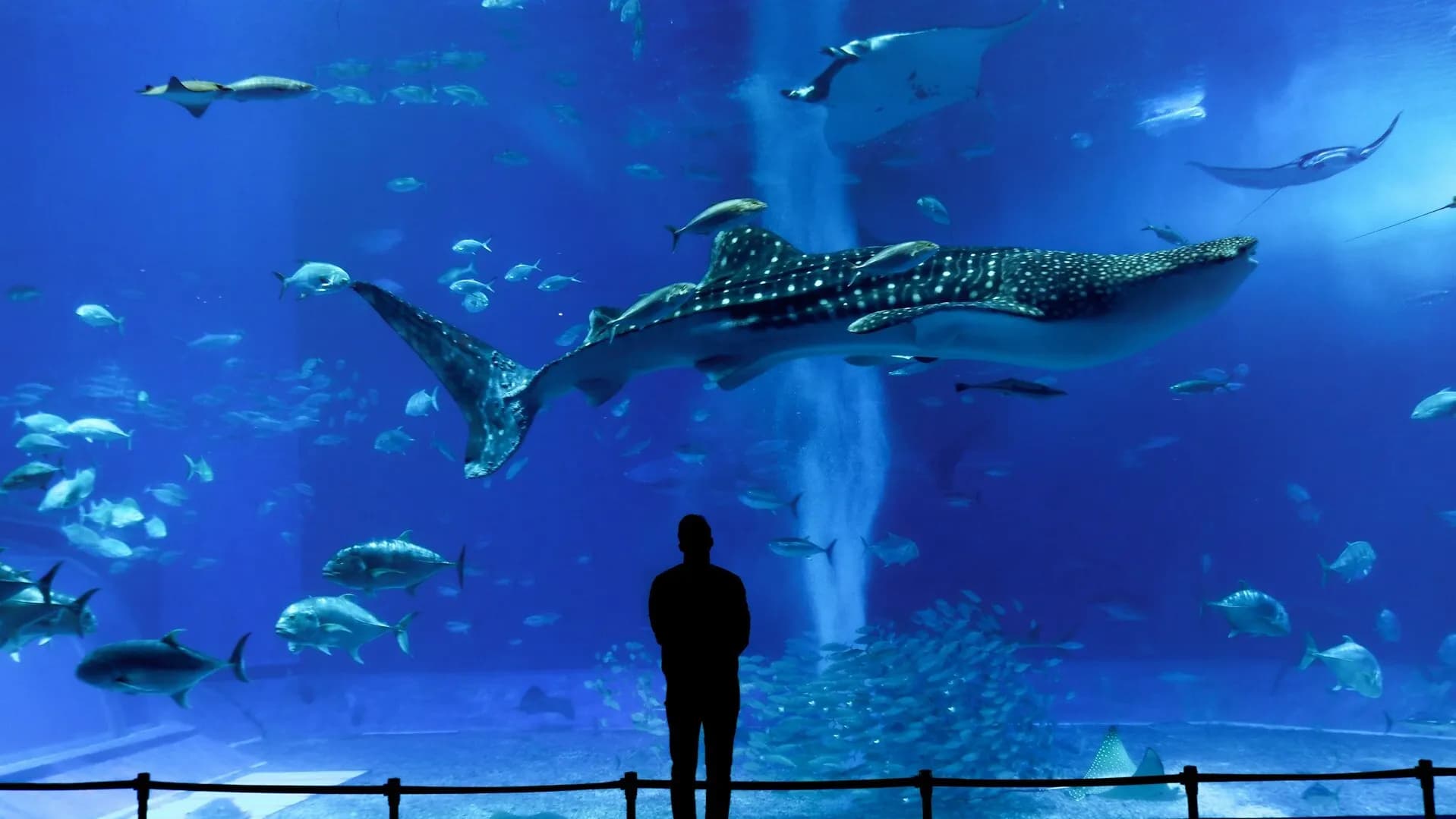
- Near Churaumi Aquarium
Among these four areas, the upper areas are closer to the city and more lively, while the lower areas feel more like a resort with beautiful nature.
In particular, the Onna resort area has many resorts with ocean-view rooms, balconies, and private beaches, so it is ideal for travelers who want a relaxing resort stay.

Even if a beach is described as a hotel’s private beach, visitors can usually still enter.
However, there may be extra fees for facilities such as parking and showers. Many hotels offer free umbrellas, chairs, beach towels, and more for guests, so it is best to check the hotel’s official website in advance.
2) Recommended hotels
No rates are available for the stay from 2026-10-15 to 2026-10-16. Please try different dates.
3) Stay in one place only?
If you have a rental car, changing hotels often is not a big problem. If you do not mind packing and unpacking, you can move flexibly based on your route.
However, moving hotels every time without a car can be a heavy burden.
For this reason, it is recommended to stay several nights near Kokusai-dori or American Village, and then spend the last night at a resort hotel to relax.
If you want to reduce luggage movement, staying in one hotel for multiple nights can be a better choice.
4) Accommodation tax? Bath tax?
Okinawa currently does not charge an accommodation tax, so travelers do not need to worry about it. However, keep in mind that some hotels with large public baths or hot spring facilities may charge a separate “bath tax”.Small unexpected payments of around 150 yen can reduce the enjoyment of your trip. If you know this in advance and prepare some coins, you can travel in a more relaxed and comfortable way.
From the second half of 2026, a new accommodation tax will be introduced. An extra 2% of the room rate (up to 2,000 yen per person per night) will be added, so keep this in mind when planning future trips.
The Origin of Okinawa Manhole DesignsHistory and how it became a tourism feature
In Japan, there is a unique culture of creating manhole covers with local designs. The starting point was Okinawa.
In 1977, a city employee in Naha reportedly had an idea while eating grilled fish at a bar:
'What if we draw fish swimming in clean water, made clearer by sewer development, on a manhole cover?'This idea became a real design, and Naha City still uses the same design today.
After that, manhole covers with local themes spread across Japan,
and one person’s idea became the trigger that turned plain manholes into tourism resources.
Today, there is even a travel trend of taking photos of unique manhole covers, and it has become one of the fun parts of traveling in Japan.
If someone had opposed this idea at the time, this unique culture might never have existed.
The first manhole cover🎨 Pokemon manhole covers
Today, you can also find Pokemon-themed manhole covers across Japan. Okinawa has 12 designs featuring Pokemon such as Emolga and Wailord, and you can also spot them near Churaumi Aquarium.
Pokemon manhole cover types and locationsAbout Kyu-bon (Old Bon Festival)Background, timing, and travel notes
Japan’s summer ancestral festival, Obon (お盆), was originally held on the 15th day of the 7th month in the lunar calendar. Due to calendar reforms in the Meiji period, it is now usually observed around August 15 on the modern calendar.
However, in Okinawa, the 15th day of the 7th lunar month is still celebrated as 'Kyu-bon (旧盆)' in the traditional way, and many attractions and shops may close on their own during this period.
So, when planning your trip, you should always check opening days and hours in advance.
Okinawa UNESCO World Heritage GuideGusuku sites and Ryukyu Kingdom heritage
Okinawa’s World Heritage is officially listed as 'Gusuku Sites and Related Properties of the Kingdom of Ryukyu' and was inscribed as a UNESCO World Heritage Site in 2000.
Detailed explanations for each site are covered in the regional sightseeing sections.
- Nakijin Castle Ruins
- Nakagusuku Castle Ruins
- Shuri Castle Ruins
- Zakimi Castle Ruins
- Katsuren Castle Ruins
- Sono Hyakutaki Ishimon
- Sefa Utaki
- Tamaudun
- Shikinaen
Okinawa Culture HighlightsArchitecture, arts, and traditional performances
1) Red roof tiles 🧱
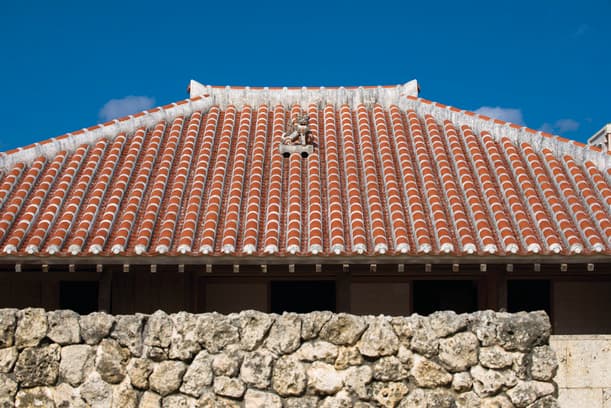
In Okinawa, gray roof tiles were originally used, but from the 18th century, red roof tiles became common.
At the time, the population grew from 100,000 to 200,000 in 100 years, and firewood, an essential daily resource, became scarce. As a result, red tiles, which can be made at a lower firing temperature, replaced gray tiles, which required higher temperatures.
However, at that time, tiled houses were limited to castles and the nobility. Ordinary people could use tiled roofs only after the Meiji Restoration.
2) Shisa 🦁
The lion-shaped guardian spirit called “shisa” is commonly seen across Okinawa.
Usually, a pair is placed together: the male opens its mouth to bring in good fortune, and the female closes its mouth to keep good fortune from escaping.
It is a custom to place them in a high position to protect the home or village. A well-known example is a male shisa placed on the roof of a house.
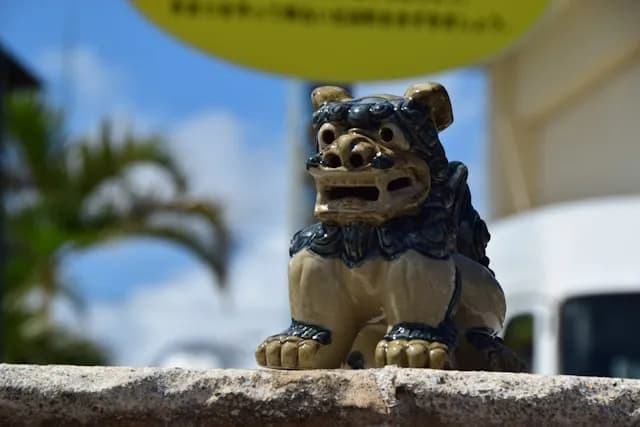
The oldest shisa in Okinawa is known as Tomori no Shisa (富盛のシーサー), and it was placed in 1689.
It still shows bullet marks from the Battle of Okinawa, giving it high historical value.
3) Sanshin 🎶
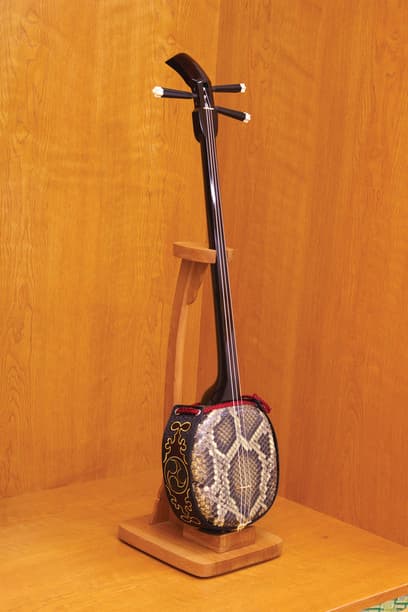
The sanshin (三線) is Okinawa’s traditional instrument, made using habu snake skin. (For reference, habu snakes are also used to make a type of infused liquor.)
4) Ryukyu traditional dance 💃
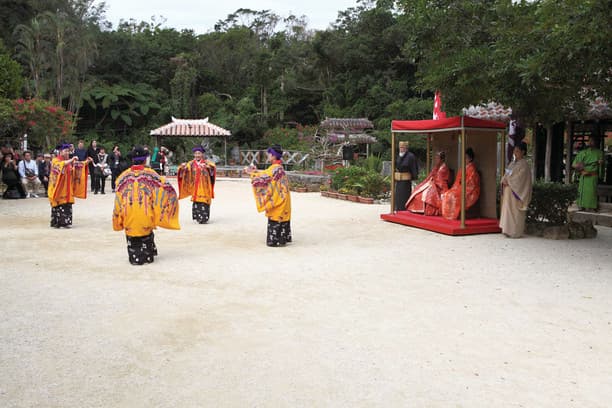
Ryukyu traditional dance began as a performance to welcome Chinese envoys during the Ryukyu Kingdom period. It is generally grouped as follows.
- Classical dance
- Modern folk dance
- Creative dance
In particular, Eisa performances (a creative dance style) can be seen at places like Ryukyu Mura or Okinawa World.