IntroductionThe north, a different side of Okinawa
The most famous attraction in Northern Okinawa is, without a doubt, Churaumi Aquarium🐋.
Along with this, the Yanbaru area is known for its rich ecosystem and deep forests—so much so that it is often called “the Amazon of Okinawa.”
It has a very different atmosphere from the south and central areas, and many travelers visit specifically for that reason.
If beach sightseeing feels repetitive or you want to enjoy trekking in nature, Northern Okinawa is worth adding to your trip.
However, it is not convenient to access by public transport, so a rental car is strongly recommended.
Buses run only a few times a day, so checking timetables in advance and planning your route carefully is essential.
Also, if you stay in Naha, it can be difficult to visit both Manzamo and Churaumi Aquarium as a day trip without a rental car.
In that case, a well-planned bus tour route can be the most efficient choice, letting you visit major sights comfortably in one day.
Meet the sea cliffs, caves, and Ryukyu traditionsA village where ocean, cliffs, and caves come together
1) Manzamo
万座毛
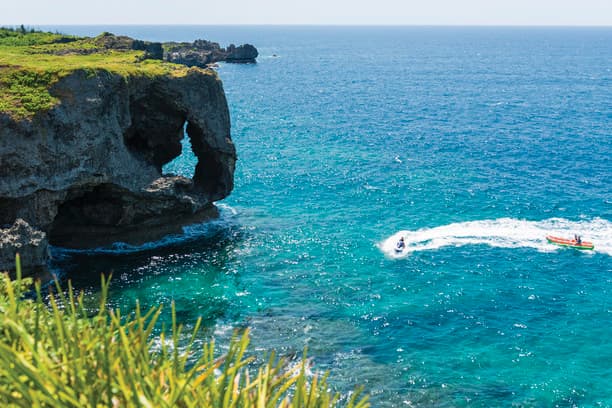
Manzamo is one of Okinawa’s best-known scenic spots, famous for its coastal cliff shaped like an elephant’s trunk. 🐘
However, the place is not named “Elephant Rock.” The name 'Manzamo (万座毛)' is said to come from a story in which the 19th King of the Ryukyu Kingdom visited and described it as a “field where ten thousand people could sit.”
At that time, elephants did not exist in Okinawa, so the concept of an elephant was not part of local life. For that reason, the nickname 'Elephant Rock' likely appeared much later as a visual comparison.
It is often considered a must-visit spot on an Okinawa trip.
- Admission: 100 yen (elementary school age and above)
- Hours: 09:00 ~ 19:00
- Closed: Open year-round (may close temporarily due to typhoons)
2) Blue Cave
青の洞窟
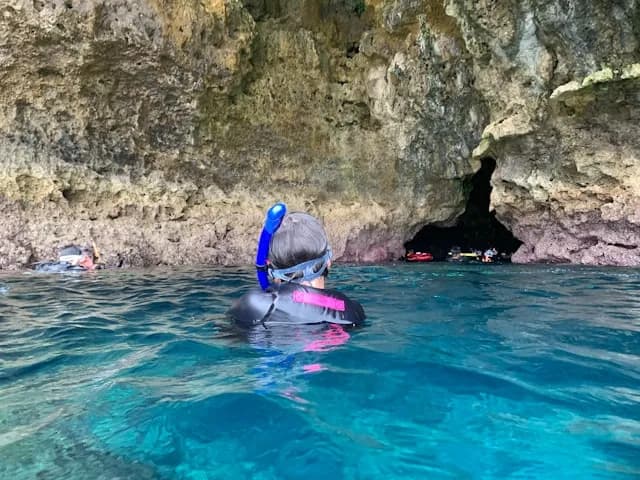
Blue Cave is considered one of Okinawa’s top snorkeling spots. The sunlight filtering through the clear sea creates a stunning blue glow. 🌊
You can book snorkeling or a trial dive through a diving company. You can also rent equipment only, or bring your own and enter on your own.
All accidents at sea are your own responsibility, so take safety seriously at all times.
Whether entry is allowed can be checked by the flag color at the Maeda Cape (真栄田岬) management office.
👉 Live conditions
- Blue: Entry allowed
- Yellow: Not allowed (only allowed with a diving company)
- Red: Completely prohibited
- Orange: Tsunami warning (immediately prohibited)
Unlike some Southeast Asian destinations, throwing bread to attract fish is prohibited in Okinawa. Diving inside the cave is also strictly limited for safety reasons.
If entry is not possible, you can use Zanee Beach, which is reachable on foot, as an alternative.
In the Onna area, you can also enjoy activities such as marine walk, sea turtle snorkeling, and whale watching tours (winter only).
3) Ryukyu Mura
琉球村
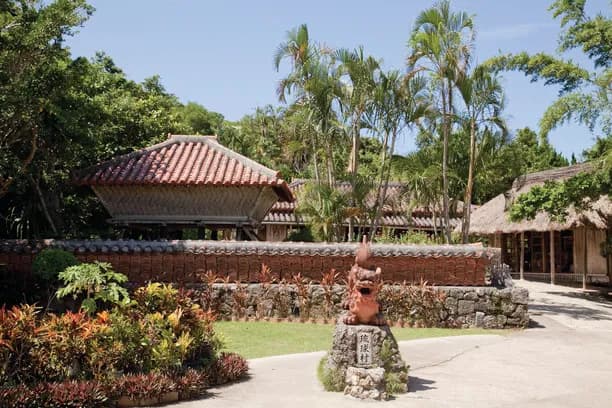
Ryukyu Mura is a traditional theme park where you can experience everyday life from the Ryukyu Kingdom era. It is built with relocated or recreated traditional houses from around Okinawa.
It also recreates the unique structure known as a combined toilet and pigsty (フール), which is worth noticing.
A traditional Eisa performance is held daily at 10:00 / 12:00 / 14:00 / 16:00. After the show, there is also a photo-time dance session with visitors.
-
Admission
- Age 16+: 2,000 yen
- Students under 15: 1,500 yen
- Age 6–15: 800 yen
- Hours: 09:30 ~ 17:00 (last entry 16:00)
- Closed: Open year-round (may close temporarily due to typhoons)
Churaumi Aquarium and a walk through Bise Fukugi Tree RoadWhale sharks and a seaside forest path
1) Churaumi Aquarium
沖縄美ら海水族館
Chura (美ら) means “beautiful” in the Okinawan dialect, and Churaumi means “beautiful sea.” 🌊
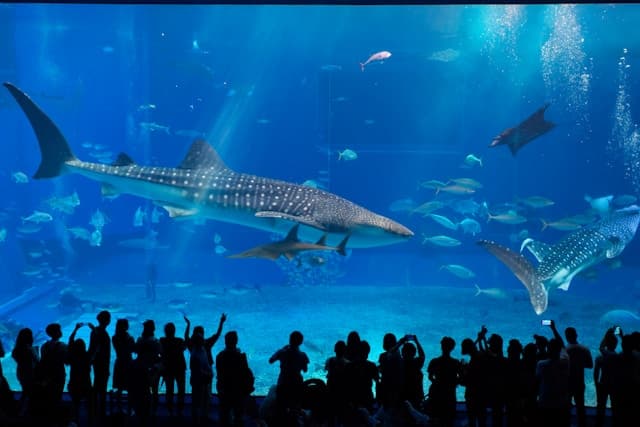
This is one of Okinawa’s signature attractions, located inside Ocean Expo Park. It is famous for its massive main tank where whale sharks over 8 meters long swim.
Every day, the manta ray feeding is at 09:30, and the whale shark feeding is at 15:00 and 17:00.
A dolphin show is also held for about 20 minutes at 10:30 / 11:30 / 13:00 / 15:00 / 17:00.
(※ Times may change or be canceled depending on local conditions.)
-
Admission
- Adult: 2,180 yen
- High school: 1,440 yen
- Elementary & junior high: 710 yen
- Under 6: Free
- Hours: 08:30 ~ 18:30 (last entry 17:30)
- Late Apr–early May, late Jul: 08:30 ~ 20:00 (last entry 19:00)
- August: 08:30 ~ 21:00 (last entry 20:00)
-
Closed
- First Wednesday of December and the following day
- May close temporarily due to typhoons
2) Bise Fukugi Tree Road
備瀬のフクギ並木
Bise (備瀬) is the local area name, and Fukugi (福木) refers to a subtropical tree sometimes called the “happiness tree.” Around 20,000 trees form a tree-lined path of about 1 km. 🌿
Among them, there are two trees that have grown with their roots intertwined. Locals call them
the “Couple Fukugi Trees (夫婦福木)”, and they are considered a spot to pray for harmony and happiness in relationships.
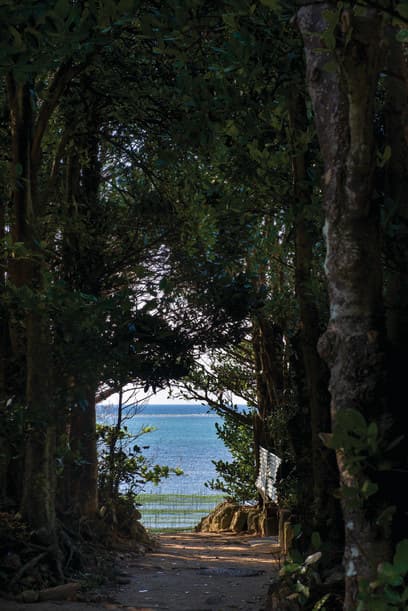
You can also explore the area by water buffalo cart. It is up to 4 people, 2,000 yen, and runs for about 20 minutes.
(It is usually weekend-only, and details should be confirmed locally.)
World heritage ruins, Kouri Bridge, and Heart RockWhere history and the sea meet
1) Nakijin Castle Ruins
今帰仁城跡
If you remember the Okinawa history section, you may recall the Hokuzan (北山) period and the Hokuzan Kingdom. Nakijin was the capital of Hokuzan and the location of the king’s main castle.
Even after Okinawa was unified under the Chuzan Kingdom, it continued to function as a strategic base governing the north.
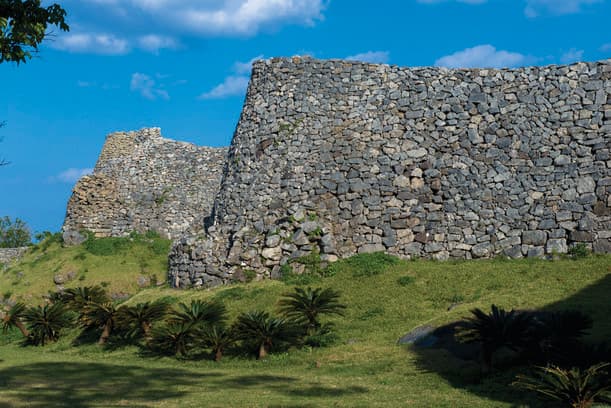
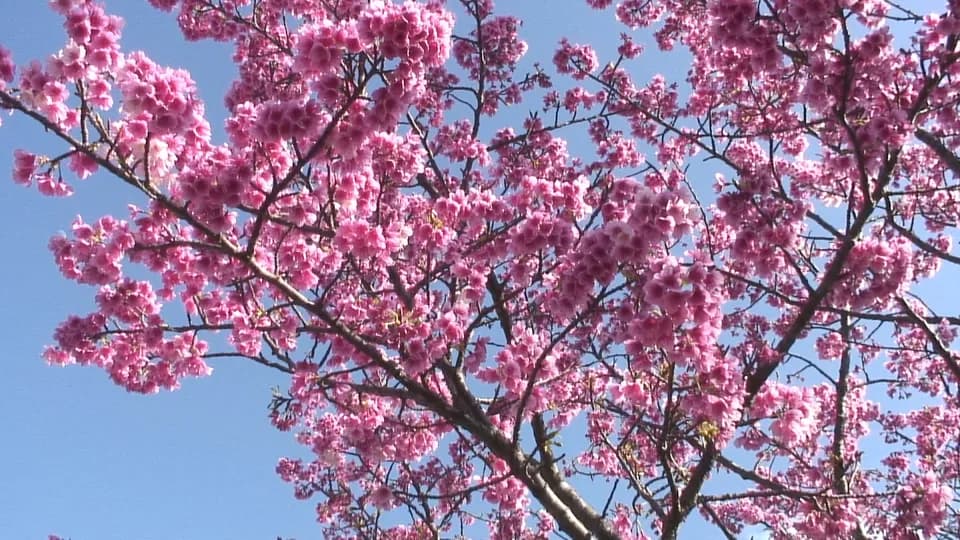
Today, it is a World Heritage site and is also known as one of the earliest cherry blossom spots in Japan.
From mid-January to early February, Kanhizakura (寒緋桜) blooms. Compared to typical cherry blossoms, the color is deeper red and the flowers often hang downward. 🌸
- Admission: Adult 600 yen / junior & high school 450 yen / elementary and under free
-
Hours
- May–Aug: 08:00 ~ 19:00 (last entry 18:30)
- Other months: 08:00 ~ 18:00 (last entry 17:30)
- Closed: Open year-round (may close temporarily depending on local conditions)
2) Kouri Bridge
古宇利大橋
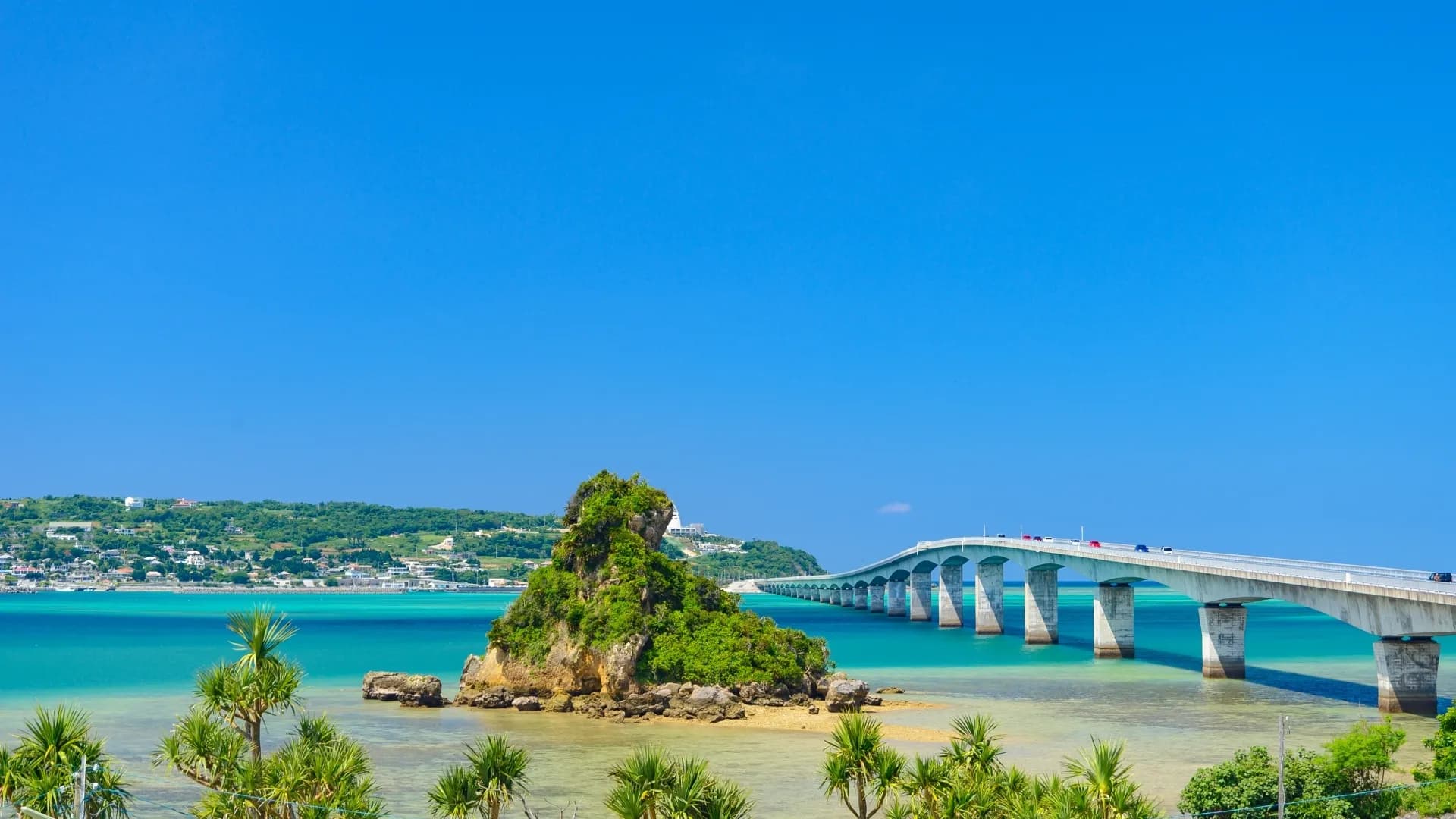
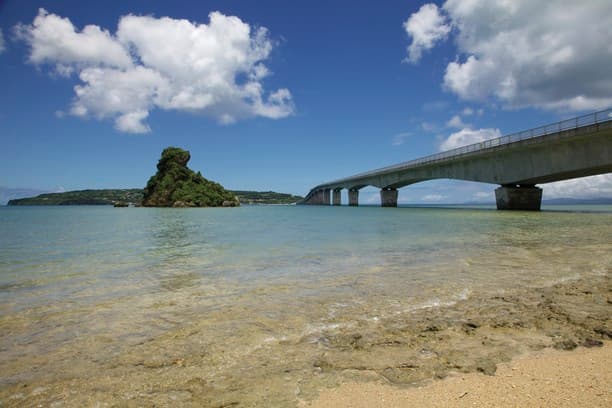
Along with Churaumi Aquarium, this is often listed as a must-do route in northern Okinawa. It connects Okinawa Main Island to Kouri Island (古宇利島) and is a bridge about 2 km long. The emerald-blue sea on both sides is stunning. 🌉
3) Heart Rock
ハートロック
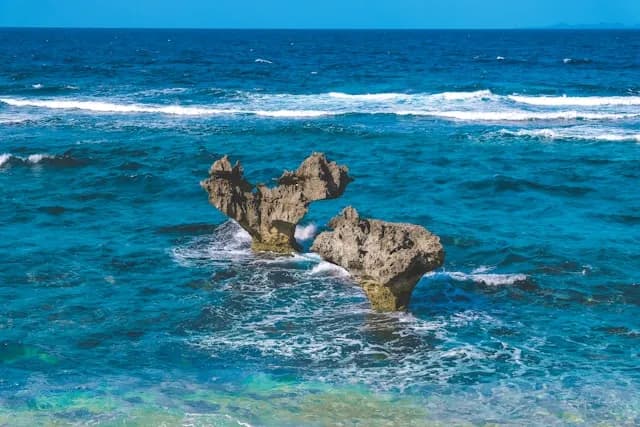
This spot became even more famous after it was featured in a JAL airline commercial filmed by the Japanese idol group 'Arashi'.
A wave-carved rock forms a heart shape, which is why it is called Heart Rock. 💕
Kouri Island is also known for an Okinawan creation legend.
According to the story, it is the place where the ancestors of the Ryukyu people were born.
LocationLong ago, one man and one woman lived on Kouri Island. They survived by eating rice cakes that fell from the sky.
Later, because they saved the rice cakes, no more fell from above, and they survived by eating fish and shellfish.One day, they saw dugongs mating and became aware of the difference between them. They had children, and those children became the beginning of the Ryukyu people, according to the legend.
A related place is Hajimari no Dokutsu (始まりの洞窟), meaning “the cave of the beginning.”
Theme parks, a beer brewery, and an underwater viewTropical fruit and ocean sounds
1) Okinawa Fruits Land
トロピカル王国 OKINAWAフルーツらんど
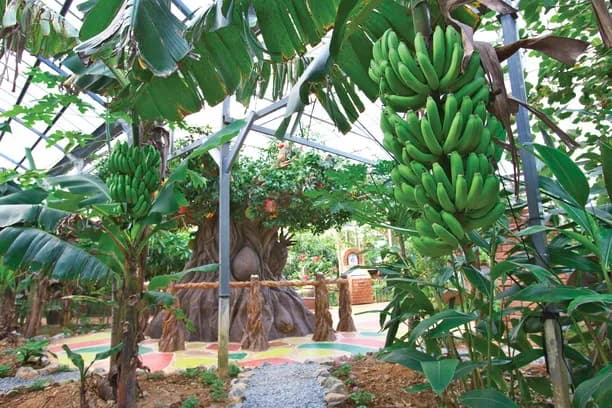
Okinawa Fruits Land is a place where you can see Okinawa-grown fruits and tropical animals, built around the theme of 'The Story of the Tropical Kingdom' with puzzle-style activities.
There are 19 fruit-related questions. You place a stamp sheet into a machine, answer correctly, and collect stamps. It is a fun hands-on activity, especially popular with children.
(The puzzles are available only in Japanese and English, and the Fruits Café cannot be used by itself.)
-
Admission
- Junior high & above: 1,200 yen / Age 4 to junior high: 600 yen
- With acerola mango: junior high & above 2,050 yen / Age 4 to junior high 980 yen
- Fruit board package: 2 adults + 1 child = 5,300 yen
- 1 adult + 2 children = 4,700 yen / 2 adults = 4,700 yen
- Hours: 10:00 ~ 18:00 (last entry 17:30)
- Closed: Open year-round
2) Nago Pineapple Park
ナゴパイナップルパーク
About 100 meters from Fruits Land, this is a pineapple-themed park. Okinawa’s pineapple industry began in 1924.
It started as a simple shop called 'Nago Pine Orchard (名護パイン園)' and grew into today’s theme park. The pineapple cart runs automatically at 3 km/h, and there are also a dinosaur adventure area, a pineapple winery museum, and many food corners.
(The unlimited tasting corner is no longer available.)
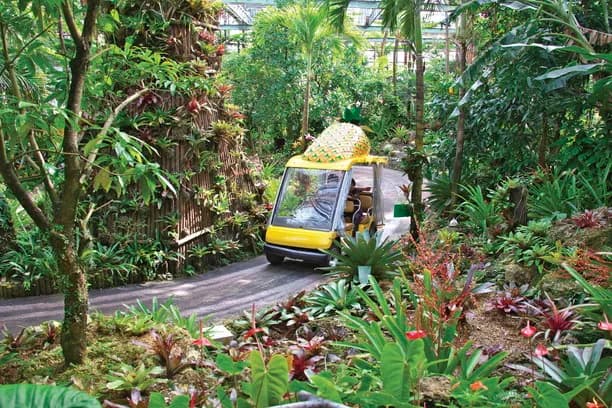
- Admission: Adult 1,200 yen / Age 4–15: 600 yen
- Hours: 10:00 ~ 18:00 (last entry 17:30)
3) Neo Park Okinawa
ネオパークオキナワ
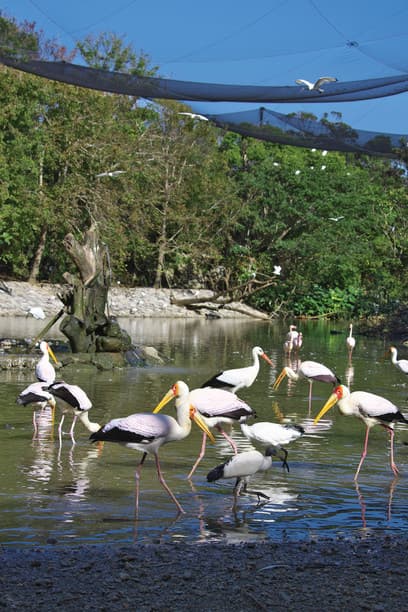
This nature and wildlife park is built on the idea of coexistence between people, animals, and plants. Highlights include a fence-free bird area and an interaction plaza where you can walk with Shiba dogs. You can also see red pandas, an endangered species.
A 3/4-scale recreation of Okinawa’s former light railway runs for about 1.2 km, and you can ride it.

Railway opened in 1914 → expanded routes into the central area → destroyed by the war in 1945
-
Admission
- Park entry: junior high & above 1,300 yen / Age 4 to elementary 700 yen
- Interaction plaza: Age 4+ 400 yen
- Light railway ride: junior high & above 800 yen / Age 4 to elementary 600 yen
-
Hours
- Park: 09:30 ~ 17:30 (last entry 17:00)
- Interaction plaza: 10:00 ~ 17:00 (last entry 16:45)
- Light railway: 10:00 ~ 17:00 (weekdays start from 10:30)
- Closed: Open year-round
- Light railway timetable: red time slots do not run on weekdays
| Hour | Minute |
|---|---|
| 10 | 00 / 30 |
| 11 | - / 30 |
| 12 | 00 / 30 |
| 13 | 00 / 30 |
| 14 | 00 / - |
| 15 | 00 / 30 |
| 16 | 00 / 30 |
| 17 | 00 |
Location Official website
4) Orion Happy Park
オリオンハッピーパーク
This is Okinawa’s best-known beer brand, launched in 1957 during the US occupation. It holds over 50% market share in Okinawa, even though it is only about 1% in the mainland Japan beer market.
Advance reservation is required. The visit includes about 35 minutes of the tour and 20 minutes of beer tasting.
(Drivers will receive a non-alcoholic drink instead.)
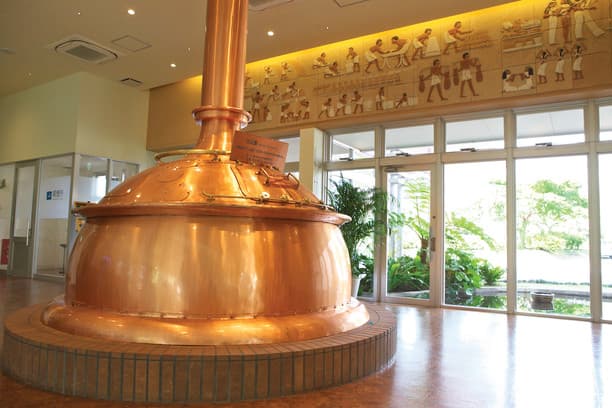
- Tour fee: Adult 500 yen / Age 7–17: 200 yen / Under 6: Free
- Closed: Wed & Thu / Dec 31 to Jan 3
- Tour times: 10 tours between 10:00 and 16:00
5) Underwater Observatory & Glass Boat
海中展望塔
The underwater observatory offers a submarine-like experience, with a 360-degree view of tropical fish below the sea. The glass boat lets you observe the underwater world through a transparent floor.
Visibility can be poor depending on the weather, so check the official site in advance.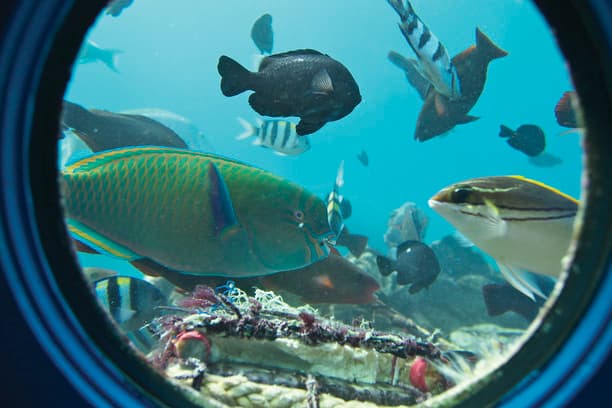
-
Admission
- Observatory: Adult 1,050 yen / Age 4 to junior high 530 yen
- Boat: Adult 1,560 yen / Age 4 to junior high 780 yen
- Set (observatory + boat): Adult 2,100 yen / Age 4 to junior high 1,050 yen
-
Hours
- Observatory: Apr–Oct 09:00–18:00 / Nov–Mar 09:00–17:30
- Boat: Departs at :10, :30, :50 each hour (timetable varies)
- Closed: See the official website
The breath of Okinawa’s far northWorld heritage forests, cliffs, and rare wildlife
1) Yanbaru National Park
やんばる国立公園
During the US occupation era, this area was used as a US military base. About half of the land was returned in 2016, and in 2022 it was designated as a national park.
Despite past environmental concerns during the military era, the presence of rare species such as the 'Yanbaru Kuina' helped recognize the region’s biodiversity value, and the area was listed as a UNESCO World Natural Heritage site in 2021.
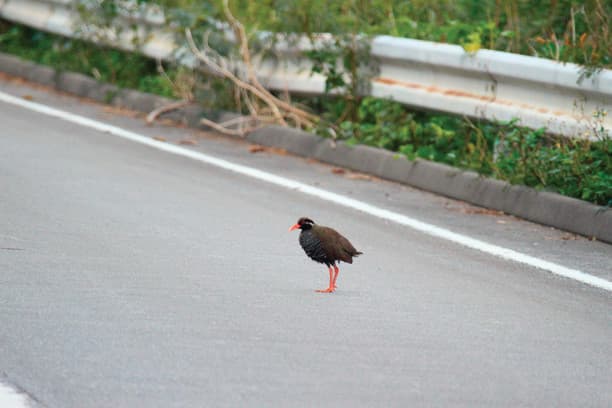
What if you see a bird on the road while driving?
The Yanbaru Kuina is a protected natural monument and an endangered species found only in Yanbaru.
Because it cannot fly, if you see one on the road, you should wait until it is completely out of sight before moving.
2) Daisekirinzan
アスムイハイクス
This is a natural spot formed by uplifted limestone layers from about 200 million years ago. It is also said to be the first sacred place chosen by the Okinawan goddess Amamikyo.
You can trek through primeval forest trails with routes of about 20 to 35 minutes, depending on your fitness level.
There is also a local expert guide tour conducted in Japanese.
-
Entry fee
- Adult 1,200 yen
- Child (age 4–14) 600 yen
- Age 65+ 1,140 yen
- Hours: 09:30 ~ 17:30 (last entry 16:30)
- Closed: Open year-round
3) Cape Hedo (Hedomisaki)
辺戸岬
A viewpoint located at Okinawa’s northernmost tip, where you can enjoy the wide ocean and the dramatic waves crashing into the cliffs. It is also known as a stargazing spot at night.
Preview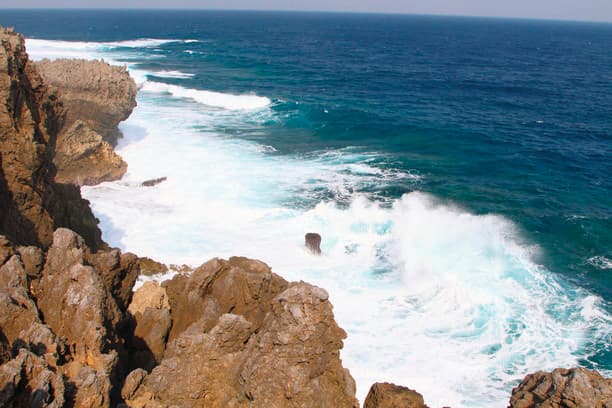
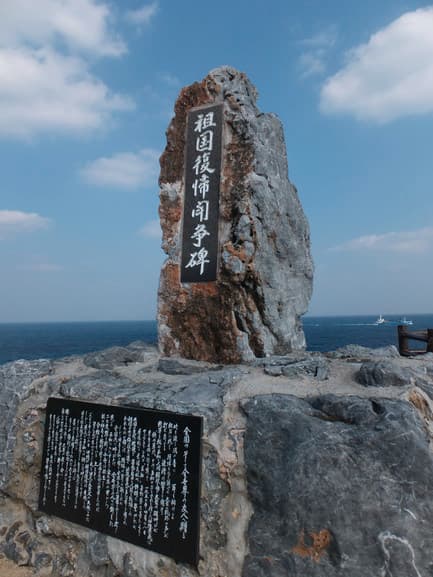
It is also known as a place where Okinawa’s 'movement to return to Japan' began, and a monument called Sokoku Fukki Toso Kinenhi (祖国復帰闘争碑) stands here.
4) Yanbaru Kuina Observation Tower
ヤンバルクイナ展望台
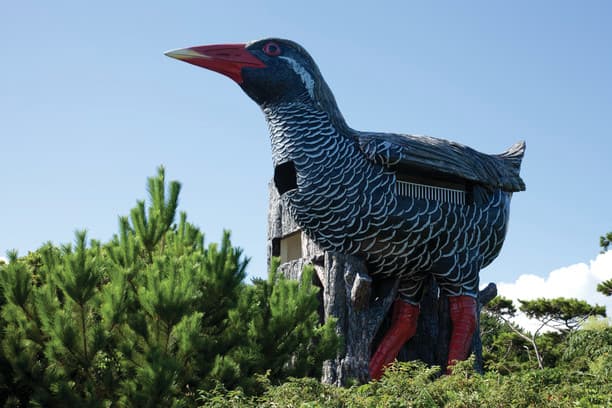
A viewing tower shaped like the endangered 'Yanbaru Kuina', about 11.5 meters tall.
There are windows in the chest and wing area, offering a wide view, and entry is free.