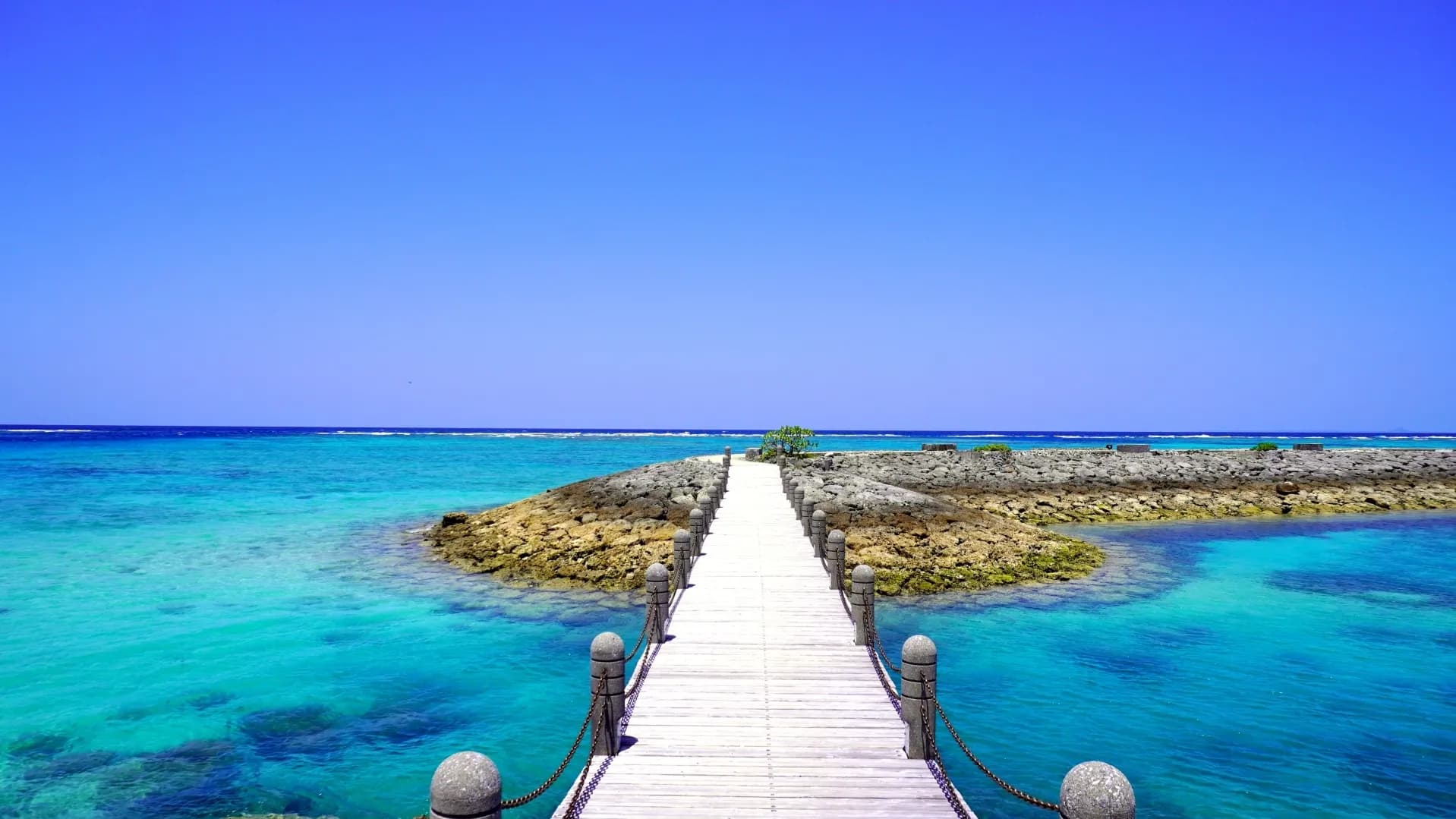
IntroductionCentral Okinawa, where the sea meets history
Central Okinawa, located in the middle of the island, has many resorts along the emerald-blue sea on the west coast. It is a great area to enjoy both sightseeing and relaxation. With wide open ocean views, it is also perfect for a drive along Kaichu Road.
American VillageSunset Beach views and a shopping paradise
アメリカンビレッジ
This area was created by redeveloping a former U.S. military airfield that was returned in 1981. In 2004, it was developed as an American-style complex cultural district, inspired by San Diego Seaport Village.
The main street, Depot Island, is known for its bright and colorful building exteriors, creating a unique atmosphere even within Japan.
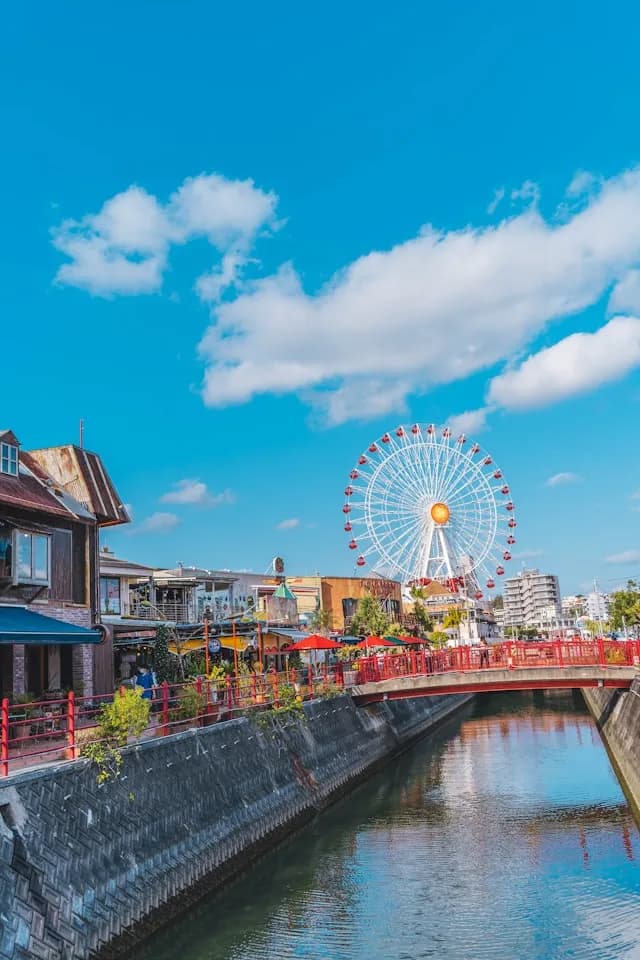
Nearby is Chatan Sunset Beach, a 600 m-long man-made beach that gets busy at sunset, when visitors come to enjoy the red sky. There are also large shopping malls such as AEON Mall, making it a great place for shopping.
View American Village on Google MapsA Village of Pottery and Stone WallsWalk around Zakimi Castle Ruins and Yachimun Village
1) Zakimi Castle Ruins
座喜味城跡
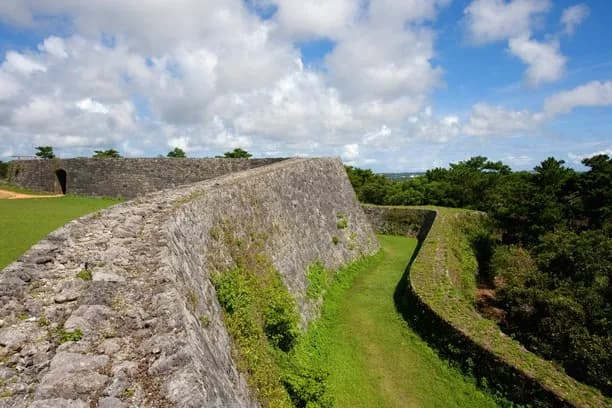
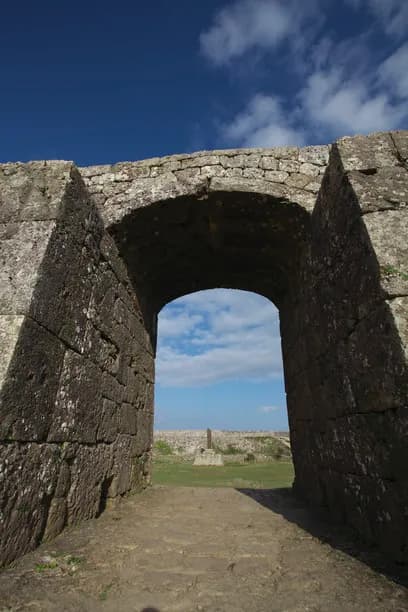
This site is one of the Gusuku Sites and Related Properties of the Kingdom of Ryukyu. It was built by 'Gosamaru', who played a key role in the unification of the Ryukyu Kingdom.
Gosamaru was originally the lord of Nakijin Castle in Hokuzan. After losing a war, he moved down to the area around Yamada Castle (which no longer exists) and stayed there as the local lord.
Later, under King Sho Hashi’s order, 'Zakimi Castle' was designed as a fortress with advantages for both attack and defense, to keep the northern region in check.
There was no actual battle here, and it was destroyed during the Pacific War and restored in 1972.
Today, the oldest arched stone gate in Okinawa remains here, and the site has high historical value.
- Opening hours: Open 24 hours
- Closed: Open year-round
2) Yomitan Pottery Village
やちむんの里
'Yachimun' means Okinawan pottery. It is an Okinawan pronunciation that comes from the Japanese word yakimono (焼き物, やきもの).
The current Yomitan Pottery Village was originally a U.S. military unexploded ordnance disposal site. After it was returned in 1978, four artists gathered and built the first kiln in 1980, forming the village.
The word 'kama (かま)' used here is also an example that suggests pottery techniques were introduced from Korea’s historical kingdoms, such as Goryeo and Joseon.
If you like pottery or tableware, it is well worth visiting. If it is hard to fit into your itinerary, you can also buy pottery at Tsuboya Yachimun Street near Kokusai-dori.
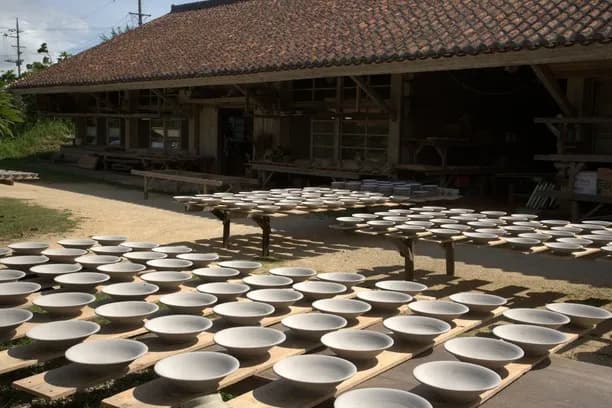
- Admission: Free
- Opening hours: Vary by workshop (usually 09:00–17:00 or 18:00)
- Closed: Varies by workshop
The 'son (村)' used in names like Yomitan-son and Onna-son is read as 'mura (むら)' in mainland Japan, but in Okinawa it is read as 'son'.
A Tragic Castle and a Traditional HouseThe story of Gosamaru and the Nakamura House
1) Nakagusuku Castle Ruins
中城城跡
Gosamaru mentioned in 'Zakimi Castle Ruins' was later appointed as the lord of Nakagusuku Castle, and he moved his base there.
This was to watch 'Amawari, the lord of Katsuren Castle', who was building power in the Chuzan region, and to help defend Shuri, the center of the Ryukyu Kingdom.
Gosamaru showed his castle-building skills again and built this castle, which was listed as a World Heritage site as part of the Gusuku Sites and Related Properties of the Kingdom of Ryukyu.
However, he met a tragic end due to the king’s misunderstanding.
One day, a tip-off reached the Ryukyu king, saying that Gosamaru was preparing a rebellion.
At first, the king did not believe it. However, after an official saw military training at Nakagusuku Castle, he misunderstood it as treason.
In reality, it was normal defense training. Still, the king ordered Amawari to attack Gosamaru and even granted him the royal banner.
When Gosamaru saw Amawari’s army and confirmed the royal banner, he did not resist and took his own life in the castle with his family.
The king had married Gosamaru’s daughter, and their daughter later married Amawari, so in the end, Gosamaru was sacrificed to his own grandson-in-law.
- Admission: Adults 400 yen, junior/senior high school students 300 yen, elementary school students 200 yen
- Opening hours (last entry: 30 minutes before closing)
- May–September: 08:30–18:30
- October–April: 08:30–17:30
- Closed: Open year-round (temporary closure possible due to typhoons, etc.)
2) Nakamuraga House
中村家住宅
The founder of the Nakamuraga family, Kauji (賀氏, かうじ), is known as the teacher of Gosamaru, the master castle builder.
During the Amawari Rebellion (1458), the Kauji family was scattered. Later, around 1720, a descendant was appointed to the local administrative post of Jitou-shoku (地頭職) and settled in the current location.
It was preserved without damage even during the Pacific War, so you can fully experience the traditional Ryukyuan house style.
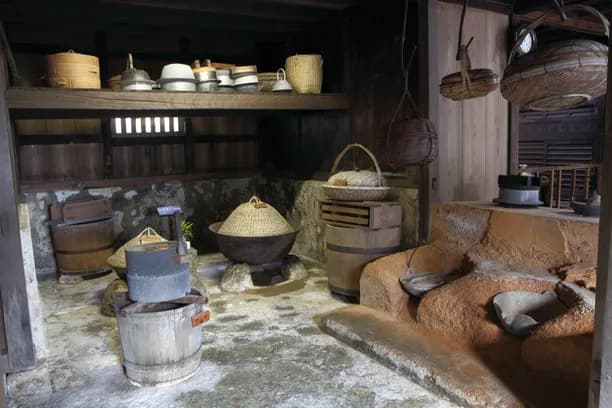
- Admission: Adults 500 yen, junior/senior high school students 300 yen, elementary school students 200 yen
- Opening hours: 09:00–17:00 (last entry 16:40)
- Closed: Every Wednesday and Thursday
The Road Over the Sea and the Missing ElephantKaichu Road, Katsuren Castle Ruins, and Okinawa Zoo & Museum
1) Katsuren Castle Ruins
勝連城跡
This is the castle where 'Amawari', who was sent by the king to attack Gosamaru, was the local lord.
After Gosamaru died, Amawari planned a rebellion against the king, but it was discovered by his wife, who was also Gosamaru’s granddaughter.
In the end, the Amawari Rebellion (1458) failed, and Katsuren Castle fell.
Today, Katsuren Castle Ruins are listed as a World Heritage site as part of the Gusuku Sites and Related Properties of the Kingdom of Ryukyu. Artifacts found here include Korean roof tiles and Chinese ceramics.
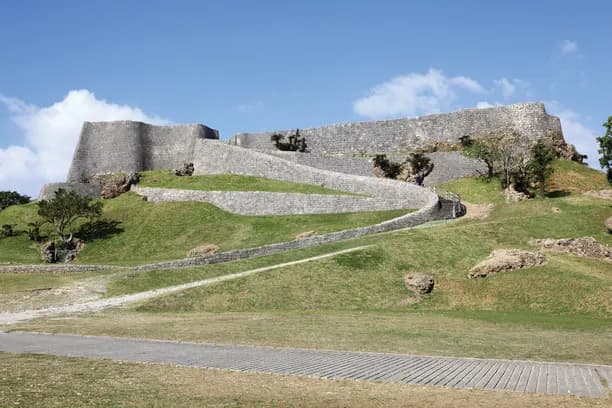
- Admission
- Adults (high school age and above) 600 yen
- Children (junior high school and below) 400 yen
- Under 6 years old: Free
- Opening hours: 09:00–18:00 (last entry 17:30)
- Closed: Open year-round (temporary closure possible due to typhoons)
2) Kaichu Road
海中道路ビーチ
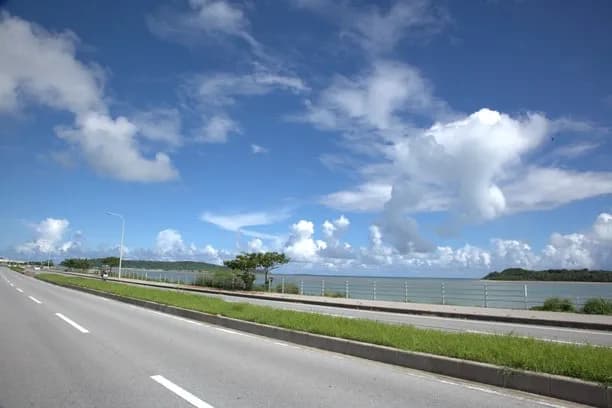
This road is often listed as a top scenic drive route, after National Route 58. With the sea stretching out on both sides, you can enjoy views that feel like driving over the ocean.
It is recommended to stop at the parking area near the Sea Culture Museum in the middle of the road, then go up to the observation deck to see the nearby islands: Henza Island, Miyagi Island, Hamahiga Island, and Ikei Island.
3) Bios Hill (Bios no Oka)
ビオスの丘
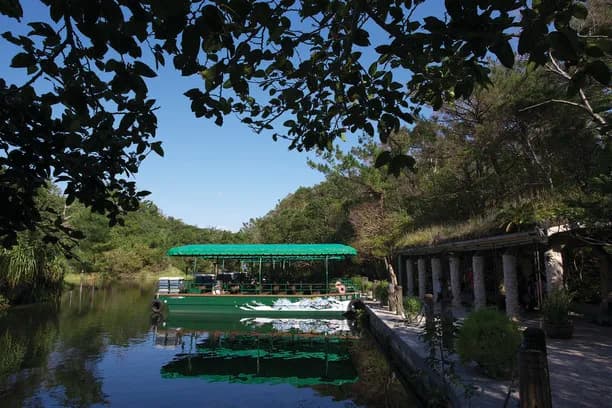
This eco park was created so visitors can experience the nature of Okinawa’s northern Yanbaru region even in Central Okinawa.
Bios means 'life, living' in Greek, and Oka (丘) means 'hill', so the name carries the meaning of 'Hill of Life'.
The park covers 330,000㎡ and has about 2 km of walking trails, where you can see many kinds of subtropical plants and animals.
Your ticket includes a lake sightseeing boat. Activities such as canoeing and water buffalo experiences cost extra.
- Admission
- Adults (junior high school age and above) 2,200 yen
- Ages 4 to elementary school 1,100 yen
- Opening hours: 09:00–17:30 (last entry 16:15)
- Closed: Every Tuesday
- July–August may be open every day (check the exact schedule on the calendar
4) Okinawa Zoo & Museum
沖縄こどもの国
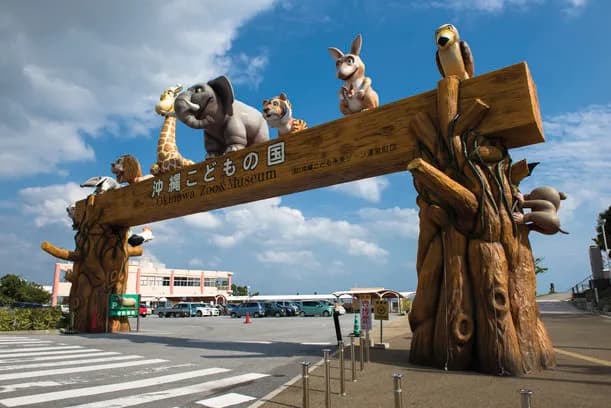
This is a hands-on theme park for children with an outdoor zoo and an indoor museum.
The museum is not a simple museum. It is a hands-on space for children themed around science, philosophy, and art. The admission fee is low, so you can visit without any pressure.
The zoo is home to many animals, including lions, sika deer, red-crowned cranes, Okinawa native pigs, and Indian elephants.
A mysterious incident called the 'Missing Elephant Case'(1973) also happened here.
On March 17, 1973, a young elephant transported from India escaped from a warehouse right after arriving at Naha Airport.
At the time, a 30,000 yen reward was offered, but after two weeks of searching, it disappeared without any clues, and the case remains unsolved.
- Admission
- General admission fee: Adults 500 yen, junior/senior high school students 200 yen, free for ages 15 and under
- Wonder Museum: Adults 200 yen, junior/senior high school students 100 yen, free for ages 15 and under (Museum-only entry is not available)
- Opening hours
- April–September: 09:30–18:00 (last entry 17:00)
- October–March: 09:30–17:30 (last entry 16:30)
- Closed
- Every Tuesday (Wednesday if Tuesday is a public holiday)
- Open daily during Golden Week and school vacation periods
- Closed due to typhoons and during New Year holidays (12/30–1/3)