
IntroductionEven Japan’s complex transport becomes easy if you understand the basic system and transfers.
When you plan a trip to Japan, the most difficult part often feels like transportation. But if you clearly understand the system differences and how transfers work, it is not complicated.
In TourCast, transport information is explained in a way that is more detailed and easier than most guidebooks, videos, or blogs. If you read it once, the confusing parts will feel much clearer. 🚉
This guide is based on Common Part 2 – Japan’s Transport System. If you have not read it yet read that first for a more accurate understanding. 📖
Nagoya Subway and TrainsIf you can separate subway and trains, you already have the basics.
In Japan, subways (地下鉄) and trains (電車) are clearly separated. If you think you can ride everything without a difference and buy only a 1-day subway pass, that is a common mistake.
- A subway pass is only for the Nagoya Municipal Subway, so you cannot use JR lines or private railways like Meitetsu and Kintetsu.
- So you must clearly separate subway and trains (JR lines and private railways).
1) Nagoya Municipal Subway
Operated by the Nagoya City Transportation Bureau, with 6 lines mainly covering the city area. Fares are 210 to 340 yen depending on distance.
- 히가시야마선Higashiyama Line
- 메이죠선Meijo Line
- 메이코선Meiko Line
- 쓰루마이선Tsurumai Line
- 사쿠라도리선Sakuradori Line
- 카미이다선Kamiida Line
2) JR Lines
Operated by JR Central (Central Japan Railway Company), including the Tokaido Main Line, Chuo Main Line, Kansai Main Line, and Takayama Main Line.
3) Private Railways (私有鐵道)
-
Meitetsu (名鉄): Nagoya Main Line, Tokoname Line (Airport Line), Inuyama Line, and more
-
Kintetsu (近鉄): Kintetsu Nagoya Line → connects to Ise and Osaka
-
Aonami Line: Nagoya Station ↔ LEGOLAND Japan and SCMAGLEV and Railway Park (official name: Nishi-Nagoyako Line)
-
Linimo: Japan’s first magnetic levitation train using permanent magnets, and a line you must use to reach Ghibli Park
-
Yutorito Line
- Official name: Nagoya Guideway Bus
- The section between Ozone (大曽根) and Obata Ryokuchi (小幡緑地) runs on an elevated guideway (dedicated road), and other sections run on normal roads
- With a Nagoya City Pass, you can only use the normal road section
- Guideway bus: the bus has guide wheels, so it runs automatically like a train on the elevated guideway
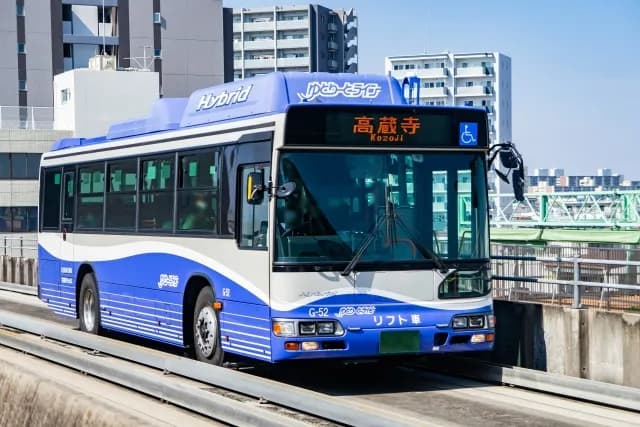
A bus running on the guideway 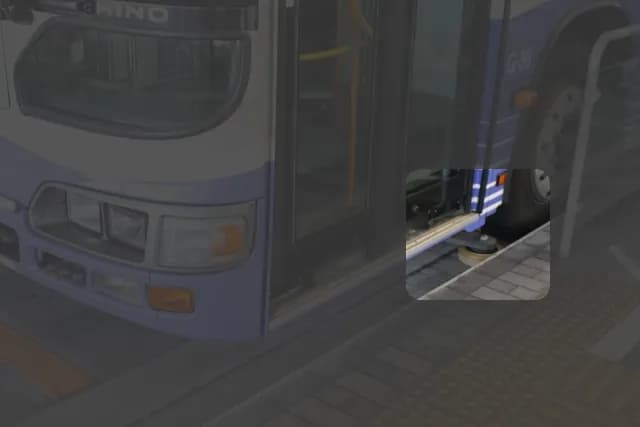
It has small guide wheels on the side of the tires, so it looks like a mini car running on a track. -
There are also other lines such as the Aichi Loop Railway.
Nagoya Transfer RulesWhen is a transfer free?
The 6 subway lines in Nagoya allow free transfers between each other. However, if you transfer from the subway to JR or a private railway, it is not a free transfer. You must exit the ticket gates and enter a new set of gates.
- JR lines: Free transfers are possible between JR lines
- Private railways: Free transfers are possible only within the same company and the same line. If you change to a different line, it is not a free transfer
For example, to go from Nagoya Station to Ghibli Park, take the Subway Higashiyama Line to Fujigaoka Station, then transfer to Linimo.
But the subway and Linimo are different systems, so you must exit the ticket gates and enter again.
So the total cost becomes 310 yen (subway) + 360 yen (Linimo) = 670 yen.
Three Nagoya Stations!?Why you must clearly tell the three Nagoya stations apart
If you search Google Maps for Chubu Centrair International Airport → Nagoya Station, it may tell you to get off at Meitetsu Nagoya Station and then walk about 1 minute (300 m) to JR Nagoya Station.
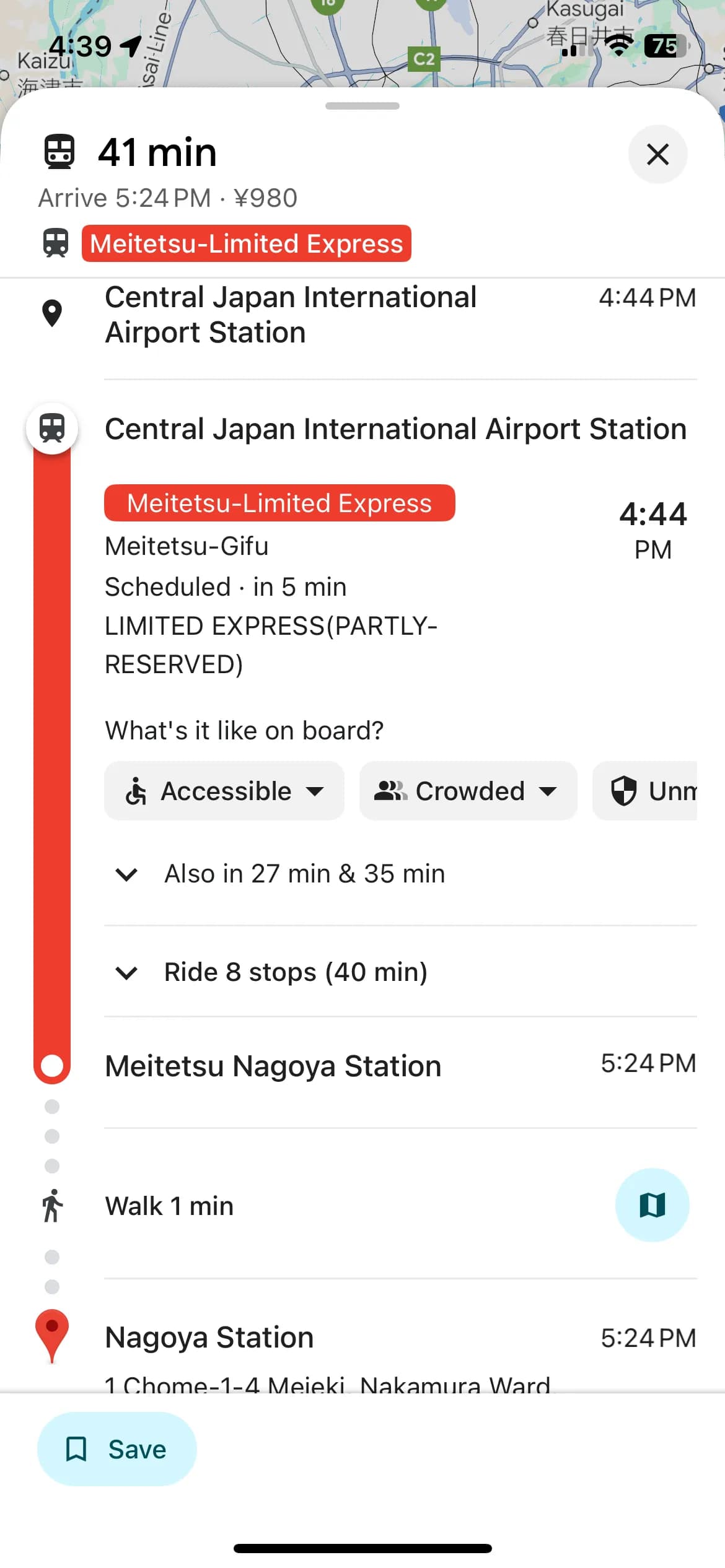
So, what is the difference between Nagoya Station and Meitetsu Nagoya Station?
As shown below, there are “Nagoya Station”, “Meitetsu Nagoya Station”, and “Kintetsu Nagoya Station.” The good news is that they are all in the same complex. However, since each station serves different lines, it is important to tell them apart.
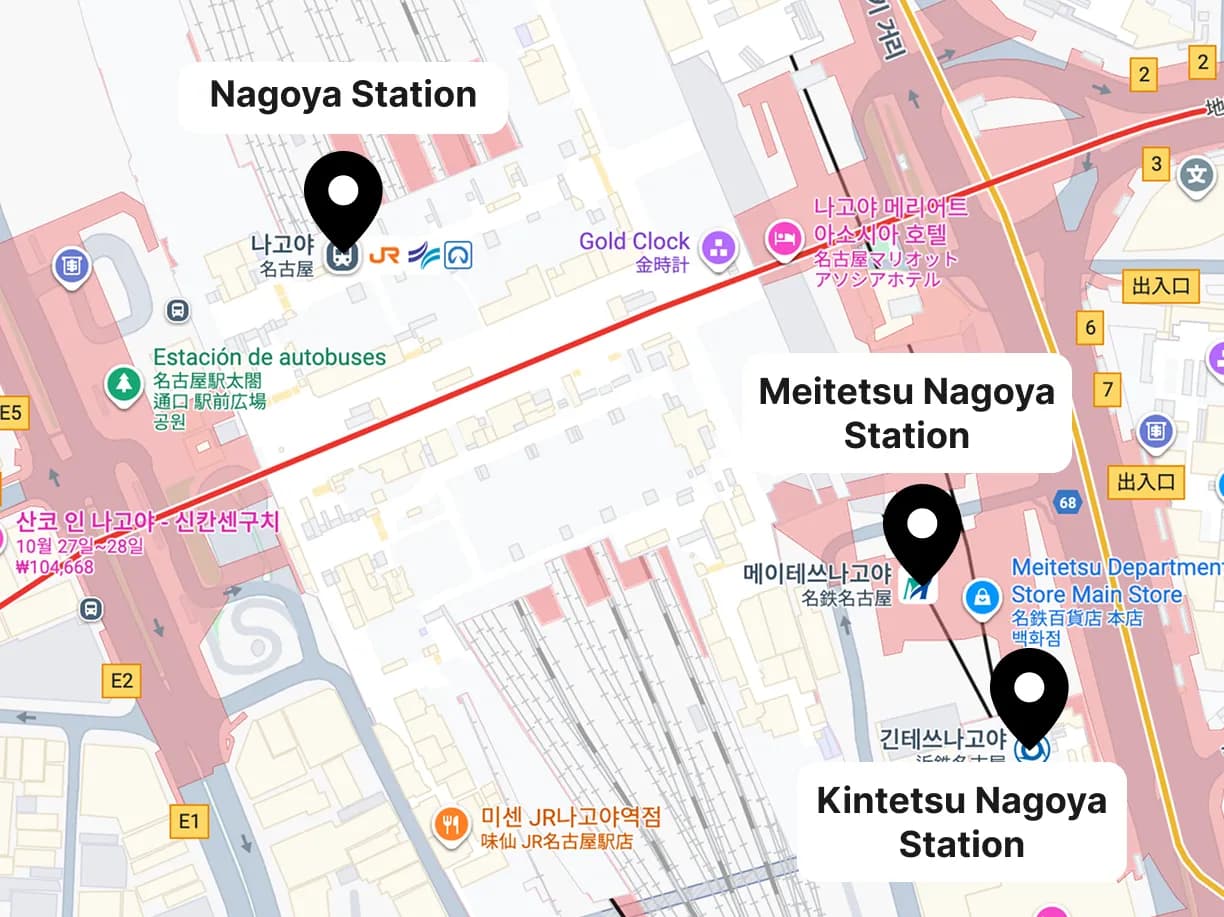
- Nagoya Station: Shinkansen, JR lines (Tokaido Main Line, Hida Line, Chuo Main Line, etc.), subway (Higashiyama Line, Sakura-dori Line), trains (Aonami Line)
- Meitetsu Nagoya Station: Meitetsu lines
- Kintetsu Nagoya Station: Kintetsu lines
IC Cards You Can Buy in NagoyaIs there an IC card discount when transferring?
In Japan, IC cards differ by region. The IC cards you can buy and refund in Nagoya are manaca and TOICA.
1) manaca
An IC card operated by the Nagoya City Transportation Bureau. Its biggest advantage is the transfer discount between the subway and city buses.
- Transfer discount routes
- Nagoya Municipal Subway ↔ City Bus
- City Bus ↔ City Bus
- Meitetsu train ↔ Meitetsu bus
- Meitetsu bus ↔ Meitetsu bus
- Conditions
- The transfer must be within 90 minutes from the first ride
- Discount: 80 yen for adults, 40 yen for children
- Other benefits
- If you use the Nagoya subway and city buses for 2,000 yen or more in a month, you can earn points
- This is not a big benefit for short trips
- Where to buy
- Inside Meitetsu stations
- Inside subway stations
2) TOICA
An IC card operated by JR Central (Central Japan Railway Company). Like Suica and ICOCA, it can be used like a normal IC transport card in most parts of Japan. 🚉
- Features
- Unlike manaca, it does not offer transfer discounts or point rewards
- It is for basic IC card use only
- Where to buy
- Available at JR stations
Exclusive TourCast Tips!
Which lines accept contactless cards?
In Nagoya, using a contactless card (tap-to-pay credit/debit card) is still limited. For example, you can use it on Meitetsu lines, but in practice it is available only at 13 major stations such as Centrair Airport Station, Meitetsu Nagoya Station, and Kanayama Station.
Bus payment options are also limited. At the moment, contactless payment is supported only on certain routes, such as the airport limousine bus (to Sakae) and the direct bus between Meitetsu Bus Center and Aichi Expo Memorial Park (Ghibli Park).
So for a Nagoya trip, you can consider an IC card as essential. You can buy an IC card at the airport and at most stations. A practical option is to use a contactless card to travel from the airport to the city, then buy an IC card at a station ticket machine in the city.
Meitetsu contactless payment guideMeitetsu bus contactless payment guideCity Buses in NagoyaHow to tell City Bus and Meitetsu Bus apart
Local buses in Nagoya are mainly divided into City Bus (operated by the Nagoya City Transportation Bureau) and Meitetsu Bus (operated by Meitetsu).
Because the two systems have different boarding styles and fare rules, it is important to tell them apart.
1) City Bus
- Flat fare: 210 yen
- Board from the front door → exit from the rear door
2) Meitetsu Bus
- Distance-based fares (the fare changes by distance)
- Board from the rear door → exit from the front door
👉 If you know this difference, you can use buses and passes without confusion.
Exclusive TourCast Tips!
How to tell City Bus and Meitetsu Bus apart on Google Maps
The image below shows a Google Maps route result. Let’s see how you can tell City Bus and Meitetsu Bus apart.
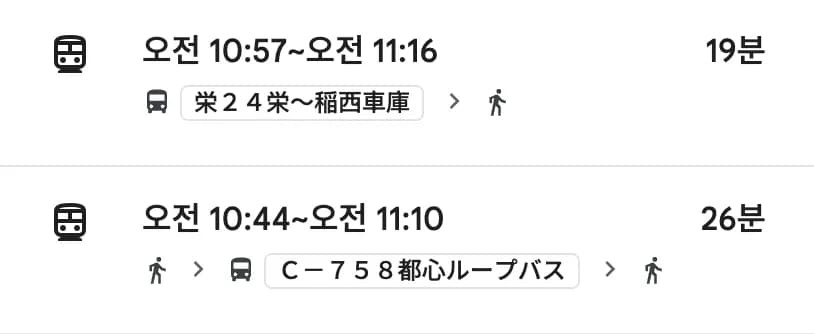
- City Bus
- The bus number shows kanji or letters before the number
- In details, the operator is shown as ‘Nagoya City Transportation Bureau’
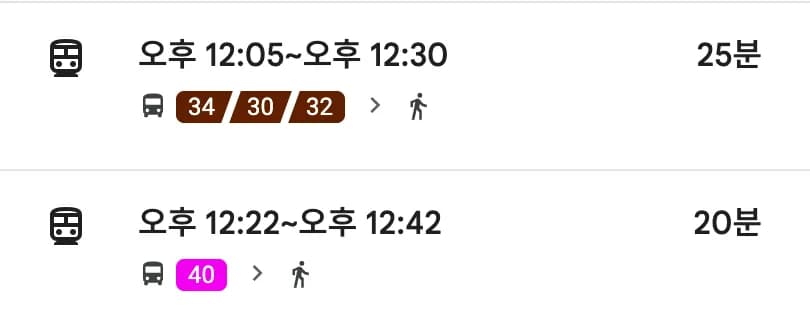
- Meitetsu Bus
- The bus number shows numbers only, and routes are separated by color
- In details, the operator is shown as ‘Meitetsu Bus’
👉 Even from the route result, you can tell them apart without difficulty. If you are not sure, check the operator name in the detailsand you will know. 🔎
Using Highway Buses from NagoyaGo to Ghibli Park or Nagashima Spa Land directly, without transfers
Nagoya is located between Tokyo and Osaka, so it can be seen as a major transport hub in Japan.
Not only the Shinkansen, but also highway buses play an important role. They connect directly to many cities, including Kyoto, Osaka, and Tokyo, as well as Sendai, Fukuoka, and Shikoku (Takamatsu, Tokushima, Matsuyama).
If you do not plan to travel to other regions, you may not use them often. However, they are useful because you can travel directly from Nagoya Station to Ghibli Park or Nagashima Spa Land without transfers.
Like trains, bus terminals also differ by operator, so before boarding you should always check the operator and terminal location.
- Meitetsu highway buses: Meitetsu Bus Center
- JR Tokai Bus (JR 東海バス): Nagoya Station Shinkansen Exit Highway Bus Stop (ハイウェイバスのりば)