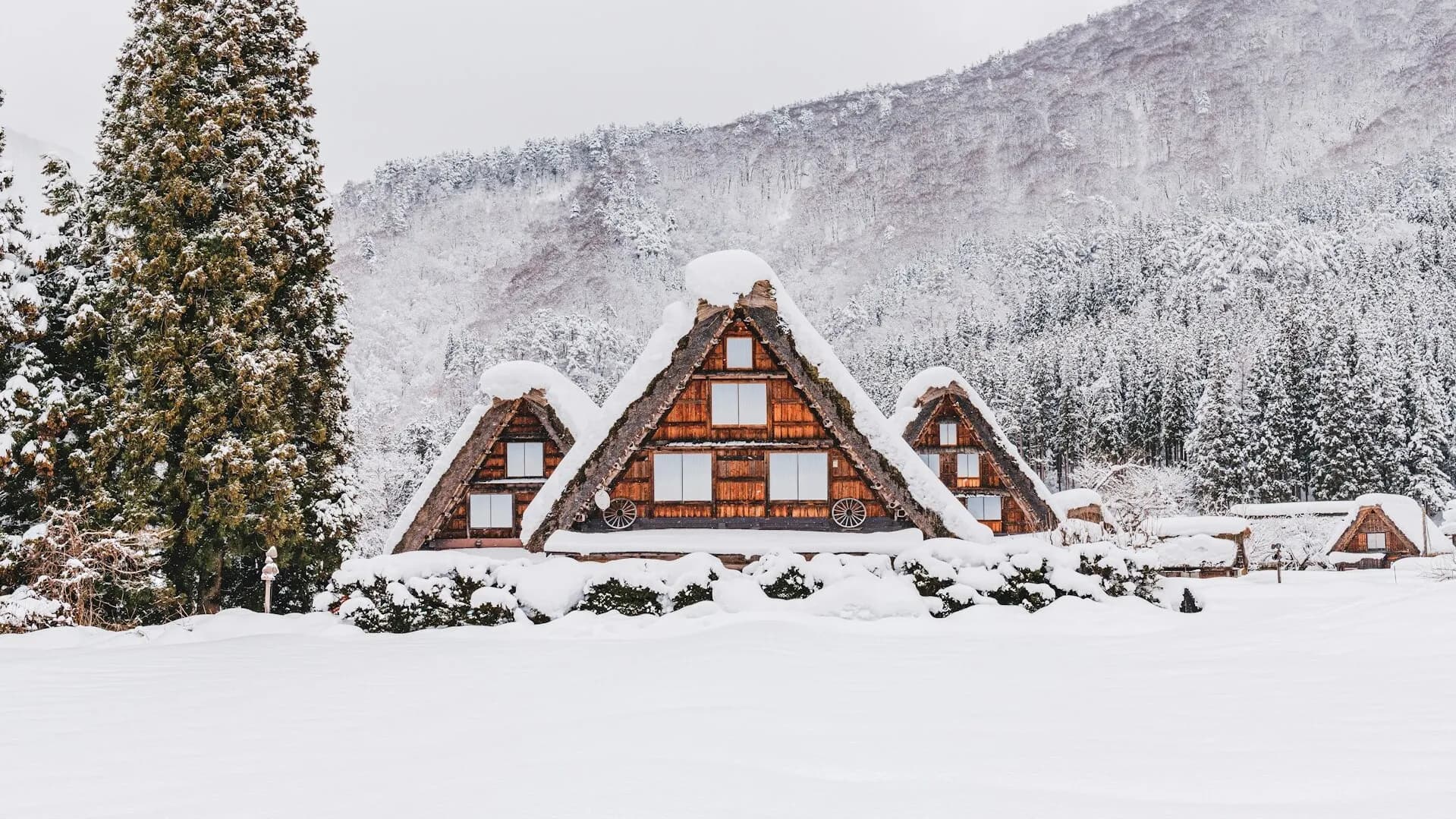
IntroductionA Gifu Prefecture route featuring Shirakawa-go
Many travelers choose Nagoya specifically to see the snow-covered Shirakawa-go.
Shirakawa-go is one of Japan’s most romantic and atmospheric destinations.
As mentioned in Part 1, “How to plan your itinerary easily,” your overall plan for Nagoya changes depending on whether you visit Shirakawa-go and how you travel.
If you also include Takayama or Gero Onsen, the Hida Area Free Ticket (Hidaji Pass) is very useful. However, this pass has a limitation: it cannot be used during certain local holidays and the New Year period.
So what should you do in those cases? 🤔 Let’s break it down below.
Exclusive TourCast Tips!
If the Hida Area Free Ticket is not valid (local holiday blackout dates)
1) Train + highway bus
For Nagoya–Takayama, book the JR Limited Express Hida (reserved seat, about 6,000 yen one-way). For Takayama–Shirakawa-go, book a highway bus (about 2,800 yen one-way) separately.
- For train booking, see Common Part 2 – JR Pass / Train Discount Booking – Eki-net
- Takayama ↔ Shirakawa-go requires a separate highway bus reservation
2) Highway buses only
This option is cheaper and more flexible than the train, and you can choose the exact routes you want.
- Nagoya ↔ Shirakawa-go
- Nagoya ↔ Takayama
- Takayama ↔ Shirakawa-go
- Nagoya ↔ Gero Onsen
- Only for guests staying at member accommodations of the Gero Onsen Cooperative, one service per day
- Nagoya 14:00 departure / Gero Onsen 10:30 departure
If booking on your own is difficult, using a bus product sold by a travel agency can also be an option.
3) Bus tours
Options 1 and 2 work best if you stay at least one night in the Hida area. For day-trippers, a Shirakawa-go bus tour is usually the most efficient choice.
Recommended Hotels / Ryokan in Hida TakayamaStay in Takayama to enjoy Shirakawa-go at a more relaxed pace
If you are not doing a day trip bus tour for Takayama and Shirakawa-go,
a same-day round trip can be challenging due to travel time. In that case, it is more efficient to stay one night in Takayama, a key transport hub in Gifu Prefecture.
No rates are available for the stay from 2026-10-15 to 2026-10-16. Please try different dates.
Hida TakayamaHida Takayama: essential for any Gifu trip
Takayama is a transport hub connecting major areas in Gifu such as Shirakawa-go, Kanazawa, Gero, and Toyama.
To reach Shirakawa-go, you typically need to pass through Takayama, but it is not just a transfer point. It is a charming city often called “the second Kyoto.”
1) Hida City (飛騨市), Takayama City (高山市), and “Hida Takayama (飛騨高山)”
- Hida City (飛騨市) and Takayama City (高山市) are separate cities (municipal areas)
- Hida Takayama (飛騨高山) means “Takayama in the Hida region (飛騨地方)”, a phrase used to emphasize the area
- The Hida Furukawa area included in the Hida Area Free Ticket coverage is a major area of Hida City, and it is also known as a setting for the anime 「Your Name (君の名は)」.
2) Sarubobo, the mascot of the Hida Takayama area
Sarubobo (さるぼぼ) was originally a faceless red cloth doll handmade by mothers or grandmothers to wish for a child’s and family’s happiness.
The name comes from saru (猿, monkey) + bō (坊, baby), and it is also linked to the Japanese word saru (去る, to go away / prevent), so it was believed to protect against illness and bad luck.
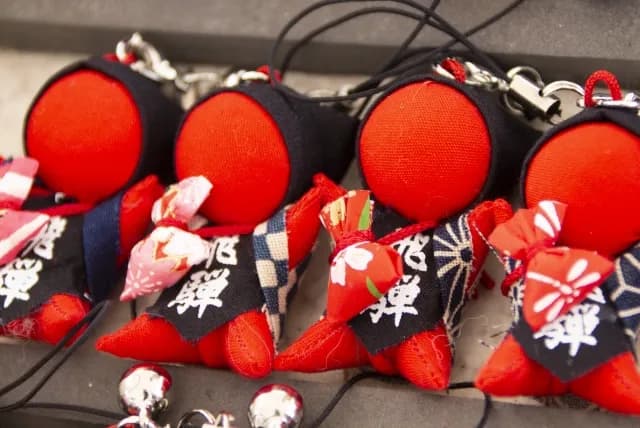
Traditionally red, Sarubobo now comes in many colors, each with a different meaning:
- ❤️ Red: health and long life
- 💛 Yellow: good fortune and wealth
- 💙 Blue: study and achievement
- 💚 Green: traffic safety and health
- 🖤 Black: protection from bad luck
- 💗 Pink: love and marriage luck
👉 In Takayama and the wider Hida area, you can also join a hands-on workshop to make your own Sarubobo. It is a great souvenir and a memorable travel experience.
1) Miyagawa Morning Market
A traditional market that dates back to the late Edo period. Every morning, stalls line a 350-meter stretch from 07:00 to 12:00 (in winter, 08:00–12:00), creating a lively atmosphere.
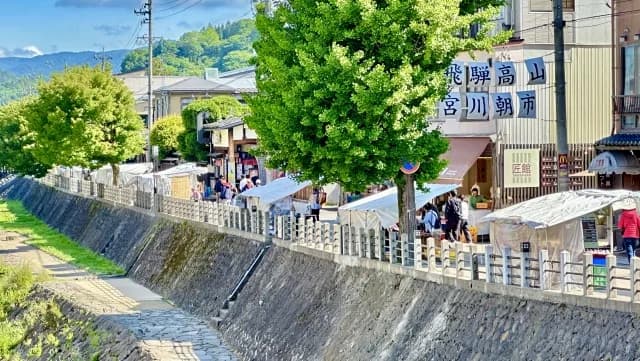
You can enjoy a warm, local vibe where residents and travelers mix, and it is also fun to chat with vendors and bargain.
You will find everything from quick snacks—like Hida beef croquettes, miso dango, Sarubobo sweets, and local mochi—to regional specialties such as honey, jam, and Japanese sweets.
2) Sanmachi Historic District Preservation Area
A historic district in central Takayama where old-town streets and traditional shopfronts are well preserved. It is often called “Little Kyoto of Hida.”
- A continuous streetscape of black lattice wooden shops, earthen-walled storehouses, and charming alleys
- Designated by the Japanese government as an Important Preservation District for Groups of Traditional Buildings
- Lined with old sake breweries, teahouses, and shops, offering a glimpse into Edo-period merchant life
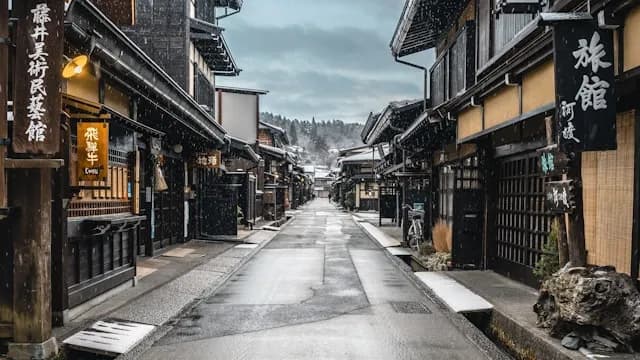
At traditional breweries in Takayama’s old town, you can sample local sake. Tastings may be free or paid, and most places close around 5–6 pm.
- Some breweries ask you to buy a special tasting cup, or
- you exchange coins to try several types of sake
Brewery locations
- Harada Sake Brewery
- Kawajiri Sake Brewery
- Hirata Sake Brewery
- Hirase Sake Shop
- Niki Sake Brewery
- Funasaka Sake Shop
- Oita Sake Shop
Exclusive TourCast Tips!
If the Shirakawa-go bus is suspended due to bad weather
If you are in Takayama but heavy snow or severe weather suspends the Shirakawa-go bus,Hida no Sato (飛騨の里) is a great alternative.
It may not have the exact romance of Shirakawa-go, but you can still enjoy a similar atmosphere and see gassho-zukuri (合掌造り) houses.
- From Takayama Station, take the Sarubobo Bus (210 yen one-way)
- Entrance fee is 700 yen → total about 1,120 yen
- At Takayama Nohi Bus Center, you can buy the Hida no Sato set ticket (1,000 yen)
- Includes round-trip transport + admission, so you can visit more cheaply
Admission info
- Admission Adults 700 yen, middle/high school students 200 yen
- Hours 08:30–17:00
- Open daily
Shirakawa-goOn snowy days, it feels like a storybook village
Shirakawa-go is a mountain village community formed since the Edo period. In an isolated environment, it developed a distinct local lifestyle and culture.
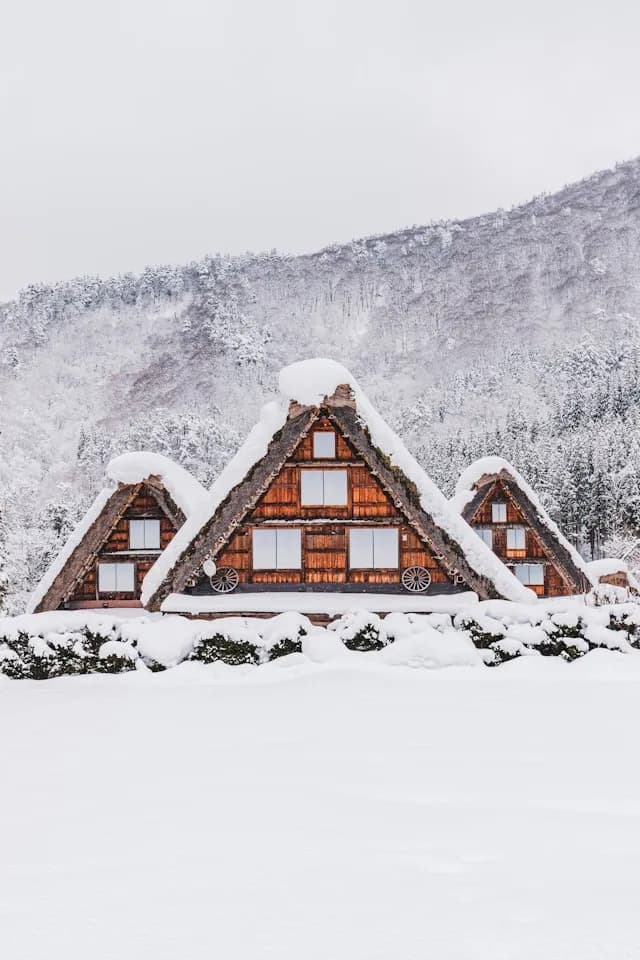
In 1995, it was registered as a UNESCO World Cultural Heritage site. The area’s symbol, gassho-zukuri (合掌造り), is famous for its steep thatched roofs designed for heavy snowfall—shaped like praying hands 🙏🏻.
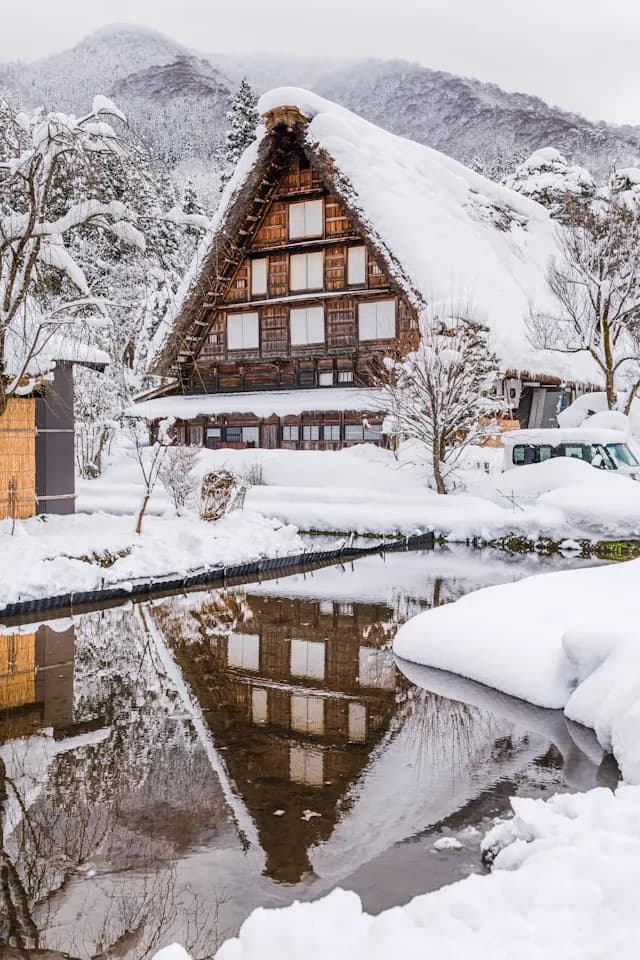
In the main village, Ogimachi (荻町), more than 100 traditional houses remain, including homes over 250 years old. Even today, residents continue fire-prevention patrols and heritage protection activities.
A tradition called “Yui (結い)”—neighbors helping each other, especially when replacing roofs—is still passed down.
Shirakawa-go Tourism AssociationSuggested route (Click links to open Google Maps)
- If you arrive by highway bus
- Take the viewpoint shuttle bus to enjoy a panoramic view of Shirakawa-go
- Walk down (or use the shuttle) and explore the main street in Ogimachi
- Places like Wada House (和田家住宅), Kanda House (神田家), Nagase House (長瀬家), and Myozenji Museum can be visited individually with separate admission fees
- Wada House is designated as an Important Cultural Property
- Walk along the main street to Three Houses or cross the suspension bridge (Deai-bashi) to visit the Gassho-zukuri Minkaen (合掌造り民家園) open-air museum (admission required)
- If you arrive by bus tour
- Get off at the parking area near Minkaen → visit Minkaen first, or cross the suspension bridge into the village
- From the suspension bridge:
- Left: viewpoint shuttle bus stop
- Right: the Three Houses and the main street
- Adjust the route to your preference to explore more efficiently
More information (Click links to open each site)
- Viewpoint shuttle bus timetable
- 300 yen one-way (cash only, bring coins)
- Gassho-zukuri Minkaen
- Admission: Adults 800 yen / elementary–high school students 400 yen
- Wada House (和田家住宅): Adults 400 yen / children 200 yen
- Kanda House (神田家): Adults 400 yen / children 200 yen
- Nagase House (長瀬家): Adults 400 yen / children 200 yen
- Myozenji Museum: Adults 400 yen / elementary & middle school students 200 yen
- Day-use onsen - Shirakawago no Yu (白川郷の湯)
- Next to the bus terminal at this location; day-use bathing and overnight stays available
- Bath fee: Adults 800 yen / elementary school students 400 yen
- Towel 200 yen / bath towel 300 yen (rental)
- Hours: 07:00–21:00 (last entry 20:00)
- Closed: every Thursday, and the 2nd and 4th Wednesday of each month
⚠️ Important rules
- No entry into restricted areas or private property
- Drones are completely prohibited
- Smoking only in designated areas
- Remember this is a real residential village
- Do not damage plants or nature
- In narrow alleys, a backpack is recommended over a suitcase
Recommended Hotels / Ryokan in Gero OnsenRelax and enjoy a slow onsen stay in Gero
No rates are available for the stay from 2026-10-15 to 2026-10-16. Please try different dates.
Gero OnsenOne of Gifu’s best onsen towns, with over 1,000 years of history
Gero Onsen is counted among Japan’s three famous hot springs together with Kusatsu and Arima, and it has a history of over 1,000 years.
Its alkaline simple hot spring water is known for leaving skin smooth, and it is also nicknamed “beauty bath (美人の湯)”.
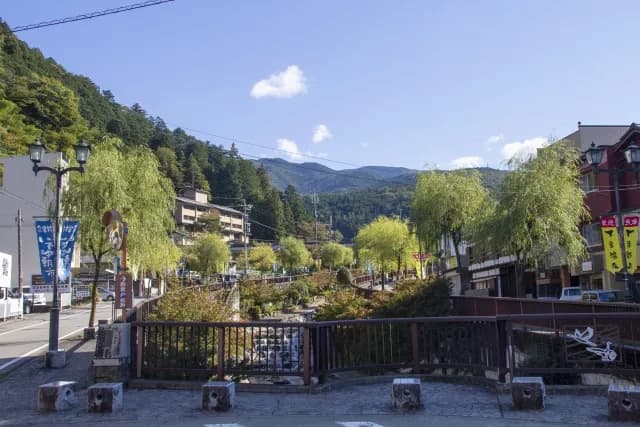
It is easy to visit as a day trip from Takayama, and it also works well for travelers who want to stay overnight and relax.
It is also worth visiting Gero Onsen Gassho Village (合掌村), which displays gassho-zukuri houses relocated from Shirakawa-go.
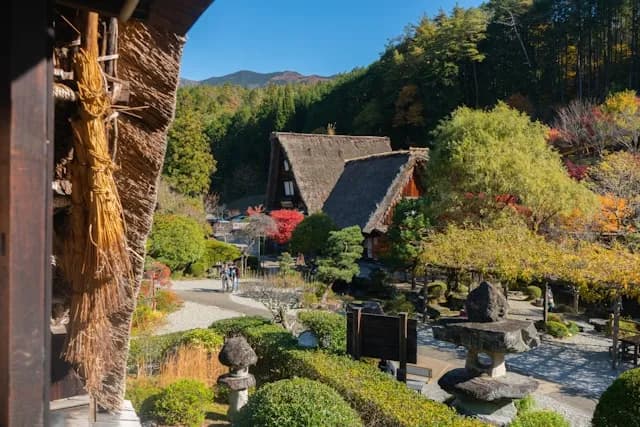
Around town, you will find public footbaths (ashiyu, 足湯), perfect for resting your feet while exploring.
In short, Gero Onsen is a place for rest and healing.
1) How to get there
- Gero Onsen direct bus for hotel guests
- A bus only for guests staying at member accommodations of the Gero Onsen Cooperative, running once per day (round trip)
- From Nagoya: 14:00 / From Gero Onsen: 10:30
- TAOYA Gero is not a member accommodation, but you can still use the bus, and the fare is slightly higher.
- By train
- JR Limited Express Hida (reserved seat): about 4,500 yen one-way, about 1 hour 40 minutes
- JR local trains: transfer via Nagoya → Gifu → Gero, about 2,310 yen one-way, about 2 hours 30 minutes
2) Yumegin Yumeguri Tegata (湯名人湯めぐり手形)
A pass that lets you enter three hot springs in Gero Onsen. Think of it as a “onsen hopping pass.”
- From October 2025, it includes a towel + small pouch and costs 2,500 yen
- The pass includes three stickers; you hand in one sticker each time you enter a bathhouse
- Children ages 4–12 can enter with one sticker (free for ages 3 and under)
-
Examples
- 1 adult + 2 children → one pass can cover all 3 entries using the 3 stickers
- 3 adults → each person needs their own pass
- Some baths may allow entry but may not sell the pass on-site, so it is best to check purchase locations in advance.
Recommended Hotels / Ryokan in Okuhida OnsenA special onsen experience in Okuhida, famous for outdoor baths
Mixed-gender bathing has mostly disappeared in Japan, but one area where it still remains is Okuhida Onsen. This also reflects how rural the area is, and it makes Okuhida a perfect place to slow down and relax in hot springs.
No rates are available for the stay from 2026-10-15 to 2026-10-16. Please try different dates.
Okuhida OnsenAn onsen area with outdoor baths where mixed bathing is still possible
Okuhida Onsen (奥飛騨温泉郷) is a healing destination surrounded by the dramatic nature of the Northern Japanese Alps. It also serves as a base for alpine sightseeing, including the Shinhotaka Ropeway and Kamikochi.
- In the Meiji era, the British geologist William Gowland introduced this region as being similar to the Alps in Europe. This helped popularize the name “the Japanese Alps.”
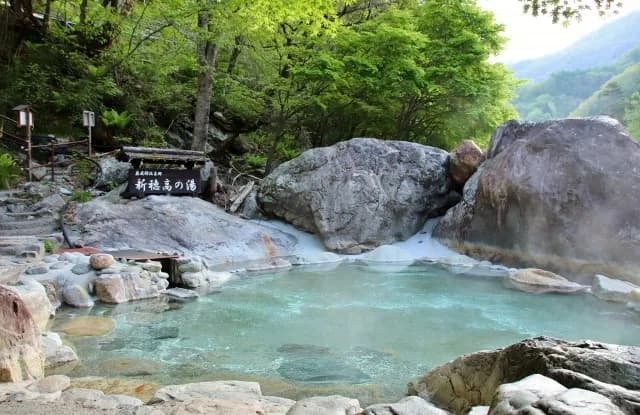
Soaking in an open-air bath while looking at snow-covered mountains is an unforgettable experience—Okuhida is often called “open-air bath heaven.”
You can enjoy hot springs in beautiful scenery across all four seasons, making it ideal for travelers who want both nature and rest.
1) How to get there
① If you have the Hida Area Free Ticket
- You can exchange it for the “Takayama & Shinhotaka Free Ride Ticket.”
- With this ticket, you can ride the Takayama ↔ Shinhotaka Ropeway Nohi Bus route freely during the validity period.
- The route includes all five Okuhida onsen villages, so you can enjoy onsen-hopping with ease.
② If the Hida Area Free Ticket is not valid (local holiday blackout dates)
- In this case, you can buy the Takayama & Shinhotaka 2-Day Free Ride Ticket separately.
- Since it offers unlimited bus rides for two days, it works well for a relaxing onsen trip.
2) The five Okuhida onsen villages
- Hirayu Onsen (平湯温泉) – the oldest village, and a key transport hub
- Fukuchi Onsen (福地温泉) – a quiet onsen town with traditional houses and a charming atmosphere
- Shinhirayu Onsen (新平湯温泉) – many accommodations, with a traveler-friendly environment
- Tochio Onsen (栃尾温泉) – small and peaceful, recommended for travelers who want a quiet and calm mood
- Shinhotaka Onsen (新穂高温泉) – a high-altitude onsen closest to the Northern Alps, located near the Shinhotaka Ropeway
3) Mixed bathing
Okuhida Onsen still has mixed-gender baths, which are now rare in Japan.
However, it is not usually the traditional “fully nude” style. Many places require bathing garments (湯浴み着), and some facilities also allow swimsuits.
If you plan to use a mixed bath, always check the facility rules before you visit.
- Hirayu Onsen area
- Shinhirayu Onsen area
- Shinhotaka Onsen
4) Okuhida Yukemuri Tatsujin (奥飛騨湯けむり達人)
- An onsen pass with three stickers that can be used across the five Okuhida onsen areas
- Each bath requires 1 or 2 stickers, so in practice you can visit 2–3 places
- You can collect stamps at each bath, and if you collect three stamps, you receive an original bath towel as a souvenir
- There is no separate child price; each person buys one pass and uses it
- The pass is valid for one year from the issue date