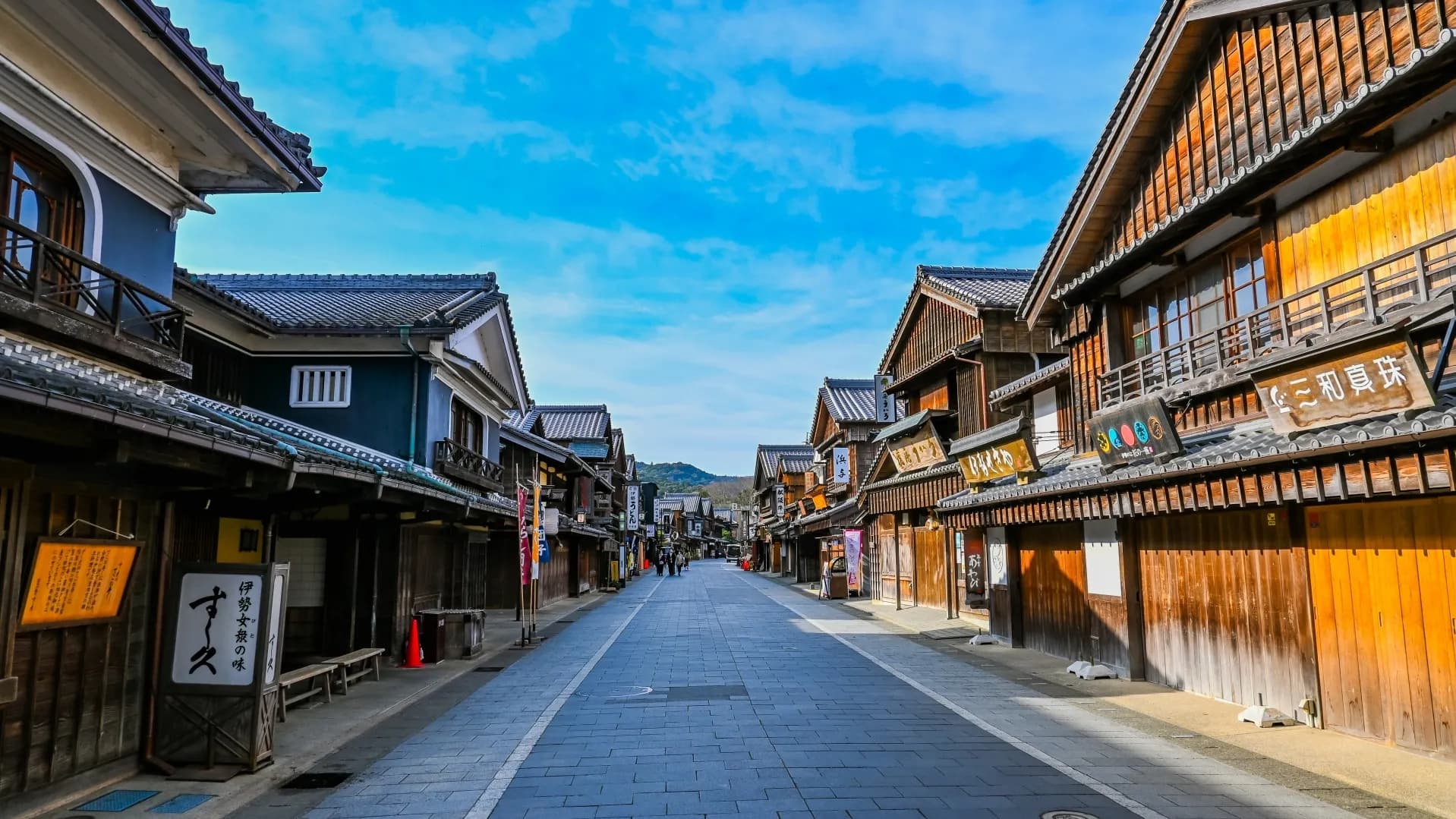
IntroductionThe sacred atmosphere of Ise Grand Shrine and the traditional street of Okage Yokocho
I have visited many regions of Japan for travel, business, and working holidays, but Ise Grand Shrine and the Okage Yokocho street in front of it feel truly special. Compared with other shrines, Ise Grand Shrine stands out for its overwhelming scale and grandeur, and its sacred atmosphere is also exceptional.
Kyoto is clearly a traditional city, but the large number of tourists makes it difficult to feel a deep traditional mood. In contrast, Okage Yokocho recreates a traditional street and offers a much richer sense of history and culture.
In Japan, there is even a saying that Ise Grand Shrine is a place you 'must visit at least once in your lifetime'. It is a very special destination for local people.
In addition, Mie Prefecture offers rich local food such as Matsusaka beef, Ise udon, Akafuku sweets, oysters, abalone, and other seafood. With history, mythology, and nature combined, it is an attractive region for slow travel, pilgrimage, and food journeys.
Ise Grand ShrineUseful passes and the history of Ise Grand Shrine
Ise Grand Shrine is Japan’s most important shrine and is often called the head shrine of all Shinto shrines. It consists of two main areas: Naiku (Inner Shrine) and Geku (Outer Shrine).
Naiku enshrines Amaterasu, the Sun Goddess, and Geku enshrines Toyouke, the deity of food and harvest.
To fully understand Amaterasu, a basic knowledge of Japanese mythology is helpful.
Japanese mythology is mainly recorded in the Kojiki and the Nihon Shoki. It is not only a collection of myths, but also explains the origin of the Imperial family and the legitimacy of the state.
At the beginning of the world, the divine couple Izanagi and Izanami created the Japanese islands with a sacred spear. Many gods were born, but when Izanami died giving birth to the fire god, Izanagi went to the land of the dead to find her.
After returning, Izanagi performed a purification ritual. From this ritual, the Sun Goddess Amaterasu, the Moon God Tsukuyomi, and the Storm God Susanoo were born. They became the three divine siblings.
Amaterasu is regarded as the most important deity and the ancestor of the Japanese Imperial family. After conflicts with Susanoo, Amaterasu hid in the Heavenly Rock Cave, and the world fell into darkness. When the gods danced and laughed, she came out again and light returned to the world, symbolizing the restoration of order and the sun.
Later, Amaterasu sent her grandson Ninigi to the Japanese land and gave him the Three Sacred Treasures. This granted divine legitimacy to the Imperial line. One of Ninigi’s descendants is said to be Emperor Jimmu, the first emperor of Japan.
Geku is located about an 8-minute walk from Iseshi Station, making it easy to access. However, Naiku is about 5 km away from the station.
If you plan to visit both, it is best to start at Geku, then walk around Okage Yokocho in front of Naiku, and finally visit Naiku.
Ise Grand Shrine is free to enter for the main shrine buildings and grounds.
However, the attached facilities such as the museum, agriculture hall, and Sengukan require a separate admission fee.
1) Access
-
Kintetsu Line
- Local train: about 1 hour 40 minutes, 1,740 yen (one way)
- Limited Express: about 1 hour 20 minutes, reserved seat 3,080 yen (one way)
- If you go directly to Okage Yokocho without visiting Geku, it is better to get off at Isuzugawa Station instead of Iseshi Station (add 10 yen to the fare).
- Shimakaze sightseeing limited express (Kintetsu Nagoya 10:25 / Iseshi 16:24): reserved seat 3,920 yen (one way)
-
JR Line
- Rapid Mie train: about 1 hour 30 minutes, 2,040 yen (one way)
- For a day trip on weekends or local holidays, the Aozora Pass (1-day, 2,620 yen) is a good choice.
- Reserved seat on Rapid Mie: add 530 yen
- Nanki Limited Express exists, but you need to transfer once at Taki Station to reach Iseshi.
2) Bus pass
In the Ise area, bus fares are relatively expensive compared with other regions in Japan.
For example, traveling from Iseshi Station to Geku, Naiku, and Futami Okitama Shrine (Meoto Iwa) costs about 1,700 yen in total.
- Iseshi Station → Geku: 200 yen
- Geku → Okage Yokocho: 450 yen
- Naiku → Futami Okitama Shrine: 850 yen
- Futami Okitama Shrine → Futaminoura Station: 200 yen
- Last buses run around 5:00 pm, so plan carefully.
A very useful pass here is the Ise–Toba Michikusa Kippu.
The 1-day pass is 1,300 yen and the 2-day pass is 1,900 yen, and you can use buses freely in the Ise–Toba area.
- The official app cannot be downloaded overseas
- Buy at information centers in front of Iseshi Station, Naiku, or Ujiyamada Station, or on board the CAN Bus
- Scratch-type ticket: scratch the date with a coin (for the 2-day pass, scratch only the first day)
- If two dates are scratched, the ticket is invalid
- Show the scratched date when getting off the bus
- Includes discounts for some facilities in Geku
3) Geku (Outer Shrine)
Toyouke Omikami is the goddess of food, harvest, and prosperity. She is believed to prepare sacred meals for Amaterasu Omikami.
Geku is quieter than Naiku and pleasant for a relaxed visit. While Naiku symbolizes the sun and the Imperial line, Geku represents the life and prosperity of the people.
According to tradition, visitors should visit Geku first before Naiku.
Main spots
- Omotesando: the main approach lined with cedar trees
- Hiyoke Bridge: a bridge to pray for protection from fire
- Goshogu: the main hall of Geku
- Takanomiya: a sub-shrine for industry and agriculture
Visitor information (Geku, Naiku, and sub-shrines)
- Admission: Free
-
Opening hours:
- Jan–Apr, Sep: 05:00–18:00
- May–Aug: 05:00–19:00
- Oct–Dec: 05:00–17:00
- Open all year
4) Sengukan Museum (Shikinen Sengu)
Shikinen Sengu is a ritual held every 20 years, in which the shrine buildings are rebuilt and the sacred objects are transferred.
It preserves the purity of the deity and passes on traditional wooden architecture skills.
The first ceremony began in 690. The 62nd was held in 2013, and the 63rd is planned for 2033.
The Sengukan Museum displays the history of Shikinen Sengu and allows visitors to experience Japanese shrine architecture, craftsmanship, and faith.
Admission
- Adult: 300 yen / Student: 100 yen
- Hours: 09:00–16:30 (last entry 16:00)
- Closed: 2nd and 4th Tuesday each month
5) Naiku (Inner Shrine)
The distance from Geku to Naiku is about 4 km. It is a bit far to walk, so taking a bus is recommended.
Naiku recommended routeUji Bridge
Uji Bridge is considered the bridge between the human world and the world of the gods.
It is also called Mimosuso Bridge, named after the legend of Princess Yamato-hime washing her robe in the Isuzu River.
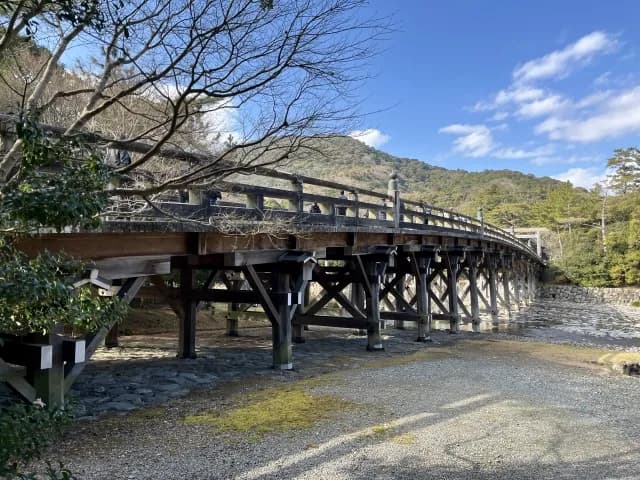
- Hiyoke Bridge at Geku: keep left
- Uji Bridge at Naiku: keep right
Mitarashi-ba
At Naiku, there is a special purification place called Mitarashi-ba by the Isuzu River.
Visitors wash their hands and mouth in the clear river water.
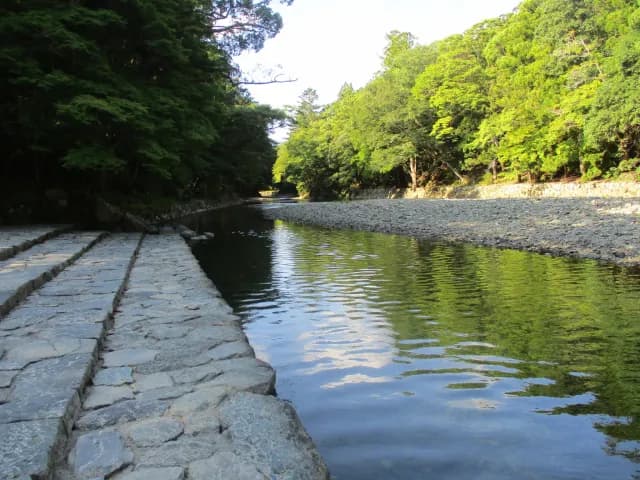
- Do not throw coins into Mitarashi-ba.
Main Hall of Naiku
The main hall enshrines Amaterasu. Visitors can only enter up to the outer gate, and photography is not allowed beyond that point.
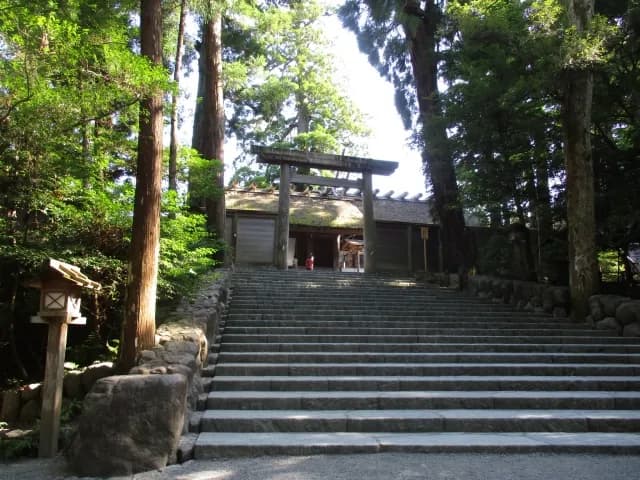
Ise Grand Shrine enshrines Amaterasu, but during the militarist period it was once used as part of State Shinto.
Today it is operated as a religious and cultural site, but it can still be a subject of political debate.
Exclusive TourCast Tips!
If you visit Mie Prefecture for 1 night and 2 days
With a 1-night, 2-day itinerary, transport costs can be high because bus fares in this area are expensive. In this case, the Ise–Toba Area Free Ticket is more efficient than buying individual passes.
This ticket allows round-trip travel from Nagoya to the JR free zone between Matsusaka and Toba on the Rapid Mie train, plus free travel within the zone and the Ise–Toba Michikusa Kippu (2-day bus pass).
Buying separately costs about 6,000 yen, while the Ise–Toba Area Free Ticket costs 5,300 yen, making it better value.
- Reserved seat on Rapid Mie: add 530 yen
- Free travel in the JR free zone during validity
- Exchange locations: Iseshi Station, Toba Station Bus Center
Okage YokochoA traditional street created by the Akafuku company
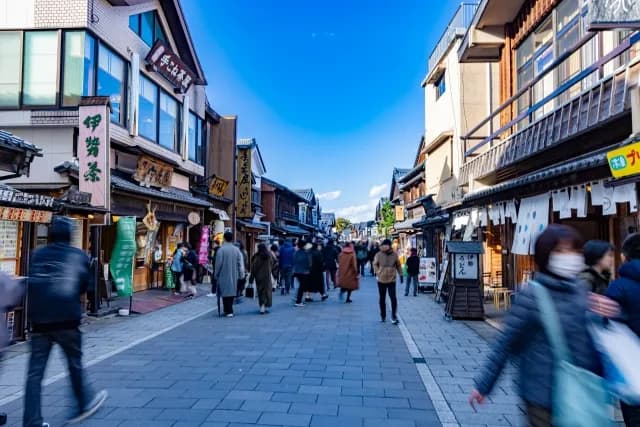
Okage Yokocho is a traditional-style street located in front of Naiku of Ise Grand Shrine.
The word ‘Okage’ means blessing and gratitude, closely related to shrine worship.
This street was not preserved from ancient times. It was newly created in 1993 by Akafuku to revitalize the area around the shrine.
However, the traditional atmosphere is well preserved, and the wide street makes it easy to walk around.
- The word okage is also used in the phrase okage-sama de, meaning “thanks to you.”
- If you travel with 3–4 people and do not buy a bus pass, a taxi from Geku to Okage Yokocho can be more convenient (about 1,800 yen).
Futami Okitama Shrine and Meoto IwaThe Wedded Rocks and their history
To truly understand Futami Okitama Shrine and the Wedded Rocks, it is not enough to know that two rocks are connected by a sacred rope.
You need to understand Japanese mythology, the sacred offshore rock called Okitama Shinseki, and the symbolism of the torii gate.
1) Okitama Shinseki
This sacred rock in the sea is believed to be the first place where gods landed when coming from the eternal land.
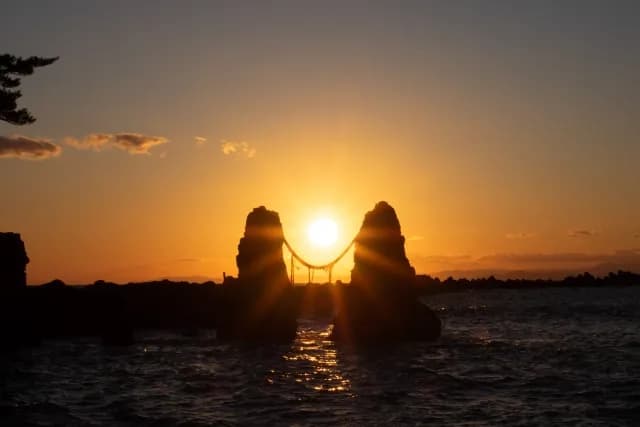
Because it is far offshore, the Wedded Rocks act as a symbolic torii gate facing it.
2) Sarutahiko Okami
Sarutahiko is a guide deity who welcomed the gods descending to the human world. He later became a guardian of the Ise area.
3) Amaterasu in Ise
It is said that Amaterasu once stopped at Futamiura Beach on her journey to Ise and declared the place beautiful.
4) Establishment of Futami Okitama Shrine
In 1876, after the separation of Shinto and Buddhism, Futami Okitama Shrine was built in front of the Wedded Rocks.
5) Meoto Iwa (Wedded Rocks)
The two rocks symbolize marital harmony and good relationships. Today they are famous as a romantic spot and sunrise viewpoint.
6) Connection with Itoshima Wedded Rocks
The Wedded Rocks in Itoshima, Fukuoka, were modeled after the Ise Wedded Rocks.
Ise is known as the “Wedded Rocks of the morning sun,” while Itoshima is called the “Wedded Rocks of the evening sun.”
The best season to see the sunrise between the rocks is from mid-May to late July.
Meoto Iwa sunrise details