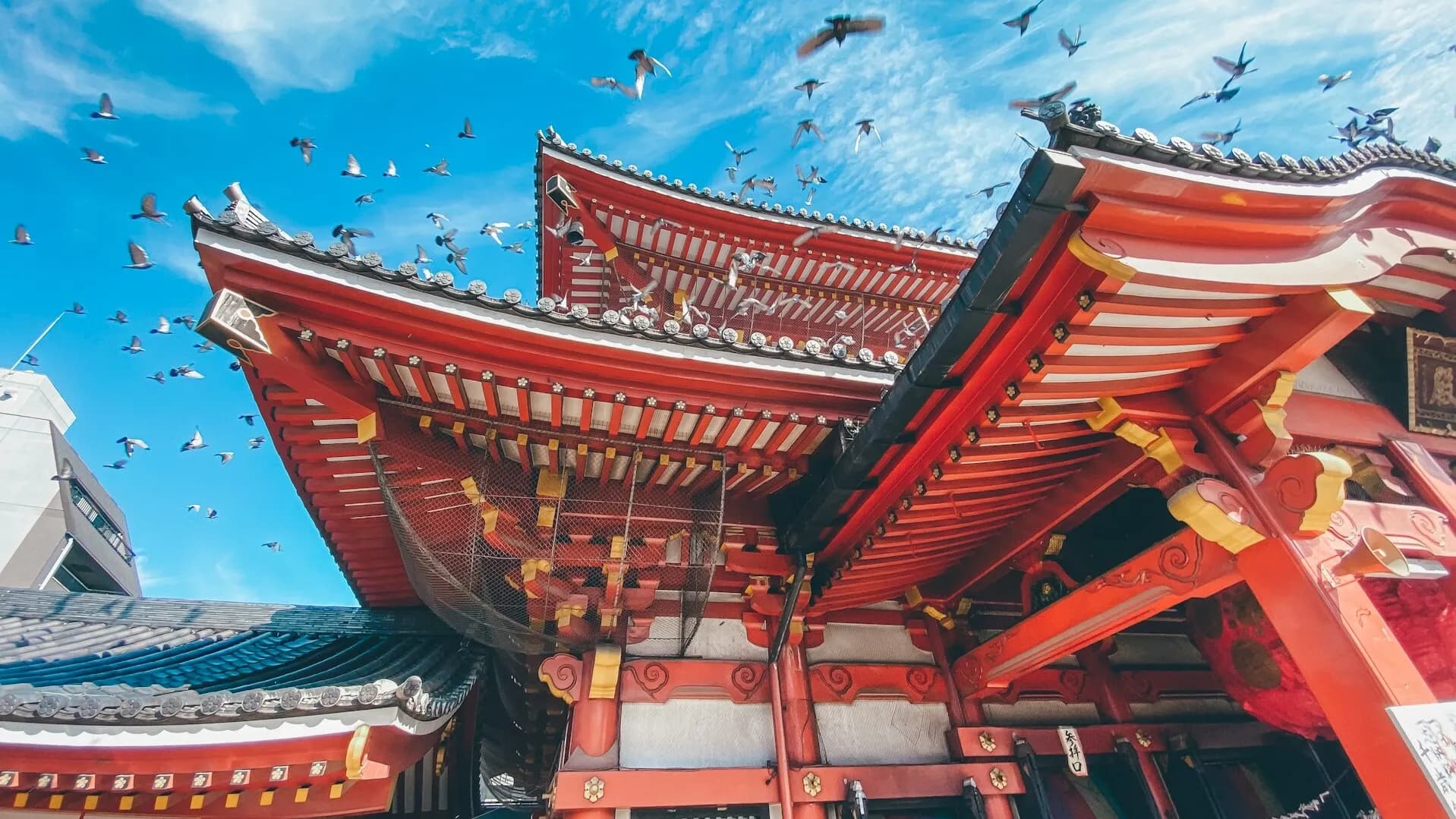
IntroductionA recommended route guide by dividing Nagoya into four areas
Central Nagoya can be divided into four main areas.
- Around Nagoya Station
- Sakae & Osu area
- Nagoya Castle & Tokugawa-en area
- Atsuta area
Based on these four areas, you can plan your route, or build a one-day itinerary using the city loop bus Meguru Bus for better efficiency.
Instagram-Style Recommended HotelsStylish Instagram-style recommended hotels
No rates are available for the stay from 2026-10-15 to 2026-10-16. Please try different dates.
Around Nagoya StationA great area to enjoy shopping and sightseeing in one place
1) JR Central Towers · JR Gate Tower
< 🚌 Gourmet Sightseeing Bus Course >
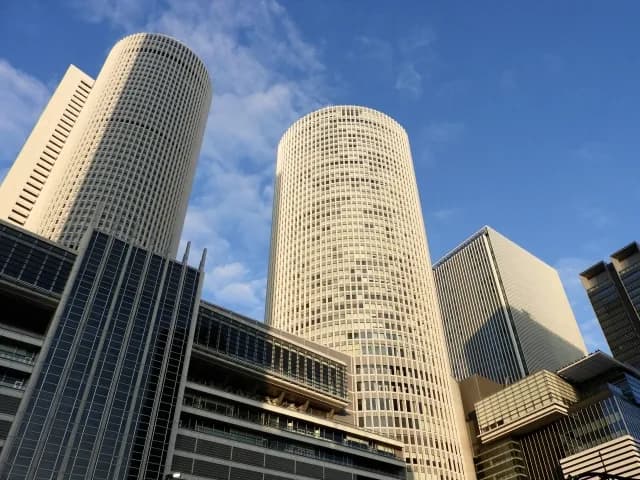
These are skyscrapers directly connected to JR Nagoya Station. The 51-floor building with a rounded shape is JR Central Towers, and the square-shaped 46-floor building next to it is JR Gate Tower.
-
JR Central Towers
- B2F to 11F: Takashimaya Department Store
- Upper floors: Nagoya Marriott Associa Hotel & Offices
-
JR Gate Tower
- B1F to 8F: Gate Tower Mall (shopping mall)
- Upper floors: JR Gate Tower Hotel & Offices
There are also many cafes and restaurants, so you can enjoy shopping and dining all day without getting bored.
Location JR Central Towers · JR Gate Tower2) Midland Square
Unlike a typical department store, Midland Square is an upscale shopping complex with many luxury brand flagship stores, along with Michelin-star restaurants and a cinema.
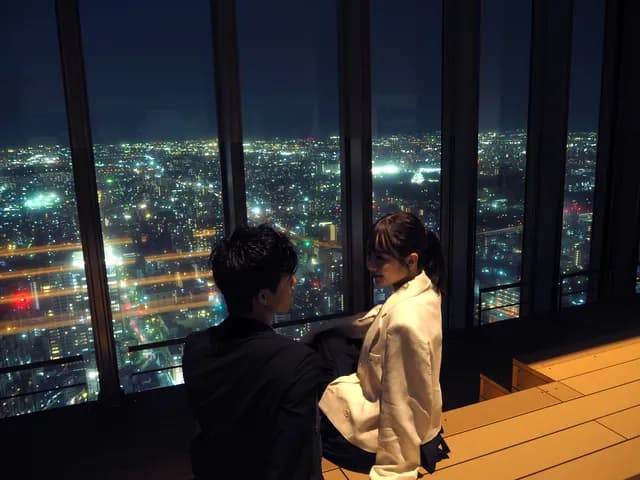
Sky Promenade (Outdoor Observation Deck)
- Location: Midland Square 44–46F, 220m above ground
- Highlights: An open-air deck with no roof, so you can feel the wind and weather directly
- Design: With glass walls and an open layout, you can enjoy a 360-degree panoramic view across Nagoya
- It is considered one of the most impressive night view spots in central Nagoya.
ⓒnagoya-info.jp - Hours: 11:00–22:00 (last entry 21:30)
- January–February: 13:00–21:00 (last entry 20:30)
- Year-end period: 11:00–18:00
- January 1: 05:30–8:30 (last entry 8:00)
-
Open year-round
- Operations may stop in heavy rain.
3) Noritake Garden
< 🚌 Gourmet Sightseeing Bus Course >
A multi-purpose cultural space created by the famous local ceramics brand Noritake, to celebrate its 100th anniversary by redeveloping the former factory site.
It combines a park, museum, workshops, and shops, offering many things to see and do.
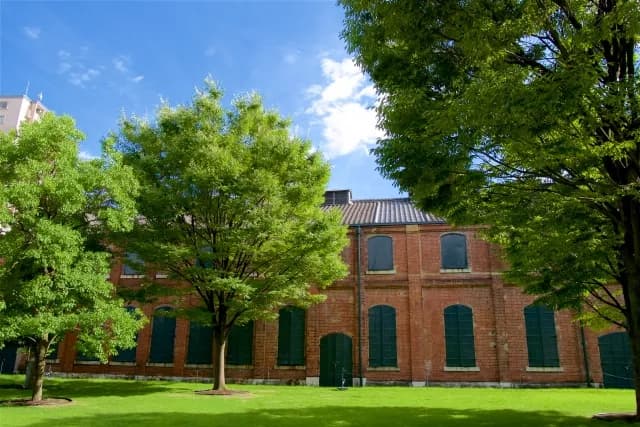
It is a must-visit if you are interested in ceramics. Even if you are not, it is located about a 10-minute walk from Nagoya Station, making it a nice place to stop by for a short walk.
Location Noritake Garden websiteNagoya Castle and Nearby SpotsGolden Nagoya Castle, cherry blossom Meijo Park, and the garden beauty of Tokugawa-en
1) Nagoya Castle
< 🚌 Gourmet Sightseeing Bus Course >
Nagoya Castle (名古屋城) was built by Tokugawa Ieyasu after his victory in the Battle of Sekigahara in 1600, to keep an eye on the Toyotomi clan in Osaka. Construction took about three years, from 1609 to 1612, and it played an important role in the early Edo period as a symbol of Tokugawa authority and a strategic military base.
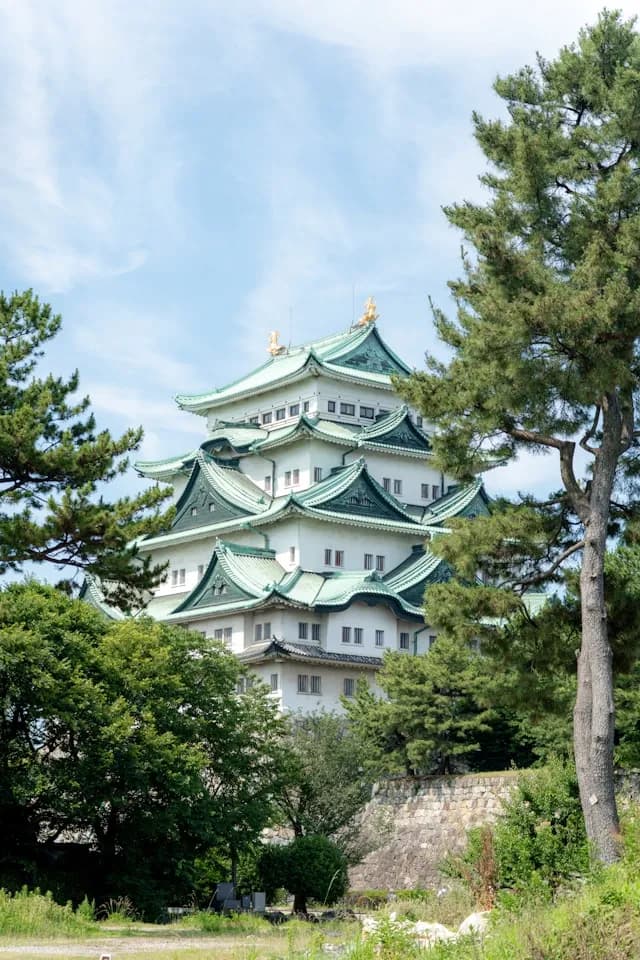
It is also said that Kato Kiyomasa (加藤清正), famous as a master castle builder, joined the construction of Nagoya Castle by Ieyasu’s order after completing Kumamoto Castle (1607). Inside the castle grounds, there is a legendary Kiyomasa Stone (180 tons), and a statue honoring him also stands near the entrance.
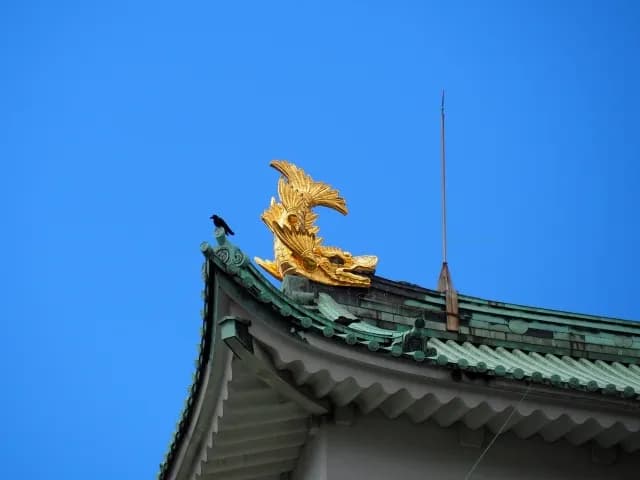
On top of the main keep, there is a gold-leaf shachihoko ornament. A shachihoko is a mythical creature with the head of a tiger and the body of a fish. It is believed to spray water to prevent fires.
The kinshachi of Nagoya Castle is known for its luxury, using about 88 kg of gold per pair. It is widely recognized as a symbol of Nagoya. Other castles, such as Osaka Castle, also have shachihoko, but Nagoya Castle’s is the most famous.
Most of the main keep and key buildings were destroyed in World War II air raids. In 1959, the main keep was rebuilt in reinforced concrete and opened as a museum. However, due to aging of the building, entry is currently restricted, and restoration work is underway to recreate the original wooden structure.
Currently, you can visit Honmaru Palace (本丸御殿), known for traditional Japanese architecture, Kano school (狩野派) paintings, and gold-decorated folding screens. You can also visit the Nishinomaru Okura Storehouse (treasure museum), which exhibits Nagoya Castle artifacts, historical materials, and restoration models.
- Admission: Adults 500 yen / Free for junior high school students and younger
- Combined ticket with Tokugawa-en: 640 yen (usable on a different day as well)
-
Hours
- 09:00–16:30
- Last entry for Honmaru Palace and Nishinomaru Okura Storehouse: 16:00
- Closed: 12/29–1/1 (may change due to events)
2) Kinshachi Yokocho
金シャチ横丁
The kinshachi (金シャチ) of Nagoya Castle is one of the most popular symbols among Japanese castle decorations. The area created by combining this name with yokocho (alley) is Kinshachi Yokocho.
Kinshachi Yokocho is divided into two zones, and it is a great place to experience both traditional and modern Nagoya.
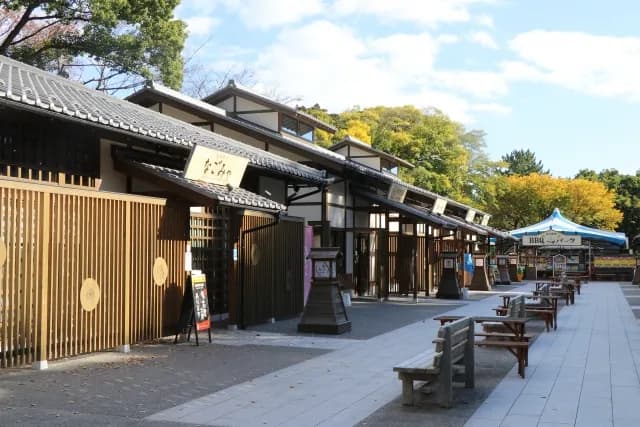
- Yoshinao Zone (Main Gate side)
A zone where you can enjoy traditional Nagoya-meshi and shop for traditional crafts and souvenirs - Muneharu Zone (East Gate side)
A zone with a younger feel, featuring modern cafes, craft beer, and fusion cuisine
If you enter through the main gate to enjoy traditional Nagoya flavors, then exit through the east gate to explore modern shops, you can feel Nagoya’s charm where the past and present meet in one route.
3) Meijo Park
Meijo Park (名城公園) takes its name from Meijo (名城), the former name of Nagoya Castle. It was created when the outer moat and surrounding areas were developed into a public park in 1931.
It is loved as a spot for cherry blossoms in spring and autumn leaves in fall. It is also a great place for a walk with views of Nagoya Castle’s main keep.
Location Meijo Park website4) Tokugawa-en
< 🚌 Gourmet Sightseeing Bus Course >
Tokugawa-en (徳川園) is a traditional Japanese garden created in 1695 as a retirement villa by Tokugawa Mitsutomo (徳川光友), the second head of the Owari Tokugawa family.
In the Meiji period, it was used as an aristocratic garden, but most of it was destroyed in World War II air raids. Nagoya City later restored it, and after major renovations, it reopened to the public in 2004. Today, it is loved as one of Nagoya’s representative strolling gardens.
- Strolling garden: a Japanese garden style designed so you can walk along paths around a pond or lake to enjoy changing scenery
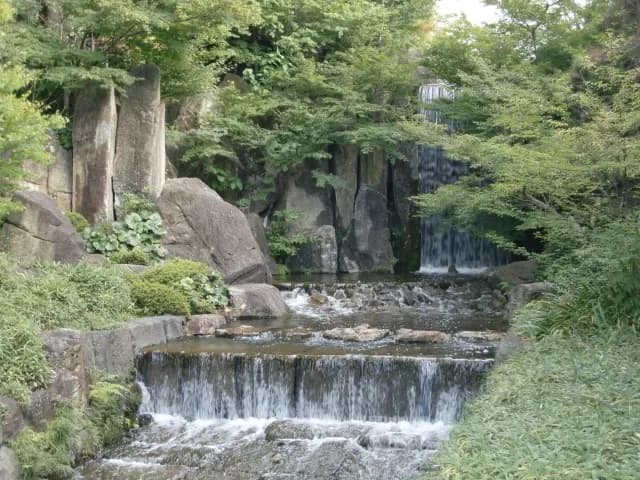
The garden layout is based on “a dragon’s head and a tiger’s tail”, with a large central pond called Ryusenko (龍仙湖). Around the pond, features such as waterfalls, streams, and stone bridges are placed naturally. It reflects a traditional Japanese aesthetic that brings natural landscapes into one garden.
- Admission: Adults 300 yen / Free for junior high school students and younger
- Combined ticket with Nagoya Castle: 640 yen (usable on a different day as well)
- Hours: 09:30–17:30 (last entry 17:00)
-
Closed
- Every Monday (if it is a public holiday, closed the next day)
- Year-end and New Year (12/29–1/1)
Sakae Must-See SpotsKey Sakae highlights like MIRAI TOWER and Oasis 21
Sakae is Nagoya’s biggest downtown area and the place where young people and tourists gather the most. From Nagoya Station to Sakae Station is only two subway stops, so if your group is small, it is efficient to use the subway or city bus. For a small group of about 3–4 people, taking a taxi can be a more convenient option.
1) Hisaya-odori Park
< 🚌 Gourmet Sightseeing Bus Course >
A central city park about 2 km long from north to south in the heart of Sakae. MIRAI TOWER stands at the center and serves as one of Nagoya’s main landmarks.
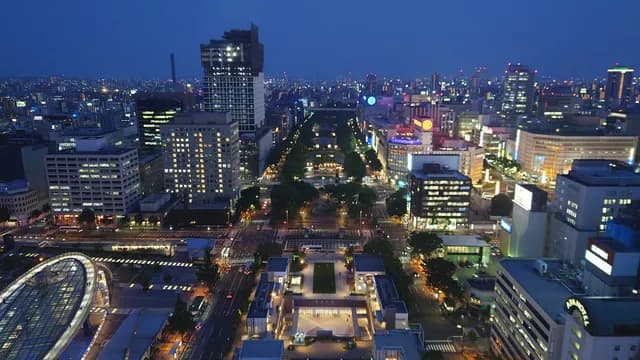
After a 2020 renewal, it became a mixed space of greenery and commercial facilities. You can enjoy walking and relaxing, as well as cafes, shopping, and night views. Seasonal illuminations and various events are held, making it a popular city spot for both tourists and locals.
Location Hisaya-odori Park website2) MIRAI TOWER (formerly Nagoya TV Tower)
< 🚌 Gourmet Sightseeing Bus Course >
Built in 1954 as Japan’s first TV broadcasting tower, it was renamed MIRAI TOWER after a 2020 renovation. It now has a more modern and stylish look, and a boutique hotel, Hotel Tower The Park, opened on the 4th floor.
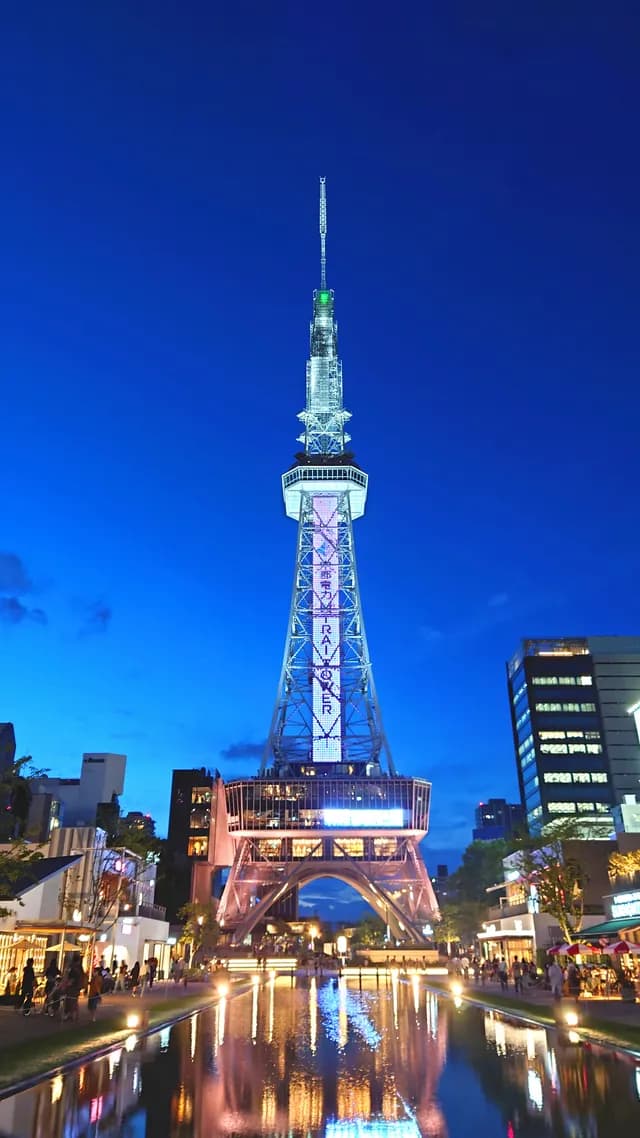
MIRAI TOWER Observation Deck
An observation deck at 90m above ground. It is lower than the Midland Square Sky Promenade, but you can look down on Oasis 21 and Hisaya-odori Park from a closer view, which can feel more romantic.
-
Hours
- Weekdays and Sundays: 10:00–21:00
- Saturdays: 10:00–21:40
- Last entry: 20 minutes before closing
- Open year-round: closed about twice a year for maintenance
3) Oasis 21
< 🚌 Gourmet Sightseeing Bus Course >
A multi-purpose cultural complex in Sakae, Nagoya. On the first floor, there is a bus terminal, making it a transport hub for city buses, airport buses, and highway buses. It is also directly connected to Sakae Station, so transfers are very easy.
Above ground, there is a modern park and plaza loved as a city center rest area for locals. Underground, you will find a shopping mall, restaurants, and event spaces, making it a popular spot for both tourists and residents.
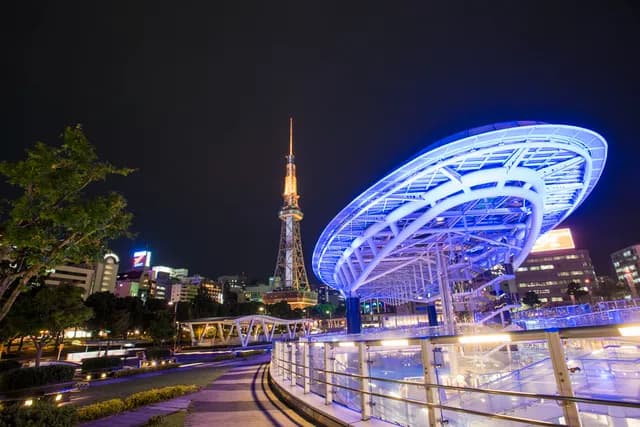
Because of its unique curved design, it has the nickname “Spaceship Aqua”. During the day, the glass roof reflects sunlight and creates a cool, bright atmosphere. At night, LED lighting turns it into a night view landmark in Sakae.
Location Oasis 21 website4) Nagoya City Science Museum
< 🚌 Gourmet Sightseeing Bus Course >
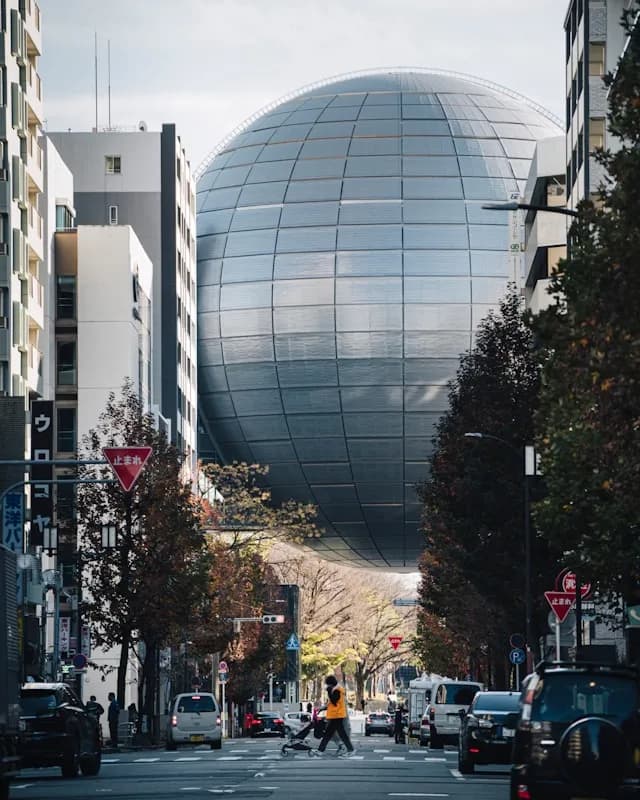
With its striking large silver sphere, the Nagoya City Science Museum is not a typical museum focused only on displays. It is a hands-on science museum where you can take part in interactive experiences.
It is a great place for families with children and also for adults interested in science. The museum offers many exhibits and programs that make science easy and fun for everyone.
- Planetarium “Brother Earth”
- With a 35m diameter and seating for 350 people, it is known as the world’s largest planetarium. It recreates the night sky and constellations, and runs seasonal programs, plus regular astronomy talks and shows using advanced projection systems.
- Science Exhibition Halls
- Covering six fields such as daily-life science, space, earth science, and life science, with many hands-on corners for all ages.
- Artificial Snowfall Room
- One of the world’s largest artificial snowstorm experience rooms, where you can experience a real snowstorm at -30°C. It is especially popular with children.
- Tornado Lab
- A lab where you can see a huge artificial tornado up close, reaching about 9m high. You can learn how tornadoes form through a science demonstration.
-
Hours
- 09:30–17:00 (last entry 16:30)
- Planetarium ticket sales end at 16:30
-
Closed
- Every Monday: if it is a public holiday, closed the next day
- Third Friday of each month: if it is a public holiday, closed on a weekday instead
- Year-end and New Year: 12/29–1/3
- There are also temporary closures. It is best to check the exact schedule on the calendar before you go.
5) Osu Shopping Street
Osu Shopping Street (大須商店街) is Nagoya’s representative pedestrian shopping area, where tradition and modern culture mix. You will see traditional Japanese shops, kimono stores, and tea houses, as well as latest fashion and electronics and street culture, creating a unique atmosphere.
It is also famous for many shops related to manga, anime, and games, so it is often called “Nagoya’s Akihabara”. You will also find maid cafes, figure shops, and cosplay costume stores.
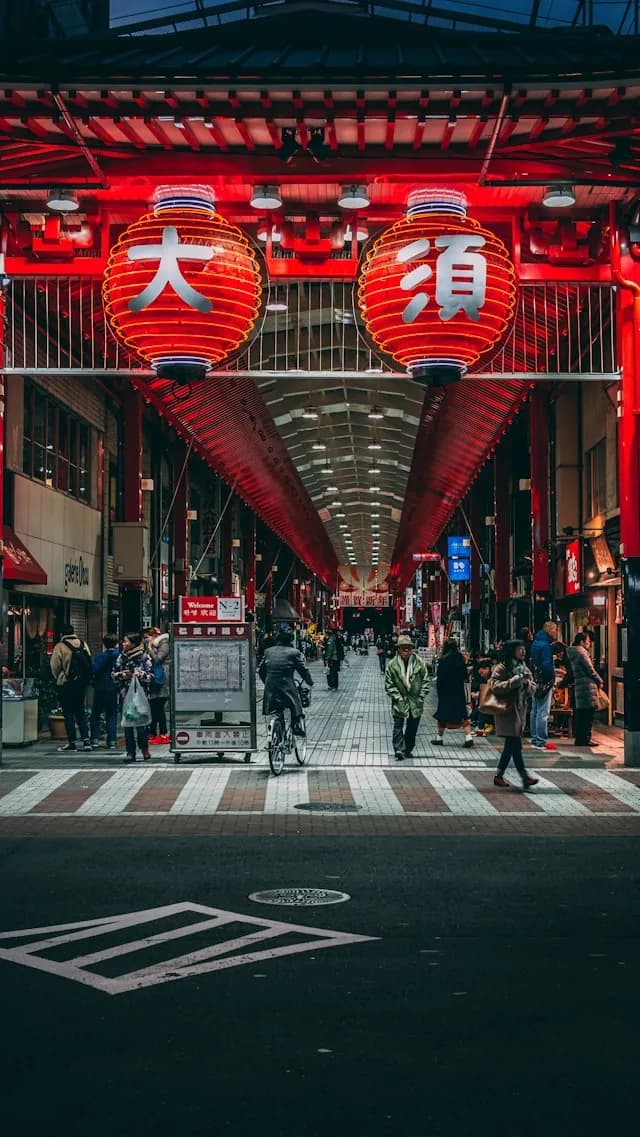
Osu Shopping Street is full of popular local food places for Nagoya-meshi (名古屋めし) such as miso katsu, hitsumabushi, tenmusu, and Taiwan ramen. You can also try many casual “B-grade” local snacks that are unique to this area.
Many street festivals are held here each year. In particular, the two festivals below are well-known local highlights.
- Late July to early August: Osu Summer Festival
- Mid-October: Osu Street Performance Festival (大須大道町人祭)
→ The streets fill with cosplay parades and traditional processions, creating a lively festival atmosphere.
Osu Kannon
Kannon (観音) refers to the Bodhisattva of Compassion (観世音菩薩). The official name is Kitanosan Shinpukuji Hoshoin (北野山 真福寺 宝生院). Simply, you can think of it as a Buddhist temple.
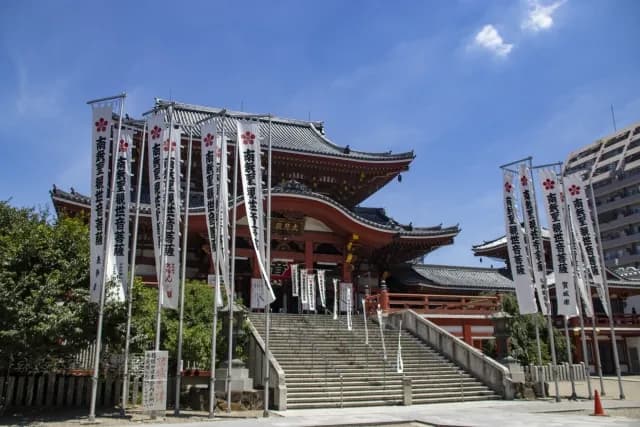
This temple was founded in 1333 in Hashima, Gifu Prefecture, and in 1612 it was moved to its current location by order of Tokugawa Ieyasu. It was destroyed in air raids during World War II, but later rebuilt and remains in its current form.
- Every month on the 18th — Kannon Day
Around the temple, you can enjoy a livelier atmosphere than usual, with a flea market and many street stalls. - Every year on February 3 — Setsubun (節分会)
Monks hold a mamemaki (豆まき) event, throwing beans from a high place to drive away bad luck and pray for good fortune. Locals and visitors can join this traditional event.
※ Setsubun is usually held on February 3, but the date can change depending on the year. For example, in 2025 it was held on February 2, so it is best to check the exact date each year in advance.
Atsuta Jingu ShrineA shrine said to hold the Kusanagi-no-Tsurugi, one of the Imperial Regalia, and Nobunaga’s wall
Atsuta Jingu Shrine
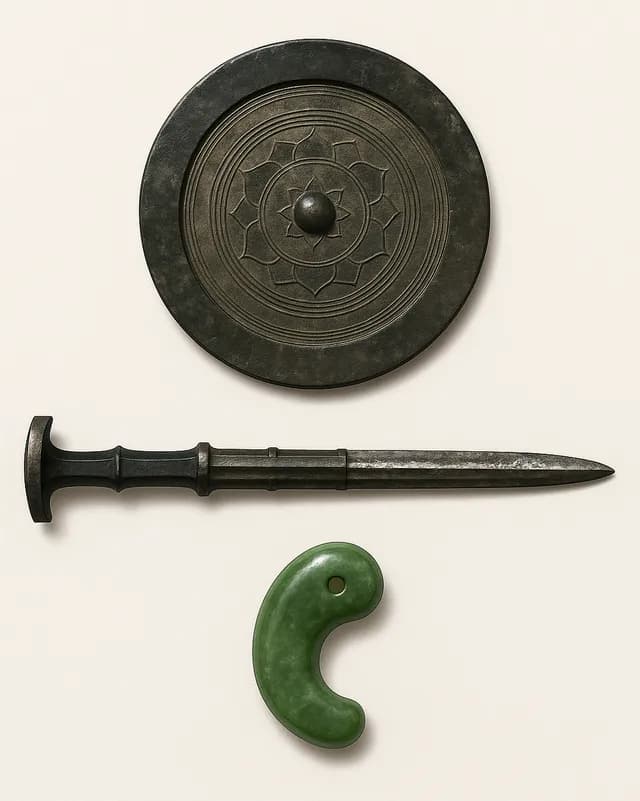
According to Japanese mythology, Susanoo-no-Mikoto (須佐之男命) defeated the eight-headed mythical monster Yamata-no-Orochi (八岐大蛇) and found a mysterious sword inside its body. He presented this sword to his sister, Amaterasu Omikami (天照大神). The sword later became one of the Three Sacred Treasures (Imperial Regalia) of Japan: Kusanagi-no-Tsurugi (草薙剣).
- Interestingly, there is also a theory that Susanoo-no-Mikoto is the same figure as Yeono-rang in the Korean folktale Yeono-rang and Seo-nyeo from the Pohang area.
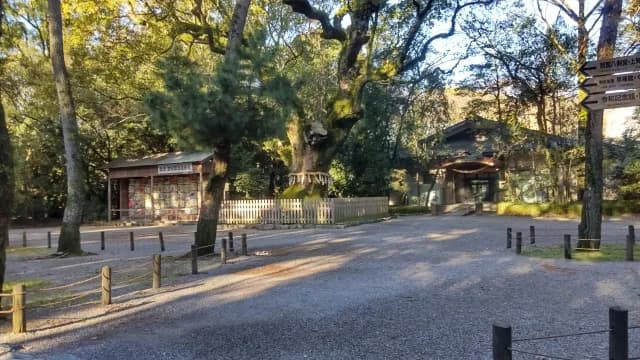
It is said that this sword is kept at Atsuta Jingu Shrine. However, the sword is kept strictly private, and no one can see it directly, not even members of the Imperial family.
- During the Genpei War (源平合戦, 1180–1185), in the final battle known as the Battle of Dan-no-ura (壇ノ浦の戦い, 1185), it is said that Emperor Antoku jumped into the sea while carrying the Three Sacred Treasures.
In this story, the mirror and jewel were recovered, but the sword was never found. - You can find more details related to this story in Kyushu Part 2 - Shimonoseki, in the section about Akama Jingu Shrine.
Even when the Allied forces investigated Imperial property after World War II, the physical Imperial Regalia were never confirmed. When a new Emperor is enthroned, the sword and the imperial seal are passed on, but always wrapped in cloth or kept in a box.
As a result, the Three Sacred Treasures remain a mystery even today, and they are seen as sacred symbols of Japanese mythology and Imperial culture.
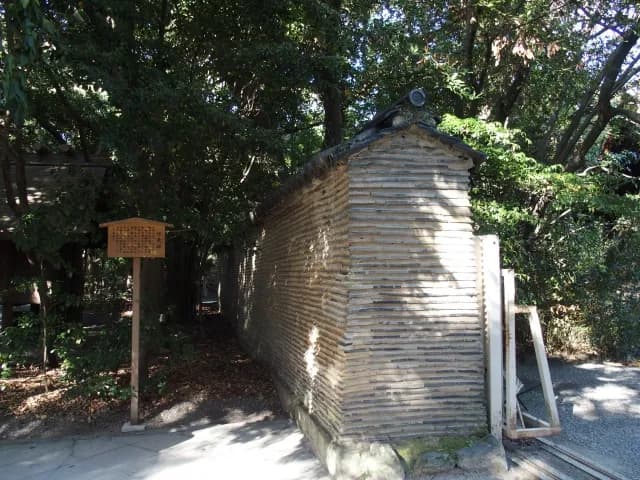
Nobunaga’s Wall (信長塀)
Within Atsuta Jingu grounds, there is a wall said to have been built by Oda Nobunaga (織田信長) after his great victory in the Battle of Okehazama (1560), as an offering of thanks. It was originally about 400m long, but part of it was lost during World War II, and about 120m remains today.
Battle of Okehazama (June 12, 1560)
In the mid-16th century, Japan was in the Sengoku period (戦国時代), a time of conflict when daimyo fought for power across the country. At that time, the powerful daimyo Imagawa Yoshimoto (今川義元), who ruled the Suruga, Totomi, and Mikawa regions, marched toward Kyoto with a large army of about 20,000–40,000 troops.
However, the Owari region (present-day Nagoya) on his route was still a minor territory, and Oda Nobunaga was a small lord with only about 2,000–3,000 soldiers.
Despite the disadvantage, Nobunaga visited Atsuta Jingu Shrine to pray before battle, then led his forces himself. By chance, Imagawa’s main camp was holding a banquet near the Okehazama valley. Taking advantage of the heavy rain that reduced visibility, Nobunaga launched a bold surprise attack.
The tactic was a great success, and Nobunaga achieved a dramatic victory by defeating Imagawa Yoshimoto on the battlefield.
This battle was not only a tactical win. It became one of the major turning points in Japanese history. Nobunaga’s name became known nationwide, and his move toward unifying Japan began in earnest.
A symbol of this beginning is the Nobunaga’s Wall that still remains in the Atsuta Jingu grounds today.
- Admission: Free
- Hours: Open 24 hours
- Open year-round
-
Treasure hall admission
- Additional 500 yen
- 09:00–16:30 (last entry 16:00)
- Closed: last Wednesday and Thursday of each month, and 12/25–12/31