IntroductionSaga, a hidden gem of Kyushu’s small cities
From Incheon, Taiwan, and Shanghai, there are direct flights to Saga Airport, which makes it a good choice for travelers planning a small-city-focused trip.
From Saga to Fukuoka, it takes about 1 hour 15 minutes by local train (about 1,300 yen), or about 40 minutes by limited express. The fare is about 2,830 yen, but with online discount tickets, you can sometimes buy it for around 1,300 yen.
For this reason, when Fukuoka flights are expensive, it can be smart to use Saga as an alternative route. Booking flights as “Saga in – Fukuoka out” (or the reverse) can make your itinerary more efficient.
Saga Prefecture has deep cultural appeal, including traditional ceramics from Arita and Imari, skin-friendly Ureshino Onsen, and the ancient site of Yoshinogari.
How to enter from Saga AirportHow to reach Saga and Fukuoka when you arrive at Saga Airport
1) From Saga Airport to Saga Station Bus Center
Buses run to match international arrival times, and even if the flight is delayed, the bus does not depart until all passengers come out to the arrival lobby. So it may leave later than the posted time, and you should plan accordingly.
At Saga Airport, there is no separate ticket counter, and you pay directly with cash or a transport IC card such as Suica.
- Fare: 600 yen one way
- Only 1,000-yen bills can be exchanged for change
- Contactless card payment is not available
2) From Saga Airport to Fukuoka
To match the operating schedule of the Shanghai route, a highway bus between Saga Airport and Tenjin Highway Bus Terminal runs only once a day on Mondays, Wednesdays, and Fridays.
- From Saga Airport: 12:10 → arrive Tenjin Bus Terminal 15:05
- From Tenjin Bus Terminal: 08:15 → arrive Saga Airport 10:07
- Fare: 2,000 yen one way
- The Tenjin departure must be booked in advance
Complete guide: How to get from Fukuoka to SagaCompare trains and buses at a glance: time, fares, and pros/cons
From Fukuoka, the main ways to reach Saga are by highway bus or by train.
1) By highway bus
There is no departure from Hakata Bus Terminal. Buses depart only from Tenjin Bus Terminal. There are about 35 services a day, roughly one every 20–30 minutes. You can board without a reservation—just buy a ticket and line up.
- Fare: 600 yen one way
- Only 1,000-yen bills can be exchanged for change
- Contactless card payment is not available
2) From Saga Airport to Fukuoka
To match the operating schedule of the Shanghai route, a highway bus between Saga Airport and Tenjin Highway Bus Terminal runs only once a day on Mondays, Wednesdays, and Fridays.
- From Saga Airport: 12:10 → arrive Tenjin Bus Terminal 15:05
- From Tenjin Bus Terminal: 08:15 → arrive Saga Airport 10:07
- Fare: 2,000 yen one way
- The Tenjin departure must be booked in advance
Saga City travel pointsQuiet streets and local sights
As you walk around Saga City, you will often see Ebisu (恵比須) statues. Ebisu is the only one of Japan’s Seven Lucky Gods (七福神) that originated in Japan, while the other six were introduced from China or India.
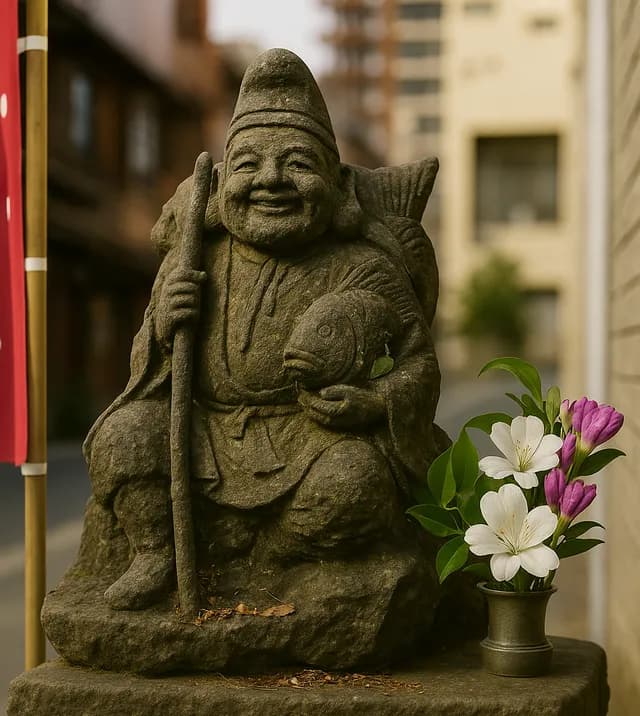
As a god of commerce and prosperity, Ebisu has long been an object of worship in Saga, and the area is known as the place with the most Ebisu statues in Japan. Today, there are more than 800 Ebisu statues installed across the city, so you can encounter them naturally in everyday streets.
This tradition reflects long-standing local faith, as residents voluntarily set up statues while wishing for family safety and prosperity. Today, there are also activities like Ebisu tours and stamp rallies, so it is fun to find them while strolling around the city.
For reference, the logo of “Yebisu Beer,” which you can easily find at convenience stores, also features Ebisu.
The Ebisu statue, smiling brightly while holding a fishing rod in the right hand and a sea bream in the left, was originally worshipped as a god of fishing.
Over time, based on the tradition of exchanging caught fish for rice to make a living, Ebisu became known as a god of commerce and business, and today is widely seen as a symbol of business success.
1) Saga City Bus 1-Day Free Pass
1日フリー乗車券
The 1-day pass for Saga City buses has two main types.
There is an All-lines 1-day pass for the full network, and a Designated-area 1-day pass limited to the central zone.
① All-lines 1-day pass
- Adults 1,000 yen / Children 500 yen
- Valid across all Saga City areas
- Discounts at 11 partner facilities, including the Saga Balloon Museum
② Designated-area 1-day pass
- Adults 350 yen / Children 180 yen
- Valid in the 160-yen zone centered around Saga Station Bus Center
- A good deal if you take the bus two times or more in the city center
You can buy the pass at the Saga Station Bus Center or directly on board the bus.
View Saga City Bus 1-Day Free Pass2) Local sweets tour
ぶらり佐賀!銘菓めぐりの旅
This program is a hands-on walking course that starts at Saga Station and visits four traditional sweets shops in central Saga. You can taste local treats at each shop and collect stamps.
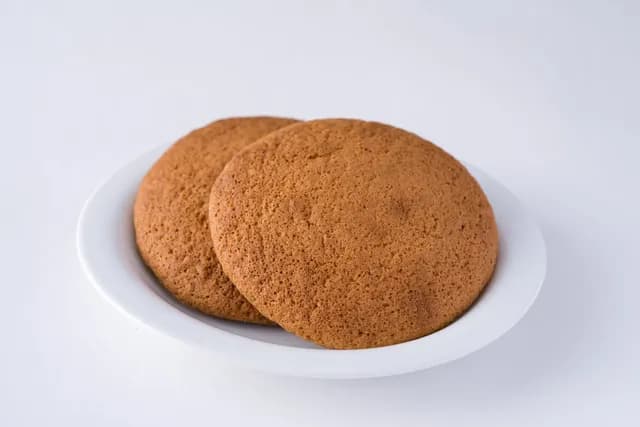
You can buy a ticket for 500 yen at SAGA MADO Information Hub & Lounge (1F of Saga Station) or at the Saga City Tourist Exchange Plaza on the 2nd floor of S-Platz (S-Platz).
- Muraokaya Main Store
- Yatoji Denkichi (Saga Tojinmachi Store)
- Muraoka Sohonpo (Tojinmachi Store)
- A place where you can find the original Ogi Yokan (小城羊羹), a representative traditional sweet of the Saga area
- Kitajima (Shirayama Main Store)
In the Edo period, Japan only allowed trade through Nagasaki Port, and sugar was a rare ingredient brought through foreign trade.
Saga was part of the roughly 228 km “Sugar Road” route from Nagasaki to Kokura (Kitakyushu). Over time, this helped traditional sweets culture grow, including treats like yokan and maruboro.
3) Saga Castle Ruins
佐賀城跡
Saga Castle Ruins was the political center of the Saga Domain in the Edo period. Today, you can see parts of the castle walls and moat, and a museum area with a restored Honmaru Palace.
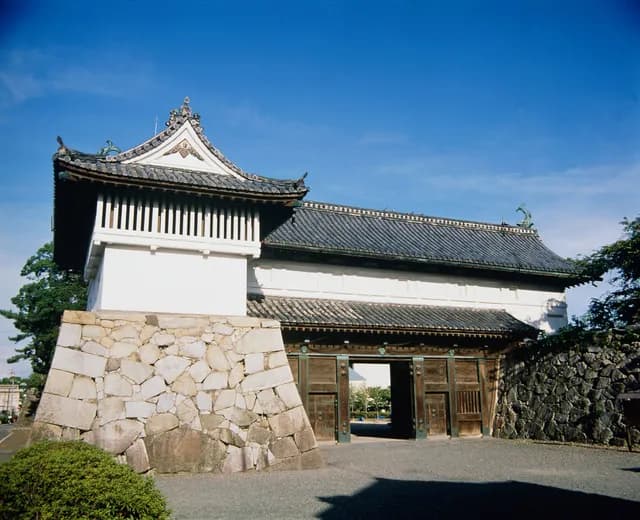
The restored Honmaru History Museum is a rare example of a reconstructed wooden castle building, with exhibitions introducing the history and culture of the Saga Domain.
The area around the museum has a large open plaza and walking paths, and it is loved as a relaxing spot for both locals and visitors.
- Admission: Free
- Hours: 09:30 ~ 18:00
- Closed: December 29 ~ January 1 (and other temporary closures may apply)
4) Saga Shrine: Eight-shrine pilgrimage (Hassha-mairi)
佐嘉神社
Saga Shrine enshrines Nabeshima Naomasa (鍋島直正), the 10th lord of the Saga Domain, and Naohiro (直大), the 11th lord.
Online, you may see different explanations about how many shrines there are, but the correct number is eight. The key of the “Eight-shrine pilgrimage” is to visit all eight shrines, including Saga Shrine, in order.
After you pass through the torii gate at the entrance and follow the marked route, you will reach each shrine. You can also collect stamps on a pilgrimage certificate (八社詣之証).
-
Saga Shrine (culture, transport, learning)
- The central shrine enshrining Naomasa, who introduced smallpox vaccination to Japan
- During the COVID period, ceremonies were also held to pray for an end to infectious diseases
-
Matsune Shrine (arts, learning)
- Enshrines Matsune, a loyal retainer and artist connected to Naomasa
- Known for outstanding skills in calligraphy, painting, and waka poetry
-
Matsubara Shrine (victory, good fortune, luck)
- Enshrines Nabeshima Naoshige, the founder of the Saga Domain, and the warlord Ryuzoji Takanobu
- The grounds include Arita porcelain lanterns
-
Saga Kou Shrine (fire prevention, kitchen god)
- Enshrines “Kojin (荒神),” a deity of fire and the kitchen
- A ritual of lighting a fire in the furnace next to the shrine while making a wish
-
Matsubara Ebisu Shrine (business, luck, lottery)
- Home to a large 3 m Ebisu statue
- Depicted catching a sea bream, and it is said that rubbing the “Tamahou (玉寶)” jewel helps with wish fulfillment
-
Matsubara Inari Shrine (family safety, business prosperity)
- A Saga version of Japan’s famous Inari shrines
- Known for red torii gates and a stamp shaped like a rice ear
-
Matsubara Kawasou Shrine (flood protection, child guardian)
- Enshrines “Kawasou (河童),” a local water deity representing Saga’s canal culture
- Features statues with headbands and a figure where people sprinkle water
“Kawasou (かわそう)” is a traditional name for kappa, and it is used when the being is enshrined in a deified form at a shrine.
- Matsubara Naginoki Shrine (relationships, family stability)
- The sacred tree is the nagi tree (梛). Its leaves, which do not tear easily, are seen as a symbol of bonds
- It is said that tying a red string (wishes) or a blue string (achievement) to the tree helps keep bonds connected
- Admission: Free
- Opening hours
- April ~ October: 06:00 ~ 18:00
- November ~ March: 06:00 ~ 17:30
- Open all year
5) Saga Balloon Museum 🎈
佐賀バルーンミュージアム
This museum introduces the history and principles of the Saga International Balloon Fiesta, held around early November every year.
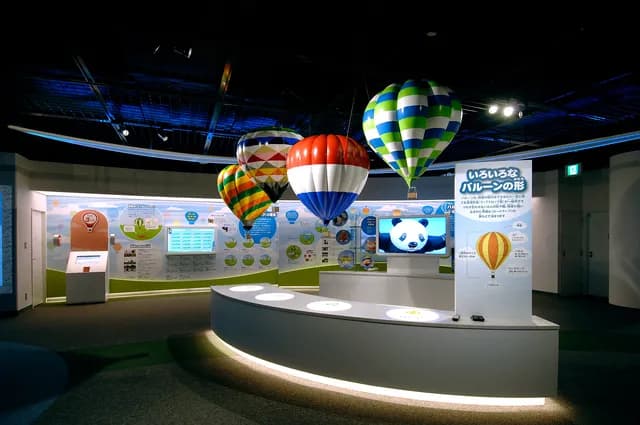
In addition to real balloon exhibits, there are many activities such as VR experiences, simulators, and a children’s zone, making it especially popular with families.
- Admission: 500 yen (adults), 200 yen (junior & senior high), free (elementary and under)
- Hours: 10:00 ~ 17:00 (last entry 16:30)
- Closed:
- Every Monday, 12/31 ~ 1/1
- ※ Open as usual during Saga Jokahinamatsuri and summer vacation periods
6) Saga Prefectural Office Observatory Hall (SAGA 360) 🗻
佐賀県庁 展望ホール (SAGA360)
This is a free observation space on the top floor (13F) of the Saga Prefectural Office Annex. On a clear day, you can see not only Saga City but also the Ariake Sea and even Mt. Unzen.
You can enjoy a 360-degree panoramic view, and it is also known as a night-view spot, with a different mood in daytime and at night.
- Admission: Free
- Hours:
- Weekdays: 08:30 ~ 22:00
- Weekends & holidays: 09:30 ~ 22:00
- Closed: Every Monday (except when it is a public holiday)
7) Youme Town Saga 🛍️
ゆめタウン佐賀
This is the largest shopping complex in central Saga City, with everything from fashion and groceries to daily goods, restaurants, and a cinema.
Popular with both locals and travelers, it is a convenient spot where you can do shopping, dining, and indoor rest all in one place.
Official website LocationTakeoA relaxed day in Takeo, the city of hot springs and books
Takeo is one of Saga’s best-known hot spring areas, along with Ureshino Onsen.
1) Takeo Onsen Station Tourist Information Center
武雄温泉駅観光案内所
North of the station, you can find the Takeo Onsen Romon Gate, and to the south are sights like Takeo City Library and the Takeo camphor tree.
If walking the full 4–5 km route feels too much, bicycle rental is recommended for small groups.
- For groups of 3–4 people or more, a walk + taxi combination is efficient
- Bicycle rental: 1,000 yen per day (open 08:30–18:30)
- Luggage storage: Free with bicycle rental / Otherwise 400 yen (bag), 800 yen (suitcase)
2) Kairodo
カイロ堂
This ekiben (station bento) specialty shop is at the north exit of JR Takeo-Onsen Station. It is famous for winning the Kyushu Ekiben Grand Prix three times in a row (8th–10th).
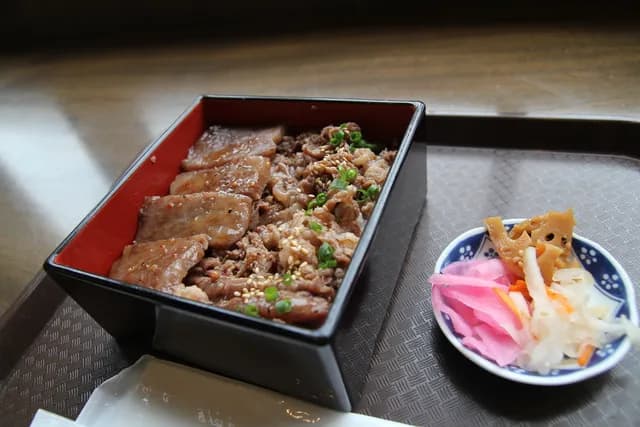
In addition to Saga beef bento, they also sell gelato and drinks. Popular bento options include:
- Saga beef sukiyaki bento: cooked in a sweet soy-based sauce (won 8th & 9th)
- Saga beef premium short ribs yakiniku bento: short ribs with a special sauce (won 10th)
- Saga beef steak & yakiniku bento: steak and short ribs together
3) Takeo Onsen Romon Gate
武雄温泉 楼門
Takeo Onsen is a historic hot spring with over 1,300 years of history, and it even appears in the “Hizen no Kuni Fudoki,” compiled in 712.
Its old name was “Tsukasaki Onsen (柄崎温泉),” and it is connected to the legend of the conquest of the Three Han. It is said that Empress Jingu poked the ground with the handle of her spear and hot spring water sprang out.
- The “Three Han conquest” story in the Nihon Shoki is a record mixed with myth and political elements, so its historical reliability is low
A written order by Toyotomi Hideyoshi—who is known as the first person to unify Japan—about using Takeo Onsen for his soldiers included these rules:
- Do not make unreasonable demands on local residents
- Pay 5 mon per person when bathing
- Do not cut trees outside designated areas
→ This is historical evidence that Takeo Onsen was used as a rest place for the army even during war.
The Takeo Onsen Romon Gate was built using traditional wooden joinery (kikumi) without nails, and it was designed by Tatsuno Kingo (辰野金吾), who also designed Tokyo Station.
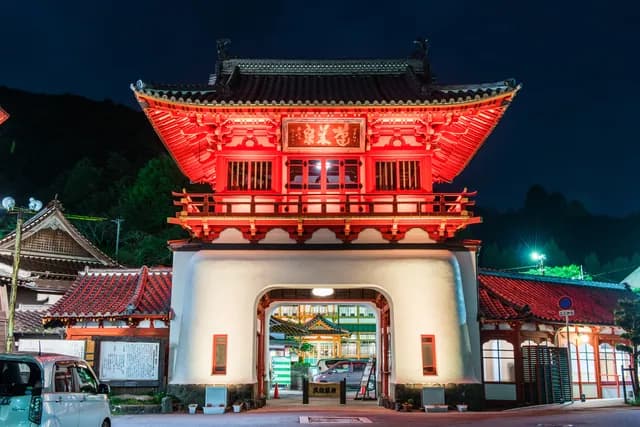
On the second-floor ceiling, there are zodiac motifs of rabbit, horse, rooster, and mouse, representing the four directions. When the other eight zodiac motifs were found on the ceiling of Tokyo Station, the connection between the two buildings also gained attention.
- Depending on the number of bathhouses, you can choose from a single bath, multiple bathhouses, or private baths, based on your travel style
You can view the ceiling patterns only at a fixed time (09:00 ~ 10:00), and only if you have a bathing ticket.
- Viewing is possible only before bathing
- Fee: 500 yen (adults), 250 yen (children)
- Includes Motoyu bath ticket / Can be substituted with Saginoyu or Romon-tei rest ticket
- Closed: Every Tuesday
- Period: until March 31, 2026
4) Takeo Onsen Shinkan (New Building)
武雄温泉 新館
Takeo Onsen Shinkan was built in 1915 (Taisho 4). It is a two-story wooden building that uses the same kikumi (木組み, traditional joinery) method as the Romon Gate, and it was built with no nails at all.
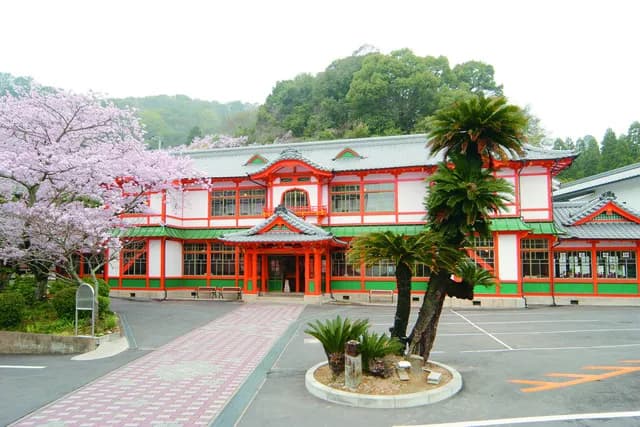
Inside, you can see rare lattice-style majolica tiles and decorative tile panels. After restoration was completed in 2003, it was registered as an Important Cultural Property in 2005.
Today, it operates as an exhibition facility (no bathing), and you can enter for free. There is also a recreated public bath space and displays of hot spring artifacts.
- Admission: Free
- Hours: 10:00 ~ 18:00
- Closed: Every Tuesday
5) Motoyu
元湯
Built in 1876, Motoyu is one of Japan’s oldest hot spring facilities still in operation, and it is the main bathhouse of Takeo Onsen.
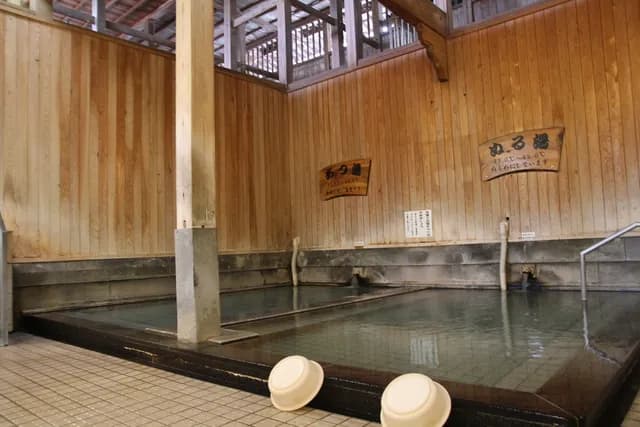
With its high ceiling and wide baths, it has a relaxed atmosphere and a nostalgic, retro mood that many travelers love.
- Bathing fee: 500 yen (adults), 250 yen (children)
- No towels provided (rental 300 yen, souvenir towel 200 yen)
6) Mifuneyama Rakuen
御船山楽園
Mifuneyama Rakuen in Takeo City is a garden heritage site created in 1845 by Nabeshima Shigeyoshi (鍋島茂義), the 28th lord of the Takeo Domain.
The garden is set against Mt. Mifune (about 210 m) and covers about 150,000㎡.
- Spring: 2,000 cherry trees, 200,000 azaleas
- Summer–Autumn: teamLab exhibition, experience an ancient path toward sacred trees
- Autumn: illuminated fall foliage
- Winter: snowy garden scenery
teamLab: A Forest Where Gods Live
This teamLab exhibition runs from summer to autumn and is an immersive experience combining nature and digital art.
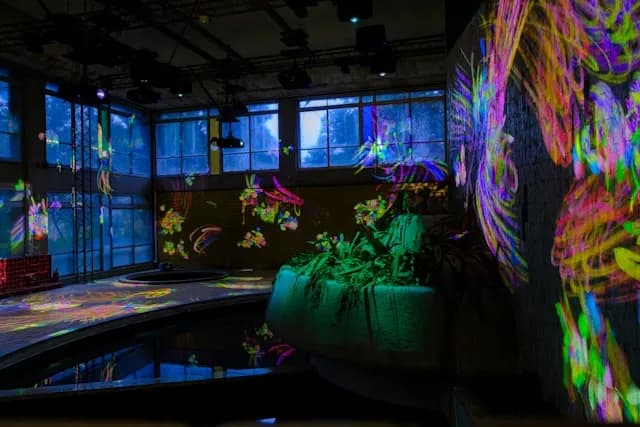
- Period: 2025.07.18 ~ 2025.11.03 (Fri/Sat/Sun & public holidays)
- Hours: Jul–Sep 19:00–22:30, Sep–Oct 18:00–22:30, Oct–Nov 17:00–22:30
- Last entry: 22:00
Rakan-no-yu at Mifuneyama Rakuen ♨️
Rakan-no-yu is a sauna facility inside Mifuneyama Rakuen. It was selected for SAUNACHELIN for three consecutive years, and in 2024 it was also recognized in the SAUNA 37 international awards.
Guests staying at Mifuneyama Rakuen Hotel or Onyado Chikurintei can use it for free, and day-use visitors must book in advance.
- Time per session: 2 hours 30 minutes
- Capacity: Men 15, Women 10 (age 16+ only)
- Up to 3 people can book together (same gender)
- Includes 6 indoor teamLab sites (including Megaliths in the Bath House Ruins)
🌙 teamLab at Mifuneyama Rakuen includes a night outdoor exhibition and a year-round indoor exhibition.
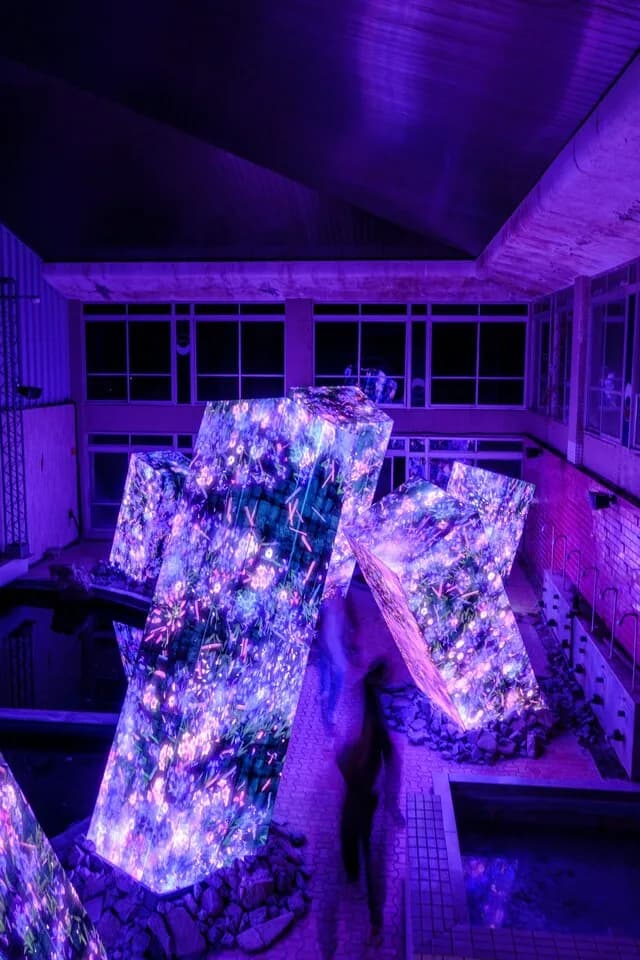
From July to November, you can see the full experience including the outdoor exhibition, but in other periods, only the indoor exhibition is open. Also, if you plan to use Rakan-no-yu, you must reserve in advance and enter only during your assigned time slot, and guests under 16 cannot enter. If you want to see only the exhibition without the sauna, you can buy a separate admission ticket.
7) Keishuen Garden & Yoko Museum 🎨
慧洲園 & 陽光美術館
Keishuen is a calm space where Japanese garden design and ceramic art come together, and it is especially recommended if you enjoy quiet scenery.
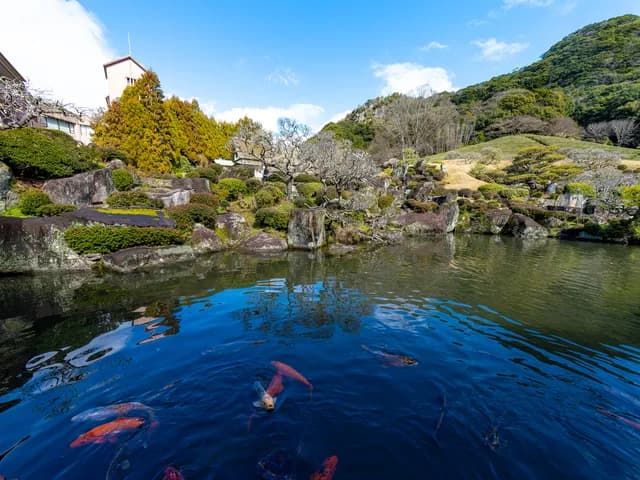
The nearby Yoko Museum displays Chinese and Japanese ceramics and Buddhist artworks, and it is known as a good place to enjoy art in a neat and peaceful atmosphere.
- Admission: 600 yen (adults), 500 yen (students) for each facility (free for junior high and under)
- Combo ticket: 1,000 yen (adults), 800 yen (students)
- Hours: 10:00 ~ 16:00
- Closed: Every Wednesday
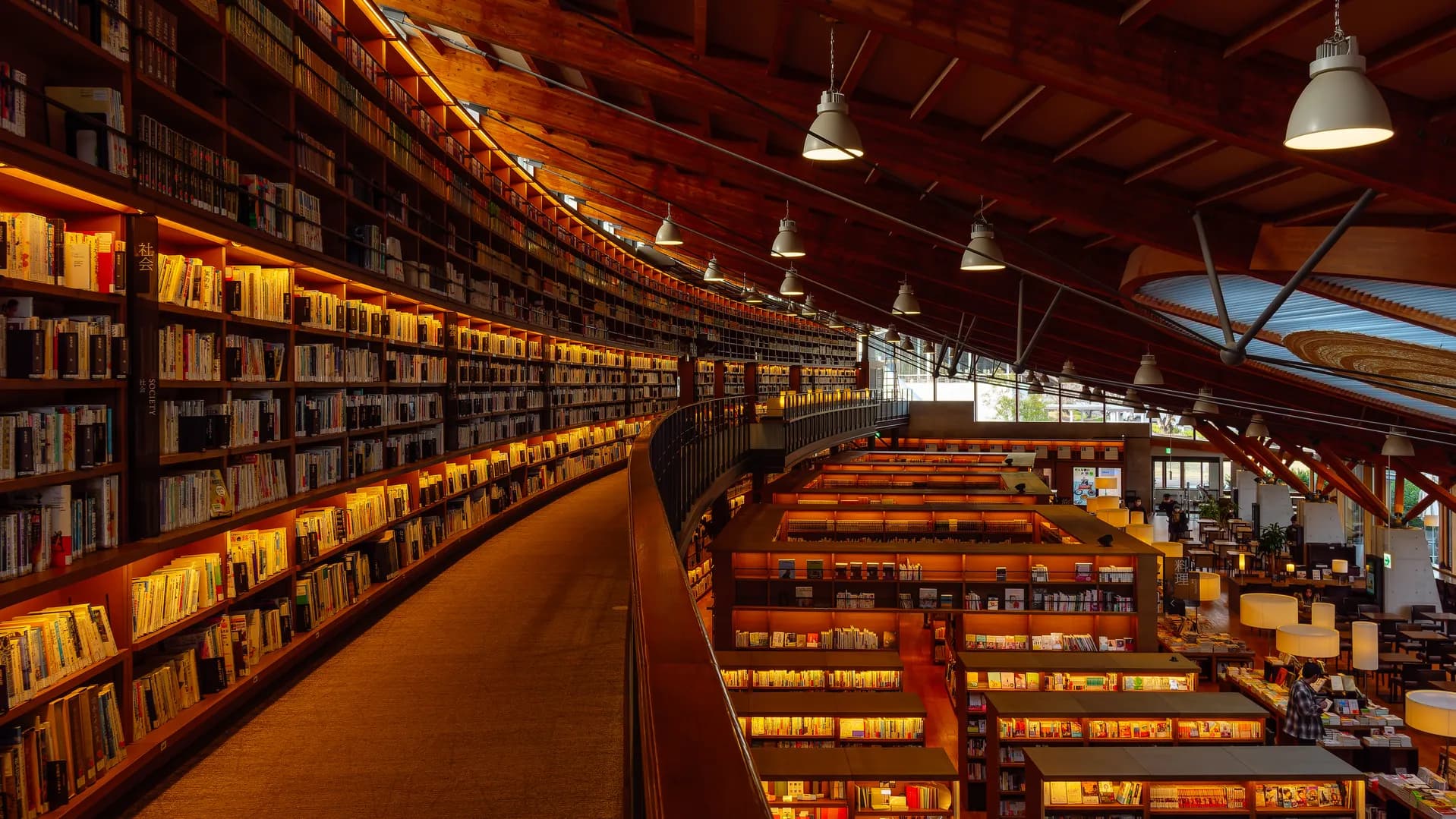
8) Takeo City Library 📚
武雄市図書館
In the past, most visitors came mainly for Takeo Onsen, but recently, many people also come specifically to see Takeo City Library.
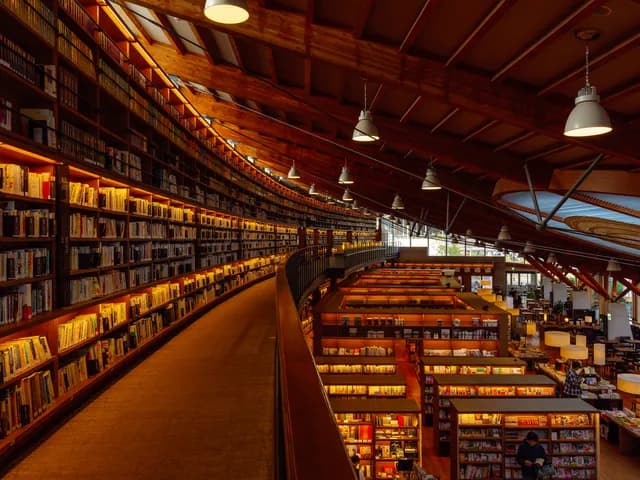
This library was created through a collaboration between CCC, the company that operates TSUTAYA, and MUJI. It has drawn attention for moving away from the typical image of a public library, and instead offering a modern complex space that combines a bookstore, Starbucks, and reading areas.
Official website Location📸 Inside the library, photos are allowed only in two designated photo spots.
9) Takeo Shrine & Camphor Tree ⛩️🌳
武雄神社
Takeo Shrine is a historic shrine with about 1,300 years of history, and it is especially famous for its giant 3,000-year-old camphor tree.
This tree is nicknamed the “Totoro tree,” and is loved by many visitors.
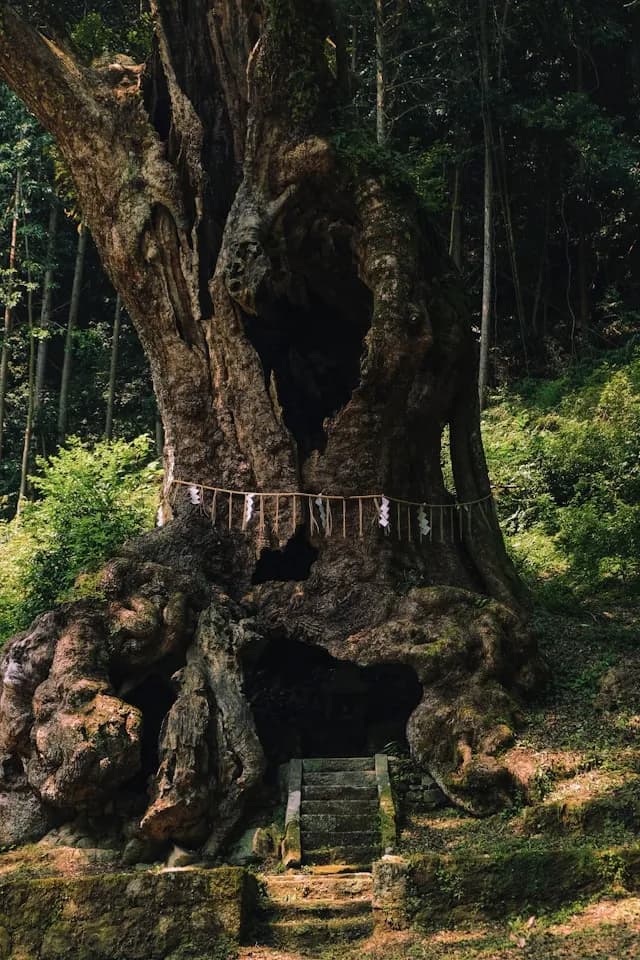
The path from the shrine to the camphor tree is surrounded by a dense bamboo grove, so even just walking there feels like entering a deep forest.
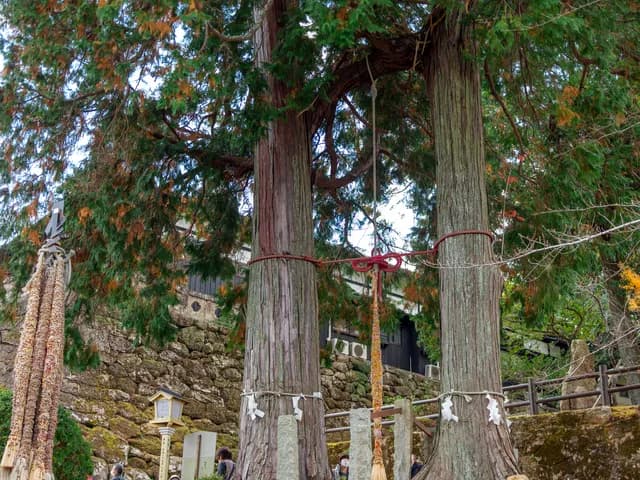
In front of the shrine, there are also two cypress trees with connected roots, known as the “couple trees (夫婦檜, Meoto Hinoki).” It is a popular photo spot for couples and married visitors.
Official website Location🚶 The Takeo Olle Trail is a trekking route inspired by Jeju Olle courses.
Recommended for travelers who want nature and countryside scenery, or who want to add an active element to a hot-spring-focused trip.
UreshinoA healing trip to Ureshino, one of Japan’s top beauty hot springs
Ureshino (嬉野) is a quiet hot spring town in southwestern Saga. Its name means “happy field,” and it is known for Ureshino Onsen, one of Japan’s “Top 3 beauty hot springs,” as well as Ureshino tea, a high-quality green tea.
With its onsen streets, traditional ryokan, free footbaths, and tidy Japanese gardens, it is loved as a healing destination where you can enjoy both nature and slow travel.
Long ago, an elderly couple carried their sick child past Todoroki Falls, and they found hot spring water rising by chance.
When they washed the child in the hot spring water, the illness disappeared, and the couple shouted, “Ureshii no~!” (“We’re so happy!”), according to the story.
From this legend, “ureshii (嬉しい, happy)” and “no (野, field)” combined to create the place name Ureshino (嬉野).
1) How to travel to Ureshino 🚌
In Ureshino, sights and shops are concentrated around the bus center area rather than around the JR station, so reaching town by bus is often more efficient.
If you arrive by train at Ureshino-Onsen Station, you can rent a bicycle at the tourist exchange facility “Ureshino Maruku (うれしのまるく)” or take a local bus toward the bus center to explore the main sights more easily.
2) Ureshino Onsen Information Center (Tourist Office)
嬉野温泉観光協会観光案内所
This official tourist office is located inside the Ureshino Onsen Bus Center. It provides sightseeing information, maps, and pamphlets, and it also offers bicycle rentals.
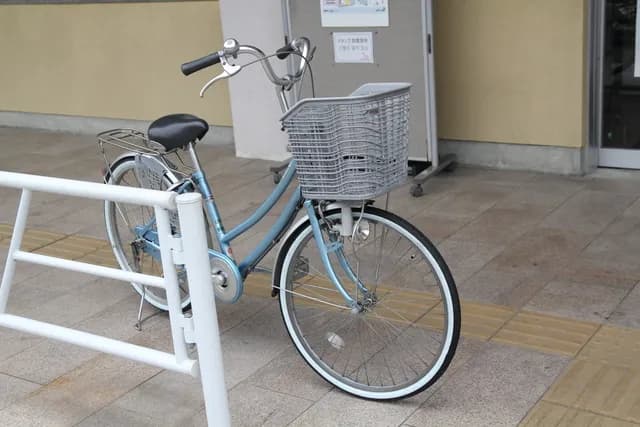
- Standard bicycle: 500 yen / E-bike: 1,000 yen / Road bike: 2,000 yen (includes 1,000 yen deposit)
- Rental hours: 09:00 ~ 17:00
- First come, first served (no reservations)
The office is in a fairly old building, but it has a warm, local atmosphere typical of small-town Japan.
- Hours: 09:00 ~ 18:00
- Closed: Thursday
3) Yuyu Ureshino Onsen Ticket 🎫
湯遊嬉野 温泉チケット
The “Yuyu Ureshino Onsen Ticket” is a discounted bathing ticket that can be used at participating onsen facilities in the Ureshino area. It costs 2,200 yen (tax included) and includes 16 tickets.
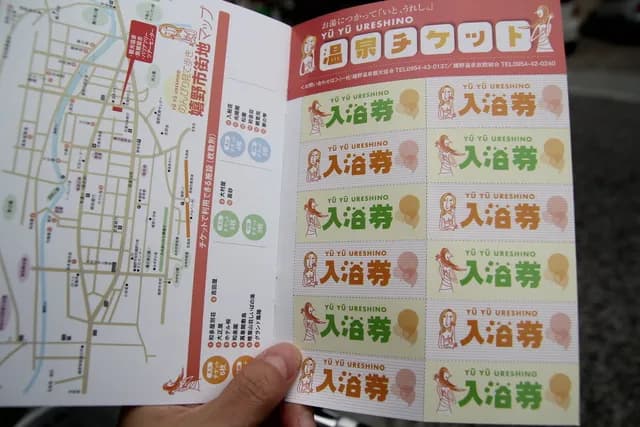
With this ticket, you can try various hot springs at a lower price. You also collect one stamp per bath, and after collecting 10 stamps, you receive a small gift.
Towels are not provided when using the ticket, so be sure to bring your own.
- Some facilities may be unavailable due to holidays or renovations
- Validity: 1 year from the issue date
- Cannot be used together with cash (no partial cash payment)
- Where to buy: Ureshino tourist office, Siebold Bath, etc.
4) Siebold Bath
シーボルトの湯
Named after Philipp Franz von Siebold, a German doctor and scholar who introduced Japanese hot springs to the West in an academic way, Siebold Bath combines that historical symbolism with the well-known benefits of Ureshino’s skin-friendly waters. It is now one of Ureshino’s representative hot spring landmarks.
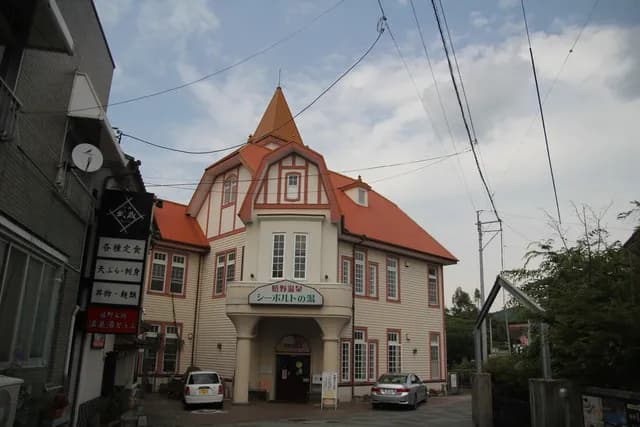
- Use 3 tickets of the Yuyu Ureshino Onsen Ticket
- 450 yen (adults), 220 yen (children)
- Private bath: 2,500 yen / 50 minutes
- Rest room: 110 yen, children 60 yen
- Hours: 06:00 ~ 22:00 (last entry 21:30)
- Regular closure: The 3rd Wednesday of each month (if a holiday, the next day)
5) Shiiba-no-yu
椎葉山荘 しいばの湯
This large open-air bath belongs to the valley-side inn “Shiiba Sanso,” about 10 minutes by car from central Ureshino.
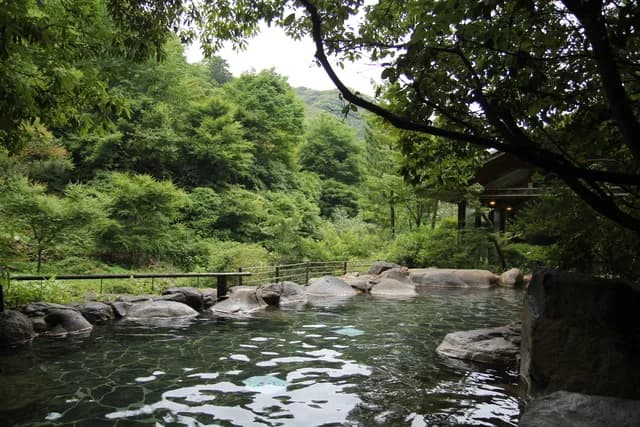
It is a place where you can enjoy an open-air bath in nature, with the sound of a stream and rich greenery, in all four seasons.
Because it is in a mountain valley, it is hard to reach on foot or by standard bicycle, so an e-bike or rental car is recommended.
- Use 8 tickets of the Yuyu Ureshino Onsen Ticket
- 1,300 yen (adults), 600 yen (children)
- Hours: 11:00 ~ 21:00
6) Yushuku Hiroba (free footbath plaza)
湯宿広場
A relaxing spot where you can enjoy both a footbath and a steam foot-sauna style foot treatment. Since opening in 2012, it has been loved by both locals and visitors.
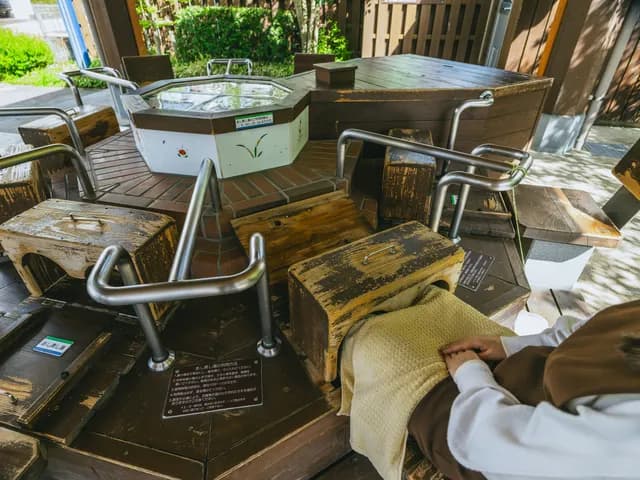
- Footbath: 08:00 ~ 23:00 (wheelchair-accessible area available)
- Foot steam: 09:00 ~ 20:00 (up to 7 people, circular seating)
- To increase the steam effect, it helps to cover the gap between the box and your legs with a towel.
7) Toyotamahime Shrine
豊玉姫神社
A small shrine that enshrines Toyotamahime, a goddess associated with beauty and good skin. It is close to the onsen street and easy to visit on a short walk.
Toyotamahime is said to be the daughter of a sea god and a princess of the Dragon Palace. She married a human, but returned to the sea after her husband broke a promise. Another story says she made a catfish’s skin smooth with hot spring water.
Because of this legend, the shrine has a catfish statue, and it is believed that touching it helps improve your skin.
Official website Location8) Todoroki Falls
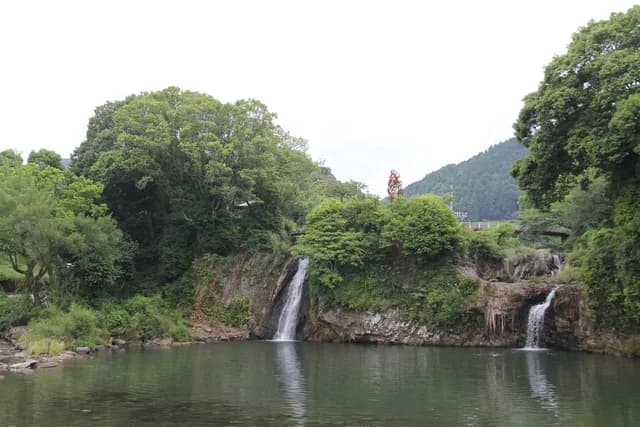
轟の滝
This is a symbolic spot tied to the origin legend of Ureshino’s name, and it is a scenic place for a walk after a hot spring bath.
9) Hizen Yumekaidou (Ninja village)
肥前夢街道
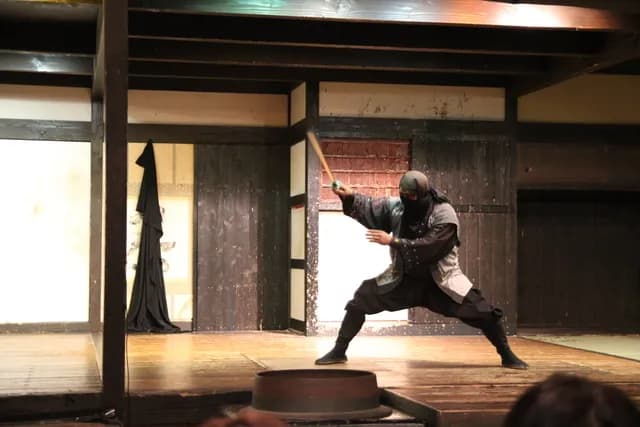
A theme park focused on ninja culture experiences, where you can enjoy the atmosphere of the Edo period through various programs.
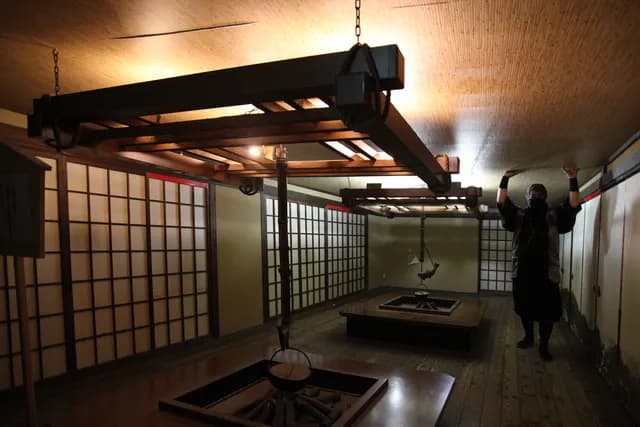
There are many activities such as ninja shows, shuriken throwing, and optical-illusion escape spaces, and it is also popular with families.
- Admission: 1,200 yen (adults, age 16+), 800 yen (children)
- Experience programs are charged separately
- Coupon booklet: 8 uses for 1,000 yen
- Ninja costume rental: 1,300 yen
- Hours
- Weekdays: 09:30 ~ 16:00
- Weekends: 09:30 ~ 17:00
- Regular closure: Tuesday (open during Golden Week)
AritaArita, a pottery town with 400 years of history
Arita is a quiet countryside town known as the birthplace of Japanese porcelain. Around town, you will see signboards, torii gates, lanterns, and shop signs made from ceramics, which makes walking around especially fun.
Arita Tourism Association1) How to get to Arita
If you take a limited express train from Hakata Station, you can reach Arita Station directly without transfers.
2) Getting around Arita
Arita is small, so getting around by bicycle or a community bus is efficient. From Arita to Imari, you can travel only by train. The one-way fare is about 550 yen and the trip takes about 25 minutes.
① Bicycle rental 🚲
At Arita Station, the tourist information center KILN ARITA offers both e-bikes and standard bicycles. Near Kami-Arita Station, rental locations offer standard bicycles only.
- E-bike: 1,000 yen per day + 1,000 yen deposit
- Standard bicycle: 500 yen per day
- Rental hours: 09:00 ~ 17:00
- Rental locations
- KILN ARITA
- Aritakan
- Harada Liquor Store (closed Sunday)
- ろくろ座 (closed Thursday)
② Community bus 🚌
In Arita, small loop buses run to support local residents and visitors. Route 1 mainly serves the north side of Arita Station and ceramic-related facilities, while Route 2 mainly serves the south side, including tourist spots and residential areas.
- Fare: 200 yen per ride (cash only)
- If you transfer between Route 1 and Route 2, you can transfer for free by showing a transfer ticket (乗継乗車券) at Arita Station Front or the Welfare & Health Center stop
- How to get a transfer ticket
- Pay 200 yen when boarding
- Ask the driver for a transfer ticket (乗継乗車券)
- Show it when transferring, then return it when getting off
- If you plan to ride the bus three times or more in one day, it is better to buy a 1-day pass (500 yen) from the driver
- The last bus is usually between 17:00 and 18:00, so be sure to check the next departure time
3) Tozan Shrine
陶山神社
When traveling in Arita, you may often see the explanation that Tozan Shrine is “a shrine that enshrines Yi Sam-pyeong, a Korean potter taken to Japan during the Imjin War, as a god.”
However, this explanation is only half true. Let’s look step by step at what is correct, what is different, and why.
In Japan, the Imjin War is sometimes called the “ceramic war,” because there was an extremely strong interest in ceramics.
For example, the national treasure “Ido chawan (井戸茶碗)” was seen as common buncheong ware in Joseon Korea, but in Japan it was highly valued as a tea bowl for the tea ceremony.
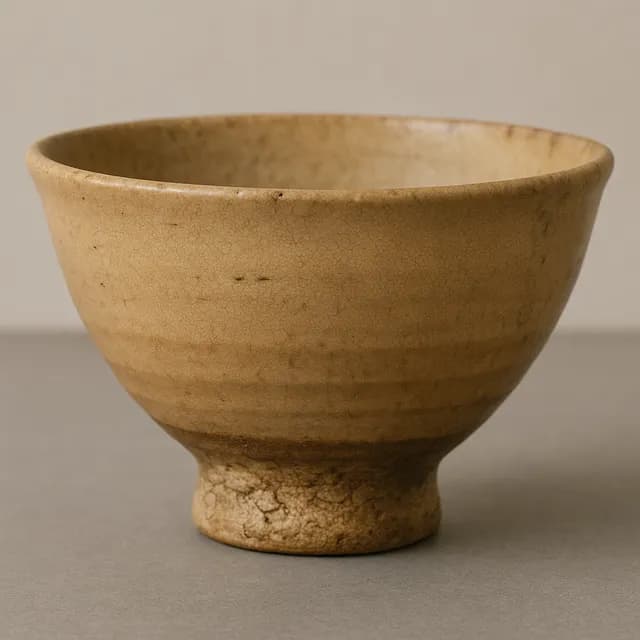
Sen no Rikyu, the master of tea ceremony, praised Ido chawan as the best tea bowl, and Toyotomi Hideyoshi is also said to have wanted to own it.
Ido chawan was used as a wedding gift in political marriages, and it was treasured so much that people said, “I would not trade it even for a castle.”
In this context, Toyotomi Hideyoshi issued the following order:
If you find people in Joseon who are skilled at firing ceramics, bring them with their families without fail.
Those who bring them will be rewarded, and those who miss them will be punished.
Secure skilled artisans before weapons or food.
As a result, many Joseon potters were forcibly relocated to Japan, and one of them was Yi Sam-pyeong.
He later discovered the Izumiyama pottery stone quarry (泉山磁石場) and began full-scale porcelain production in Arita.
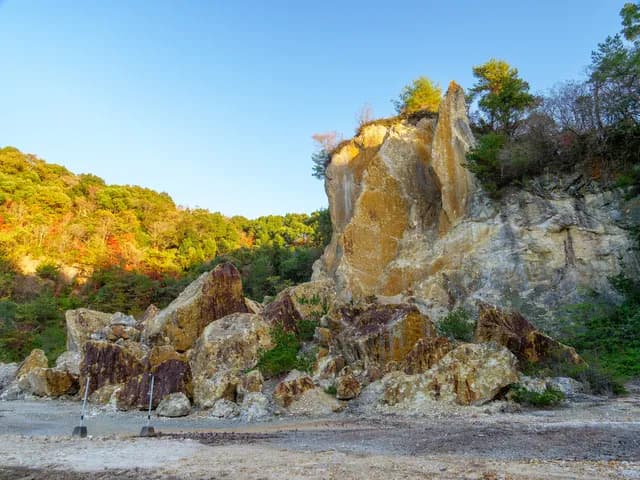
In 1616, Japan succeeded for the first time in producing Joseon-style porcelain. Over the next 100 years, more than 1.2 million pieces were exported to Europe, and Arita porcelain became a major success.
In 1658, “Arita Izumiyama Shara-yama Somyo Hachimangu (有田皿山宗廟八幡宮)” was founded on Otaruyama in Arita, and Emperor Ojin was enshrined in a nearby shrine as a guardian deity of the town.
- Emperor Ojin is said to be the son of Empress Jingu, who is associated with the “Three Han conquest” story.
In 1871, the shrine name changed to Tozan Shrine (陶山神社), and from 1887, local residents began discussing the idea of honoring Yi Sam-pyeong together.
In 1927 (Taisho 16), Yi Sam-pyeong was not deified, but he was enshrined in the form of a memorial monument (李参平碑) inside the shrine grounds.
So when you visit, it is better to pay respects not at the main hall, but at the memorial monument, his grave, or at Ishiba Shrine.
- The torii gate, guardian dogs, and plaque on the grounds are all made of porcelain.
- Every May, a Tozosai festival is held to express gratitude to Yi Sam-pyeong.
4) Toso Yi Sam-pyeong Kiln Gallery Shop
陶祖 李参平窯ギャラリーショップ
This gallery is run by Yi Sam-pyeong’s descendants, and today the 14th-generation descendant sells ceramics that they make themselves.
Official website Location5) Ishiba Shrine
石場神社
At Tozan Shrine, Yi Sam-pyeong is honored in the form of a memorial monument, but at Ishiba Shrine, you can directly see a porcelain statue of Yi Sam-pyeong. There is also a stone monument in the grounds that reads “Koreishin (高麗神).”
This Koreishin monument was built in 1809. Local people believed the town’s decline was due to neglecting ancestral rites, and they built it to restart ceremonies.
Location6) Treasure hunting (pottery hunting)
トレージャーハンティング
Treasure hunting is an interactive “treasure hunt” event held around a town or tourist area, combining exploration and fun.
In Arita, pottery treasure hunting can be experienced at Kouraku Kiln (幸楽窯), where you select pottery on site and purchase it as part of the program.
- Hours
- 10:00 ~ 12:00 (reception closes 11:00)
- 13:00 ~ 15:30 (reception closes 14:00)
- Experience time: up to 90 minutes
- Closed: New Year holidays
- Fees
- 6,600 yen course: mainly simple daily-use ceramics
- 13,200 yen course: mainly detailed and decorative ceramics
7) Arita Sera
アリタセラ / Arita Será
Arita Sera is a ceramic-focused shopping mall that covers both tradition and modern styles of Japanese porcelain. With many products and experience programs, it is a great place to feel the depth of Arita ceramics.
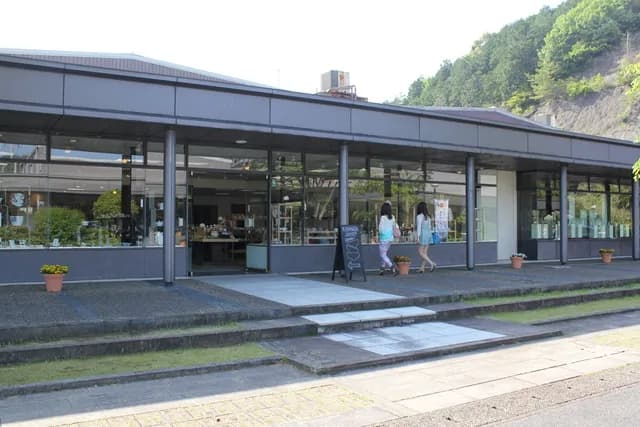
There are also restaurants and cafes that serve food using ceramic tableware, so you can enjoy both dining and the beauty of ceramics at the same time.
Official website LocationExclusive TourCast Tips!
How to buy cheaper train tickets to Arita
When booking a train from Hakata Station to Arita Station, most people search with the departure station set to Hakata and the arrival station set to Arita. But with this search, online-only discount tickets do not apply, and you will only see the standard reserved-seat fare (3,860 yen one way).
However, if you set the arrival station to Sasebo or Huis Ten Bosch, online-only discount tickets apply, and you can book for 2,300 yen or 2,700 yen.
After booking with that ticket, you can simply get off at Arita Station (a stop along the way), and save up to 1,560 yen.
- See the Guidebook - Kyushu Part 1 - Rail passes, train timetables & reservations section
- Before booking, check the train number and confirm that it stops at Arita Station
- Or you can book a discount ticket to Takeo-Onsen Station and transfer there.
Exclusive TourCast Tips!
Key tips for Arita pottery hunting
On site, gloves and newspaper for wrapping are provided, but for a smoother experience, it helps to bring the items below.
- Extra items to bring
- Mask: The site is dusty, so it is essential
- Towel or cloth: Wipe dust to check for chips or cracks
- A carry-on-friendly bag & bubble wrap: Checked luggage has a higher risk of breakage, so carry-on is recommended
- Tips for choosing good porcelain
- Do not grab everything at once—pick the pieces that catch your eye first
- Prioritize items with a signature seal (artist mark) on the bottom
- Wipe off dust and check for chips or scratches
- Other notes
- Up to 2 people can share one basket
- For 3 people or more, you should request 2 baskets or more
ImariImari, the ‘secret kiln’ town—home of Joseon potters?
1) How to get there
One of the most efficient ways to travel from Fukuoka to Imari is by highway bus.
From Hakata or Tenjin Bus Terminal, or from Fukuoka Airport Domestic Terminal (5 services per day), you can take the Showa Bus “Imari-go (いまり号)” and arrive at Imari Station (伊万里駅前) without transfers.
- One way from Hakata/Tenjin Bus Terminal: 2,040 yen
- One way from Fukuoka Airport: 2,300 yen
- Round trip (Hakata/Tenjin ↔ Imari): 4,000 yen
2) Okawachiyama
大川内山の町並み
Okawachiyama is not just a pottery village—it is a village with a special purpose, known as a “secret kiln (秘窯).”
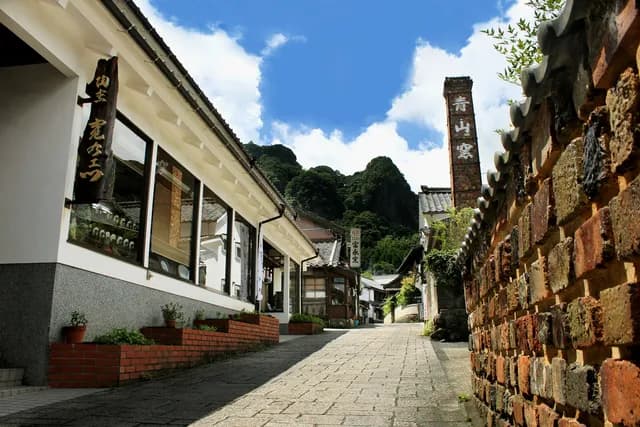
Among the Joseon potters who settled around Arita, the most skilled artisans were secretly moved to this village. The goal was to prevent advanced ceramic techniques from leaking outside, and to produce porcelain only for tribute items for the shogunate and daimyo.
During the Edo period, Okawachiyama produced only Nabeshima-yaki (鍋島焼), the highest-grade porcelain made exclusively for presentation, not for commercial sales.
The village is surrounded by mountains, forming a natural fortress-like landscape. Potters lived separated from the outside world and devoted most of their lives to ceramic production.
In this environment, ceramics with some of Japan’s most detailed patterns and refined white glazes were created.
However, for the Joseon potters, life here was also a harsh journey of spending their whole lives in the mountains, firing porcelain.
Even today, you can find traces of Joseon life around the village. The roof tiles placed on stone walls especially resemble rural villages in Korea, showing that their lives and culture remain clearly here.
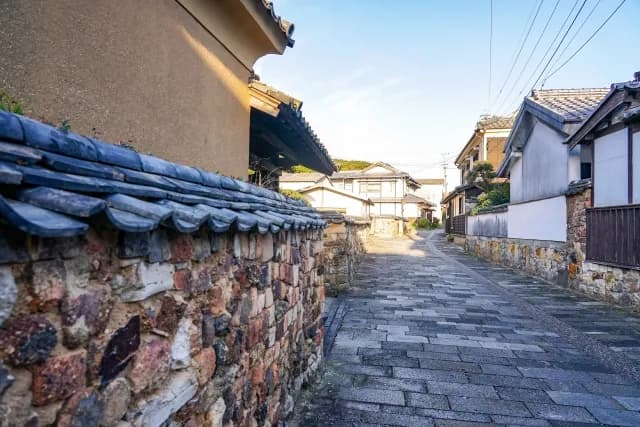
- Top 3 photo spots 📸
How to get there
You cannot reach Okawachiyama directly by public transport from Arita. You must take a bus from Imari Station.
- There are only 4 buses a day, so it is essential to check the timetable and plan around it
- One-way fare: 200 yen, about 15 minutes
- If you miss the bus, a taxi costs around 2,500 yen
3) Meotoshi Tower
めおとしの塔
This tower was built to commemorate “Meotoshi (目落とし),” a traditional Edo-period method used to judge the quality of ceramics. When you cross the nearby bridge, a sensor triggers a clear porcelain sound automatically.
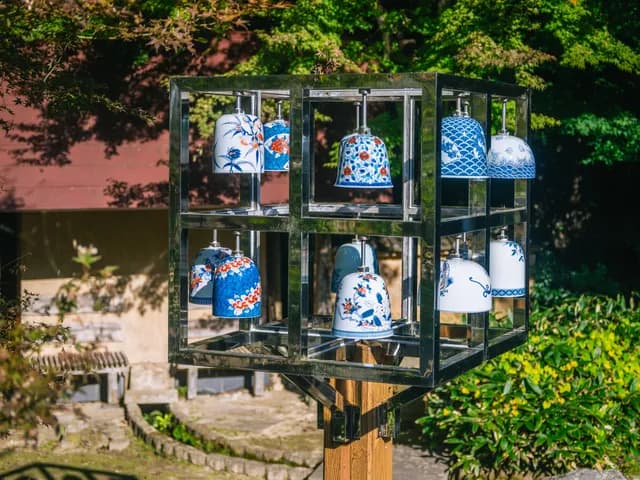
This sound is special enough to be selected as one of Japan’s “100 Soundscapes,” and it is a rare place where you can hear the gentle, transparent tone of porcelain. 🔔
Meotoshi Tower information Location4) Nabeshima Hanyo Bridge
鍋島藩窯橋
This bridge at the village entrance is beautifully decorated with blue-and-white porcelain tiles and ceramic jars, and it is one of Okawachiyama’s representative photo spots.
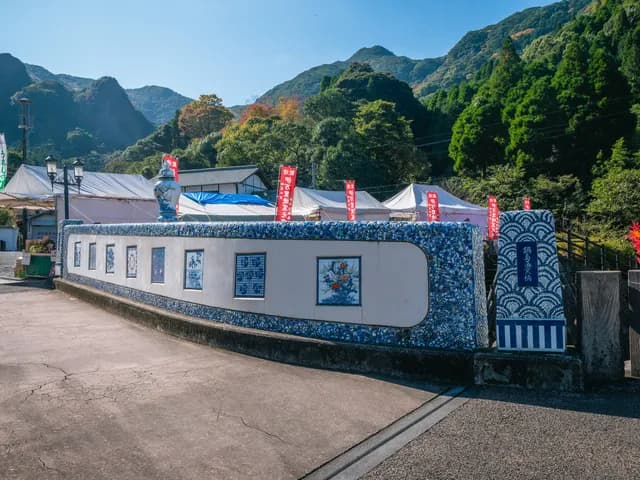
However, the Joseon potters likely spent most of their lives confined inside the village, and it is very possible that they never crossed this bridge even once. Remembering this history gives the spot a deeper meaning beyond a simple sightseeing place.
Nabeshima Hanyo Bridge information Location5) Potters’ Unclaimed Memorial Tower
陶工無縁塔
In 1936, a local man named Ichikawa Harukichi gathered about 880 unclaimed grave markers and built this pyramid-shaped memorial tower with villagers. It is a place to honor the anonymous potters who supported the history of ceramics.
Some inscriptions include Korean family names such as Kim, Lee, and Shin, which makes the presence of Joseon potters feel even more real.
Potters’ memorial tower information Location6) Climbing kiln (Noborigama)
登り窯
This climbing kiln (noborigama) was reconstructed for tourism in 1990. It uses the slope of the mountain to control the flow of fire and temperature with precision.
Today, it serves as an educational place where traditional techniques are passed on to younger potters, and a shared firing event is held each year around September. 🔥
View the climbing kiln Location7) Nabeshima Hanyo Park
鍋島藩窯公園
This area was the site of the official kiln of the Saga Domain from the 17th to the 19th century, producing high-grade ceramics to present to the shogunate and aristocrats.
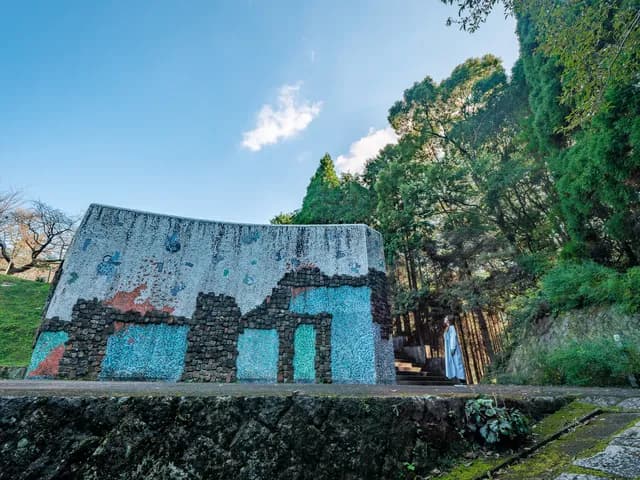
In 2003, it was designated as a National Historic Site, “Okawachi Nabeshima Kiln Ruins (大川内鍋島窯跡).” The large ceramic mural is especially memorable.
Location