PrefaceA small but mighty destination—Kitakyushu
Kitakyushu is a city located in northern Fukuoka Prefecture, serving as a gateway connecting Honshu and Kyushu. With railway and bus networks well developed around Kokura Station—where the Sanyo Shinkansen stops—it is an easy day-trip destination from central Fukuoka.
Major highlights include the Mojiko Retro district, Kokura Castle, Karato Market, and the Hiraodai Plateau, where you can feel the grandeur of nature. With so many places offering different vibes, it may be difficult to see everything in just one day.
Kitakyushu Tourism AssociationExclusive TourCast Tips!
Why a Weekend Trip to Kitakyushu Is Even Better
If you are planning a trip to Kitakyushu, many people already know that the Karato Sushi Market in Shimonoseki is open only on weekends and holidays.
Beyond that, Kitakyushu also has many transport options that run only on weekends or have far more services on weekends than weekdays, so if you plan to rely on public transport without renting a car, a weekend trip is much more advantageous.
- Karato Sushi Market: Weekends & holidays only (including Friday), until 15:00
- Mojiko Retro sightseeing train Shiokaze Train: Weekends only
- Direct bus: Kokura–Sarakurayama: Weekends only
- Free shuttle bus: Yahata Station–Sarakurayama Observatory: Starts in the afternoon on weekdays, in the morning on weekends
- Hiraodai Jumbo Taxi: Regular service is weekend-only
Not Just Fukuoka—Kitakyushu Airport TooHow to make the most of small but convenient Kitakyushu Airport
Kitakyushu has an airport with direct international flights, making it a good option if you want to travel at a relaxed pace focusing on the Kitakyushu area.
Alternatively, booking flights as arrive via Kitakyushu Airport and depart via Fukuoka Airport (or vice versa) can help you build a more efficient travel route.
How to Get from Kitakyushu Airport
At Kitakyushu Airport, there is no train service, so you must use buses to get into the city. Buses run to Kokura, Kurosaki, Kusami, and Fukuoka directions.
- The Kokura-bound bus operates on a seat-capacity system, and it is first-come, first-served.
- If you cannot board, take the bus toward Kusami Station, then use the JR Nippo Main Line to reach Kokura Station.
- IC cards like Suica can be used
- Contactless cards can be used
- If paying in cash, it is better to buy a ticket in advance.
- The Fukuoka-bound bus runs only around 23:00, so it is difficult for most travelers from Korea to use.
In the timetable, buses marked '直行 (Direct)' do not stop within Kitakyushu city and go straight to the destination. However, even direct buses must pass through Kokura Station Shinkansen Entrance and stop at the Kokura Station Bus Center.
On the other hand, buses marked 'Sunatsu' go via multiple city stops, so you should get off at the stop closest to your destination.
One important caution: when returning to the airport, you cannot board at Kokura Station Shinkansen Entrance, and must board at Kokura Station Bus Center, Platform 8.
From Fukuoka to Kitakyushu: Finding the Best RouteTime- and cost-saving tips, pros/cons by transport option
1) By bus
From Fukuoka Airport or Hakata Bus Terminal, there are no direct express buses to Kokura; you can only use highway buses departing from the Tenjin Bus Terminal.
- 4–5 buses by time slot
- Seat-capacity system; first-come, first-served without reservation
- Travel time: about 1 hour 35 minutes
- One-way fare: 1,350 yen
Useful pass
Mojiko Retro Kippu is a cost-effective choice if you plan to travel only by bus for Tenjin ~ Kokura ~ Mojiko.
- Round-trip Tenjin ↔ Kokura highway bus
- Round-trip Kokura ↔ Mojiko city bus
- Validity: 2 days including purchase date
- Discounts for some facilities such as Mojiko Observatory and the Railway Museum
- Where to buy: Nishitetsu Tenjin Highway Bus Terminal
2) By train
- Local trains: about 1 hour 25 minutes, 1,510 yen one way
- With 2-ticket (Nimai Kippu): 3,400 yen (1,700 yen per person one-way) to ride Limited Express Sonic (non-reserved), about 40 minutes
- With JR KYUSHU MOBILE PASS (2-day, 3,500 yen): Limited Express Sonic (non-reserved) available
- With JR Kyushu Japanese online discount ticket: Limited Express Sonic reserved seat 1,550 yen one-way (difference is seat reservation)
- Shinkansen non-reserved: 1,600 yen one-way, 15 minutes (however, cannot be purchased on-site)
For the Hakata–Kokura section, the Shinkansen non-reserved option is the fastest and most efficient choice.
However, if you plan to use JR for multiple days—such as one day in Kitakyushu and another day to Tosu/Kurume/Omuta—the JR Kyushu Mobile Pass (2-day) may be more economical, so you should choose according to your itinerary.
A Full Loop Around Kitakyushu with Transportation PassesHow to use passes to cover both transport and sightseeing
Kitakyushu has no subway lines; only JR lines, the Kitakyushu Monorail, and buses operate.
For transportation, you can use nationwide IC cards such as Suica.
1) Kitakyushu Monorail
北九州モノレール
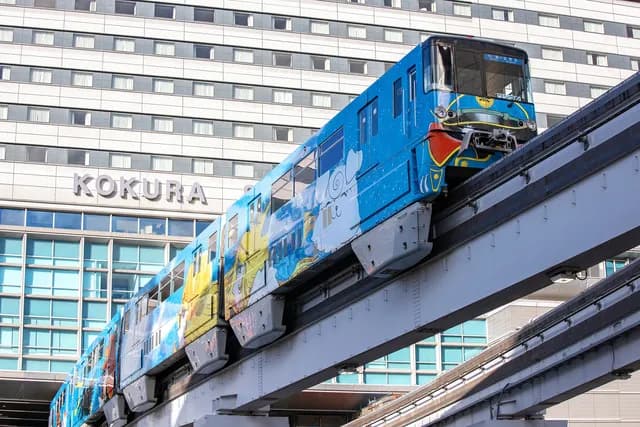
The Kitakyushu Monorail is an elevated railway (monorail) operating in the Kokura area of Kitakyushu, Fukuoka Prefecture.
Because it runs through the city center, it is popular both as a practical city transport option and as a scenic ride.
A notable feature is that tickets can be used via QR code scanning.
- The main section is from Kokura Station to Tanga Market, and the one-way fare is 100 yen.
- A 1-day pass costs 700 yen, and is rarely purchased by typical travelers because it tends to be inefficient for most itineraries.
- Nationwide IC cards such as Suica can be used
2) Kitakyushu Urban Area 1-Day Free Ride Ticket
北九州都市圏1日フリー乗車券
- Scratch-type paper ticket: scratch the travel date with a coin (1-day ticket 1,200 yen)
- In the my route app: digital tickets available, 24-hour pass (1,000 yen), 48-hour pass (1,800 yen)
- With one adult ticket, one elementary school child rides free (Kids Free service) → Link
- Usable on Nishitetsu city buses within Kitakyushu City and Yukuhashi City
- Not valid on highway buses or limited express buses
- Not valid on the airport limousine between Kitakyushu Airport and Kokura Station; only the Route 51 local bus is allowed
- Take a numbered ticket when boarding; insert it when getting off and show the pass
- On weekends and holidays only, the direct bus between Kokura and Sarakurayama Observatory can be used
In central Kokura, you can get around sufficiently by walking or monorail. For outer areas like Mojiko, JR lines are more convenient, so this free pass is relatively low-utility.
However, on weekends, for travelers with elementary school children, if you go from Kitakyushu Airport to Kusami Station by Route 51 (instead of the limousine) and then additionally use the Sarakurayama Observatory bus, this pass can offer significant savings.
3) Kitakyushu Municipal Bus Pass
北九州市営バス
Kitakyushu municipal buses mainly operate around the area between Fukuoka and Kokura Station.
For most travelers, there are not many situations where you will need to use them, and usage is generally low unless visiting Kitakyushu City Hibikinada Green Park, etc.
However, if you use the Kitakyushu Urban Area 1-Day Free Ride Ticket described earlier,
you must distinguish between Nishitetsu buses and municipal buses,
so you should always check the operating company before boarding.
-
1-day pass: Adults 700 yen / Children 350 yen
-
Can be purchased in the JapanTransit app, at the municipal bus counter, on board, etc. (limited quantities)
Municipal Bus All-Routes 1-Day Pass Info -
Weekend/holiday family discount ticket
- 2 adults + 2 elementary school children can ride all municipal bus routes on a designated weekend/holiday
- Total 700 yen
Kitakyushu Joy Pass can be purchased for about 5,000 yen, and it includes items like the Sarakurayama cable car and slope car. However, it is hard to say it offers good value for the price.
Exclusive TourCast Tips!
Check Kitakyushu’s IC-card blind spots in advance!
From Kokura Station, you can use an IC card on JR trains up to Shimonoseki Station, butif you go beyond Shimonoseki into Yamaguchi Prefecture sections, IC cards cannot be used. Therefore, in such cases, it is best to buy a separate ticket for that section at Kokura Station.
However, if you start within Shimonoseki or within Yamaguchi Prefecture and travel only within that area, IC card use is possible.
Also, if you use the JR Kyushu Hitahikosan Line, IC cards are usable only from Kokura Station to Jono Station.Beyond that section, IC cards do not apply, and many stations are unmanned, so if you plan to use the Hitahikosan Line, it is best to purchase tickets for the relevant section in advance.
KokuraA ‘small Fukuoka’ where history and modern life coexist
小倉
The scene of rivers cutting through the city, Riverwalk shopping mall, and Kokura Castle in harmony feels like a “small Fukuoka.” (Although Fukuoka itself is mostly only castle ruins)
Central Kokura is a scale you can cover in half a day to one day, and combining it with retro Mojiko or nearby Shimonoseki makes for an efficient one-day course.
Also, during times when concerts or major events are held in Fukuoka, accommodation prices often surge, so planning a trip that includes staying overnight in Kokura can be a good alternative.
Run with power, Galaxy Express 999~ 🚀
It may be unfamiliar to the MZ generation, but Galaxy Express 999 is known for featuring a city setting modeled after Kokura in Kitakyushu.
The author, Leiji Matsumoto, has deep ties to Kokura, and backgrounds resembling the real Kokura Station appear in the work.
The Kitakyushu Monorail has officially collaborated with Galaxy Express 999, operating sightseeing trains featuring Maetel & Tetsuro wrap designs and announcement broadcasts by Maetel’s voice actor.
Around Kokura Station, you can also find various Galaxy Express 999 elements such as a Maetel statue, Tetsuro figures, and commemorative signs.
In addition, in the Aruaru City shopping mall next to Kokura Station, there is the “Kitakyushu Manga Museum,” making it a recommended spot for visitors interested in manga and anime.
In Korea, there is a popular claim that Maetel was modeled after “Kusumoto Takako,” but the original author stated that she was not drawn after any specific person, but rather a composite ideal fused from his feelings and memories.

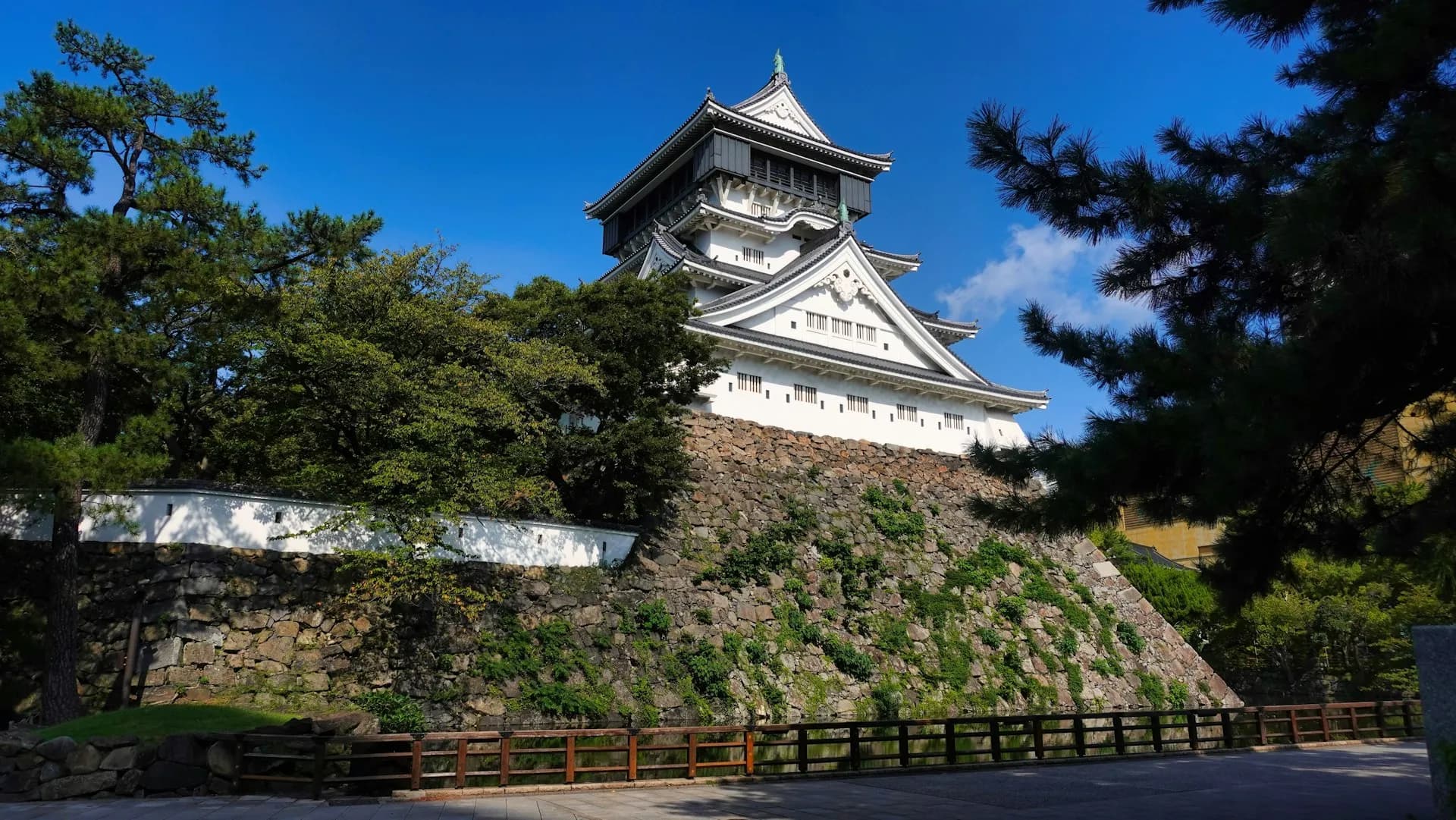
1) Kokura Castle 🏯
Hosokawa Tadaoki joined the Eastern Army (Tokugawa Ieyasu’s side) in the 1600 Battle of Sekigahara, and after victory, he was appointed the first lord of Kokura Domain.
From 1602, he built Kokura Castle over about seven years.
Kokura Castle was constructed as a city-planning castle complex that included the entire castle town within its walls, and it boasted the fifth-largest scale in Japan at the time. It was the largest in Kyushu, reaching about twice the size of Kumamoto Castle.
Kokura prospered as a center of transportation and commerce, to the extent that a saying spread: “All roads in Kyushu lead to Kokura,” because it was the starting point of the Nakatsu Kaido and the Nagasaki Kaido.
Around the castle lived the samurai class, while the outskirts were home to merchants and artisans; Tadaoki developed the urban foundation by attracting merchants and craftsmen and establishing events such as the Gion Festival.
After 1632, the Ogasawara clan came to rule Kokura and performed a political role of monitoring Kyushu lords under Edo shogunate orders.
During this period, Kokura further developed as a transportation and military hub, and improvements inside the castle such as strolling gardens continued.
However, a major fire in 1837 burned down the interior, and the keep was left unrestored. In the late shogunate era, the castle was destroyed through withdrawal and arson during battles with Choshu, and later in the Meiji era it was used as military land.
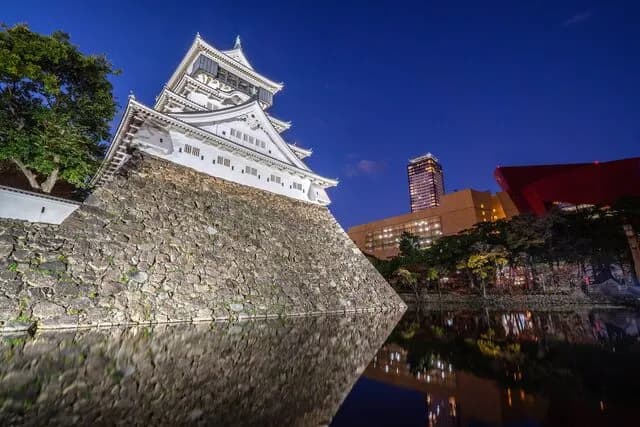
The current keep is a concrete structure rebuilt in 1959 at the request of citizens, featuring the Karazukuri (唐造り) style. Its distinctive structure includes a fifth floor that is wider than the fourth, and an absence of eaves.
The stone walls were built using the Nozurazumi (野面積み) method—rough natural stones stacked as-is—showing a plain yet resilient aesthetic.
On the third floor of the keep, there is an exhibition space themed around the duel between Miyamoto Musashi and Sasaki Kojiro, offering a look into the historical context through artifacts and explanations related to sword culture of the era.
Kokura Castle is the only castle in Japan open at night. Visiting hours are until 20:00 in summer (Apr–Oct) and 19:00 in winter (Nov–Mar), and there is also a daily illumination after sunset, making it ideal for night views.
A café on the fifth floor operates, and every Saturday from 18:00–22:00 it turns into a Bar, offering a special experience of enjoying drinks while viewing Kokura’s night skyline.
- Admission: Adults 350 yen / Junior & senior high 200 yen / Elementary 100 yen
- Hours:
- Apr–Oct: 09:00–20:00
- Nov–Mar: 09:00–19:00
- Open year-round
2) Kokura Garden 🌿
Kokura Castle Garden is a restored traditional Japanese garden on the site where the Ogasawara clan’s villa, Shimoyashiki (下屋敷), stood in the Edo period.
- Villa (別邸): a place built for rest and scenery, not for daily living
- As it was a villa near Kokura Castle’s keep, it carried the honorific “Oshita (御下)” and was also called Oshitayashiki (御下屋敷).
Despite being in the heart of the city, the garden is popular as a quiet space where nature and tradition harmonize.
It is designed in the Chisen-Kaiyu-style garden (池泉回遊式庭園)—a “stroll garden centered around a pond”—so you can enjoy the atmosphere of becoming one with nature while walking.
It also includes a Shoin-style wooden building, an Ogasawara-ryu etiquette & tea ceremony exhibition hall, and a tea room (Chashitsu).
Although the garden was destroyed by fire during the 1866 Choshu expedition, major spaces have now been meticulously restored, allowing you to fully feel the ambiance of an Edo-period garden.
In the garden, you can stroll while viewing seasonal scenery, enjoy matcha and wagashi in tatami rooms, and participate without reservation in paid tea ceremony experiences, as well as incense/etiquette workshops and other traditional culture programs.
In addition, the scenery with Kokura Castle and the garden as a backdrop is popular for photography and is also used for kimono photo shoots and wedding photography.
- Admission: Adults 350 yen / Junior & senior high 200 yen / Elementary 100 yen
- Hours:
- Apr–Oct: 09:00–20:00
- Nov–Mar: 09:00–19:00
- Open year-round
If you plan to visit Kokura Castle and Kokura Castle Garden together, it is cheaper to buy the joint 2-facility ticket.
- Joint 2-facility ticket: Adults 560 yen / Junior & senior high 320 yen / Elementary 160 yen
There is also a joint 3-facility ticket that includes the Matsumoto Seicho Memorial Museum, priced at 700 yen for adults / 400 yen for junior & senior high / 250 yen for elementary.
3) Tanga Market
旦過市場
Tanga Market is a traditional market in central Kokura with a 100-year history formed since the 1920s. Also known as “Kokura’s kitchen,” it has long been loved by both locals and travelers.
Around 120 stalls line the market, and it is popular as a local experience space where you can browse and choose from fresh seafood, vegetables, meat, Japanese side dishes, snacks, and more.
In the past, a “foodie market” experience was possible—buying only rice and then choosing side dishes around the market to build a donburi-style meal. This was operated through a space called Daigakudo (大學堂), but after a fire in 2022, it is no longer operating.
An interim temporary structure called “Tanga Aozora Market” is operating on the site, and a new commercial facility is under construction with completion planned for March 2026.
Hours vary by stall, but most operate roughly from 9:00 to around 17:00. Most stalls are closed on Sundays and public holidays, so it is best to check before visiting. Also, payments are mostly cash-based, so be sure to bring cash.
Official Website Location Store Map4) Riverwalk Kitakyushu 🛍️
Riverwalk Kitakyushu
Riverwalk Kitakyushu is a multi-purpose cultural shopping complex along the riverside near Kokura Castle, known for its unique exterior design and a mix of shopping, art, dining, and relaxation all in one place.
Because it is also close to Kokura Castle and Tanga Market, it is easy to include naturally in your route.
From the Roof Garden terrace on the 5th floor, you can enjoy a panoramic view of Kokura Castle and the riverside scenery. Seasonal illuminations, exhibitions, and cultural events are frequently held, reinforcing its role as a vibrant cultural hub.
It is also a great indoor travel option for rainy days, especially useful for families or itineraries that avoid weather constraints.
Official Website LocationMojikoRetro vibes with sea views—Mojiko Port, full of nostalgia
門司港
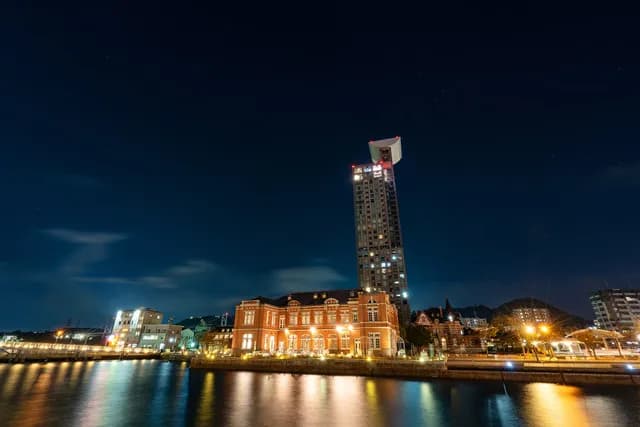
Mojiko is a former international trade port in northern Kitakyushu, reborn as a retro tourist destination that preserves the architecture and atmosphere of the Meiji–Taisho era.
True to the name “Mojiko Retro,” it is loved as a place where simply walking the streets lets you feel the romance and atmosphere of modern-era Japan.
Signature foods include banana soft-serve, once a symbol of the banana export port, oven-baked Japanese-style curry Yaki Curry (焼きカレー), and fresh fugu cuisine, leveraging Mojiko’s proximity to Shimonoseki.
It is about 15 minutes by train from JR Kokura Station, and on weekends and public holidays, the retro line sightseeing train “Shiokaze Train” also operates.
With a well-balanced mix of riverside promenades, small museums, and retro cafés, it is recommended as a course you can enjoy leisurely in about half a day.
Official Website Recommended Mojiko Retro Course Banana Man Location1) Mojiko Station 🚉
門司港駅
Mojiko Station is Japan’s first neo-Renaissance-style station building, opened in 1914, and is one of the oldest existing railway stations, designated as an Important Cultural Property.
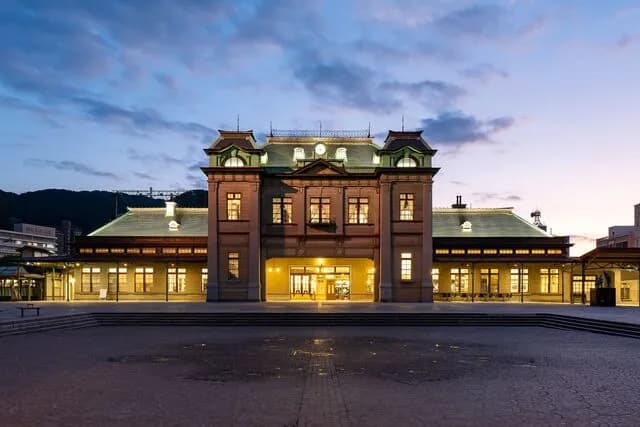
After a five-year restoration, it was fully restored to its original form in 2019, preserving its classic exterior and interior with great care.
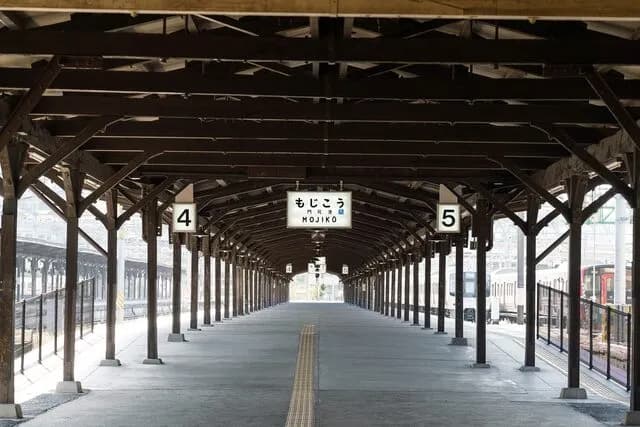
Inside the station are a classic waiting room, café, and souvenir shops, and a unique feature is the lack of benches on the platforms.
A traditional washbasin area (洗面所) installed at the time of opening still remains and can be used by travelers to wash their hands or face.
In front of it is a drinking fountain called “Kaerimizu (帰り水)”, said to be the first water that Japanese soldiers returning from overseas after the war drank upon arriving at Mojiko.
A story is told that they felt emotion and relief of returning home as they drank this water, and it remains a symbolic spot of homecoming.
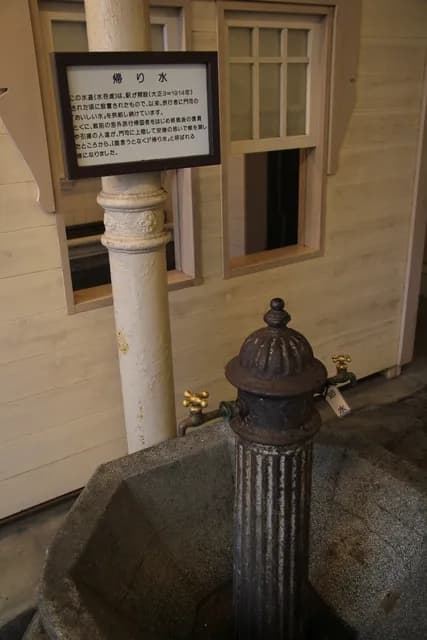
If you visit without knowing this historical background, you may treat it as just a photo spot, but because it is also connected to modern history, it is worth pausing to reflect on its meaning rather than passing by lightly.
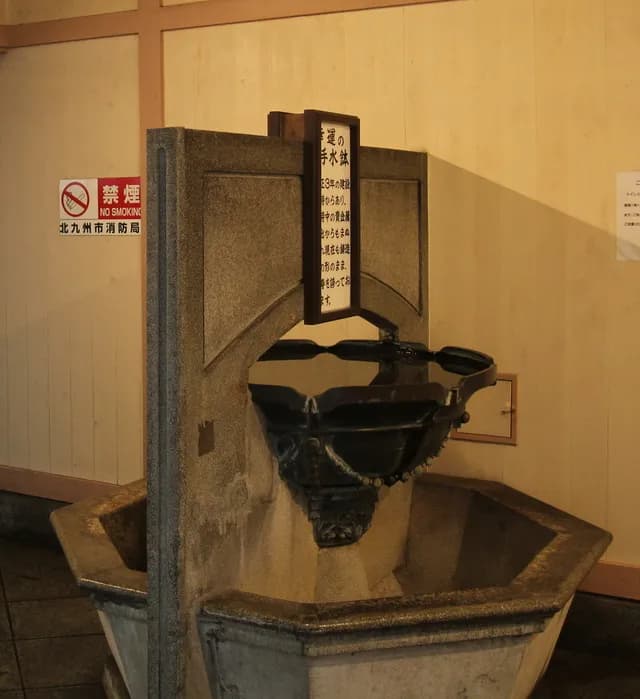
Meanwhile, next to the station, between the men’s and women’s restrooms, there is a washbasin called the “Lucky Washbasin.” This structure was excluded from wartime metal requisitions during WWII, and remains as one of the few facilities to preserve its original form.
As a structure that survived even amid wartime chaos, it gained the nickname “Lucky Washbasin,” and this too is a place that should be viewed with accurate historical awareness.
2) Shiokaze Train (Seaside Train) 🚃
潮風号
The Shiokaze Train is a tourist trolley train operating in the Mojiko area of Kitakyushu, known as the slowest train in Japan—about the speed of a bicycle.
It runs only on weekends, public holidays, and during Japanese holiday periods, and is popular as a short, relaxing trip where you can enjoy retro streetscapes and stunning views of the Kanmon Strait.
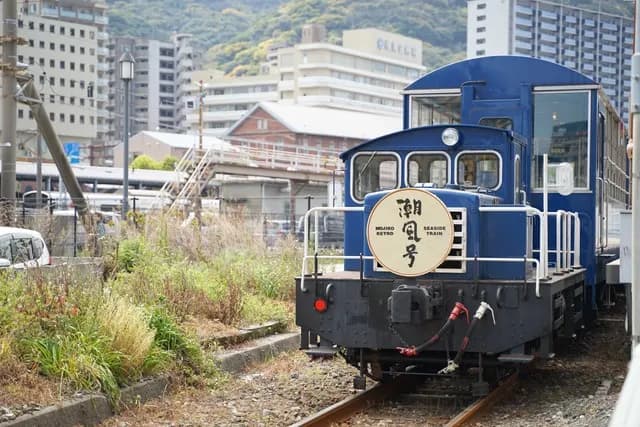
- Route: Kyushu Railway History Museum Station ↔ Kanmon Strait Mekari Station
- Distance: about 2.1 km
- Travel time: about 10 minutes one way
- One-way fare: Adults 300 yen / Children 100 yen
- 1-day pass: Adults 600 yen / Children 300 yen
3) Blue Wing Moji 🌉
ブルーウィングもじ
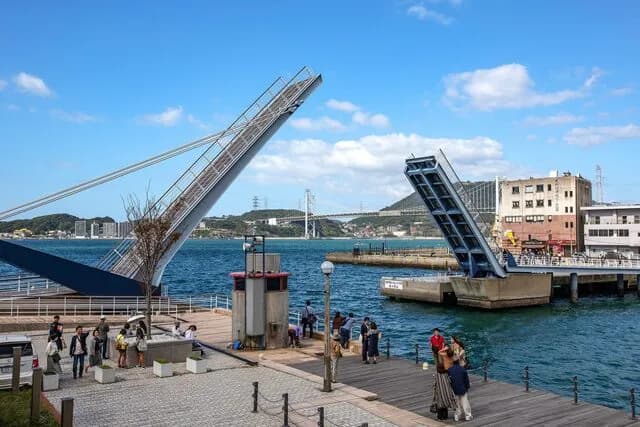
Blue Wing Moji is a pedestrian-only drawbridge (開閉橋) connecting the Mojiko Retro district and the waterfront. Installed in 1993, it is Japan’s only vertical-lift pedestrian-only bridge.
It is about 108m long, and the scene of the bridge slowly rising and lowering six times a day is a unique Mojiko attraction.
- Lift times: 10:00 / 11:00 / 13:00 / 14:00 / 15:00 / 16:00
A story says that lovers who cross first right after the bridge fully closes will have their love fulfilled, making it a romantic spot especially popular among couples.
Exclusive TourCast Tips!
Walking from Mojiko to Shimonoseki via the Kanmon Undersea Tunnel?
The common way to cross the sea between Mojiko ↔ Shimonoseki is to use a ferry or JR trains, but for a more unique option, you can walk through the Kanmon Undersea Tunnel Pedestrian Path.
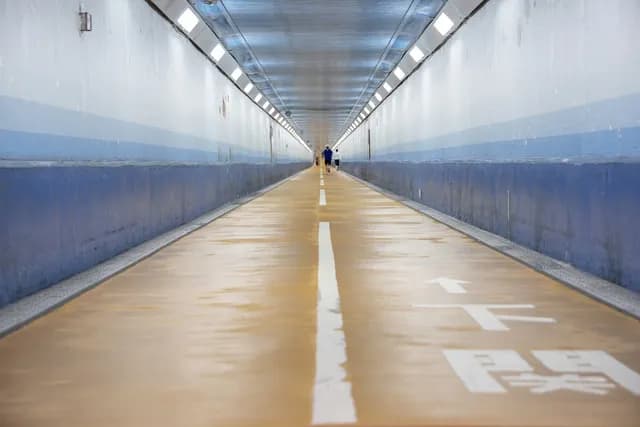
The tunnel entrance is about 2.5 km from Mojiko Station, so it is efficient to take the Shiokaze Train to Norfolk Hiroba Station or Kanmon Strait Mekari Station and thenwalk across the undersea tunnel.
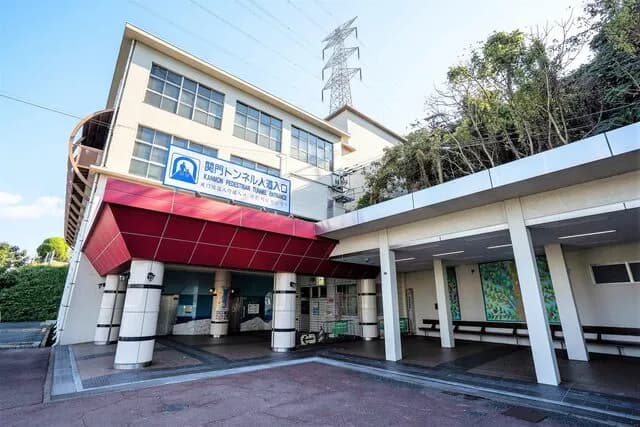
If you plan to use this route, the Kanmon Strait Clover Ticket is efficient. It costs Adults 800 yen / Children 400 yen and includes the following.
- 1 ride on the Shiokaze Train
- On non-operating days, it is replaced with 1 ride on a Nishitetsu bus
- 1 ride on a Sanden bus(Mimosusogawa ~ Karato)
- 1 ride on a Kanmon Kisen ferry (Shimonoseki ↔ Mojiko)
- Where to buy:
- Kyushu Railway History Museum Station
- Kanmon Strait Mekari Station
- Sanden bus: ticket shop in front of Shimonoseki Station
- Kanmon Kisen: ticket offices at Moji Port / Karato Pier
- Mojiko Station tourist information center
- Former British Consulate in Shimonoseki
However, if you plan to go straight from Shimonoseki to Kokura, it is more efficient to use a local bus or JR trains rather than returning to Mojiko.
HiraodaiInto a spectacle shaped by nature—an invitation to Hiraodai, the grasslands touching the sky
平尾台
Hiraodai is a vast limestone karst landscape in southern Kitakyushu, regarded as one of the three great karst landscapes in Japan and a representative natural attraction.
In spring, green grasslands spread out; in autumn, silver grass fields; and in winter, snow-covered plains—a beloved hilly area where you can enjoy diverse natural scenery across all four seasons.
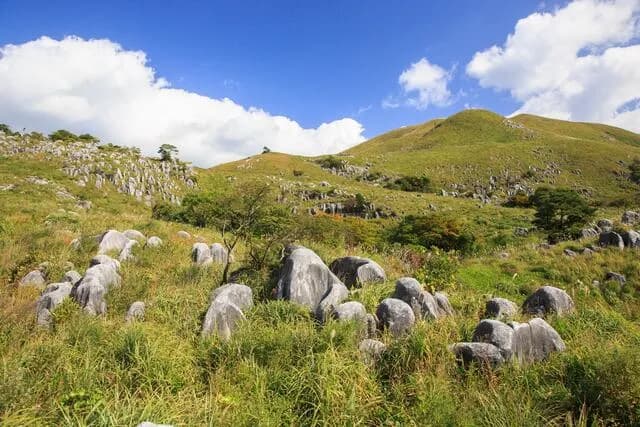
The most distinctive feature is the irregular limestone rocks rising between grasslands, creating a scene that from a distance looks like sheep lying on the fields.
In addition, caves, sinkholes, and underground waterways formed as limestone is eroded by groundwater are scattered throughout, making it a region evaluated as geologically significant.
How to Get There
By train, take the JR Hitahikosan Line from Kokura Station and get off at Ishiharamachi Station (石原町駅). The station is unmanned and IC cards cannot be used, so you must buy a section ticket (450 yen) before boarding. After getting off, you can use a locally operated Jumbo Taxi to reach Hiraodai.
By bus, go to the Nakatani (中谷) bus stop, then use the Jumbo Taxi departing from Nakatani Depot (中谷車庫) next door.
A key caution: when searching routes from Kokura Station to Hiraodai, you may see a route name like “平尾台地区おでかけ交通,” which does not indicate a bus or regular railway route, but rather a Jumbo Taxi service operated by Himawari Taxi (ひまわりタクシー).
-
Operating period: Regular service on weekends and public holidays from the Spring Equinox in March to the end of November
- Off-regular times: available by advance reservation for 3+ people (09:00–17:00)
- Reservations are not possible even if 2 people pay fares for 3; the actual group must be 3 or more to reserve.
-
Vehicles are typically 9-seat jumbo taxis, but depending on passenger count, they may be replaced with 4-seat cars.
-
Full capacity or vehicle wait times may occur, so reservation is recommended even for regular services.
-
Service may be suspended in strong winds, heavy rain, snow, fog, or other severe weather, so you should check operation status before use
-
A regular taxi costs around 3,000 yen one way
Hiraodai Taxi Info
1) Hiraodai Nature Park vs Nature Observation Center 🏕️
Hiraodai Nature Park (自然の郷) is a family-friendly outdoor area with a lawn plaza, camping site, and hands-on workshops. From picnics to pottery and insect observation, it offers a wide variety of activities, and also operates a restaurant and souvenir shop, making it ideal as a relaxing nature retreat.
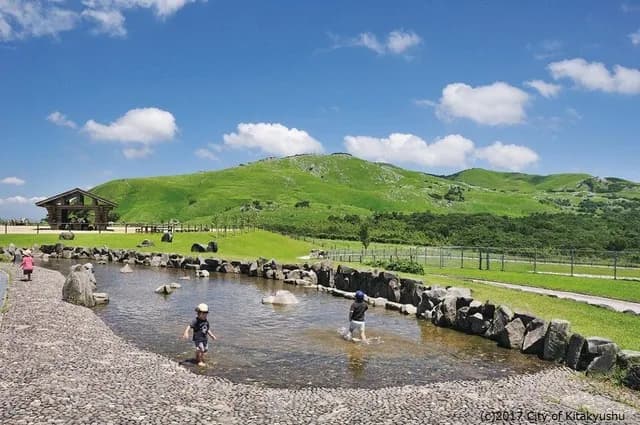
In contrast, the Hiraodai Nature Observation Center (自然観察センター) is an indoor learning space that introduces the area’s geology and ecology. In addition to exhibitions on karst landscapes and seasonal nature information, it also provides trekking course guidance.
Official Website LocationIf you arrive at Hiraodai using the Jumbo Taxi, then for family trips with children, Hiraodai Nature Park is recommended, while if you want to enjoy Senbutsu Limestone Cave or trekking courses, it is better to get off at the final stop: the Nature Observation Center.
2) Senbutsu Limestone Cave 🕳️
Senbutsu Limestone Cave is a natural limestone cave located in Hiraodai (平尾台)—one of Japan’s three great karst landscapes—and was designated a National Natural Monument in 1935, making it an academically and scenically significant spot.
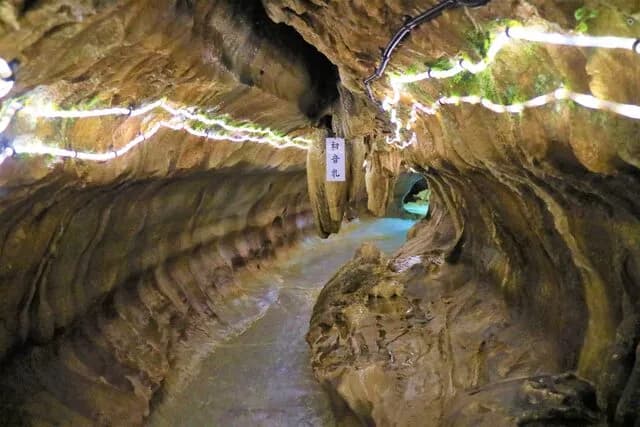
Of its total length of about 900m, the publicly accessible section is largely designed to follow a waterway. The beginning is a dry path, and later you walk along a stream with water ranging from ankle to knee depth.
With lighting and natural light installed, you can explore without special equipment, and it is popular year-round thanks to cool summers and warm winters.
Wearing shorts or bringing a change of clothes is recommended, and while slippers can be rented at the entrance, quantities are limited, so it is better to bring comfortable trekking sandals.
It is about 2 km from the Hiraodai Nature Observation Center, and there is no public transport, so walking is the only option. If you do not have a vehicle, you must walk.
- Admission: Adults 1,000 yen / Junior & senior high 600 yen / Elementary 500 yen / Age 4+ 200 yen
- Hours:
- Opens 09:00 / Weekdays until 17:00 / Weekends until 18:00
- In autumn/winter seasons, until sunset (last entry 16:15)
- Open year-round
Along the way is Ojikado Cave (牡鹿鍾乳洞), so if you are interested in cave exploration, it is also recommended to visit together.
Sarakurayama ObservatoryA delicate harmony of night sky and city—an observatory holding one of Japan’s top night views
皿倉山展望台
Mount Sarakura is a mountain in Yahatahigashi Ward, Kitakyushu City, Fukuoka Prefecture, with an elevation of 622m. From the summit observatory, you get expansive views of Kitakyushu’s city center, the sea, and the industrial zone.
In particular, at night it is widely known as a famous night-view spot, often cited as one of the “New 3 Great Night Views of Japan.”
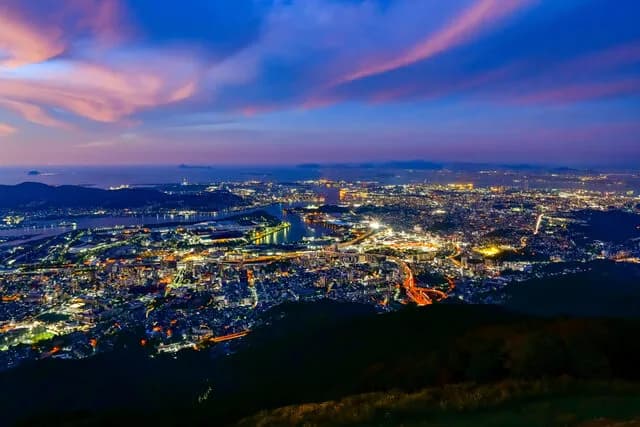
- Cable car & slope car round trip: Middle school and up 1,230 yen / Elementary 620 yen
- 65+ 500 yen (passport required), under 6: 1 child free per 1 adult
- Hours:
- Apr–Oct: 10:00–22:00 (last ride 21:20)
- Nov–Mar: 10:00–20:00 (last ride 19:20)
- Regular closure: Every Tuesday
- Operates normally if it falls on a public holiday
- Special operation on Aug 12, 2025
- Other closure dates: Jun 2–6, 2025 / Feb 16–27, 2026
- Operations may be suspended due to weather, so you must check the website on the day.
How to Get There
Take the JR Kagoshima Main Line from Kokura Station to Yahata Station (340 yen one way).
From Yahata Station, take the free shuttle bus to Sanroku Station, then use the cable car and slope car to reach the observatory.
Shuttle bus timetable Shuttle boarding locationExclusive TourCast Tips!
Kokura–Sarakurayama–Fukuoka Transportation Guide
- Highway bus 🚌
- Only highway buses marked Itōzu-go (いとうづ号) apply.
- Timetable from Kokura Station Front
- Bus stop location (Kokura Station Front)
- Local bus 🚌
- In Google Maps, search routes to Kosoku Sarakurayama Cable(bus) bus stop as the destination.
- Weekend/holiday direct bus 🚌
- Departs from the Shinkansen-guchi bus stop at Kokura Station .
- It is located across from the bus stop where you get off after taking the airport limousine from Kitakyushu Airport.
- Operating hours:
- Apr–Oct: Kokura departures 17:25, 20:05 / Return 19:35, 22:00
- Nov–Mar: Kokura departure 17:25 / Return 19:20
- Since there are days it does not run, you must check in advance. (View direct-bus info)
- If the Sarakurayama cable car is suspended, the bus also does not operate. Check the website for day-of operations.
When departing from Kokura, all methods get off at Kosoku Sarakurayama Cable(bus) and then walk to Sanroku Station.
For the return, board at the opposite-side stop of where you got off: Kosoku Sarakurayama Cable(bus) .
The fare for all methods 1–3 is 610 yen one way. Highway and local buses stop at intermediate stops, while thedirect bus runs non-stop, making it more convenient.
Also, methods 2 and 3 can use the Kitakyushu Urban Area 1-Day Free Ride Ticket.
If you plan to go to Fukuoka (Tenjin) after visiting the observatory, you can take method 1—the Itōzu-go (いとうづ号) highway bus—from the Kosoku Sarakurayama Cable(bus) stop directly to Tenjin Bus Terminal. (However, be careful: if the bus is full at departure, you may not be able to board.)
Highway bus timetable to FukuokaKawachi FujienA dreamy spring walk through purple wisteria—Kawachi Fujien
河内藤園
Kawachi Fujien is a privately owned wisteria garden in the mountains of Yahatahigashi Ward, Kitakyushu City, Fukuoka Prefecture. It is especially famous for its “Wisteria Tunnel,” and has drawn global attention after being included in CNN’s “31 places to visit once in a lifetime.”
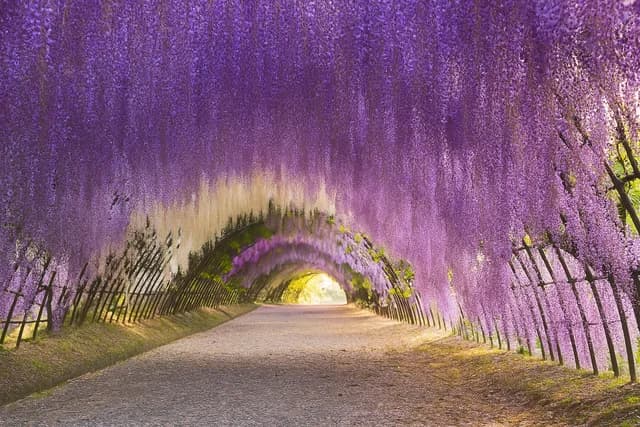
- During the wisteria bloom season (late April to early May), it operates by mandatory advance reservation only.
- Walk-in entry is not allowed, so you must check the official website each year for the announced operating period and ticket reservation schedule.
- For online reservations, you pay a 500-yen reservation fee, and then pay an additional 1,000 yen on-site.
- There are no restrooms inside the garden, so it is best to use a restroom before visiting. 🚻
After visiting Kawachi Fujien in the afternoon, a course that walks about 1 hour 30 minutes to Sarakurayama Observatory to enjoy the night view is also worth recommending.
However, this is not a typical trekking course, and wild animals may appear, so you must be careful.
(Reference: In the Kitakyushu area, bears are known to be extinct.)
How to Get There
By taxi from Yahata Station, it costs about 3,000–3,500 yen one way, and the most efficient option is for 4 people to share the cost. 🚕
A public-transport option exists, but it requires advance phone reservation and takes a long time, so it is not recommended as a practical transport choice (for reference only).
-
Take a bus that arrives at Okura bus stop (大蔵バス停前).
- The highway bus Itōzu-go (いとうづ号) from Kokura Station does not stop here.
- Only the Itōzu-go (いとうづ号) highway bus from Tenjin Bus Terminal can get off here, and after getting off you must cross to the opposite side of the road.
- Otherwise, take a local bus departing from Kokura Station or Yahata Station.
-
Use the “Yahatahigashi-ku / Tashiro / Kawachi area” bus operated by Kitakyushu Outing Transport (おでかけ交通).
- You must reserve by phone at least one day in advance, and it may not operate without a reservation.
- Board next to the Okura bus stop
- Get off at Kawachi Elementary School bus stop (河内小学校) and walk about 10 minutes
- Fare: 400 yen for high school students and up / 200 yen for middle school and below