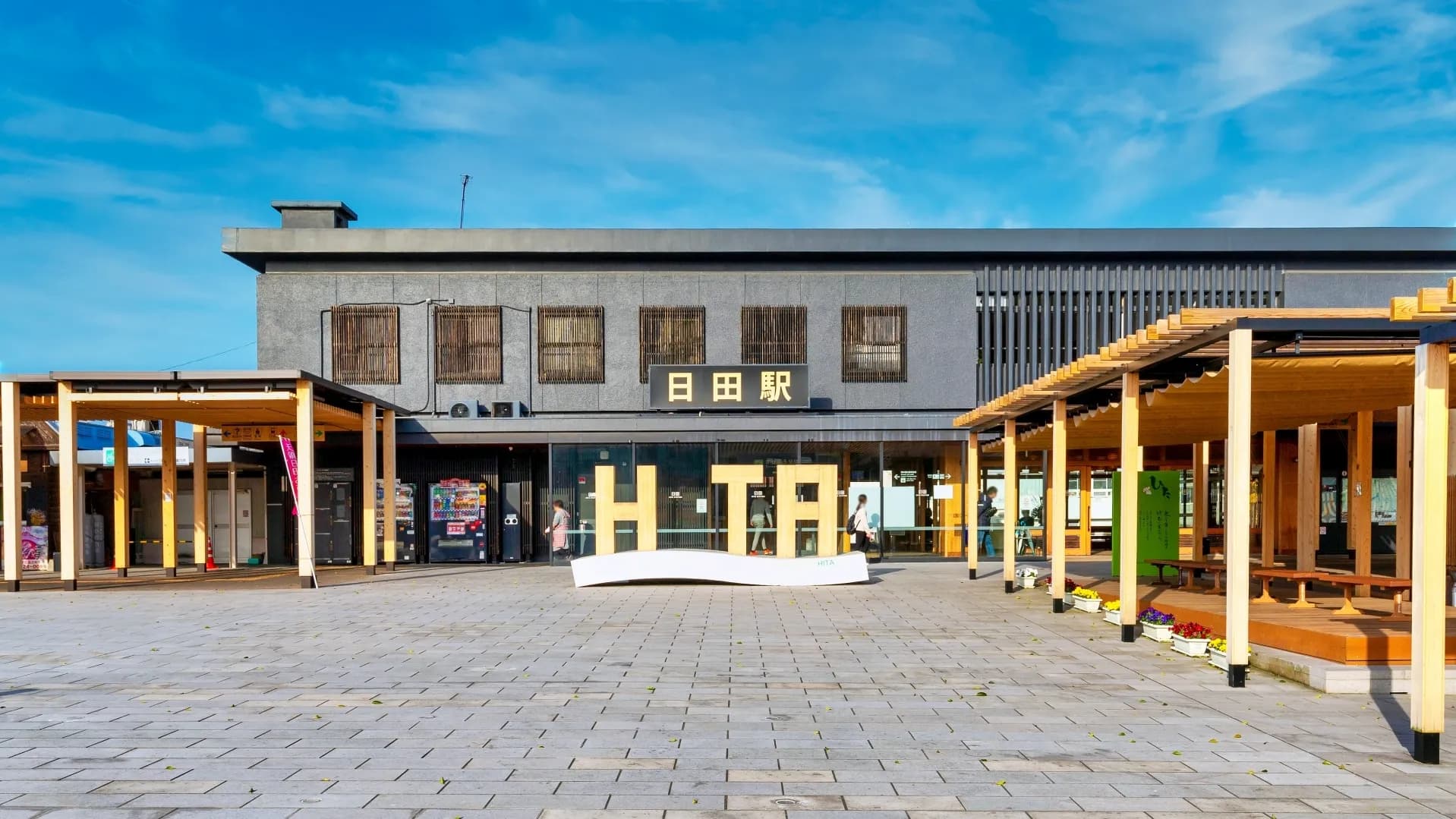
Kyushu’s Former Center, HitaA former regional capital shaped by rivers and tradition
Today, Fukuoka is the main hub of Kyushu, but in the Edo period (1603–1868), Hita was the political, economic, and cultural center of Kyushu.
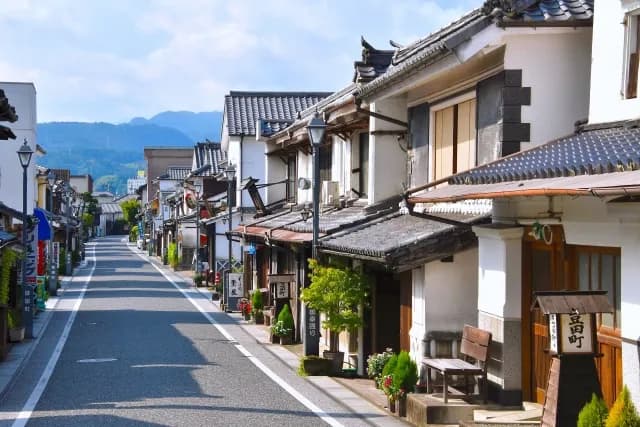
At that time, the first lord of Hita Domain, 'Ogawa Mitsuuji', built Nagayama Castle, and the town developed below it became Mamedamachi (豆田町).
- Mamedamachi: a historic district located in today’s Hita City
- Nagayama Castle now has only parts of the moat and stone walls remaining, and the area has been developed as a park.
Mamedamachi was designated as Tenryo (天領), a direct territory of the Edo shogunate, and grew into a key center of Kyushu. Later, in 2004, it was also selected as a Preservation District for Groups of Traditional Buildings.
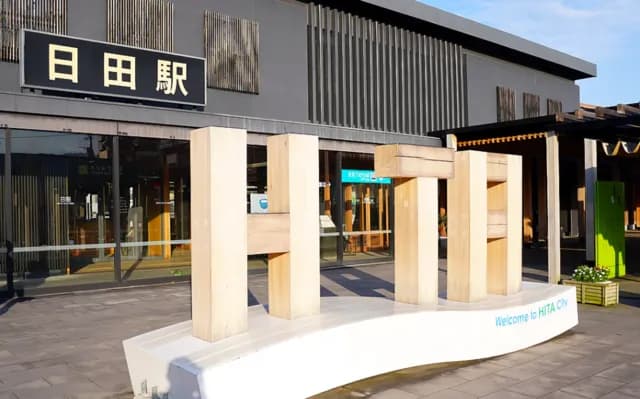
Then why was Hita chosen as Tenryo, even though Kyushu also had cities like Fukuoka and Nagasaki?
The answer is the Chikugo River (筑後川), which runs through Hita.
Rivers naturally attract settlements, and Hita sits near the center of Kyushu, so it also worked as a geographic hub. With its clean water, it prospered as a “city of water.”
Good water also means good sake, so Hita has several historic breweries, and many still continue today.
In particular, the spring water from Nakanoshima (中ノ島) island on the Chikugo River, known as Hita Tenryosui (日田天領水), is famous in Japan as a premium mineral water.
- If you stay at Hita Hananoki River Terrace, you can drink the water freely.
- Even without staying overnight, you can apply by 5:00 PM the day before for a day plan with lunch + onsen (4,300 yen per person).
- Or you can use the onsen only: 800 yen for adults (11:00–20:00).
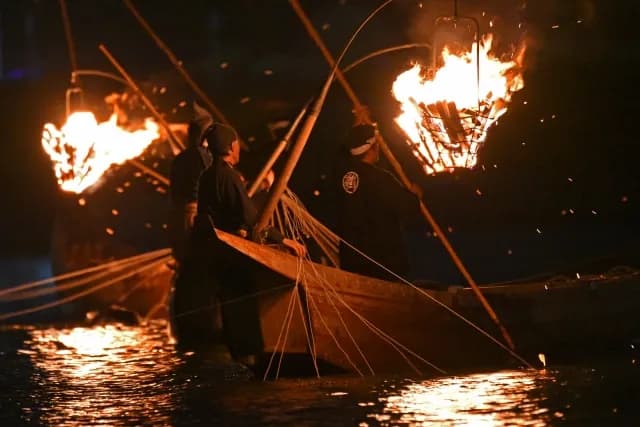
From mid-May to the end of October each year, Hita holds Ukai (鵜飼), a traditional sweetfish fishing show using cormorants.
- The word “Ukai” originally means “to keep cormorants,” but today it refers to this traditional fishing method.
- Around mid-May, when Ukai begins, the Hita Festival is also held.
In this method, a rope is tied around the cormorant’s neck so it cannot swallow large fish, while smaller fish are allowed.
Ukai is usually held in the evening. During the day, sweetfish move too quickly, but after sunset they slow down, making fishing easier. That is why the boats move along the river with fires lit on board.
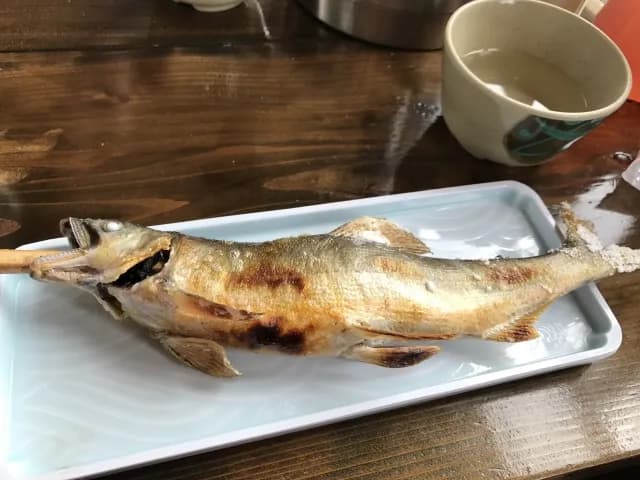
Sweetfish that a cormorant stuns with its beak stay exceptionally fresh, and the traditional style is to grill the fish whole and eat it from the head.
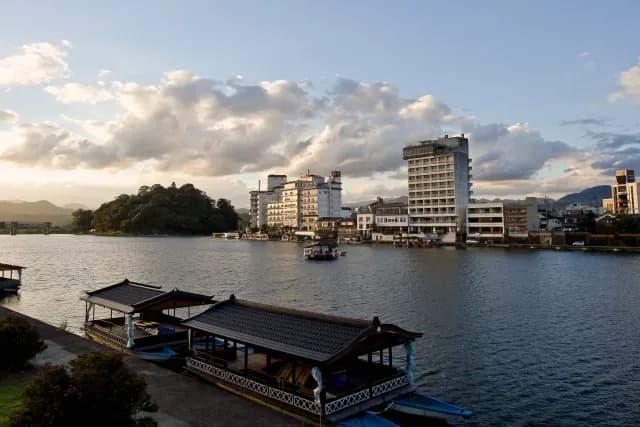
If you take a yakatabune (屋形船), a traditional dining boat, you can watch Ukai up close.
- Reservation required for 4 people or more
- If fewer than 4 people, you may be combined with another group
- Private booking is possible even without staying at a hotel (about 10,000 yen per person)
- If you book with a hotel dinner plan, the yakatabune cost is about 5,000 yen per person
- It may be cancelled due to weather
In Hita, travelers often choose unagi rice bowls, but locals often name grilled sweetfish, gattomaki, Hitan sushi (ひたん寿し), and Hita yakisoba as signature foods.
For dessert, Hita yokan and Hita watermelon shaved ice are also popular.
Hita City Tourism AssociationFukuoka–Hita transport guideBus and train routes, fares, and discounts
1) Highway bus
- Boarding points: Hakata Bus Terminal, Tenjin Bus Terminal, Fukuoka Airport Domestic Terminal
- If you go right after arriving at the airport, take the free shuttle bus to the Domestic Terminal and board there
- Seats are limited, so if you do not reserve, you must line up; if seats sell out, you need to take the next bus
- Standard one-way fare: 1,980 yen
- Round-trip pair discount tickets (2 tickets): 3,580 yen
(One person can use them for a round trip, or two people can use them one-way) - With the Sanko Pass, you can board by simply showing your pass
Hakata Bus Terminal timetable Tenjin Bus Terminal timetable Fukuoka Airport timetable Hita Bus Terminal timetable
2) Train
- Travel to Hita by limited express trains such as Yufuin no Mori or Yufu
- Reserved-seat fare: 3,910 yen (Yufuin no Mori), 3,410 yen (Yufu)
- With JR Kyushu online discount tickets, you can buy them for 2,700 yen and 2,200 yen
※ For details, see KYUSHU Part 1: Rail Pass & Booking Guide - You can also use the Northern Kyushu Rail Pass
3) Bus tour
If you plan a day trip from Fukuoka using only public transport, it can be too tight to visit both Hita and Yufuin in one day. In that case, a bus tour can be a better choice. You can pick routes like Hita + Yufuin + Beppu or Hita + Yufuin + Dazaifu, which makes the travel flow much more efficient.
Choose the best option based on your overall itinerary and travel style.
Exclusive TourCast Tips!
If you take the highway bus from Fukuoka to Hita: a stop tip to reach Mamedamachi faster
When traveling from Fukuoka to Hita, you do not always need to go all the way to the Hita Bus Terminal. If you get off atJonai / Mameda Entrance (城内・豆田入口) bus stop, you can start closer to Mamedamachi.
However, there are no luggage storage facilities around Mamedamachi. If you have luggage, it is best to go to the bus terminal first and use coin lockers or the tourist information center before sightseeing.
- Tourist information center hours: 09:00 ~ 17:00
- Bus terminal hours: 05:00 ~ 21:00
Exclusive TourCast Tips!
Yufuin–Hita transport guide
By highway bus
- There is no direct bus to Hita from the bus center in front of Yufuin Station. You must reserve a highway bus toward Fukuoka and get off atKosoku Hita (高速日田) stop. (Advance reservation required)
- Kosoku Hita stop is in the middle of the expressway, and it is about 3 km from Hita Station.
- The nearest local stop isHano (羽野) bus stop, but buses from there toward Hita Terminal run only three times a day.
- For example, if you take the 08:00 bus from Yufuin and arrive at Kosoku Hita at 08:52, you have only 7 minutes to catch the 08:59 bus at Hano.
- You can check the timetable from Hano toward Hita Terminal here (weekday/weekend times differ) (Hano stop timetable)
- If you miss the connection:
- Take a taxi, or
- Walk about 1 km to another stop, or
- There is also a detour option via Kosoku Kiyama (高速基山) stop, but it is inefficient
- The Sanko Pass covers the full route
By train
- The travel time difference between local trains and limited express trains is only about 10 minutes, so in many cases the local train is the better option.
(However, times can vary depending on transfer timing, so check in advance.) - Local train (Kyudai Main Line) fare: 1,130 yen
- Yufuin no Mori reserved-seat fare: 3,160 yen
- Yufu limited express reserved-seat fare: 2,660 yen
- All trains can be used with a rail pass
Plan your Hita trip by seasonA perfect one-day flow from Ukai to onsen
If you want to watch Ukai fishing (May to October), the ideal plan is to enjoy a Mamedamachi walk in the afternoon, watch Ukai in the evening, and then stay overnight with an onsen.
Outside the Ukai season, you can also leave Fukuoka for Hita in the morning, explore, and then continue to Yufuin for an overnight stay. Another good option is to stay one night in Yufuin and stop by Hita before returning to Fukuoka.
Since it is about 1.5 km from Hita Station to Mamedamachi (around a 15-minute walk), it is also nice to rent a bicycle at the tourist information center or walk slowly and explore.
Start your trip at the Tourist Information CenterLuggage storage, bicycle rental, and local tips
The Hita Tourist Information Center is near Hita Station and the bus terminal. It is a useful place where you can get travel information and also rent a bicycle or store your luggage.
Since the hours are 09:00 to 17:00, you must finish bicycle returns and luggage pickup before 17:00.
It is regularly closed on January 1 and 2, so if you visit during this period, it is best to adjust your itinerary in advance.
- Bicycle rental fee: from 300 yen per hour
⚡ cogicogi electric bike sharing service
If it is difficult to rent a regular bicycle at the tourist information center or you want to use an electric bike, you can use the cogicogi bike-sharing service.
After installing the cogicogi app and registering an account by email, you can rent and return bikes freely at five locations in Hita City.
- From 1,500 yen for a 3-hour rental
In Japan, you also need to be careful when riding a bicycle. For details on what is different from Korea and the key traffic rules, see 'Guidebook - Common Part 2 - Essential traffic rules for bicycle rentals' and follow it carefully.