IntroductionBasic info you should know before starting your Fukuoka trip
Fukuoka is the largest city in the Kyushu region. Compared with major cities in Japan, if Tokyo is like Seoul and Osaka is like Busan, then Fukuoka can be seen as closer to Ulsan in Korea.
In this section, you will find useful transport passes for traveling around Fukuoka city, and a city sightseeing and shopping itinerary using the 150-yen bus or walking.
Fukuoka? Hakata?Fukuoka vs Hakata: why the same place has two names
Fukuoka City, Hakata Station, Fukuoka Airport—even in the same area, you will see “Fukuoka (福岡)” in some places and “Hakata (博多)” in others.
So, why do two different names exist for the same place?
In the past, the area was divided by the river Nakagawa (那河川) that runs through central Fukuoka: the west side was known as Fukuoka (福岡), the samurai district, and the east side was known as Hakata (博多), the merchants’ town.
Later, in Meiji 22 (1889), the two areas were merged through administrative reorganization. The name “Fukuoka” remained for the city’s administrative identity centered around the castle area, while “Hakata” remained as the name associated with the commercial merchants’ district.
This naming tradition continues today, so you often see “Fukuoka” for airports, banks, and company branches, while “Hakata” is commonly used for ports, train stations, and souvenirs.
In short, just remember that both names refer to the same area.
How to Save on Transport Costs: Complete Guide to Fukuoka PassesHow to choose the best pass for your route and travel style
Transport passes for Fukuoka city can be broadly grouped into subway-only, bus-only, and integrated passes that cover subway + trains + JR + buses + ferries.
Because many pass names look similar and can be confusing, it helps to start with this basic category overview.
Also, some pass names used online may differ from the names used at official sales channels.
In this guide, each pass is listed using the official names from the official websites, so please use that as your reference.
1) (Subway) 1-Day Pass
① Coverage Area
- Fukuoka city area
② Eligible Lines
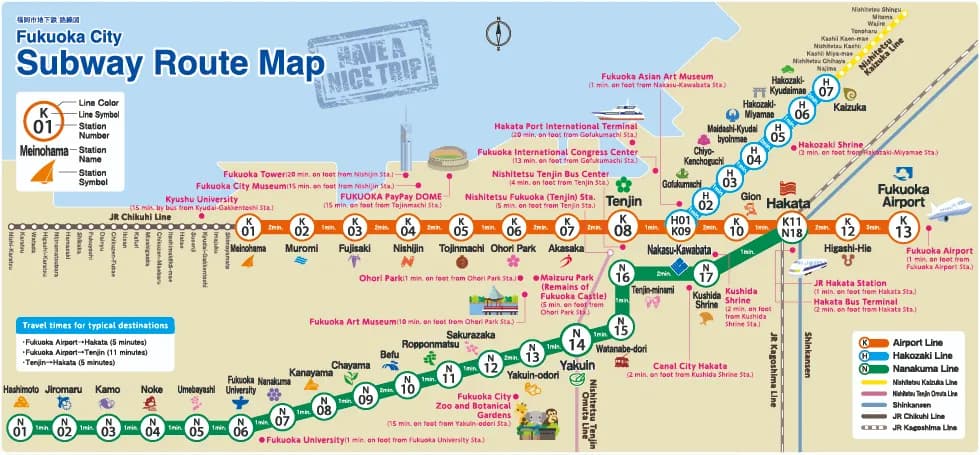
- The 3 Fukuoka City Subway lines
- Airport Line (orange): Meinohama ~ Fukuoka Airport
- Hakozaki Line (light blue): Nakasu-Kawabata ~ Kaizuka
- Nanakuma Line (green): Hashimoto ~ Hakata
③ Not Eligible
- JR lines, Nishitetsu lines
④ Types
- 1-day pass: Adult 640 yen / Child 320 yen
⑤ Key Points
- The subway minimum fare is 210 yen, so it is worth it if you ride 3 times or more in a day.
- In Fukuoka, bus routes are more dense, so you will often use buses more than the subway.
Even so, if you prefer the subway, this pass is a good option.
⑥ Where to Buy
- Ticket machines at each subway station
2) (Bus) Fukuoka City Unlimited Ride Ticket
① Coverage Area
② Eligible Lines
- All Nishitetsu route buses
- Dazaifu Liner Bus Tabito
③ Types
- 1-day pass: Adult 1,200 yen / Child 600 yen
- 1-day pass with Tabito round trip: Adult 2,100 yen / Child 1,050 yen
④ Key Points
- A bus-only 1-day pass that used to be called the “Green Pass”
- Especially useful for family trips. One child (elementary school age) can ride free per one paying adult (Kids Free service) See Nishitetsu Kids Free Service
- You can also travel to LaLaport from central Fukuoka
- The Tabito-included pass is most efficient when you transfer from Fukuoka Airport to reach LaLaport
- On Nokonoshima, the island bus is covered (ferry is separate)
- With a paper ticket, you must scratch the date to activate it, and a mistake means it becomes unusable
- You can buy a slightly cheaper digital pass through the my route app
When you search routes on Google Maps, bus fares in Fukuoka city are not shown. Because of this, it is hard to judge whether buying the “Fukuoka City Unlimited Ride Ticket” is worth it, or if paying per ride is better.
You can check fares one by one on the Nishitetsu official website in Japanese, but in reality, it is not convenient.
The basic fare within central Fukuoka (Tenjin–Hakata) is 150 yen per ride, so if you mainly move around the city center, you usually do not need to buy an unlimited pass. However, if you will mainly use outer-area routes where the 150-yen fare does not apply, the unlimited pass can be more useful.
3) Fukuoka Tourist City Pass
Subway + trains + JR + buses + ferries
① Coverage Area
② Eligible Lines
- Across Fukuoka city
- Nishitetsu buses
- Nishitetsu train: Fukuoka (Tenjin) Station ~ Zasshonokuma Station
- Full Kaizuka Line
- All 3 Fukuoka subway lines
- JR: Meinohama~Kyudaigakkentoshi, Takeshita~Saitozaki sections
- Showa Bus and ferries: Nokonoshima–Meinohama route, Hakata–Shikanoshima route
- Fukuoka city + Dazaifu: all lines above + Nishitetsu train Zasshonokuma~Futsukaichi~Dazaifu included
③ Types
- Fukuoka city only
- 1-day pass: Adult 2,500 yen / Child 1,250 yen
- Fukuoka + Dazaifu
- 1-day pass: Adult 2,800 yen / Child 1,400 yen
- ※ Also available on the my route app, but no extra discount
④ Key Points
- The most expensive option, but it is a complete free pass covering nearly all transport in Fukuoka: subway, trains, buses, and ferries
- Dazaifu Liner Bus “Tabito” is not included → use the Nishitetsu train to visit Dazaifu
- The round-trip fare between Nishitetsu Fukuoka (Tenjin) and Dazaifu is 840 yen, so you need to use the remaining 1,160 yen value on other transport to break even
- When returning from Dazaifu to Hakata, you can get off at Ōhashi Station and connect by bus to LaLaport
- The paper ticket is scratch-style, so you must scratch the correct date
⑤ Where to Buy
- Nishitetsu Tenjin / Hakata Bus Terminal
- Fukuoka Airport International / Domestic Bus Terminal
- Nishitetsu Fukuoka (Tenjin) Station
- Hakata Port International Terminal Information Counter
- Fukuoka City Subway Customer Service (Hakata, Tenjin stations)
- Hakata Station General Information Center
- Tenjin Tourist Information Center
- Digital ticket available on the my route app
4) Fukuoka One-Day Pass (1Day Pass)
Nishitetsu train + Nishitetsu bus
① Coverage Area
- All of Fukuoka Prefecture (excluding Kitakyushu) and some parts of Saga Prefecture
② Eligible Lines
- Nishitetsu trains: Fukuoka (Tenjin) ~ Yanagawa, Dazaifu Line, Amagi Line
- Nishitetsu buses: Fukuoka, Kurume, Saga, Chikuho local routes
③ Not Eligible
- All 3 Fukuoka subway lines
- All JR lines
④ Types
- 1-day pass: Adult 2,800 yen / Child 1,400 yen
⑤ Key Points
- Best for itineraries that include Yanagawa + Dazaifu, or if you expect to spend 700 yen or more on Nishitetsu trains/buses
- Nishitetsu Fukuoka ~ Nishitetsu Yanagawa (one way 870 yen)
- Yanagawa ~ Dazaifu (one way 690 yen)
- Dazaifu ~ Nishitetsu Fukuoka (one way 420 yen)
- Highway buses and limited express buses are not included
- When returning from Dazaifu to Hakata, you can either get off at Ōhashi Station and go to LaLaport, or take the liner bus Tabito to Hakata directly
- Paper ticket is scratch-style; you must scratch the correct date
⑥ Where to Buy
- Nishitetsu Tenjin / Hakata Bus Terminal
- Fukuoka Airport (International/Domestic) Bus Terminal
- Nishitetsu Fukuoka (Tenjin) Station
- Tenjin Tourist Information Center
- Digital ticket available on the my route app
🎫 If you plan to visit Yanagawa and Dazaifu together, the passes below with extra benefits can be even more efficient.
- Dazaifu & Yanagawa Sightseeing Ticket:
Nishitetsu train round-trip ticket + Yanagawa river cruise ticket + other local benefits - Dazaifu & Yanagawa Full Enjoyment Ticket:
Same set + Umegae Mochi exchange ticket
Both passes can be purchased at major locations such as Nishitetsu Fukuoka (Tenjin) Station
5) Fukuoka Taiken (Experience) Bus Ticket
福岡体験バスチケット
This ticket must be purchased together with the “Fukuoka City Unlimited Ride Ticket”, and it cannot be purchased by itself.
Each experience ticket costs 550 yen, and you can buy up to 10 per person.
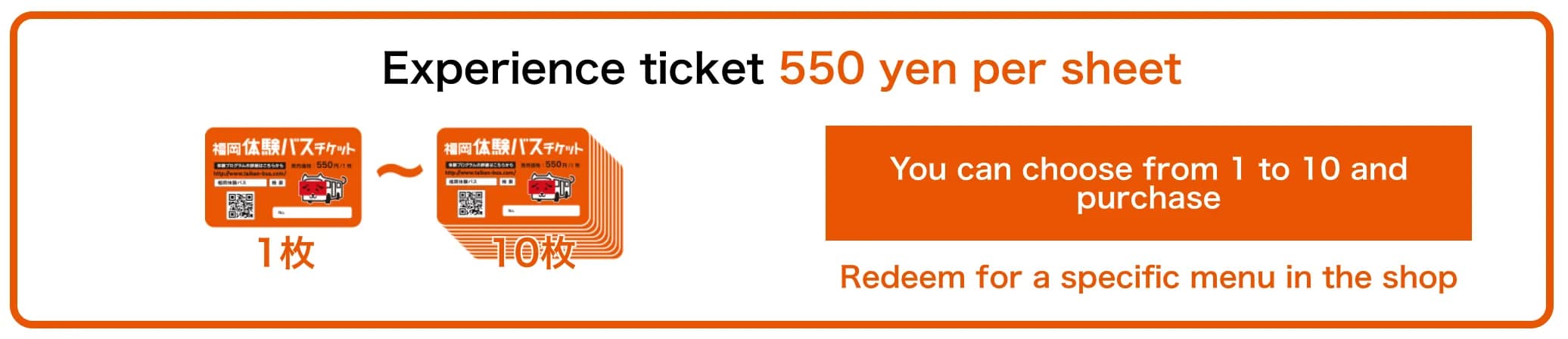
- Experience tickets can be used at restaurants, yatai food stalls, onsen, and sightseeing experiences for better value than paying cash
- Recommended experience
- Open-top bus: 1,570 yen → save 470 yen by using 2 experience tickets
- Experience tickets must be purchased together with the unlimited ride ticket, and cannot be purchased alone
- Experience tickets can be used even if the date is different from the unlimited ride ticket date
- Transferable to others, and if you have 1 left, you can exchange it for a souvenir
- Refunds: only possible if both the unlimited ride ticket and the experience tickets are unused.
However, once you use the unlimited ride ticket even once, you cannot refund the experience tickets separately - When buying online, you can purchase up to 4 tickets only
- Not available for purchase on the my route app
Exclusive TourCast Tips!
Using a Contactless Card for Subway, Trains, and Buses
Contactless cards are credit cards or travel cards with a🛜 Wi-Fi-like symbol. With this payment method, you can complete payment by simply tapping the card on the reader.
Currently, in Kyushu, the lines where you can pay for transport with a contactless card are as follows.
- Subway: All sections of the 3 Fukuoka city subway lines
- Nishitetsu train: All lines and all stations
- JR Kyushu lines(However, at Hakata Station and Kokura Station, only some gates support it)
- Fukuoka area
- Kagoshima Main Line: Moji-ko ~ Kurume (entire section)
- Kashii Line: Only Uminonakamichi Station
- Oita area
- Nippo Main Line: Beppu ~ Oita
- Kyudai Main Line: Oita ~ Yufuin
- Kagoshima area
- Ibusuki Makurazaki Line: Kagoshima-Chuo ~ Ibusuki (entire section)
- Fukuoka area
However, for buses, only some routes support contactless payment. Representative routes include the following.
- Hakata Station ↔ Fukuoka Airport International Terminal
- BRT articulated bus (Hakata Station ↔ Tenjin Station)
- Dazaifu Liner (Airport ↔ Dazaifu)
In conclusion, if you plan a train-focused trip around central Fukuoka,a single contactless card may be enough, and you can use cash for buses outside the routes listed above.
On the other hand, if you plan to move around mainly by bus in Fukuoka city,it is much easier to buy a transport IC card or use a 1-day bus pass.
Explore the City Freely: Fully Cover the City Center with the 150-Yen BusKey Fukuoka spots on a budget, with a solid route
This itinerary is built around areas you can reach in central Fukuoka by the 150-yen bus or on foot.
It includes shrines and gardens where you can feel Japan’s traditions in the middle of the city, Kushida Shrine, which holds painful history connected to Korea, and the Furusatokan museum that shows the lifestyle of old Hakata merchants.
It is also designed so you can enjoy shopping at Hakata City and Canal City Hakata as part of the same day.
1) The 150-Yen Bus
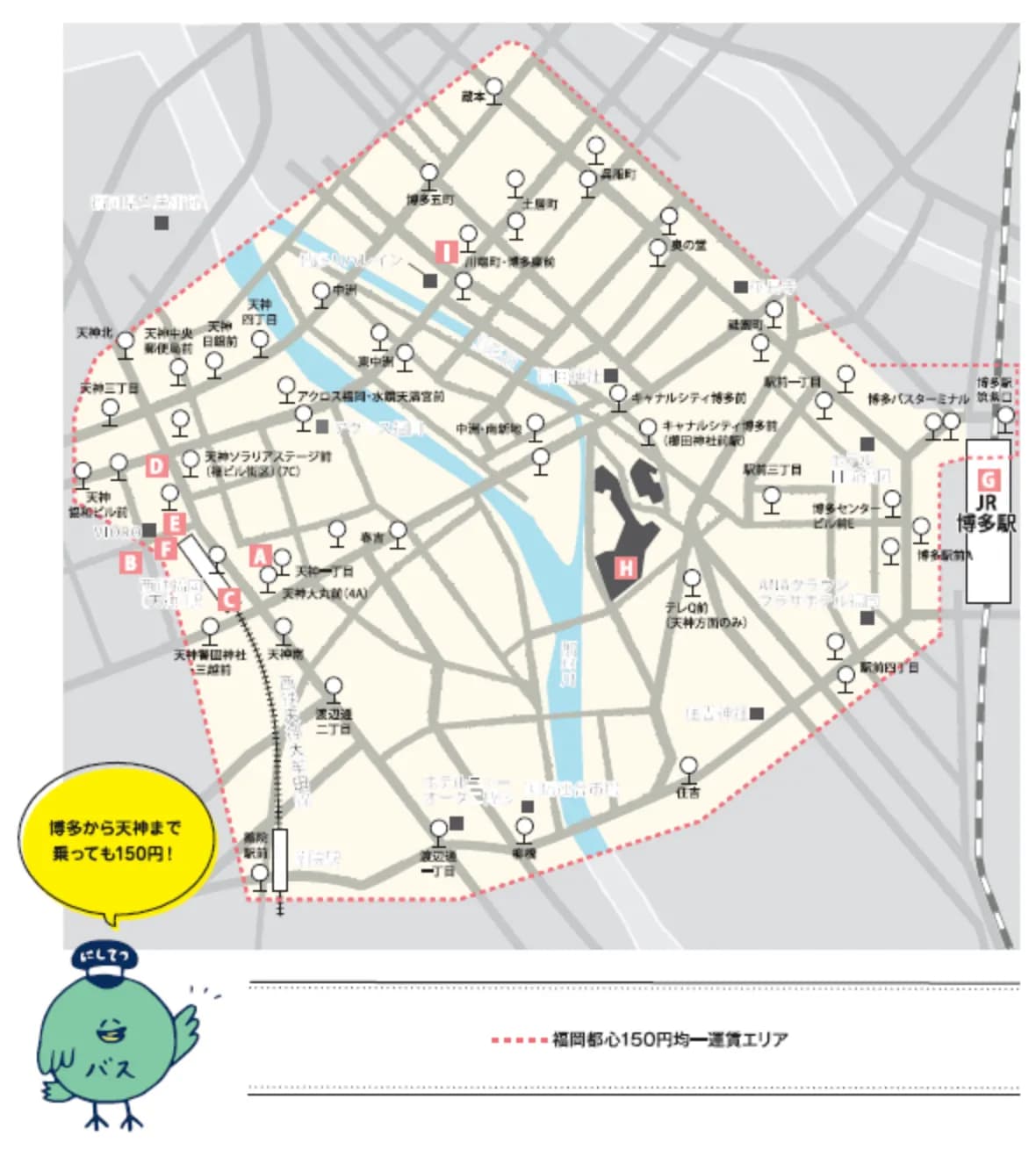
The 150-yen bus is a system for buses that run between 13 major stops in the city center, such as Hakata Station and Tenjin Station. No matter the distance, you pay a flat 150 yen per ride within the covered area.
Because of this fare system, it is often called the “150-yen bus.” If you use a nimoca IC card, you get a 50-yen transfer discount when you ride again within 90 minutes after getting off.
- Transfer discount with nimoca: 50 yen off if you board again within 90 minutes after getting off
Some blogs or communities still say, “The 100-yen bus is a loop bus, and you must only ride buses marked 100 yen,” but that is based on the past.
The old 100-yen bus system was changed to 150 yen after a fare increase, and even if the bus itself does not show ‘150 yen’ on the outside, if the route is within the area explained below, the 150-yen fare still applies.
In other words, if you get on and off within the red dotted area, including Hakata Station, Yakuin Station, Tenjin, and Kuramoto, you can use any bus at the 150-yen fare.
2) Hakata Station
Hakata City AMU PLAZA Hakata
Hakata Station is the place many people use as the starting point for Northern Kyushu travel.
For a Fukuoka city itinerary, it is convenient to start at “Hakata City,” a large complex directly connected to Hakata Station.
(If your hotel is closer to Tenjin, you can do the route in reverse with no problem.)
Renewed in 2011, Hakata City includes Hankyu Department Store, AMU PLAZA, Tokyu Hands, large shopping areas, many restaurants, and popular food spots. It also has a rooftop garden, event halls, and meeting spaces, making it one of Fukuoka’s representative landmarks.
Location See JR Hakata City Official Website3) Sumiyoshi Shrine
住吉神社
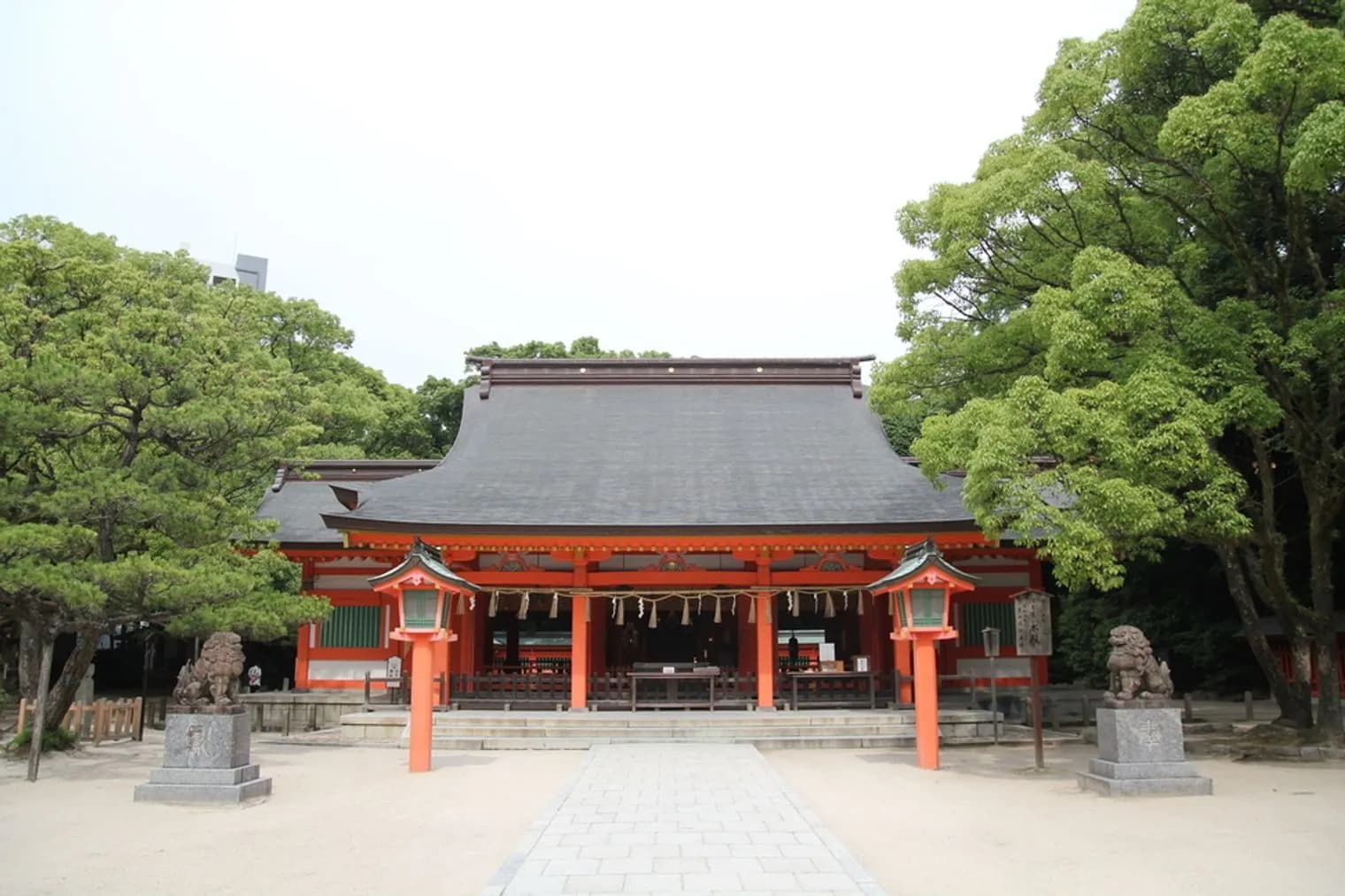
In Japan, there are about 2,000 shrines named “Sumiyoshi Shrine” across the country.
Among them, Fukuoka’s Sumiyoshi Shrine is considered one of the Three Great Sumiyoshi Shrines, along with Sumiyoshi Taisha in Osaka and Sumiyoshi Shrine in Shimonoseki, and there is also a theory that it is the oldest “origin” Sumiyoshi Shrine.
It enshrines deities believed to remove bad luck and bring good fortune, and to protect safe voyages and ships, so in the past it was also widely used as a place to pray for safety before going fishing.
- 10–15 minutes on foot from Hakata Station
- Get off at the bus stop “Sumiyoshi (住吉)” (not much different from walking)
- Hours: 09:00 ~ 17:00
- Closed: None
- Admission: Free
4) Rakusuien Garden
楽水園
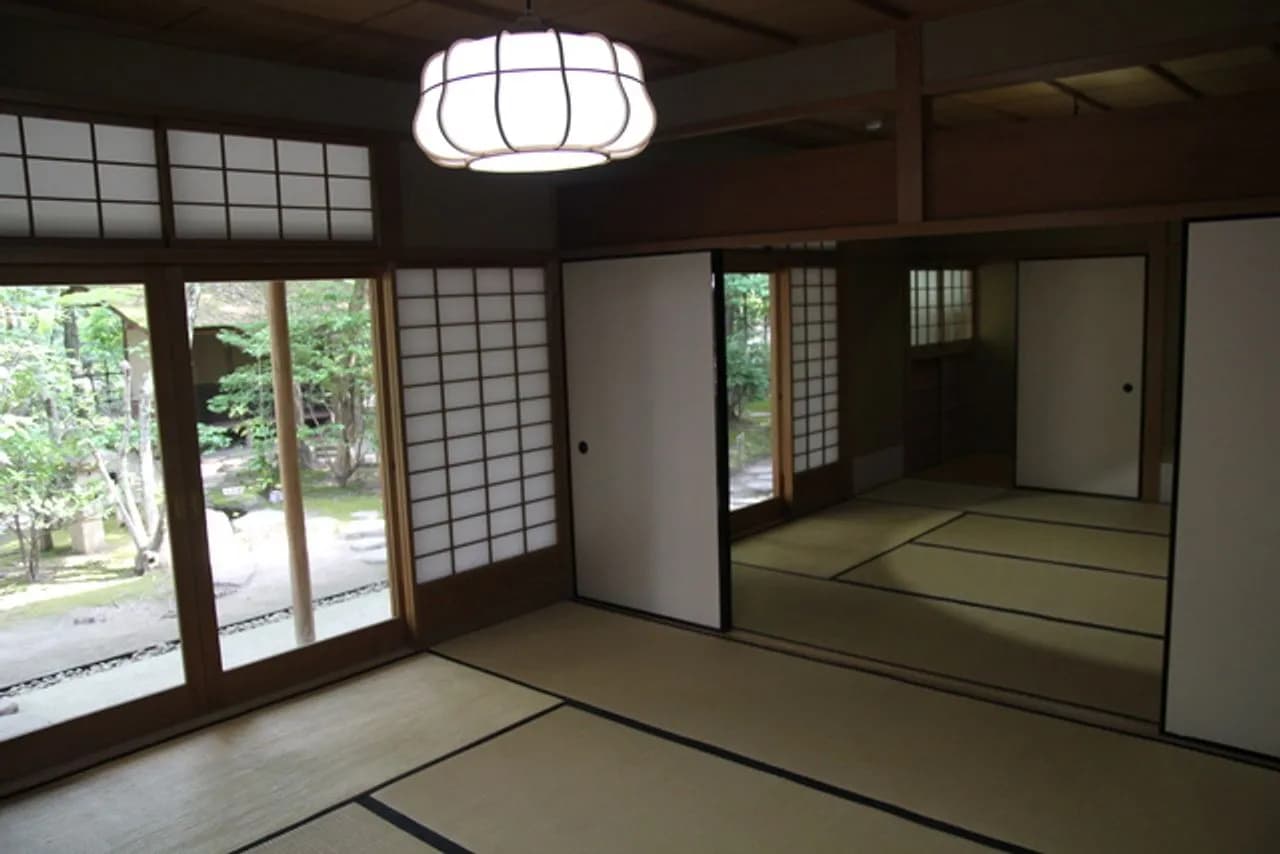
Rakusuien is one of Fukuoka’s three famous gardens and was once the villa of a merchant in the Meiji era.
The garden was created in the Edo-period strolling pond garden style (池泉回遊式), and you can enjoy different views as you walk along the paths around the pond.
For an additional 500 yen on top of admission, you can also experience matcha tea and seasonal sweets in a tatami room.
- Matcha service: 09:00 ~ 12:00 / 14:00 ~ 16:00
It is a nice place to rest and enjoy a quiet moment during your trip.
- Location: 1 minute on foot from Sumiyoshi Shrine
- Hours: 09:00 ~ 17:00
- Closed: Every Tuesday (or the next day if it is a holiday), 12/29 ~ 1/1
- Admission: Adult 100 yen, Child 50 yen
5) Canal City Hakata
Canal City Hakata
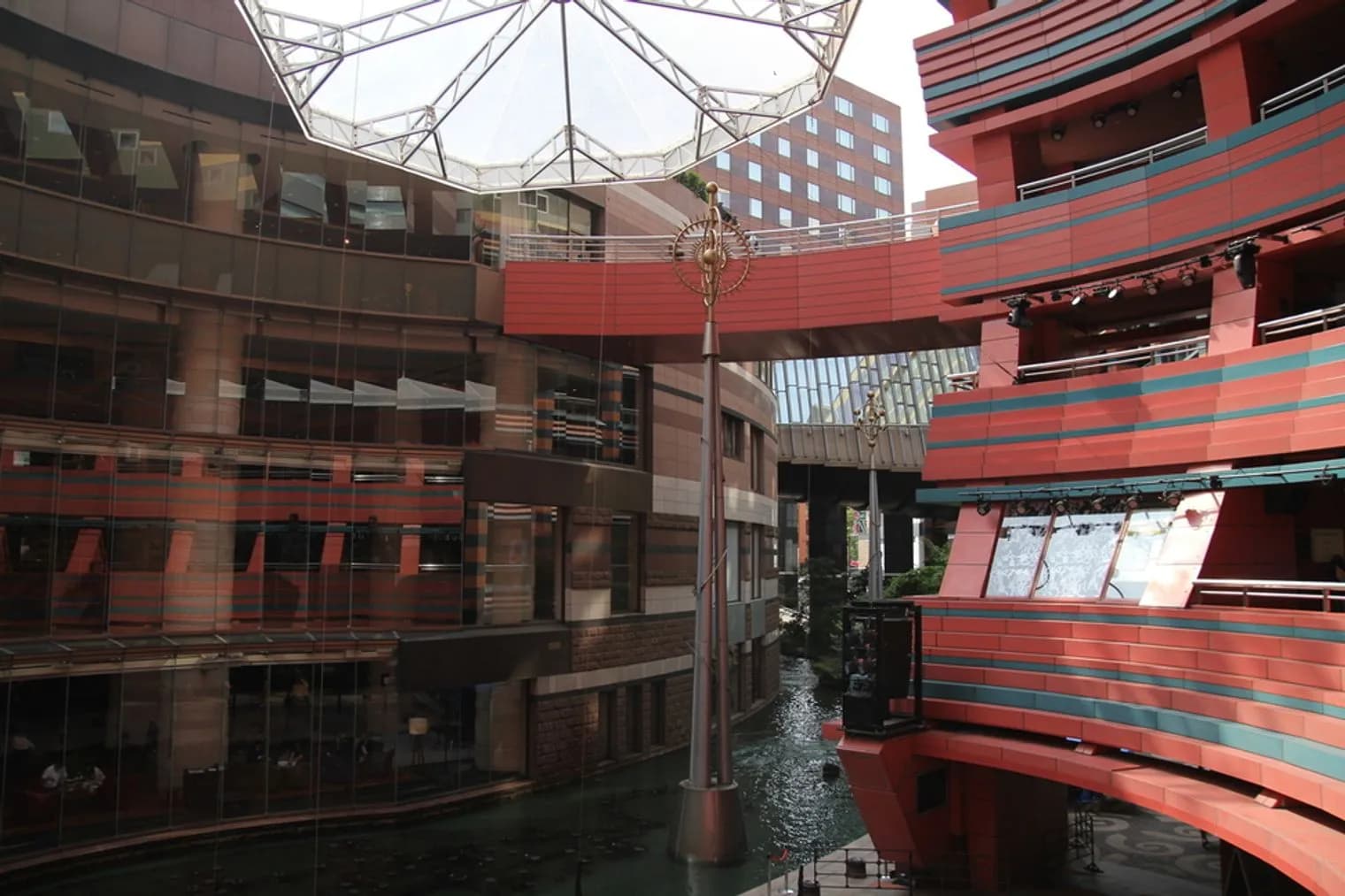
Canal City Hakata is a large shopping and entertainment complex built around a 150-meter artificial canal, and it opened in April 1996.
With shopping, food, entertainment, and hotels in one place, it is a must-visit spot for many travelers in Fukuoka.
At the central Sun Plaza stage, you can see a music fountain show, and there is also an installation by world-famous video artist Nam June Paik, titled “Fuku/Luck, Fuku=Luck, Matrix.”
- Location: 5 minutes on foot from Rakusuien
- Hours: 10:00 ~ 21:00
- Closed: None
6) Hakata Machiya Furusatokan
博多町家ふるさと館
The east side of the Nakagawa River developed as a merchants’ town, and this area is known as “Hakata.”
Hakata Machiya Furusatokan is a history and folklore museum that introduces the old lifestyle and culture of Hakata merchants.
It is also a good place to understand why the name “Hakata” is still used in Fukuoka today.
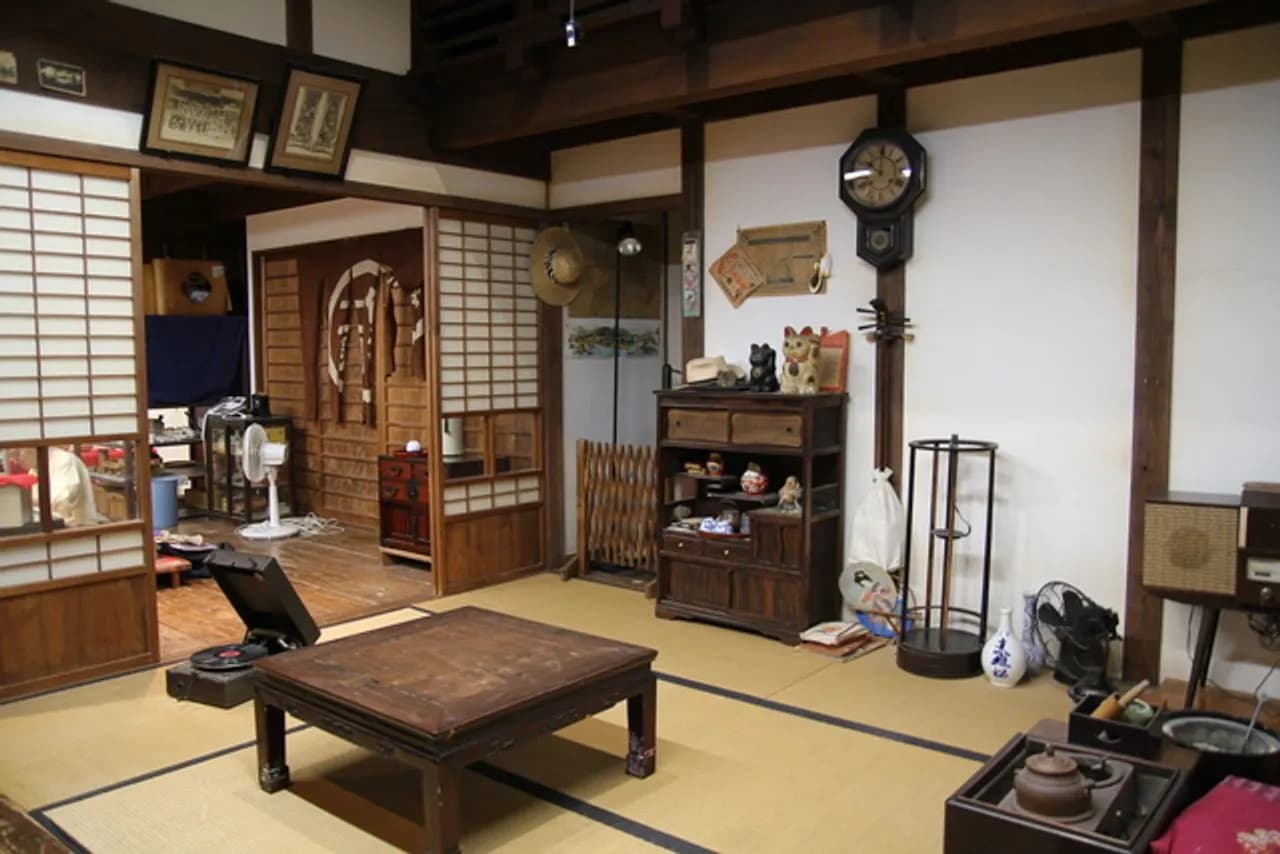
- Location: 5 minutes on foot from Canal City
- Hours: 10:00 ~ 18:00 (last entry 17:30)
- Closed: 12/29 ~ 12/31
- Admission: Adult 200 yen / Free for elementary & junior high students
7) Kushida Shrine
櫛田神社
Kushida Shrine is a shrine that enshrines Hakata’s guardian deity and deities associated with long life and prosperity.
However, there is an important historical fact you should know. The sword “Hizentō,” connected to the assassination of Empress Myeongseong, is kept here.
In October 1895, under an operation name translated as “Fox Hunt,” Japanese rōnin attacked Gyeongbokgung Palace.
A sword used by the rōnin Tō Katsuaki was dedicated here, and a sentence is engraved on its scabbard that says it cut down the “old fox” in a single strike like lightning.
The fact that a sword used to assassinate the Joseon queen is displayed at a Japanese shrine should be remembered.
Many travel guides do not mention this, so the shrine is often introduced only as a place to pray for long life.
Still, it is better to visit knowing it is also a place linked to tragic history.
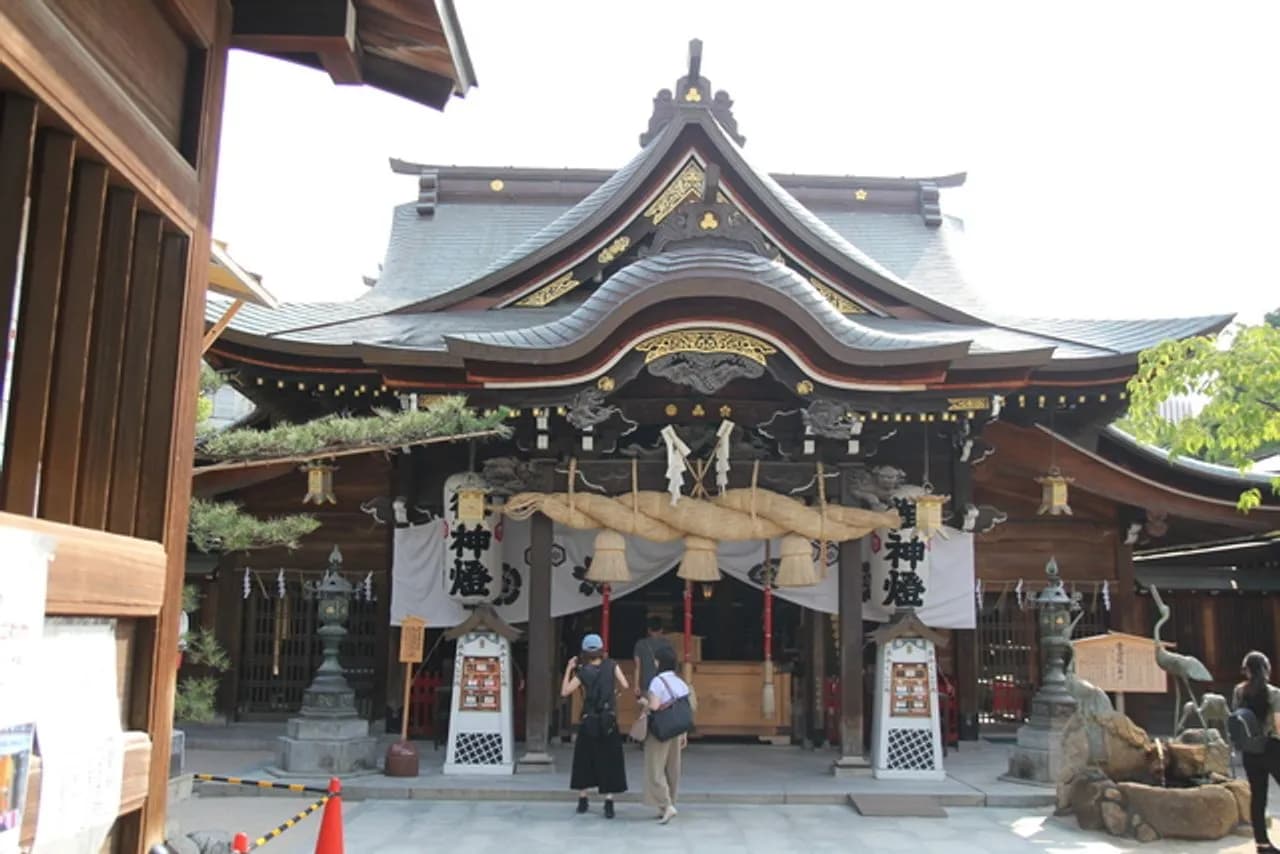
- Location: Across from Hakata Machiya Furusatokan
- Hours: 09:00 ~ 17:00
- Closed: None
- Admission: Free
8) Nakasu Yatai (Food Stall) Street
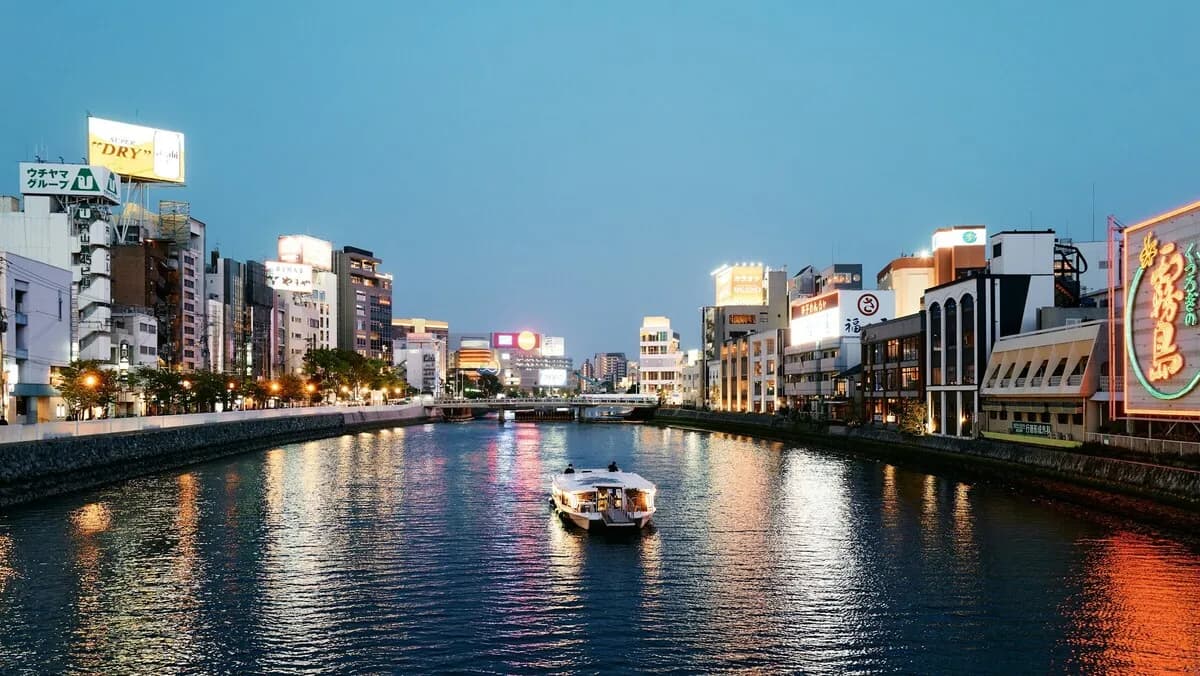
Nakasu is one of Japan’s three major nightlife areas, located on a river island in the middle of the Nakagawa River.
Along the riverside yatai street, you can enjoy Hakata ramen, oden, skewers, and beer.
A meal with a cool river breeze is a perfect way to end your day in Fukuoka.
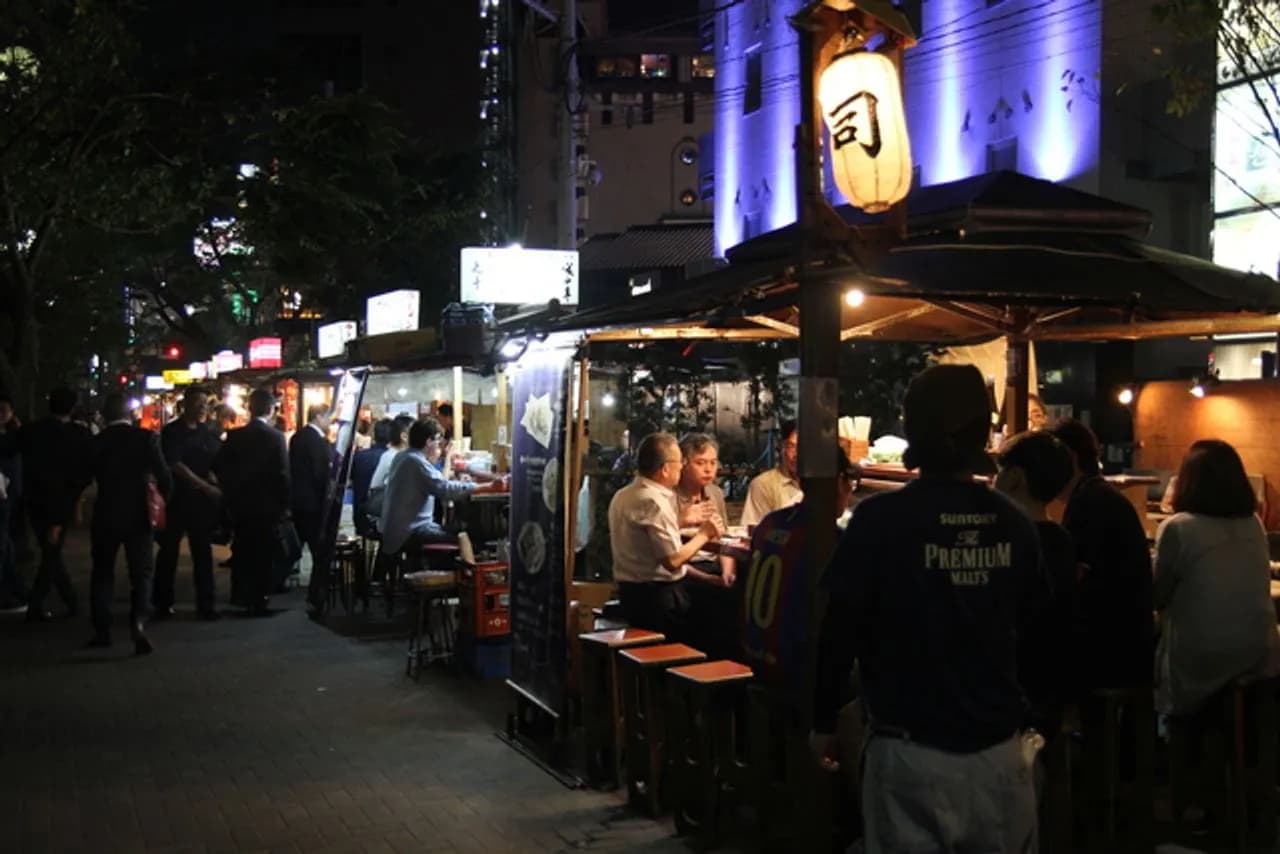
- Location: 5 minutes on foot from Kushida Shrine
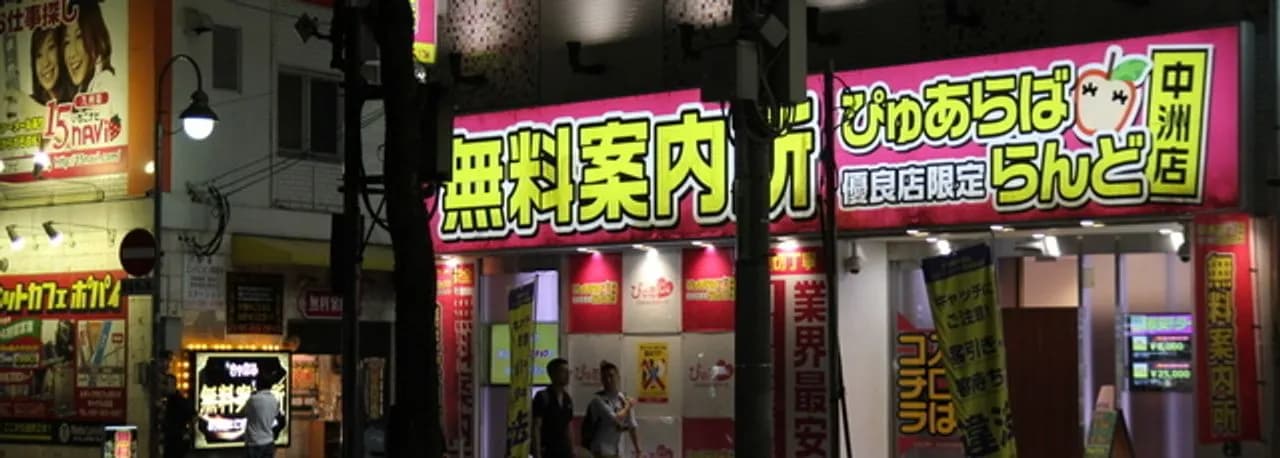
Nakasu is a nightlife district, and you will see many signs saying "無料案内所(Free Nightlife Guide)".
These are not tourist information centers, but guides for nightlife venues, so be careful and do not enter just because you see the word “free.”
9) Try a Taxi Ride in Japan
In Japan, people often go home before the last train rather than staying out drinking until dawn like in Korea. This is partly because taxi fares are expensive.
However, Nakasu → Tenjin/Hakata Station is within walking distance, and a taxi ride is usually around 1,000–2,000 yen. After visiting the yatai street late at night, it can be fun to try a taxi once on the way back to your hotel.
- Note: the rear door is automatic, so do not open or close it by hand.