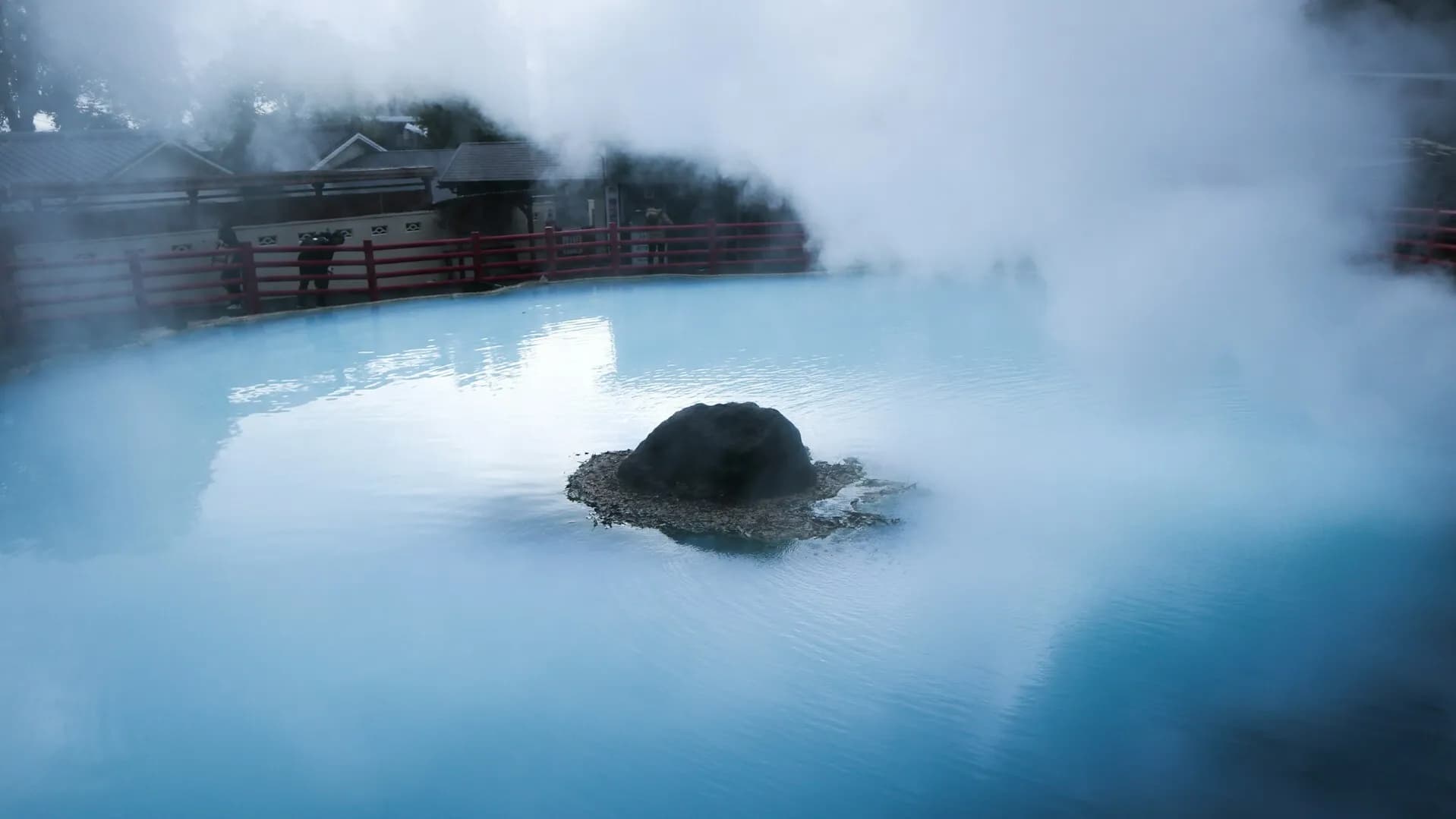
Beppu, affordable hot springs and diverse attractionsWhat you must know in Beppu: Kitahama stop, getting around, and how to plan your trip
別府
According to one survey, Beppu was once selected as the #1 most-visited tourist destination in Japan among Koreans.
This can be interpreted as the influence of package tours that include a guide.
Kyushu is the closest region of Japan to Korea, with relatively affordable airfare, and from Busan, it is even close enough to reach by ferry.
Among Kyushu destinations, Beppu has become a frequent feature in Korean travel packages because it offers a wide variety of hot-spring experiences at low admission prices, and it’s also known for active sales of hot-spring products such as footbaths and Yunohana (湯の花).
In other words, it’s a place where you can have a highly satisfying trip even on a small budget, and in this chapter, we’ll introduce a wide range of Beppu information—including hot-spring facilities you can enjoy for as little as 300 yen.
Oita Prefecture Tourism Information Beppu City Tourism Website1) Beppu Kitahama stop
別府北浜
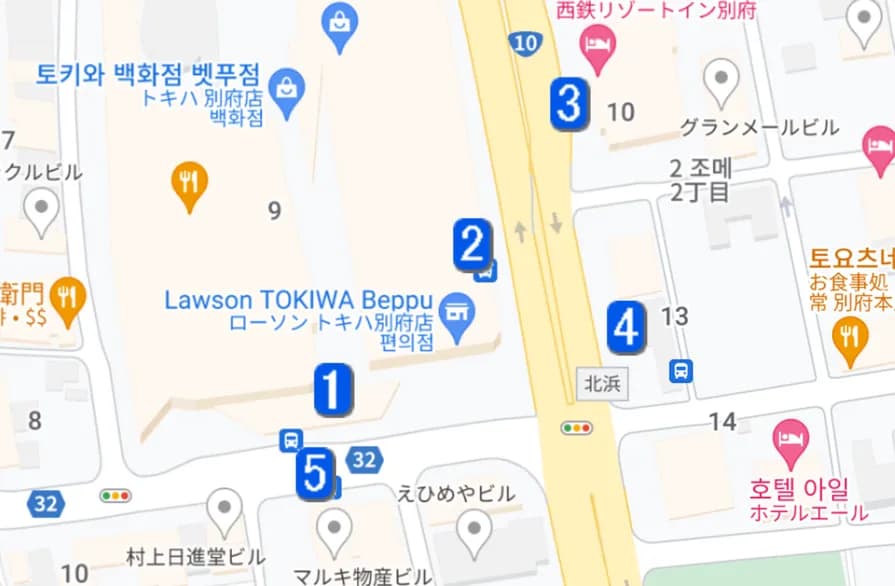
The most important transportation hub for Beppu sightseeing is the Kitahama stop.
There are five stops in total, and this guide will refer to them by number, so you should study the map above and memorize the exact locations to avoid missing buses.
At the link below, you can check Beppu city bus routes, stops, and timetables. Everything is provided in Japanese, so you’ll need to use a translation feature.
Beppu Transportation Website2) How to get to Beppu
By train
- Hakata Station → Beppu: Runs about every 20–30 minutes from 06:30 to 22:00
- If you plan to do only a round trip between Fukuoka and Beppu, online discount tickets can be cheaper than the Northern Kyushu Rail Pass.
By bus
- Hakata Bus Terminal 3F platform 34 (timetable)
- Tenjin Highway Bus Terminal platform 5 (timetable)
- Fukuoka Airport International Terminal bus stop (timetable)
- Get off at Kitahama stop #3 (map)
- The Kitahama Bus Center (亀の井北浜バスセンター) handles ticketing only and does not function as a terminal; actual boarding and alighting happen at the roadside stops.
- If you want to start the Beppu Hells tour right away: it’s recommended to get off at Kannawaguchi (鉄輪口).
3) How to plan your Beppu trip
Beppu’s major attractions can be divided by Beppu Station into the north (Hells tour, African Safari, Harmonyland) and the south (Umitamago Aquarium, Takasakiyama Monkey Park). (Administratively, the southern area is in Oita City)
The final program at Umitamago Aquarium ends at 15:00, so it’s recommended to visit the aquarium and the monkey park first in the morning. (Weekends/holidays: 15:40)
If your weekend/holiday itinerary is Fukuoka → Beppu in the morning → Yufuin in the afternoon, it’s more efficient to get off at Kannawaguchi stop without going all the way to Beppu Station, start the Hells tour, then take the Yufurin (ゆふりん) bus at Kanna wa stop #2.
- Fukuoka → Beppu direction: You can get off at Kannawaguchi / You cannot get off at Kanna wa stop #2
Conversely, for a Yufuin in the morning → Beppu in the afternoon route, take the Yufurin bus and get off at Umijigoku-mae or Kannawaguchi, do the Hells tour, then board the bus to Fukuoka at Kanna wa stop #2.
- Beppu → Fukuoka direction: Boarding is only possible at Kanna wa stop #2 / Boarding is not possible at Kannawaguchi
However, the Yufurin runs only once per weekday, so timing can be difficult.
4) Beppu ↔ Yufuin transfer
① Yufurin bus (ゆふりん)
Yufurin is a sightseeing bus connecting Beppu–Yufuin in about 1 hour, and it can be used with the Sankyu Pass. It has a fixed capacity, so boarding may be denied when full.
- Beppu → Yufuin: Kanna wa stop #2
- Yufuin → Beppu: Umijigoku-mae, Kannawaguchi
- Stops differ depending on the travel direction, so be careful
- Weekdays: 1 service / Weekends & holidays: 6 services
- Fare (one way): 1,100 yen
② Route bus #36
Because Yufurin runs only once per weekday, it’s practically difficult to use on weekdays.
As an alternative, you can take route bus #36. It takes about 1 hour, and the fare is the same as Yufurin: 1,100 yen.
③ By train
From Beppu Station, you can take the limited express trains Yufu / Yufuin no Mori bound for Yufuin.
- Direct: Beppu Station → Yufuin Station (departures at 13:13 / 14:43 / 18:09)
- Otherwise: Transfer at Oita Station
Exclusive TourCast Tips!
The most efficient route linking Kannawa (Beppu Hells) and Yufuin
As explained in How to plan your Beppu trip, if you travel from Fukuoka to Beppu and get off at the Kannawaguchi stop, you can start the Beppu Hells tour right away.
On weekends, the Yufurin bus runs frequently, so it’s not difficult to move straight from Kannawa to Yufuin. However, on weekdays the Yufurin runs only once per day, making it hard to match your timing.
In that case, you could go to Beppu Station and then head to Yufuin, but using Reisenji stop as a transfer point is even more efficient. This stop sits at the midpoint between Kannawa ↔ Beppu Station ↔ Yufuin.
1) Kannawa → Yufuin
Board bus route 26 or 26A at the following stop and ride to Reisenji.
- Umijigoku-mae (海地獄前) stop → Route 26A (timetable)
- Kannawa stop #1 → Route 26 or 26A (timetable)
Make sure the bus is going toward Beppu Station. If the timing doesn’t work, you can also go to Beppu Station and then take route bus #36 from West Exit stop #1.
Reisenji stop (get off) → cross the road to Reisenji stop (board) and take route bus #36 (timetable).
2) Yufuin → Kannawa (reverse route)
From the bus center in front of Yufuin Station, take route bus #36 (timetable) to Reisenji, then cross the road and take route bus #16 (timetable) to Kannawa.
- From Reisenji to Kannawa, buses run at about one per hour, so if the timing doesn’t work, it may be more efficient to go to Beppu Station and take a Kannawa-bound bus from there.
Top accommodation picks to complete your tripThe best places to rest comfortably after onsen time
Beppu is known less for traditional ryokan like Yufuin or Kurokawa, and more for large resort-style onsen hotels.
Especially at hotels near Beppu Bay, you can enjoy an onsen while watching the sunrise rising over the sea, and at night, relax in outdoor pools and open-air baths under the glow of Beppu Bay and the stars.
Since views and facilities differ by hotel, choosing accommodation that fits your travel style can make your trip even more memorable.
No rates are available for the stay from 2026-10-15 to 2026-10-16. Please try different dates.
Useful passes for Beppu & OitaSmart essentials for saving on transportation costs
1) My Beppu Free Pass
My べっぷ Free
Coverage area
- Mini Free Pass: Beppu city (Kannawa, Jigoku Meguri area, Kijima Kogen area)
- Wide Free Pass: All Beppu city routes, Kijima Kogen, Yufuin, African Safari area
① Types & prices
- Mini Free 1-day: Adult 1,100 yen / Student 900 yen / Child 550 yen
- Mini Free 2-day: Adult 1,700 yen / Child 850 yen
- Wide Free 1-day: Adult 1,800 yen / Child 900 yen
- Wide Free 2-day: Adult 2,800 yen / Child 1,400 yen
② Features
- Includes discount coupons for hot springs, attractions, and the Beppu Hells
③ Notes
- The 2-day pass must be used on consecutive days
④ Tips
- Great value if you’ll ride buses 3+ times or visit all 7 Beppu Hells
- If you plan to go from Beppu to Yufuin, the Wide Free Pass is recommended
- The Wide Pass also lets you ride the Yufurin sightseeing bus
- Umitamago Aquarium and Takasakiyama Monkey Park are under Oita City and are not covered
⑤ Where to buy
- Kitahama Bus Center (08:30–17:00)
- Kannawa Terminal (08:30–17:00)
- Yufuin Station Bus Center (07:40–17:30)
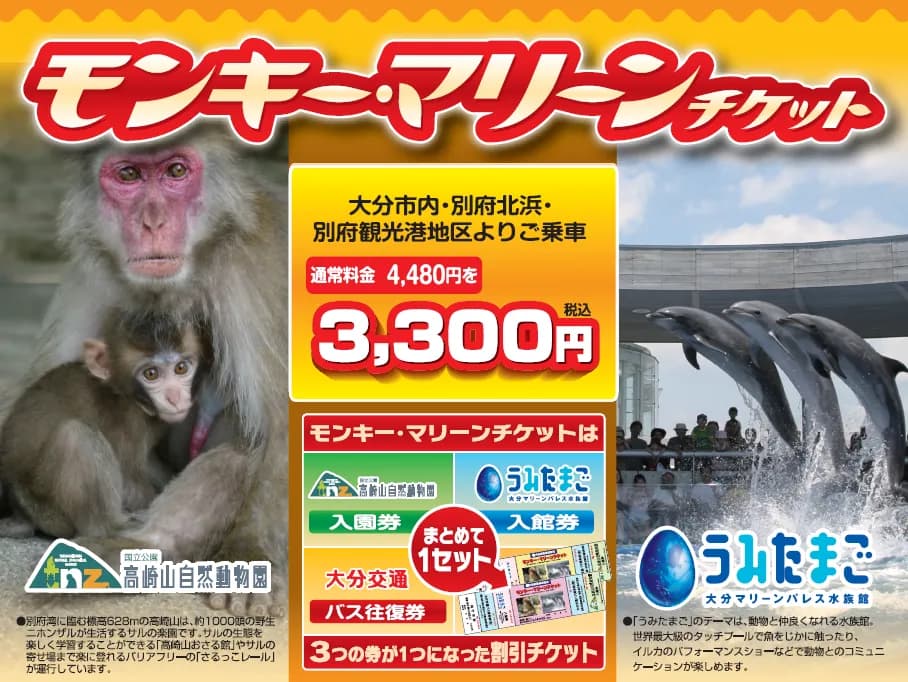
2) Monkey Marine Ticket 🐒🐟
モンキーマリーンチケット
① Coverage
- Round trip between Beppu Station / Beppu Kitahama / Kannawa stops ↔ Takasakiyama Park bus stop in Oita City
② Valid routes
- Available on Oita Kotsu routes
③ Price
- Departing Beppu Station / Kitahama / Oita City: 3,300 yen
④ Features
- Includes round-trip bus ticket + Umitamago Aquarium admission + Takasakiyama Monkey Park admission
⑤ Notes
- No separate child fare
⑥ Where to buy 🛒
- Kitahama Bus Center (08:30–17:00)
- WANDER COMPASS BEPPU (10:00–19:00)
- Beppu Transportation Center (09:00–17:00)
- Oita Shinkawa Bus Center
- Oita Station Bus Center
Beppu’s most Instagrammable spotsA best-of list of Beppu & Oita highlights
Global Tower
The tallest structure in Beppu, reaching 125 meters. The observatory at 100 meters offers panoramic views of the city and is especially known as a popular Instagram photo spot.
- Hours
- March–November: 09:00–21:00
- December–February: 09:00–19:00
- Closed: Year-end/New Year (Dec 29–Jan 3)
- Admission: Adult 300 yen / Child 200 yen
How to get there 🧭
- About a 20-minute walk from Beppu Station West Exit; you can also combine the walk with a stroll through Beppu Park.
- By public transport: From West Exit stop #1, take bus #3 or bus #36 and get off at Beacon Plaza-mae (ビーコンプラザ前) (190 yen one way)
- With 3–4 people, taking a taxi can also be economical; the fare is around 750 yen.
A packed one-day Beppu & Oita routeA practical itinerary that works even as a day trip
1) Umitamago Aquarium 🐬
うみたまご
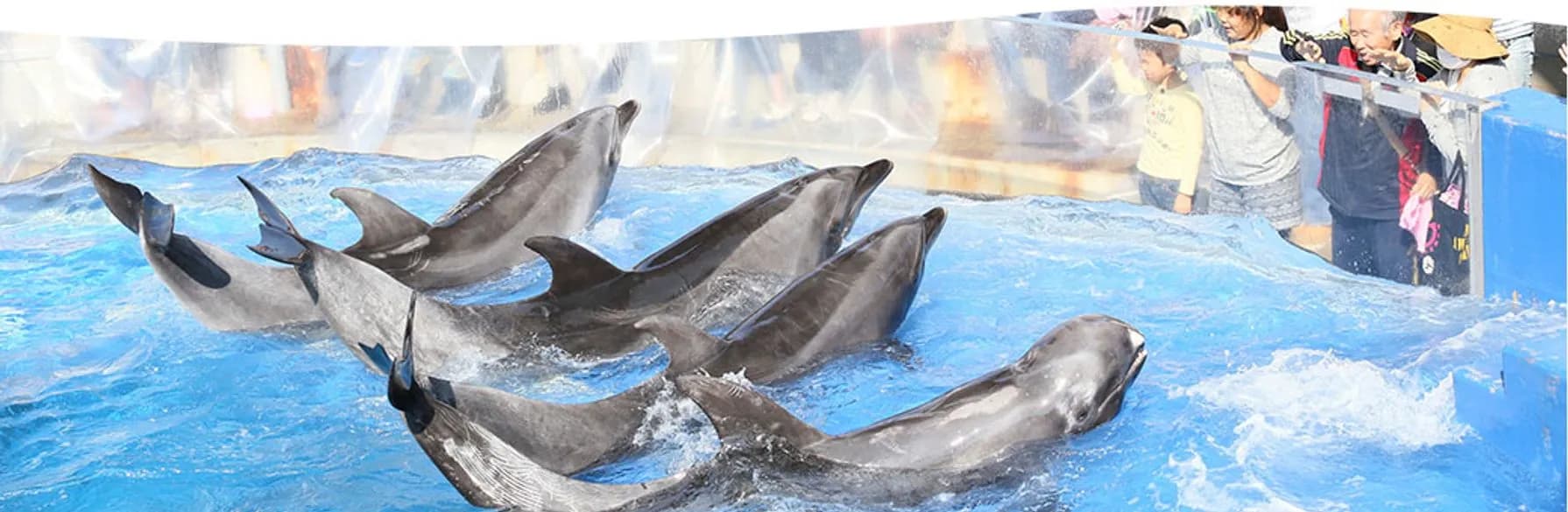
Beppu’s representative aquarium, located on the seaside across from Mt. Takasakiyama. Since it is directly adjacent to the ocean, it operates as an experiential aquarium rather than just a place to look at tanks.
About 90 species of marine life live here, and you can watch seal, sea lion, and dolphin shows with the real sea as a backdrop.
- Hours: 09:00–18:00 (last entry 30 minutes before closing)
- Closed: None
- Admission
- High school students & adults: 3,000 yen
- Elementary & junior high: 1,500 yen
- Children (age 4+): 1,000 yen
- Under 4: Free
2) Takasakiyama Monkey Park 🐵
高崎山自然動物園
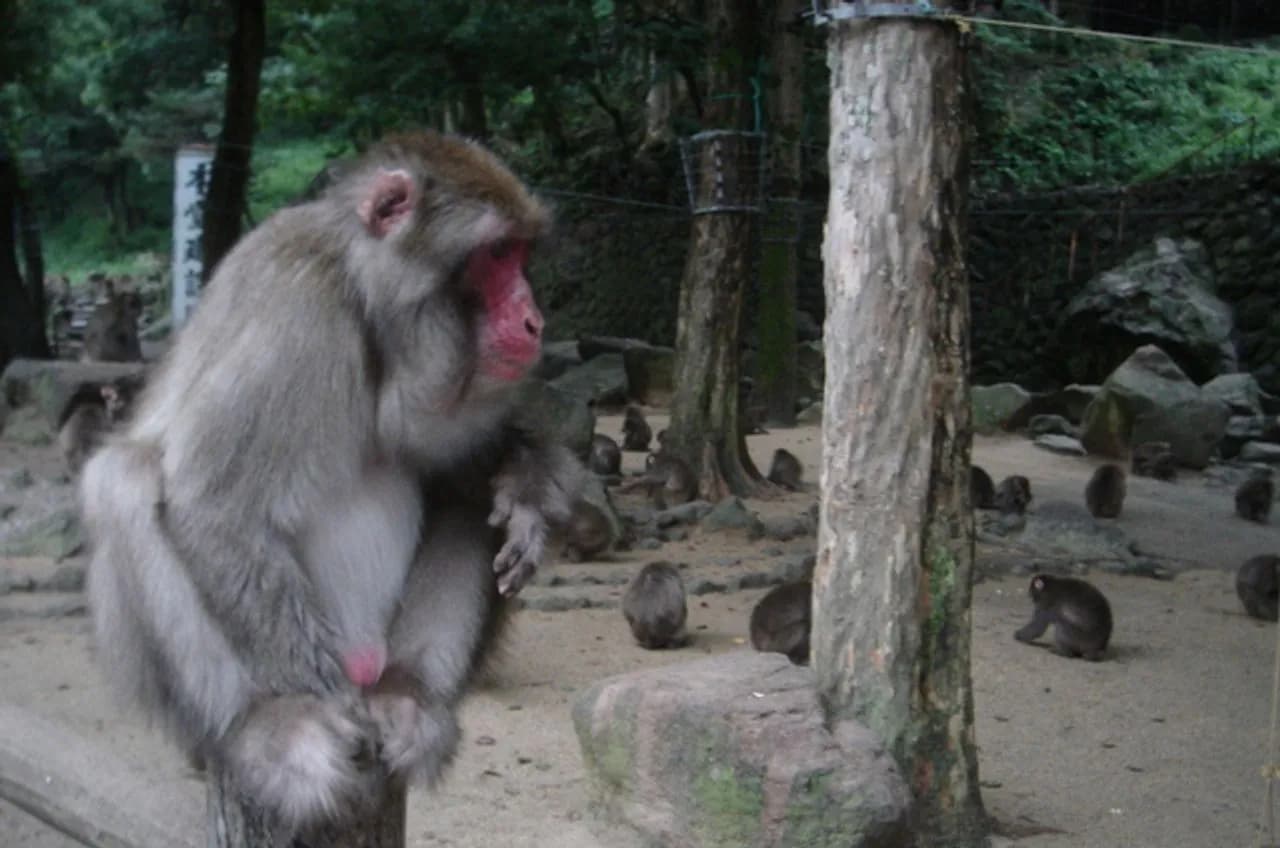
A nature-style animal park on Mt. Takasakiyama (682 m), home to about 1,200 Japanese macaques. Unlike a typical zoo, it offers the unique experience of observing wild monkeys living in troops.
There are three monkey troops, and each troop—led by its boss—takes turns coming down toward the mountain’s foothills in search of food. Watching hundreds of monkeys moving together is a scene that’s hard to find elsewhere.
It’s also fascinating how the troops appear in order from the strongest to avoid conflicts, which some people even describe as a miniature of human society.
- Hours: 09:00–17:00 (last entry 30 minutes before closing)
- Closed: None
- Admission
- High school students & adults: 520 yen
- Elementary & junior high: 260 yen
- Preschool children: Free
- Saruko Rail (to the top)
- Round trip: 110 yen
- Preschool children: Free
Quick overview: how to get to Takasakiyama & Umitamago
Check directions3) Beppu Hells tour
地獄めぐり
Many people wonder why these hot springs are called “hells (地獄),” but the name comes from how their intense, boiling appearance can feel like a scene from hell. On Google Maps, they are labeled as “Hells of Beppu.”
The Beppu Hells tour is called Jigoku Meguri (地獄巡り) in Japanese, and “Meguri (巡り)” means “to go around / tour.” The main feature is that you don’t bathe in these hot springs—you view them as attractions, each with a distinct look.
Famous hells include Umi (Sea) Jigoku, Tatsumaki (Tornado) Jigoku, Chinoike (Blood Pond) Jigoku, and Kamado (Cooking Pot) Jigoku, and there are 7 locations in total. If you plan to see all of them, it’s better value to buy the common admission ticket (2,400 yen); if you plan to visit only 1–2, individual tickets (500 yen) are sufficient.
The most recommended is Kamado Jigoku (かまど地獄). “Kamado” means a hearth or cooking stove, and the name is said to come from a tradition at the local shrine Kamado Hachimangu (竃門八幡宮), where rice was cooked using 90°C steam during rituals.
Among the seven hells, it offers the most variety, and you can also try a footbath, which makes it especially popular.
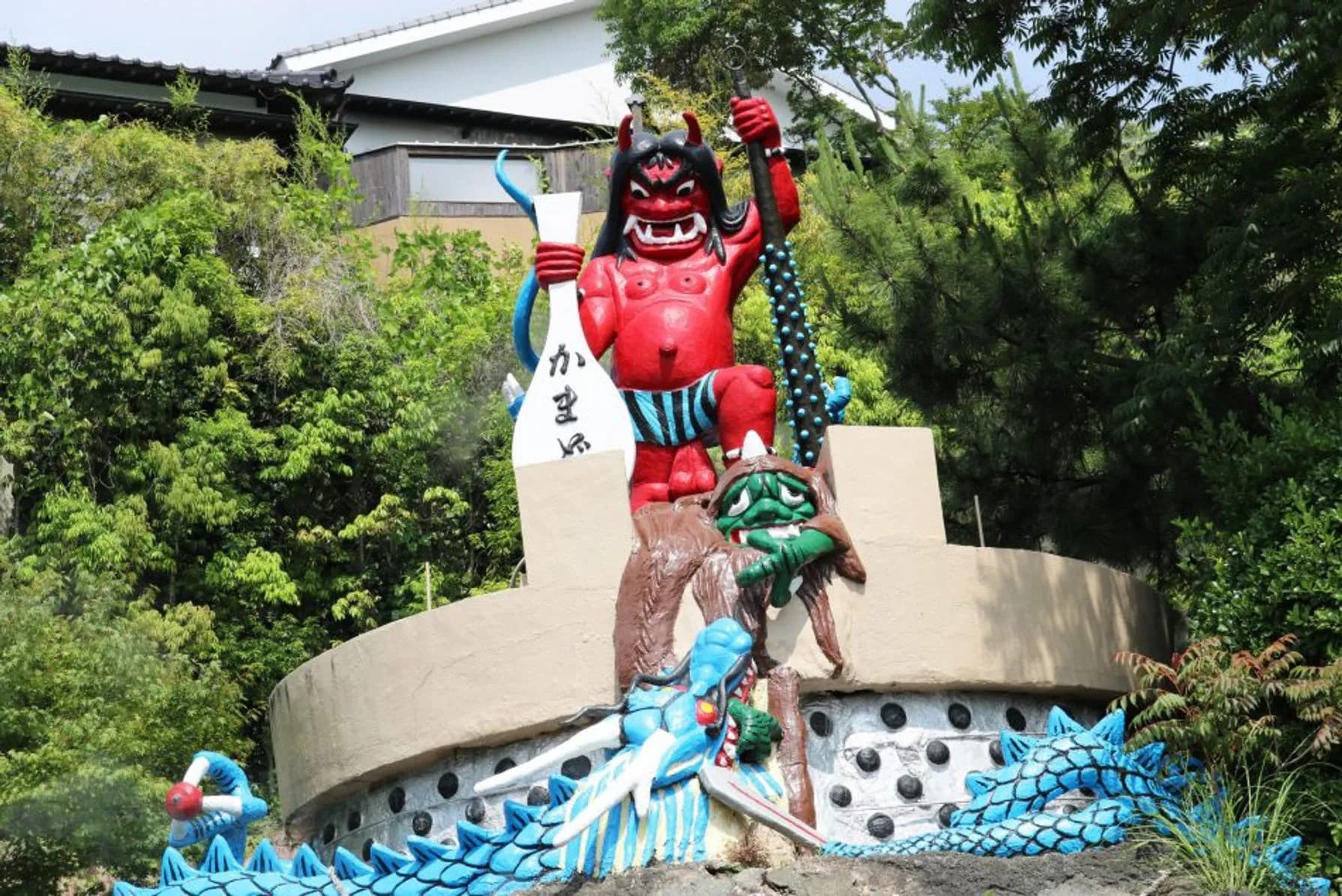
At the entrance to Kamado Jigoku, you’ll meet an oni (鬼) with horns holding a club, portrayed as a threatening and frightening figure.
- Hours: 08:00–17:00
- Closed: Open year-round
- Admission
- Single hell: Adult 500 yen / Elementary & junior high 250 yen
- Common ticket (7 hells): Adult 2,400 yen / Elementary & junior high 1,200 yen
4) Takegawara Onsen ♨️
竹瓦温泉
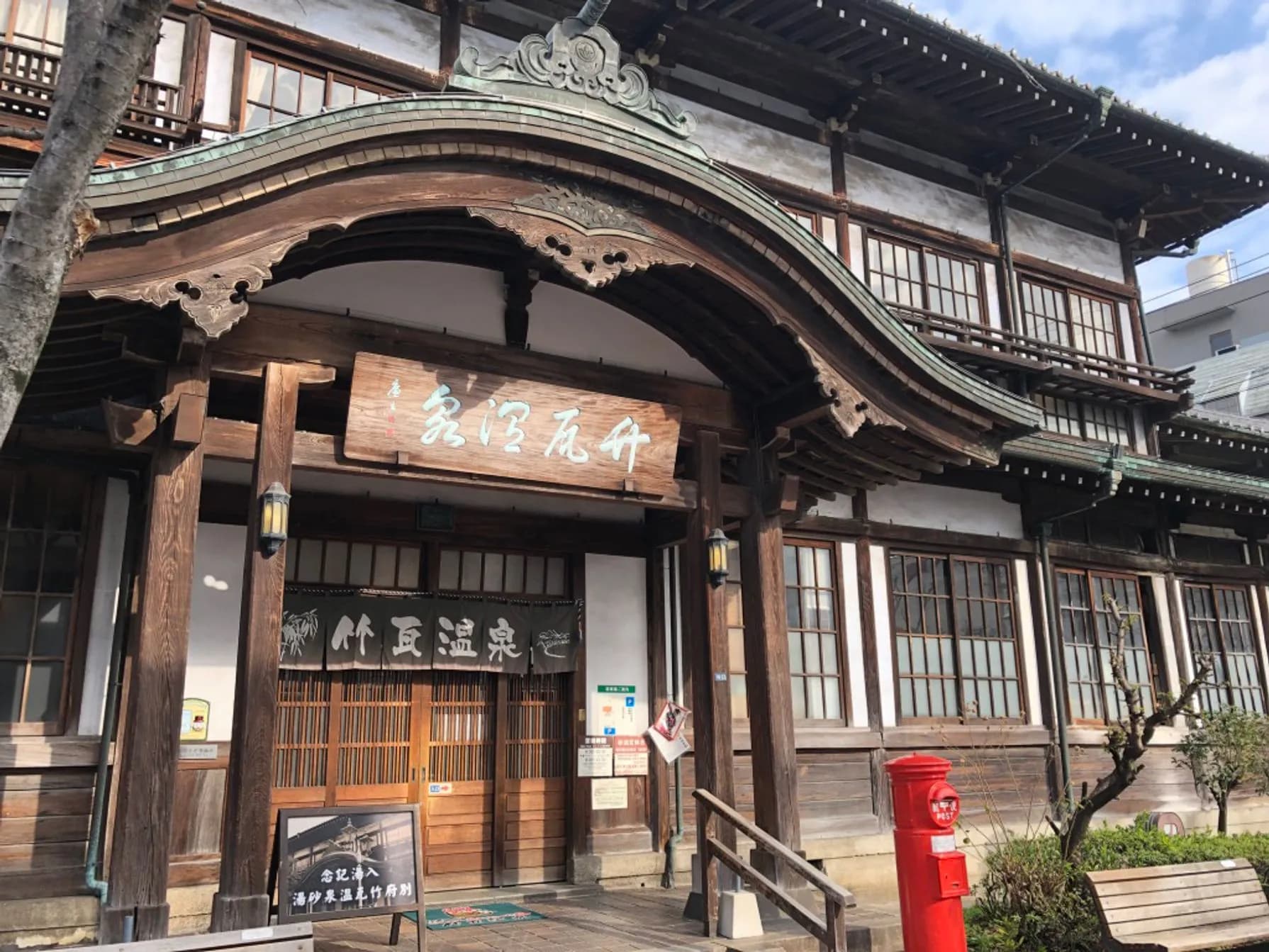
If you visit Beppu—Kyushu’s most famous onsen town—and still don’t get to soak in an onsen, it can feel like you missed something. In that case, the perfect last stop is Takegawara Onsen. For just 300 yen, you can enjoy a bath without cost burden.
Takegawara Onsen uses hot spring water drawn up in a traditional way, and the water can be extremely hot because the temperature is not adjustable, so be careful.
Also, the 300-yen admission does not include a towel, so if you don’t bring one, you’ll need to purchase one separately—and it may even cost more than the admission. If you enter without a towel, you could end up in the unfortunate situation of having to dry yourself with the clothes you wore, so keep that in mind.
- It’s within walking distance from the Kitahama stop, and it also works well as part of an itinerary like Takasakiyama → soak at Takegawara → continue to the Beppu Hells tour.
- Hours: 06:30–22:30
- Closed: The third Wednesday of each month (If it falls on a public holiday, closed the next day)
- Admission: Adult 300 yen / Child 100 yen
- Sand bath (includes sauna): 1,500 yen (includes onsen bathing)
- Towels for purchase: Original towel 350 yen / Bath towel 1,200 yen, etc.