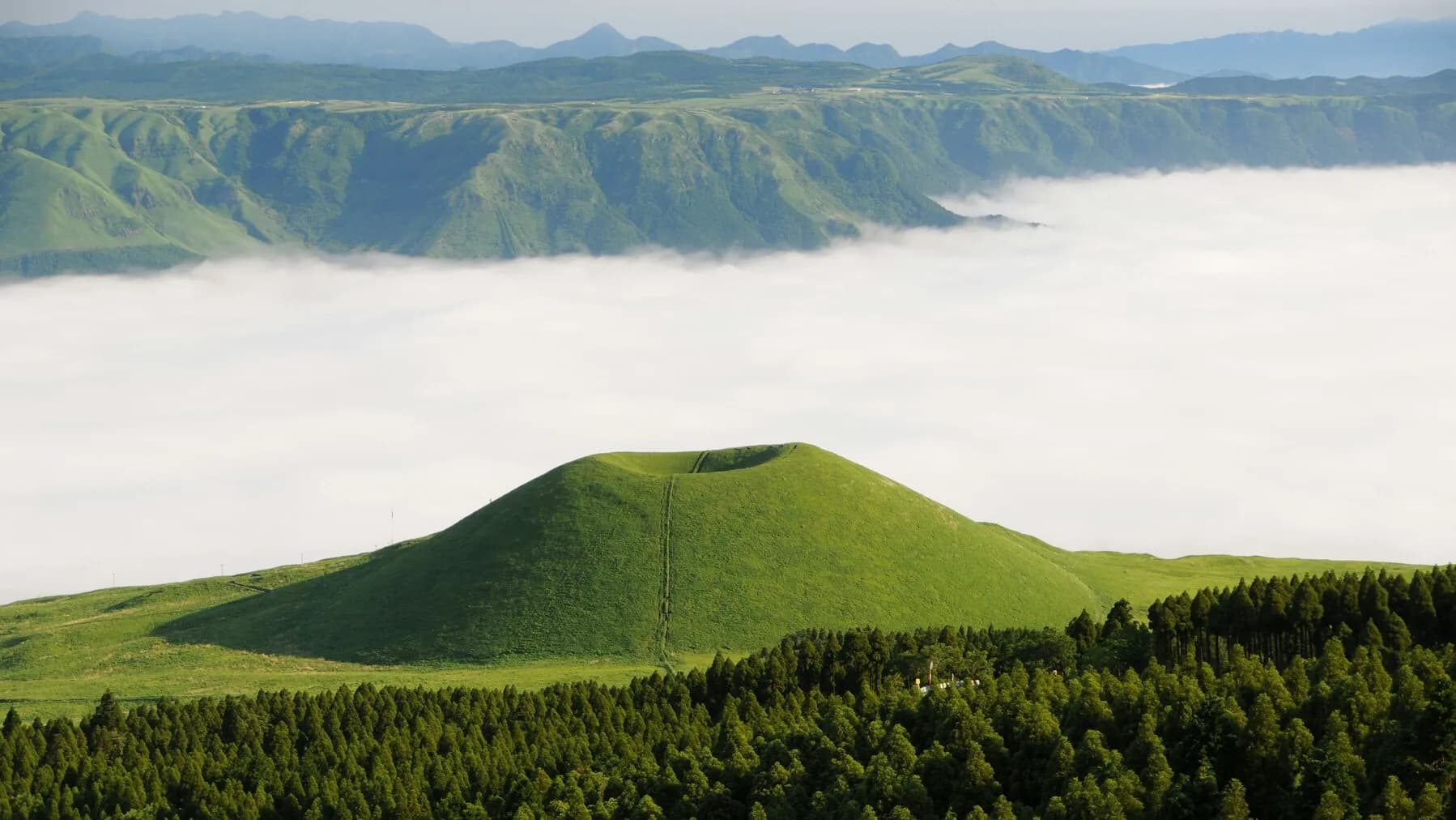
Mt. AsoThe grandeur of a living active volcano
阿蘇山
Mt. Aso is an active volcano that is still erupting today, and it’s a place where you can physically feel the grandeur and mystery of nature.
On October 8, 2016, a **large-scale eruption—the biggest in 36 years—**occurred, sending volcanic ash up to 3.5 km into the sky. In the aftermath, entry restrictions were repeatedly enforced, and after March 23, 2023, the eruption alert level was lowered to 1, so entry is currently possible.
However, entry may be restricted depending on the crater conditions on the day, so it is best to check the status on the official website before visiting.
In the past, a ropeway (cable car) operated here, but it is now closed. From the Aso Sanjo Terminal to the crater entrance, you can only travel by shuttle bus. This shuttle bus cannot be ridden with the Sankyu Pass, and you must pay separately on site.
Even if you can’t reach the summit due to local conditions, the vast grassland of Kusasenri (草千里) located midway up Mt. Aso delights travelers with scenery that looks like a Windows desktop wallpaper.
However, since sulfur dioxide (SO₂) gas is emitted at the crater, people with asthma, respiratory diseases, or heart conditions are prohibited from entering. If this applies to you, be especially cautious.
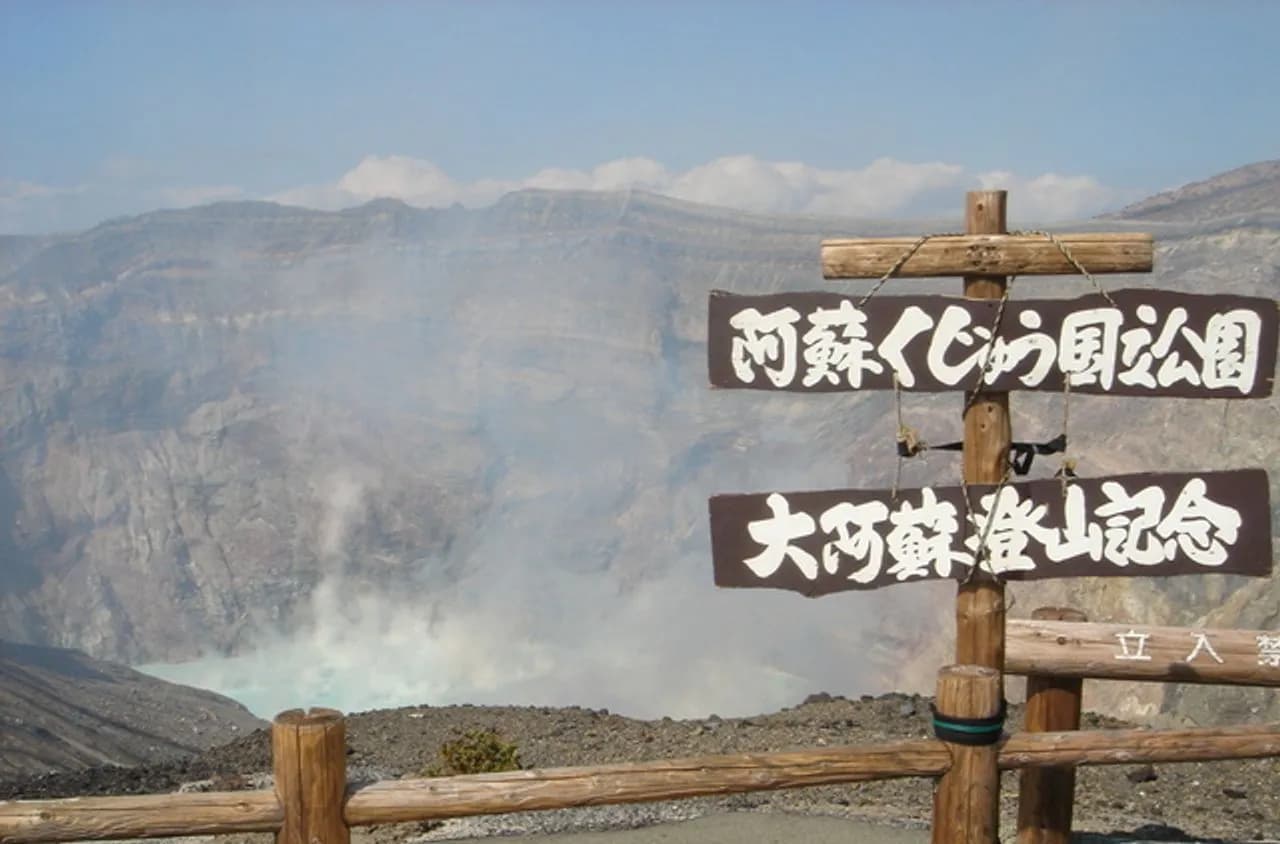
Other unique ways to enjoy Mt. Aso include horseback riding experiences or helicopter tours over the crater, and if you’re interested, it’s also recommended to book in advance and give it a try.
- Kusasenri
- Kusasenri (草千里) literally means “a grassland spread out for a thousand ri,” and it is a vast prairie spread out on the mid-slope of Mt. Aso. You can see cows and horses grazing in various spots.
- Aso Volcano Museum
- Hours: 09:00 ~ 17:00 (last entry 16:30)
- Closed: None
- Admission: 1,100 yen (13+), 550 yen (under 13), free (under 6)
How to get there
① By train
- Get off at Aso Station via the Kyushu Transversal Train
- From Kumamoto Station: 2 times daily
- From Beppu Station: 1 time daily
- From Oita Station: 2 times daily
- Requires 1 transfer from Kumamoto, and 3 transfers from Beppu
- Buses departing Aso Station connect with trains departing Kumamoto, so departing from Kumamoto is recommended over Beppu
② By bus
- Get off at Aso Station via the Kyushu Transversal Bus
- Refer to the “Sankyu Pass, bus reservations, Nimmai/Yonmai Kippu” section for related information
- Aso Station → Aso Sanjo Terminal timetable
- Sankyu Pass usable, one-way 730 yen, elementary school and under 370 yen
- Aso Sanjo Terminal → Crater stop shuttle bus timetable
- Sankyu Pass not accepted, one-way 600 yen, elementary school and under 300 yen
- After sightseeing, return in reverse order or walk to Aso Sanjo Terminal (about 15 minutes)
- Eat/rest in front of the Aso Volcano Museum, then return to Aso Station
- Sankyu Pass usable, one-way 570 yen, elementary school and under 290 yen
- Aso Crater Line 1-day pass: usable for Aso Station - Kusasenri - Aso Sanjo Terminal (adult 2,000 yen, child 1,000 yen)
Because buses from Aso Station to the crater do not run frequently, it’s essential to check the timetable in advance and plan accordingly.
KurokawaThe essence of a traditional Japanese onsen town
黒川
One element that simply can’t be left out of a Kyushu trip is onsen.
Beppu and Yufuin are also well known, but if you want to feel the true atmosphere of an onsen town, Kurokawa is a better fit.
If you want to properly enjoy the iconic image of Japanese hot springs—open-air baths (露天風呂)—Kurokawa is the most ideal place.
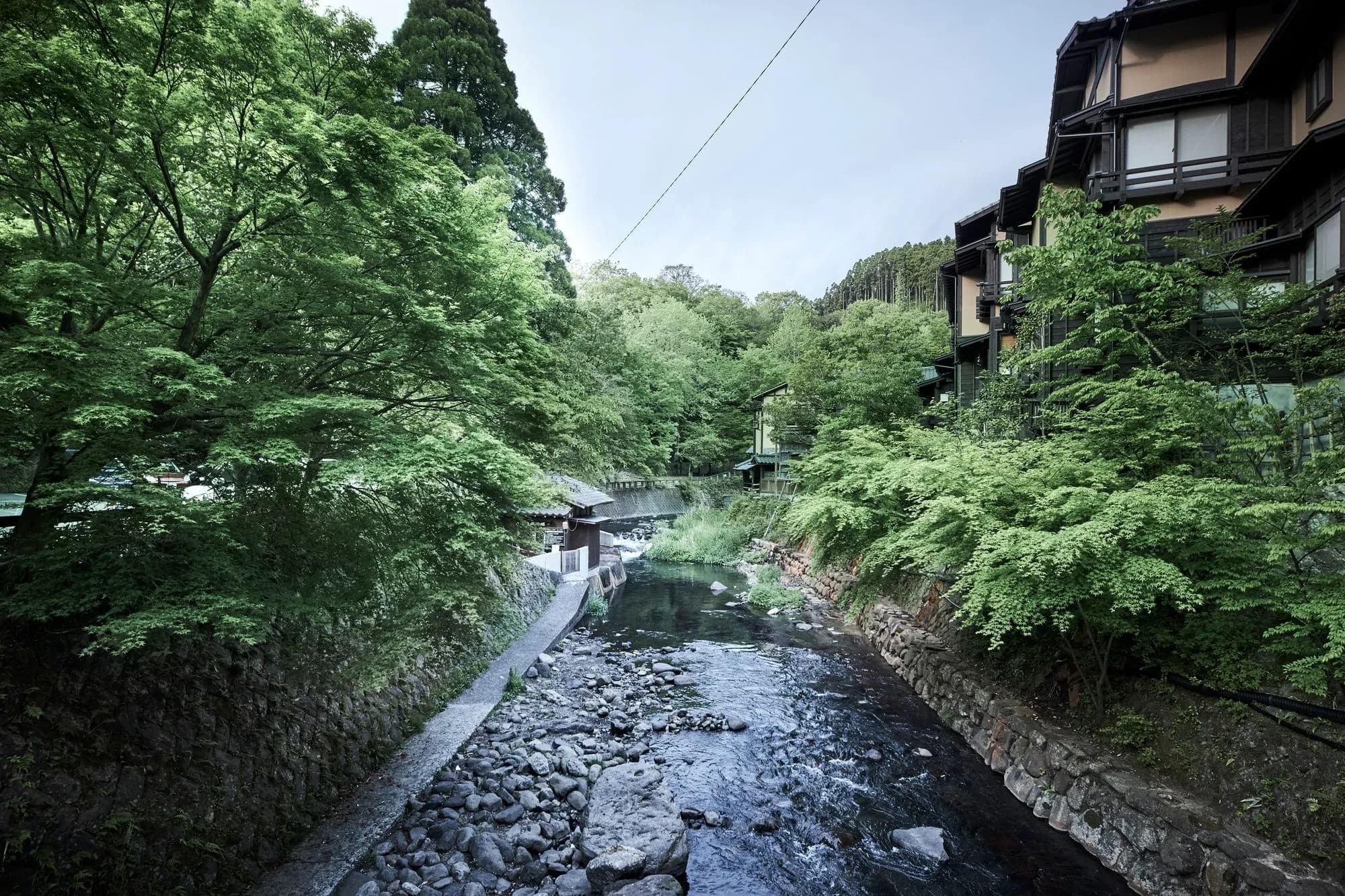
Kurokawa (黒川) means “black stream,” derived from the fact that the brook running through the center of town looks dark due to volcanic rock.
It’s a typical rural onsen village deep in the mountains—so much so that the phrase “a town for onsen” feels fitting.
Located in Minamioguni Village north of Mt. Aso in Kumamoto Prefecture, it was selected as #1 onsen town Japanese people most want to live in, and it has also been awarded two stars in the Michelin Green Guide.
Yufuin and Beppu are easy to access, so they attract many tourists, but Kurokawa maintains a quieter mood because public transportation access is not convenient.
There are about 30 ryokan, and each typically has only around 20 rooms, making it ideal for those who want a quiet onsen retreat.
Kurokawa Onsen Ryokan Cooperative Association1) How to enjoy the trip
Because Kurokawa is a quiet onsen village, there aren’t special sightseeing spots, but it offers an environment perfect for onsen and rest in nature.
A day trip is possible, but considering the inconvenient transportation, an overnight stay is recommended.
Most ryokan offer an option to use the onsen only for about 500–700 yen, so you can enjoy not only open-air baths but also cave baths and other styles without cost burden.
If you plan to visit three or more onsen, it’s economical to purchase the bath pass booklet “Nyuto Tegata (入湯手形)” for 1,500 yen. It also makes a great souvenir.
There’s even a theory that this Nyuto Tegata played a big role in popularizing Kurokawa.
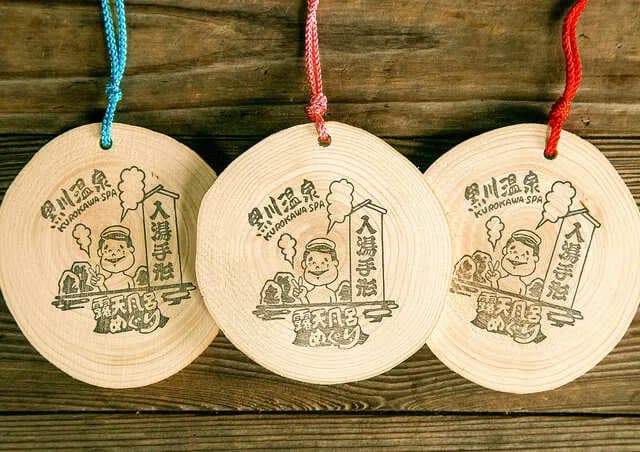
With the Nyuto Tegata, you can use three onsen, or two onsen + exchange one stamp for food or souvenirs. You can buy it at participating ryokan or at Kazenoya (風の舎).
See Kurokawa Onsen informationIf you do a day trip from Fukuoka to Kurokawa Onsen only, it may feel a bit lacking. In that case, a useful option is a bus tour,
as there are courses that let you visit not only Kurokawa Onsen but also popular areas like Hita, Mt. Aso, and Yufuin together. So if you want to enjoy multiple highlights in one day without the burden of transportation, taking a bus tour can be a great choice.
2) How to get there
Kurokawa is an area accessible only by bus, and there are three direct buses per day from Fukuoka.
So if you plan to visit, using the Sankyu Pass is efficient.
Even if you only have the Northern Kyushu Rail Pass, you can arrive by taking trains to nearby stations such as Hita, Beppu, Mt. Aso, or Yufuin and then transferring to a bus.
By bus
- Departing from Fukuoka
- Use the Kyushu Transversal Bus timetable
- Get off at Kurokawa Onsen (黒川温泉) bus stop
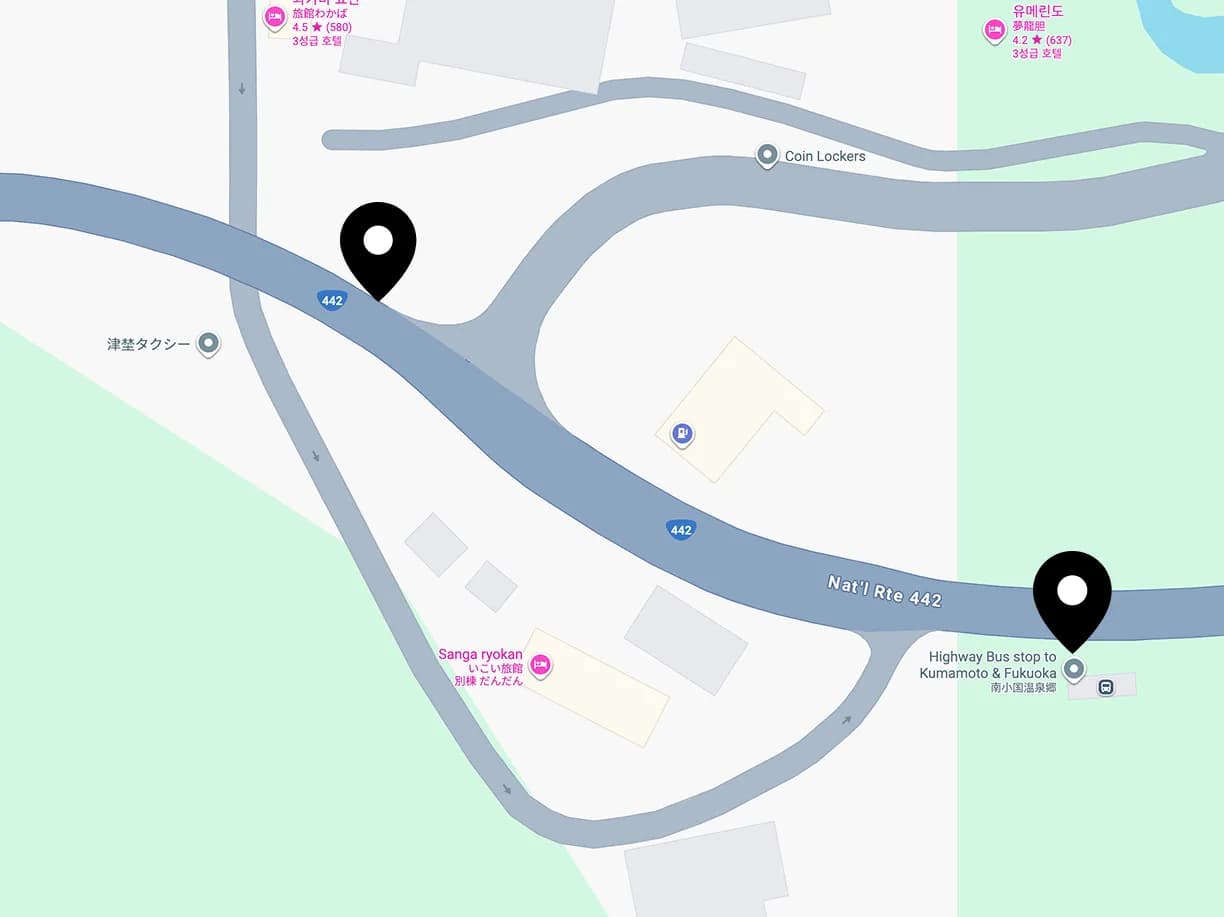
- Left stop: Departing Fukuoka/Kumamoto → arrive / board toward Yufuin/Beppu
- Right stop: Departing Yufuin/Beppu → arrive / board toward Fukuoka/Kumamoto
3) Recommended ryokan
A day of enjoying kaiseki cuisine and onsen bathing in a quiet mountain valley will be, in itself, a perfect comma of rest in your journey.
How about turning off your phone for a while, forgetting the outside world, and fully enjoying a night at a ryokan?