
PrefaceWhen you need a transport pass and how to use it
If you plan to travel by rental car for the entire trip, you don’t need to buy a transport pass separately. However, if you rent a car only for part of the trip, or plan to use bus tours or rail in certain areas, it can be confusing to decide which pass to choose.
For this reason, TourCast provides the following flowchart so travelers can easily pick the right pass depending on their situation.
Exclusive TourCast Tips!
Choose a Pass Easily with a Flowchart
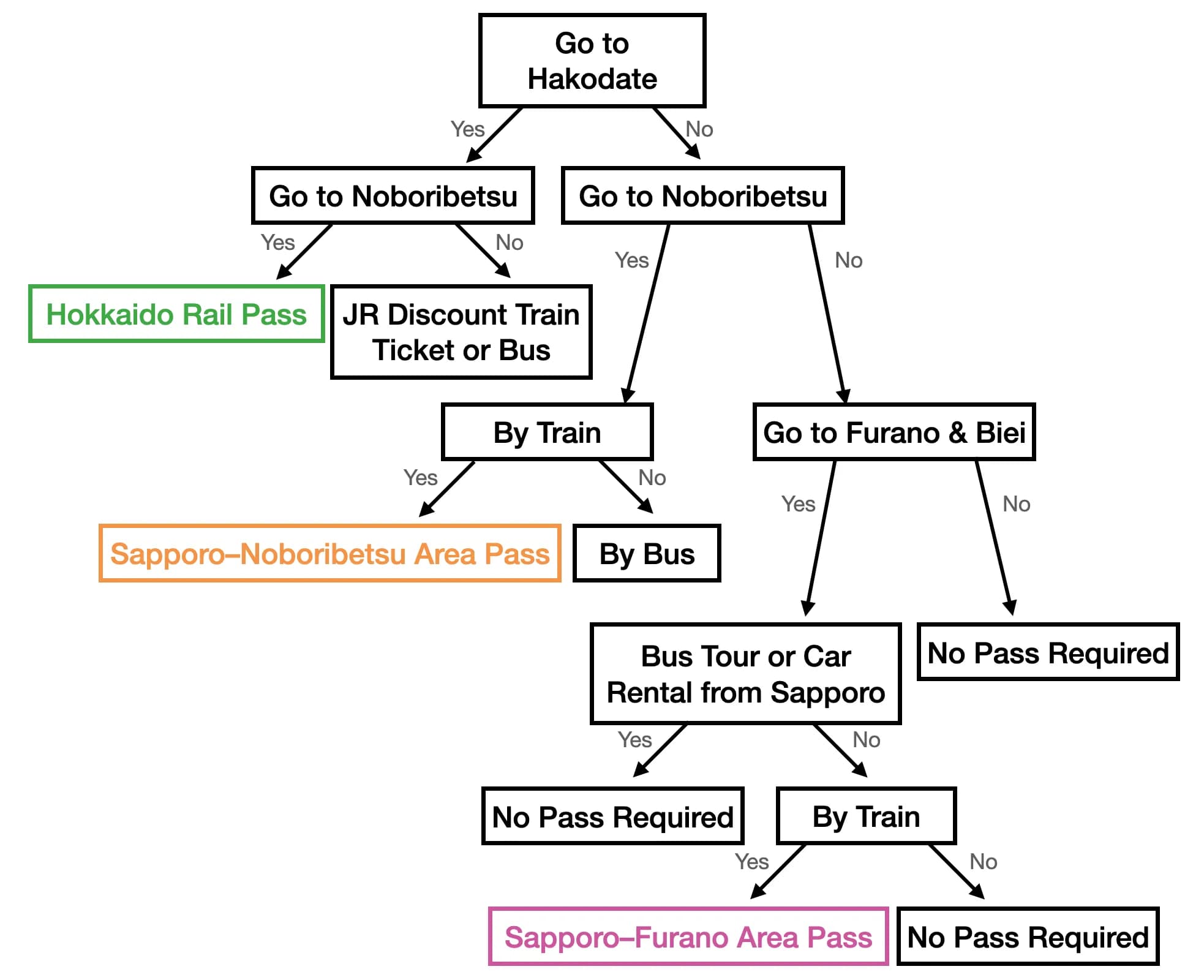
The areas most frequently visited on a Hokkaido trip are Hakodate, Noboribetsu, Furano, and Biei. So, if you separate transport passes based on whether you will visit these areas, choosing becomes much easier. The first thing to decide is whether you will visit Hakodate.
Let’s go through the conditions one by one in the order below.
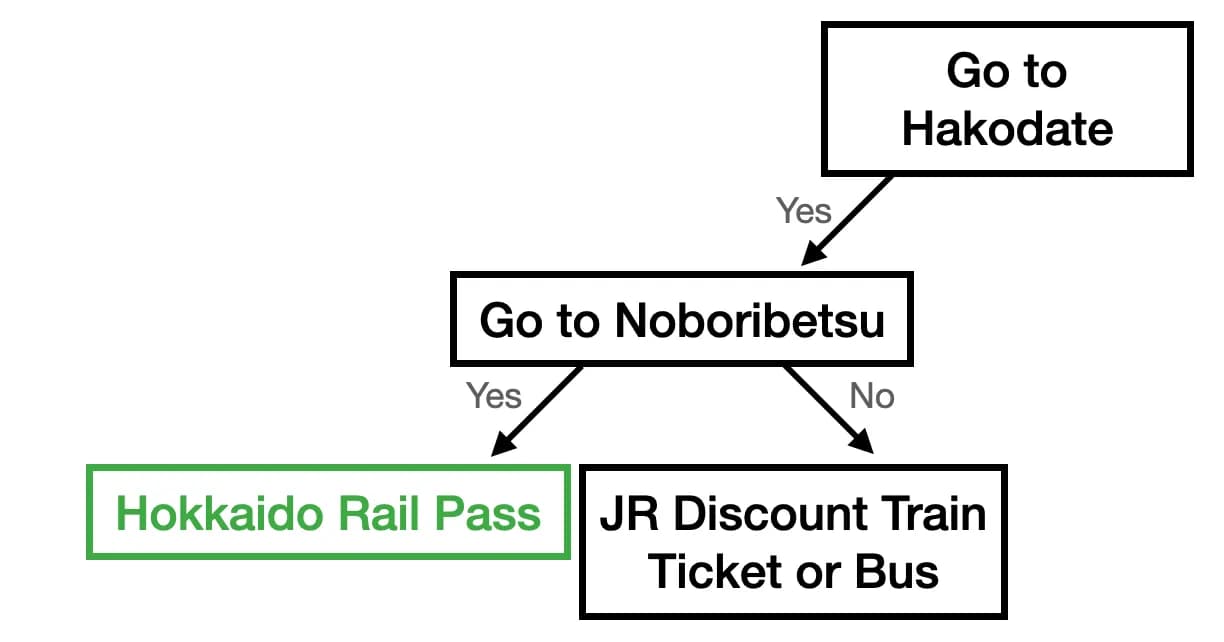
If you will visit Hakodate, the next step is to decide whether you will also visit Noboribetsu.
This is because there is no highway bus between Hakodate and Noboribetsu, and you can only travel by train.
Since the one-way reserved-seat fare on this section is about 7,790 yen, if you plan to visit both areas, it is better to buy the Hokkaido Rail Pass.
- Sapporo–Hakodate reserved seat (one way): 9,770 yen
- Hokkaido Rail Pass (5-day): 22,000 yen → great value even just for the round trip + New Chitose Airport transfers
If you are visiting only Hakodate, you can also save money by buying the discount ticket introduced in 'Common Part 2 - JR Pass / Discount Train Reservations', or by using early-discount highway bus fares.
- Sapporo–Hakodate highway bus (early discount): from 3,920 yen one way
Next, let’s look at the case where you don’t go to Hakodate and visit only Noboribetsu.
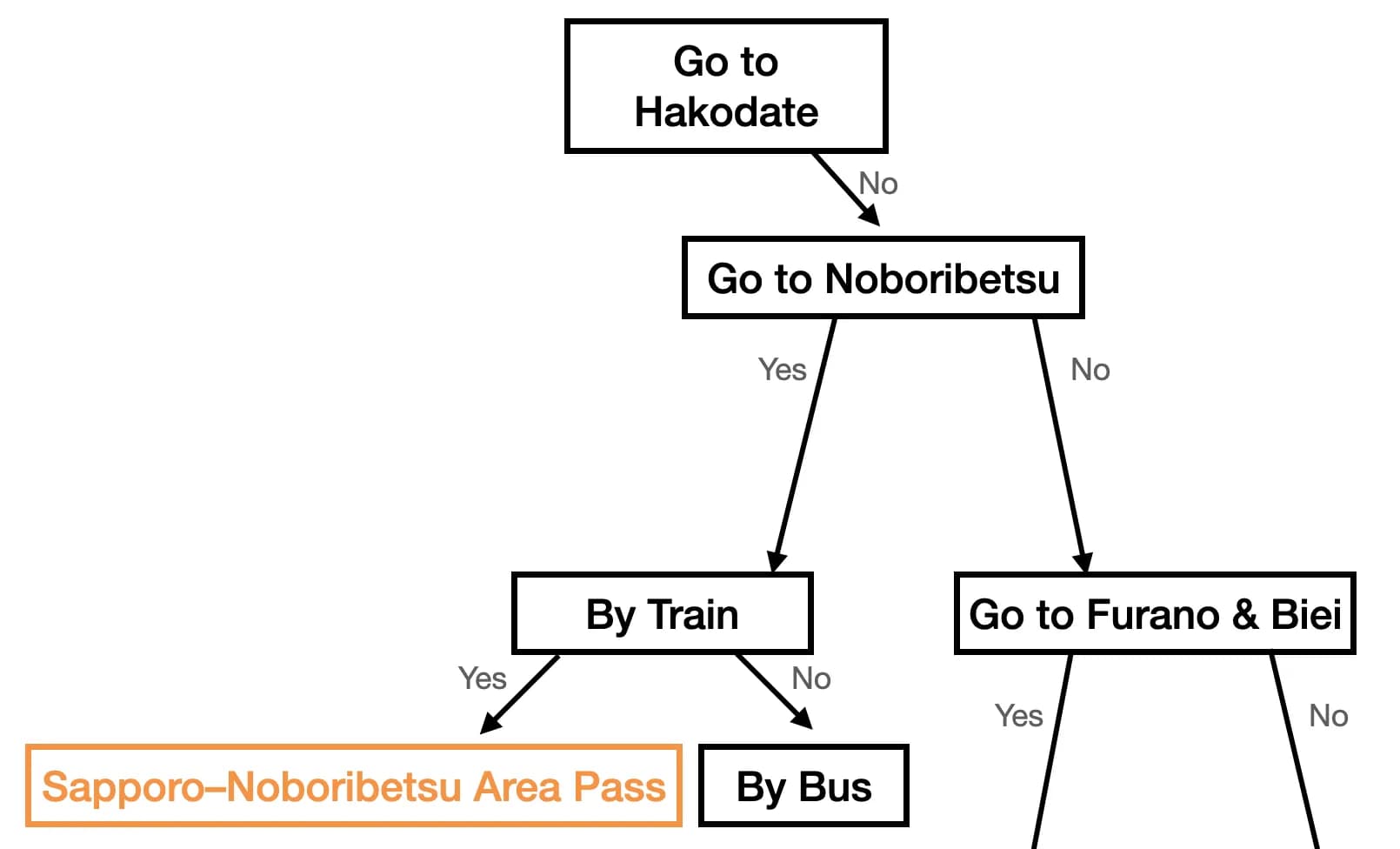
If you take the train, the most efficient option is the Sapporo–Noboribetsu Area Pass, though you can also use a highway bus.
- Sapporo–Noboribetsu reserved seat (one way): 4,890 yen
- Area Pass (4-day): 10,000 yen → worth it with just a round trip + New Chitose Airport transfers
- Highway bus (one way): about 2,500 yen (reservation required)
Finally, this is the case where you don’t visit Hakodate or Noboribetsu, and travel only to Furano and Biei.
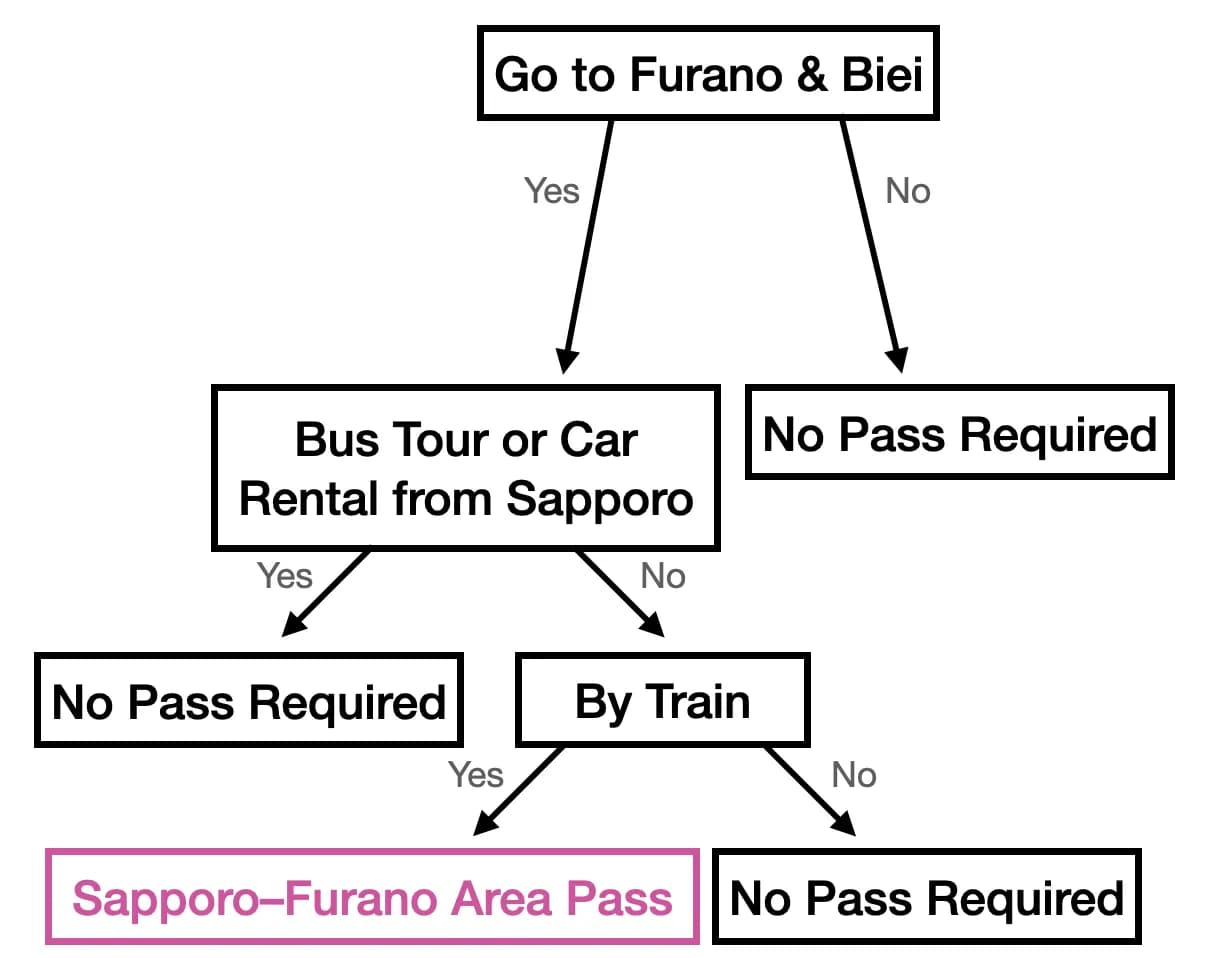
In this case, if you plan to use a bus tour or rental car, you don’t need a rail pass.
However, if you plan to travel to Furano and Biei by train via Asahikawa, or by using seasonal trains (Lavender Express, Norokko Train), then the Sapporo–Furano Area Pass is useful.
- Sapporo–Asahikawa reserved seat (one way): 5,440 yen
- Sapporo–Furano reserved seat (one way): 5,440 yen
- Area Pass (4-day): 11,000 yen → pays for itself with just a round trip
- Highway bus to Asahikawa: 2,500 yen one way / Furano: 2,700 yen one way
- If you use coupon tickets, you may be able to ride buses even cheaper
How to Check Train TimesJR Hokkaido official website guide
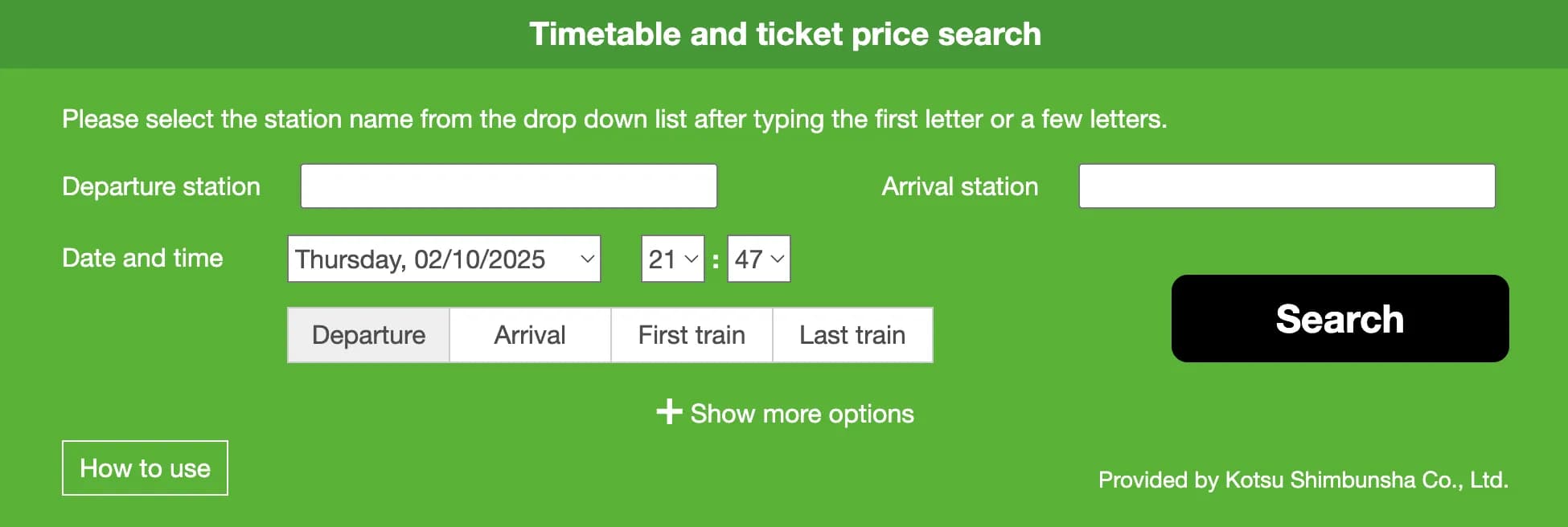
On the JR Hokkaido official website, you can search by entering the departure and arrival stations in English, setting the date and time, and then pressing the Search (English version) button.
- Departure: Search trains departing after the specified time
- Arrival: Search trains that arrive by the specified time
- First: Show the first train of the day
- Last: Show the last train of the day
Example search results
Below is a sample result for the New Chitose Airport ↔ Sapporo Station section.
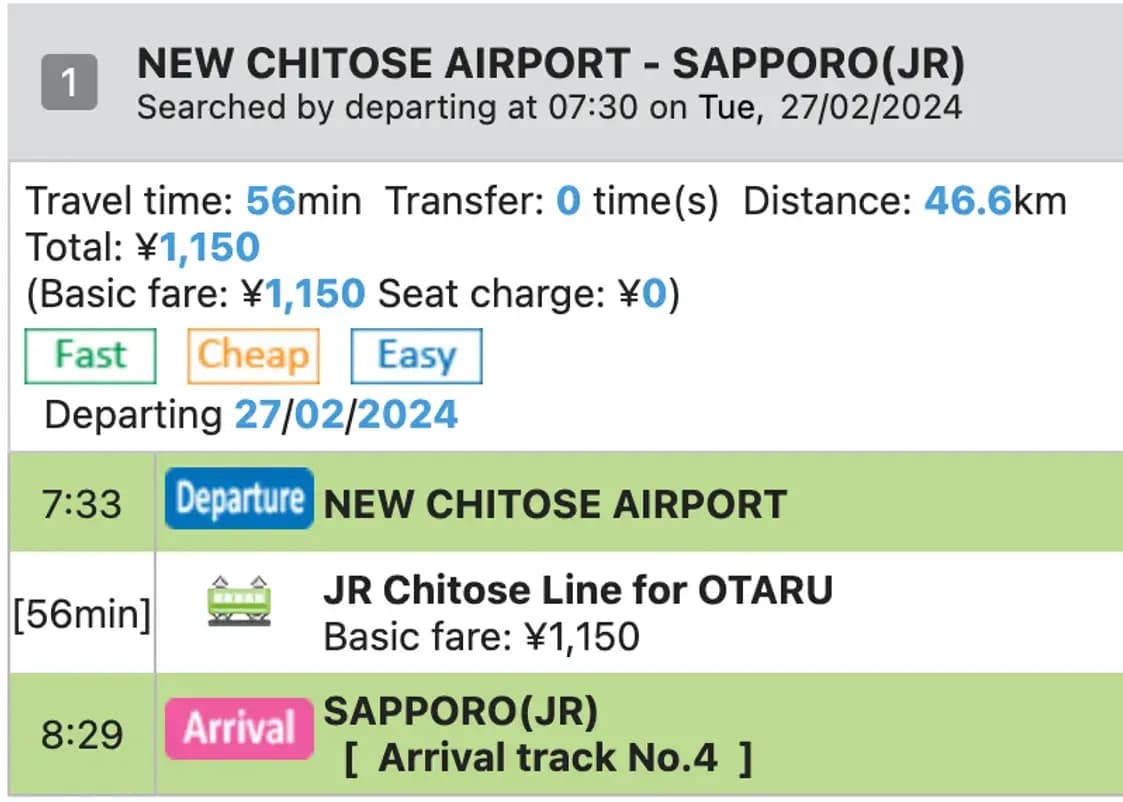
From the image above, you can see the train departs New Chitose Airport at 07:33,
takes 56 minutes, and costs 1,150 yen one way.
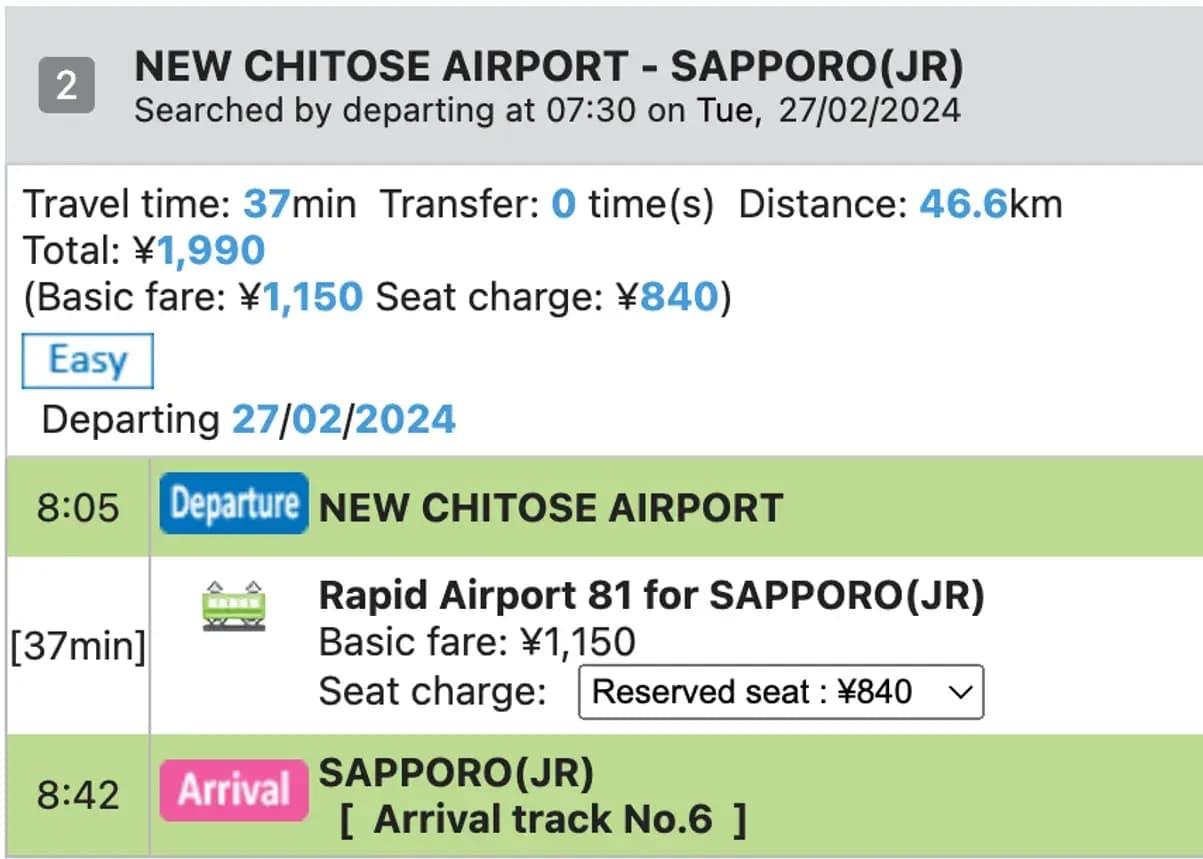
This is the same route, but the image above shows a 37-minute travel time and an additional reserved-seat fee of 840 yen.
More precisely, the first image is a local train (not a limited express), so it stops at every station, takes longer, and has no reserved seats. The second image is a limited express, stopping only at major stations, and it has reserved seats (Reserved seat).
However, since the website currently does not explicitly label whether a train is limited express or local, you need to judge it by whether Reserved seat is shown.
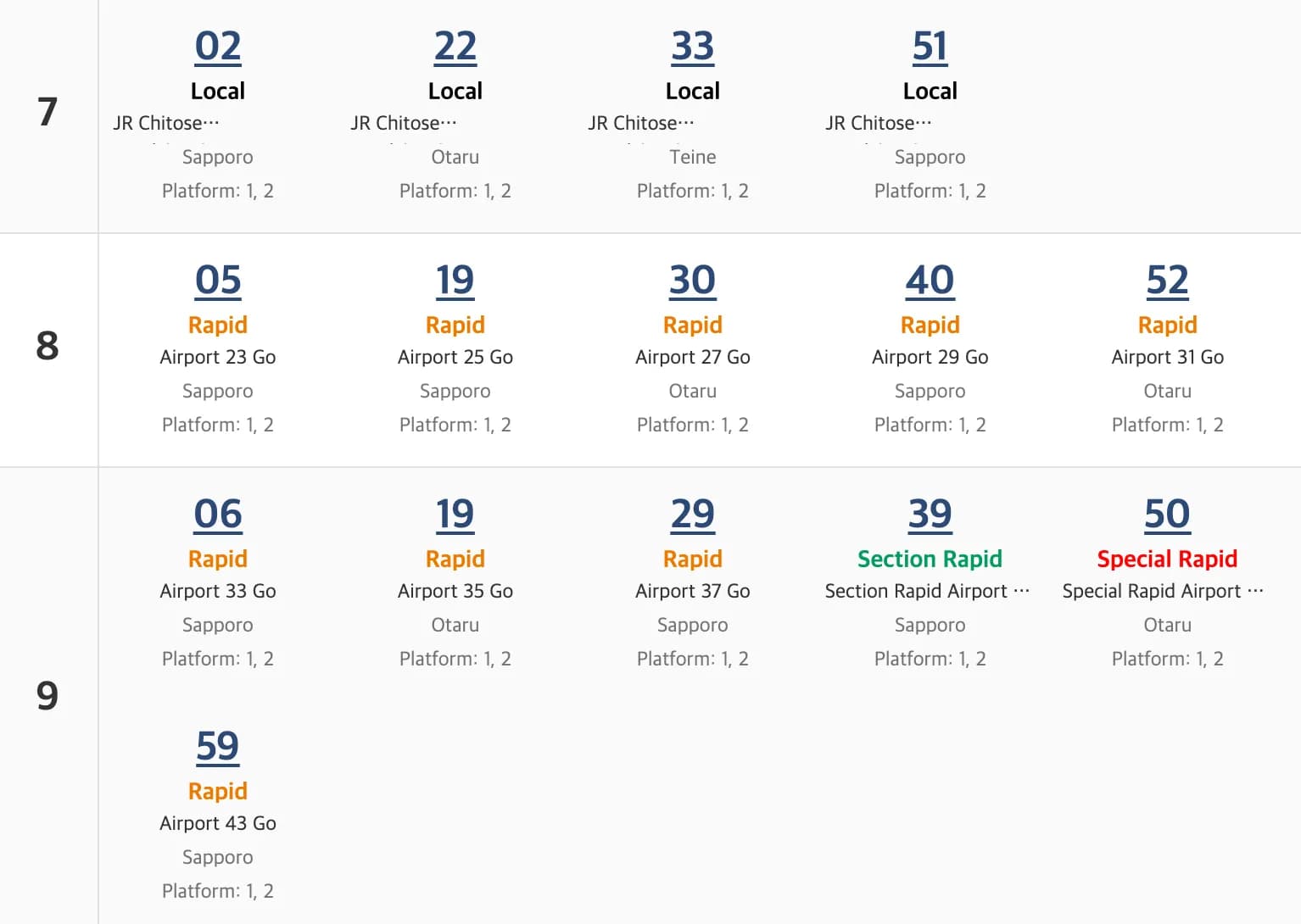
- Local trains departing from New Chitose Airport run only about five services in the 7 a.m. hour,
and outside that window, the schedule is mostly made up of rapid trains with both reserved and non-reserved cars. - Each regional guide page provides timetable links for major sections, so it’s efficient to refer to those when planning train travel on that route.
Handling Travel VariablesWeather delays, cancellations, and hotel strategy
In Hokkaido, incidents like wild animals such as deer or Japanese serow entering the tracks, and especially winter heavy snow and strong winds, often cause trains to run late or be canceled.
For this reason, it’s best to check JR Hokkaido train operation information frequently and adjust your itinerary flexibly.
If service is suspended or delayed, you should immediately check the fastest next train and reschedule your plan, and if needed, make a reservation on the spot.
This can also lead to situations where you must change or cancel accommodations, so when booking, it’s important to check cancellation, change, and refund policies in advance.
- If a delay occurs, you can print a Train Delay Certificate (Japanese).
Also, it is safer to stay in Sapporo on the last night of your trip.
For example, if you plan to spend the last day relaxing at a Noboribetsu ryokan and enjoying an onsen, bad weather or transport disruptions can make it impossible to reach the airport if trains stop running. So, it is recommended to end your trip in Sapporo, where public transport connections are most reliable.