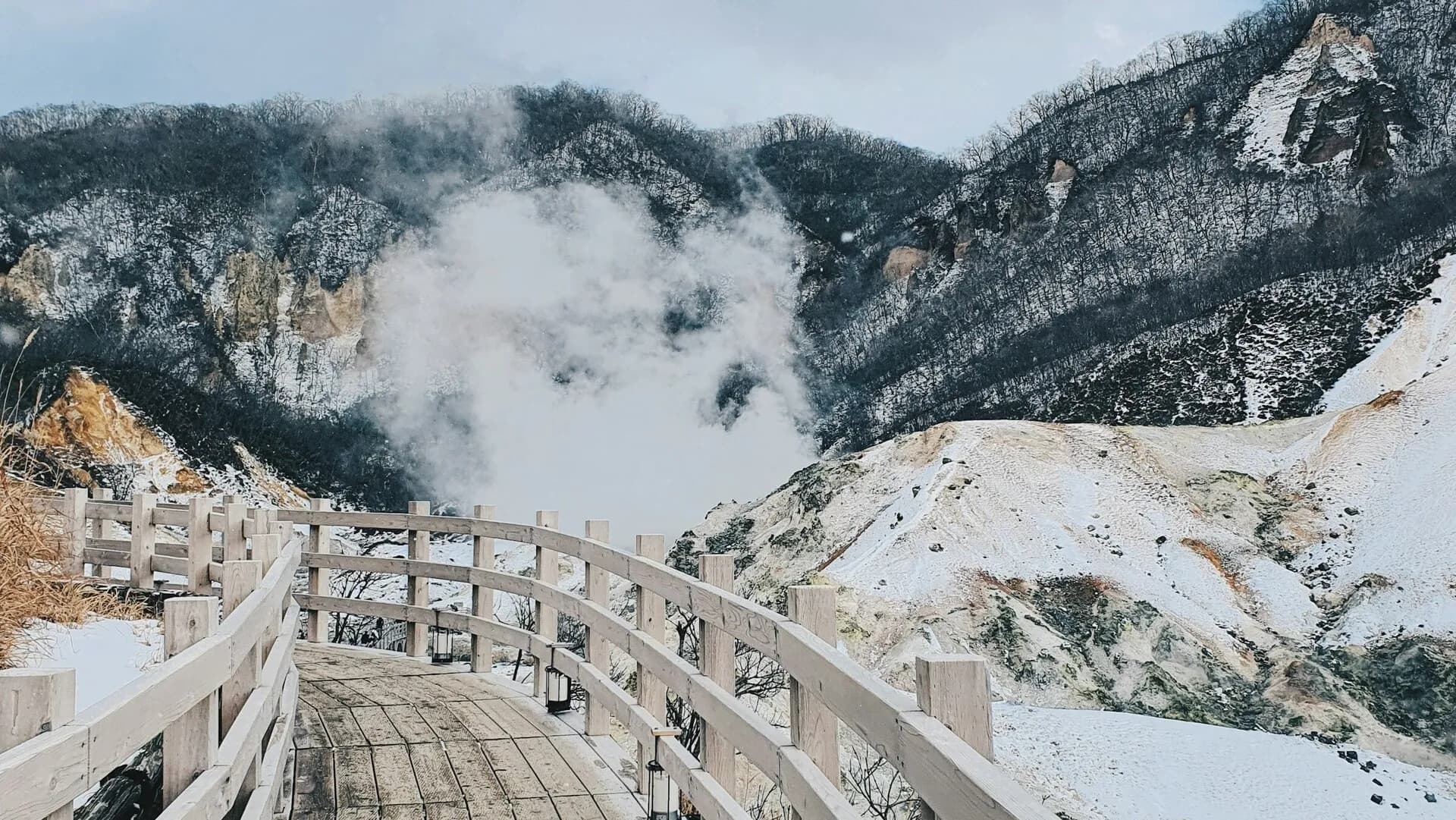
IntroductionA healing destination where Hell Valley meets hot springs
Noboribetsu is one of the most famous hot spring towns in Hokkaido. In addition to enjoying onsen baths with natural hot spring water, you can visit many attractions such as Hell Valley, hot spring streams, hot spring marshes, the Bear Park, and Date Jidaimura (historical theme village).
From Sapporo, a day trip is easy. If you travel to Hakodate, it is also a good idea to stop at Noboribetsu on the way.
If you have more time, a one-night stay at an onsen hotel or ryokan is highly recommended.
Please note that a sulfur smell spreads across the town. Travelers sensitive to smells should be aware. Official Noboribetsu Tourism Association Website Noboribetsu Day-Use Onsen GuideRecommended Hotels & RyokanNoboribetsu accommodation guide
No rates are available for the stay from 2026-10-15 to 2026-10-16. Please try different dates.
How to Get to NoboribetsuTravel time and access by transport
1) By Train
- Train timetable from Sapporo Station
- Train timetable from Noboribetsu Station
- For rail pass selection, see the separate guide (Part 1)
2) Sapporo – Noboribetsu by Bus
Travel time is about 1 hour 50 minutes. One-way fare is 3,000 yen.
Round-trip tickets and multi-ride tickets are not available on this route.
① Donan Bus (Hakucho Express) – Non-reserved seating
-
From Sapporo
- Bus Stop No. 7 in front of Sapporo Station
- Check timetable
- Get off at Noboribetsu Ekimae Bus Stop
- Noboribetsu is not the final stop. Please confirm your stop before riding.
-
From Noboribetsu
- Board at Noboribetsu Ekimae Bus Stop
- Check timetable
- Please check the timetable for “Noboribetsu Station Front”.
② Donan Bus (Onsen Express) – Reservation Required
-
From Sapporo
- Bus Stop No. 7 in front of Sapporo Station
- Check timetable
- Reservation required → Reservation link
-
From Noboribetsu
- Stops: Ashiyu Iriguchi, Park Hotel Mae, Dai-ichi Takimotokan Mae, Noboribetsu Onsen Chuo, Noboribetsu Onsen Terminal
- Check timetable
- Reservation required → Reservation link
3) New Chitose Airport → Noboribetsu by Bus
From New Chitose Airport, travel time is about 1 hour 15 minutes. The one-way fare is 1,950 yen.
This route is available only with advance reservation.
① Hayabusa Express – Reservation Required
- International Terminal Platform 86
- Domestic Terminal Platforms 29 / 2
- Check timetable
- Some buses do not stop at Noboribetsu Onsen Terminal. In this case, get off at Noboribetsu Station Front.
② Noboribetsu Onsen Airport Express – Reservation Required
- International Terminal Platform 86
- Domestic Terminal Platforms 29 / 2
- Check timetable
- Some buses stop at Noboribetsu Onsen Chuo, Dai-ichi Takimotokan Mae, Park Hotel Mae, and Ashiyu Iriguchi. Please check in advance.
③ Reservation Links
4) Noboribetsu Station → Noboribetsu Onsen Area
From Noboribetsu Station to the onsen town, take a local bus. Take a numbered ticket when boarding and pay the fare when getting off.
You can buy a round-trip ticket from the vending machine for a small discount (about 60 yen), but buying tickets may take time and you may miss your seat or the bus.
Timetable from Noboribetsu Ekimae (Station Front) Timetable from Noboribetsu OnsenExclusive TourCast Tips!
Noboribetsu Travel Tips: Best Bus Stops and Walking Routes
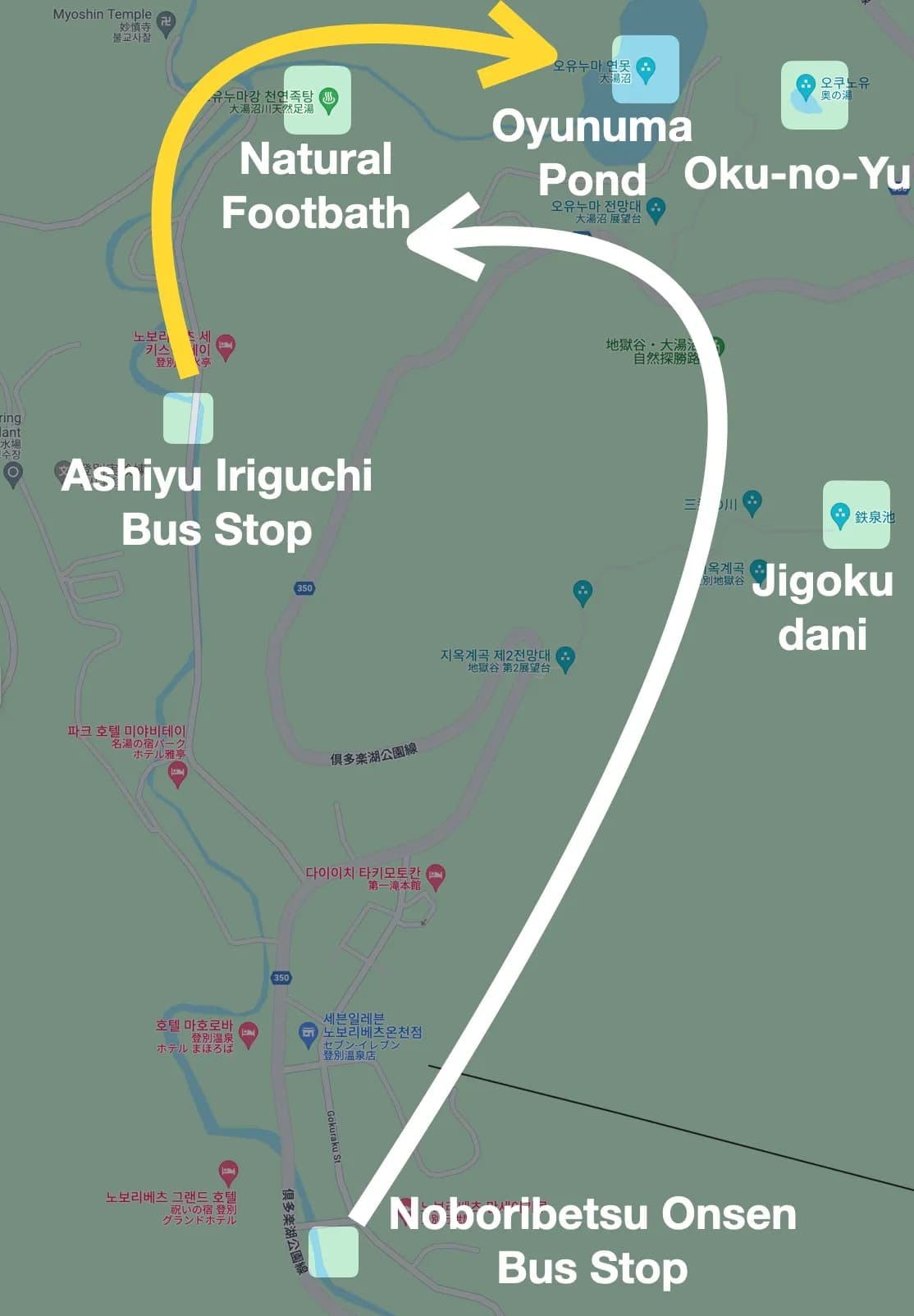
If you plan to visit the natural footbath, it is best to get off at Ashiyu Iriguchi Bus Stop.Please do not get off at Noboribetsu Onsen Bus Stop.
The two stops are about 1 km apart. From Ashiyu Iriguchi, it is about a 5-minute walk to the Oyunuma River Natural Footbath.(See the left arrow in the image below)
- Some buses from Sapporo or New Chitose Airport stop directly at Ashiyu Iriguchi Bus Stop. If the schedule fits, this option is convenient.
- Ashiyu Iriguchi (足湯入口) means “Footbath Entrance”.
- If you are comfortable with walking, you can get off atNoboribetsu Onsen Bus Stop, walk through the town, and follow this route: Hell Valley → Okunoyu → Oyunuma Pond → Natural Footbath.(See the right arrow in the image below)
- If you rent a car, the parking lot next to Oyunuma Pond is very convenient.
Hell Hot Springs & Natural FootbathThe power of boiling hot springs from underground
Lake Kuttara is a volcanic lake formed by past eruptions. In many places around the area, hot spring water and volcanic gas rise from the ground. For this reason, the area known as Hell Valley (Jigokudani) is the most famous sightseeing spot.
The name Hell Valley comes from the image of boiling hot spring water bubbling up from the ground, which looks like a scene from hell.
- The term “Hell Onsen” is also used in other regions of Japan.
In this area, you will see statues of Oni (Japanese demons), who are described as guards of hell and servants of King Enma. They have horns and carry clubs.
Main Highlights12 must-see spots in Noboribetsu
1) Enma-do (Enma Hall)
からくり閻魔堂
This hall features King Enma, the judge of heaven and hell. In normal times, he looks like a human.
At 10:00 / 13:00 / 15:00 / 17:00 / 20:00 / 21:00, he transforms into his true form.
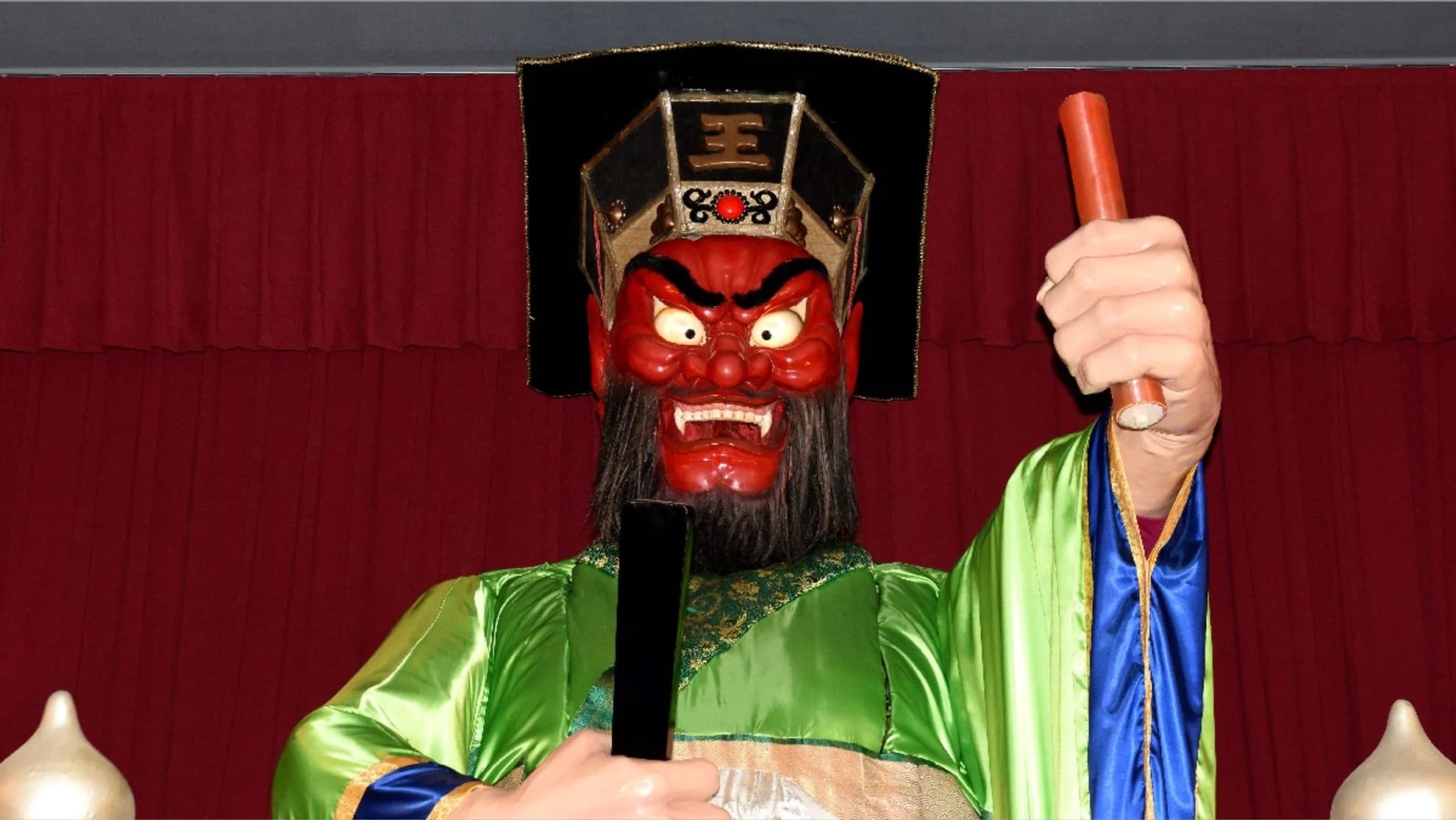
LocationI am Enma, the King of Hell!
Humans who do not fear hell!
2) Sengen Park Geyser
泉源公園の間欠泉
A geyser is a natural phenomenon where hot steam and water erupt due to underground pressure.
In Noboribetsu, the geyser erupts about every 3 hours and releases steam for about 50 minutes.
In front of the geyser, there are eight upside-down oni clubs, each with a symbolic meaning.
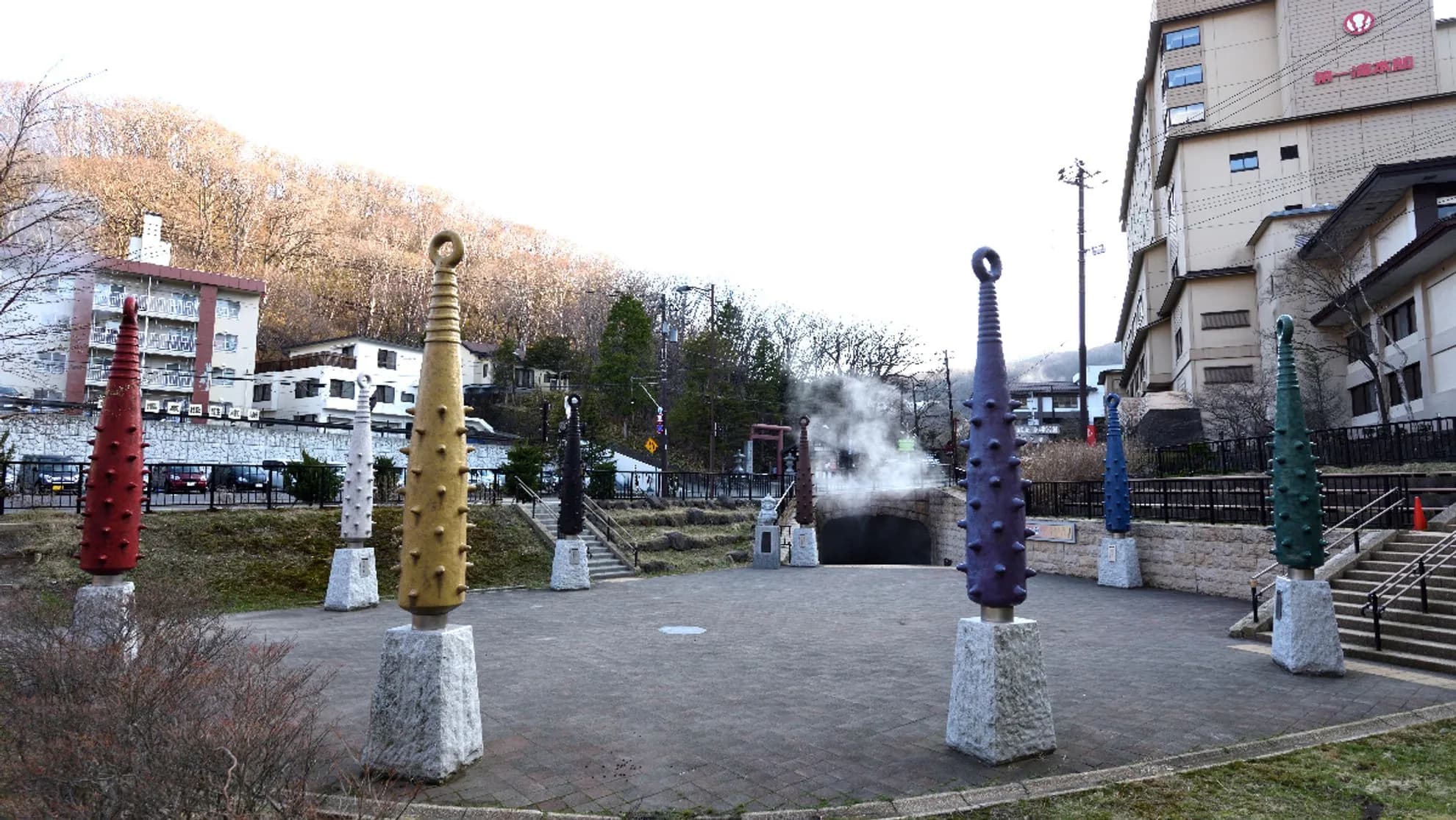
- 🟩 Green: Wealth
- 🟪 Purple: Career success
- 🟨 Yellow: Good relationships
- 🟥 Red: Family prosperity
- ⬜ White: Happy home
- ⬛ Black: Business success
- 🟫 Brown: Academic success
- 🟦 Blue: Long life
The sign shows nine clubs, but only eight are standing. Where is the last golden club?
A large golden club is displayed on the basement floor of the nearby Dai-ichi Takimotokan onsen hotel.
At this club, a sun-themed band performs every hour from 7:15 in the morning, and every 30 minutes from 20:00 to 23:00 at night.
However, this golden club is only a monument. The real golden club, symbol of the Five Yellow Earth Star, is said to be buried under Sengen Park.
Location3) Oni Shrine (Onibokora)
鬼祠(念仏鬼像)
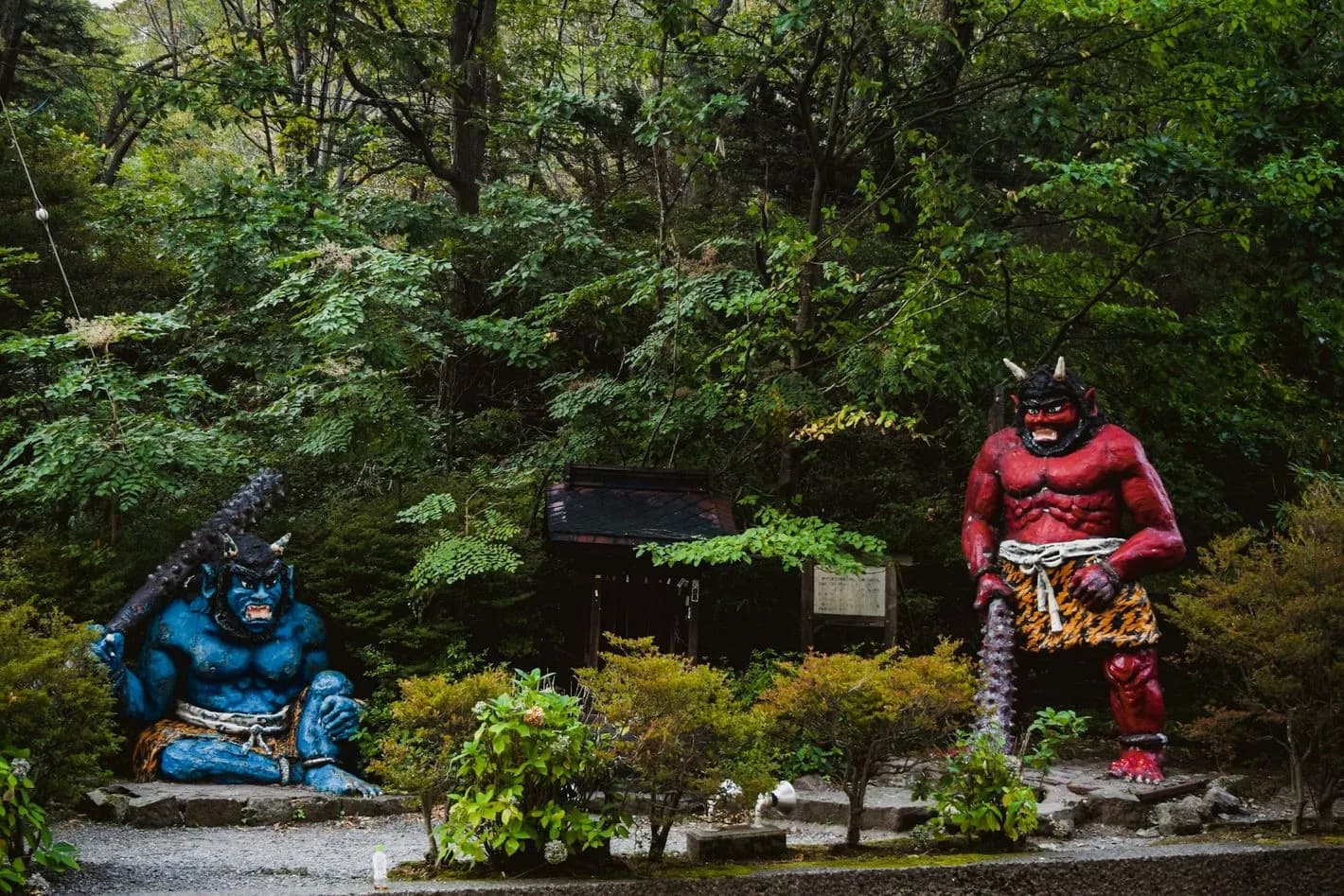
A shrine that enshrines the Nembutsu Oni statue. At the entrance, a blue oni and a red oni stand guard.
4) Yakushi Nyorai Hall
薬師如来
In 1861, a sulfur miner washed his eyes with hot spring water here and was cured of an eye disease.
Since then, it has been called the “Eye Onsen”.
- Yakushi Nyorai is known as the Buddha of healing.
5) Hell Valley (Jigokudani)
登別地獄谷
A valley with a strong sulfur smell and clear traces of volcanic activity from 10,000 years ago.
Steam rises from the ground, creating a dramatic landscape.
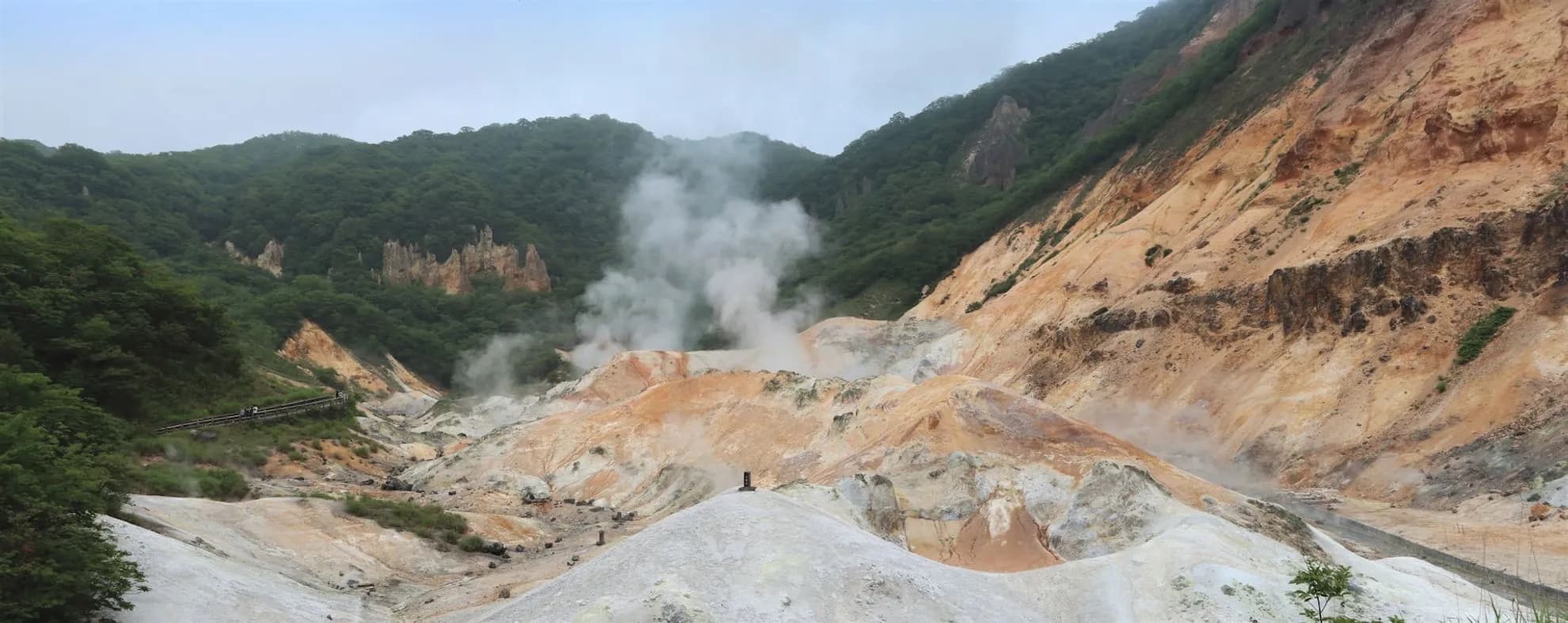
At the end of the walking trail, there is a spot where you can see the geyser up close.
If you are lucky, you may also see wild deer.
6) Okunoyu
奥の湯
A rare hot spring marsh filled with natural hot spring water.
The surface temperature reaches about 75–85°C.
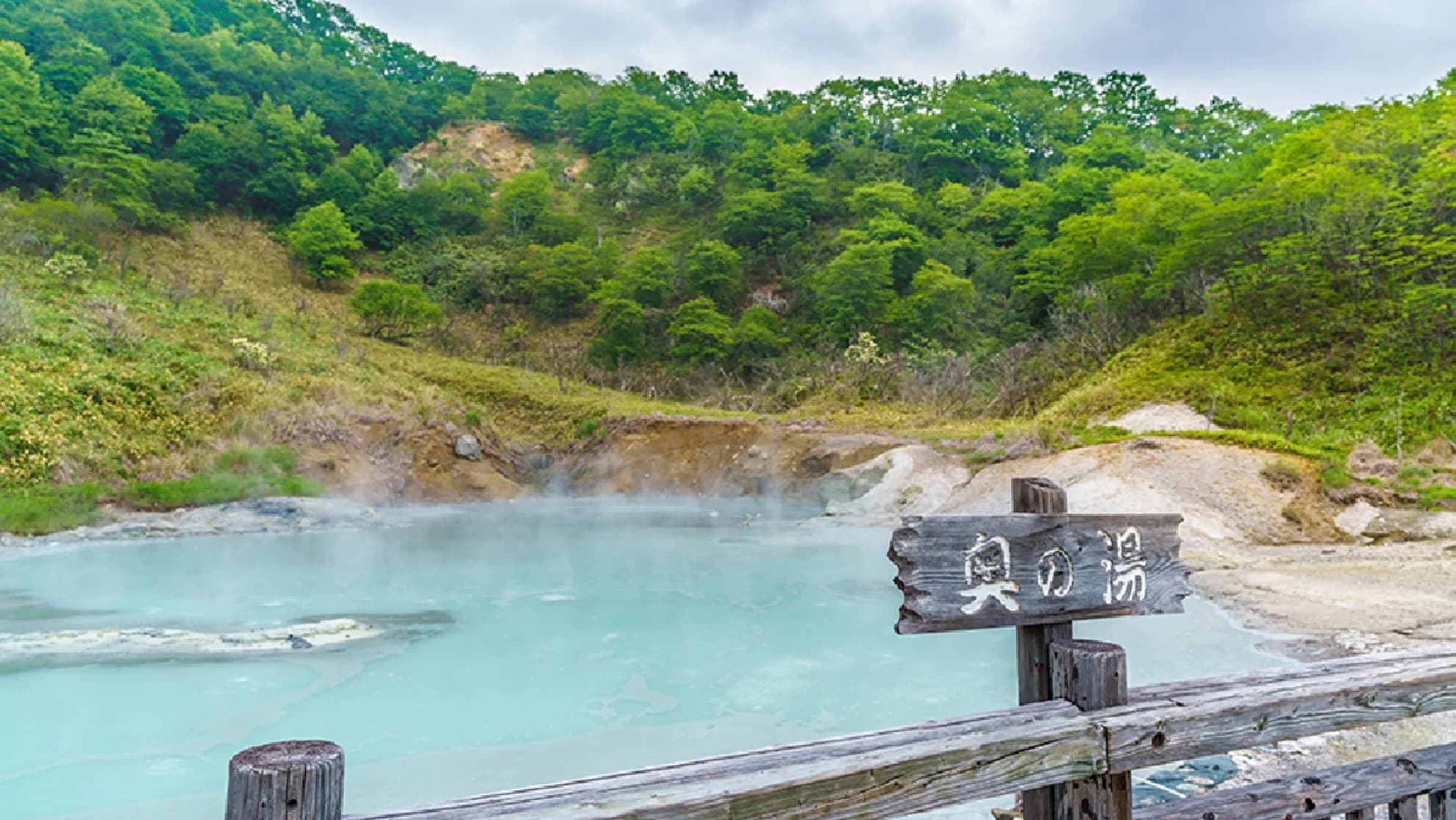
The rising steam and boiling water create a powerful scene, like a real hell on earth.
Location7) Oyunuma Pond
大湯沼
Hot spring water flows from Oyunuma Pond into Oyunuma Valley.
The entire valley is filled with warm hot spring water, and the rising steam creates a rare and impressive view.
8) Oyunuma River Natural Footbath
大湯沼川天然足湯
Warm hot spring water from Oyunuma cools naturally to a perfect temperature for footbathing.
It is a popular place to relax tired feet during your trip.
Location
9) Parent and Child Oni
親子鬼
The father oni looks angry, but the statue is actually a welcome sign for visitors.
(Welcome to hell? Or welcome to Noboribetsu?)
You can also find many oni statues and clubs around the town.
Location10) Onsen Market 🍜
温泉市場
Most visitors eat inside their hotels, so there are fewer restaurants in the town.
Here, you can enjoy seafood dishes such as additive-free sea urchin rice bowls (uni-don), ramen, and more.
- Opening hours: 11:30 – 20:00 (last order 19:30)
- Check other menus
11) Bear Park 🐻
のぼりべつクマ牧場
The Ezo brown bear is native to Hokkaido and is known as the largest land animal in Japan.
At first, they may look scary, but when you feed them, they can look surprisingly cute.
Of course, never enter the bear enclosure. 😱
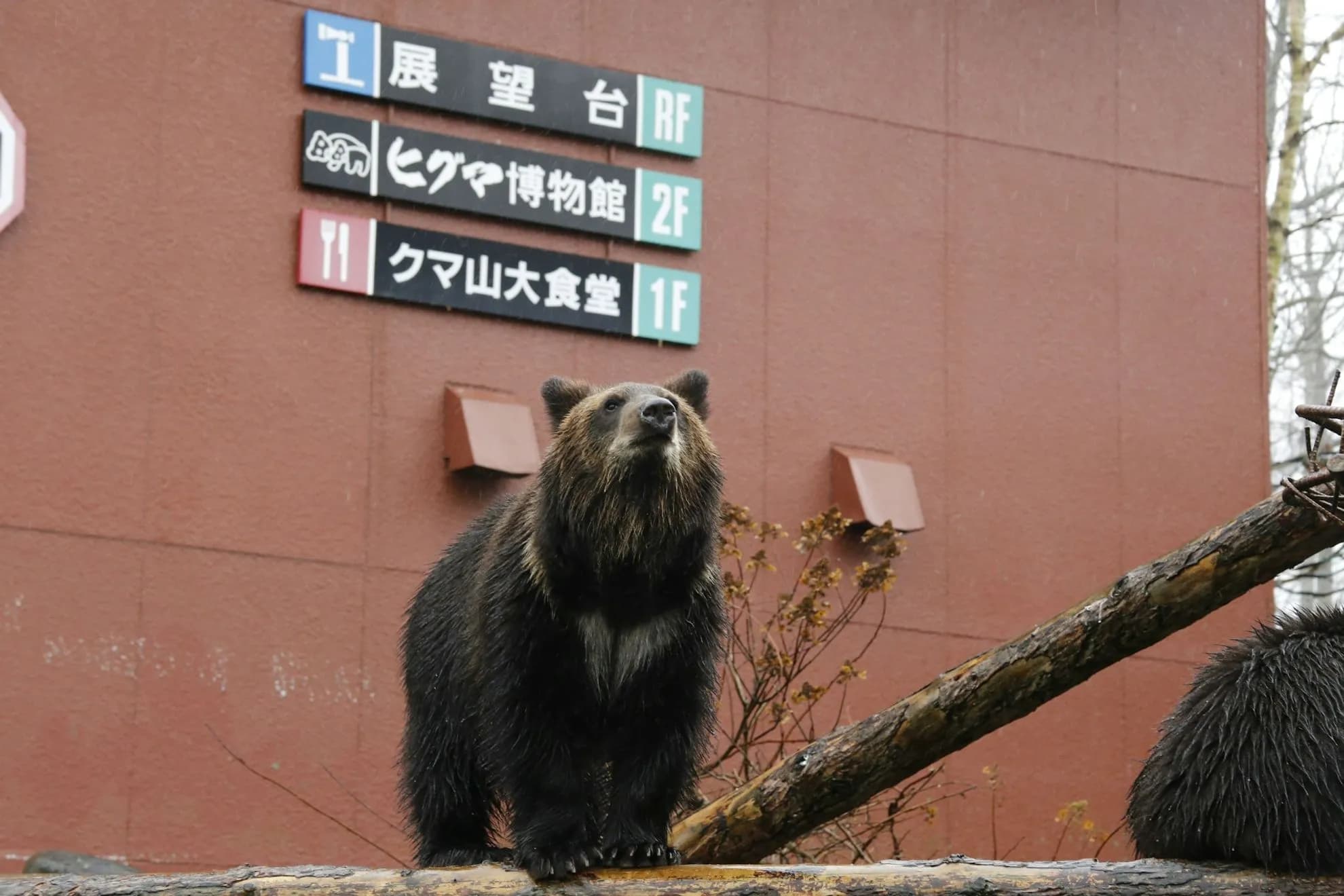
Every day at 10:30 and 15:00, there is a hide-and-seek feeding show.
At 11:30 and 14:00, there is a learning show about bear ecology and habits.
(Programs may be cancelled depending on conditions)
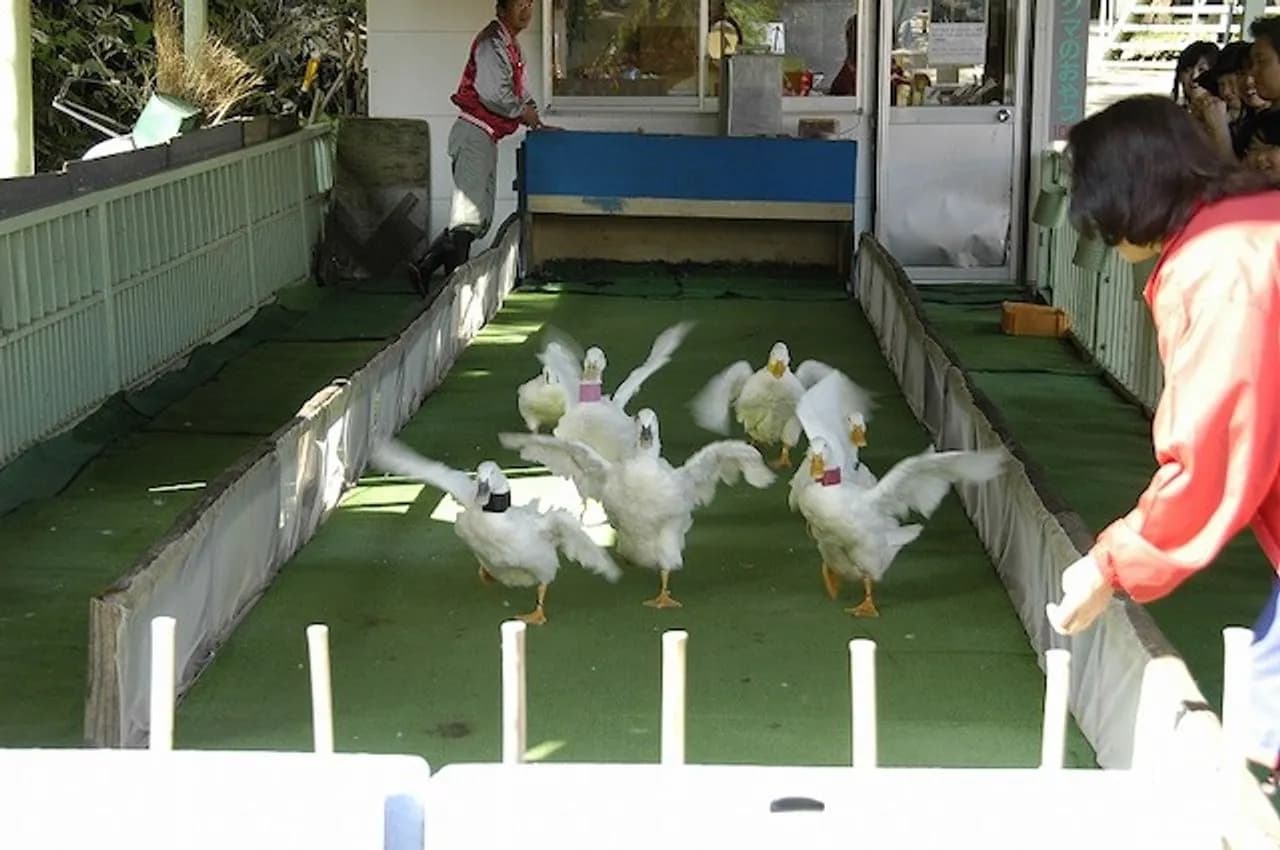
At 10:00 / 11:00 / 12:00 / 13:30 / 14:30 / 15:30, there is a duck race.
If you guess the winner, you can win a prize (200 yen).
At Yukara Village (Ainu Kotan), you can see traditional Ainu houses and tools.
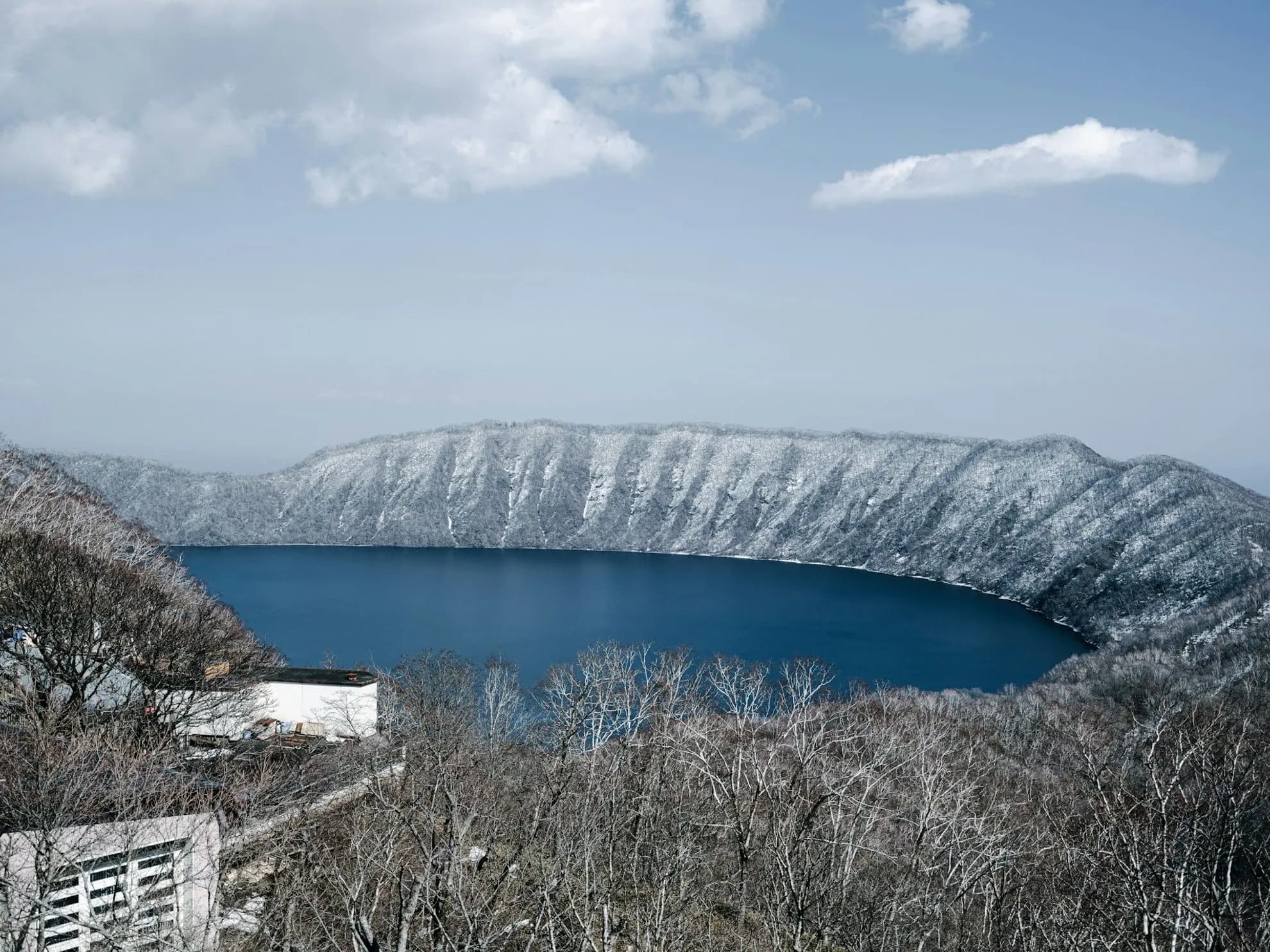
From the Bear Museum and rooftop observatory, you can enjoy a full view of Lake Kuttara.
This is a large sightseeing complex, not just a bear park.
-
Opening hours
- Oct 21 – Apr 20: 09:30 – 16:30 (last entry 15:50)
- Apr 21 – Oct 20: 09:00 – 17:00 (last entry 16:20)
-
Admission (round-trip ropeway + entrance)
- Adults (junior high school and older): 3,000 yen
- Children (elementary school and age 4+): 1,500 yen
- Please check the website for maintenance closures.
12) Date Jidaimura 🏯
登別伊達時代村
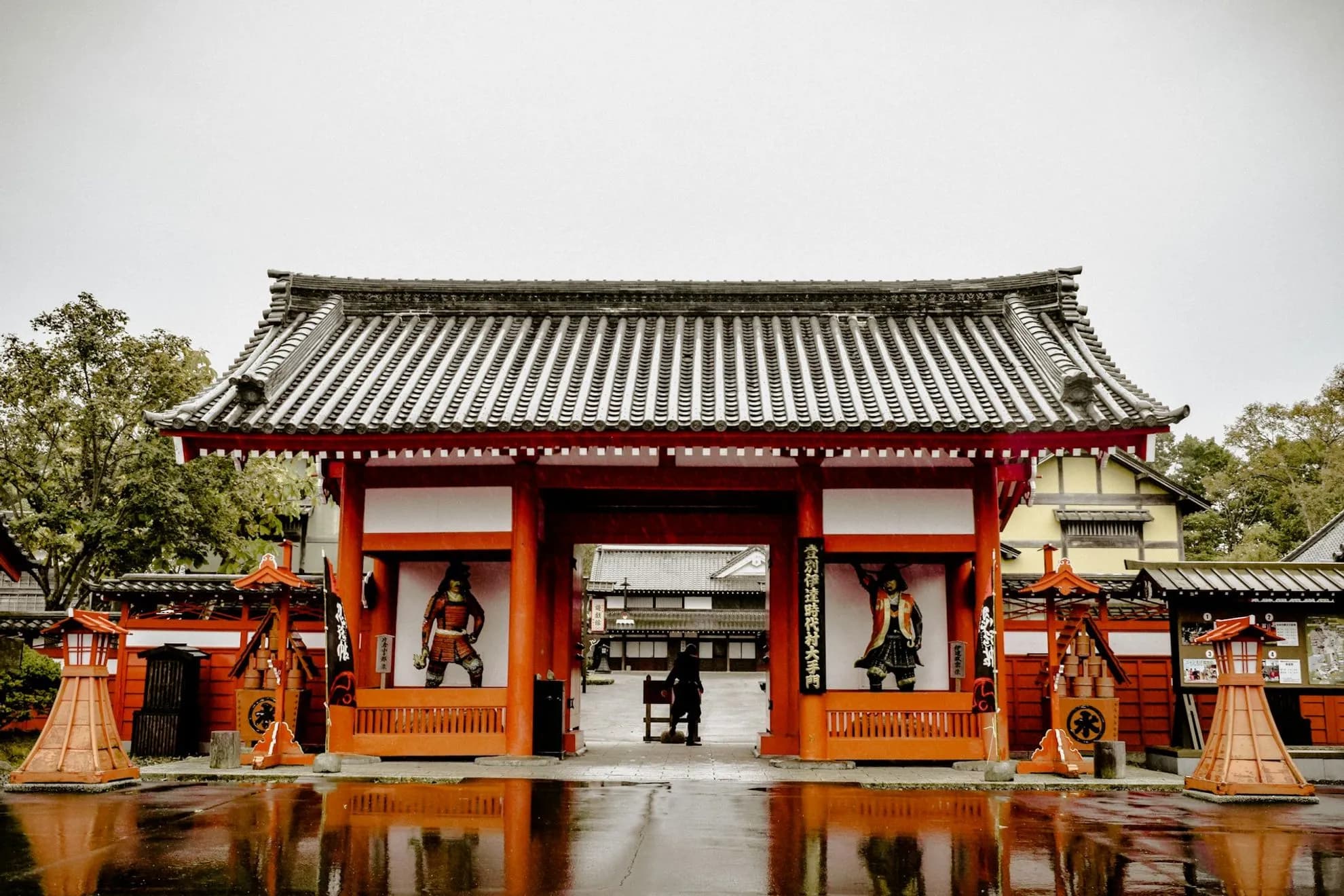
Date Jidaimura means “Date Period Village”. It is a theme park and historical village based on the samurai and ninja era.
There are ninja shows, oiran shows, and comedy performances four times a day.
After winter, outdoor action shows are also added.
Please check the show schedule on the website before your visit.
Around the village, you can also find fun yokai (monster) statues, such as:
- Umbrella yokai
- Child monk yokai
- Kappa yokai
- Long-neck yokai
-
Opening hours (last entry: 1 hour before closing)
- April – October: 09:00 – 17:00
- November – March: 09:00 – 16:00
-
Admission
- Adults (junior high school and older): 3,300 yen
- Elementary school students: 1,700 yen
- Children (age 4+): 600 yen
-
Closed days: Open all year (except winter maintenance days)