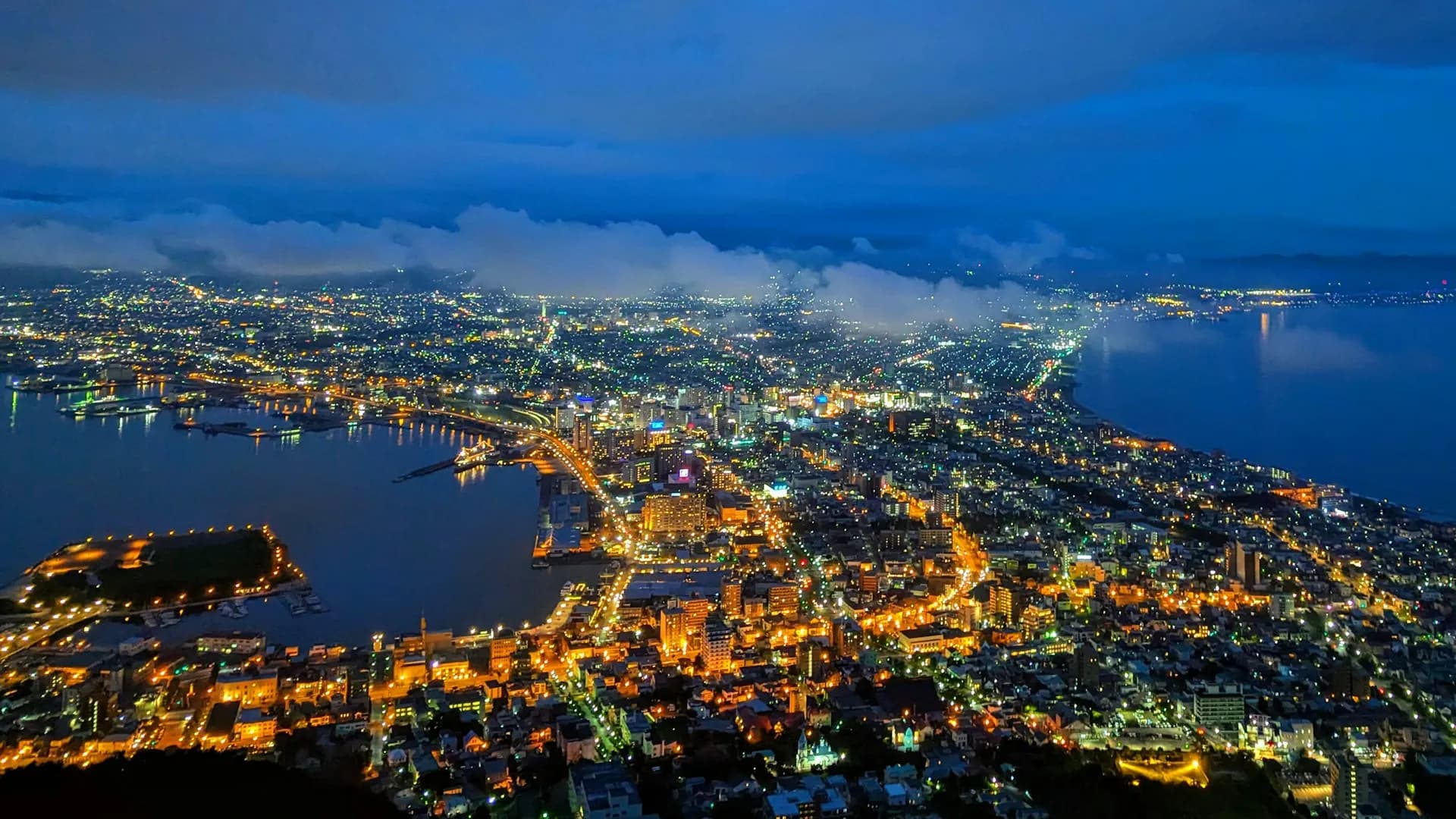
IntroductionA city famous for one of the world’s top three night views
While traveling around Japan, one of the most memorable places was the Hakodate night view.
From the summit, the scenery spreads out in front of you, and it is so impressive that you naturally say, “Wow… wow…” out loud.
For travelers in Hokkaido, it is a must-recommend night view, and once you see it, you will quickly understand why it is known as one of the world’s top three night views.
Even in Japan, it is highly rated—selected as the No. 2景観 to preserve, and also introduced in the Michelin Green Guide Japan with three stars (⭐️⭐️⭐️).
It takes about 4 hours by train from Sapporo, so a day trip is not recommended.If possible, it is ideal to stay 1 night in Hakodate after enjoying the night view. If your schedule is tight, you can also consider the overnight bus between Sapporo and Hakodate.
How to get thereComplete guide: train and bus
1) By train
- From Sapporo Station, the Limited Express “Hokuto” takes about 3 hours 30 minutes.
2) By bus
- You can book the highway bus (overnight bus) from Sapporo Station.
- A key advantage is that you can save on accommodation and arrive early in the morning to start the day at Hakodate Morning Market.
- However, it can be tiring for people who cannot sleep well on buses or have low stamina.
Useful passes in HakodateDiscount passes for streetcars, buses, and the ropeway
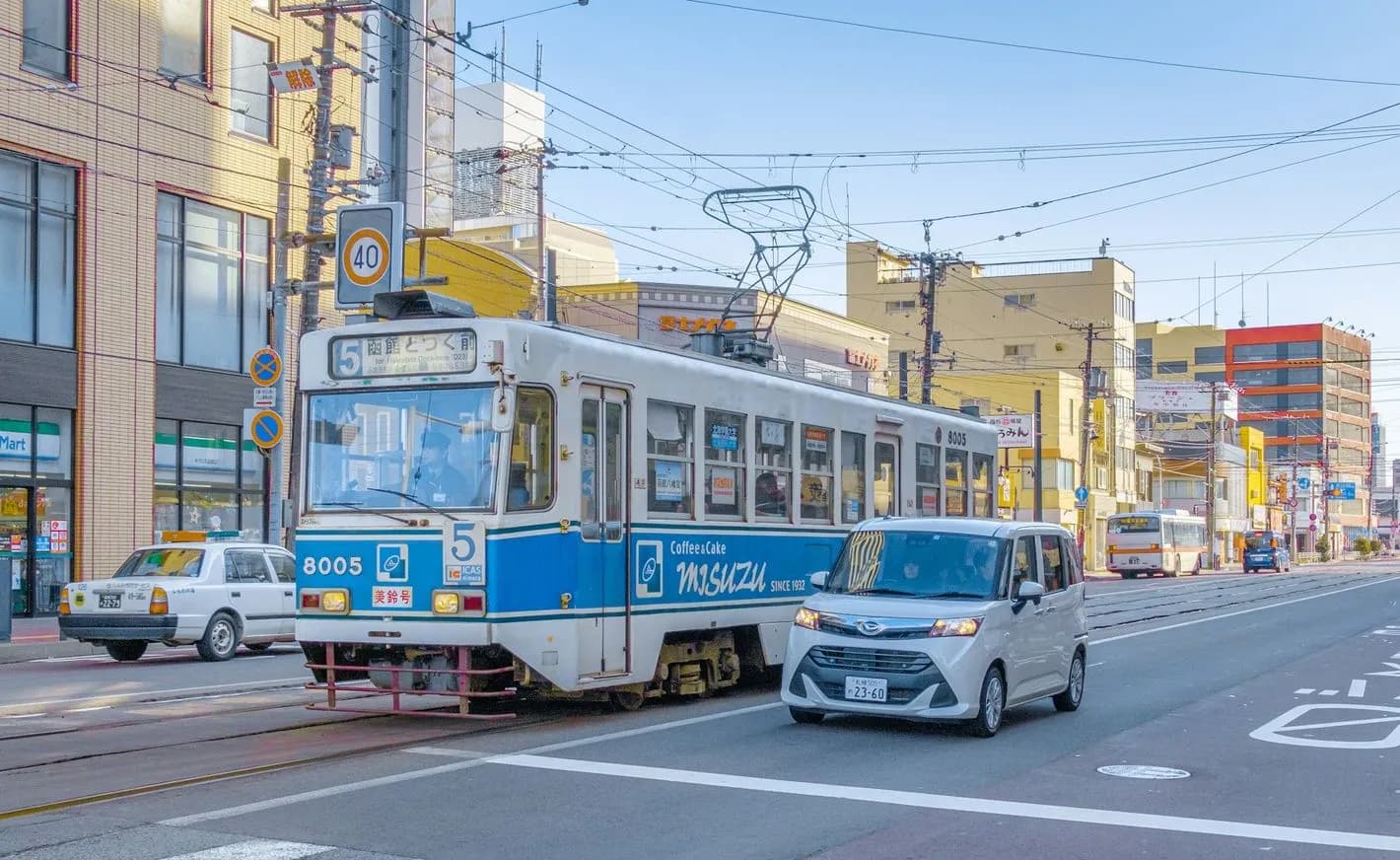
1) Shiden (streetcar) 1-day ticket
- This pass is very useful if you plan to travel mainly by streetcar in Hakodate.
- A single ride costs 210–260 yen, and it is always worth it if you ride 3 times or more.
- Options are 1-day pass: 600 yen and 24-hour pass: 900 yen.
2) Hakodate bus-only 1-day pass (Kanpass)
- This pass is a good deal if you will use only buses in Hakodate.
- 4/14 ~ 11/9: 1,600 yen
- 11/10 ~ late April: 1,200 yen
- If you do not use the Mt. Hakodate Ropeway or the streetcar, this pass alone can be enough.
- 24-hour pass: 2,100 yen
3) Hakodate bus + Shiden combo pass
- A combined pass that includes both Kanpass and the Shiden 1-day ticket.
- Prices are 1-day: 1,400 yen and 2-day: 2,400 yen.
- It is a good choice if you go to Mt. Hakodate by bus and travel around the city by streetcar.
4) How to buy
- All passes can be purchased online, with simple email verification and payment by credit card.
- The Shiden 1-day ticket can also be purchased in person at the Hakodate Station Information Center, some hotel fronts, or directly from the streetcar driver.
- Note: you can only buy it when the streetcar is stopped.
- Ask the driver, “One day pass, onegaishimasu,” then scratch to activate it on the day you ride.
Find the right Hakodate pass for youRecommended combinations by travel route
When traveling in Hakodate, buses are often faster than streetcars, and many stops are close to major sights. However, service intervals can be long, so plan with that in mind.
On the other hand, streetcars run more frequently, but you often need to walk from the stop to the main sights. So it is important to choose a pass based on your schedule and travel style.
- For example, Goryokaku Tower is about a 10-minute walk (about 750 m) from the streetcar stop “Goryokakukoen-mae,” and there are several bus routes that go closer to the area. So taking the bus is more efficient.
- Since buses run less often, you can plan a relaxed route by sightseeing during the wait time and then catching the next bus.
Most importantly, plan how you will go up Mt. Hakodate for the night view.
If the ropeway is suspended or you cannot use the ropeway, you will need the Route 1 Mt. Hakodate climbing bus, and the best pass option will change depending on this.
🧭 How to reach the observation deck by season
| Method | 2025/4/18 | 2025/10/9 | 2025/11/10 | Notes |
|---|---|---|---|---|
| Ropeway | ○ | ✕ | ○ | |
| Mt. Hakodate Climbing Bus (Route 1) | ○ | ○ | ✕ | |
| Taxi | ○ | ○ | ✕ | |
| Sightseeing bus | ○ | ○ | ✕ | |
| Private car / rental car | △ | △ | ✕ | Restrictions apply (*1) |
| Hiking | ○ | ○ | ○ | |
| Bicycle / motorcycle | △ | △ | ✕ | With ropeway (*2) |
-
*(1) Private car / rental car traffic restrictions
- April 18, 2025 ~ September 30, 2025: No entry from 17:00 to 22:00 (other times allowed)
- October 1, 2025 ~ November 9, 2025: No entry from 16:00 to 21:00 (other times allowed)
- November 10, 2025 11:00 ~ April 13, 2026 11:00 (planned): Winter vehicle restrictions
-
*(2) Two-wheel vehicle restrictions
- Motorcycles and bicycles: two-wheel vehicles are not allowed on the mountain road
Three useful bus routes in HakodateComplete guide: mountain bus, shuttle, and loop bus
See how to use Hakodate buses Latest bus information (Japanese)1) Route 1: Mt. Hakodate climbing bus
This is a climbing bus that operates from mid-April to early November. From Hakodate Station, you can reach the Mt. Hakodate observation deck for 700 yen one way.
Stop No. 4 in front of Hakodate Station → Hakodate Morning Market → In front of Hakodate Kokusai Hotel → In front of Meijikan → Jujigai → Mountain entrance → Mt. Hakodate summit
→ This section is boarding only at these stops
Mt. Hakodate summit → Mountain entrance → Jujigai → In front of Meijikan → In front of La Vista Hakodate Bay → In front of Hakodate Kokusai Hotel → Stop No. 4 in front of Hakodate Station
→ This section is alighting only at these stops
- Hakodate bus-only 1-day pass “Kanpass” is accepted
- iC transport cards accepted
- The Hakodate bus + Hakodate Shiden 1/2-day pass is not accepted
2) Route 2: Shuttle bus connecting to the Mt. Hakodate Ropeway
Departure times differ in summer (April–September) and winter (October–March). This shuttle bus helps you avoid the inconvenience of a 10-minute walk from Jujigai to the ropeway.
Stop No. 4 in front of Hakodate Station(+0 min) → Hakodate Morning Market (+3 min) → In front of Hakodate Kokusai Hotel (+4 min) → In front of Meijikan (+6 min) → Jujigai (+8 min) → In front of the ropeway (+11 min)
- If the ropeway is not operating, this bus does not operate either
- 280 yen per ride (adult) / 140 yen (child)
- Hakodate bus + Hakodate Shiden 1/2-day pass and Hakodate bus-only 1-day pass “Kanpass” are accepted
- iC transport cards accepted
3) Route 3: Motomachi & Bay Area loop bus (Shuyugo)
This route has different departure times for summer (April–September) and winter (October–March). In summer, it runs as a loop bus every 40 minutes from 9:00 to 17:40 from in front of Hakodate Station.
Main stops:
Stop No. 4 in front of Hakodate Station(+0 min) → Hakodate Morning Market (+3 min) → In front of Hakodate Kokusai Hotel (+5 min) → In front of Hakodate Beer (+6 min) → In front of La Vista Hakodate Bay (+7 min) → In front of Meijikan (+8 min) → In front of Kanemori Yokominkan / BAY Hakodate (+9 min) → In front of Nishi Hashijo / Hakodate Beer Hall (+10 min) → Jujigai (+12 min) → In front of the ropeway (+15 min) → Motomachi (+17 min) → Old British Consulate (+18 min) → In front of the Chinese Hall (+19 min) → In front of Motomachi Park (+20 min) → In front of Higashihama Pier (+22 min) → In front of Lucky Pierrot Main Store (+23 min) → In front of Meijikan (+25 min) → In front of La Vista Hakodate Bay (+26 min) → In front of Hakodate Beer (+27 min) → In front of Hakodate Kokusai Hotel (+28 min) → Century Marina Hakodate (+29 min) → Stop No. 4 in front of Hakodate Station(+33 min)
- Adult fare: 250 yen per ride, child: 130 yen
- Hakodate bus + Hakodate Shiden 1/2-day pass or Hakodate bus-only 1-day pass “Kanpass” accepted; iC transport cards accepted
- In the winter season, the bus does not stop at the Chinese Hall, Motomachi Park, or Higashihama Pier stops
Around Hakodate StationThe start and end of your trip: enjoy food and views at the morning market and yokocho
1) Morning Market
Hakodate Morning Market is a local market similar to Sapporo’s Nijo Market or Otaru’s Sankaku Market. Hours vary by shop, but it is generally open from around 5:00 a.m. to 2:00 p.m.
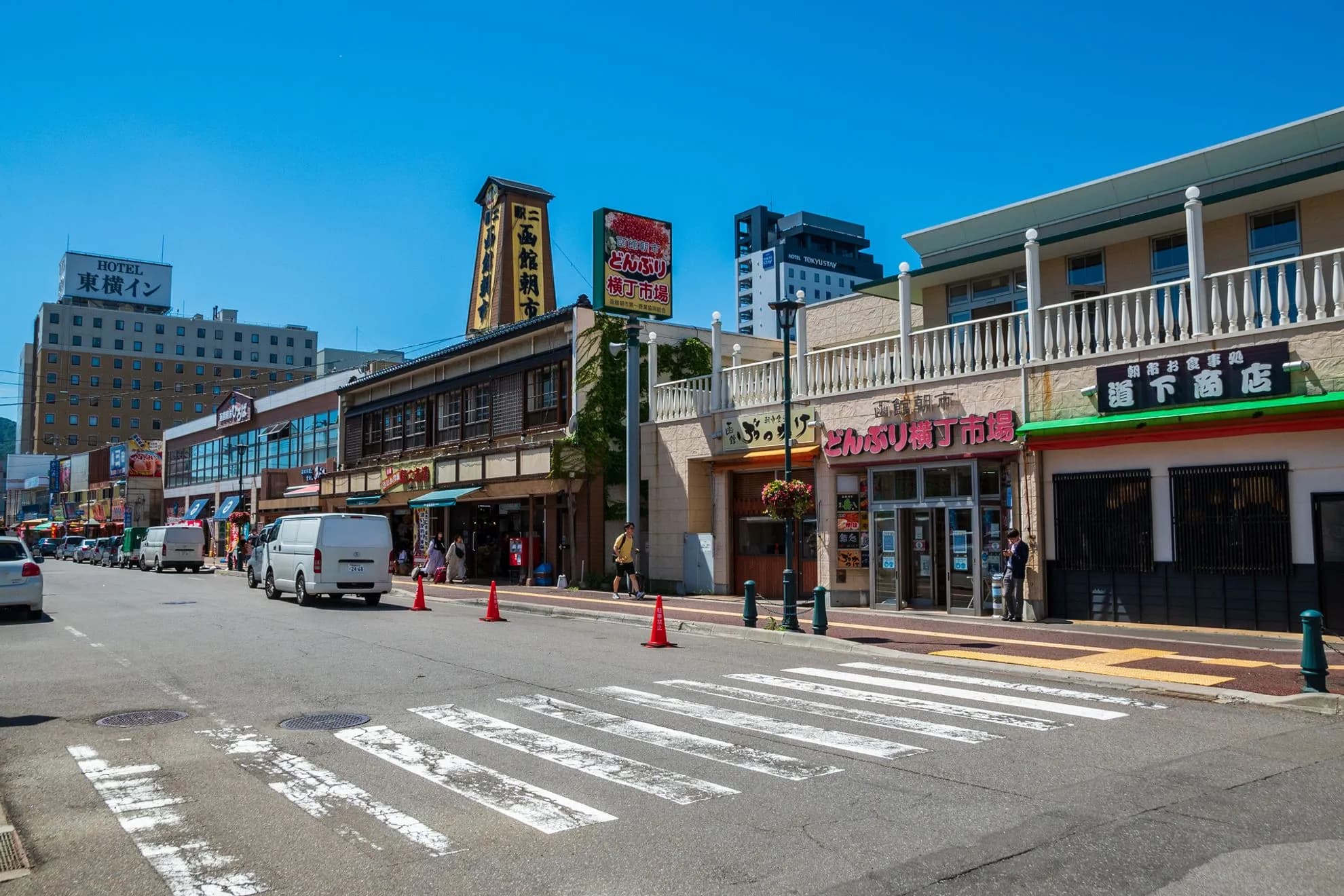
If you arrive early by overnight bus or by a morning train, this is a great place for an early breakfast.
Location WebsiteKAIKOUBO
- This place has one of the largest fish tanks in Hokkaido and serves fresh seafood at reasonable prices.
However, it is not part of the morning market. It is open from 5:00 p.m. to 10:00 p.m., so it is recommended for dinner or casual drinks.
2) Daimon Yokocho
Daimon Yokocho is a small alley with around 26 different izakaya (Japanese pubs). If you stay one night in Hakodate, it is a good place to visit after enjoying the night view.
You can choose from a wide range of dishes, not only seafood but also motsu (offal), lamb, ramen, oden, and more.
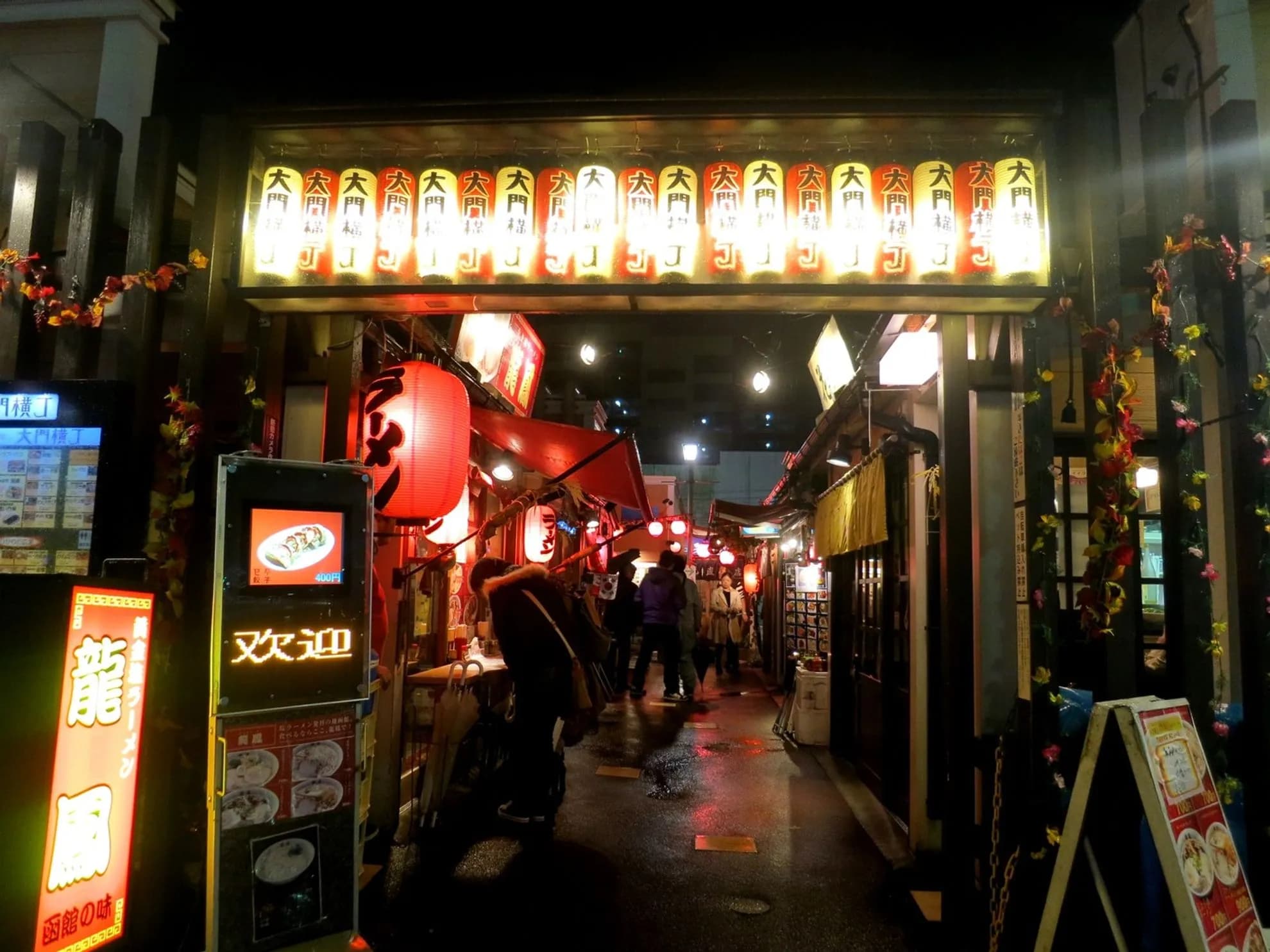
- In most of Japan, “yakitori” means chicken, but in Hakodate, yakitori is often made with pork.
GoryokakuCherry blossoms blooming on a star-shaped fort
五稜郭
As mentioned in Hokkaido Part 1, “History of Hokkaido,” Japan’s last civil war, the Boshin War, ended here at Goryokaku.
After Commodore Perry’s arrival and the signing of the Treaty of Peace and Amity between the United States and Japan, Hakodate opened as a port. Goryokaku was built to prepare for foreign attacks.
It is said that the site was chosen strategically so that even if foreign ships fired from either harbor, the fort could avoid direct hits.
- At that time, the firing range of cannons was about 3 km.
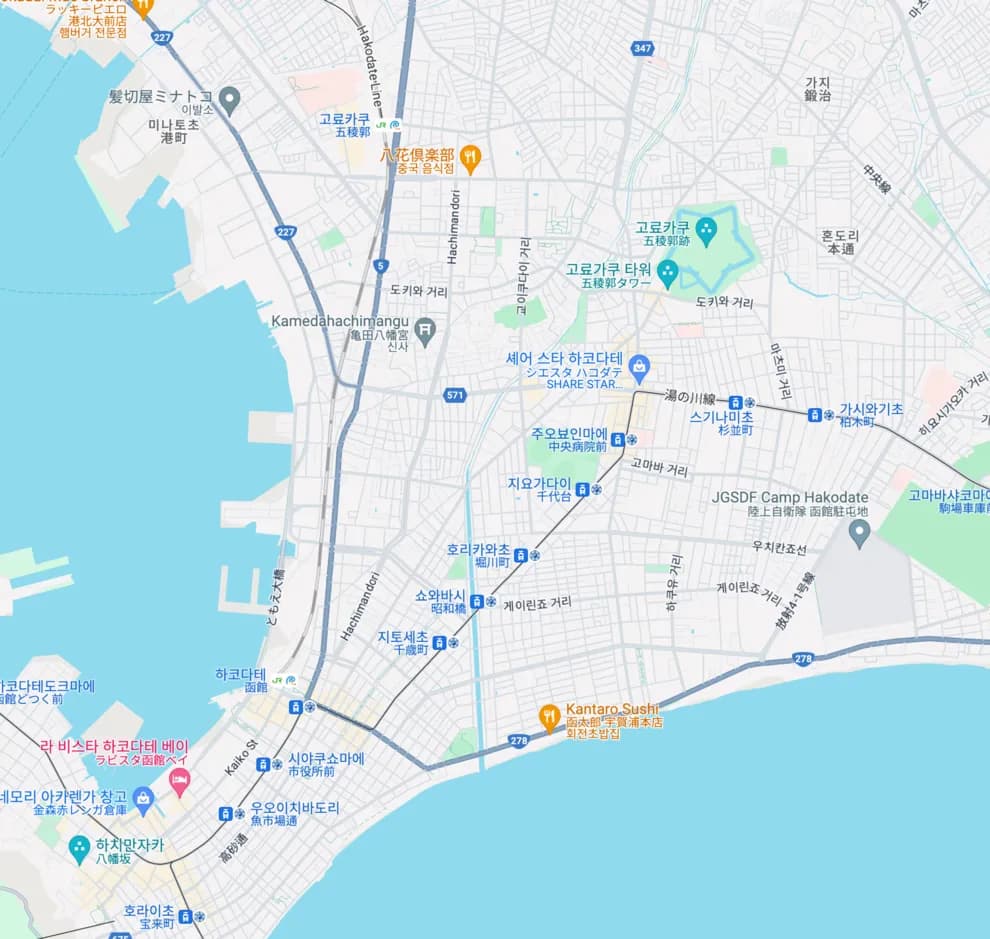
Goryokaku is a unique fort with a clear star-shaped layout, even on Google Maps.
If you look closely, there is a tail-like structure extending at the bottom, and some travelers wonder what it is.
This is a structure called “Hangetsuho (半月堡)”. The original plan was to place hangetsuho at each concave point of the star, creating a double-star shape and five main gates. However, due to budget limits, it was reduced to one hangetsuho and three main gates.
The fort was inspired by 17th-century Western fortification methods, but by the 19th century it was already an outdated design, and it is considered to have several weaknesses for defense.
In particular, although the corners were designed to remove blind spots, some say the structure became a weakness against attackers.
Although it was built to prepare for foreign invasion, it was never used in a battle with foreign forces. Ironically, it became the final major battleground of Japan’s civil war, which gives it strong historical significance.
- Nearby is Ajisai, a popular shio ramen shop: Ajisai. It is a good place to visit together.
1) Goryokaku Tower
Goryokaku Tower is the best place to see the full shape of Goryokaku, and you can also enjoy a wide view over Hakodate city.
It is popular all year round: from late April to early May, the fort turns pink during cherry blossom season, and in winter, you can see a magical snowy landscape.
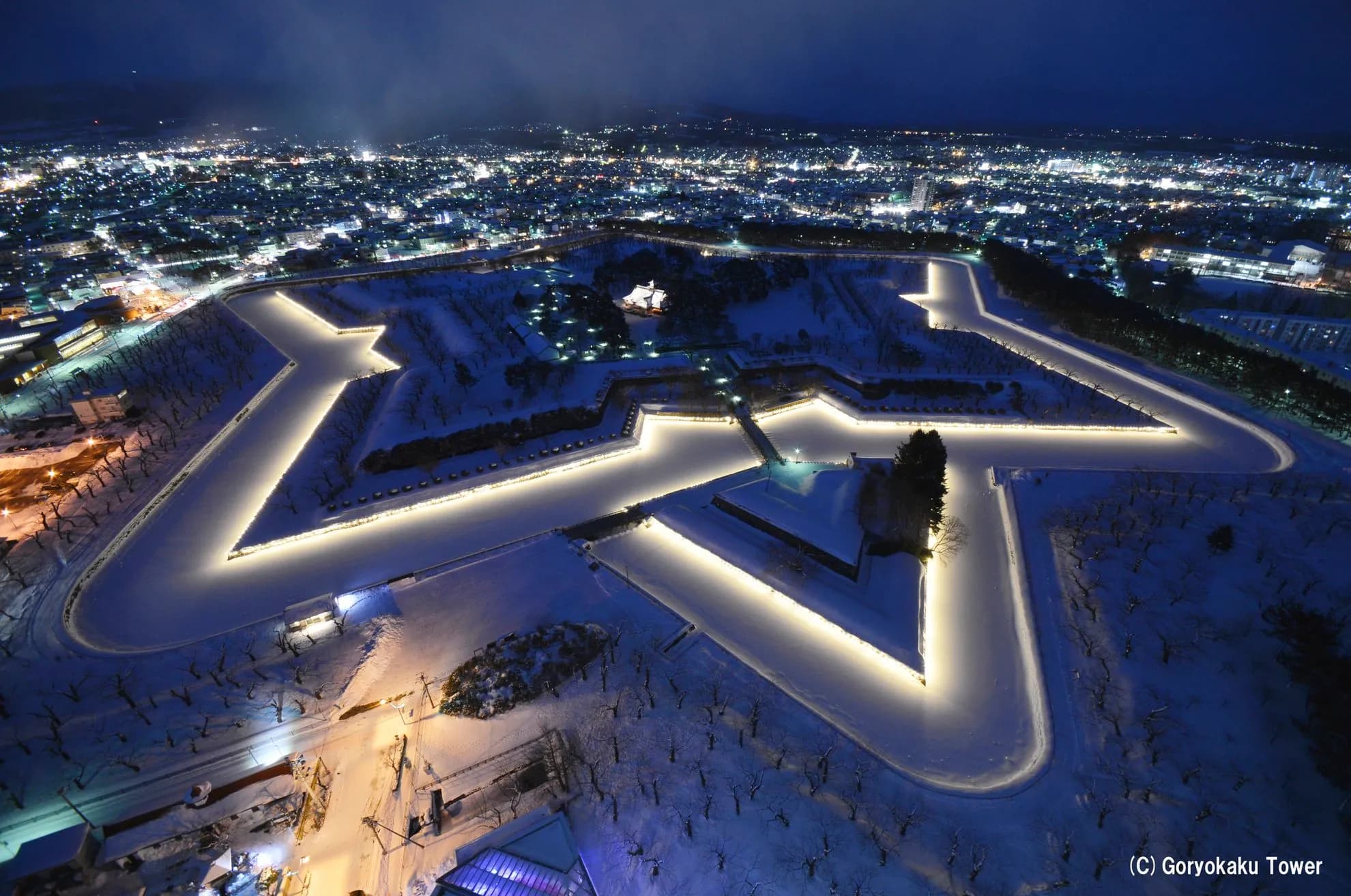
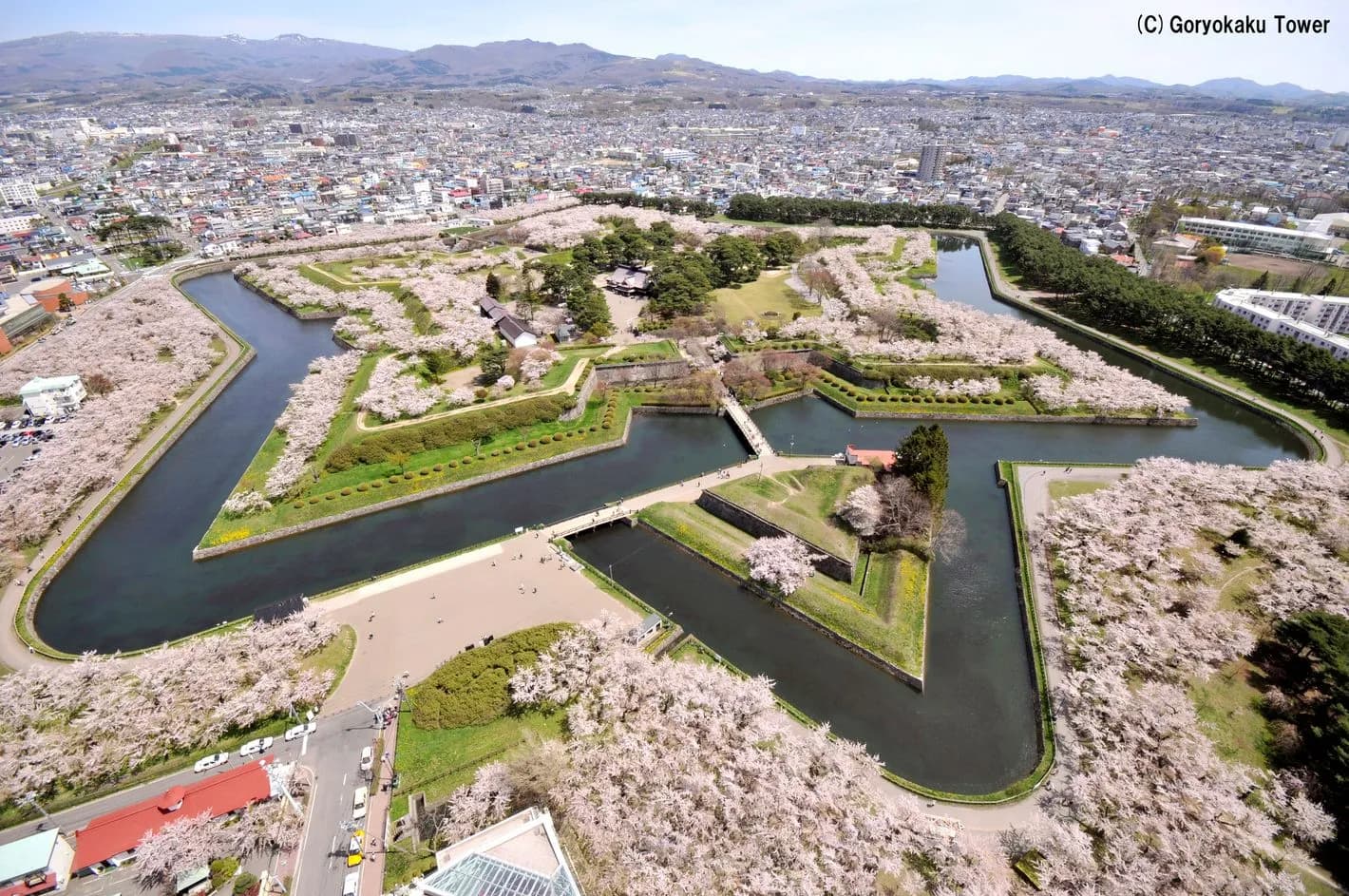
Cherry blossom season and the snow-covered night view of Goryokaku
- Opening hours: 09:00 ~ 18:00 (last entry 10 minutes before closing)
- Admission: Adults 1,000 yen / Junior & senior high school students 750 yen / Elementary school students 500 yen / Preschool children free
- Open year-round
2) Hakodate Magistrate’s Office (Bugyosho)
The Bugyosho (奉行所) was a government office in the Edo period, responsible for administration and public order. After the return of power to the emperor, it was transferred to the Meiji government and later dismantled after the Hakodate War.
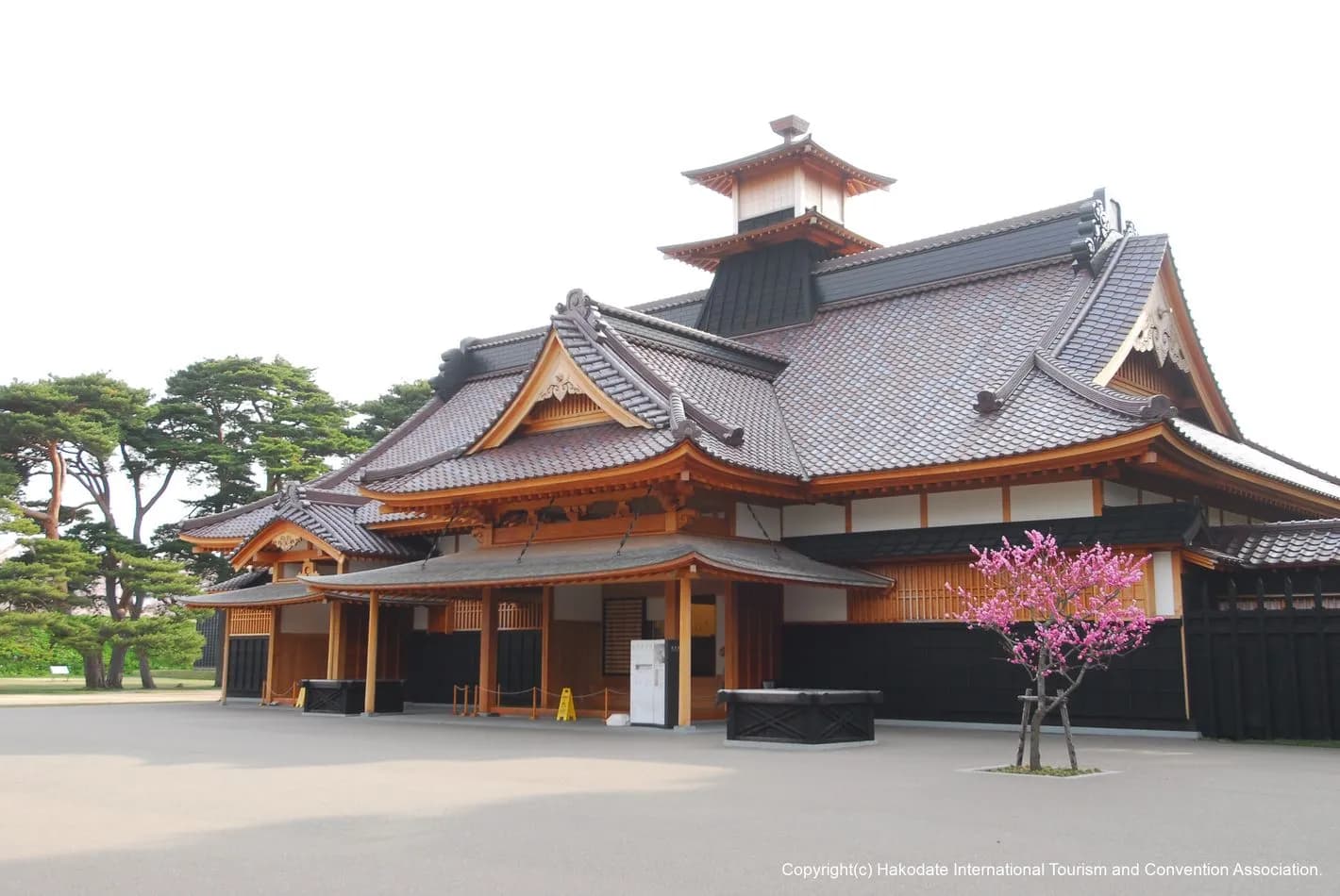
The current Bugyosho is a building restored in 2010 based on historical materials, located inside Goryokaku.
It is a good stop for a short walk after coming down from Goryokaku Tower. Inside, it is arranged like a Japanese historical drama set, making it interesting to see daily life from that era.
Yunokawa OnsenA relaxing stop with footbaths and sea views
湯の川温泉
In Hokkaido Part 1 (History of Hokkaido), we introduced Enomoto Takeaki, the Edo shogunate navy vice admiral who resisted the new government until the end.
It is said that Enomoto especially liked Yunokawa Onsen and visited often.
Yunokawa’s hot spring water is known for being clear and colorless. At the entrance of the town, there is a free public footbath, making it an attractive spot where you can relax even without staying overnight.
- For a footbath, be sure to bring a towel and a plastic bag. 🧦🛍️
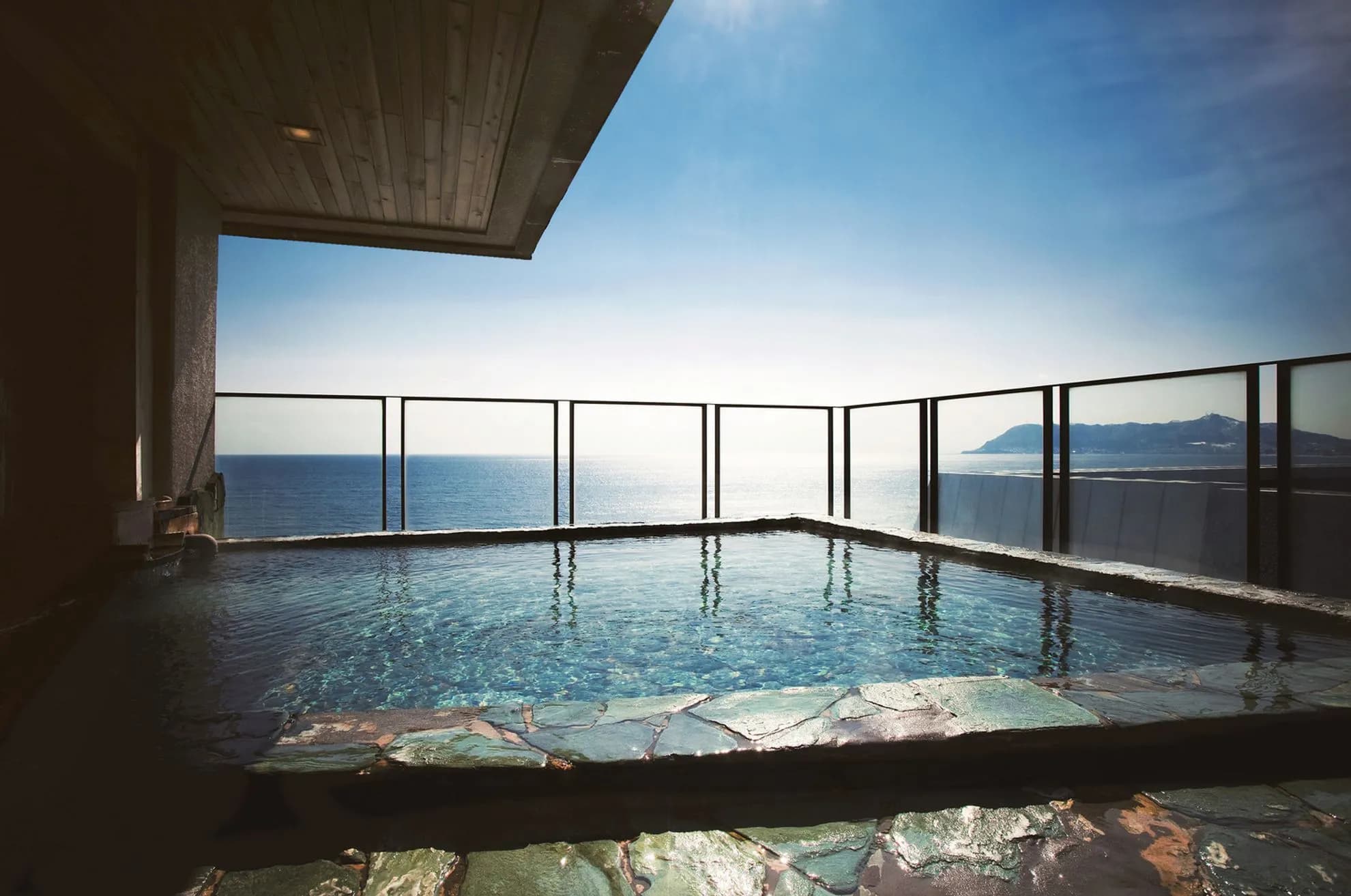
Some onsen hotels in Yunokawa Onsen offer baths with a view of the horizon over the Tsugaru Strait, giving a different kind of healing atmosphere compared to other areas.
Hakodate Tropical Botanical Garden
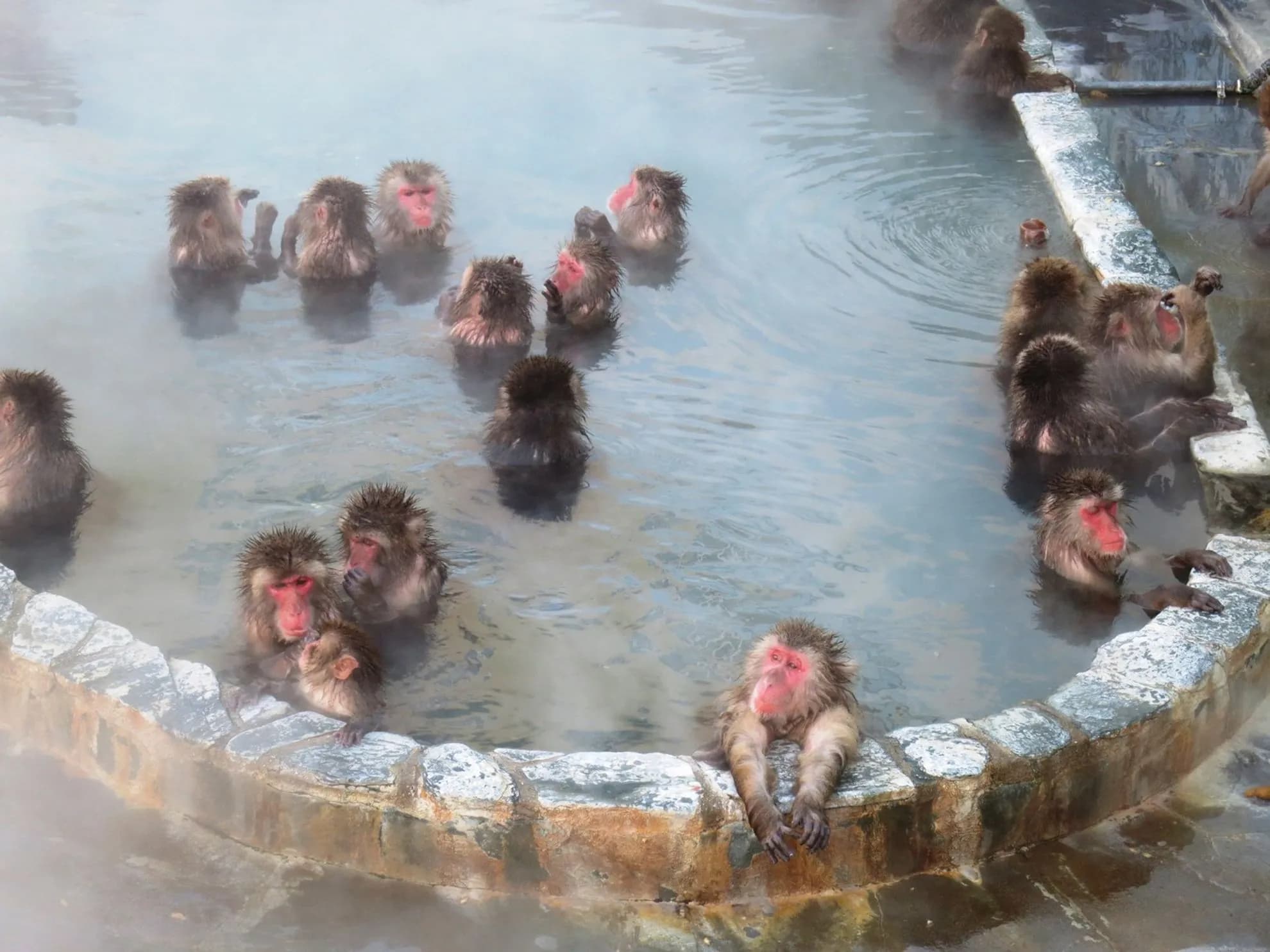
There is a famous scene often shown on TV when introducing Hokkaido: monkeys enjoying a hot spring.
You can see this in person at the Hakodate Tropical Botanical Garden, near Yunokawa Onsen.
You can observe the monkeys at any time, but the hot spring bathing scene can only be seen from December to early May. Even during this period, the hot spring water may be drained if babies are born, so be sure to check before you visit.
- You may be surprised to see monkeys with missing fur, but this is not a disease. Their fur naturally thins because they bathe in the hot spring often. 🐒♨️
- Opening hours
- April ~ October: 09:00 ~ 18:00
- November ~ March: 09:00 ~ 17:00
- Admission: High school age and above 300 yen / Elementary & junior high school 100 yen / Below elementary school free
- Closed: December 29 ~ January 1
Bay AreaA seaside street where shopping, dining, and culture meet among red brick buildings
Kanemori Red Brick Warehouse
金森赤レンガ倉庫
Just as Otaru has red brick warehouses by the canal, Hakodate, a historic port city, also has a group of red brick warehouses by the sea.
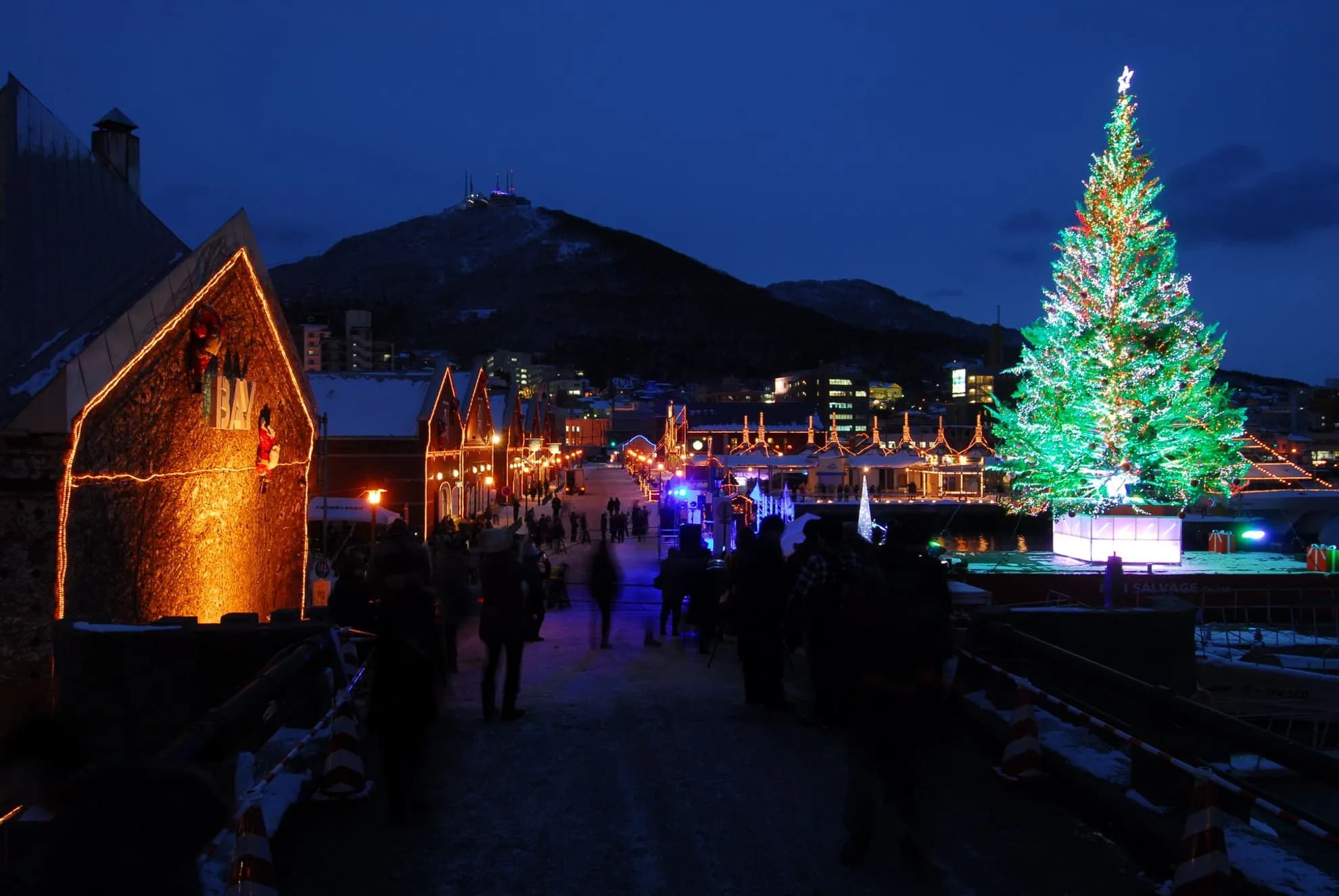
In Otaru, a few warehouses simply add atmosphere around the canal. Here, Kanemori Red Brick Warehouse has been fully transformed into a multi-purpose complex for dining, shopping, and cultural experiences.
Instead of moving between floors like a department store, the shopping route is designed so you cross the street from one warehouse to another, so it feels like a walk through a small port town.
In particular, from sunset to night, the red brick walls are lit up against the sea, creating a romantic atmosphere and a popular photo spot. 📸✨
MotomachiA port-opening district shaped by consulates and churches
After Hakodate opened as a port in 1854 through the Treaty of Peace and Amity between the United States and Japan, this area became a town where many Western residents lived.
In many Japanese port-opening cities, foreign settlements were often located on the slopes. For example, in Nagasaki (Orandazaka) and Kobe (Kitano Ijinkan), people lived on higher ground with views over the sea.
1) Former Hakodate Ward Public Hall
旧函館区公会堂
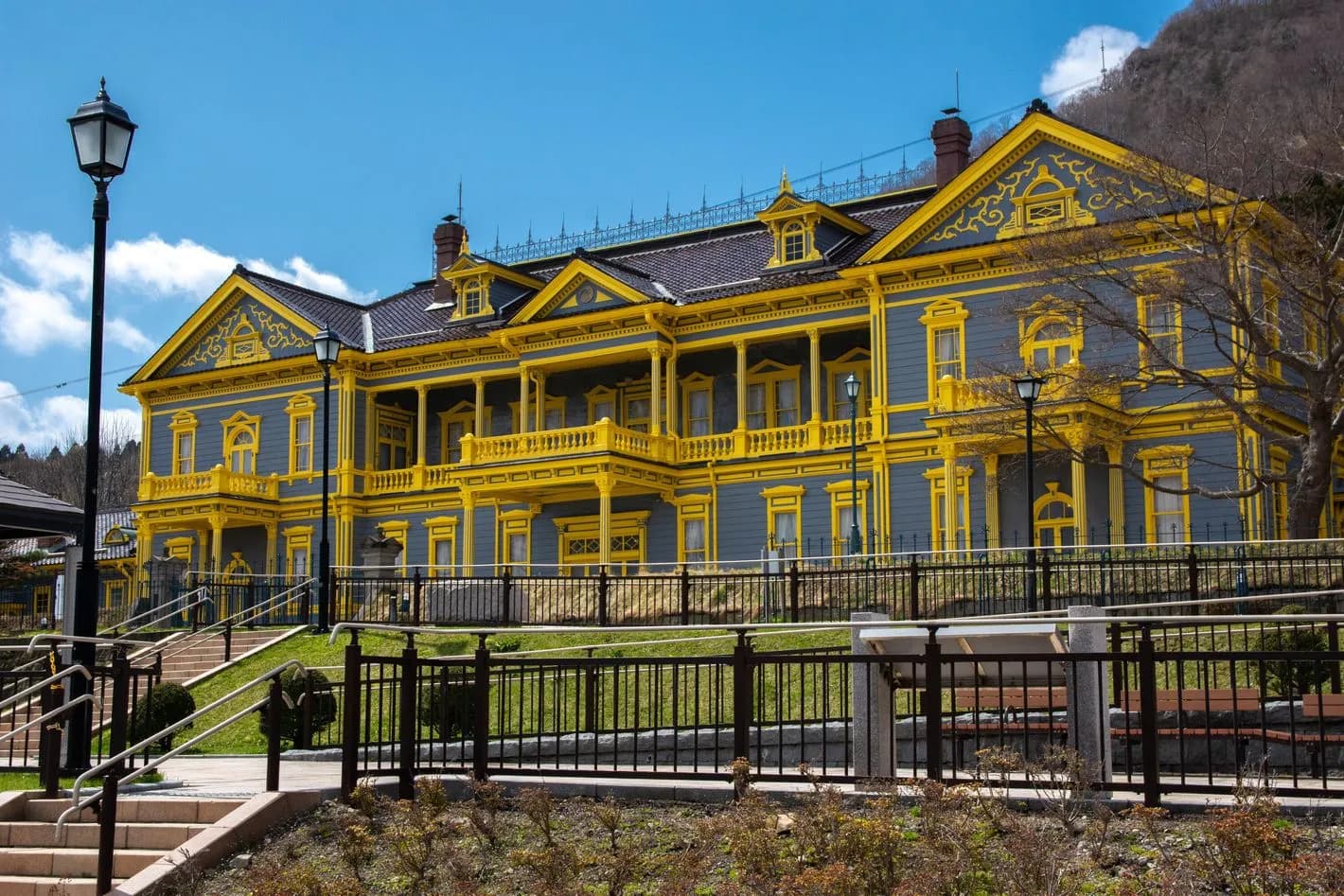
A representative Western-style wooden building built with Japanese craftsmanship, used as a public facility for meetings and discussions.
With its pastel blue and yellow colors, the building is a Motomachi landmark. From the balcony, you can enjoy a view of the sea in Hakodate.
- Opening hours (last entry 30 minutes before closing)
- Apr–Oct Tue–Fri 09:00–18:00
- Apr–Oct Sat–Mon 09:00–19:00
- Nov–Mar 09:00–17:00
- Admission: Adults 300 yen / Students and children 150 yen
- With a combined ticket, you can also visit the Old British Consulate, the Museum of Northern Peoples, and the Hakodate City Museum of Literature
- Closed: 12/31–1/3, and temporary closures
2) Hachimanzaka Slope
八幡坂
The only one of Hakodate’s 19 hills with a view of the sea, known as a romantic street. It became famous for the bicycle scene in the movie Love Letter.
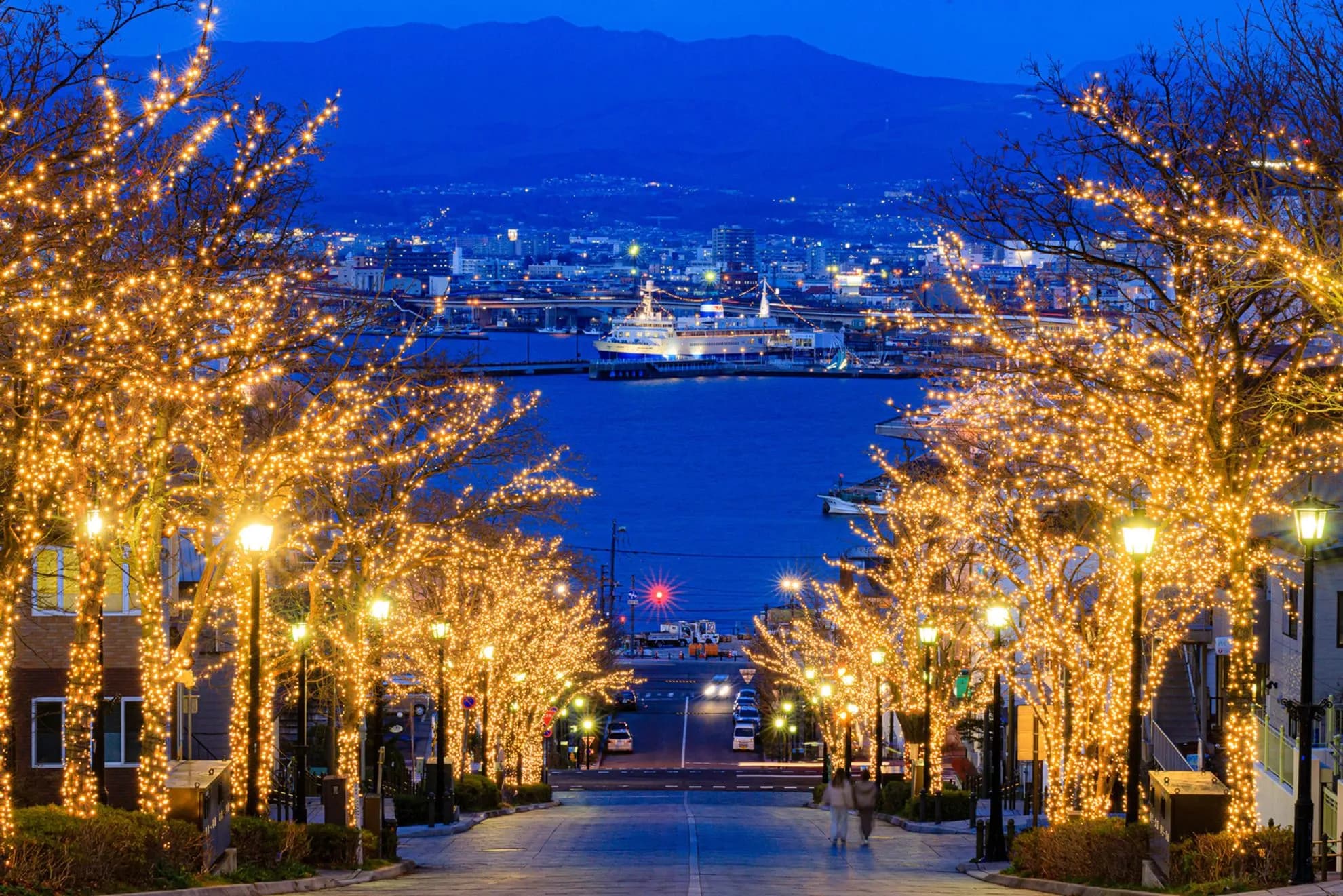
3) Hakodate Orthodox Church
函館ハリストス正教会
An Orthodox church built in 1858 when Japan’s first Russian consulate was established here. It is known for its Byzantine-style onion dome and crosses.
It is also famous for an exterior that напоминает St. Basil’s Cathedral from Tetris.
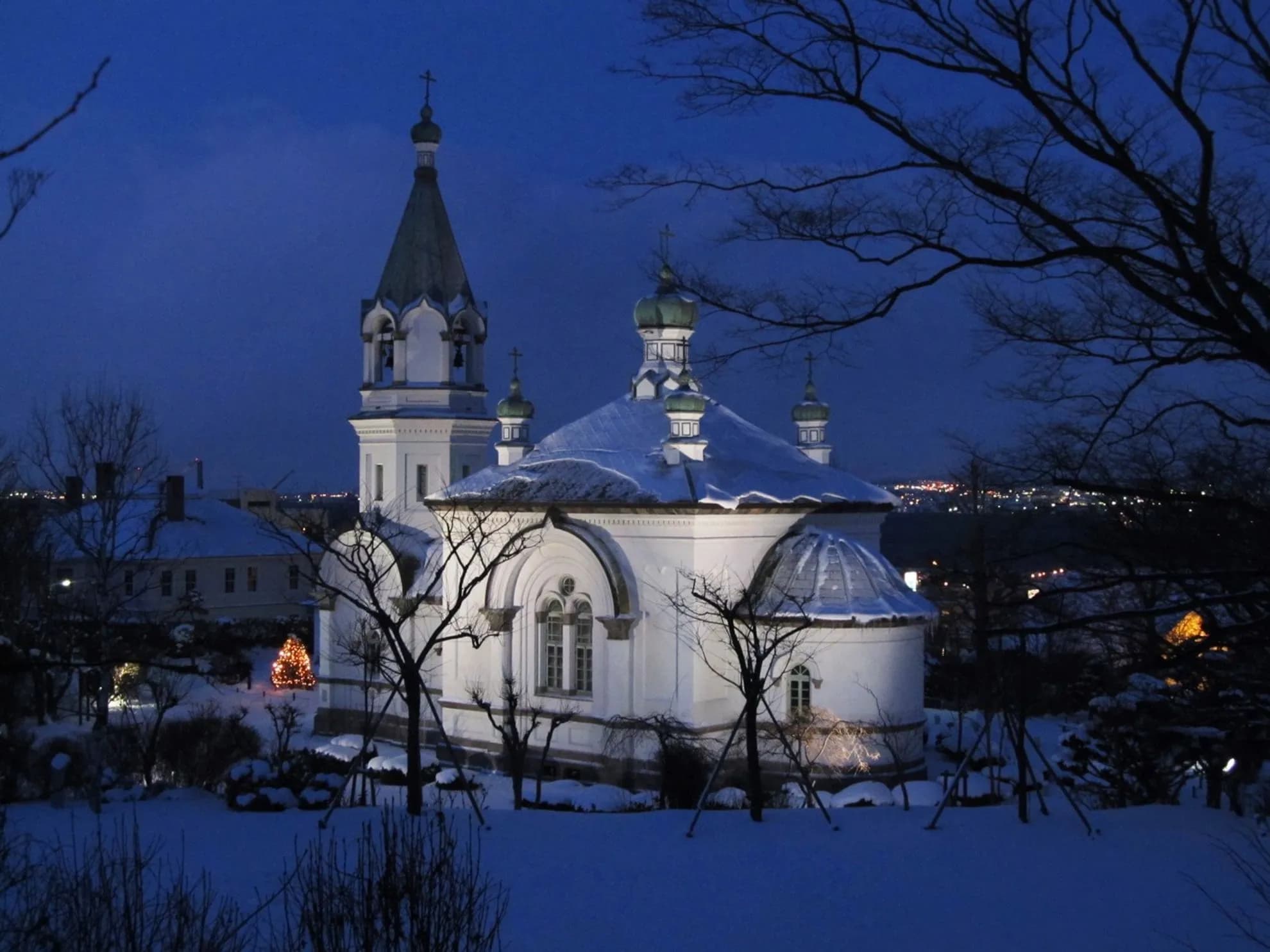
- Visiting hours
- Mon–Fri 10:00–17:00
- Sat–Sun 10:00–16:00
- Voluntary donation: Adults 200 yen / Junior high school 100 yen / Below elementary school free
- After 17:00 on Saturdays and from 10:00 on Sundays, anyone may attend the service
- Please keep quiet inside the church, and photography is not allowed
4) Motomachi Catholic Church
カトリック元町教会
It began as a temporary church in 1860, founded by the Paris Foreign Missions Society. After a major fire in 1921, it was rebuilt into the current church in 1924.
Its grand Gothic-style interior stands out. The main altar and statues are made of wood and were sent by Pope Benedict XV, and the church has a structure that is rare to see in Japan.
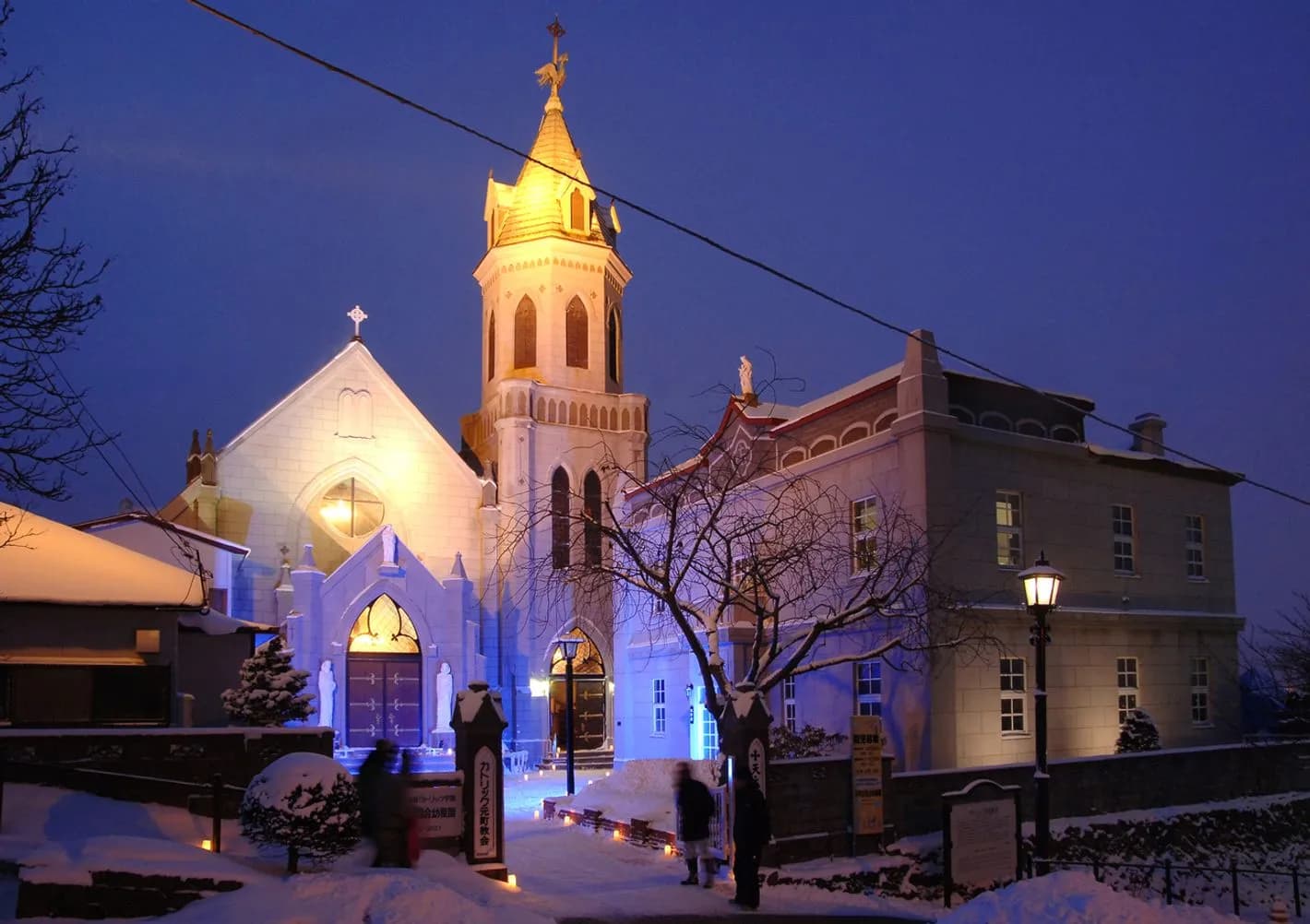
- Visiting hours
- Weekdays and Saturday 10:00–16:00
- Sunday 12:00–10:00
- Admission: Free
5) St. John’s Church
函館聖ヨハネ教会
An Anglican church introduced by the British missionary Denning in 1874. The church was built in 1878, later destroyed by fire, and rebuilt as the current building in 1979.
It is known for its dome-shaped ceiling, brown roof, and cross on the exterior wall, which is a rare structure for an Anglican church.
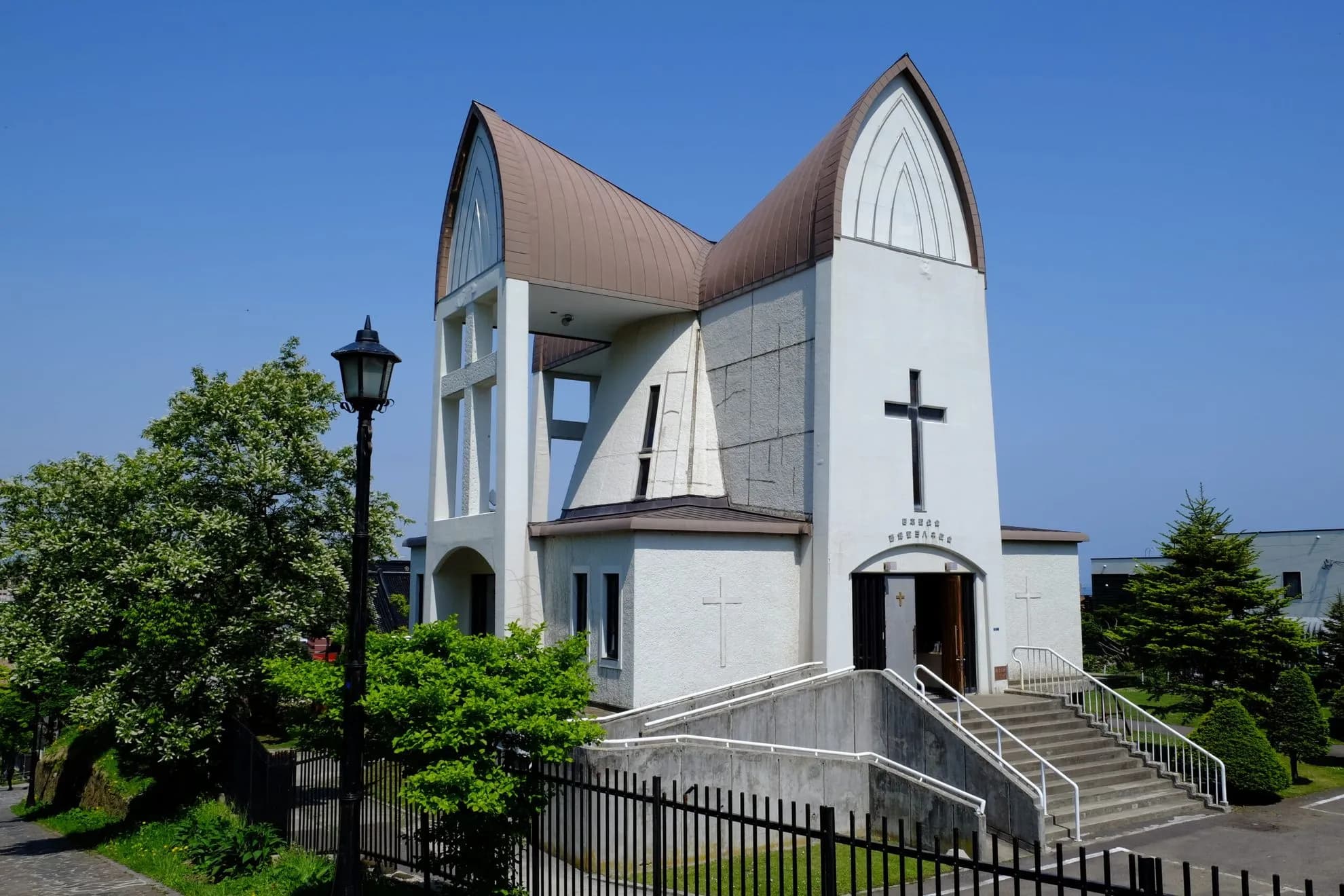
Hakodate night viewWhere the night sky meets the sea: an observation deck with one of the world’s top three night views
The clear highlight of a Hakodate trip is the night view from Mt. Hakodate. It is often listed as one of the world’s top three night views, and the curve made by the sea and the city lights is truly stunning.
Many travelers say that the main reason they visit Hakodate is this night view. The scenery from the summit leaves a strong impression on everyone.
To reach the top, you usually use the Mt. Hakodate Ropeway. Since operations depend on weather conditions, be sure to check the weather before you go. If it is cloudy or foggy, you may not be able to enjoy the night view even from the summit.
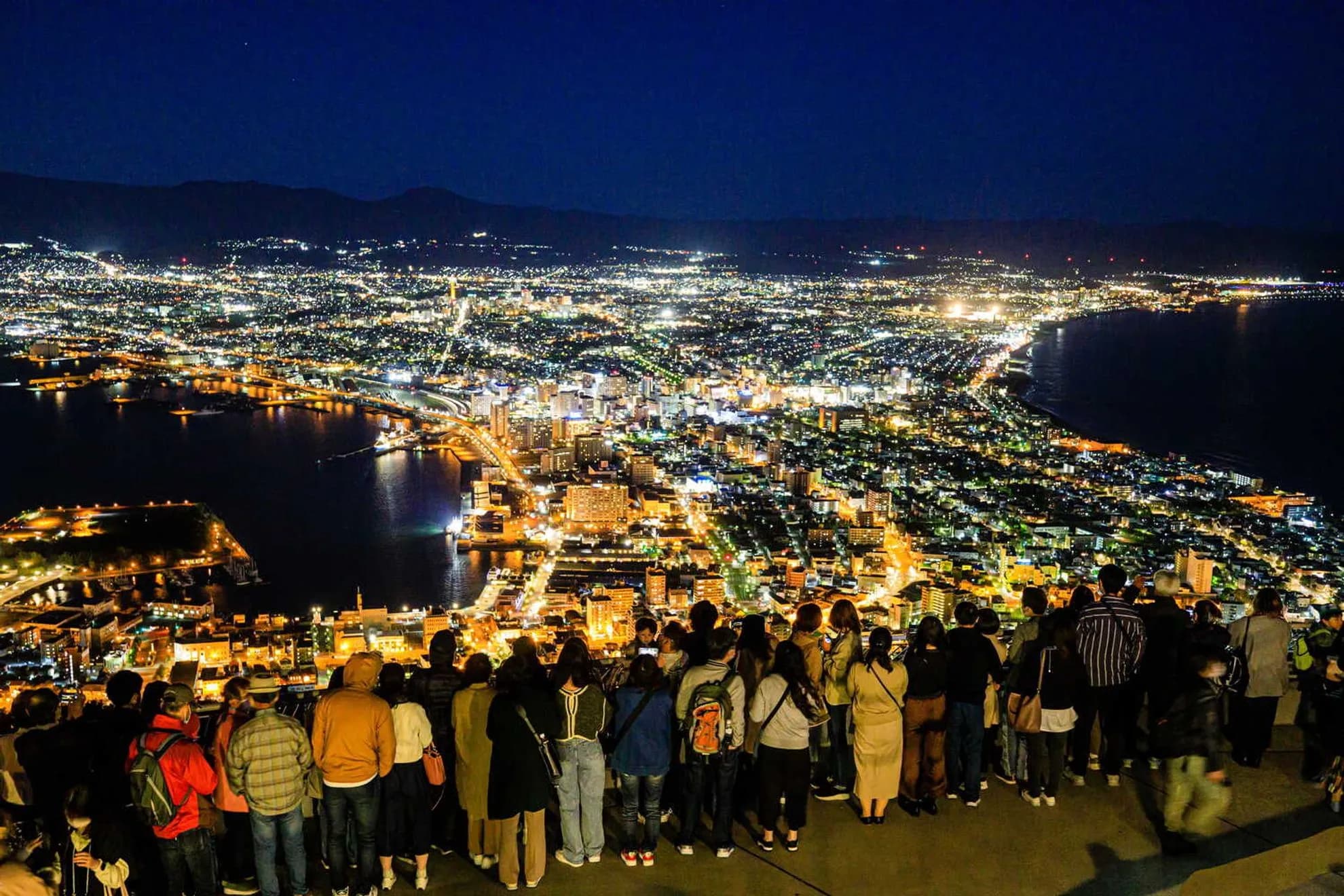
For weather checks, we recommend looking at the Mt. Hakodate live cam or checking real-time updates on the ropeway website. There is also a restaurant on the second floor of the summit building, so you can enjoy a nice meal with the view.
Ropeway information
-
Operating hours
- April 20 ~ September 30: 10:00 ~ 22:00 (last uphill trip is 10 minutes before closing)
- October 1 ~ April 19: 10:00 ~ 21:00 (last uphill trip is 10 minutes before closing)
-
Fares
- Round trip: Adults 1,800 yen / Children 900 yen
- One way: Adults 1,200 yen / Children 600 yen