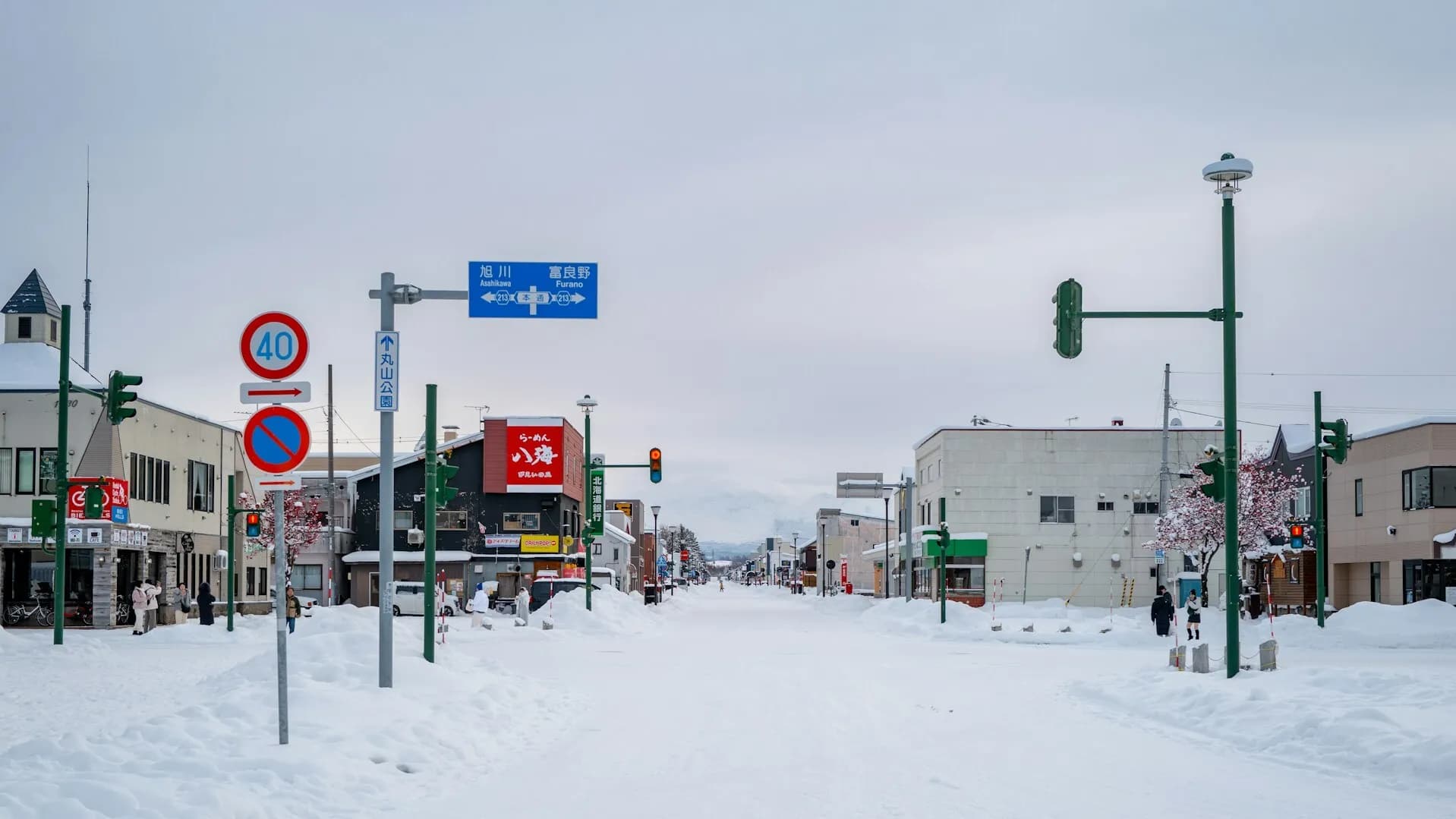
IntroductionA city of summer lavender and winter snow scenery
The Biei & Furano area is a famous place to enjoy the summer scent of lavender. It offers a different charm from Hokkaido in winter, covered in snow, and it is a must-visit route for a Hokkaido trip.
However, your travel route and plan will change completely depending on whether you take a bus tour or use public transport. For this reason, it is best to check your transport options before you visit and build your itinerary based on that.
Asahikawa Tourism Association Biei Tourism Association Furano Tourism AssociationSmart itinerary planning strategiesRecommended plans by travel routes and overnight patterns
Because most bus tours have similar departure times and routes, crowds often gather at the same sights. If you want to avoid this, a self-guided trip using public transport is also worth considering.
However, a day trip that covers Asahikawa, Biei, and Furano all in one day can be too much. In that case, a realistic plan is to stay 1 night in Asahikawa, then visit Biei and Furano the next day.
If you skip Asahikawa and visit only Biei and Furano, a day trip from Sapporo is also possible, using a rental car or public transport.
If you are doing a Biei and Furano day trip without a rail pass, a bus tour is the most efficient option.
For family trips or small groups
Bus tours are affordable and convenient for a one-day trip, but you must follow a fixed schedule, and it can be hard to adjust the plan freely for your group.
On the other hand, for family trips or small groups, you can use a private car with a dedicated driver-guide and move on your preferred schedule, so you can enjoy a more flexible and comfortable trip.
What about luggage when staying in Asahikawa?
For example, if your plan is 1 night in Sapporo → 1 night in Asahikawa → 1 night in Sapporo, you may have the inconvenience of returning to Asahikawa to pick up your luggage after sightseeing in Biei and Furano.
- If you arrive in Asahikawa on day 1 and go straight to Biei and Furano, this inconvenience is minimal.
In this case, it is best to book the same hotel in Sapporo and email them in advance to confirm luggage storage. Also note the tips below.
- In your email: include the booking site and reservation number as well as the guest name, so they can confirm faster.
- At check-in: if you did not get an email reply, you can also ask directly at the front desk.
- Even with approval, staff communication may vary, so it is safer to print or save the email reply and show it.
- If the hotel cannot store luggage, another option is to take only what you need and use coin lockers.
- Coin lockers can store items for up to 3 days, and you pay for each day (e.g., 2 days means 2 days of fees).
Transport guide for Asahikawa, Biei, and FuranoSeasonal and route-based transport options
1) Travel by train
-
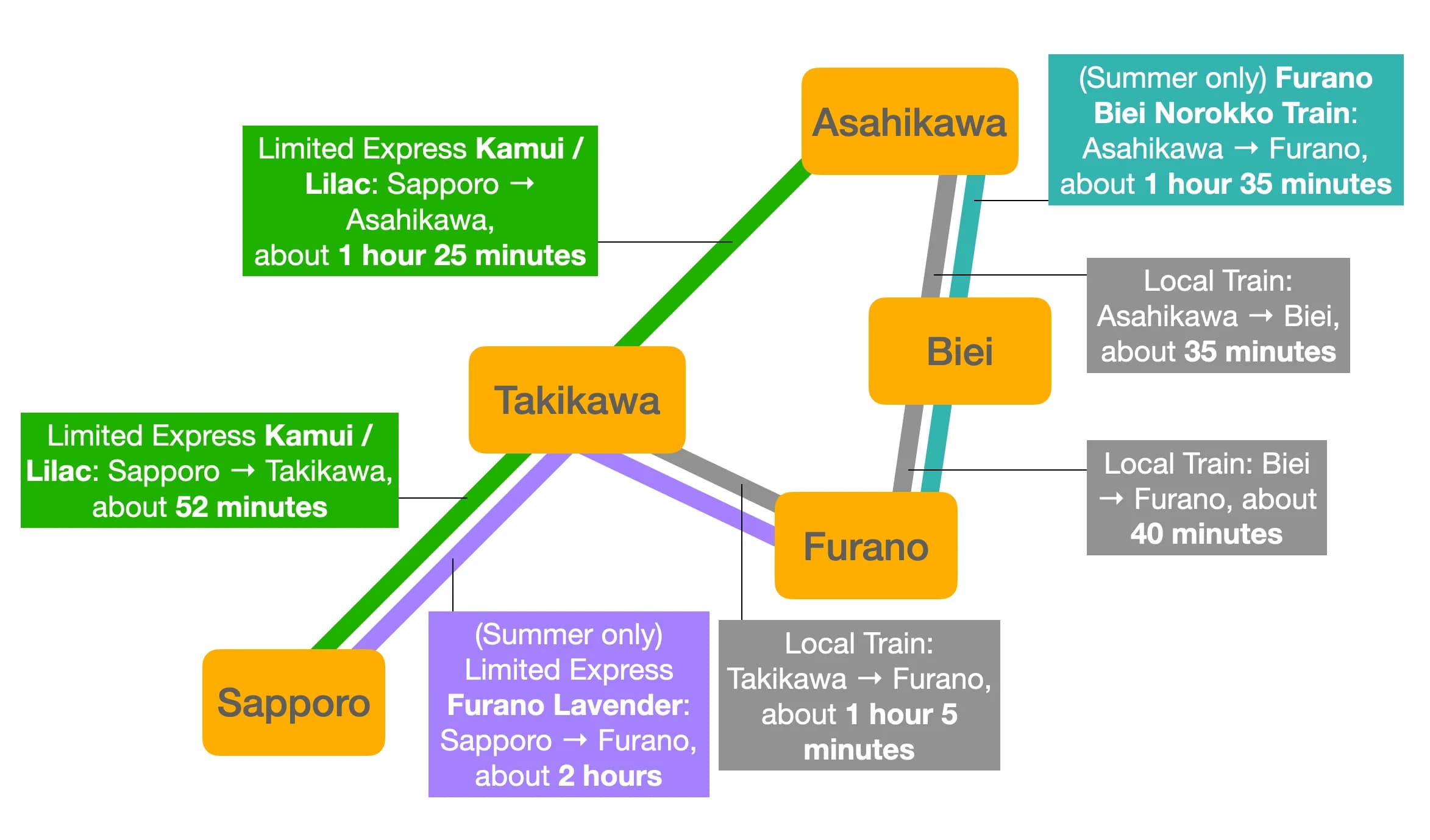
Summer only (June–September) when the Furano Lavender Express & Norokko trains operate
- Travel from Sapporo to Furano on the Furano Lavender Express.
- After arriving in Furano, take the Norokko train and travel slowly toward Biei.
- The Norokko train stops at Lavender Farm Station (temporary station), which makes it easy to reach Farm Tomita.
-
Other seasons
- Travel from Sapporo to Asahikawa first, then go from Asahikawa → Biei → Furano
- Timetables: Sapporo → Asahikawa timetable / Asahikawa → Sapporo timetable
- Another option is Sapporo → Takikawa Station, then travel Furano → Biei → Asahikawa.
- If you are going to Farm Tomita: get off at Nakafurano Station, then walk about 25 minutes or take a taxi.
The lavender peak season is from mid-July to late July. If summer seasonal trains are not running, you can usually see only greenhouse lavender.
2) Summer seasonal train details
These trains usually operate on some weekends or for limited periods from early June to September. From mid-June to mid-August, they run daily.
There are reserved seats, but online advance reservations are not available, so it is best to buy tickets at the station in Japan.
Furano Lavender Express
It is a train that takes about 2 hours from Sapporo to Furano without any transfers, and its exterior is impressively decorated in purple, just like lavender flowers.
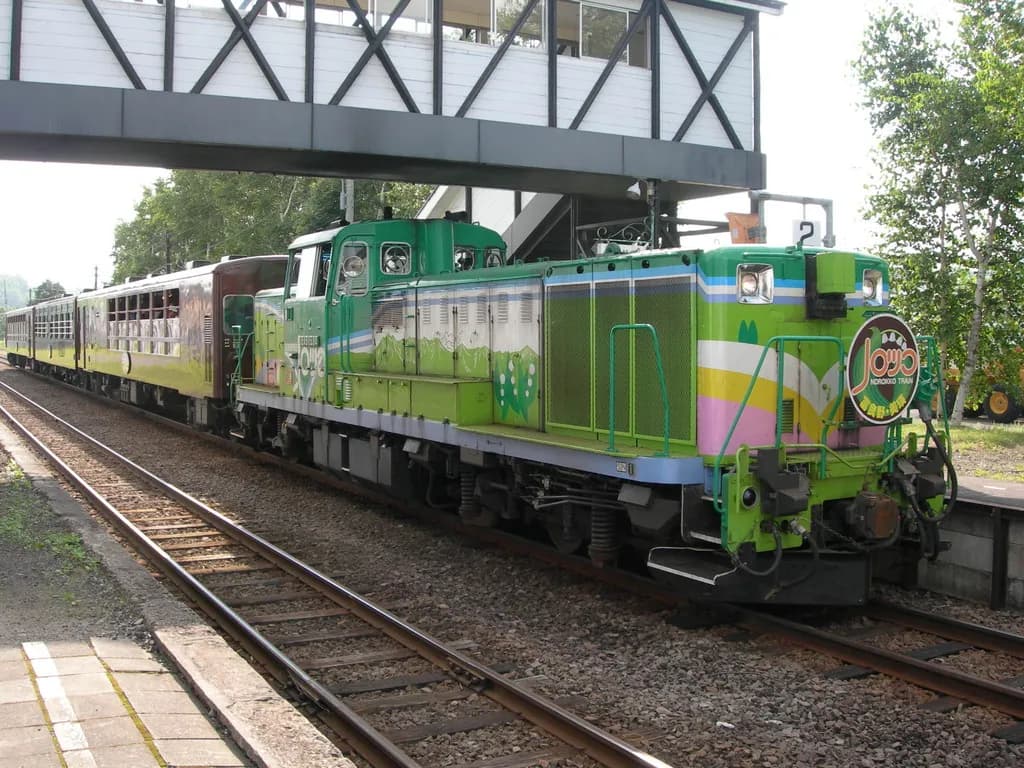
Furano Biei Norokko Train
Norokko is a blend of the Japanese word noronoro (ノロノロ), meaning slowly, and trolley train (トロッコ).
The seats are simple wooden benches, but it is a retro-style train where you can enjoy a romantic countryside view at a slow pace.
- Torokko (トロッコ) is a Japanese term that comes from a minecart.
- You can receive a ride certificate.
- There is even a story that people could grill meat on board in the past.
- Service is planned to end after operating until 2026
3) Travel by bus
Asahikawa
JR Hokkaido Bus, Chuo Bus, and Dohoku Bus operate this route together, with about 2 buses per hour from in front of Sapporo Station.
Service runs from 07:00 to 21:30, and travel time varies slightly by season.
-
Travel time
- April–November: about 2 hours 5 minutes (one way)
- December–March: about 2 hours 25 minutes (one way)
-
Fare
- One way: 2,500 yen / Round trip: 4,700 yen
- 4-ticket booklet (online): 9,000 yen
- 10-ticket booklet (online): 21,700 yen
- 4-ticket paper booklet: 9,200 yen / 10-ticket: 22,100 yen
-
Where to buy tickets
-
Chuo Bus Ticket Counter
-
Sapporo Terminal Counter
-
Dohoku Bus (in front of Asahikawa Station)
- Booklet tickets can also be purchased on board
-
-
Main bus stops
Furano
This route is operated only by Chuo Bus, with only about 7 buses per day. Travel time is about 2 hours 10 minutes (one way).
-
Fare
- One way: 2,700 yen / Round trip: 5,100 yen
- 4-ticket booklet (web): 9,500 yen
- 4-ticket paper booklet: 10,000 yen
-
Where to buy tickets
-
Chuo Bus Ticket Counter
-
Sapporo Terminal Counter
- Booklet tickets can also be purchased on board
-
-
Main bus stops
Exclusive TourCast Tips!
Round-trip bus set ticket to Asahiyama Zoo
If you plan to take the highway bus from Sapporo to Asahikawa and visit the zoo, a set ticket is recommended.
In general, if two people buy a 4-ticket booklet + round-trip zoo bus + admission, it is about 6,500 yen per person. With the set ticket, it can be about 5,500 yen.
- Round-trip highway bus ticket: Sapporo ↔ Asahikawa
- Round-trip bus ticket: Asahikawa ↔ Zoo
- Asahiyama Zoo admission ticket
- Price: Adult 5,500 yen / Junior high 4,900 yen / Child 2,500 yen
- Valid for 3 days
- Available at the usual ticket purchase counters
Top 3 must-do experiences in AsahikawaAsahiyama Zoo, Mount Asahidake, and shoyu ramen
If you plan to visit Asahikawa, it is enough to remember just three things: Asahiyama Zoo, Mount Asahidake, and shoyu ramen.
1) Asahiyama Zoo 🐧
旭川市旭山動物園
Many travelers visit Asahikawa mainly for this zoo.
Because of the latitude difference, you can see animals that are hard to find in Korea, including penguins.
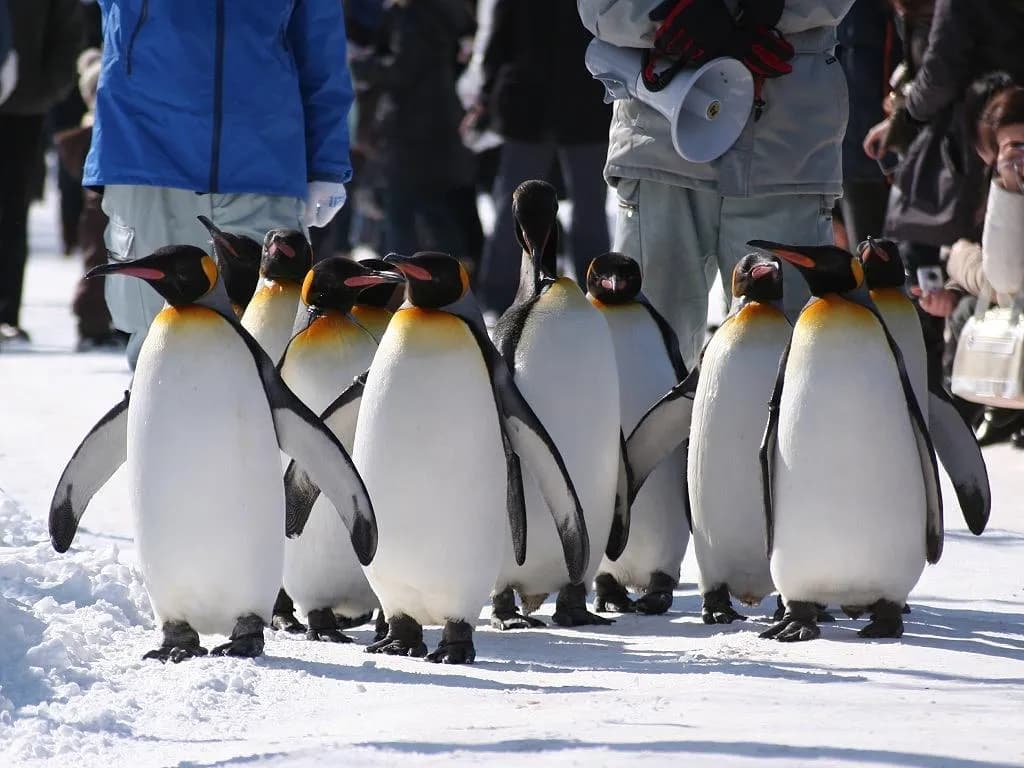
In winter, the penguin walk program is especially popular, and many people come to see the cute penguins waddling along.
Today, Asahiyama Zoo is famous nationwide, but it was not popular from the beginning.
After opening in 1967 as a typical zoo, its annual visitors dropped to 260,000 by 1996, creating a risk of closure.
What the staff created was the 'behavior-based exhibit' style. This approach shows animals from the keeper’s point of view, focusing on natural behaviors.
As a result, the zoo attracted 3 million visitors per year within 10 years. Later, a TV drama (2006) 'Miracle Zoo: The Story of Asahiyama Zoo' and a film (2009) 'Asahiyama Zoo Story' were produced.
It was not only the exhibit style. The staff’s effort also mattered. Instead of giving simple information, they explained animals in a clear and engaging way.
Because of limited budget, staff also made handwritten signs, which moved many visitors and helped shape the zoo as it is today.
If you look closely at the handmade signs around the zoo, your visit will feel even more special.
- Opening hours- Summer season (weekdays): 09:30–17:15 (last entry 16:00) - Summer season (weekends/holidays): 09:30–16:30 (last entry 16:00) - Night opening (8/10–8/16): 09:30–21:00 (last entry 20:00) - Winter season: 10:30–15:30 (last entry 15:00)
- Admission: 1,000 yen (junior high and older) / Free for children under junior high
- How to get there- Take bus 41, 42, or 47 from Asahikawa Station Bus Stop 6 (about 50 minutes) - Check bus timetable / Fare: 500 yen - Nationwide IC cards (Suica, PASMO, etc.) cannot be used (only Asaca or DoCARD) - If paying cash: take a numbered ticket when boarding → pay cash when getting off - For credit card payment, you must buy a ticket in advance at Asahikawa Denkikidou General Information Center (1st floor)
If it is crowded, entering from the West Gate is a good way to get in faster with less waiting.
2) Mount Asahidake
旭岳
Mount Asahidake is Hokkaido’s highest peak at 2,291 m, located inside Daisetsuzan National Park (大雪山, Daisetsuzan). This area is known as Japan’s first designated national park.
Daisetsuzan is also called 'Kamui Mintara' in the Ainu language, meaning 'the playground of the gods'. The area is about four times the size of Seoul, so it is very large.
The area has well-developed trekking and hiking routes, but hiking without a local professional guide can be dangerous, so extra caution is needed.
From June to mid-October, you can also follow a walking course that takes about 1 hour.
In winter, backcountry skiing is possible on the snowy mountains, but a guide is essential for safety.
- You are responsible for all accidents, so safety gear and advance checks are essential
In summer, bring hiking shoes. In winter, prepare seasonal gear such as rubber boots and snowshoes. In any season, sunglasses are a must.

- Sanroku Station: ropeway boarding point, food available
- Visitor Center: boots, snowshoes, and ski rental available
- Sugatami Station (mountain station near the top): hiking poles and boots rental / small shop with croquettes and coffee
After Sugatami Station, there are no facilities except a simple toilet. If you plan a longer trek, prepare snacks and essentials in advance.
Even if you bring gear from Korea, entry may be restricted depending on weather. In that case, the ropeway itself may not operate. Before you go, be sure to check local weather and ropeway operations.
If you plan to stay near Mount Asahidake, Bear Monte Hotel is recommended. It is a 3-minute walk from Sanroku Station.
- Ropeway fare- 11/1–5/31: Adults 2,600 yen round trip / Children 1,700 yen - 6/1–10/31: Adults 3,500 yen round trip / Children 1,750 yen - One preschool child is free per one adult
- How to get there- Take bus 66 from Asahikawa Station Bus Stop 9 (about 1 hour 10 minutes / bus fare 1,800 yen) - Nationwide IC cards (Suica, PASMO, etc.) cannot be used. Only Asaca and DoCARD are accepted - If paying cash: take a numbered ticket and pay when getting off - For credit card payment, you must process it in advance at the ticket machine on the 1st floor of Asahikawa Denkikidou General Information Center
3) Shoyu ramen 🍜
醤油ラーメン
Hokkaido’s three famous ramen styles are Sapporo miso ramen, Hakodate shio ramen, and Asahikawa shoyu ramen.
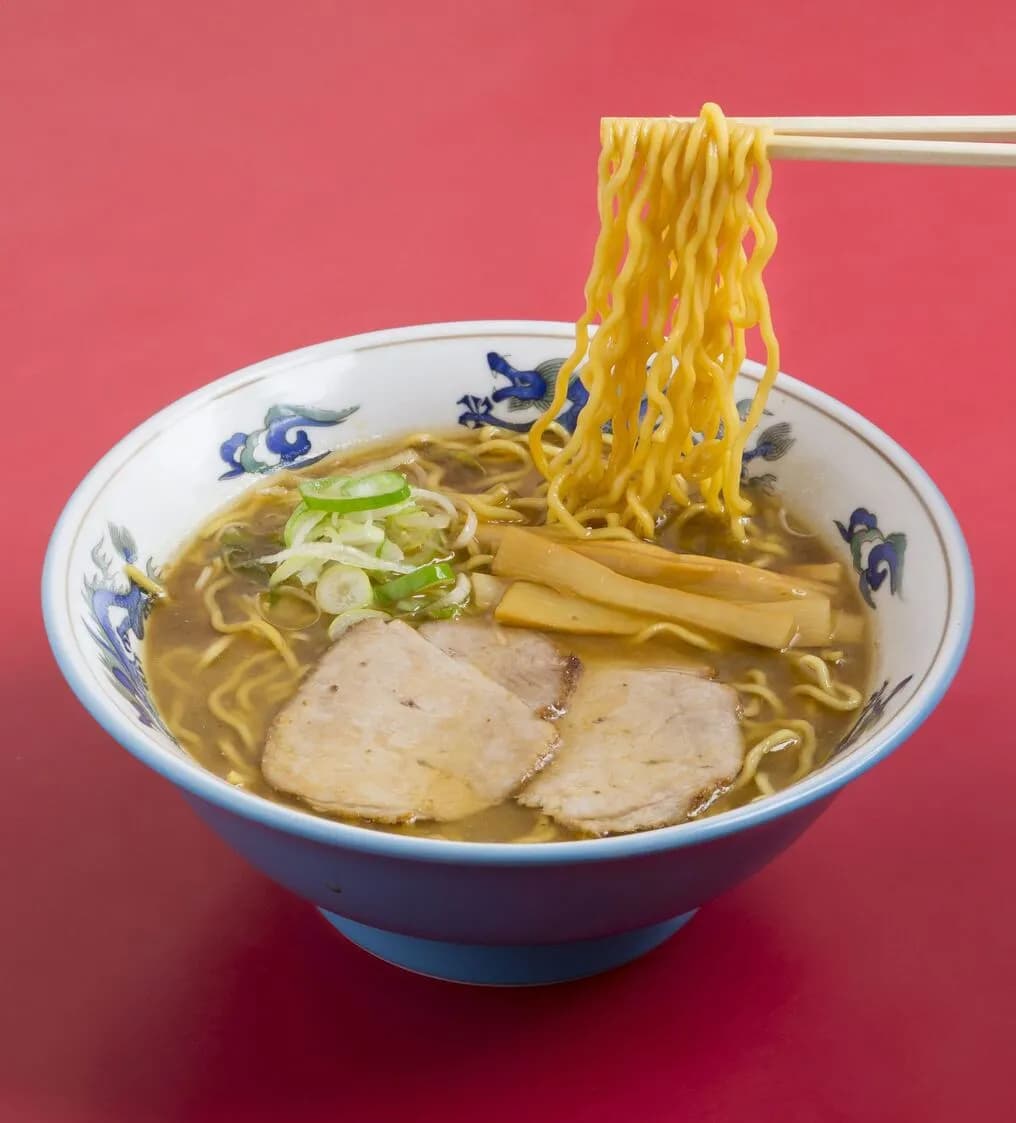
Asahikawa shoyu ramen is known for a deep, rich flavor made from pork-bone and chicken broth with added seafood stock.
Below are the three most famous shoyu ramen shops in Asahikawa.
Biei & FuranoRegion overview and transport options
The name is said to come from the Ainu word 'piye (fertile land)'. It is also believed that Biei (美瑛) was named using '美 (beauty)' and '瑛 (jade-like shine)' to express the beauty of 'Blue Pond'.
As a must-visit area in Hokkaido, Biei & Furano are easiest to visit by bus tour, but you may feel limited due to time constraints and crowds.
If you want smoother photo stops, we recommend staying 1 night in Asahikawa or Biei and starting early the next day.
Biei Tourism Portal1) Rental car
- Offers the highest travel freedom, but there can be stress about driving in Japan and a higher winter accident risk.
- There are no rental car offices near Biei Station. The closest options are Asahikawa Airport, Chiyogaoka Station, or Asahikawa Station.
- Example: rent in Asahikawa, return in Furano, then continue to Sapporo.
- Cost: from about 100,000 KRW for 24 hours
2) Sightseeing taxi
- A safer option with a driver who has local road experience.
- Costs are higher, but it can be good value for 3–4 people or more.
- You can request a custom route beyond the standard course.
Sample fares
- Small taxi (up to 4): 7,580 yen per hour / 11,370 yen for 1.5 hours and up
- Jumbo taxi (up to 9): 9,640 yen per hour / 14,460 yen for 1.5 hours and up
3) Bicycle
- A romantic and flexible way to travel, but it is less mobile than a car.
- An electric bike is recommended (Patchwork Hills have slopes).
- Rental fee: from about 600 yen per hour / passport may be required
- Recommended area: Patchwork Hills north of Biei Station
- No rentals on rainy or snowy days
4) Public transport (bus)
- The cheapest option, and while services are not frequent, it can be useful with good planning.
Routes
- South of Biei Station → Shirogane Aoiike (Blue Pond) → Shirokane Onsen
- Bus 39 timetable
- Bus 42 timetable
- Shirokane Onsen → Biei Station
- Blue Pond → Biei Station
Lavender-go bus route
Asahikawa Station → Biei → Nakafurano (Farm Tomita) → Furano Station → New Furano Prince Hotel
- Lavender-go route map
- Furano Station Stop 1 (toward Asahikawa)
- Furano Station Stop 4 (toward Prince Hotel)
5) Local bus tours
There are also local bus tours that comfortably cover Patchwork Hills, Blue Pond, and Shirahige Falls.
However, the guide is only in Japanese, so it may be inconvenient if you are not comfortable with Japanese.
BieiSeven Stars Tree, Christmas Tree, locations and parking info
In Biei, farmers use crop rotation instead of planting the same crop in the same field every year.
If germs or pests from other areas enter the fields on your shoes, one harvest can be ruined and the damage may last for years, so access to fields is strictly restricted
.
Never enter unpaved areas or places blocked with ropes. If problems occur, you may even face legal penalties.
1) Seven Stars Tree
セブンスターの木
This tree became famous after appearing in a 1976 advertisement for the Japanese cigarette brand 'Seven Stars'.
It used to be a scenic spot with about 40 birch trees lined along the road, but it was cut down on January 14, 2025 due to overtourism issues, so it can no longer be seen.
2) Oyako (Parent-and-child) Tree
親子の木(徒歩のみ)
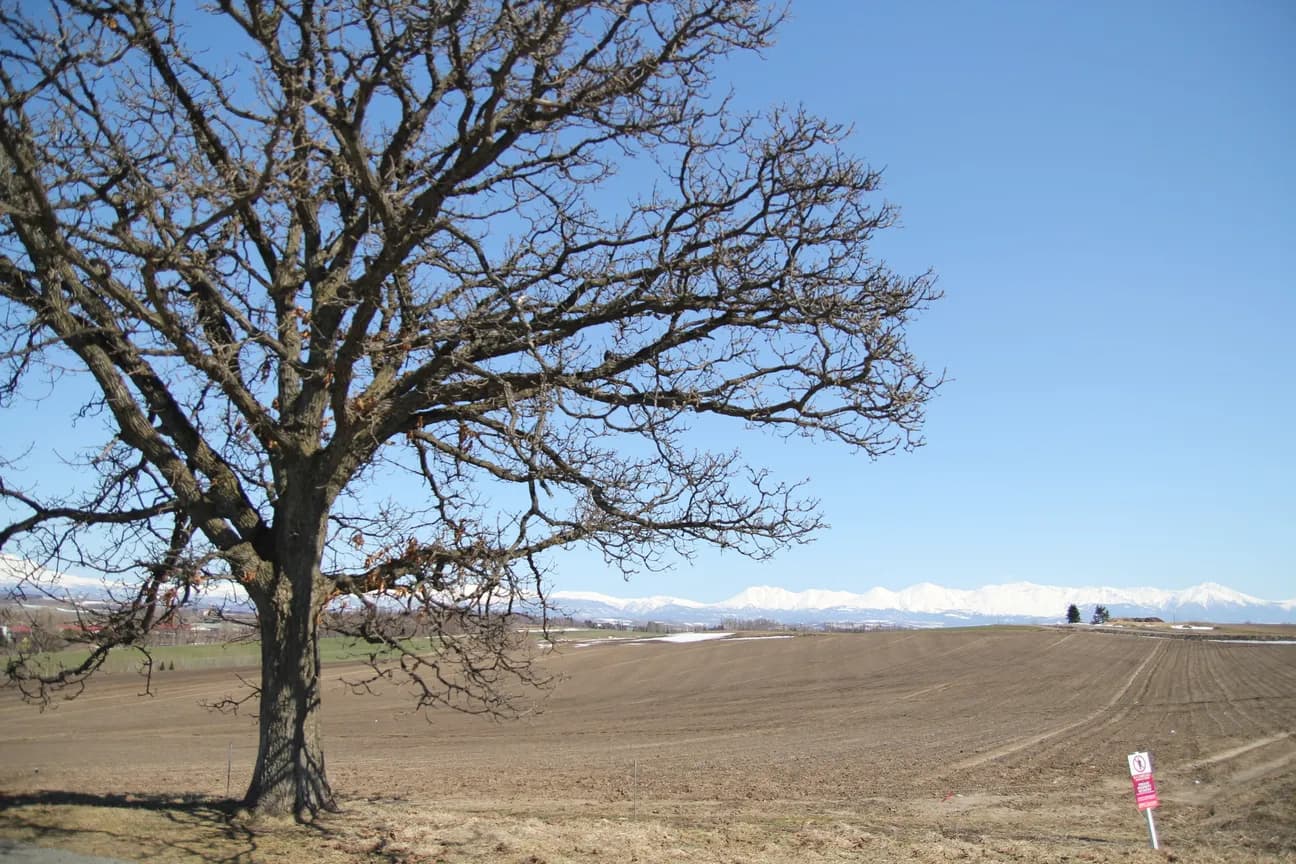
Oyako (親子) means parents and children, and the smaller “child” trees between the larger trees create a memorable view.
3) Ken and Mary Tree
ケンとメリーの木
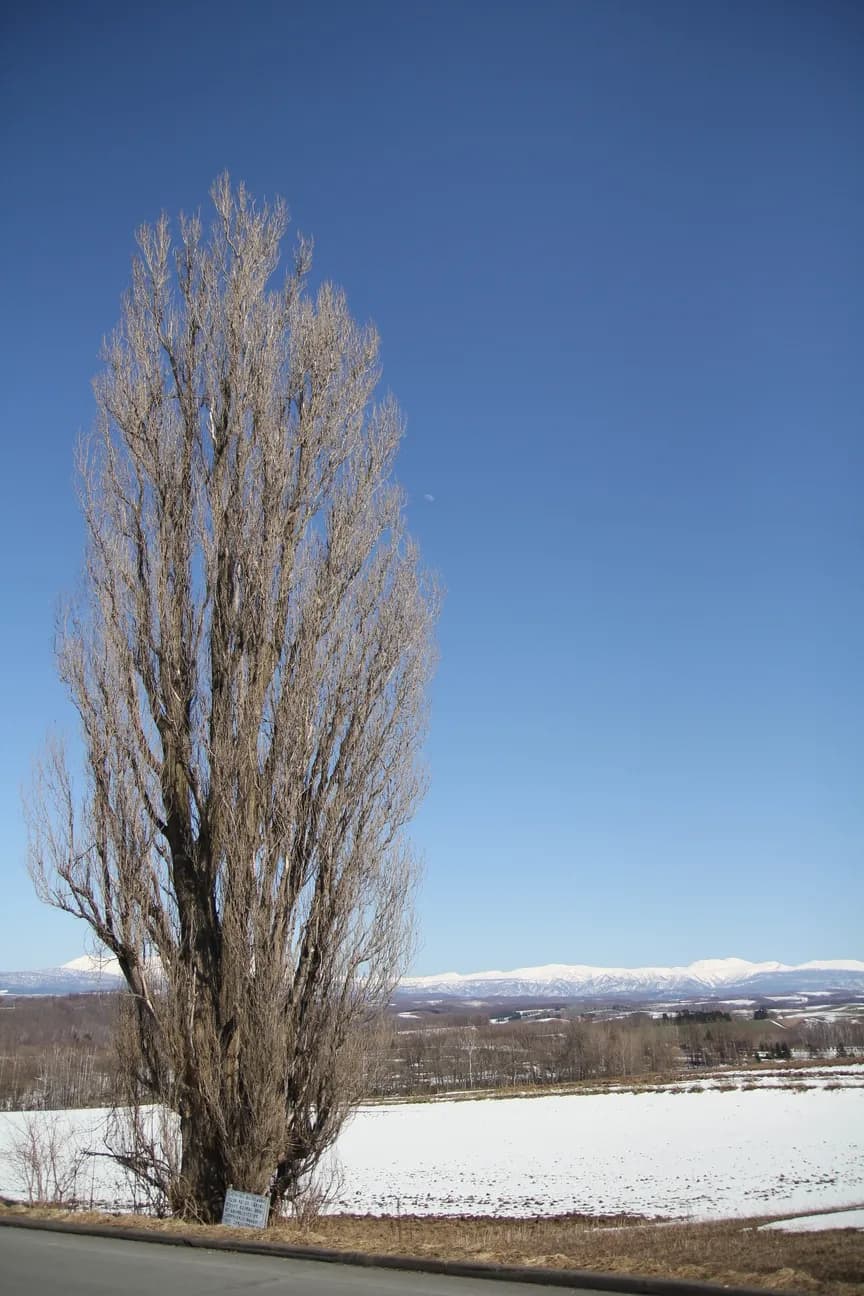
This tree is known as the filming location for a 1976 Nissan 'Skyline' commercial, and the name comes from the main characters, Ken and Mary.
-
Watch on YouTube (the commercial scene appears from 03:29)
-
Parking available nearby
4) Mild Seven Hill
マイルドセブンの丘
This hill became famous through a Mild Seven cigarette advertisement, but
from 2013, terms like 'mild' were banned in tobacco naming, and the product name was changed.
- A small open parking area is available
5) Christmas Tree
クリスマスツリーの木
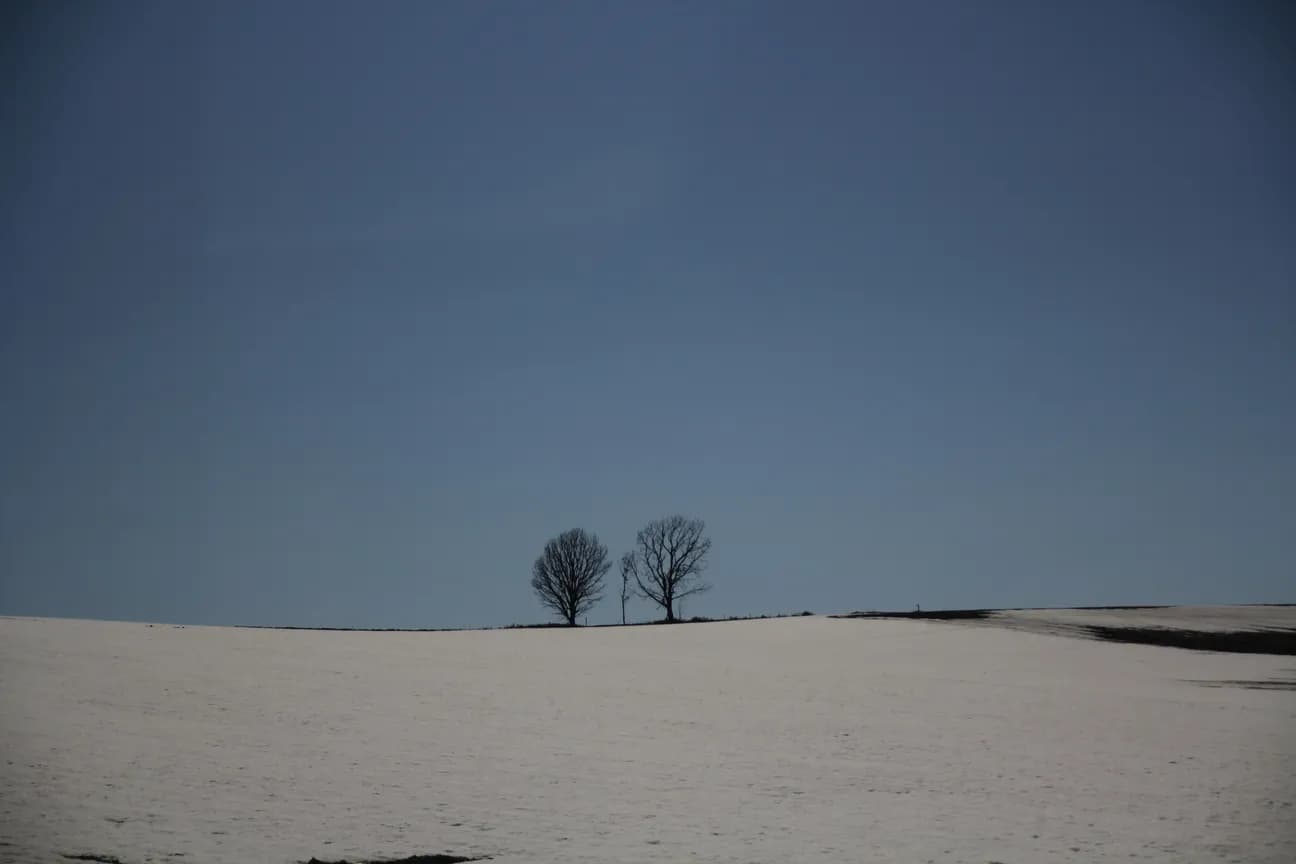
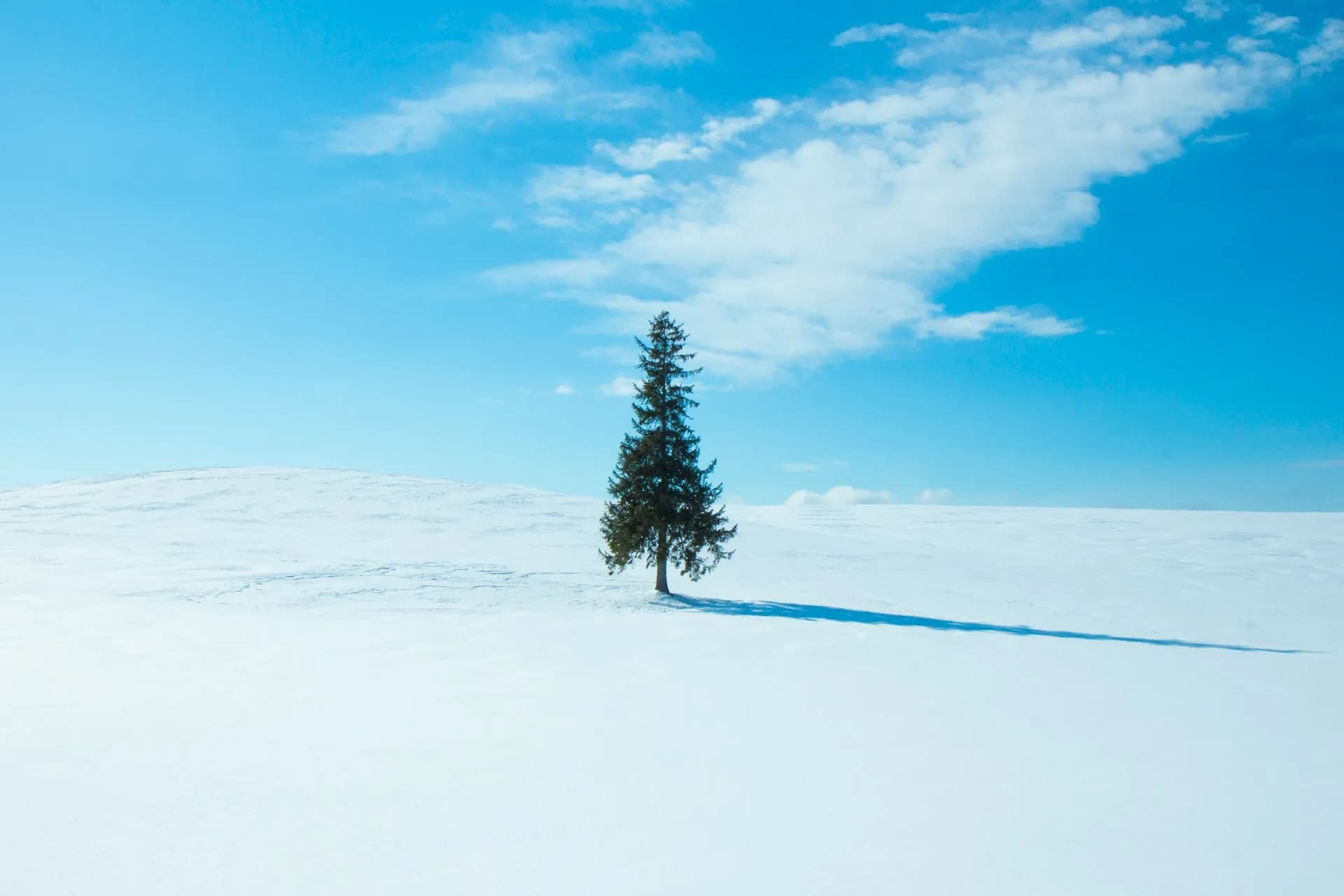
One of Biei’s top sights, especially in winter, when it stands alone on white snow and creates a true Christmas tree atmosphere.
There are no decorations, but near sunset the warm light, and at night the stars, can feel like they are decorating the tree.
6) Blue Pond (Aoiike)
白金青い池
This is one of Biei’s best-known attractions. It became famous worldwide after being used as the MacBook (MacBook) wallpaper 'OS X Mountain Lion'.
What is interesting is that it is not a naturally formed lake, but it is also not an intentionally created artificial lake.
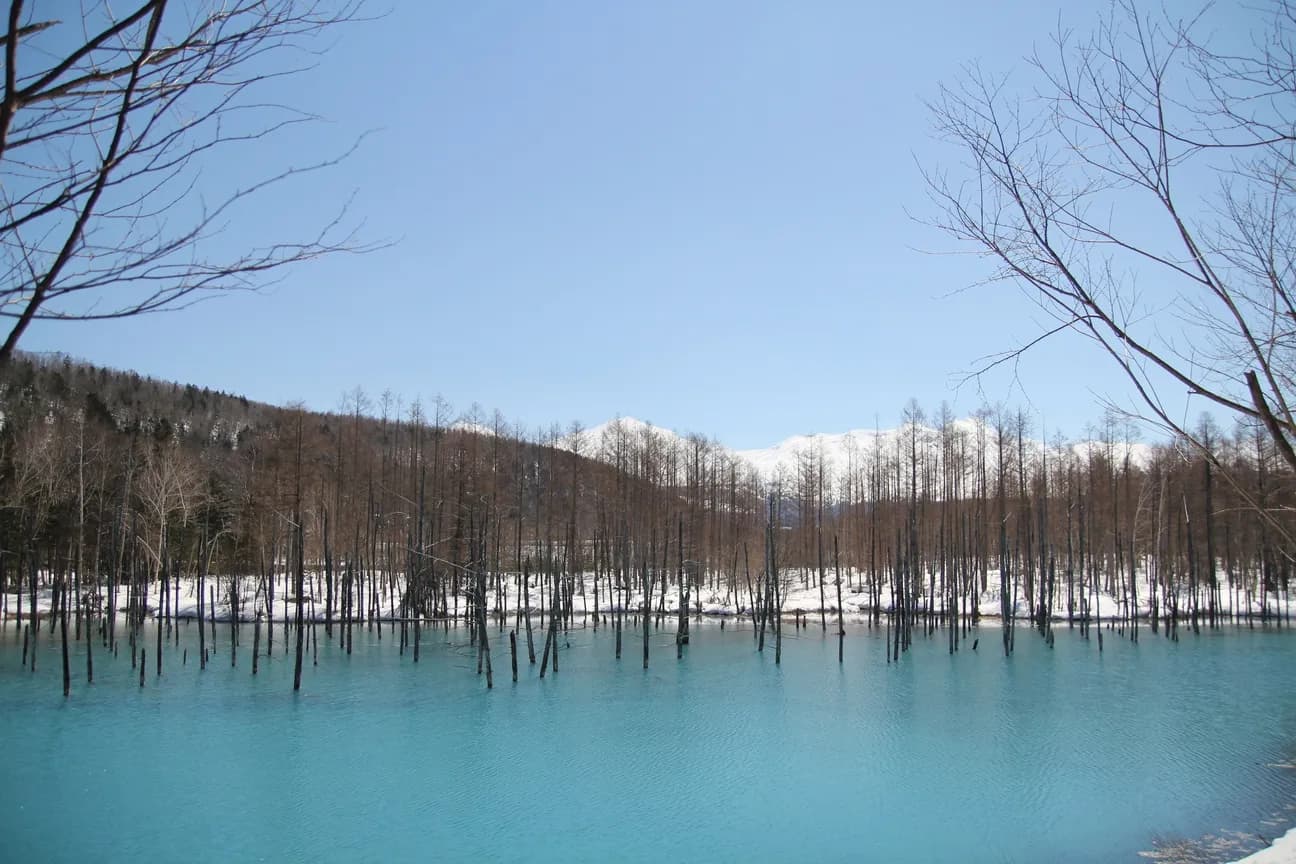
In December 1988, it was formed as a pond to block volcanic mudflows caused by an eruption of Mount Tokachidake.
When sulfur and aluminum from the Shirogane Onsen area (including Shirahige Falls) meet the Biei River,
colloidal particles that scatter only blue light are created, producing the pond’s unique blue color.
- Parking available (500 yen)
- From December to early April, it may be covered in snow and the blue color may not be visible
Opening hours
- May, October: 07:00–18:00
- June–September: 07:00–19:00
- November–April: 08:00–21:30
Night illumination (November–April, from the times below until 21:00)
- November, January: from 17:00
- December: from 16:30
- February: from 17:30
- March: from 18:00
- April: from 18:30
- 12/31–1/3: extended until 2:00 a.m. the next day
7) Shirahige Falls
白ひげの滝
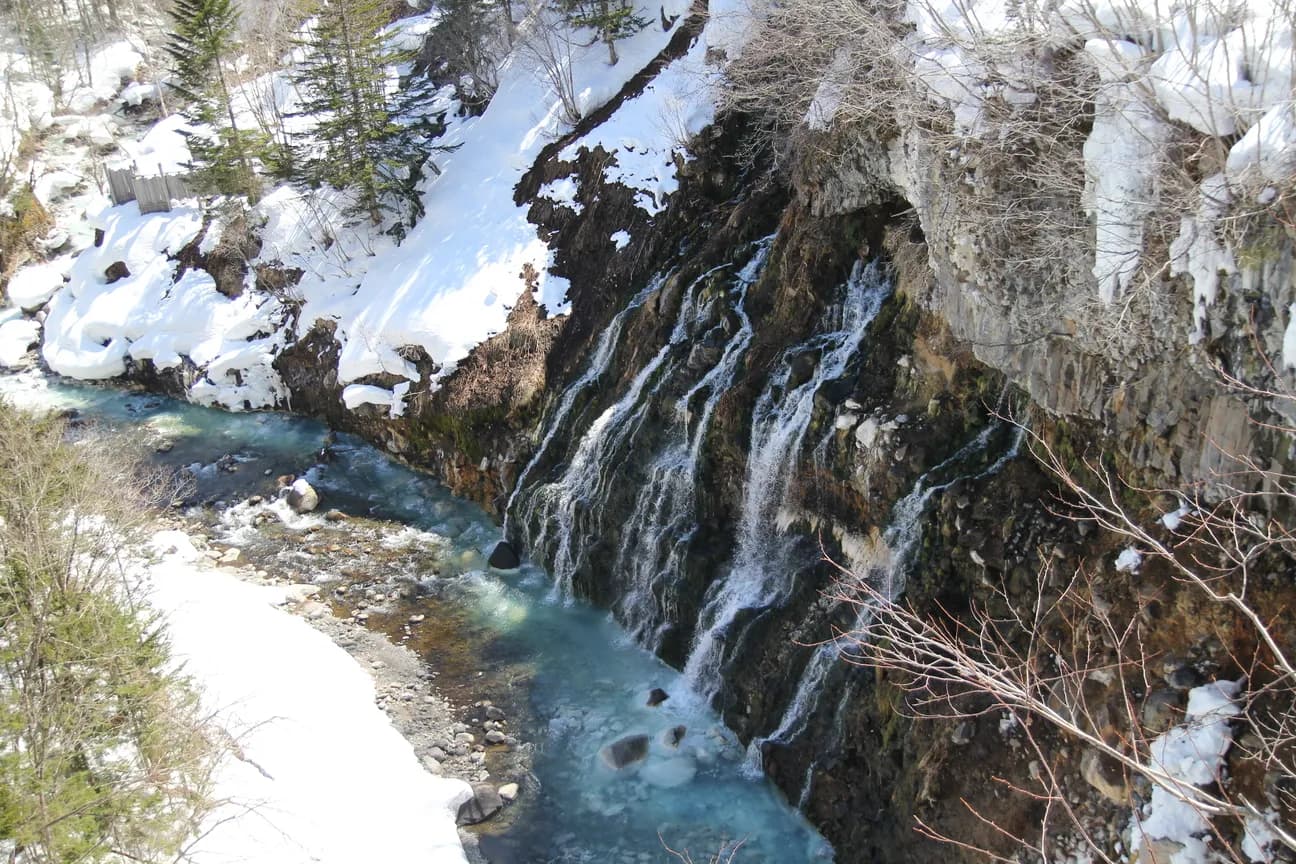
A waterfall you can view from the bridge at the entrance to Shirogane Onsen. It was named because the thin streams of water flowing from cracks in the cliff look like a white beard.
It is the source of the blue water color seen at Blue Pond. When the waterfall water meets the Biei River, you can see a mysterious blue shade.
- No separate parking lot
- Night illumination: same as Blue Pond (November–April)
- May–October: 18:00–21:00
8) Shirokane Onsen
白金温泉
A representative hot spring village in Biei, known for the kakenagashi (かけ流し) style, where fresh hot spring water flows continuously without being reused.
You can visit for a day trip or stay overnight.
Shirokane day-use onsen list9) Takushinkan Gallery
拓真館
This gallery is about a 15-minute drive from Biei Station and has limited access by public transport.
Opened in 1987, it exhibits works by landscape photographer Shinzo Maeda. The nearby birch forest path is also a popular photo spot.
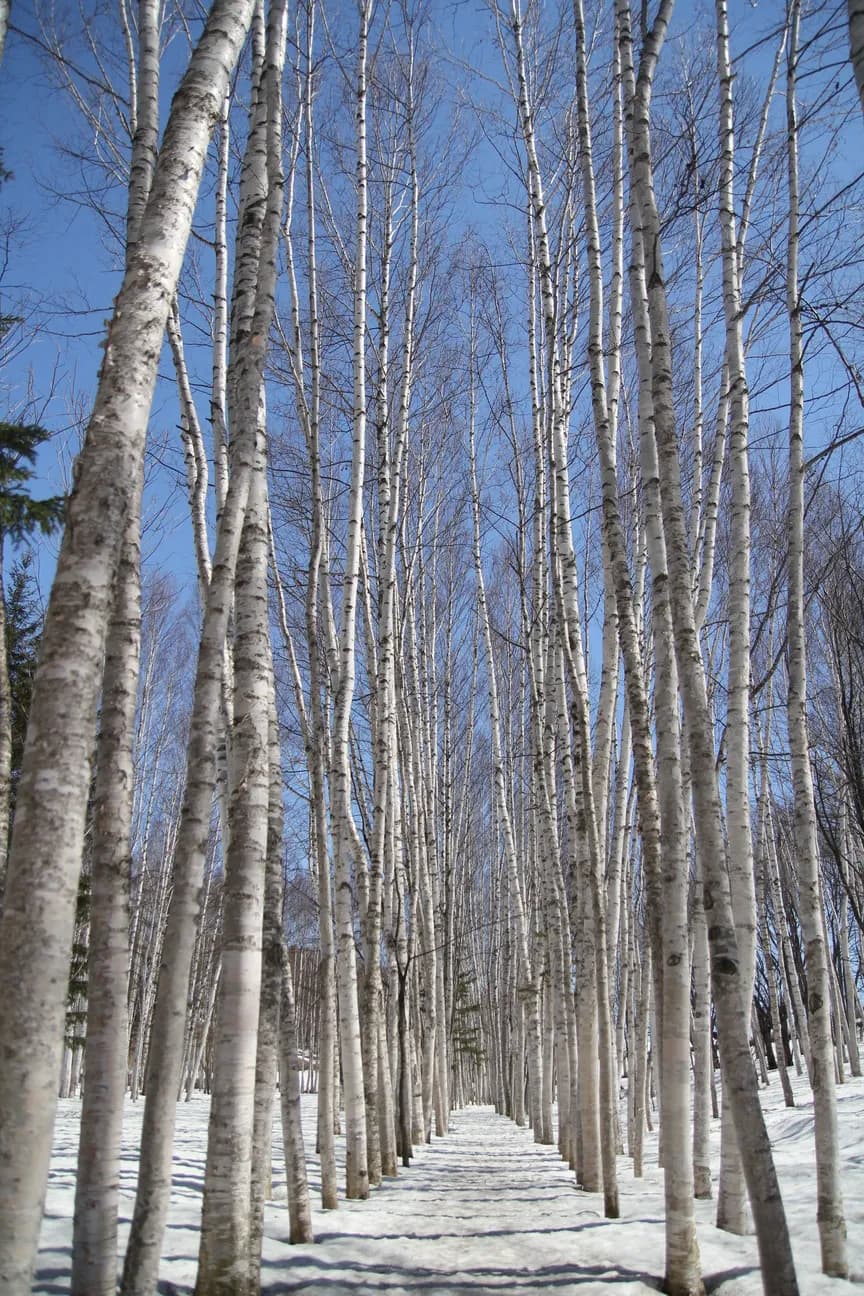
Takushinkan offers free entry, and you can buy items such as postcards.
Opening hours
-
April–October: 10:00–17:00 (last entry 16:45)
-
November–March: 10:00–16:00 (last entry 15:45)
- Free admission / Free parking
-
Closed: Every Wednesday - Open daily from July to September - Temporary winter closures may happen
FuranoMain sights in Furano
1) Farm Tomita
ファーム富田
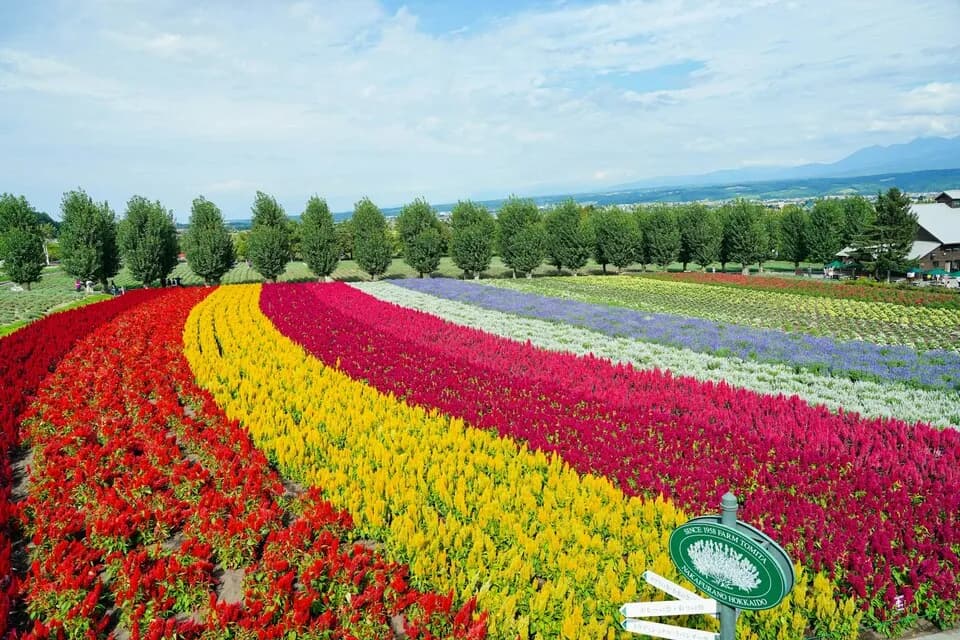
It may be one of the most famous fields in the world. What made it so well known was a single photo.
In 1958, the farm began growing lavender to produce perfume, but mass-produced synthetic fragrances made it hard to compete. However, a turning point came when a lavender field photo appeared in a 1976 JR calendar and captured public attention.
Later, original lavender perfume made by Farm Tomita became popular, and the farm itself also became famous.
The lavender season runs from late June to early August, and the peak is from mid-July to late July. The lavender-flavored purple soft serve ice cream is a must-try local specialty.
Nearby, Lavender East is open for about one month only, from late June to early July. You can ride a paid tractor bus through the fields.
Japan’s most famous melon is 'Yubari Melon', produced only in Yubari City, Hokkaido.
The name “Yubari Melon” can only be used for melons grown in that area.Next to Farm Tomita, Tomita Melon House sells melons under the name Furano Melon, known for its bright orange flesh.
They also sell a variety of local Furano farm products, such as corn.
- You can buy Yubari melons at Sapporo Nijo Market for several thousand yen per melon
- Opening hours: 10:00–16:30
- Admission and parking: Free
2) Ningle Terrace
ニングルテラス
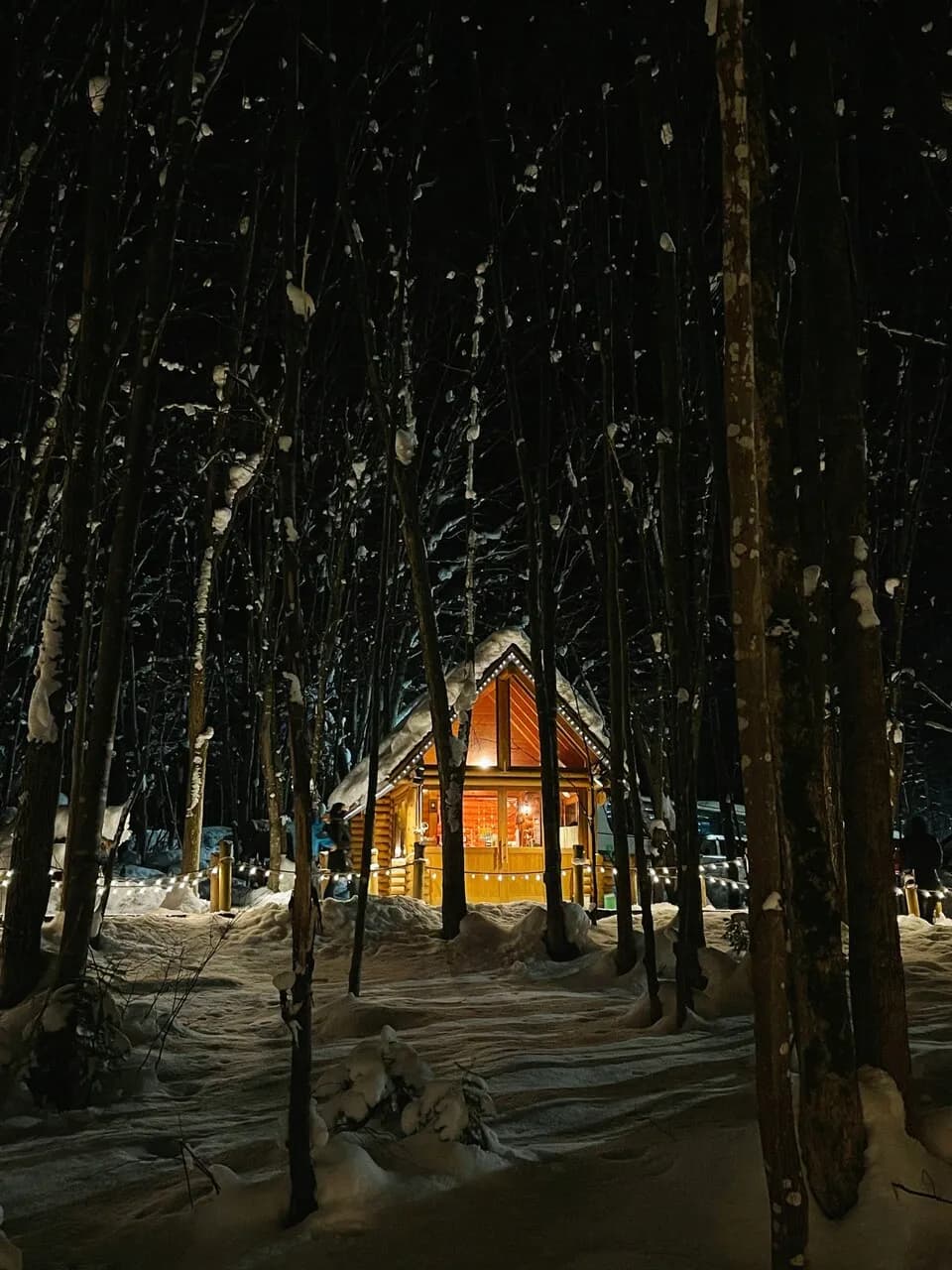
‘Ningle’ is an Ainu word meaning ‘a small person, a tiny fairy’. It refers to a legendary fairy said to live in Hokkaido’s forests.
In the evening, lights turn on, creating a dreamy atmosphere that feels like fairies might appear.
It is managed by the Shin Furano Hotel, and small cabin-style shops display and sell unique handmade items.
- Opening hours: 12:00–20:45
- Admission and parking: Free